
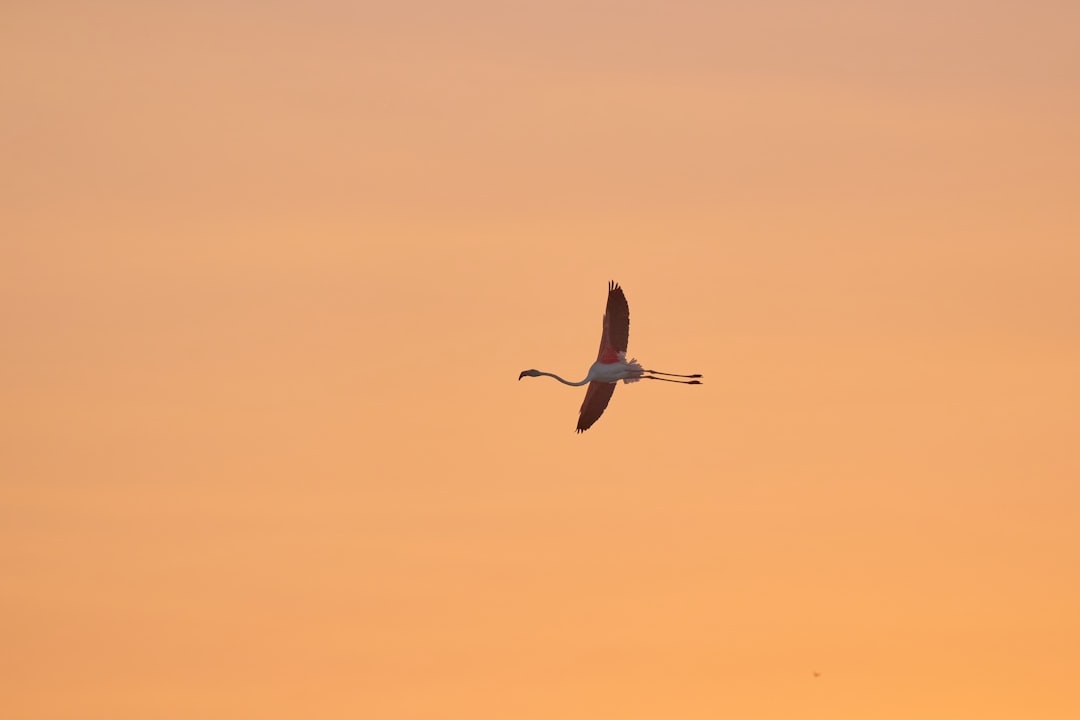
Every year, billions of animals undertake journeys so vast that they would be considered impossible feats of endurance by human standards. A bird weighing less than a coffee mug flies from pole to pole and back -- a round trip exceeding 70,000 kilometers -- without a map, a compass, or a single moment of navigational doubt. A butterfly with a brain smaller than a pinhead crosses an entire continent using a sun compass it inherited genetically but has never been taught to use. A million wildebeest march in a circle through the Serengeti, following rains they cannot see and grass that has not yet grown.
These migrations are among the most extraordinary phenomena in the natural world. They push the limits of physiology, navigation, and endurance, and they have been shaped by millions of years of relentless natural selection. Understanding them requires grappling with questions that span ecology, neuroscience, genetics, and atmospheric physics.
"Migration is the visible expression of an invisible calculation -- a biological algorithm that weighs energy reserves against distance, weather against predation, and the cost of staying against the cost of going." -- Dr. Peter Berthold, Max Planck Institute for Ornithology, on the evolution of migratory behavior [1]
What Qualifies as a True Migration?
Not all animal movement is migration. Migration, in the ecological sense, is defined by several criteria: it is seasonal or cyclical, covering a predictable route between distinct habitats; it involves the majority of a population rather than isolated individuals; and it serves a specific ecological purpose, typically breeding, feeding, or overwintering.
This distinguishes migration from dispersal (permanent, one-way movement), nomadism (irregular, unpredictable wandering), and daily ranging (routine foraging movements within a home territory). True migration is a physiologically demanding, genetically programmed behavior that often requires months of preparation -- including the accumulation of massive fat reserves, hormonal changes, and in some species, the seasonal growth of specialized flight muscles.
The Record Holders: Longest Migrations by Distance
Arctic Tern (Sterna paradisaea) -- 70,900 km Annual Round Trip
The Arctic tern holds the undisputed record for the longest migration of any animal on Earth. These small seabirds, weighing approximately 100 grams, breed in the Arctic and sub-Arctic regions during the northern summer, then fly to the Antarctic pack ice for the southern summer, effectively chasing perpetual daylight.
In 2010, a team led by Carsten Egevang of the Greenland Institute of Natural Resources fitted miniaturized geolocators (weighing just 1.4 grams) to 11 Arctic terns breeding in Greenland. The tracking data revealed that the birds did not fly in a straight line between poles. Instead, they followed a massive S-shaped route across the Atlantic, stopping at productive feeding grounds off the coast of West Africa and in the middle of the North Atlantic before continuing south. The longest individual track recorded was 70,900 kilometers in a single year -- roughly equivalent to flying around the Earth nearly twice [2].
Over a lifespan of 25 to 30 years, a single Arctic tern may fly more than 2.4 million kilometers -- the equivalent of three round trips to the Moon.
| Migration Record | Species | Distance | Duration | Notable Detail |
|---|---|---|---|---|
| Longest annual migration (bird) | Arctic tern | 70,900 km round trip | ~90 days each way | Follows S-shaped Atlantic route; sees more daylight than any other animal |
| Longest non-stop flight | Bar-tailed godwit | 12,200 km | ~11 days | Crosses the Pacific from Alaska to New Zealand without stopping to eat, drink, or rest |
| Longest insect migration | Monarch butterfly | 4,800 km one way | ~2 months | Multi-generational return; only the autumn generation completes the full southward journey |
| Longest mammal migration | Gray whale | 22,000 km round trip | ~5 months | Longest migration of any mammal; travels from Arctic feeding grounds to Mexican breeding lagoons |
| Longest land migration | Caribou (Grant's caribou) | 4,800 km round trip | ~6 months | Largest remaining land migration in North America |
| Longest fish migration | European eel | 5,000 - 6,000 km one way | ~6 months | Migrates from European rivers to the Sargasso Sea to spawn; larvae drift back on ocean currents |
Bar-Tailed Godwit (Limosa lapponica) -- Non-Stop Endurance Champion
While the Arctic tern covers the greatest total distance, the bar-tailed godwit holds what may be an even more astonishing record: the longest non-stop flight of any animal. In September 2020, a satellite-tagged male godwit (designated "4BBRW") flew continuously from Alaska to New Zealand -- a distance of 12,200 kilometers -- in approximately 11 days without stopping once to rest, eat, or drink [3].
Before departure, godwits undergo extreme physiological remodeling. Their digestive organs -- stomach, intestines, liver, kidneys -- shrink by up to 25 percent, reducing dead weight. Their flight muscles and heart enlarge. They accumulate fat reserves that can constitute more than 55 percent of their total body weight. In effect, the bird converts itself into a flying fuel tank.
During the flight, godwits burn fat at a rate that would be lethal to most mammals within hours. They navigate across open ocean with no landmarks, adjusting for wind drift and maintaining altitude. How they navigate remains incompletely understood, but evidence points to a combination of magnetic field sensing, star patterns, and an internal circadian clock.
"A godwit that takes off from Alaska is betting its life on a calculation it cannot consciously perform. It must have enough fuel, the winds must be favorable, and its navigation must be precise to within a few degrees over 12,000 kilometers. There is no margin for error." -- Dr. Jesse Conklin, Global Flyway Network, on the physiology of non-stop avian flight
The Monarch Butterfly: A Multi-Generational Relay
The monarch butterfly (Danaus plexippus) migration is unique among all known animal migrations because it is multi-generational. No single butterfly completes the entire round trip. The southward autumn migration from eastern Canada and the United States to overwintering sites in the mountains of central Mexico (a distance of up to 4,800 kilometers) is completed by a single "super generation" of butterflies. These autumn monarchs live up to eight months -- roughly eight times longer than the summer generations that preceded them.
In spring, the overwintering monarchs begin the return journey northward, but they die along the way after laying eggs. It takes three to four successive generations to repopulate the northern range. The great-great-grandchildren of the butterflies that departed Mexico in spring will be the ones that, the following autumn, make the same journey back -- to the exact same mountain forests their ancestors left, despite never having been there before.
This navigational feat requires a time-compensated sun compass -- an internal mechanism that integrates the position of the sun with circadian clock information to calculate a constant bearing. In 2009, researchers at the University of Massachusetts demonstrated that the compass is located in the antennae, not the brain, overturning decades of assumptions about insect navigation [4].
The Serengeti Wildebeest: A Million Animals in Motion
The annual migration of approximately 1.5 million white-bearded wildebeest (Connochaetes taurinus) through the Serengeti-Mara ecosystem of Tanzania and Kenya is the largest terrestrial animal migration on Earth by sheer biomass. Accompanied by hundreds of thousands of zebras and gazelles, the wildebeest follow a roughly circular, 800-kilometer clockwise route driven by seasonal rainfall patterns and the grass growth they produce.
The migration has no true beginning or end -- it is a continuous cycle. The wildebeest move southeast to the short-grass plains of the southern Serengeti for calving season (January-March), then northwest toward the Masai Mara in Kenya as the southern plains dry out (June-October), before returning south with the short rains in November.
The Mara River crossings are among the most dramatic events in the natural world. Wildebeest gather in herds of thousands on the riverbanks, often waiting days before a critical mass triggers a crossing. During these crossings, an estimated 250,000 wildebeest die annually from drowning, exhaustion, injury, and predation by Nile crocodiles. The carcasses are not wasted -- they deliver approximately 1,100 tonnes of biomass into the Mara River each year, providing nutrients that sustain the entire river ecosystem [5].
Tracking Migration With Modern Technology
The revolution in animal migration research over the past two decades has been driven almost entirely by miniaturized tracking technology. GPS transmitters now weigh as little as 1 gram, allowing researchers to track animals as small as songbirds with sub-meter accuracy. Satellite tags can record not just position but altitude, speed, heart rate, body temperature, and ambient light levels, building comprehensive physiological profiles of animals in transit.
| Technology | Weight | Accuracy | Duration | Best Suited For |
|---|---|---|---|---|
| Satellite GPS tags | 5 - 50 g | 5 - 15 m | 1 - 5 years | Large birds, marine mammals, sea turtles |
| Geolocators (light-level loggers) | 0.5 - 1.5 g | 100 - 200 km | 1 - 2 years | Small songbirds, shorebirds (requires recapture) |
| Archival tags (pop-up satellite) | 20 - 60 g | 50 - 100 km | 1 - 3 years | Fish, sharks, sea turtles (detaches and transmits stored data) |
| Radar tracking | N/A (ground-based) | ~1 km | Real-time | Mass movements of birds, bats, insects |
| ICARUS (ISS-based) | 5 g | 5 m | Ongoing | Global tracking via International Space Station relay |
| Cellular network tags | 10 - 30 g | 10 - 50 m | 1 - 5 years | Medium birds, mammals in areas with cell coverage |
Researchers and field biologists working with GPS-tagged animals frequently need to extract and analyze geographic metadata from tracking data and images. Tools like the EXIF GPS Viewer allow researchers to verify geolocation data embedded in field photographs, cross-referencing photographic records with satellite tracking data to confirm animal sightings and habitat use patterns.
Field documentation is equally critical. Long-term migration studies generate vast quantities of observational notes, weather data, behavioral records, and photographic evidence. Platforms like When Notes Fly offer researchers structured approaches to organizing and sharing field documentation, ensuring that years of observational data remain accessible and searchable.
Why Migrations Are Disappearing
The scale and reliability of animal migrations are declining worldwide. The primary drivers are habitat loss along migratory routes, climate change altering the timing of seasonal cues, and barriers including fences, roads, dams, and urban sprawl that physically block movement corridors.
The monarch butterfly population overwintering in Mexico declined by an estimated 80 percent between the mid-1990s and 2014, driven primarily by the loss of milkweed habitat in the American Midwest due to herbicide-resistant crop agriculture. The wildebeest migration in the Serengeti faces pressure from proposed road and rail infrastructure. Shorebird populations along the East Asian-Australasian Flyway have declined by more than 50 percent in two decades, largely due to the destruction of tidal mudflat staging areas in the Yellow Sea [6].
"We are not just losing animals. We are losing the phenomenon of migration itself -- a process that shapes ecosystems, moves nutrients across continents, and connects biomes that would otherwise be ecologically isolated." -- Dr. David Wilcove, Princeton University, author of No Way Home: The Decline of the World's Great Animal Migrations [7]
Conservation of migratory species is uniquely challenging because it requires coordinated action across multiple countries and jurisdictions. A bird that breeds in Russia, stages in China, and winters in Australia cannot be protected by any single nation. International agreements like the Convention on Migratory Species (CMS) and flyway-specific partnerships attempt to coordinate conservation, but enforcement remains inconsistent and funding inadequate.
References
Berthold, P. (2001). Bird Migration: A General Survey (2nd ed.). Oxford University Press. doi:10.1093/oso/9780198507864.001.0001
Egevang, C., Stenhouse, I. J., Phillips, R. A., Petersen, A., Fox, J. W., & Silk, J. R. D. (2010). Tracking of Arctic terns Sterna paradisaea reveals longest animal migration. Proceedings of the National Academy of Sciences, 107(5), 2078-2081. doi:10.1073/pnas.0909493107
Gill, R. E., Tibbitts, T. L., Douglas, D. C., Handel, C. M., Mulcahy, D. M., Gottschalck, J. C., ... & Piersma, T. (2009). Extreme endurance flights by landbirds crossing the Pacific Ocean. Proceedings of the Royal Society B, 276(1656), 447-457. doi:10.1098/rspb.2008.1142
Merlin, C., Gegear, R. J., & Reppert, S. M. (2009). Antennal circadian clocks coordinate sun compass orientation in migratory monarch butterflies. Science, 325(5948), 1700-1704. doi:10.1126/science.1176221
Subalusky, A. L., Dutton, C. L., Rosi, E. J., & Post, D. M. (2017). Annual mass drownings of the Serengeti wildebeest migration influence nutrient cycling and storage in the Mara River. Proceedings of the National Academy of Sciences, 114(29), 7647-7652. doi:10.1073/pnas.1614778114
Piersma, T., Lok, T., Chen, Y., Hassell, C. J., Yang, H. Y., Boyle, A., ... & Ma, Z. (2016). Simultaneous declines in summer survival of three shorebird species signals a flyway at risk. Journal of Applied Ecology, 53(2), 479-490. doi:10.1111/1365-2664.12582
Wilcove, D. S. (2008). No Way Home: The Decline of the World's Great Animal Migrations. Island Press.