
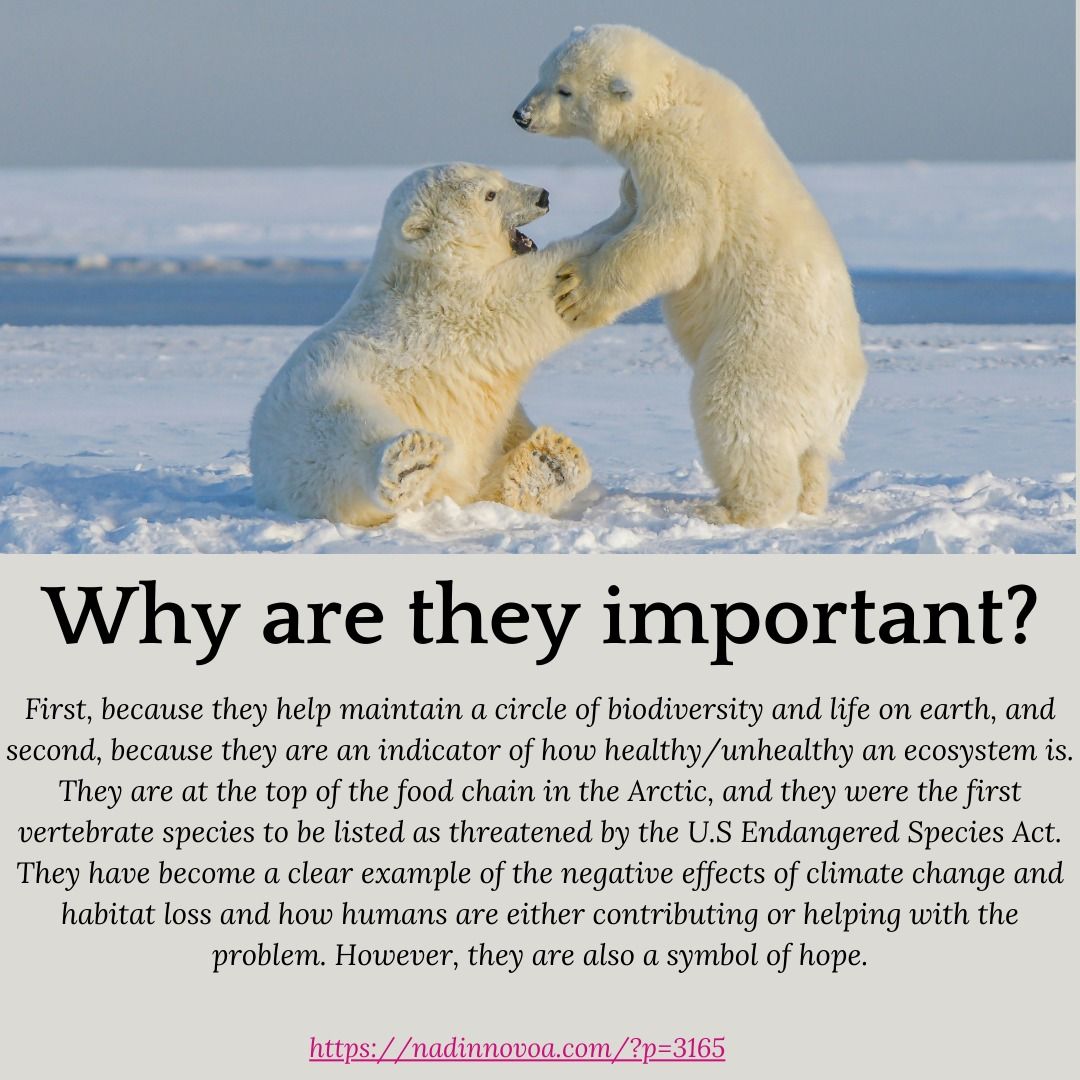
Why are polar bears endangered?
Polar bear endangerment is official but often overstated. The species (Ursus maritimus) is classified as Vulnerable with a decreasing trend by the IUCN Red List, not formally Endangered. The global population is 22,000 to 31,000. The primary threat is sea ice loss, which has reduced Arctic September extent by roughly 40 percent since 1979. Peer-reviewed projections from USGS and Nature find that two-thirds of the global population could be lost by 2050 under unabated emissions, while aggressive mitigation preserves most of the range.
The Status, Stated Plainly
The polar bear is not the species on the brink that some headlines suggest. It is also not a species that is thriving. It sits in a middle category that conservation biologists find uncomfortable to explain in a single sentence, because the correct sentence is long.
The IUCN Red List places Ursus maritimus in the Vulnerable category with a decreasing population trend. That classification has stood since the 2015 reassessment and was retained in the 2024 review by the IUCN Polar Bear Specialist Group.
Vulnerable, under IUCN criteria A3c and A4c, requires a projected population reduction of 30 percent or more over three generations (approximately 35 to 41 years for polar bears) based on a decline in habitat quality or area. The data cleared that bar. It did not clear the 50 percent bar required for Endangered.
The United States Endangered Species Act listed the polar bear as Threatened in May 2008, the first species listed primarily because of projected climate change impacts. Canada lists the species as a Species of Special Concern under SARA. Russia prohibits polar bear hunting entirely. Greenland and Norway maintain regulated subsistence or quota systems.
Read the full profile of the species at polar bear for a complete background. This article focuses specifically on why the status exists and what the next three decades look like.
How Many Polar Bears Are Left
The current global estimate is 22,000 to 31,000 polar bears, with a central point near 26,000. That figure comes from the IUCN Polar Bear Specialist Group's 2021 synthesis, reaffirmed in the 2024 status update. It is a sum across 19 recognized subpopulations spread between the five range states: Canada, the United States (Alaska), Denmark (Greenland), Norway (Svalbard), and Russia.
The number sounds stable on its own. Monitoring began in earnest in the 1980s, and early global estimates were in a similar range. That resemblance, however, hides severe regional redistribution and the fact that only 14 of 19 subpopulations have enough monitoring data to assign a trend at all. Five are simply data-deficient.
For a geographic breakdown of where the bears actually are, see polar bear populations: where they live.
Subpopulation Trends by Region
| Subpopulation | Latest estimate | Trend | Primary pressure |
|---|---|---|---|
| Western Hudson Bay (Canada) | 1,185 (2021) | Declining (~27% since 2011) | Ice-free season lengthening |
| Southern Hudson Bay (Canada) | 780 (2021) | Declining | Ice breakup 3+ weeks earlier than 1980s |
| Southern Beaufort Sea (US/Canada) | ~900 (2015) | Declining (~40% since 2001) | Ice retreat far from continental shelf |
| Chukchi Sea (US/Russia) | ~2,937 (2016) | Stable | Productive shelf still supports prey |
| Barents Sea (Norway/Russia) | ~3,000 (2015) | Data-deficient, body condition declining | Rapid Svalbard warming |
| Baffin Bay (Canada/Greenland) | ~2,826 (2013) | Declining | Spring ice loss, reduced denning |
| M'Clintock Channel (Canada) | ~716 (2016) | Increasing (recovery from overharvest) | Quota reduction effective |
| Davis Strait (Canada/Greenland) | ~2,015 (2018) | Stable-declining | Warming trend |
| Kara Sea (Russia) | Unknown | Data-deficient | Industrial expansion |
| Laptev Sea (Russia) | Unknown | Data-deficient | Shipping lane expansion |
The pattern visible in this table is the pattern that matters. The declines are concentrated in the southern parts of the range, where summer ice disappears entirely, while the high Arctic subpopulations remain stable or, in cases like M'Clintock Channel where overharvest was the earlier problem, recovering.
The Core Problem: Sea Ice
Polar bears are not endangered because humans hunt them. Subsistence harvest in Canada, Alaska, and Greenland is regulated and, in most subpopulations, sustainable. Polar bears are not endangered because of disease. They are not endangered because of a prey crash independent of climate.
They are endangered because the ice is melting.
A polar bear is a marine mammal that hunts from a platform. The platform is sea ice. Without ice, the bear cannot reach ringed seals, which it kills by ambush at breathing holes. The seal-hunting question is covered in full at what do polar bears eat, and swimming limitations are covered at polar bears: swimming marine mammal.
Arctic Sea Ice Loss, By the Numbers
- 1979 September baseline extent: ~7.0 million km^2
- 2023 September extent: 4.23 million km^2 (record-tied low)
- Total decline since satellite records began: approximately 40 percent
- Linear trend: ~13 percent per decade decline in September minimum
- Ice volume loss: closer to 70 percent, because ice is thinner as well as less extensive
- First ice-free Arctic summer projection: 2035 to 2050 depending on model
The difference between extent (area covered) and volume (three-dimensional mass of ice) matters for polar bears. Extent governs where a bear can walk. Volume governs how long the ice stays in spring and how early it forms in fall. Volume is declining faster than extent. A bear's hunting window is shrinking on both ends.
The Western Hudson Bay Signal
Western Hudson Bay is the most-studied polar bear subpopulation on Earth. Bears there are accessible from Churchill, Manitoba, which is why the research record is unusually deep. The bay itself is subarctic and freezes completely in winter but melts completely in summer, forcing every bear onshore for the ice-free season. That makes Hudson Bay an early-warning system for what an ice-free Arctic summer looks like for a polar bear.
Ice breakup in Western Hudson Bay now occurs roughly three weeks earlier than it did in the early 1980s. Ice formation in fall has delayed by a similar margin. The ice-free season is lengthening by approximately one day per year. Each additional ice-free day costs a bear about 1 kg of body mass on average, because the bear is fasting onshore rather than hunting on ice.
"What we are watching in Western Hudson Bay is not a prediction anymore. It is the demographic consequence of three extra weeks of summer. Cubs that should be born at 30 kilograms are born at 20. Females that should be entering the den in good condition are entering lean. That cascade is visible in every body-condition index we track." - Steven Amstrup, Chief Scientist, Polar Bears International
The Western Hudson Bay count fell from approximately 1,200 bears in the 2004 aerial survey to 1,030 in 2011 to 842 in 2016 in some aerial surveys, before revised methodology placed the 2021 estimate at 1,185 bears. The revised methodology does not erase the decline. Across comparable techniques, the subpopulation has lost roughly a quarter of its bears since the early 2000s, and body condition has dropped in both sexes and all age classes.
The Nutritional Stress Cascade
The mechanism by which sea ice loss produces population decline is not direct heat stress. Polar bears, as detailed in their biology profile at polar bear, tolerate -40 C without difficulty and overheat only above about 10 C. Warm summers are uncomfortable; they are not the killer. The killer is nutrition.
The cascade works in four steps:
- Less ice means less hunting time. A bear's peak seal consumption happens in spring, when ringed seal pups are concentrated in lairs on the ice. A shorter spring hunt means fewer seals eaten.
- Less hunting means poorer body condition. Bears enter the fasting season with thinner fat layers. Adult males can tolerate long fasts; pregnant females cannot.
- Poorer condition means fewer cubs. A female below approximately 189 kg at denning will generally not reproduce. Litter size drops from the standard two cubs toward one. Triplets, once common in some subpopulations, are now rare.
- Fewer cubs and poorer maternal milk means lower cub survival. First-year cub mortality, which runs 40 to 60 percent in healthy subpopulations, climbs toward 70 percent in bad ice years.
The reproductive consequences are covered in depth at polar bear cubs: denning and survival. The arithmetic of the cascade is unforgiving. A population does not need bears to die en masse to decline. It just needs each generation to be smaller than the last.
"Polar bears are not starving in the way people imagine, with bears visibly emaciated on every ice floe. They are starving in the demographic sense, which is slower and harder to photograph. Females arrive at the den a few kilograms light. They produce one cub instead of two. The cub weans early. Recruitment falls. Over a decade, that is a collapsing subpopulation." - Andrew Derocher, University of Alberta, Biological Conservation (2019)
Why Bears Cannot Simply Switch Prey
A recurring question is whether polar bears can shift to land-based food: berries, eggs, geese, reindeer, garbage. The answer from the nutritional ecology literature is that they can forage on such foods, they do so routinely onshore, and the calories are insufficient. A polar bear requires roughly 12,000 to 16,000 kcal per day.
A ringed seal yields approximately 150,000 kcal; a bearded seal yields 400,000 kcal or more. A snow goose yields perhaps 3,000 kcal. A bear would have to catch dozens of geese per day and expend significant energy to do so, and goose populations themselves would collapse under that pressure. The fundamental energetic fact is that no terrestrial Arctic food source replaces seal blubber.
The Amstrup Projections
The most frequently cited polar bear extinction projections come from two papers by a USGS-led team around Steven Amstrup. The 2008 USGS administrative report (Amstrup, Marcot, Douglas) constructed a Bayesian network linking sea ice projections to polar bear carrying capacity. The 2010 Nature paper (Amstrup, DeWeaver, Douglas, Marcot, Durner, Bitz, Bailey) extended the work by testing whether mitigation scenarios could avoid the loss.
The headline result from 2008 was that under a business-as-usual emissions trajectory, approximately two-thirds of the global polar bear population would be lost by mid-century, with the loss concentrated in the southern and divergent ice ecoregions (Hudson Bay, southern Beaufort, Baffin Bay). The high-Arctic archipelago and Last Ice Area subpopulations would persist but at reduced numbers.
The 2010 follow-up asked whether that trajectory was locked in. The answer was no: aggressive greenhouse gas reductions that kept global mean warming near the Paris Agreement target preserved enough sea ice habitat to retain most of the range, though with continued losses in the most-exposed subpopulations.
Projected Population Under Emission Scenarios (Amstrup et al. 2010, updated)
| Scenario | Rough CO2 trajectory | Global polar bear outcome by 2050 | Outcome by 2100 |
|---|---|---|---|
| RCP 8.5 (business as usual) | ~940 ppm by 2100 | ~two-thirds reduction; southern subpops extirpated | Near-total loss outside Last Ice Area |
| RCP 6.0 (moderate) | ~670 ppm by 2100 | ~50% reduction; Hudson Bay lost | Significant further decline |
| RCP 4.5 (stabilization) | ~540 ppm by 2100 | ~30% reduction; some southern loss | Partial recovery possible after mid-century |
| RCP 2.6 (Paris-aligned, 1.5-2 C) | Net-zero by ~2070 | Minor global decline; most range preserved | Stabilization at reduced but viable numbers |
"The polar bear's fate is not sealed. Our 2010 analysis showed that a path consistent with holding warming near 2 degrees preserves enough sea ice habitat for the species to persist in most of its current range. That path requires action, not hope. The choice is still ours in a way that is rarely true in conservation biology." - Amstrup, DeWeaver, Douglas et al., Nature (2010)
Secondary Threats
Sea ice loss is the first-order driver. Several additional pressures interact with it and would matter even in a stable-climate scenario.
Persistent Organic Pollutants
Polar bears are apex predators of a fat-rich marine food web. Lipid-soluble pollutants, including PCBs, PBDEs, and legacy organochlorines like DDT metabolites, biomagnify up through plankton, fish, seals, and finally bears. Blubber concentrations in East Greenland and Svalbard polar bears are among the highest ever measured in any wild mammal. Per- and polyfluorinated substances (PFAS) have recently been documented in Arctic bears as well.
The effects are sublethal but significant: immune suppression, thyroid disruption, reproductive hormone alteration, and altered bone density in cubs. A nutritionally stressed bear that also carries a high pollutant burden reproduces less successfully than the same bear with either pressure alone.
Oil, Gas, and Shipping
The southern Beaufort Sea and Chukchi Sea overlap with U.S. and Russian offshore hydrocarbon interest. Industrial development brings habitat disturbance, noise, potential spill exposure, and den disturbance. Russian Arctic shipping has expanded rapidly since 2015 along the Northern Sea Route as ice recedes, introducing ship strikes and chronic disturbance in previously quiet subpopulations.
Human-Bear Conflict
As bears spend longer onshore waiting for ice to re-form, encounters with Arctic communities increase. Churchill, Manitoba has maintained a "polar bear jail" since 1982 and handles 50 to 100 conflict bears per year. Villages in Nunavut, Greenland, and Chukotka report rising bear visits to dumps and cabins. Most conflicts end with the bear chased off.
Some end with the bear shot, legally or otherwise. In 2019, a Russian settlement on Novaya Zemlya declared emergency after dozens of bears entered the town.
"Human-bear conflict is where climate change arrives on somebody's doorstep. A hungry bear at a fish-drying rack in Arviat or at a trash bin in Kaktovik is the same biophysical signal as a retreating ice edge, just read from a different end." - Kristin Laidre, University of Washington, Polar Science Center
Denning Disruption
Female polar bears dig maternity dens in snowdrifts in fall and emerge with cubs in late March or early April. Warmer falls mean less stable snow for denning. Unseasonal winter rain, now documented in Hudson Bay and Svalbard, can collapse dens or soak cubs to lethal hypothermia. Some subpopulations that historically denned on pack ice, such as the southern Beaufort bears, have shifted to land denning as ice retreats, but terrestrial dens are more exposed to disturbance.
The Hope Angles
The polar bear story is serious without being hopeless. Three elements of the current data support that distinction.
The Chukchi Sea subpopulation remains stable. Despite occupying a rapidly warming region, Chukchi bears benefit from an unusually productive continental shelf ecosystem that supports high seal densities. Bears there show good body condition and normal reproductive rates. The Chukchi case establishes that polar bears can tolerate substantial ice loss where the underlying marine productivity is strong.
The Paris Agreement scenarios work. The Amstrup 2010 analysis was specific: aggressive mitigation is not a marginal improvement. It changes the outcome category from "majority lost" to "majority preserved." The species does not face a biological death sentence; it faces a habitat contraction that is still a function of human energy choices.
The Last Ice Area will persist longest. The region north of Greenland and Ellesmere Island retains multi-year ice in almost all climate models well into the second half of the 21st century. That area is likely to function as a climate refugium where a reduced polar bear population persists even under moderate-emissions pathways.
"Subpopulation heterogeneity is the most underreported finding in polar bear science. Bears in the Chukchi Sea are doing fine right now. Bears in Western Hudson Bay are not. The global number is the average of a growth curve and a collapse curve. Conservation policy needs to treat these as separate problems." - IUCN Polar Bear Specialist Group, 2021 Status Report
What This Means for Listings and Policy
The gap between the IUCN Vulnerable classification and the popular impression that polar bears are Endangered in the ordinary sense of the word is itself a useful policy signal. It tells us that the data does not yet show catastrophic collapse, and that the catastrophic scenarios are contingent on emission pathway choices that remain open.
The U.S. Endangered Species Act listing as Threatened triggered a legal pathway for considering climate impacts in federal decision-making. That listing has survived multiple legal challenges. The ESA framework does not directly regulate greenhouse gas emissions, but it does require federal agencies to consult on actions affecting polar bear habitat, which includes oil and gas permitting on Arctic waters.
Canada's management is structured around co-management boards with Indigenous communities, particularly Inuit organizations, who retain subsistence harvest rights and who possess long-term observational knowledge of bears that scientific monitoring only partly captures.
The broader context of endangered and extinct species is covered in the site's sections on endangered wildlife and recently extinct species. The polar bear sits within a larger pattern of Arctic biodiversity under habitat stress, but its case is unusual because the mechanism of decline is unusually well-understood, unusually well-modeled, and unusually responsive to a single intervention (emissions reduction) that is within human control.
Brown bears, covered at brown bear, offer a useful comparison: they share much of the polar bear's recent evolutionary history (genetic evidence shows repeated introgression between the two lineages), but their terrestrial habitat is far more flexible. The polar bear's specialization is the source of both its magnificence and its vulnerability.
The Next Decade
Several milestones will shape the polar bear story between now and 2035:
- First ice-free Arctic summer. Models now converge on a plausible range of 2035 to 2050 for the first September with less than 1 million km^2 of ice. That event, when it happens, will mark the loss of summer hunting habitat across much of the range.
- Western Hudson Bay tipping point. The subpopulation is on a trajectory that may cross a reproductive failure threshold within the next 15 to 20 years under current ice conditions. Either the trend bends, or the subpopulation functionally disappears.
- Chukchi Sea inflection. If Chukchi bears begin showing the body-condition declines now visible in Hudson Bay and the Barents Sea, the "productive shelf" buffer will have been exhausted, and the whole range will be on the Hudson Bay trajectory.
- Paris Agreement implementation. Whether global emissions actually bend downward in the 2025 to 2035 window determines which column of the projection table applies.
A polar bear alive today is walking in a habitat that has already lost 40 percent of its summer area since that bear's great-grandmother was a cub. What happens to her great-granddaughter depends on decisions being made in capitals far from the Arctic coast.
For more on the species' biology and resilience, see polar bear and how long do polar bears live.
References
- Wiig, O., Amstrup, S., Atwood, T., Laidre, K., Lunn, N., Obbard, M., Regehr, E., Thiemann, G. (2015). Ursus maritimus. The IUCN Red List of Threatened Species 2015: e.T22823A14871490. https://doi.org/10.2305/IUCN.UK.2015-4.RLTS.T22823A14871490.en
- Amstrup, S. C., Marcot, B. G., Douglas, D. C. (2008). A Bayesian network modeling approach to forecasting the 21st century worldwide status of polar bears. Geophysical Monograph Series, 180, 213-268. https://doi.org/10.1029/180GM14
- Amstrup, S. C., DeWeaver, E. T., Douglas, D. C., Marcot, B. G., Durner, G. M., Bitz, C. M., Bailey, D. A. (2010). Greenhouse gas mitigation can reduce sea-ice loss and increase polar bear persistence. Nature, 468, 955-958. https://doi.org/10.1038/nature09653
- Stern, H. L., Laidre, K. L. (2016). Sea-ice indicators of polar bear habitat. The Cryosphere, 10(5), 2027-2041. https://doi.org/10.5194/tc-10-2027-2016
- Molnar, P. K., Bitz, C. M., Holland, M. M., Kay, J. E., Penk, S. R., Amstrup, S. C. (2020). Fasting season length sets temporal limits for global polar bear persistence. Nature Climate Change, 10, 732-738. https://doi.org/10.1038/s41558-020-0818-9
- Derocher, A. E., Lunn, N. J., Stirling, I. (2004). Polar bears in a warming climate. Integrative and Comparative Biology, 44(2), 163-176. https://doi.org/10.1093/icb/44.2.163
- Regehr, E. V., Laidre, K. L., Akcakaya, H. R., Amstrup, S. C., Atwood, T. C., Lunn, N. J., Obbard, M., Stern, H., Thiemann, G. W., Wiig, O. (2016). Conservation status of polar bears (Ursus maritimus) in relation to projected sea-ice declines. Biology Letters, 12(12), 20160556. https://doi.org/10.1098/rsbl.2016.0556
- Atwood, T. C., Marcot, B. G., Douglas, D. C., Amstrup, S. C., Rode, K. D., Durner, G. M., Bromaghin, J. F. (2016). Forecasting the relative influence of environmental and anthropogenic stressors on polar bears. Ecosphere, 7(6), e01370. https://doi.org/10.1002/ecs2.1370
Further Reading
Human-authored coverage of animal biology, cognition, and extinction risk across the site:
- Polar bear: the Arctic's apex predator
- What do polar bears eat
- Polar bear populations: where they live
- Polar bear cubs: denning and survival
- How long do polar bears live
- Polar bears: swimming marine mammal
- Brown bear
- Endangered species overview
- Recently extinct species
External tools and projects from the publisher network:
- Evidence-based cognitive tools at whats-your-iq.com
- Music education platform at whennotesfly.com
- Writing and grammar resources at evolang.info
Frequently Asked Questions
Are polar bears actually endangered or just vulnerable?
Polar bears (Ursus maritimus) are classified as Vulnerable with a decreasing population trend on the IUCN Red List, not Endangered in the strict technical sense. The 2015 reassessment, which still stands in the 2024 review, estimated a greater than 30 percent probability of a population reduction of at least 30 percent over three generations (roughly 35 to 41 years).
That threshold meets the Vulnerable criterion (A3c) but falls short of Endangered (A3c requires a 50 percent reduction probability). The United States lists the polar bear as Threatened under the Endangered Species Act, which it has done since 2008. Canada lists the species as a Species of Special Concern.
The practical meaning across all three frameworks is the same: the polar bear is not disappearing today, but the trajectory of Arctic sea ice loss points toward substantial population decline within the lifetimes of children alive now. The Vulnerable label is a scientific statement about probability, not a statement that the situation is mild.
How many polar bears are left in the world?
The IUCN Polar Bear Specialist Group (PBSG) estimates 22,000 to 31,000 polar bears globally as of the 2021 and 2024 assessments, with a central estimate near 26,000. This number is a sum across 19 recognized subpopulations spread between Alaska, Canada, Greenland, Svalbard, and Russia. Trend data is only available for 14 of the 19 subpopulations.
Of those, four are classified as likely declining (Western Hudson Bay, Southern Hudson Bay, Southern Beaufort Sea, Kane Basin), two as likely increasing (M’Clintock Channel, Kane Basin in some revised analyses), and eight as stable or data-deficient. The number has not collapsed since monitoring began in the 1980s, but two regional subpopulations (Western Hudson Bay and Southern Beaufort) have each lost between 25 and 40 percent of their bears since 2001.
The global total masks severe regional losses, because the declining subpopulations are in the southern part of the range where ice loss is fastest.
Will polar bears actually go extinct by 2050?
Full extinction by 2050 is not what peer-reviewed projections show. The Amstrup et al. 2008 USGS study and its 2010 update (Amstrup, DeWeaver, Douglas, et al., Nature) projected loss of approximately two-thirds of the global polar bear population by mid-century under a business-as-usual emissions trajectory, not complete extinction.
Under that scenario, bears would disappear from the southern parts of their range (Hudson Bay, southern Beaufort, parts of Baffin Bay) while persisting at reduced numbers in the high Arctic where summer sea ice remains longest, a region sometimes called the Last Ice Area north of Greenland and the Canadian Arctic Archipelago.
The 2010 update explicitly found that aggressive emissions reductions consistent with the Paris Agreement’s 1.5 to 2 degree targets could avoid the tipping point and preserve sea ice habitat through the century. Polar bear persistence is therefore contingent, not predetermined. The species does not face a biological ceiling; it faces a habitat ceiling set by human energy choices.