
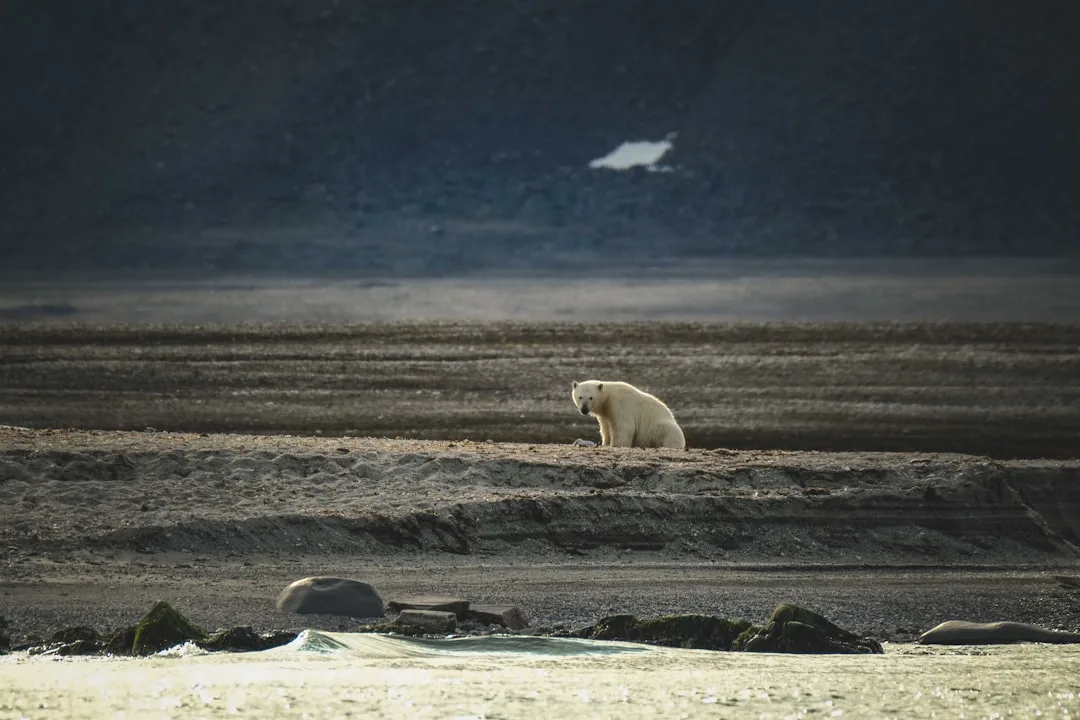
The polar bear is the only bear species classified by scientists as a marine mammal. Unlike grizzlies or pandas, Ursus maritimus spends most of its life on drifting sea ice, hunts almost exclusively in or beside the sea, and depends on marine prey for more than ninety per cent of its diet. The polar bear is the largest land carnivore on Earth today, the heaviest member of the bear family, and one of the few large predators that actively treats humans as prey under the right circumstances.
This guide covers every aspect of polar bear biology and ecology: size and strength, adaptations to cold, hunting behaviour, diet, reproduction, social life, conservation status, and the relationship between polar bears and the humans who share the Arctic. It is a reference entry, not a summary - so expect specifics: kilograms, kilometres, temperatures, populations, and verified records.
Etymology and Classification
The scientific name Ursus maritimus was coined by Constantine Phipps in 1774 after his voyage toward the North Pole. It literally means 'maritime bear' and reflects how surprised early European explorers were to find such a large mammal living on sea ice rather than on land. In Inuktitut the polar bear is called nanuq, a word carrying deep cultural weight across Inuit communities. Russian and Scandinavian languages use variants of isbjorn or belyy medved meaning 'white bear'.
Genetic analysis places polar bears firmly inside the brown bear family tree. The two species diverged relatively recently - current molecular evidence suggests between 150,000 and 500,000 years ago, with some estimates pushing the date as recent as 70,000 years. This makes the polar bear one of the youngest large mammal species on Earth, evolutionarily speaking.
The divergence appears to have occurred multiple times, with ancient gene flow between the two lineages complicating any simple family tree.
Modern polar bears retain enough genetic similarity to brown bears that hybrids - known as pizzly or grolar bears - are fully fertile and have been documented in the wild since at least 2006.
Size and Physical Description
Polar bears are the largest land carnivores alive today. Size differences between males and females are extreme, a pattern biologists call sexual dimorphism.
Males:
- Length: 2.4-3.0 metres from nose to tail
- Shoulder height: 1.3-1.6 metres on all fours
- Standing height: up to 3 metres on hind legs
- Weight: typically 350-680 kg, record 1,002 kg
Females:
- Length: 1.8-2.4 metres
- Weight: typically 150-300 kg, rising to 400 kg when heavily pregnant
- Generally half the mass of a comparable male
Cubs at birth:
- Length: roughly 30 cm
- Weight: 500-700 grams - about the size of a guinea pig
Polar bears are built for long-distance travel on ice and in water. Their bodies are more elongated than brown bears, with longer necks and narrower heads. The skull is smaller in proportion to body size than that of any other bear, which reduces wind resistance while swimming and running. Their feet are enormous - up to 30 centimetres across - spreading weight across thin ice and functioning as paddles during swims. Small papillae (bumps) and fur between the toes provide traction on ice.
Their famous white coat is one of the most frequently misunderstood features in biology. Each hair is not pigmented white. Each hair is a hollow transparent tube. Visible light scatters off the inner walls of the shaft and bounces out in every direction, producing a diffuse white or cream appearance. The skin beneath is jet black.
In ultraviolet photographs polar bears appear almost black, because the fur transmits UV rather than reflecting it. Under humid, dirty, or captive conditions the coat can take on yellow, green, or even pinkish tints when algae grow inside the hollow hair shafts.
Built for Extreme Cold
Polar bears are adapted to routine temperatures of minus forty degrees Celsius and wind chills colder than that. Every major feature of their biology serves one of two goals: keep heat in, or find enough food to generate heat.
Insulation layers:
- Outer guard hairs: 5-15 cm long, hollow, water-shedding
- Dense underfur: traps a still layer of warm air against the skin
- Subcutaneous fat: 5-10 cm thick in healthy adults, sometimes more
Thermal regulation features:
- Small ears and short tail: minimise surface area for heat loss
- Compact body shape: favourable volume-to-surface ratio
- Counter-current blood flow in the legs: cools blood before it reaches the paws
The bears' insulation is so effective that they routinely overheat during physical exertion above minus ten degrees Celsius. Running for more than a few hundred metres can push a healthy adult into heat stress. This is why polar bears hunt primarily through ambush and patience rather than chase. Above roughly ten degrees Celsius even at rest they begin to show heat stress, which is a growing problem as Arctic summers warm.
Their paws contain a specialised blood network that allows the pads to remain just above freezing - cold enough to conserve core heat but warm enough to prevent tissue damage. The same network allows the feet to be cooled to the ambient ice temperature when needed, which stops the bear from sinking into the snow by melting it.
Hunting and Diet
Polar bears are hypercarnivores. Their diet is not just meat-dominated: it is essentially pure marine mammal fat, augmented by small amounts of muscle protein. Seal blubber is roughly eighty per cent fat by weight, and a polar bear needs two kilograms of fat per day to maintain body condition. This translates to killing and fully consuming one adult ringed seal every four to five days, on average, or about fifty to seventy-five seals per year for a typical adult.
Primary prey:
- Ringed seal (Pusa hispida) - most common
- Bearded seal (Erignathus barbatus) - larger, more energetic payoff
- Harp seal and hooded seal - seasonal, regionally important
Secondary and opportunistic prey:
- Walrus (usually juveniles or carcasses)
- Beluga whale (usually trapped in ice or stranded)
- Narwhal (rare, usually scavenged)
- Seabirds, eggs, small mammals
- Reindeer in parts of Svalbard
- Whale carcasses when they drift ashore
Hunting techniques:
- Still-hunting at breathing holes. A polar bear locates a seal's breathing hole by scent, sits motionless beside it for up to several hours, and strikes the instant a seal surfaces. This is the dominant hunting method, responsible for more than half of all successful kills.
- Stalking on ice. The bear crawls across the ice on its belly, using ice ridges for cover, then explodes into a short sprint at the end. Success depends on the seal not seeing movement.
- Aquatic stalking. In open water, the bear dives and swims slowly beneath a hauled-out seal, surfacing beneath it.
- Lair raids. Mothers with cubs target newborn ringed seal pups that are hidden in snow lairs above the ice. The bear uses scent to locate the lair, then crashes through the roof with its paws.
Success rates are low. Studies in Canada report successful kill rates between two and twenty per cent depending on method, season, and ice conditions. The bears compensate by hunting almost continuously during good ice seasons and building up fat reserves that allow them to fast for months during poor ones.
Life Cycle and Reproduction
Polar bear reproduction runs on a strict seasonal schedule keyed to Arctic ice cycles. Mating takes place in April and May on the sea ice. Males roam enormous distances searching for females in oestrus, guided almost entirely by scent trails. Fights between rival males are common and often brutal - broken canine teeth and facial scars are near-universal in older males.
Once mated, females enter a form of reproductive pause called delayed implantation. The fertilised egg floats in the uterus without developing, in some cases for more than four months. Implantation - and pregnancy proper - only begins if the female has enough fat reserves to support gestation and nursing. If not, her body reabsorbs the embryo. This is one of the strongest signals of how climate-dependent polar bear reproduction is: a bad summer hunt means no cubs the following year.
Denning cycle:
- Late October to early November: pregnant female digs a snow den
- Mid-November to late December: implantation, gestation completes, birth
- December to late March: female and cubs remain in the den
- Late March to early April: family emerges, first walk to sea ice
Cubs are born blind, toothless, and almost furless. They weigh roughly five hundred to seven hundred grams. They nurse from a mother whose milk is thirty per cent fat - among the richest of any mammal. By the time they emerge from the den in spring, cubs weigh ten to fifteen kilograms. The mother, meanwhile, has lost up to forty-three per cent of her body mass and has not eaten for four to eight months.
Cubs stay with their mother for about two and a half years, learning hunting techniques, ice navigation, and the social geography of the local population. Survival to independence is brutal: studies estimate forty to sixty per cent cub mortality in the first year. Major causes include starvation, predation by adult males, hypothermia, and falling through thin ice.
Females typically produce one litter every two to four years. Most litters contain two cubs; singletons are common in lean years; triplets occur but rarely survive to independence.
Movement, Range, and Swimming
Polar bears travel extraordinary distances. Individual home ranges vary from a few thousand to over three hundred thousand square kilometres depending on ice conditions, prey density, and population. Most of this movement is passive: bears ride drifting ice floes, letting currents carry them long distances, then correcting by swimming or walking when needed.
Travel data:
| Metric | Value |
|---|---|
| Typical daily walking range | 10-40 km |
| Swim speed | 6-10 km/h |
| Longest recorded swim | 687 km (continuous, 9 days) |
| Longest recorded dive | 3 minutes 10 seconds |
| Annual home range (median) | 125,000 km^2 |
The 687-kilometre continuous swim, documented in 2011 off Alaska, was recorded on a tagged female who also lost twenty-two per cent of her body mass and her yearling cub during the journey. Long-distance swimming is becoming more common as sea ice recedes further from coastlines, and research indicates that these swims are energetically expensive enough to reduce body condition and reproductive output.
Polar bears can hold their breath for up to three minutes and dive to approximately five metres, though most dives are shorter and shallower. They swim with the front paws paddling and the hind legs trailing as rudders. Their fur traps enough air to provide buoyancy, and a thick layer of subcutaneous fat provides further insulation and flotation.
Populations and Subpopulations
Scientists divide the global polar bear population into nineteen recognised subpopulations distributed across the circumpolar Arctic. These subpopulations interbreed only at their margins and exhibit measurable genetic and behavioural differences.
Geographic distribution by country:
| Country | Approximate share | Key subpopulations |
|---|---|---|
| Canada | ~60% | Western Hudson Bay, Foxe Basin, Lancaster Sound |
| Russia | ~15% | Kara Sea, Laptev Sea, Chukchi Sea |
| United States | ~10% | Chukchi Sea, Southern Beaufort Sea |
| Greenland | ~10% | East Greenland, Baffin Bay |
| Norway | ~5% | Barents Sea (Svalbard) |
Subpopulation trends vary. Foxe Basin and Kane Basin appear stable or slightly increasing. Western Hudson Bay, Southern Beaufort Sea, and Baffin Bay are in measurable decline. Several subpopulations in the Russian Arctic have insufficient monitoring to assess trends. Total global population is estimated at 22,000 to 31,000 individuals as of the most recent assessments.
Conservation Status and Threats
The IUCN Red List classifies polar bears as Vulnerable with a decreasing population trend. The species is listed on CITES Appendix II, which regulates international trade, and protected under the 1973 Agreement on the Conservation of Polar Bears signed by the five range states.
Primary threats:
- Sea ice loss. Arctic summer sea ice has declined roughly thirteen per cent per decade since 1979. Reduced ice means less time hunting seals, longer forced fasts, lower body condition, lower reproductive output, and higher cub mortality. Current projections suggest that thirty to seventy per cent of the global polar bear population could be lost by 2050 under continued warming.
- Pollution. Polar bears sit at the top of a marine food chain that concentrates persistent organic pollutants - PCBs, PFAS, mercury, and flame retardants - in fatty tissue. Cubs receive a toxic load through milk. These compounds affect immune function, hormone balance, and reproduction.
- Oil and gas development. Spills in Arctic seas are difficult to contain and cleanup under ice. Chronic noise and infrastructure disturbance can displace bears from key feeding or denning areas.
- Shipping. Reduced ice has opened new shipping routes through polar bear habitat, bringing collision risk, noise, and new pollution sources.
- Human-bear conflict. Bears drawn into settlements by hunger are increasingly killed in defence-of-life-and-property incidents. Communities in Churchill, Hammerfest, and parts of Nunavut run active bear patrols.
- Hybridisation. Warming drives grizzly bears northward into polar bear habitat. Hybridisation is genetically interesting but may dilute polar bear-specific adaptations over generations.
Several conservation measures exist but none address the primary driver. Hunting is regulated by quotas under national laws and Indigenous co-management agreements. Protected areas cover a meaningful fraction of denning habitat. Captive breeding has produced animals for display but has no realistic role in species recovery.
The long-term outlook for polar bears depends almost entirely on Arctic sea ice trajectory. Sea ice depends on atmospheric carbon dioxide. No local conservation measure can compensate for global greenhouse gas emissions.
Polar Bears and Humans
Polar bears have been central to Inuit culture for thousands of years. Traditional hunters respected the bear as a spiritual equal, and many subsistence rules reflected genuine ecological knowledge centuries before western science caught up. Modern Inuit communities retain hunting rights under national and international agreements, with quotas set collaboratively between governments and local hunters' organisations.
Among non-Indigenous people, the polar bear's reputation is mixed. Early Arctic explorers feared the species, not without reason. Polar bears are the only bear species that routinely treats humans as prey. Documented attacks are rare - 73 recorded between 1870 and 2014, with 20 fatalities - but they cluster around hungry summer bears forced onto land.
Protocols at Arctic field stations and communities include firearm training, rubber slugs, flares, bear fences, and strict rules about food storage.
Polar bear tourism generates meaningful income for communities like Churchill, Manitoba, where purpose-built vehicles carry visitors to observe bears gathering during the autumn ice freeze-up. Done well, tourism provides economic incentives for conservation. Done badly, it habituates bears to human presence with dangerous consequences.
Related Reading
- Polar Bear: The Arctic's Apex Predator in a Warming World
- How Bears Hibernate
- Bears of the World: Power, Intelligence, and Survival
- Grizzly Bear: North American Predator
References
Relevant peer-reviewed and governmental sources consulted for this entry include IUCN Polar Bear Specialist Group status reports (2023, 2024), the U.S. Fish and Wildlife Service Recovery Plan, the Canadian Wildlife Service population surveys, and published research in Ecological Applications, Journal of Mammalogy, and Science. Specific population figures reflect the most recent consolidated estimates as of the 2024 Polar Bear Range States meeting.
Frequently Asked Questions
How big are polar bears?
Adult male polar bears (Ursus maritimus) weigh 350-680 kg and stretch 2.4-3 m from nose to tail. Standing upright on their hind legs they can reach 3 m tall. Females are roughly half the size at 150-300 kg. The heaviest verified polar bear weighed 1,002 kg, making the species the largest land carnivore currently alive. Shoulder height on all fours is 1.2-1.6 m.
Cubs weigh just 500-700 grams at birth - smaller than a loaf of bread - and emerge from the den weighing 10-12 kg.
What do polar bears eat?
Polar bears are hypercarnivores specialised for hunting seals on sea ice. Ringed seals and bearded seals make up more than 90% of their diet. A mature polar bear consumes roughly 2 kg of pure fat per day to maintain body mass and will kill 50-75 seals per year. Favoured hunting methods include still-hunting beside seal breathing holes, stalking hauled-out seals, and ambushing newborn pups in snow lairs.
When sea ice is unavailable, polar bears opportunistically eat walruses, beluga carcasses, seabirds, eggs, fish, berries, and even garbage. These alternative foods cannot sustain the species long term.
Where do polar bears live?
Polar bears inhabit the circumpolar Arctic across five nations: Canada (which holds ~60% of the global population), Greenland, Norway (Svalbard), Russia, and the United States (Alaska). Nineteen distinct subpopulations have been identified, distributed across sea ice, coastal islands, and fjord systems. They prefer areas where sea ice meets shallow continental shelf waters rich in seals.
During summer ice retreat many bears come ashore and fast until freeze-up returns. The species does not live at the North Pole year-round because the central Arctic basin has too few seals.
Are polar bears endangered?
The IUCN lists polar bears as Vulnerable with a decreasing population trend. Current estimates put the global population at 22,000-31,000 individuals. Sea ice loss driven by climate change is the primary threat - Arctic sea ice now covers roughly 40% less area than it did in 1979. Without sufficient ice, bears cannot hunt enough seals to store the fat they need to survive summer and support reproduction.
Some subpopulations (Western Hudson Bay, Southern Beaufort Sea) are in measurable decline. Secondary threats include pollution (persistent organic chemicals concentrate in blubber), oil spills, shipping disturbance, and conflict with humans in settlements.
How long do polar bears live?
Wild polar bears typically live 25-30 years. Few exceed 25. The oldest documented wild polar bear was 32 years old. Captive bears have reached 40+ years in zoo care thanks to consistent food and veterinary support, but captive lifespans don’t reflect wild ecology. Cub mortality is extremely high - roughly 40-60% of cubs die before their first birthday, mainly due to starvation, predation by adult males, and cold stress during denning.
Females typically reproduce from age 4-5 to about 20, producing a litter every 2-4 years.
Can polar bears and grizzly bears interbreed?
Yes. Polar bears and grizzly bears (brown bears) can produce fertile hybrids known informally as ‘pizzly bears’ or ‘grolar bears’. Hybrids have been confirmed in the wild since at least 2006 in the western Canadian Arctic, where warming conditions push grizzlies north into polar bear territory. Genetic studies show the two species diverged only 150,000 to 500,000 years ago and have interbred multiple times during past climate shifts.
Hybrids typically show intermediate fur colour, body shape, and behaviour. Conservation biologists disagree on whether increasing hybridisation is a threat to polar bear identity or a natural response to climate change.
Are polar bears dangerous to humans?
Polar bears are the most predatory bears on Earth and view humans as potential prey under the right conditions, unlike most bear species. However, lethal attacks are rare because human settlements and polar bear ranges overlap in only limited areas. Between 1870 and 2014, 73 documented attacks killed 20 people. Attacks cluster around ice-free summer periods when bears come ashore hungry and encounter human communities.
Research stations, tourism operations, and Arctic communities maintain strict protocols - rubber slugs, deterrents, bear patrols - to prevent encounters without killing bears.