
Size matters in predation. A large body allows a hunter to tackle larger prey, survive longer fasts, dominate territorial rivals, and in cold environments, retain heat against the crushing thermodynamics of the polar night. But the world's biggest predators are not simply scaled-up versions of their smaller cousins. They have evolved specialized biomechanics, metabolic strategies, and sensory systems that let them operate at scales where physics itself changes the rules of engagement.
This ranking orders the largest active predators on Earth by adult body mass, drawing on verified biometric data from long-term field studies, fisheries records, and museum specimens. It covers the mammals, reptiles, and cartilaginous fishes that sit at the apex of every major biome, from polar sea ice to tropical deep trenches.
Defining "Predator" for This Ranking
Before the numbers, a clarification. A predator, in the strict biological sense, is an organism that kills and consumes another individual animal. Filter-feeders such as blue whales and whale sharks consume enormous biomass of small prey but are traditionally excluded from predator rankings because they do not pursue, capture, and dispatch discrete large prey items. This list focuses on active hunters of vertebrate or large invertebrate prey.
For researchers preparing formal species comparisons or manuscripts, structured writing templates and academic formatting tools available through scientific writing platforms like Evolang help standardize how biometric data is presented in peer review.
The Ranking: Top 12 Largest Active Predators
| Rank | Species | Average adult mass | Maximum recorded length | Primary prey |
|---|---|---|---|---|
| 1 | Sperm whale | 35,000 to 57,000 kg | 20.7 m | Giant and colossal squid |
| 2 | Killer whale | 3,600 to 5,400 kg | 9.8 m | Seals, whales, sharks, fish |
| 3 | Great white shark | 680 to 1,100 kg | 6.4 m (verified) | Seals, tuna, cetaceans |
| 4 | Tiger shark | 385 to 635 kg | 5.5 m | Sea turtles, dugongs, fish |
| 5 | Polar bear | 350 to 700 kg | 3.0 m (nose to tail) | Ringed and bearded seals |
| 6 | Saltwater crocodile | 400 to 1,000 kg | 6.3 m (verified) | Buffalo, sharks, wild boar |
| 7 | Brown bear (Kodiak) | 300 to 680 kg | 3.0 m | Salmon, ungulates, carrion |
| 8 | Siberian tiger | 180 to 306 kg | 3.3 m (with tail) | Wild boar, red deer, moose |
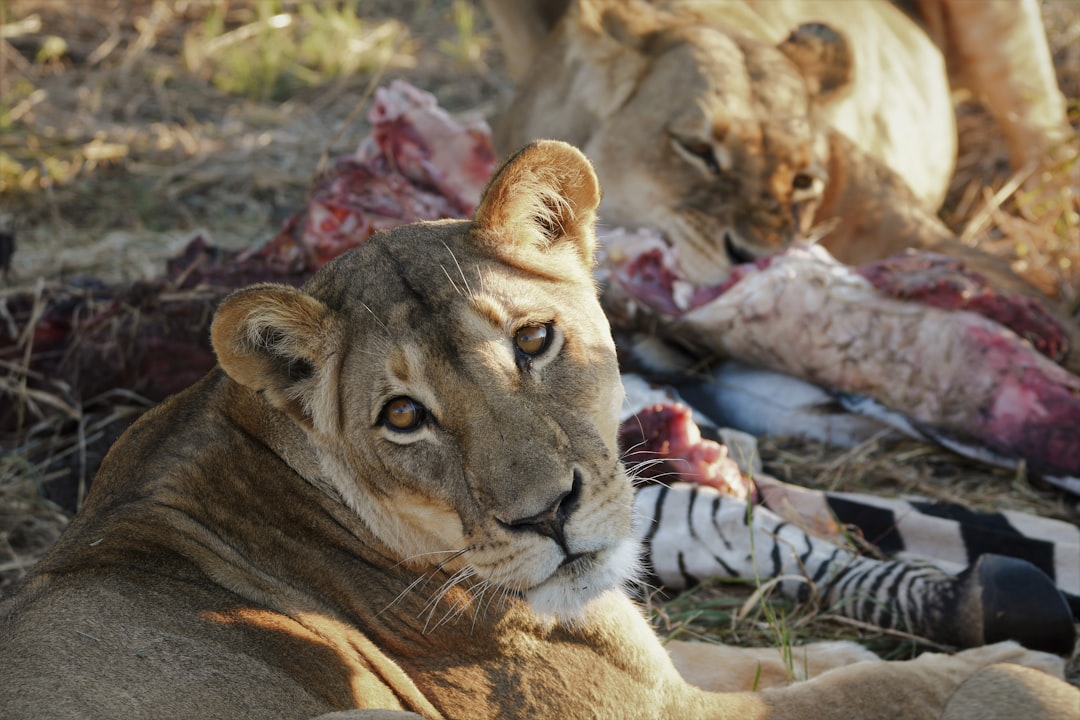
| 9 | African lion | 160 to 270 kg | 2.5 m (body) | Buffalo, zebra, wildebeest |
| 10 | Leopard seal | 300 to 500 kg | 3.5 m | Penguins, krill, fish, seals |
| 11 | Nile crocodile | 225 to 750 kg | 5.5 m | Wildebeest, zebra, fish |
| 12 | Jaguar | 56 to 158 kg | 1.8 m (body) | Caiman, capybara, tapir |
The gap between ranks one and two is staggering. A large sperm whale outweighs a large killer whale by a factor of roughly ten. The gap between ranks five and four is smaller but meaningful, and the jump from land predators to marine predators reflects a fundamental truth of biomechanics: water supports mass in a way air cannot, allowing ocean hunters to achieve sizes impossible on land.
Sperm Whale: The Deepest Hunter
The sperm whale (Physeter macrocephalus) sits at the top of this ranking by a wide margin. Mature males reach 16 to 18 meters in length, with a verified specimen from the 19th century measuring 20.7 meters. Adult male mass ranges from 35 to 57 metric tons. The species is the largest toothed predator ever documented, and it descends into the abyssal zones of the ocean to hunt giant squid (Architeuthis dux) and colossal squid (Mesonychoteuthis hamiltoni).
Sperm whales dive to depths exceeding 2,250 meters and hold their breath for up to 90 minutes. The hunting strategy relies on echolocation clicks generated in the spermaceti organ, which occupies roughly one-third of the animal's total length. These clicks reach source levels of 236 decibels (referenced to 1 microPascal at 1 meter), making the sperm whale's click the loudest sustained sound produced by any animal on Earth.
"The sperm whale's spermaceti organ is the most powerful biological sonar ever evolved. The clicks can stun or disorient prey at close range, but their primary function is high-resolution acoustic imaging of squid in total darkness." -- Peter Tyack, Professor of Marine Mammal Biology, University of St Andrews
Scars on captured sperm whales from giant squid tentacles provide evidence of regular combat at depth, though actual footage of these battles remains vanishingly rare. Researchers documenting these encounters often annotate GPS dive tracks against metadata extracted from submersible imagery using image metadata and EXIF tools to correlate depth, bearing, and scar patterns.
Killer Whale: The Ocean's Most Versatile Hunter
The killer whale (Orcinus orca) is the largest member of the dolphin family and arguably the most behaviorally flexible predator on Earth. Adult males reach 6 to 9.8 meters and weigh 3,600 to 5,400 kilograms. Females are smaller but often lead the hunting strategy, particularly in matriarchal resident pods of the North Pacific.
Different ecotypes specialize in radically different prey. The Bigg's (transient) killer whales of the northeastern Pacific hunt harbor seals, Dall's porpoises, and sea lions. The offshore ecotype targets sharks, including great whites, and has been documented flipping them upside down to induce tonic immobility before tearing out their nutrient-rich livers. Type B killer whales in Antarctic waters generate cooperative wave-wash attacks to dislodge Weddell seals from ice floes. Type A killer whales target minke whales and even attack blue whales.
Killer whales show evidence of vocal dialects, cultural transmission of hunting techniques, and individual recognition spanning decades. Their cognitive abilities have been measured using behavioral paradigms parallel to those applied to great apes, and the comparative literature on cetacean cognition is a frequent reference in broader animal intelligence measurement research that extends psychometric concepts to non-human species.
Great White Shark: The Open-Ocean Ambusher
The great white shark (Carcharodon carcharias) reaches average adult lengths of 4 to 4.8 meters and masses of 680 to 1,100 kilograms. The largest verified specimen, captured off Cuba in 1945, measured 6.4 meters. Unverified reports have claimed larger individuals, including sightings of "Deep Blue," a female photographed near Guadalupe Island estimated at 6.1 meters and over 50 years old, though she was never captured or formally measured.
Great whites hunt primarily by ambush from below, exploiting the silhouette of seals against the bright surface. Breach hunting, in which the shark launches its entire body out of the water while striking, has been documented most dramatically at Seal Island in False Bay, South Africa. The species maintains a body temperature up to 14 degrees Celsius above ambient water via regional endothermy, allowing it to hunt in cold productive waters where ectothermic sharks cannot sustain the necessary muscle power.
Polar Bear: The Largest Land Predator
The polar bear (Ursus maritimus) is the largest hypercarnivorous terrestrial predator alive today. Adult males average 350 to 700 kilograms, with exceptional individuals exceeding 1,000 kilograms. The largest verified polar bear, shot in Alaska in 1960, weighed 1,002 kilograms. Females are roughly half the mass of males.
The species relies almost entirely on ringed seals (Pusa hispida) and bearded seals (Erignathus barbatus), which it hunts at breathing holes and birth lairs on sea ice. A successful kill provides 30 to 40 kilograms of blubber, which polar bears digest with extraordinary efficiency, converting roughly 97 percent of consumed fat into metabolic energy.
| Measurement | Adult male polar bear | Adult male brown bear (Kodiak) | Adult male Siberian tiger |
|---|---|---|---|
| Mass range | 350 to 700 kg | 300 to 680 kg | 180 to 306 kg |
| Shoulder height | 1.6 m | 1.5 m | 1.1 m |
| Bite force (estimated) | 1,200 N | 1,160 N | 1,050 N |
| Primary diet | Marine mammals | Omnivorous, 80 percent plant | Obligate carnivore |
| IUCN status | Vulnerable | Least concern | Endangered |
Polar bear populations are projected to decline by roughly 30 percent by 2050 as Arctic sea ice retreats. Field researchers tracking den sites and seasonal movements rely heavily on GPS telemetry, and integrating this data with weather records and satellite imagery requires dedicated field observation documentation workflows that structured scientific logging platforms provide.
Saltwater Crocodile: The Largest Living Reptile
The saltwater crocodile (Crocodylus porosus) is the largest living reptile and the largest predator in the Indo-Pacific region. Mature males reach 5 to 6 meters, with verified specimens exceeding 6.3 meters. The largest reliably measured individual, "Lolong," captured in the Philippines in 2011, measured 6.17 meters and weighed 1,075 kilograms.
Saltwater crocodiles have the highest measured bite force of any living animal at 16,460 newtons (3,700 pounds-force), roughly three times that of a lion. They hunt by ambush, using explosive acceleration from complete stillness to seize prey at the water's edge. Recorded prey includes water buffalo, wild boar, sharks, and on rare occasions humans. The species kills an estimated 1,000 people annually across its range, making it the deadliest reptile on Earth.
Australia holds the highest concentration of wild saltwater crocodiles, particularly in the Northern Territory and Far North Queensland. Tourism operators in these regions offer supervised viewing experiences that balance public safety with wildlife engagement, an ecosystem that overlaps considerably with broader Australian wildlife tourism documentation covering crocodile-adjacent destinations.
Tigers and Lions: The Largest Big Cats
The Siberian tiger (Panthera tigris altaica) is the largest extant cat species. Males average 180 to 306 kilograms, with a verified specimen from 1950 reaching 384 kilograms. The Bengal tiger is slightly smaller on average but overlaps in size. African lions (Panthera leo) are smaller than tigers, with males averaging 160 to 270 kilograms, though the extinct Barbary lion of North Africa may have reached 300 kilograms historically.
Tigers hunt solitarily, relying on stealth and explosive power to take prey up to the size of adult wild boar, red deer, and occasionally moose. Lions hunt cooperatively in prides, a strategy that allows them to take down prey many times larger than individual adults, including Cape buffalo and, in rare cases, sub-adult elephants and hippos.
"A tiger is a solitary hunter whose entire body plan is engineered for a single explosive charge. A lion's body is engineered for endurance within a cooperative group. These are fundamentally different predatory strategies that converged on roughly similar masses through different evolutionary routes." -- Craig Packer, Director of the Lion Research Center, University of Minnesota
Leopard Seal: The Antarctic Specialist
The leopard seal (Hydrurga leptonyx) is the second-largest seal in Antarctic waters, trailing only the southern elephant seal, which is not a predator in the strict sense. Adult leopard seals reach 3 to 3.5 meters and weigh 300 to 500 kilograms. They hunt penguins, krill, fish, and, notably, other seal species including crabeater seals and young Weddell seals.
Leopard seals are the only seal species known to regularly prey on other seals. They ambush penguins at the ice edge and have been documented tossing carcasses violently to tear them into manageable pieces.
Nile Crocodile and Jaguar: The Freshwater and Neotropical Apex
The Nile crocodile (Crocodylus niloticus) is the second-largest crocodilian after the saltwater crocodile, with males reaching 4 to 5.5 meters and masses of 225 to 750 kilograms. It is responsible for an estimated 300 human fatalities per year across sub-Saharan Africa, primarily during fishing, bathing, and river crossings.
The jaguar (Panthera onca) is smaller than the other cats on this list, averaging 56 to 96 kilograms, but it has the highest bite force relative to body size of any big cat. Jaguars are the only cats that routinely hunt reptiles as a significant portion of their diet, puncturing caiman skulls and tortoise shells with direct bite force rather than relying on strangulation.
Size and Ecological Role: Why Giant Predators Matter
Apex predators of this scale are disproportionately important to ecosystem function. The removal of a single wolf pack can reshape a forest over decades. The decline of sharks in the Atlantic has been linked to cascading collapses in shellfish fisheries. The Yellowstone wolf reintroduction remains the most studied example of trophic cascade recovery.
| Ecosystem service | Quantified effect |
|---|---|
| Herbivore population control | 20 to 80 percent reduction in over-browsing |
| Mesopredator suppression | 40 to 60 percent decrease in smaller carnivore density |
| Carrion provision for scavengers | 3 to 15 percent of annual biomass to vultures and bears |
| Disease dynamics | Removal of weak or infected prey reduces pathogen transmission |
| Nutrient transport | Marine predators move nitrogen from ocean to land via carcasses |
"When you protect an apex predator, you are not just saving one species. You are protecting every function that species performs for every other species in the food web. Lose the predator, and the entire pyramid begins to shift." -- William Ripple, Professor of Ecology, Oregon State University
Wildlife biologists pursuing advanced certifications to work on large predator conservation programs often prepare through formal credentialing pathways, including the wildlife biology and ecology certification programs that structure professional exam preparation for field researchers and agency biologists.
Conservation Status of the Top Predators
Most species on this list are classified as threatened or vulnerable under the IUCN Red List. Sperm whales are rated Vulnerable, with a global population estimated at 300,000 to 450,000 individuals following the near-catastrophic depletion of the 20th-century whaling era. Polar bears are Vulnerable with 22,000 to 31,000 individuals. Siberian tigers remain Endangered with roughly 540 individuals in the wild. Saltwater crocodiles have recovered significantly in Australia following 1971 protection but remain threatened across Southeast Asia due to hide hunting and habitat loss.
Ecotourism operators specializing in apex predator viewing, from shark cage dives in South Africa to polar bear expeditions in Churchill, form a significant economic driver for conservation. The businesses behind these expeditions often incorporate as specialized nature tourism companies, and the registration and licensing workflow for such entities is documented in detail across nature tourism business formation resources.
Measurement and Verification Challenges
Claims of record-size predators are common, often wildly exaggerated, and rarely verified to scientific standards. Museum specimens and verified field measurements using standardized protocols remain the gold standard. Modern field teams use laser rangefinders, photogrammetry, and DNA-calibrated growth curves to estimate mass without capture.
For specimen labels, museum inventory codes, and voucher identifiers that link each physical sample to its digital record, many natural history collections now generate machine-readable specimen labels with QR encoding to reduce transcription errors and allow rapid retrieval during collection audits.
The Vanished Giants
No ranking of the world's largest predators would be complete without noting what has been lost. The short-faced bear of Pleistocene North America (Arctodus simus) reached masses of over 900 kilograms. Megalodon (Otodus megalodon) dwarfed the great white at 15 to 18 meters and an estimated 30 to 65 metric tons. The saber-toothed cats, dire wolves, and cave lions of the last ice age all contributed to predator guilds of a richness we no longer see.
Today's apex predators are the survivors of those extinctions, and the ecological lessons of their ancestors echo in how modern conservation biologists think about rewilding, trophic restoration, and the long-term health of food webs.
References
- Whitehead, H. (2003). Sperm Whales: Social Evolution in the Ocean. University of Chicago Press. DOI: 10.7208/chicago/9780226895130.001.0001
- Ford, J. K. B., & Ellis, G. M. (2006). Selective foraging by fish-eating killer whales Orcinus orca in British Columbia. Marine Ecology Progress Series, 316, 185-199. DOI: 10.3354/meps316185
- Stirling, I., & Derocher, A. E. (2012). Effects of climate warming on polar bears: a review of the evidence. Global Change Biology, 18(9), 2694-2706. DOI: 10.1111/j.1365-2486.2012.02753.x
- Webb, G. J. W., & Manolis, S. C. (1989). Crocodiles of Australia. Reed Books. DOI: 10.1086/417034
- Erickson, G. M., Gignac, P. M., Steppan, S. J., et al. (2012). Insights into the ecology and evolutionary success of crocodilians revealed through bite-force and tooth-pressure experimentation. PLOS ONE, 7(3), e31781. DOI: 10.1371/journal.pone.0031781
- Ripple, W. J., Estes, J. A., Beschta, R. L., et al. (2014). Status and ecological effects of the world's largest carnivores. Science, 343(6167), 1241484. DOI: 10.1126/science.1241484
- Miller, P. J. O., Johnson, M. P., Madsen, P. T., et al. (2008). Foraging behaviour of sperm whales off Northern Norway. Deep Sea Research Part II, 55(10-11), 1168-1181. DOI: 10.1016/j.dsr2.2008.02.003
- Packer, C., Swanson, A., Ikanda, D., & Kushnir, H. (2011). Fear of darkness, the full moon and the nocturnal ecology of African lions. PLOS ONE, 6(7), e22285. DOI: 10.1371/journal.pone.0022285