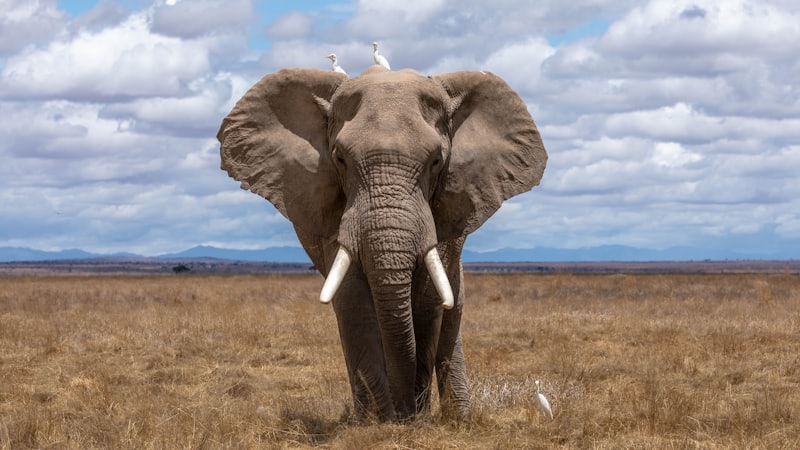
Why Are Elephants Afraid of Mice?
A 2,000-Year-Old Myth, Tested
Ask almost anyone in the Western world what frightens an elephant, and they will likely say a mouse. The image is so embedded in cartoons, children's books, and popular culture that it has become one of the most recognizable animal stereotypes on Earth. An elephant -- seven tonnes of muscle -- rearing up in panic at a rodent weighing 20 grams.
The story has lasted two thousand years. It was already widely believed in Rome when Pliny the Elder wrote about it in 77 CE. Medieval monks copied it into bestiaries. Shakespeare's contemporaries treated it as biological fact. And despite all the time to test it, nobody actually did until the 21st century.
When they finally did, the answer turned out to be more interesting than the myth.
Where the Myth Came From
Pliny the Elder is the earliest known source. In Naturalis Historia, his 37-volume attempt to catalog the natural world, he wrote that elephants feared mice above all other creatures because mice could crawl into elephants' trunks and cause infection, starvation, or suffocation.
Pliny's reasoning was almost entirely wrong. The elephant trunk is not a passive tube. It is a muscular hydrostat, an active organ with over 150,000 muscle fascicles, capable of extremely precise control. If a mouse entered an elephant's trunk, the elephant could expel it instantly with a trunk-snort -- the same mechanism elephants use to clear dust, water, or insects dozens of times a day.
But Pliny was enormously influential. His encyclopedia was copied by Roman scholars, preserved through the Middle Ages in monastery libraries, and treated as an authoritative source well into the Renaissance. The mouse story survived every century since.
In 1607, English author Edward Topsell wrote in The History of Four-Footed Beasts that elephants "hate" mice and flee from them. In Shakespeare's Troilus and Cressida, the character Thersites invokes the myth casually, expecting the audience to understand. By the 19th century, the story had become a staple of Aesop-style fables and children's literature.
The MythBusters Test
In 2006, the Discovery Channel series MythBusters traveled to South Africa to actually test whether elephants fear mice. The experiment was conducted on wild African elephants in a safari reserve.
Test conditions: a white mouse hidden inside a pile of dung was revealed suddenly as an elephant approached. The elephants in the experiment did react -- they backed up, extended their trunks, and showed classic startle behavior. One elephant circled around the area entirely.
The episode concluded the myth was "plausible." But the experimental design had problems. The mice were revealed by rapid unexpected movement, which would have startled the elephants regardless of what the moving object was. The same reaction would likely have occurred if the dung pile contained a squirrel, a pigeon, or a hat.
Later, more controlled studies showed elephants tolerate mice in their enclosures indefinitely without any fearful response. Zoo elephants share habitats with wild rodents constantly. Thai elephant sanctuaries host rats in barns where elephants eat, sleep, and interact with the rodents as casually as a horse might.
The consensus among professional elephant behaviorists is clear: elephants are not specifically afraid of mice. They can be startled by sudden movement from any small object, which is exactly what you would expect from a highly intelligent animal paying attention to its surroundings.
What Elephants Actually Fear
The real fears of elephants are far more interesting than the mouse myth.
Bees
Elephants are genuinely terrified of African honey bees. The fear is not learned -- even elephants raised in captivity that have never encountered a bee swarm will panic at the sound of recorded bee buzzing.
The reason: elephants have thick skin but thin, sensitive areas around the eyes, trunk, mouth, and inside the ears. A swarm of aggressive bees targeting those areas causes extreme pain and can blind an elephant. Asian and African elephants both show this fear, suggesting it evolved before the species diverged roughly 5 million years ago.
Dr. Lucy King's research at Save the Elephants used this fear to develop one of modern conservation's most elegant inventions: the beehive fence. Farmers in Kenya, Tanzania, and Uganda now protect their crops from elephant raids using strings of hollow logs with live bee colonies suspended at elephant height. When an elephant pushes the fence, the hives shake, bees emerge, and elephants flee. The system has reduced crop raiding by 80 percent in some areas and has the bonus of producing honey that farmers can sell.
Ants
Siafu driver ants, which swarm in massive columns through African forests, are another major elephant fear. Ants can crawl into the elephant's trunk, ears, and eyes in numbers too large for the elephant to expel. Encounters with driver ant swarms have been documented to drive elephant herds into panicked retreats covering several kilometers.
Specific Humans
Elephants can distinguish between human groups by smell, voice, and even clothing color. In Amboseli National Park, researchers documented that Maasai men trigger stronger defensive responses in elephants than Kamba men. The explanation is historical: Maasai traditionally hunted elephants as part of warrior rites of passage, while the Kamba did not. Elephants remember this, and they teach their calves to remember it.
In a 2007 study published in Current Biology, researchers played recordings of Maasai male voices and Kamba male voices to elephant families. The elephants grouped defensively at Maasai voices and showed no reaction to Kamba voices. Children and women produced no fear response in either case.
Hyenas and Lions Near Calves
Adult elephants have no predators other than humans. Calves are another matter. Lion prides and large hyena clans can occasionally kill elephant calves under five years old. Elephant mothers show strong fear responses to the smell and sound of both species when calves are present in the herd.
Interestingly, mature bull elephants largely ignore predators. They are so big that nothing short of a coordinated pride of adult lions could injure them, and the elephants know it.
The Memory of Fear
Elephants do not forget what they are afraid of. Matriarchs -- the older females who lead elephant herds -- carry learned fears across generations.
Cynthia Moss's 47-year study at Amboseli National Park documented matriarchs leading their herds away from specific human villages where poaching had occurred decades earlier, even after poaching had stopped and the villages were no longer dangerous. The matriarchs' fear was learned from their own mothers and was transmitted to their daughters.
This cultural transmission of fear is one of the most sophisticated behaviors ever observed in non-primate mammals. It means elephant fears are not purely biological instincts. They are learned, remembered, and taught -- more similar to human cultural knowledge than to the fixed fears of most animals.
Why the Mouse Myth Survived
The persistence of the mouse story for 2,000 years despite its biological implausibility reveals something about human storytelling rather than elephant psychology.
The myth is appealing because it inverts expectation. The largest land animal on Earth reduced to panic by the smallest mammal that shares its habitat is inherently comic and dramatic. It makes elephants seem simultaneously more formidable (because their single weakness is so specific) and more relatable (because even they have silly fears).
Cartoons in the 20th century cemented the image. Disney's Dumbo (1941) featured a chorus of circus elephants panicking at the sight of Timothy Q. Mouse. Tom and Jerry episodes played on the theme repeatedly. By the time anyone thought to test the myth scientifically, it had become so culturally entrenched that the test itself was newsworthy.
The mouse myth is an example of how cultural narratives can persist across centuries in the absence of empirical investigation. It took 2,000 years to get from Pliny to MythBusters, and even now, most people still believe it.
What Elephants Can Teach Us
Elephants are among the most studied animals on Earth, and their psychology turns out to be more similar to ours than to most other mammals. They mourn the dead. They recognize individual humans across decades. They teach their children what to fear and what is safe. They form friendships that last for lifetimes.
The mouse myth, in this context, is almost insulting. It reduces one of the most cognitively complex animals on the planet to a cartoon character panicking at a rodent. The truth is richer: elephants fear bees because bees hurt them. They fear certain humans because those humans killed their ancestors. They fear sounds and smells they have learned to associate with danger, and they carry those fears across generations with precision that would be impressive in a human family.
They do not fear mice. They never did. The story was a quirk of Roman natural history that outlived the Roman Empire, the feudal age, and the Industrial Revolution. It will probably outlive our era too, because good stories almost always do.
But now at least we know the truth. And the truth is more interesting.
Related Articles
- Elephants: Memory, Intelligence, and the Fight for Survival
- Smartest Animals: How We Measure Animal Intelligence
- Primates: Our Closest Relatives in the Animal Kingdom
Frequently Asked Questions
Are elephants actually afraid of mice?
No, elephants are not specifically afraid of mice. The belief dates to ancient Rome, first recorded by Pliny the Elder in his Natural History (77 CE), but modern behavioral research does not support it. A 2006 Mythbusters experiment in Africa showed elephants reacting cautiously to sudden appearances of white mice, but the response was classic startle behavior toward any unexpected small moving object -- not specific fear of rodents. Zoologist Dr. Richard Lair, a leading elephant behaviorist, has documented elephants calmly sharing enclosures with rats, mice, and even birds without concern. The myth persists because elephants are large, and any nervousness in such a massive animal looks dramatic on film.
Where did the elephant-mouse myth come from?
The myth originates in classical antiquity, approximately 2,000 years ago. Pliny the Elder, writing in Natural History around 77 CE, stated that elephants feared mice because the rodents could crawl into their trunks and cause suffocation or infection. Greek historian Plutarch repeated the claim. Medieval bestiaries preserved the belief through the Middle Ages, and Shakespeare's contemporaries treated it as established fact. The physiological premise (mice crawling into trunks) is implausible -- elephant trunks contain complex muscular structures, are actively controlled, and could easily expel a rodent. But the story was memorable, and it survived 20 centuries largely because nobody tested it scientifically until the 21st century.
What are elephants actually afraid of?
Elephants have well-documented fears of several specific threats. Bees are their most significant fear -- African and Asian elephants both show strong avoidance behavior when they hear recorded swarm buzzing. Kenyan farmers now use beehive fences to keep crop-raiding elephants off their fields, a conservation technique developed by Dr. Lucy King at Save the Elephants. Elephants also fear ants, which can swarm into their trunks and cause genuine discomfort. In some African populations, elephants show cultural fear of specific human groups -- the Maasai, who traditionally hunted elephants as a rite of passage, trigger more defensive behavior than Kamba people who did not hunt them. Sudden loud noises, unfamiliar terrain, and the smell of predators (particularly hyenas and lions near calves) all produce fear responses.
Do elephants have good memory?
Yes, elephant memory is among the best documented in the animal kingdom. Matriarch elephants remember the locations of water holes over 30 years old, leading their herds across hundreds of kilometers during droughts to sources the younger animals have never seen. Elephants recognize individual humans decades after meeting them. A famous case involved Shirley, an elephant at the Elephant Sanctuary in Tennessee, who recognized her former circus companion Jenny after 22 years apart -- both elephants immediately displayed greeting behavior specific to their shared history. Research by Dr. Joyce Poole in Amboseli National Park documented elephants recognizing the contact calls of specific individuals from their extended family networks over 19 years after last hearing them. Brain imaging shows elephants have proportionally the largest hippocampus (memory center) of any land mammal.
Do elephants mourn their dead?
Yes, elephants show clear behavioral responses to death that meet most scientific definitions of mourning. Elephants will pause at the bones of dead relatives even years after death, touching skulls and tusks with their trunks. They return repeatedly to death sites. Mothers carry the bodies of deceased calves for days before reluctantly leaving them. Entire herds stand silent vigil over a dying matriarch. Dr. Cynthia Moss's 47-year study in Amboseli recorded elephants distinguishing between elephant bones and other mammal bones, spending more time with elephant remains even when presented with unfamiliar skeletons. Whether this constitutes 'grief' in the human emotional sense is debated, but the behavioral response is real, consistent, and unique among non-primate mammals.