
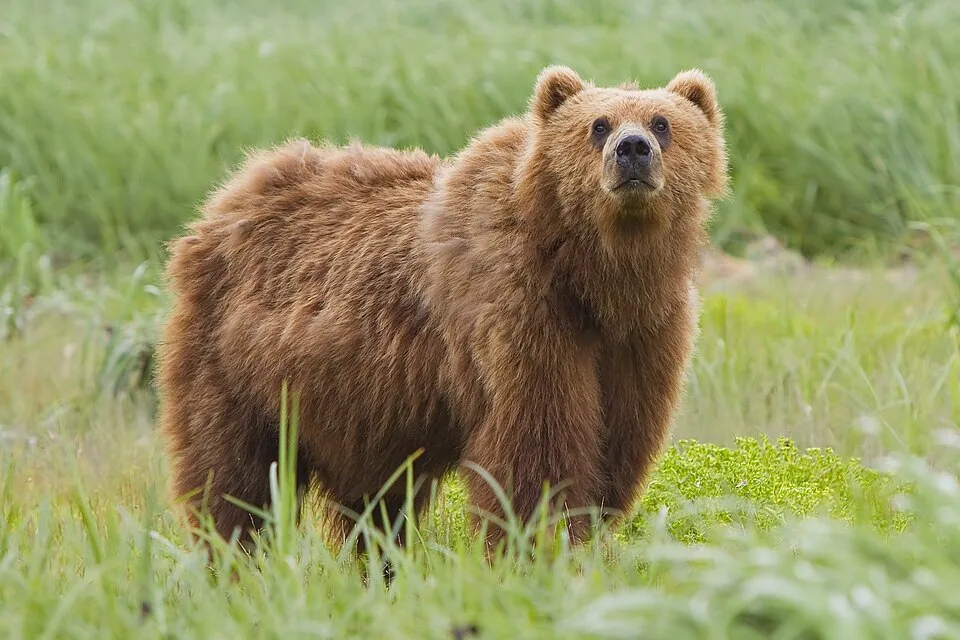
Do all bears truly hibernate?
Not all bears worldwide hibernate, and those that do are technically in a state called torpor rather than true hibernation. Black bears and grizzlies enter winter dens where their heart rate drops from 40-50 beats per minute to as low as 8, and their body temperature decreases by roughly 10 degrees Fahrenheit. However, they can rouse relatively quickly if disturbed.
Few animals command as much respect, fascination, and fear as bears. Spanning four continents and occupying habitats from Arctic sea ice to tropical rainforests, the family Ursidae comprises eight living species that have evolved remarkably diverse strategies for survival. From the 1,500-pound polar bear patrolling frozen coastlines to the 60-pound sun bear scaling dipterocarp trees in Borneo, bears represent one of the most adaptive radiations among large carnivores.
Despite their classification in the order Carnivora, bears have diversified their diets more dramatically than almost any other mammalian family. One species subsists almost entirely on bamboo. Another depends on termites and ants. Several are opportunistic omnivores that shift their diets seasonally. And one has become the Arctic's undisputed apex predator, hunting marine mammals across vast expanses of sea ice.
This article examines all eight bear species in depth, exploring their biology, behavior, ecological roles, and the conservation challenges they face in the 21st century.
The Eight Bear Species at a Glance
Before diving into individual species, the following table provides a comparative overview of all living bear species.
| Species | Scientific Name | Range | Adult Weight | Diet Type | IUCN Status | Population Estimate |
|---|---|---|---|---|---|---|
| Brown Bear (incl. Grizzly) | Ursus arctos | North America, Europe, Asia | 250-790 kg (550-1,740 lb) | Omnivore | Least Concern | ~200,000 |
| Polar Bear | Ursus maritimus | Arctic circumpolar | 350-700 kg (770-1,540 lb) | Hypercarnivore | Vulnerable | 22,000-31,000 |
| American Black Bear | Ursus americanus | North America | 40-250 kg (90-550 lb) | Omnivore | Least Concern | ~600,000 |
| Asian Black Bear | Ursus thibetanus | East and South Asia | 60-200 kg (130-440 lb) | Omnivore | Vulnerable | Unknown (declining) |
| Giant Panda | Ailuropoda melanoleuca | Central China | 75-135 kg (165-300 lb) | Herbivore (bamboo) | Vulnerable | ~1,864 wild |
| Sun Bear | Helarctos malayanus | Southeast Asia | 25-65 kg (55-145 lb) | Omnivore | Vulnerable | Unknown (declining) |
| Spectacled Bear | Tremarctos ornatus | South America (Andes) | 60-175 kg (130-385 lb) | Omnivore (mostly plants) | Vulnerable | ~6,000-10,000 |
| Sloth Bear | Melursus ursinus | Indian subcontinent | 55-145 kg (120-320 lb) | Insectivore/Omnivore | Vulnerable | 6,000-11,000 |
As this table makes clear, six of the eight bear species are currently classified as Vulnerable by the International Union for Conservation of Nature. Bears, as a group, are among the most threatened large mammals on Earth.
The Grizzly Bear: North America's Icon of Wilderness
The grizzly bear - the North American subspecies of the brown bear (Ursus arctos horribilis) - is perhaps the most iconic wild animal on the continent. Males can weigh over 790 kg (1,740 lb) in coastal Alaska, where abundant salmon runs fuel extraordinary growth. Interior grizzlies are smaller, typically 180-360 kg (400-790 lb), reflecting the reduced caloric availability of their habitats.
Strength and Physical Capability
A grizzly's bite force has been measured at approximately 1,160 PSI (pounds per square inch), powerful enough to crush a bowling ball. Their forelimb muscles generate enough force to move rocks weighing over 300 kg (700 lb) in search of insects and rodents. A single swipe from a grizzly paw can deliver an estimated 600 pounds of force.
The Salmon Runs of Katmai
Nowhere is grizzly behavior more spectacular than at Katmai National Park in southern Alaska. Each July through September, more than 2,000 brown bears converge on the park's watersheds to intercept sockeye salmon migrating upstream to spawn. Brooks Falls, perhaps the most photographed bear-fishing site in the world, regularly hosts dozens of bears simultaneously.
Individual bears at Katmai have been documented consuming up to 30 salmon per day during peak runs, each fish delivering roughly 4,500 calories. A dominant male may gain over 1.3 kg (3 lb) per day during the hyperphagic period before denning. The park's annual "Fat Bear Week" competition, which invites the public to vote on the most impressively fattened bear, has become a viral conservation success, drawing millions of viewers to the park's live webcams.
The Timothy Treadwell Incident
The relationship between grizzlies and humans is not always harmonious. Perhaps the most infamous case of human-bear conflict in modern history involves Timothy Treadwell, a self-taught bear enthusiast who spent 13 consecutive summers living among grizzlies in Katmai National Park without weapons or bear spray. Treadwell filmed over 100 hours of close-range bear footage, often approaching within arm's length of wild grizzlies, naming them, and speaking to them as companions.
On October 5, 2003, Treadwell and his girlfriend Amie Huguenard were killed and partially consumed by a bear - likely an older, unfamiliar male that had entered the area late in the season when food was scarce. An audio recording from a camera that was running during the attack (with the lens cap on) captured the event. The incident became the subject of Werner Herzog's acclaimed 2005 documentary Grizzly Man.
Bear biologist Tom Smith of Brigham Young University later noted that Treadwell's prolonged habituation of bears to human presence may have increased danger not only for himself but for subsequent visitors: "He was breaking every rule in the book, and it was only a matter of time before it ended tragically."
The Polar Bear: Arctic Apex Predator Under Siege
The polar bear is the largest living land carnivore and the only bear species classified as a marine mammal. Adult males average 450 kg (990 lb), with the largest recorded individuals exceeding 1,000 kg (2,200 lb). Their range spans five Arctic nations: Canada, Russia, the United States (Alaska), Norway (Svalbard), and Denmark (Greenland).
Hunting and Sea Ice Dependency
Polar bears are hypercarnivores, meaning more than 70% of their diet consists of animal tissue - primarily ringed seals (Pusa hispida) and bearded seals (Erignathus barbatus). Their hunting success depends almost entirely on the presence of sea ice, which serves as a platform from which to ambush seals at breathing holes or haul-out sites.
A polar bear's sense of smell is among the most acute in the animal kingdom, capable of detecting a seal beneath three feet of ice and snow from nearly a mile away. Their still-hunting technique requires extraordinary patience; a bear may wait motionless at a breathing hole for hours, then strike in a fraction of a second with enough force to crush the seal's skull.
Climate Change and Population Decline
The Arctic is warming at roughly four times the global average rate. Between 1979 and 2023, September Arctic sea ice extent declined by approximately 13% per decade. For polar bears, this means shorter hunting seasons, longer fasting periods, and reduced body condition.
Research published in Nature Climate Change projected that under a high-emissions scenario, most of the world's 19 polar bear subpopulations could face reproductive failure by 2100. The Southern Beaufort Sea subpopulation has already declined by approximately 40% between 2001 and 2010, from an estimated 1,500 to roughly 900 individuals.
Chris Servheen, who served as the U.S. Fish and Wildlife Service's Grizzly Bear Recovery Coordinator for 35 years and has worked extensively on bear conservation across species, has stated: "The polar bear is the canary in the coal mine for climate change. What happens to polar bears is a preview of what will happen to ecosystems worldwide as the planet warms."
The Giant Panda: A Conservation Triumph
The giant panda is arguably the world's most recognizable bear and serves as the global symbol for wildlife conservation. Endemic to the temperate bamboo forests of central China - primarily in Sichuan, Shaanxi, and Gansu provinces - the panda's story is one of near-extinction and remarkable recovery.
The Bamboo Specialist
Despite possessing the digestive system of a carnivore, the giant panda subsists almost exclusively on bamboo, which comprises over 99% of its diet. An adult panda consumes between 12 and 38 kg (26-84 lb) of bamboo daily and spends 10 to 16 hours per day feeding. This extreme dietary specialization is made possible by several unique adaptations, including an enlarged radial sesamoid bone - the famous "pseudo-thumb" - that enables precise gripping of bamboo stalks.
Pandas extract only about 17% of the nutrients from the bamboo they consume, compared to roughly 80% efficiency in true herbivores like cattle. This low efficiency necessitates their massive intake and relatively sedentary lifestyle - pandas have the lowest metabolic rate of any bear species, roughly 38% of what would be expected for a mammal their size.
Conservation Success Story
The giant panda's conservation trajectory represents one of the most significant recovery efforts in the history of wildlife management. China's 2015 national panda survey counted 1,864 individuals in the wild, up from an estimated low of around 1,000 in the late 1970s. In 2016, the IUCN downlisted the giant panda from Endangered to Vulnerable, recognizing decades of successful habitat protection and reforestation.
China has established 67 panda reserves protecting approximately 66% of wild pandas and 54% of their habitat. The captive breeding program, once plagued by reproductive failure, has grown the captive population to over 600 individuals. Reintroduction efforts have returned captive-bred pandas to the wild, though with mixed success rates.
The Sun Bear: The Smallest and Most Threatened
The sun bear (Helarctos malayanus) is the smallest of all bear species, with adults weighing just 25-65 kg (55-145 lb) and standing approximately 70 cm (28 in) at the shoulder. Found across the tropical forests of Southeast Asia - from northeastern India through Myanmar, Thailand, Cambodia, Vietnam, Laos, Malaysia, and Indonesia - the sun bear is arboreal, shy, and poorly studied compared to its larger relatives.
Remarkable Tongue
The sun bear possesses a tongue that can extend 20-25 cm (8-10 in) beyond its lower lip - the longest tongue relative to body size of any bear species. This adaptation allows it to extract honey and insects from deep within tree cavities and termite mounds, earning it the nickname "honey bear." Sun bears also have long, curved claws - up to 10 cm (4 in) - that function as climbing hooks, making them the most arboreal of all bear species.
Deforestation Crisis
Sun bears face catastrophic habitat loss. Southeast Asia has one of the highest deforestation rates in the world, driven primarily by palm oil plantations, logging, and agricultural expansion. Between 1990 and 2020, the region lost approximately 60 million hectares of forest. The Borneo Sun Bear Conservation Centre, founded by wildlife biologist Wong Siew Te, estimates that sun bear populations have declined by at least 30% over the past three decades.
The Spectacled Bear: South America's Only Bear
The spectacled bear (Tremarctos ornatus), also known as the Andean bear, is the sole surviving bear species in South America and the last remaining short-faced bear - a lineage that once included the massive Arctotherium angustidens, the largest bear that ever lived. The spectacled bear ranges from western Venezuela through Colombia, Ecuador, Peru, and Bolivia, primarily in cloud forests and paramo grasslands at elevations of 500 to 4,300 meters (1,600-14,100 ft).
Named for the distinctive pale markings around its eyes that resemble spectacles (each bear's pattern is unique, like a fingerprint), this species is primarily herbivorous, with plants comprising roughly 90-95% of its diet. Bromeliads, cacti, orchid bulbs, and fruit are staples, supplemented occasionally by insects, small mammals, and carrion.
Spectacled bears are among the most arboreal of large bears, constructing feeding platforms in trees - nests of broken branches that can reach 15 meters (50 ft) above the ground. These platforms serve as both dining tables and resting sites. Population estimates are uncertain but generally range from 6,000 to 10,000 individuals, with habitat fragmentation and human encroachment posing the greatest threats.
The Sloth Bear: The Real "Baloo"
The sloth bear (Melursus ursinus), native to the Indian subcontinent, is one of the most distinctive and least appreciated bears. With its shaggy black coat, elongated snout, protruding lower lip, and pale chest patch, the sloth bear looks unlike any other ursid. It is widely believed to be the species that inspired Rudyard Kipling's Baloo in The Jungle Book, despite the character often being depicted as a brown bear in popular adaptations.
Insect Specialists
Sloth bears are the world's only bears that have evolved primarily to feed on insects. Their nostrils can close voluntarily to prevent insect inhalation during feeding. They lack upper incisors, creating a gap through which they can suck termites and ants from their mounds with a vacuum-like action audible from over 100 meters (330 ft) away. A single sloth bear can consume up to 10,000 insects in a night.
During the fruiting season, sloth bears shift heavily to fruit, particularly figs and mango, and are important seed dispersers in Indian forests. Their population is estimated at 6,000-11,000 individuals, with threats including habitat loss, poaching, and conflict with humans - sloth bears are responsible for more human attacks in India than any other bear species, largely due to their poor eyesight and tendency to charge when startled at close range.
The Science of Bear Hibernation
Hibernation is one of the most remarkable physiological feats in the animal kingdom, and bears are its most famous practitioners - though the reality is more nuanced than popular understanding suggests.
Not Quite "True" Hibernation
Technically, most biologists distinguish between true hibernation (as seen in ground squirrels and marmots, where body temperature drops to near freezing) and the winter dormancy exhibited by bears.
A hibernating ground squirrel's body temperature may fall to 1-3 degrees Celsius (34-37 degrees Fahrenheit), while a denning black bear's temperature drops only from approximately 38 degrees Celsius to 31-35 degrees Celsius (88-95 degrees Fahrenheit). However, some researchers argue that bears should be reclassified as true hibernators because their metabolic suppression is proportionally comparable.
Metabolic Marvels
During denning, a bear's metabolic rate drops by 50-75%. Heart rate decreases from 40-50 beats per minute to as few as 8-10. Oxygen consumption falls by roughly 75%. And yet, denning bears do not eat, drink, urinate, or defecate for 5-7 months in northern populations.
How do they manage this without suffering organ failure? Bears recycle urea - a waste product of protein metabolism that would normally require excretion - back into usable amino acids. Their bones maintain density despite months of inactivity (something that would cause severe osteoporosis in humans). They burn stored fat at a rate that would be lethal for most mammals, yet they do not develop the insulin resistance or cardiovascular disease that such lipid mobilization would cause in humans.
Female bears give birth during hibernation, typically in January, delivering cubs weighing just 200-450 grams (7-16 oz) - roughly 1/300th of the mother's weight. The cubs nurse on fat-rich milk (up to 33% fat content, compared to 4% in human milk) and grow rapidly while the mother remains in her state of dormancy.
Which Bears Hibernate?
Not all bear species hibernate. The behavior is generally limited to species in temperate and Arctic climates where winter food scarcity makes dormancy energetically advantageous:
- Brown/Grizzly Bears: Hibernate 5-7 months in northern ranges; shorter periods or no denning in mild climates
- American Black Bears: Hibernate up to 7 months in Alaska and Canada; shorter in southern states
- Asian Black Bears: Hibernate in northern populations; southern populations may not den
- Polar Bears: Only pregnant females den; males and non-pregnant females remain active year-round
- Sun Bears, Sloth Bears, Spectacled Bears: Do not hibernate (tropical/subtropical habitats provide year-round food)
Bear Intelligence: Problem Solving, Memory, and Tool Use
Bears possess some of the largest brains relative to body size among carnivores, and behavioral research has increasingly revealed cognitive abilities that rival those of great apes in certain domains.
Problem Solving and Learning
Captive studies have demonstrated that bears can quickly learn to solve complex multi-step puzzles to obtain food rewards. American black bears have been observed defeating supposedly "bear-proof" garbage containers, coolers, and car doors through systematic trial-and-error learning. In the Greater Yellowstone Ecosystem, bears have learned to recognize and avoid certain types of traps, teaching this avoidance behavior to their cubs through observational learning.
Grizzly bears in coastal Alaska have been documented using different fishing techniques at waterfalls depending on water conditions, individual body size, and competitive pressure from other bears - suggesting flexible, context-dependent decision-making rather than rigid instinct.
Spatial Memory
Bears possess exceptional long-term spatial memory. Research on brown bears in Scandinavia has shown that individuals can remember the locations of specific food sources across a home range of up to 1,500 square kilometers (580 square miles) and return to them year after year with remarkable precision. GPS collar data reveals that bears often travel in efficient, nearly straight lines to distant food sources rather than wandering randomly, indicating detailed mental maps of their territories.
Tool Use and Self-Awareness
One of the most striking demonstrations of bear intelligence was documented by researchers at the Washington State University Bear Research Center, where a captive brown bear named Kio was observed using a barnacle-encrusted rock to scratch a facial itch - a form of tool use previously attributed only to primates, corvids, and a small number of other taxa.
In a 2017 study published in Animal Cognition, Asian black bears demonstrated evidence of mirror self-recognition - the ability to understand that a reflection in a mirror represents oneself rather than another animal. This capacity had previously been confirmed in only great apes, elephants, dolphins, and magpies.
Charlie Russell, the late Canadian naturalist who spent a decade raising orphaned brown bear cubs in Kamchatka, Russia, wrote extensively about bear cognition in his book Grizzly Heart: "After years of living alongside bears, I became convinced that they possess an emotional and intellectual depth that we have barely begun to appreciate. They remember everything, they solve problems with creativity, and they form relationships as complex as those of any primate."
Human-Bear Conflict and Coexistence
As human populations expand into bear habitat and as bear populations recover in some regions, encounters between the two species are becoming more frequent - and more consequential.
The Scale of the Problem
In North America, human-bear conflicts result in the killing of thousands of bears annually. In the United States, wildlife agencies remove an estimated 3,000-5,000 black bears per year due to conflicts with humans, primarily involving property damage, livestock depredation, and perceived threats to human safety. In India, sloth bear attacks injure or kill hundreds of people each year, often in impoverished rural communities with limited access to medical care.
In the Arctic, as sea ice retreats and polar bears spend longer periods on land, bear-human encounters in coastal communities are rising sharply. The town of Churchill, Manitoba - known as the "Polar Bear Capital of the World" - operates a "polar bear jail" where problem bears are held until sea ice forms, allowing them to return to hunting.
Coexistence Strategies
Modern wildlife management emphasizes coexistence over elimination. Effective strategies include:
- Bear-proof infrastructure: Redesigned garbage containers, electric fencing for beehives and livestock enclosures, and secure food storage systems in bear country
- Bear spray: Studies have shown that bear spray (capsaicin aerosol) is over 90% effective at deterring charging bears and significantly reduces injury to both humans and bears compared to firearms
- Corridor conservation: Maintaining wildlife corridors that connect fragmented habitat patches, allowing bears to move between populations and reducing genetic isolation
- Education programs: Community-based programs teaching residents in bear country proper food storage, behavior during encounters, and the ecological value of bears
- Karelian bear dogs: Specially trained dogs used in the Wind River Bear Institute's "bear shepherding" program to condition bears to avoid human areas through controlled hazing
Chris Servheen has emphasized the importance of long-term commitment to coexistence: "We have the tools to live alongside bears. What we often lack is the institutional patience and public will to implement them consistently over decades. Bear conservation is a marathon, not a sprint."
The Value of Bears
Bears are ecological keystone species whose influence extends far beyond their immediate presence. Salmon-eating bears transport marine-derived nutrients deep into forests - studies in British Columbia have found that trees within 500 meters of salmon streams receive up to 24% of their nitrogen from salmon carcasses deposited by bears. Bear digging aerates soil.
Seed dispersal by fruit-eating bears promotes forest regeneration. And as apex or near-apex predators, bears help regulate prey populations and maintain ecosystem balance.
The economic value of bears is substantial as well. Bear-related ecotourism generates an estimated $20 million annually at Katmai National Park alone. Churchill's polar bear tourism industry contributes roughly $8 million per year to the local economy. Globally, the existence of bears in a landscape is a powerful indicator of ecosystem health and wilderness quality.
Conclusion
The eight bear species of the world represent a remarkable evolutionary lineage - one that has produced Arctic marine predators, bamboo specialists, arboreal tropical climbers, and insect-vacuuming forest dwellers from a single common ancestor. Their intelligence, adaptability, and ecological importance are matched by their vulnerability. Six of eight species are classified as Vulnerable by the IUCN.
Climate change threatens the very ice platform that polar bears depend on for survival. Deforestation is erasing sun bear habitat at an accelerating rate. And human-bear conflict continues to claim thousands of bears annually across their range.
Yet there are reasons for cautious optimism. The giant panda's recovery demonstrates that sustained investment in habitat protection can reverse population declines. Grizzly bear populations in the Greater Yellowstone Ecosystem have expanded from fewer than 140 individuals in 1975 to an estimated 700-1,000 today. Coexistence strategies are becoming more sophisticated and more widely adopted.
The future of bears depends on the choices that human societies make in the coming decades - about climate, about land use, and about the value we place on sharing the planet with creatures that have roamed it for millions of years before us.
References
Stirling, I. (2011). Polar Bears: The Natural History of a Threatened Species. Fitzhenry & Whiteside. A comprehensive overview of polar bear biology, ecology, and the impacts of climate change on Arctic ecosystems.
Herrero, S. (2018). Bear Attacks: Their Causes and Avoidance (3rd ed.). Lyons Press. The definitive scientific analysis of bear-human conflict, covering attack patterns, prevention strategies, and case studies across all North American bear species.
Nie, Y., et al. (2015). "Giant Pandas Are Macronutritional Carnivores." Current Biology, 25(17), R750-R751. Research demonstrating that pandas' macronutrient intake profile is more similar to hypercarnivores than to herbivores, despite their bamboo diet.
Pigeon, K. E., et al. (2016). "Staying cool in a changing landscape: the influence of maximum daily ambient temperature on grizzly bear habitat selection." Oecologia, 181(4), 1101-1116. Study on how climate affects brown bear behavior and habitat use.
Molnar, C., et al. (2017). "Bears show evidence of mirror self-recognition." Animal Cognition, 20(1), 117-130. Landmark study demonstrating self-awareness in Asian black bears through the mirror test.
Russell, C. & Enns, M. (2002). Grizzly Heart: Living Without Fear Among the Brown Bears of Kamchatka. Random House Canada. First-hand account of living among wild brown bears, documenting their cognitive and emotional complexity.
Servheen, C., Herrero, S., & Peyton, B. (Eds.). (1999). Bears: Status Survey and Conservation Action Plan. IUCN/SSC Bear Specialist Group. The foundational conservation planning document for bear species worldwide.
Frequently Asked Questions
Do all bears truly hibernate?
Not all bears hibernate, and those that do are technically in a state called torpor rather than true hibernation. Black bears and grizzlies enter winter dens where their heart rate drops from 40-50 beats per minute to as low as 8, and their body temperature decreases by roughly 10 degrees Fahrenheit. However, they can rouse relatively quickly if disturbed.
Polar bears generally do not hibernate except for pregnant females, and tropical species like sun bears and sloth bears remain active year-round due to consistent food availability.
How do polar bears hunt seals on sea ice?
Polar bears primarily use a technique called still-hunting. They locate a seal’s breathing hole in the sea ice using their extraordinary sense of smell - capable of detecting a seal from nearly a mile away - then wait motionless, sometimes for hours, until the seal surfaces to breathe. The bear then strikes with explosive speed, biting the seal’s head or upper body and hauling it onto the ice.
Polar bears also stalk seals resting on ice and ambush them from the water’s edge. An adult polar bear may need to consume one ringed seal every 10-12 days to maintain its body weight.
Why do giant pandas eat almost exclusively bamboo despite being classified as carnivores?
Giant pandas belong to the order Carnivora and retain a carnivore’s digestive system, but they evolved to exploit bamboo roughly 2 million years ago when competition for meat intensified. They developed a pseudo-thumb - an enlarged wrist bone - for gripping bamboo stalks. Because bamboo is extremely low in nutrients, pandas must eat 26-84 pounds (12-38 kg) daily and spend 10-16 hours per day feeding.
Their gut microbiome has partially adapted to process cellulose, but they still extract only about 17% of the nutrients from bamboo, which is why they must consume such enormous quantities.