
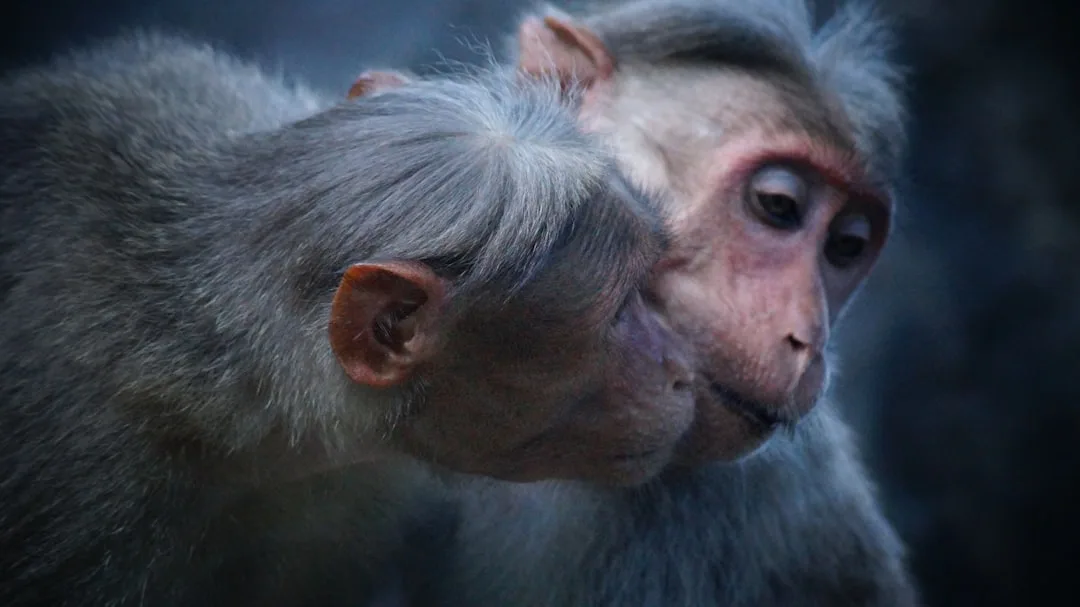
How intelligent are primates compared to other animals?
Primates are among the most intelligent animals on Earth. Chimpanzees use tools, plan for the future, and can learn sign language. Orangutans have been observed crafting tools from sticks and using leaves as gloves or umbrellas. Gorillas like Koko learned over 1,000 signs in modified American Sign Language.
The order Primates encompasses more than 500 living species spread across 80 genera, ranging from the tiny Madame Berthe's mouse lemur - weighing just 30 grams - to the imposing eastern gorilla, which can exceed 200 kilograms. These are our closest relatives in the animal kingdom, and studying them reveals as much about ourselves as it does about the natural world.
Primates first appeared in the fossil record roughly 55 to 58 million years ago, during the Paleocene epoch. From those early ancestors, the order diversified into an extraordinary array of species: the acrobatic gibbons of Southeast Asia, the calculating chimpanzees of equatorial Africa, the enigmatic aye-ayes of Madagascar, and everything in between.
Humans belong to this order too - we are primates, classified within the family Hominidae alongside gorillas, chimpanzees, bonobos, and orangutans.
What unites primates is a suite of shared characteristics: forward-facing eyes that provide stereoscopic vision, grasping hands with opposable thumbs (or in some cases, opposable big toes), relatively large brains for body size, and extended periods of parental care. These traits evolved in the context of arboreal life, where judging distances, gripping branches, and learning complex social rules were matters of survival.
Understanding primates is not merely an academic exercise. As Jane Goodall wrote: "What makes us human, I think, is an ability to ask questions, a consequence of our sophisticated spoken language." That capacity for questioning drives us to study our closest kin - and what we find challenges our assumptions about the boundaries between human and animal.
The Great Apes: Our Closest Kin
The great apes - gorillas, chimpanzees, bonobos, and orangutans - occupy a special place in primatology. Along with humans, they form the family Hominidae. These are the largest, most intelligent, and most socially complex of all non-human primates, and each species offers a different lens through which to understand the roots of human behavior.
All great apes share certain characteristics that distinguish them from monkeys and lesser apes: they lack tails, possess large brains relative to body size, exhibit prolonged juvenile development, and demonstrate sophisticated cognitive abilities including tool use, self-recognition, and cultural learning.
Their slow reproductive rates - females typically give birth to a single infant after long gestation periods and invest years in raising each offspring - make them particularly vulnerable to population decline.
| Feature | Chimpanzees | Gorillas | Orangutans | Bonobos |
|---|---|---|---|---|
| Closest DNA match to humans | 98.7% | 97.0% | 96.4% | 98.7% |
| Average weight (male) | 40-60 kg | 140-200 kg | 50-90 kg | 34-60 kg |
| Social structure | Multi-male communities | Harem groups led by silverback | Mostly solitary | Multi-male communities |
| Habitat | Tropical forests, savanna | Montane and lowland forest | Tropical rainforest | Lowland forest |
| Population estimate | ~170,000-300,000 | ~100,000 (western), ~5,000 (eastern) | ~104,000 (Bornean), ~14,000 (Sumatran) | ~15,000-20,000 |
| IUCN status | Endangered | Critically Endangered / Endangered | Critically Endangered | Endangered |
| Primary diet | Omnivorous (fruit, leaves, meat) | Herbivorous (leaves, stems, fruit) | Frugivorous (fruit, bark, insects) | Omnivorous (fruit, herbs, small animals) |
| Tool use | Extensive and varied | Occasional | Extensive and innovative | Limited |
Chimpanzee Intelligence: Tools, Language, and Warfare
Chimpanzees (Pan troglodytes) are perhaps the most thoroughly studied of all non-human primates, and for good reason. Their cognitive abilities rival those of young human children and challenge long-held assumptions about what separates humans from the rest of the animal kingdom.
Tool Use and Problem Solving
Chimpanzees employ a remarkable diversity of tools. In West Africa, populations in Guinea and Cote d'Ivoire use stone hammers and anvils to crack open oil palm nuts - a technique that juveniles spend years learning from their mothers. In central Africa, chimpanzees fashion spears from branches, sharpening the tips with their teeth, and use them to stab bushbabies hiding in tree hollows.
At Gombe Stream National Park in Tanzania, Jane Goodall's groundbreaking 1960 observation of a chimpanzee she named David Greybeard using a grass stem to extract termites from a mound rewrote the definition of what it means to be human. When Goodall telegraphed her mentor Louis Leakey with the news, he famously replied: "Now we must redefine 'tool,' redefine 'man,' or accept chimpanzees as humans."
Different populations use different tool kits - a phenomenon primatologists recognize as culture. Chimpanzees in the Tai Forest of Cote d'Ivoire crack nuts with stones, but chimpanzees at Gombe, where the same nut species grow, do not. This is not a matter of ability but of tradition: behaviors are learned socially and passed from generation to generation.
Washoe and the Question of Language
In 1966, researchers Allen and Beatrix Gardner began teaching American Sign Language to a young female chimpanzee named Washoe. Over her lifetime, Washoe learned approximately 350 signs and could combine them into novel phrases. When she saw a swan for the first time, she signed "water bird" - a combination she had never been taught.
Washoe also taught signs to her adopted son, Loulis, without human intervention, suggesting that language-like communication can be culturally transmitted among chimpanzees.
The Washoe project ignited fierce debate about whether chimpanzees truly understand language or merely produce conditioned responses. Regardless of where one falls in that debate, the experiments demonstrated cognitive capacities - symbolic reference, novel combination, and social teaching - that blur the line between human and non-human minds.
The Gombe Chimpanzee War
Perhaps nothing shattered the image of chimpanzees as gentle, peaceful creatures more than the Gombe War of 1974-1978. What Goodall documented was the systematic extermination of one chimpanzee community by another. The Kasakela community in the northern part of Gombe Stream National Park launched a series of lethal raids against the breakaway Kahama group to the south.
Over four years, Kasakela males - often traveling in parties of five or more - ambushed isolated Kahama males one by one. The attacks were brutal: victims were held down, beaten, bitten, and left to die of their injuries. By 1978, all six adult males of the Kahama community had been killed, along with one female. The surviving females were absorbed into the Kasakela group.
Goodall later wrote that the violence was so disturbing she had nightmares about it, and it took her years to come to terms with the dark side of chimpanzee nature. The Gombe War remains one of the most extensively documented cases of intergroup lethal aggression in non-human animals.
Gorilla Society: Silverbacks, Family, and Dian Fossey's Legacy
Gorillas are the largest living primates, and despite their imposing size, they are predominantly gentle, herbivorous animals whose social lives revolve around close family bonds. There are two species - the eastern gorilla (Gorilla beringei) and the western gorilla (Gorilla gorilla) - each with two subspecies.
The Silverback and the Family Group
Gorilla society is organized around a dominant male, the silverback, named for the saddle of silver-gray hair that develops on the backs of mature males around age 12-13. A typical gorilla group consists of one silverback, several adult females, and their offspring - usually 5 to 30 individuals. The silverback serves as the group's leader, protector, and decision-maker. He determines when and where the group travels, mediates disputes, and defends against threats.
Young males face a choice as they mature: challenge the dominant silverback for control of the group, or leave to live as solitary "blackbacks" until they can attract females and form their own groups. Infanticide by incoming males - while distressing to observe - is a known aspect of gorilla biology.
When a new silverback takes over a group, he may kill infants sired by his predecessor, bringing females back into estrus more quickly. This grim reproductive strategy drives females to associate closely with strong silverbacks who can protect their young.
Dian Fossey and the Mountain Gorillas
No discussion of gorillas is complete without Dian Fossey, the American primatologist who devoted 18 years of her life to studying and protecting mountain gorillas in the Virunga Mountains of Rwanda. Arriving in 1966 at the suggestion of Louis Leakey, Fossey established the Karisoke Research Center and pioneered habituation techniques that allowed her to observe gorillas at close range.
Fossey's work revealed the depth of gorilla emotional and social life. She documented play behavior, mourning rituals, and the tender bond between mothers and infants.
As she wrote: "The man who kills the animals today is the man who kills the people who get in his way tomorrow." Her increasingly militant stance against poachers - she destroyed snares, confiscated weapons, and organized anti-poaching patrols - made her both revered and despised. On December 26, 1985, Fossey was found murdered in her cabin at Karisoke. Her killing has never been officially solved.
At the time of Fossey's death, mountain gorillas numbered roughly 250 individuals. Thanks in large part to the conservation infrastructure she built and the global attention her work attracted, the mountain gorilla population has since recovered to approximately 1,063 as of the most recent census in 2021 - one of the few great ape conservation success stories.
Koko: The Gorilla Who Spoke
One of the most famous gorillas in history was Koko, a western lowland gorilla born at the San Francisco Zoo in 1971. Psychologist Francine "Penny" Patterson began teaching Koko a modified form of American Sign Language when she was just one year old. Over her 46-year life, Koko reportedly learned more than 1,000 signs and could understand approximately 2,000 words of spoken English.
Koko's story captivated the world. She famously asked for a pet cat and was given a kitten she named "All Ball." When All Ball was killed by a car, Koko signed "sad" and "frown" and was observed mourning. She appeared on the cover of National Geographic twice - once in a photograph she took of herself in a mirror. When told of the death of her childhood companion, the actor Robin Williams (who had visited her in 2001), Koko reportedly became visibly somber and signed "cry."
Critics questioned whether Koko's signs represented true linguistic understanding or conditioned responses interpreted generously by her handlers. Patterson's research was never subjected to rigorous peer review, and the Gorilla Foundation's methodology drew scrutiny. Regardless of the scientific debate, Koko's life undeniably shifted public perception of gorillas from fearsome beasts to emotionally complex beings deserving of protection. Koko died in her sleep on June 19, 2018.
Orangutans: The Solitary Geniuses of the Forest
Orangutans are the only great apes found outside Africa, inhabiting the tropical rainforests of Borneo and Sumatra. The name "orangutan" comes from the Malay words orang (person) and hutan (forest) - literally, "person of the forest." There are three recognized species: the Bornean orangutan (Pongo pygmaeus), the Sumatran orangutan (Pongo abelii), and the Tapanuli orangutan (Pongo tapanuliensis), described as a new species only in 2017.
Intelligence Without Sociality
What makes orangutans extraordinary among great apes is that they achieve remarkable intelligence despite being largely solitary. While chimpanzees and gorillas learn in social groups, orangutans must largely figure things out alone - and they do so with striking ingenuity.
Orangutans have been observed using sticks to extract seeds from spiny fruit, fashioning leafy branches into makeshift umbrellas during rainstorms, and using leaves as gloves to handle prickly vegetation. In Sumatra, some populations use sticks to extract honey from bee nests and insects from tree holes - tool use that, like chimpanzee tool traditions, varies between populations and appears to be culturally transmitted.
In captivity, orangutans have demonstrated problem-solving abilities that surpass chimpanzees in some tests. They can pick locks, unscrew bolts, and have been known to plan escapes from enclosures with startling patience and cunning. Researcher Robert Shumaker has noted that orangutans seem to approach problems more thoughtfully than chimpanzees, observing quietly before acting rather than relying on trial and error.
Borneo vs. Sumatra
Bornean and Sumatran orangutans diverged roughly 400,000 years ago, and the two populations show notable behavioral differences. Sumatran orangutans are more social and more frequent tool users - likely because the higher density of fruit trees in Sumatran forests allows individuals to tolerate closer proximity to one another. Bornean orangutans, living in less productive forests, are more strictly solitary and range over larger territories.
The Tapanuli orangutan, found only in the Batang Toru forest of northern Sumatra, is the most endangered great ape on Earth, with fewer than 800 individuals remaining. Its discovery underscored how much we still have to learn about primate diversity - and how quickly that diversity can vanish.
The Crisis of Deforestation
Orangutans face an existential threat from habitat destruction. Between 1999 and 2015, Borneo lost approximately 100,000 orangutans - more than half its population - primarily due to logging, palm oil plantations, and fires. Indonesia and Malaysia, which share the island of Borneo, are the world's largest producers of palm oil, a commodity found in roughly half of all packaged products in Western supermarkets.
The conversion of rainforest to monoculture plantations has devastated orangutan habitat, fragmenting populations and pushing them into ever-smaller forest patches where genetic diversity declines and conflict with humans increases.
Bonobos: The Peaceful Ape
Bonobos (Pan paniscus) are, along with chimpanzees, our closest living relatives - sharing 98.7% of our DNA. Yet bonobos could hardly be more different from their chimpanzee cousins in temperament and social organization. Found only in the dense forests south of the Congo River in the Democratic Republic of Congo, bonobos have earned a reputation as the "hippie apes" for their remarkably peaceful conflict resolution strategies.
Conflict Resolution Through Social Bonding
Where chimpanzee society is characterized by male dominance hierarchies, political alliances, and sometimes lethal violence, bonobo society is female-dominated and conspicuously less aggressive. When tensions arise - over food, mating rights, or social rank - bonobos frequently resolve them through affiliative social behaviors, including grooming, play, and physical bonding.
Frans de Waal, the primatologist who has studied bonobos extensively, observed: "The chimpanzee resolves sexual issues with power; the bonobo resolves power issues with sex."
Female bonobos form strong alliances that collectively outweigh the influence of any individual male. Mothers actively support their sons in the social hierarchy, and high-ranking females mediate disputes. Lethal aggression between groups - common in chimpanzees - has never been documented in wild bonobos.
Why Bonobos Differ
The leading hypothesis for bonobo peacefulness is ecological. South of the Congo River, bonobos do not compete with gorillas for food resources (gorillas are absent from their range). This reduced competition may have allowed bonobos to evolve in a more resource-rich environment where extreme aggression was less advantageous. Additionally, the female-dominated social structure creates selection pressures that favor cooperation and tolerance over aggression.
Bonobos number an estimated 15,000 to 20,000 in the wild, though accurate census data is difficult to obtain due to the political instability and ongoing conflict in the DRC. They are classified as Endangered by the IUCN.
Monkeys vs. Apes: Key Differences
One of the most common misconceptions about primates is conflating monkeys and apes. While both are primates, they diverged evolutionarily roughly 25 million years ago and differ in several fundamental ways.
Tails: The simplest distinction - apes (gibbons, great apes, and humans) do not have tails. Most monkeys do, though some species like the Barbary macaque are exceptions.
Body plan: Apes have broader chests, longer arms relative to their legs, and more mobile shoulder joints - adaptations for brachiation (swinging through trees). Monkeys tend to run along the tops of branches on all fours.
Brain size: Apes have significantly larger brains relative to body size. A chimpanzee's brain is roughly three times the size of a macaque's brain when corrected for body mass.
Development: Apes have longer gestation periods, longer childhoods, and longer lifespans. A chimpanzee may live 50 years; most monkeys live 20 to 30 years.
Old World vs. New World Monkeys
Monkeys are divided into two major groups separated by geography and millions of years of evolution:
Old World monkeys (family Cercopithecidae) are found in Africa and Asia. They include baboons, macaques, colobus monkeys, and langurs. They have non-prehensile tails (or no tails), nostrils that point downward, and specialized molars with sharp ridges for processing tough vegetation.
New World monkeys (infraorder Platyrrhini) are found in Central and South America. They include howler monkeys, spider monkeys, capuchins, and tamarins. Many have prehensile tails that function as a fifth limb, their nostrils are flat and widely spaced, and some species - like marmosets and tamarins - are among the smallest primates in the world.
The two groups diverged when the ancestors of New World monkeys somehow crossed the Atlantic Ocean from Africa, likely on rafts of vegetation, roughly 35 to 40 million years ago - one of the most remarkable dispersal events in mammalian evolution.
Lemurs: Madagascar's Living Fossils
Lemurs are prosimian primates found exclusively on the island of Madagascar, off the southeastern coast of Africa. They represent an ancient branch of the primate family tree - their ancestors arrived on Madagascar roughly 60 million years ago, likely via oceanic dispersal from mainland Africa, and evolved in isolation ever since.
Today, there are over 100 recognized species of lemurs, making Madagascar one of the most important hotspots for primate diversity on Earth. Lemurs range from the 30-gram Madame Berthe's mouse lemur - the world's smallest primate - to the indri, which weighs up to 9.5 kilograms and is known for its haunting, whale-like songs that carry for kilometers through the forest.
The ring-tailed lemur (Lemur catta), with its distinctive black-and-white striped tail, is the most recognizable species and one of the few lemurs that spends significant time on the ground. The aye-aye (Daubentonia madagascariensis) is perhaps the strangest - a nocturnal creature with bat-like ears, rodent-like teeth, and an elongated middle finger used to tap on tree bark and extract insect larvae, a feeding strategy called percussive foraging.
Lemurs face catastrophic threats. Madagascar has lost roughly 90% of its original forest cover, and a 2020 IUCN assessment found that 98% of lemur species are threatened with extinction - making them the most endangered group of mammals on Earth. Slash-and-burn agriculture, illegal logging, and the bushmeat trade continue to erode what habitat remains.
Communication and Culture in Primates
One of the most profound discoveries in primatology over the past half century is that non-human primates possess culture - defined as behaviors that are learned socially, vary between populations, and are transmitted across generations without genetic change.
Vocal Communication
Primates communicate through a rich repertoire of vocalizations. Vervet monkeys produce distinct alarm calls for different predators - one for eagles, another for leopards, a third for snakes - and other vervets respond appropriately to each, suggesting the calls function as rudimentary words. Howler monkeys produce vocalizations that can be heard up to 5 kilometers away, advertising territory ownership.
Gibbons sing elaborate duets - mated pairs produce coordinated songs each morning that strengthen pair bonds and warn neighboring groups.
Cultural Transmission
Beyond tool use, primates display cultural variation in food processing, social customs, and even grooming styles. Japanese macaques on Koshima Island famously learned to wash sweet potatoes in water after a young female named Imo invented the technique in 1953 - a behavior that then spread through the troop and persists today, decades later.
Chimpanzees in some communities perform a "rain dance" during thunderstorms - charging, swaying, and slapping the ground - while neighboring communities do not.
These findings have fundamentally altered our understanding of culture as a uniquely human trait. As Frans de Waal argued: "We are not the only species with a history; we share this with our closest relatives."
Conservation: The Fight to Save Our Closest Relatives
Primates are in crisis. A comprehensive 2017 study published in Science Advances found that approximately 60% of all primate species are threatened with extinction, and 75% have declining populations. The threats are overwhelmingly human-caused.
Habitat Destruction
Tropical deforestation is the single greatest threat to primates worldwide. Between 2001 and 2020, the tropics lost approximately 12% of their tree cover. In Southeast Asia, palm oil expansion has devastated orangutan habitat. In Madagascar, slash-and-burn agriculture consumes roughly 1-2% of remaining forest each year. In the Amazon, cattle ranching and soybean cultivation are fragmenting habitats critical to spider monkeys, howler monkeys, and tamarins.
The Bushmeat Trade
In Central and West Africa, the commercial bushmeat trade poses an existential threat to great apes. An estimated 1 to 5 million metric tons of bushmeat are extracted from the Congo Basin annually. Gorillas, chimpanzees, and bonobos are all hunted, despite legal protections.
The construction of logging roads into previously inaccessible forests has opened vast new areas to hunters, and bushmeat is sold openly in urban markets. For great apes, with their slow reproductive rates, even low levels of hunting can push populations into irreversible decline.
Disease
The Ebola virus has killed an estimated one-third of the world's gorilla population since the 1990s, with devastating outbreaks in the Republic of Congo and Gabon. Respiratory diseases transmitted by tourists and researchers pose an ongoing risk to habituated gorilla and chimpanzee populations - a concern that intensified during the COVID-19 pandemic, given the susceptibility of great apes to human respiratory pathogens.
Sanctuaries and Conservation Success
Despite the grim outlook, there are reasons for cautious optimism. Mountain gorilla numbers have increased from an estimated 250 in the 1980s to over 1,000 today, thanks to intensive anti-poaching patrols, veterinary intervention, and community-based tourism programs in Rwanda, Uganda, and the Democratic Republic of Congo.
The golden lion tamarin, a striking orange primate from Brazil's Atlantic Forest, was reduced to roughly 200 individuals in the 1970s. Through a coordinated breeding and reintroduction program involving dozens of zoos worldwide, the population has recovered to approximately 3,700 in the wild - a landmark achievement in primate conservation.
Organizations like the Jane Goodall Institute, the Dian Fossey Gorilla Fund, the Borneo Orangutan Survival Foundation, and the Lemur Conservation Network work across habitat countries to protect remaining populations, rehabilitate orphaned individuals, and support local communities in developing sustainable livelihoods that reduce pressure on forests.
The future of primates depends on addressing the root causes of their decline: poverty, governance failures, and unsustainable consumption patterns in both producing and consuming nations. As Goodall has repeatedly emphasized, conservation cannot succeed without the involvement and empowerment of local communities who share their landscapes with primates.
References
Goodall, J. (1986). The Chimpanzees of Gombe: Patterns of Behavior. Harvard University Press.
Fossey, D. (1983). Gorillas in the Mist. Houghton Mifflin.
de Waal, F. (1997). Bonobo: The Forgotten Ape. University of California Press.
Estrada, A., et al. (2017). "Impending extinction crisis of the world's primates: Why primates matter." Science Advances, 3(1), e1600946.
Voigt, M., et al. (2018). "Global demand for natural resources eliminated more than 100,000 Bornean orangutans." Current Biology, 28(5), 761-769.
Patterson, F., & Gordon, W. (1993). "In the Company of Koko." National Geographic, 184(4), 110-113.
Nishida, T. (2012). Chimpanzees of the Lakeshore: Natural History and Culture at Mahale. Cambridge University Press.
Frequently Asked Questions
How intelligent are primates compared to other animals?
Primates are among the most intelligent animals on Earth. Chimpanzees use tools, plan for the future, and can learn sign language. Orangutans have been observed crafting tools from sticks and using leaves as gloves or umbrellas. Gorillas like Koko learned over 1,000 signs in modified American Sign Language. Great apes demonstrate self-awareness, pass the mirror test, and exhibit cultural transmission of learned behaviors across generations.
How similar is human DNA to other primates?
Humans share approximately 98.7% of their DNA with chimpanzees and bonobos, making them our closest living relatives. We share about 97% with gorillas and roughly 96.4% with orangutans. Even Old World monkeys like macaques share around 93% of their DNA with humans. This genetic closeness reflects our shared evolutionary history - humans and chimpanzees diverged from a common ancestor roughly 6 to 7 million years ago.
Which great apes are endangered and why?
All great ape species are endangered or critically endangered. Mountain gorillas number around 1,000 individuals, while the Cross River gorilla has fewer than 300 remaining. Bornean orangutans are critically endangered with populations declining over 50% since 1999. Sumatran orangutans number around 14,000, and the Tapanuli orangutan - discovered in 2017 - has fewer than 800 individuals, making it the rarest great ape.
The bushmeat trade, habitat destruction from logging and palm oil plantations, and disease are the primary threats.