
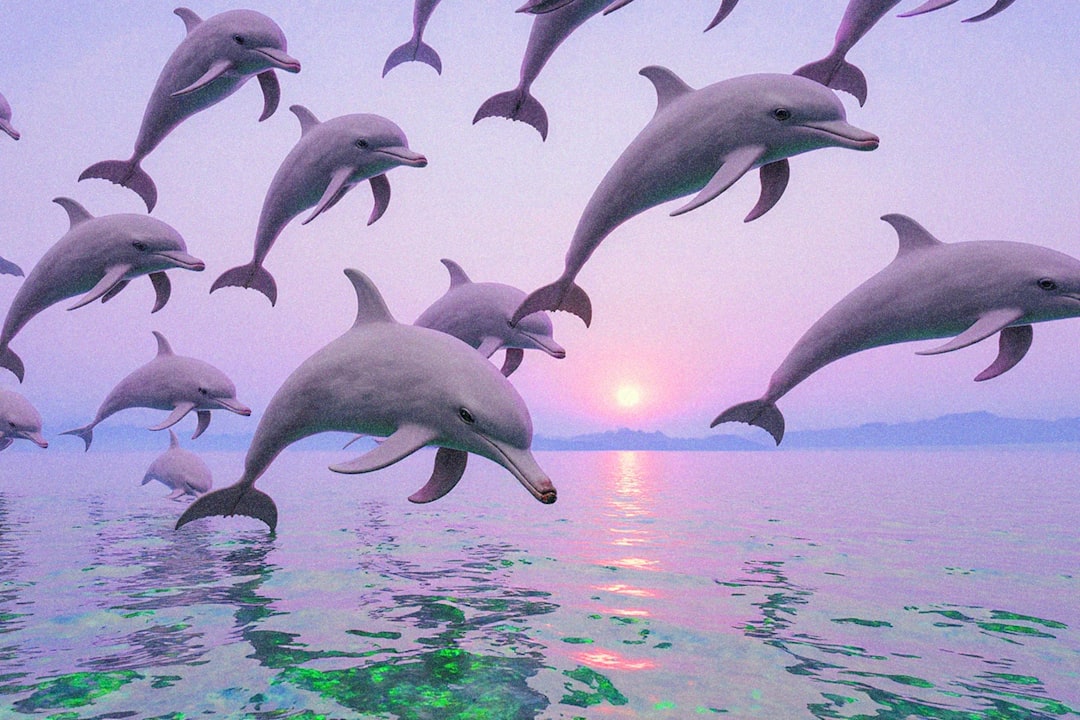
The dolphin does not have hands. It cannot fashion tools the way a New Caledonian crow bends a wire into a hook. It cannot write symbols on a wall the way a chimpanzee trained in American Sign Language can. Yet when a bottlenose dolphin sees a mark drawn on its own forehead in a mirror, it turns its body to inspect the mark. It does this in seconds, without training, without prompting, and with a behavioral clarity that has convinced nearly every comparative cognition researcher that the dolphin is aware of itself as an individual.
Self-recognition is not the whole of consciousness, but it is the classical behavioral marker. It is the threshold that divides creatures that merely live in the world from creatures that know they are living in it. The dolphin crosses that threshold, along with the great apes, elephants, corvids, and a few other species whose cognition we are slowly beginning to take seriously.
The Mirror Test and Its History
The mirror self-recognition test (MSR) was developed by Gordon Gallup Jr. in 1970 using chimpanzees. The protocol is straightforward. A subject is exposed to a mirror long enough to understand its reflective properties. A visible mark is then placed on a part of the body the subject cannot see directly. If the subject examines its own body rather than the mirror in response to the mark, it demonstrates understanding that the reflection represents itself.
Chimpanzees passed. So did orangutans, bonobos, and (with qualifications) gorillas. Rhesus macaques, baboons, and most monkey species fail reliably. Among non-primates, the confirmed passers include Asian elephants, bottlenose dolphins, orcas, and Eurasian magpies.
The dolphin result came from a 2001 study by Diana Reiss of Hunter College and Lori Marino of Emory University, conducted at the New York Aquarium. Two bottlenose dolphins, Presley and Tab, were marked with nontoxic ink on hidden parts of their bodies and then given access to a mirror. Both dolphins swam directly to the mirror and oriented their bodies to examine the marked sites. They spent significantly more time inspecting the marks than inspecting unmarked control sites.
"These results show that dolphins are capable of using a mirror to investigate parts of their bodies, a capacity that requires a level of abstract thinking previously documented only in great apes and humans." -- Diana Reiss, Professor of Psychology, Hunter College of the City University of New York
A 2018 follow-up by Rachel Morrison and Reiss at the National Aquarium in Baltimore showed that dolphins pass the mirror test at significantly younger ages than human children. Mirror self-directed behavior appeared in dolphins as young as 7 months, while human children do not consistently pass until 18 to 24 months. This developmental finding challenged long-held assumptions about the relationship between body growth, motor control, and the emergence of self-awareness.
Signature Whistles: Functional Naming
Dolphins develop individually distinctive signature whistles during their first year of life. These whistles are learned, not genetically fixed, and each individual's whistle remains stable across decades. When one dolphin wants to address or initiate contact with another, it often produces the other dolphin's signature whistle.
A 2013 study by Stephanie King and Vincent Janik at the University of St Andrews confirmed that bottlenose dolphins respond preferentially to playback of their own signature whistle even when produced by a different individual. This meets the operational definition of referential communication and is the closest parallel to naming documented in any non-human species.
| Feature of dolphin signature whistle | Evidence base |
|---|---|
| Individually distinctive | Confirmed in 100+ wild bottlenose dolphins |
| Stable across decades | Tracked in Sarasota Bay pop. since 1970s |
| Learned, not innate | Calves develop whistles in first year |
| Used to address specific individuals | Shown in controlled playback studies |
| Preserved across long-distance reunions | Documented in multi-pod encounters |
| Mimicked by other dolphins to call | Observed in wild and captive settings |
King and Janik's work has been supplemented by field research in Shark Bay, Western Australia, where the Dolphin Innovation Project has tracked multi-generational dolphin social networks for decades. The resulting datasets represent one of the most complete long-term behavioral studies ever conducted on a wild cetacean population.
For field biologists logging individual dolphin encounters across decades-long studies, integrating photo-ID records, acoustic files, genetic samples, and GPS tracks requires the meticulous field observation documentation infrastructure that modern scientific notebook platforms have brought to long-term marine mammal research.
The Cetacean Brain
Dolphins have the second-largest brain relative to body size of any animal on Earth. The encephalization quotient (EQ), a standardized ratio of actual brain mass to expected brain mass for an animal of a given body size, is 4.14 for bottlenose dolphins. Humans measure 7.4 to 7.8. Chimpanzees are 2.2 to 2.5. Most other mammals sit between 0.5 and 1.5.
| Species | Encephalization quotient | Absolute brain mass |
|---|---|---|
| Human | 7.4-7.8 | 1,350 g |
| Bottlenose dolphin | 4.14 | 1,500-1,700 g |
| Killer whale | 2.57 | 5,620 g (largest in absolute terms after whales) |
| Chimpanzee | 2.2-2.5 | 384 g |
| Elephant | 1.88 | 4,780 g |
| Dog | 1.2 | 65-75 g |
| Cat | 1.0 | 30 g |
The dolphin neocortex has more surface area than the human neocortex. However, structural organization differs. Dolphin cortex has six layers rather than the five typical of mammals, with unusually thick layers I and II and an unusually thin layer IV. The functional implications of these differences are not yet fully understood.
Dolphins also possess Von Economo neurons, a specialized class of spindle-shaped cells previously thought to be unique to great apes, elephants, and humans. These neurons are associated with social cognition, emotional processing, and self-awareness in humans. Their presence in cetaceans provides neurobiological support for the behavioral evidence of dolphin self-awareness.
"The dolphin brain has the infrastructure we associate with complex cognition, social awareness, and emotional intelligence in humans. The question is not whether dolphins are conscious. It is what kind of consciousness they have and how we can begin to measure it." -- Lori Marino, Neuroscientist and Founder, Kimmela Center for Animal Advocacy
This comparative perspective on animal cognition connects broadly to the field of animal intelligence measurement and cross-species cognitive assessment, which extends frameworks originally developed in human psychometrics to non-human subjects including cetaceans, primates, and corvids.
Metacognition: Knowing What You Know
A dolphin named Natua, tested at the Kewalo Basin Marine Mammal Laboratory in Hawaii by Louis Herman's research group, performed a classical metacognition paradigm. She was trained to discriminate between high-frequency and low-frequency tones. For ambiguous tones near the discrimination threshold, she was given the option of a third response indicating uncertainty. Natua reliably chose the uncertainty response for near-threshold tones and the forced-choice responses for easy trials, a pattern consistent with monitoring the quality of her own perceptual evidence.
Metacognition is the ability to reflect on one's own knowledge state. It is considered a hallmark of higher-order cognition and has been documented in humans, great apes, macaques, and now dolphins. The ability suggests that dolphins have at least some form of second-order mental representation, where the animal holds a representation of its own certainty or uncertainty.
Cultural Transmission and Innovation
Dolphins exhibit cultural transmission of hunting techniques. In Shark Bay, Western Australia, a lineage of female bottlenose dolphins uses marine sponges as protective tools on their rostrums when foraging along the seafloor. This sponging behavior is learned through mother-to-daughter transmission and has been documented in the population for at least 40 years.
In Laguna, Brazil, a population of bottlenose dolphins cooperates with human fishermen, driving schools of mullet toward fishing boats and signaling with specific tail-slap patterns when the fish have arrived. The fishermen cast nets on cue and share the disoriented fish with the dolphins. This cooperative behavior has been passed through dolphin generations since at least the 1840s and is one of the clearest cases of persistent interspecies cooperation documented in the wild.
In the Bahamas, bottlenose dolphins have been observed teaching spotted dolphins new foraging techniques across species boundaries. In the Florida Keys, dolphins perform mud-ring feeding, where one individual stirs up a ring of silt to trap fish, allowing the entire pod to capture the confused prey.
The Australian dolphin populations in Shark Bay, Port Phillip, and Moreton Bay represent some of the best-studied cultural dolphin groups on Earth, and their conservation intersects with the broader Australian marine wildlife observation and ecotourism sector that documents these encounters for both research and visitor education.
Social Complexity and Alliances
Male bottlenose dolphins in Shark Bay form multi-level alliances unique among non-human animals. First-order alliances consist of two or three males cooperating to herd and mate with females. Second-order alliances involve multiple first-order groups joining to defend access to females or to attack rival second-order alliances. Third-order relationships represent stable coalitions of second-order alliances.
This three-tier social structure has no known parallel outside of humans. Richard Connor at the University of Massachusetts Dartmouth and Michael Krutzen at the University of Zurich have documented these alliance structures through 35 years of continuous fieldwork in Shark Bay.
Sleep and Conscious Control
Dolphins sleep with one brain hemisphere at a time, a phenomenon called unihemispheric slow-wave sleep. One eye remains open and the opposite hemisphere stays awake, maintaining breathing, awareness of predators, and basic navigation. Over 24 hours, each hemisphere accumulates sufficient sleep, but the animal is never fully unconscious.
This has profound implications for the nature of cetacean consciousness. Human unconsciousness is largely defined by the synchronized slow waves of both hemispheres entering deep sleep together. Dolphins never experience this state. Whatever their consciousness is, it is continuously active in at least one hemisphere throughout their lives.
Research Writing and the Cetacean Literature
The comparative cognition literature on dolphins is technically dense, spanning neuroscience, ethology, acoustic analysis, and genetic population studies. Manuscripts frequently require LaTeX-compatible equation formatting, multi-author collaboration across institutions, and careful citation management.
Scientific writing platforms, including academic manuscript tools and templates at Evolang, have become standard infrastructure in these multi-institutional projects, particularly for the complex Bayesian statistical analyses used in modern social network and population-genetic papers.
Conservation and Captive Care Ethics
Bottlenose dolphins are listed as Least Concern globally by the IUCN, but several populations are at significant risk. The Indo-Pacific humpback dolphin, the Irrawaddy dolphin, and the Maui dolphin are all classified as Endangered or Critically Endangered. Bycatch in fisheries remains the leading source of mortality for coastal dolphins worldwide.
The ethical status of dolphin captivity has been debated for decades. The 2013 US government decision to halt the Navy's dolphin cognition research program, the Indian government's 2013 declaration that cetaceans qualify as non-human persons and banning captive dolphin shows, and the ongoing public pressure on traditional marine parks have shifted the industry substantially.
Wildlife biologists and marine mammal care specialists pursuing professional credentials for work in stranding response, population monitoring, and oceanographic agencies prepare through formal wildlife biology and marine science certification programs that structure the exam and continuing-education requirements for NOAA, state agencies, and international marine mammal commissions.
Acoustic Signatures and Biobank Integration
Each dolphin's signature whistle and photo-ID fin pattern are cataloged in research databases such as FinBase, used by the Sarasota Dolphin Research Program. Tissue samples from biopsy darts, necropsied animals, and rehabilitation centers contribute to genetic biobanks including the Marine Mammal Genome Resource at the University of California.
Cross-referencing acoustic files, photo-ID, and genetic records relies on rigorous specimen coding. Modern collections increasingly adopt QR-coded sample labels to link physical tissue vials to their acoustic and morphometric records, eliminating the transcription errors that historically corrupted large cetacean datasets.
For research teams working with historical photo-ID archives, GPS-tagged survey tracks, and embedded-metadata photographs of individual dolphins, tools that inspect and normalize image metadata, including image EXIF viewers, maintain the provenance chains required for publication and data sharing through platforms like Dryad and GBIF.
Marine Wildlife Tourism
Dolphin-watching tourism generates over 2.1 billion US dollars annually worldwide, supporting roughly 13,000 jobs across 119 countries. Operators range from large commercial fleets to small cooperative ventures organized by local fishing communities. The sector is governed by varying national regulations, with particularly strict codes in Australia, New Zealand, and the United States.
Businesses offering dolphin observation experiences typically register as specialized marine ecotourism entities, and the company formation and licensing workflow is documented across nature tourism business registration resources that cover coastal jurisdictions with protected marine species requirements.
What Dolphin Cognition Tells Us About Ourselves
The evolution of consciousness is one of the deepest unanswered questions in biology. Humans, dolphins, elephants, and corvids represent four independently evolved lineages that have arrived at something resembling self-awareness. The last common ancestor of humans and dolphins lived roughly 95 million years ago. Every cognitive similarity between us is the product of parallel evolution, not shared inheritance.
This convergence matters. It suggests that the social, ecological, and computational demands that produce self-awareness may be general rather than specific to our lineage. Complex social groups, long lifespans, extended parental care, varied diets, and rich communication systems all correlate with the emergence of self-recognition capacity. The dolphin exemplifies every one of these conditions, and it crossed the threshold into self-awareness in a body that could not be more different from our own.
"The dolphin is not a human in a fish suit. It is a different kind of mind, evolved in a different medium, solving the same problems we face with a different toolkit. Studying dolphins is not about proving they are like us. It is about understanding what consciousness looks like from the outside in, across evolutionary distance." -- Justin Gregg, Research Associate, Dolphin Communication Project
What dolphins teach us is that the human mind is one solution among many. The ocean holds another. The insight is humbling, and it reshapes the ethical calculus of how we treat the other intelligences that share the planet.
References
- Reiss, D., & Marino, L. (2001). Mirror self-recognition in the bottlenose dolphin: A case of cognitive convergence. Proceedings of the National Academy of Sciences, 98(10), 5937-5942. DOI: 10.1073/pnas.101086398
- Morrison, R., & Reiss, D. (2018). Precocious development of self-awareness in dolphins. PLOS ONE, 13(1), e0189813. DOI: 10.1371/journal.pone.0189813
- King, S. L., & Janik, V. M. (2013). Bottlenose dolphins can use learned vocal labels to address each other. Proceedings of the National Academy of Sciences, 110(32), 13216-13221. DOI: 10.1073/pnas.1304459110
- Marino, L., Connor, R. C., Fordyce, R. E., et al. (2007). Cetaceans have complex brains for complex cognition. PLOS Biology, 5(5), e139. DOI: 10.1371/journal.pbio.0050139
- Connor, R. C., & Krutzen, M. (2015). Male dolphin alliances in Shark Bay: changing perspectives in a 30-year study. Animal Behaviour, 103, 223-235. DOI: 10.1016/j.anbehav.2015.02.019
- Herman, L. M. (2010). What laboratory research has told us about dolphin cognition. International Journal of Comparative Psychology, 23(3). DOI: 10.46867/ijcp.2010.23.03.03
- Krutzen, M., Mann, J., Heithaus, M. R., et al. (2005). Cultural transmission of tool use in bottlenose dolphins. Proceedings of the National Academy of Sciences, 102(25), 8939-8943. DOI: 10.1073/pnas.0500232102
- Hof, P. R., & Van der Gucht, E. (2007). Structure of the cerebral cortex of the humpback whale, Megaptera novaeangliae. The Anatomical Record, 290(1), 1-31. DOI: 10.1002/ar.20407