
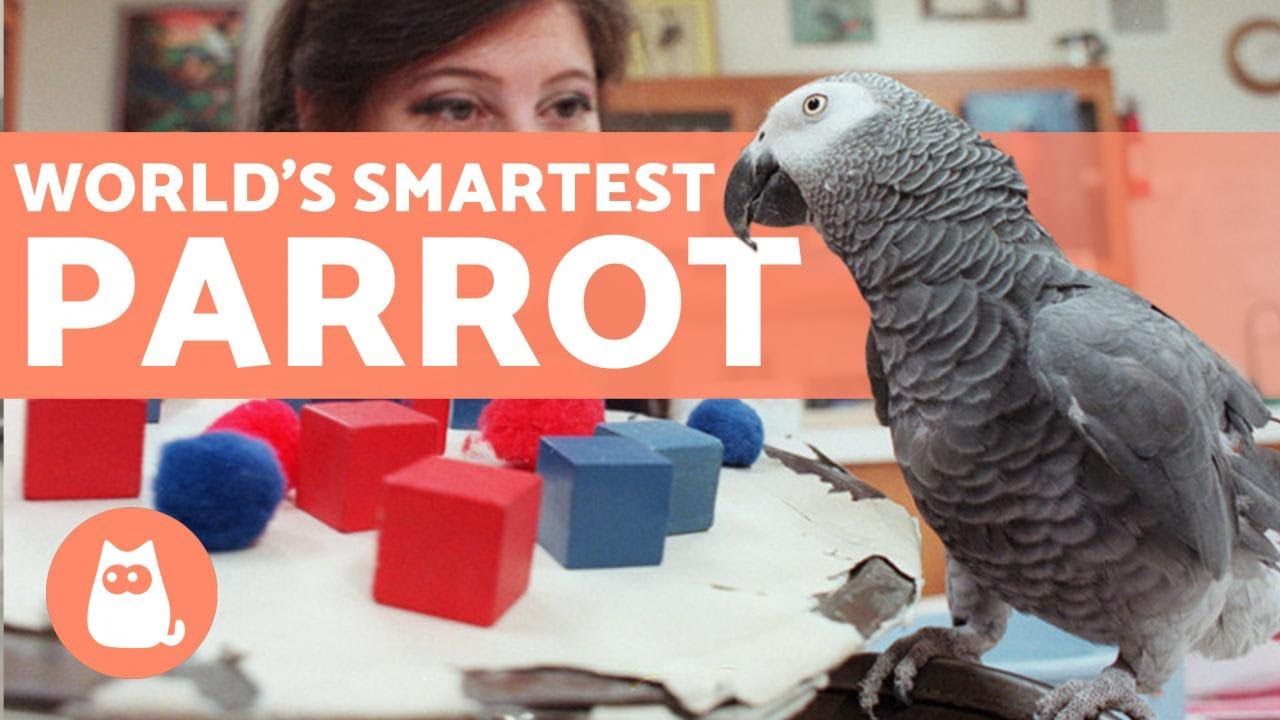
Did Alex the parrot really understand language or was he just mimicking?
Alex the African grey demonstrated genuine referential comprehension that exceeded simple mimicry. Under the 30-year controlled training and testing protocol developed by Irene Pepperberg at Harvard, Brandeis, and the University of Arizona, Alex correctly identified over 100 objects by name, seven colors, five shapes, and numerical values up to six.
On September 6, 2007, the most famous parrot in the scientific history of animal cognition said goodnight to his researcher and did not wake up. Alex, an African grey parrot purchased from a Chicago pet store in 1977, had spent 30 years working with Irene Pepperberg on what turned out to be the most rigorous demonstration of referential language comprehension ever documented in a non-human animal.
His death at age 31 was unexpected and scientifically devastating. It also left behind a research record that forced the comparative cognition field to rewrite its assumptions about what a bird brain could do.
This article documents the 30-year Alex Project, the parrots that have continued the research since his death, the broader context of parrot cognition beyond African greys, and the implications of this body of work for how humans think about language, intelligence, and the moral status of the animals we have long dismissed as "bird-brained."
The Alex Project
Irene Pepperberg began the Alex Project in 1977 after observing the limitations of earlier attempts to teach human language to great apes. The ape studies, particularly those of Washoe and Koko, had produced genuine language-related capacities in chimpanzees and gorillas, but methodological criticisms had cast doubt on how much was real comprehension versus trained response.
Pepperberg wanted to eliminate those criticisms by developing a rigorous experimental methodology and by testing a species whose vocal apparatus could produce human-like sounds without requiring the laborious manual signing training that the ape studies depended on.
She chose the African grey parrot (Psittacus erithacus) for two reasons. First, the species has a sophisticated natural vocal learning capacity comparable to that of songbirds. Second, African greys had a well-documented ability in captivity to produce clearly articulated human speech sounds, giving researchers direct access to the animal's vocal output without the need for sign-language interpretation.
Alex was purchased at roughly one year of age from a pet store in Chicago. The name was an acronym for Avian Language EXperiment, later revised to Avian Learning EXperiment when Pepperberg wanted to sidestep the decades-old debate over what constituted "language" in animals.
The Model/Rival Training Method
The core methodological innovation of the Alex Project was the model/rival training protocol. Rather than using conditioning with food rewards, which earlier studies had relied on, Pepperberg and her colleagues used a social learning framework in which the parrot observed two human trainers modeling a target interaction. One human asked questions about an object.
The other human answered, was praised for correct answers and corrected for incorrect answers, and was given the object as reward when correct. Alex observed these interactions and gradually entered them as a participant.
The method drew on social learning theory developed by Albert Bandura and on the observation that African greys in the wild learn vocalizations and foraging techniques by watching other parrots rather than through isolated trial and error.
Testing was separated from training. All evaluations were conducted under blind conditions with randomized trial order, and Alex's answers were scored by observers who did not know the correct answer or the trial sequence. This protocol eliminated the Clever Hans effect, the phenomenon in which animals produce apparently intelligent responses by reading subtle cues from their handlers.
What Alex Could Do
By the time of his death, Alex had mastered a vocabulary of over 100 words used referentially. The vocabulary was not merely labels. He could combine categories in novel ways that demonstrated comprehension of abstract relationships.
| Cognitive capacity | Demonstrated evidence |
|---|---|
| Object labels | 100+ objects by name |
| Color categories | 7 colors identified |
| Shape categories | 5 shapes (3, 4, 5, 6 corners, etc.) |
| Material categories | Wood, wool, cork, paper, rock, chalk |
| Numerical quantity | 0 through 6, including zero as absence |
| Addition | Sums up to 6 |
| Same/different | Abstract relational judgment |
| Bigger/smaller | Relative magnitude comparison |
| Over/under | Spatial relationship |
| Phonological awareness | "Sound it out" approximations |
| Requests and refusals | "I want X," "No" with contextual meaning |
Perhaps the most striking finding was Alex's grasp of zero. When shown a tray of three red objects and asked "What color four?" where no group of four existed, Alex would respond "none." This required him to understand both the absence concept and the specific numerical question being asked, a capacity that human children do not typically demonstrate until age 4.
Alex also performed addition with small numbers. When presented with two occluded collections of objects and asked for the total, he correctly answered sums up to 6. The 2012 posthumous study by Pepperberg documented that Alex could add across non-visible sets, indicating he was maintaining numerical representations in short-term memory rather than performing visual counting.
"Alex did not simply repeat sounds. He answered questions. He corrected his own errors. He used English words to refer to things in the world, and he used them in ways that went far beyond what we had been willing to attribute to a bird." - Irene Pepperberg, Research Associate, Harvard University
The methodological rigor of the Alex Project has been substantially more thorough than that of the earlier great ape language studies. Every claim about Alex's comprehension was subjected to control trials designed to rule out cued responding, stereotyped behavior, and probability-matching strategies.
The Broader Context of Animal Language Studies
Alex's work sits within a longer tradition of animal language research. The field has produced several notable subjects:
| Subject | Species | Primary researcher | Primary findings |
|---|---|---|---|
| Alex | African grey parrot | Irene Pepperberg | Referential labels, numerical reasoning |
| Washoe | Chimpanzee | Beatrix and Allen Gardner | ~250 ASL signs, novel combinations |
| Koko | Western lowland gorilla | Francine Patterson | 1,000 ASL signs (contested rigor) |
| Kanzi | Bonobo | Sue Savage-Rumbaugh | Lexigram comprehension, grammar |
| Chaser | Border collie | John Pilley | 1,022 noun labels |
| Rico | Border collie | Juliane Kaminski | Fast-mapping word acquisition |
| Griffin | African grey | Irene Pepperberg | Continuation of Alex protocols |
| Athena | African grey | Irene Pepperberg | Current research subject |
Each of these studies has been subject to methodological critique. The Alex Project is generally considered the most rigorous of the set, in large part because Pepperberg anticipated and addressed the critiques that had been leveled at earlier work.
The comparative cognition literature now places parrots and corvids at the top of the avian cognitive hierarchy, with some species performing at levels comparable to great apes on specific cognitive tasks. This work forms part of the broader field of animal intelligence measurement and cross-species cognitive assessment that extends psychometric frameworks originally developed for humans to the study of non-human minds.
African Grey Neurobiology
The African grey parrot brain is substantially smaller than a human brain in absolute terms at approximately 8 grams, compared with the human brain at 1,350 grams. However, neuron density in the avian pallium is substantially higher than in mammalian cortex.
A 2016 study by Seweryn Olkowicz and colleagues at Charles University in Prague showed that the brains of parrots and corvids contain more neurons than primate brains of equivalent mass. The African grey brain contains approximately 1.5 billion neurons in total, compared with roughly 7 billion in a capuchin monkey brain despite a six-fold mass difference.
More importantly, parrot pallial neurons are organized in dense, functionally specialized circuits analogous to the mammalian prefrontal cortex. The avian equivalent, the nidopallium caudolaterale, handles executive function, planning, and flexible decision-making. Parrots have an unusually large nidopallium relative to body size, consistent with their high cognitive performance.
Griffin and the Continuing Research
Following Alex's death in 2007, Pepperberg's research continued with Griffin, an African grey parrot hatched in 1995. Griffin has performed at levels comparable to Alex on most tasks and has extended the research program into new domains.
A 2019 study published by Pepperberg and colleagues in Cognition showed that Griffin outperformed typical 4-year-old children on a delayed gratification task adapted from the classic marshmallow test. Griffin successfully waited up to 15 minutes for a preferred reward when offered a less preferred immediate option. The study controlled for hunger state, food preference gradients, and the parrot's attention to the experimenter.
Athena, an African grey obtained in 2013 by the Pepperberg laboratory, has continued the research into referential communication and logical reasoning, extending the research program that began with Alex into its third generation of subjects.
Other Highly Intelligent Parrots
African greys are not the only parrots that have demonstrated advanced cognition. Several other species deserve recognition in any discussion of parrot intelligence.
Kea
The kea (Nestor notabilis) is an alpine parrot endemic to New Zealand. Research by Alex Taylor at the University of Auckland and Alice Auersperg at the University of Veterinary Medicine Vienna has demonstrated exceptional problem-solving intelligence in kea, including spontaneous tool use, cooperative problem-solving, and causal reasoning on physical puzzles. Kea sometimes outperform chimpanzees on tasks requiring flexible reasoning about novel situations.
Goffin's Cockatoo
Cacatua goffiniana, a small cockatoo from Indonesia, has shown remarkable tool manufacture in laboratory conditions. A captive Goffin's named Figaro was filmed spontaneously crafting tools from pieces of wood and cardboard to retrieve food. Subsequent research has shown that tool manufacture is not limited to a single individual but is a capacity within the species that can be expressed when conditions require it.
Hyacinth Macaw
The hyacinth macaw (Anodorhynchus hyacinthinus), the largest flying parrot in the world, shows exceptional capacities for problem-solving and foraging innovation, including the use of leaves as tools to wedge brazil nuts against branches during the cracking process.
Palm Cockatoo
The palm cockatoo (Probosciger aterrimus) of Australia, New Guinea, and Indonesia is the only parrot documented to manufacture and use a tool for a non-foraging purpose. Males fashion drumsticks from branches and seed pods and use them to drum on hollow trees during courtship displays.
Robert Heinsohn and colleagues at the Australian National University have documented this as the only confirmed instrumental musical behavior in a non-human species. The palm cockatoo sits within the broader context of Australian wildlife observation and cognitive research that makes northern Australia a global priority for parrot cognition research.
Australian Parrot Fauna
Australia is the global center of parrot diversity, with 56 species native to the continent. The galah, corella, sulphur-crested cockatoo, rainbow lorikeet, and king parrot are familiar urban species across eastern Australia. The budgerigar, the world's most popular pet bird, is a small native parrot of the Australian arid interior. The palm cockatoo, as noted, is the largest cockatoo and the only tool-using drum-display parrot.
Parrot ecotourism is a significant draw for the Australian wildlife tourism industry. Dedicated parrot observation sites at O'Reilly's Rainforest Retreat in Queensland, the Flinders Ranges in South Australia, and the Kimberley region in Western Australia generate substantial visitor flows.
For field biologists documenting parrot populations, foraging behavior, and vocal dialects across these landscapes, the integration of GPS tracks, audio recordings, and photo-ID records requires the structured field observation platforms that modern ornithology routinely relies on.
Conservation Status of the African Grey
The African grey parrot itself is in serious trouble in the wild. The species was uplisted from Vulnerable to Endangered on the IUCN Red List in 2016, reflecting catastrophic population declines across its central African range driven by trapping for the pet trade and habitat destruction.
| Region | Historical population | Current estimate | Primary threat |
|---|---|---|---|
| Ghana | Abundant in 1990s | 90 to 99 percent decline | Trapping for pet trade |
| Nigeria | Abundant in 1990s | Severe decline | Trapping, habitat loss |
| Cameroon | Stable 1990s | Significant decline | Trapping |
| Democratic Republic of Congo | Historically abundant | Declining, scale unknown | Trapping, deforestation |
| Angola | Abundant historically | Uncertain, likely declining | Trapping |
The 2016 CITES Appendix I listing banned international commercial trade in wild-caught African greys, but enforcement remains weak across much of the species' range. Conservation organizations working in central Africa continue to document illegal trapping and exports to Asian markets.
Professional conservationists working on African grey and related parrot species often pursue formal credentials through wildlife biology and conservation certification programs that structure exam preparation and continuing education for agency and NGO roles.
Research Writing and the Cognition Literature
The animal cognition literature is methodologically dense. Papers claiming cognitive capacity in non-human animals face intense scrutiny, and modern publications require rigorous statistical methodology, supplementary video evidence, and clear documentation of experimental controls.
Scientific writing platforms supporting LaTeX manuscripts, reference management, and multi-author collaboration, including academic writing tools at Evolang, have become standard infrastructure for comparative cognition research publications.
Specimen Curation and Vocal Archives
Parrot vocal recordings represent a specialized category of scientific data distinct from physical specimens. The Macaulay Library at the Cornell Lab of Ornithology holds over 2 million recordings, including extensive archives of African grey, kea, cockatoo, and other parrot species vocalizations. Each recording is cataloged with metadata including date, location, recordist, equipment, and behavioral context.
Modern recording archives generate QR-coded catalog labels that link digital audio files to field notebooks, specimen records, and DNA subsamples, supporting the cross-institutional research workflows that comparative vocal learning studies require.
Researchers processing historical photographs of tagged and banded parrots for long-term monitoring studies require tools that inspect and normalize image metadata, including image EXIF viewers, to maintain the provenance chains across multi-decade datasets.
Ecotourism and Parrot Observation Businesses
Parrot-focused ecotourism is a substantial segment of nature travel worldwide. Operators offering macaw clay lick expeditions in Peru, scarlet macaw observation in Costa Rica, and cockatoo watching tours in Australia register as specialized wildlife observation entities. The company formation workflow for these operators is documented across nature tourism business registration resources.
What Alex Taught Us
The Alex Project forced a fundamental revision of what a bird brain is capable of doing. Before Alex, the term "bird brain" was a common idiomatic insult, rooted in the long-held assumption that the small brains of birds could not support complex cognition. After Alex, that assumption is no longer tenable in scientific discourse.
The avian pallium, built on an evolutionary plan that diverged from mammals over 300 million years ago, arrived at cognitive capacities that rival those of the mammalian cortex.
The broader implication is philosophical. If intelligence can evolve independently in a lineage that shares almost no anatomical cognitive infrastructure with our own, then intelligence is not a unique feature of primates. It is a convergent adaptation that nature has produced, and may continue to produce, in any lineage that faces sufficient cognitive pressure over enough evolutionary time.
The dolphin found it in the ocean. The elephant found it on the savanna. The parrot and the corvid found it in the air. The distance between human minds and these other minds is smaller than we long believed, and the moral calculus that follows from that realization is only beginning to be worked out.
"The real legacy of Alex is not that he proved birds are smart. It is that he changed the question. We no longer ask whether animals can think. We ask what they are thinking, and how, and what it means for our relationships with the non-human world." - Diana Reiss, Professor of Psychology, Hunter College of the City University of New York
Alex's last recorded statement to Irene Pepperberg on the evening before his death was the same phrase he used almost every night: "You be good. I love you. See you tomorrow." Whether those words had the meaning for Alex that they carry for humans is a question the science cannot settle.
What the science can settle is that Alex said them in context, with reference to the person he was addressing, at the right moment in their daily ritual, and with the evident understanding that they constituted a closing of the day. That is not mimicry. That is something we do not yet have a fully developed name for, and finding that name may be the work of the next generation of comparative cognition research.
Which Animals Can Regenerate Its Broken Body Part?
Parrots like Alex the African grey (Psittacus erithacus) do not regenerate body parts - birds in general cannot regrow lost limbs - but molt and regrow individual feathers throughout life. True regenerators include the axolotl (Ambystoma mexicanum), which regrows entire limbs, heart tissue, spinal cord, and portions of the optic tectum and brain without scarring.
Starfish regenerate lost arms, and some species like Linckia guildingii rebuild entire bodies from a single arm. Planaria flatworms regenerate from fragments as small as 1/279th of the body. Crabs and lobsters regrow claws over successive molts. Lizards drop and regrow tails, though the replacement is cartilaginous rather than bony. Newts regenerate lens tissue through Wolffian lens regeneration.
No bird or mammal, however cognitively sophisticated - not even Alex, with his 100-word referential vocabulary and understanding of seven colors, five shapes, and numbers up to six - can regenerate body parts.
References
- Pepperberg, I. M. (2002). The Alex Studies: Cognitive and Communicative Abilities of Grey Parrots. Harvard University Press. DOI: 10.2307/j.ctv24tr8nr
- Pepperberg, I. M. (2006). Grey parrot numerical competence: a review. Animal Cognition, 9(4), 377-391. DOI: 10.1007/s10071-006-0034-7
- Koepke, A. E., Gray, S. L., & Pepperberg, I. M. (2015). Delayed gratification: A grey parrot (Psittacus erithacus) will wait for a better reward. Journal of Comparative Psychology, 129(4), 339-346. DOI: 10.1037/a0039553
- Olkowicz, S., Kocourek, M., Lucan, R. K., et al. (2016). Birds have primate-like numbers of neurons in the forebrain. Proceedings of the National Academy of Sciences, 113(26), 7255-7260. DOI: 10.1073/pnas.1517131113
- Auersperg, A. M. I., Szabo, B., von Bayern, A. M. P., & Kacelnik, A. (2012). Spontaneous innovation in tool manufacture and use in a Goffin's cockatoo. Current Biology, 22(21), R903-R904. DOI: 10.1016/j.cub.2012.09.002
- Heinsohn, R., Zdenek, C. N., Cunningham, R. B., et al. (2017). Tool-assisted rhythmic drumming in palm cockatoos shares key elements of human instrumental music. Science Advances, 3(6), e1602399. DOI: 10.1126/sciadv.1602399
- Pepperberg, I. M., & Carey, S. (2012). Grey parrot number acquisition: The inference of cardinal value from ordinal position on the numeral list. Cognition, 125(2), 219-232. DOI: 10.1016/j.cognition.2012.07.003
- Emery, N. J., & Clayton, N. S. (2004). The mentality of crows: Convergent evolution of intelligence in corvids and apes. Science, 306(5703), 1903-1907. DOI: 10.1126/science.1098410
Frequently Asked Questions
Did Alex the parrot really understand language or was he just mimicking?
Alex demonstrated genuine referential comprehension that exceeded simple mimicry. Under the 30-year controlled training and testing protocol developed by Irene Pepperberg at Harvard, Brandeis, and the University of Arizona, Alex correctly identified over 100 objects by name, seven colors, five shapes, and numerical values up to six.
He combined these categories in novel ways, correctly answering questions such as ‘What color is the key?’ when presented with multiple objects of varying colors. He distinguished ‘same’ from ‘different’ and applied these abstract relational concepts to objects he had never encountered together.
The rigorous experimental designs, including double-blind testing and randomized trial order, ruled out the Clever Hans effect and cued responding that had undermined earlier claims of animal language comprehension.
What was Alex's final performance and how did he die?
Alex died unexpectedly on September 6, 2007, at age 31 of cardiac arrhythmia attributed to atherosclerosis, a condition common in captive parrots. On the evening before his death, his final recorded words to Irene Pepperberg were reported to be ‘You be good. I love you. See you tomorrow.’ African grey parrots typically live 40 to 60 years in captivity, making Alex’s death at 31 relatively premature.
A necropsy was performed at Tufts University Cummings School of Veterinary Medicine. Following his death, his research role was continued by the parrots Griffin and later Athena, who have continued to demonstrate the cognitive capacities first documented with Alex.
Are African grey parrots the most intelligent birds?
African grey parrots are among the most cognitively capable birds, but they share the top tier of avian intelligence with several corvid species and other parrots. New Caledonian crows rival greys in tool-use complexity. Kea, the alpine parrot of New Zealand, outperform greys on certain types of insight problem-solving. Common ravens match or exceed greys on future-planning tasks.
The cognitive profile of each species differs: African greys excel at referential language and vocal learning, New Caledonian crows at physical tool manufacture, kea at spontaneous problem-solving. No single species is simply ‘the smartest bird.’ Each has evolved a cognitive toolkit adapted to its ecological niche.