
Hummingbirds: Nature's Tiny Flying Machines -- Speed, Metabolism, and Aerial Mastery
There is no bird on Earth quite like the hummingbird. Weighing less than a nickel, capable of flying backwards and upside down, sustaining a heart rate that would kill any mammal, and entering a death-like state every night just to survive until morning -- hummingbirds are not merely small birds. They are biological extremes compressed into feathered packages barely larger than a human thumb. Every measurable aspect of their physiology operates at or near the theoretical limits of what vertebrate life can sustain. Their metabolism burns hotter, their wings beat faster, their hearts pump harder, and their energy budgets are tighter than those of any other warm-blooded animal.
Found exclusively in the Americas, from the frozen reaches of southeastern Alaska to the windswept tip of Tierra del Fuego, hummingbirds have colonized virtually every habitat the Western Hemisphere offers. They are creatures of superlatives and contradictions -- ferociously aggressive yet impossibly delicate, ancient in lineage yet constantly pushing the boundaries of evolutionary innovation. Understanding them requires abandoning the assumptions we bring to most birds and entering a world where the ordinary rules of avian biology simply do not apply.
Diversity and Distribution: A Purely American Family
Hummingbirds belong to the family Trochilidae, which currently contains more than 360 recognized species distributed across 113 genera. This makes them one of the largest bird families on the planet, exceeded in species count only by the tyrant flycatchers. Every single species is restricted to the Americas -- no hummingbird has ever been found nesting in Europe, Africa, Asia, or Australia.
The center of hummingbird diversity lies in the tropical Andes of South America, particularly in Ecuador and Colombia, where more than 130 species can be found within a single country. Ecuador alone harbors roughly 163 species, the highest national concentration on Earth. From this Andean epicenter, species richness declines with latitude and altitude in both directions. The United States hosts approximately 17 breeding species, while Canada has just 5 regular breeders. At the southern extreme, a handful of species reach Patagonia and the Falkland Islands.
This geographic restriction is puzzling given the family's age. Fossil evidence and molecular phylogenetics place the origin of Trochilidae at approximately 42 million years ago, during the Eocene, with the lineage likely arising in Eurasia before colonizing the Americas via a land bridge [1]. Why hummingbirds subsequently vanished from the Old World remains an open question. The prevailing hypothesis involves competition with sunbirds (family Nectariniidae), which occupy a similar nectar-feeding niche across Africa and Asia but lack the hovering ability of hummingbirds.
The Physics of Hovering Flight
No discussion of hummingbirds can avoid their most famous ability: sustained hovering. While other birds -- kestrels, terns, kingfishers -- can hover briefly, only hummingbirds can maintain a perfectly stationary position in midair for extended periods, and only hummingbirds can fly backwards, sideways, and even briefly upside down.
The biomechanical secret lies in a radically modified wing structure. In most birds, the majority of lift is generated on the downstroke, with the upstroke serving primarily as a recovery phase. Hummingbird wings operate differently. The shoulder joint rotates through nearly 180 degrees, allowing the wing to flip over at the end of each stroke. This produces a figure-8 wing pattern in which both the downstroke and the upstroke generate lift -- roughly 75 percent on the downstroke and 25 percent on the upstroke during hovering [2]. The result is near-continuous thrust in all directions.
Wing beat frequency scales inversely with body size. The smallest species, such as the bee hummingbird, beat their wings at approximately 80 times per second. Larger species like the giant hummingbird (Patagona gigas) beat at around 12 times per second. During courtship displays, some species can reach wing beat frequencies exceeding 200 beats per second -- so fast that the wings become completely invisible to the human eye and produce the characteristic humming sound that gives the family its name.
"The hummingbird's flight is not simply fast -- it is fundamentally different from that of any other bird. It is, in aerodynamic terms, more similar to the flight of an insect than to that of a fellow avian." -- Douglas Warrick, Oregon State University, lead author of the landmark 2005 study on hummingbird aerodynamics published in Nature [2]
This insect-like flight comes at a staggering metabolic cost. Hovering is the most energy-expensive form of locomotion in the animal kingdom relative to body mass. A hovering hummingbird consumes oxygen at roughly 10 times the rate of a running human athlete, gram for gram.
Key Flight Metrics
| Metric | Value |
|---|---|
| Wing beats per second (small species) | Up to 80 |
| Wing beats per second (large species) | 10-15 |
| Wing beats per second (courtship dives) | Up to 200+ |
| Maximum flight speed | 50-60 km/h (30-37 mph) |
| Dive speed (Anna's hummingbird) | 90 km/h (56 mph) |
| Lift generated on downstroke (hovering) | ~75% |
| Lift generated on upstroke (hovering) | ~25% |
| Oxygen consumption during hovering | ~10x that of a human athlete (per gram) |
| Unique flight capabilities | Backwards, sideways, briefly inverted |
The Bee Hummingbird: The Smallest Bird That Has Ever Lived
On the island of Cuba lives a creature that challenges the very definition of what a bird can be. The bee hummingbird (Mellisuga helenae) holds the undisputed record as the smallest living bird -- and, based on the fossil record, the smallest bird that has ever existed.
An adult male bee hummingbird measures approximately 5 centimeters (2 inches) from bill tip to tail tip and weighs just 1.6 to 2 grams -- roughly the same as a single U.S. dime. Females are marginally larger, reaching about 2.6 grams. To put this in perspective, the bee hummingbird is smaller than many species of insects. Large hawk moths, atlas moths, and even some dragonflies outweigh it. Its eggs, the smallest of any bird, measure 6.35 millimeters in length -- about the size of a coffee bean.
Despite its minuscule dimensions, the bee hummingbird is a fully functional warm-blooded vertebrate with a four-chambered heart, hollow bones, a complex respiratory system, and feathers capable of producing brilliant iridescent colors. Its heart, proportionally the largest of any bird relative to body mass, beats at up to 1,260 times per minute during flight. It visits an estimated 1,500 flowers per day, and its tiny nest, constructed from cobwebs, bark, and lichen, is roughly the size of a thimble.
The bee hummingbird is currently classified as Near Threatened by the IUCN, with populations declining due to habitat loss as Cuba's native forests are converted to agricultural land.
Metabolism at the Edge of Survival
Hummingbirds possess the highest mass-specific metabolic rate of any vertebrate. Their physiology operates at intensities that would be lethal in virtually any other animal. Understanding hummingbird metabolism means understanding life at its thermodynamic extreme.
A typical hummingbird heart beats between 500 and 1,200 times per minute during active flight, depending on species and activity level. For comparison, the resting human heart rate is 60 to 100 beats per minute. The hummingbird's resting rate of approximately 250 beats per minute still exceeds the maximum heart rate that most humans can achieve during intense exercise.
Respiration rates are equally extraordinary. A hummingbird at rest takes roughly 250 breaths per minute. During flight, this can exceed 500 breaths per minute. Core body temperature during active periods sits at approximately 40 to 42 degrees Celsius (104-107.6 degrees Fahrenheit), near the upper lethal limit for most birds.
This furnace-like metabolism demands constant fuel. Hummingbirds must eat every 10 to 15 minutes during waking hours, consuming approximately twice their body weight in nectar and insects daily. A three-gram hummingbird eats roughly 6 grams of food per day -- the caloric equivalent of a 150-pound human consuming over 300 pounds of food daily. If they stop feeding for more than a few hours during the day, they risk starvation.
Their diet is not exclusively nectar, as is commonly believed. While nectar provides the simple sugars that fuel their extreme metabolism, hummingbirds also consume substantial quantities of small insects and spiders, which supply essential proteins, fats, and minerals. Studies of stomach contents have found that arthropods can constitute 10 to 15 percent of daily caloric intake, and some species are highly skilled aerial insectivores, hawking gnats and fruit flies in flight [3].
Torpor: The Nightly Brush with Death
The metabolic demands described above create an existential problem: how does a hummingbird survive the night? With no ability to feed in darkness and a metabolic rate that would exhaust their energy reserves in a matter of hours, hummingbirds face potential starvation every single evening. The solution is one of the most remarkable physiological adaptations in the animal kingdom: torpor.
Torpor is a controlled state of hypothermia that hummingbirds can enter voluntarily. It is not sleep -- it is a near-shutdown of metabolic activity that resembles hibernation compressed into a single night. During torpor:
- Body temperature drops from the normal 40 degrees Celsius to as low as 9 degrees Celsius (48 degrees Fahrenheit) -- just a few degrees above ambient air temperature in some cases
- Heart rate plummets from the active range of 500-1,200 beats per minute to roughly 50 beats per minute
- Breathing slows to approximately 10-12 breaths per minute or may appear to cease entirely for brief periods
- Metabolic rate decreases by up to 95 percent compared to normal resting levels
- Overall energy savings amount to approximately 60 percent of what would otherwise be expended overnight
A hummingbird in torpor is, by almost every outward sign, indistinguishable from a dead bird. It is cold to the touch, unresponsive to gentle stimulation, and may hang upside down from its perch. Arousal from torpor takes approximately 20 to 60 minutes and involves violent shivering of the flight muscles to generate heat. The bird's body temperature must rise by as much as 30 degrees Celsius before normal activity can resume -- a process so energetically demanding that some individuals fail to arouse and die on the perch [4].
"A torpid hummingbird is, to all outward appearances, dead. It is cold, stiff, unresponsive, and breathless. Only the faintest pulse, detectable by the most sensitive instruments, betrays the spark of life within." -- Karl Schuchmann, ornithologist and author of Hummingbirds (1999)
Not all hummingbird species use torpor with equal frequency. High-altitude species, such as those living in the Andes above 3,000 meters, enter torpor almost every night. Lowland tropical species, where nighttime temperatures remain warm and food is abundant, may use torpor only occasionally or during periods of food scarcity.
Iridescent Plumage: Color Without Pigment
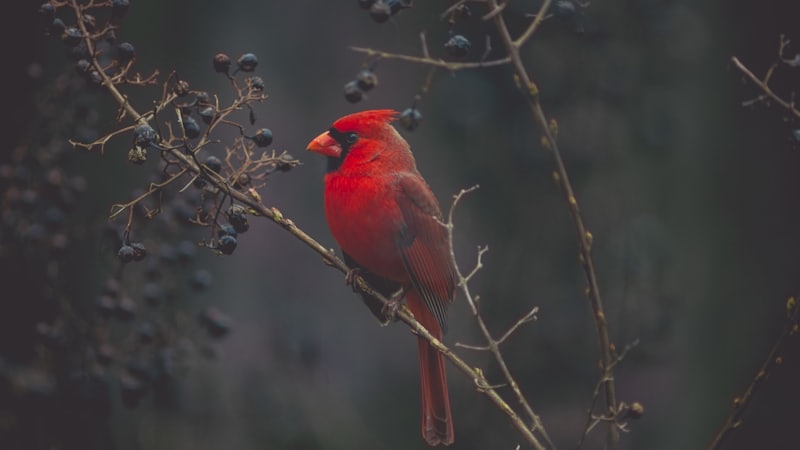
The vivid, metallic colors of hummingbird plumage -- blazing rubies, electric greens, deep violets, molten coppers -- are among the most visually striking displays in the animal kingdom. But these colors are not what they seem. Unlike the reds and yellows of cardinals or goldfinches, which derive from carotenoid and melanin pigments that absorb certain wavelengths of light, hummingbird colors are almost entirely structural.
The mechanism is thin-film interference produced by specialized structures within the feather barbules. Each barbule contains flattened, disc-shaped organelles called melanosomes, arranged in precise layers separated by air gaps. When light strikes these layers, some wavelengths are reflected and reinforced through constructive interference while others are canceled through destructive interference. The specific color produced depends on the thickness of the melanosome layers, the spacing between them, and the angle of incoming light [5].
This is why hummingbird colors appear to shift and flash as the bird moves or as the observer changes position. A gorget (throat patch) that blazes brilliant red from one angle may appear completely black from another. The bird has not changed -- only the geometry of the light path through the microstructure has shifted. This property, known as iridescence, makes hummingbird plumage fundamentally different from pigment-based coloration. The feathers contain virtually no colored pigment at all. Remove the microstructure, and the feather would appear dull brown or black -- the base color of the melanin within the melanosomes.
Recent research using electron microscopy and optical modeling has revealed that some hummingbird species possess multiple types of melanosome arrangements within a single feather, producing what amounts to a nanoscale diffraction grating. The Anna's hummingbird (Calypte anna), for example, has gorget feathers containing melanosomes arranged in a photonic crystal configuration that produces some of the most saturated and angle-dependent colors found anywhere in nature [5].
The Sword-Billed Hummingbird: Evolution Taken to Extremes
In the cloud forests of the northern Andes, from Venezuela to Bolivia, lives a bird that looks like an evolutionary thought experiment taken too far. The sword-billed hummingbird (Ensifera ensifera) is the only bird in the world whose bill is longer than its body (excluding the tail). The bill can reach 10 to 11 centimeters in length, while the body itself measures only about 9 centimeters. Total length from bill tip to tail tip can exceed 21 centimeters, making it one of the largest hummingbird species.
This extraordinary bill is a product of coevolution with the equally extreme flowers of the genus Passiflora (passionflowers) and several species of Datura and Brugmansia (angel's trumpets). These plants produce very long, tubular corollas that exclude virtually all other pollinators. The sword-billed hummingbird is the only animal capable of reaching the nectar at the base of these flowers, creating an obligate mutualistic relationship -- the bird depends on the flower for food, and the flower depends on the bird for reproduction.
The bill's length creates practical problems. The sword-billed hummingbird is the only hummingbird species that cannot use its bill to preen its feathers. Instead, it must use its feet for all grooming tasks. When perched, the bird typically tilts its head upward at a steep angle to balance the weight of the bill, giving it a distinctive and somewhat comical posture.
The Rufous Hummingbird: Marathon Migrant
While many hummingbird species are sedentary, the rufous hummingbird (Selasphorus rufus) undertakes one of the most extraordinary migrations in the bird world. Breeding as far north as southeastern Alaska and wintering in Mexico, rufous hummingbirds travel up to 3,900 miles (6,275 kilometers) one way -- the longest migration relative to body size of any bird.
To appreciate the scale of this feat, consider that a rufous hummingbird weighs approximately 3 to 4 grams and measures about 9 centimeters in length. Its one-way migration distance is roughly 78.5 million body lengths. By comparison, the Arctic tern -- famous for its pole-to-pole migration of over 44,000 miles -- travels approximately 52 million body lengths. Relative to its size, the rufous hummingbird travels farther.
The migration follows a clockwise loop pattern. Northbound birds in spring travel up the Pacific coast, taking advantage of early-blooming flowers in California and the Pacific Northwest. Southbound birds in late summer and fall move through the Rocky Mountain corridor, where late-season wildflowers provide fuel for the return journey. Along the way, individual birds may gain 25 to 40 percent of their body mass in fat reserves to sustain them through segments of the journey where feeding opportunities are scarce.
Rufous hummingbirds are also among the most aggressive and territorial of all hummingbird species, routinely driving away birds many times their size -- including other hummingbird species, orioles, and even small hawks -- from favored feeding sites along migration routes.
Pollination: Coevolution with Flowers
Hummingbirds are among the most important pollinators in the Americas, responsible for pollinating an estimated 7,000 to 8,000 plant species. The evolutionary relationship between hummingbirds and their flowers is one of the most elegant examples of coevolution in biology.
Plants pollinated by hummingbirds -- termed ornithophilous -- share a suite of convergent characteristics that distinguish them from insect-pollinated species:
- Red, orange, or bright pink coloration (hummingbirds see red well; most insects do not)
- Tubular corolla shapes that match hummingbird bill dimensions
- No landing platform (hovering birds need none; this excludes heavy insects)
- Copious dilute nectar (typically 15-25% sucrose concentration)
- No scent (birds have poor olfactory sense; scent attracts insects, not birds)
- Stamens positioned to deposit pollen on the bird's forehead or bill
The preference for red is genuine but nuanced. Hummingbirds do not innately prefer red -- they prefer whatever color is associated with the highest-quality nectar in their environment. However, because red flowers are effectively invisible to most bees (which lack red photoreceptors), red-flowering plants face less competition from insect pollinators for hummingbird attention, creating a selective advantage for redness that has driven the convergent evolution of red coloration across dozens of unrelated plant families [6].
A single hummingbird may visit 1,000 to 3,000 flowers per day, transferring pollen between individuals and often between plants separated by considerable distances. This makes them especially valuable pollinators for widely dispersed tropical plant species that cannot rely on wind or short-range insect pollination.
Anna's Hummingbird: The Fighter Pilot
The Anna's hummingbird (Calypte anna), a year-round resident of the western United States, produces one of the most spectacular courtship displays in the bird world -- and one that has attracted the attention of physicists as well as biologists.
During the display, the male climbs to a height of approximately 30 meters (100 feet) above a perched female, then enters a near-vertical power dive, reaching a maximum speed of roughly 90 km/h (56 mph). At the bottom of the dive, the male pulls up sharply, experiencing forces of approximately 10 g -- ten times the force of gravity. At the moment of maximum velocity, the bird is traveling at roughly 385 body lengths per second.
This figure demands context. A fighter jet at maximum combat speed covers approximately 150 body lengths per second. A peregrine falcon in its famous hunting stoop reaches about 200 body lengths per second. The Anna's hummingbird, at 385 body lengths per second, exceeds both -- making it, relative to body size, the fastest animal on the planet during its courtship dive [7].
The g-forces experienced during the pullout are equally remarkable. Fighter pilots typically lose consciousness at around 8-9 g without the aid of pressurized flight suits. The Anna's hummingbird sustains 10 g using nothing more than its own physiology. At the bottom of the dive, the male also spreads its outer tail feathers, which vibrate in the airflow to produce a loud, explosive chirp -- a sonic punctuation mark to an already extraordinary performance.
Territorial Aggression: Small Bird, Big Attitude
Despite their delicate appearance, hummingbirds are among the most aggressively territorial birds in the world. Males of most species establish and vigorously defend feeding territories, engaging in aerial combat that involves high-speed chases, bill-fencing (literal sword fighting with their bills), body slams, and loud vocalizations.
The intensity of hummingbird aggression is disproportionate to their size. A 4-gram rufous hummingbird will unhesitatingly attack and drive away a 40-gram Steller's jay from a feeder. Hummingbirds have been documented attacking crows, hawks, and even eagles that enter their territory, diving at the larger bird's head with bill strikes that can draw blood.
This aggression is not random belligerence -- it is an economic calculation. A hummingbird that fails to defend a productive flower patch or feeder may not acquire enough calories to survive the day. The metabolic cost of territorial defense is high, but the cost of losing a food source is higher. Studies have shown that territorial hummingbirds adjust the vigor of their defense based on the caloric value of the resource being defended, spending more energy protecting richer food sources and abandoning defense of marginal ones [3].
Comparison of Hummingbird Species
| Species | Weight | Notable Feature | Range |
|---|---|---|---|
| Bee hummingbird | 1.6-2 g | Smallest bird on Earth | Cuba |
| Sword-billed hummingbird | 10-15 g | Bill longer than body | Northern Andes |
| Rufous hummingbird | 3-4 g | Longest relative migration (3,900 mi) | Alaska to Mexico |
| Anna's hummingbird | 3-6 g | 385 body lengths/sec courtship dive | Western North America |
| Giant hummingbird | 18-24 g | Largest hummingbird species | Western South America |
| Ruby-throated hummingbird | 2-6 g | Only eastern North American breeder | Eastern N. America |
| Marvelous spatuletail | 6-7 g | Four tail feathers, two with rackets | Northern Peru |
Conservation and Threats
Hummingbirds face a complex web of conservation challenges. According to the IUCN Red List, approximately 10 percent of hummingbird species are classified as Threatened or Near Threatened, with several species critically endangered. The primary threats include:
- Habitat loss: Deforestation in tropical montane forests, which harbor the highest hummingbird diversity, is the single greatest threat. Species with restricted ranges in the Andes are particularly vulnerable.
- Climate change: Rising temperatures are shifting the altitudinal ranges of both hummingbirds and their food plants, but not always in synchrony. This can create temporal and spatial mismatches between pollinators and flowers.
- Pesticide exposure: Neonicotinoid insecticides, applied to flowering crops and ornamental plants, have been shown to impair hummingbird spatial memory and reduce feeding efficiency at sub-lethal doses.
- Window strikes and cat predation: In North America, building collisions and domestic cat predation are significant sources of hummingbird mortality.
Conservation strategies include the establishment of hummingbird corridors -- chains of protected habitat and private gardens providing feeding stations along major migration routes -- and the breeding of native ornithophilous plants in urban and suburban landscapes.
A Machine That Runs on Flowers
To watch a hummingbird is to witness the extremes of what evolution can produce when selection pressure favors speed, efficiency, and miniaturization above all else. Every gram of their body is optimized, every calorie budgeted, every wingbeat a precision-engineered event. They are, in the most literal sense, living at the edge -- the edge of metabolic possibility, the edge of aerodynamic theory, the edge of survival itself.
The roughly 360 species of hummingbirds represent not just a bird family but a biological experiment in how far vertebrate physiology can be pushed. From the bee hummingbird, smaller than the insects it competes with, to the sword-billed hummingbird, warped by coevolution into an almost surreal form, to the rufous hummingbird, crossing a continent on wings no larger than a paperclip -- these animals have earned every superlative that science has bestowed upon them. They are not merely remarkable for their size. They are remarkable, full stop.
References
[1] McGuire, J.A., et al. "Molecular phylogenetics and the diversification of hummingbirds." Current Biology, vol. 24, no. 8, 2014, pp. 910-916.
[2] Warrick, D.R., Tobalske, B.W., and Powers, D.R. "Aerodynamics of the hovering hummingbird." Nature, vol. 435, no. 7045, 2005, pp. 1094-1097.
[3] Powers, D.R., and McKee, T. "The effect of food availability on time and energy expenditures of territorial and non-territorial hummingbirds." The Condor, vol. 96, no. 4, 1994, pp. 1064-1075.
[4] Hainsworth, F.R., and Wolf, L.L. "Regulation of oxygen consumption and body temperature during torpor in a hummingbird." Science, vol. 168, no. 3929, 1970, pp. 368-369.
[5] Doucet, S.M., et al. "Iridescent plumage in satin bowerbirds: structure, mechanisms and nanostructural predictors of individual variation in colour." Journal of Experimental Biology, vol. 209, no. 2, 2006, pp. 380-390.
[6] Cronk, Q., and Ojeda, I. "Bird-pollinated flowers in an evolutionary and molecular context." Journal of Experimental Botany, vol. 59, no. 4, 2008, pp. 715-727.
[7] Clark, C.J. "Courtship dives of Anna's hummingbird offer insights into flight performance limits." Proceedings of the Royal Society B, vol. 276, no. 1670, 2009, pp. 3047-3052.
Frequently Asked Questions
How fast does a hummingbird's heart beat?
A hummingbird's heart rate can reach approximately 1,200 beats per minute during active flight, making it the fastest heart rate of any bird and one of the fastest of any vertebrate. At rest, the rate slows to around 250 beats per minute. During torpor -- a nightly hibernation-like state -- the heart rate can plummet to as low as 50 beats per minute to conserve energy.
How do hummingbirds hover in place?
Hummingbirds hover using a unique figure-8 wing stroke pattern that generates lift on both the downstroke and the upstroke. Unlike other birds, which produce lift only on the downstroke, hummingbirds rotate their wings at the shoulder joint so that each half-stroke pushes air downward. Their wings beat up to 80 times per second, and this symmetrical lift generation allows them to remain perfectly stationary in midair -- and even fly backwards, a feat no other bird can achieve.
What is torpor and why do hummingbirds need it?
Torpor is a controlled hypothermic state that hummingbirds enter nightly to survive periods without food. During torpor, body temperature drops from the normal 40 degrees Celsius to as low as 9 degrees Celsius, heart rate falls to roughly 50 beats per minute, and metabolic rate decreases by up to 95 percent. This state saves approximately 60 percent of the bird's nightly energy expenditure. Without torpor, most hummingbird species would starve to death before dawn, given their extraordinarily high daytime metabolic demands.