
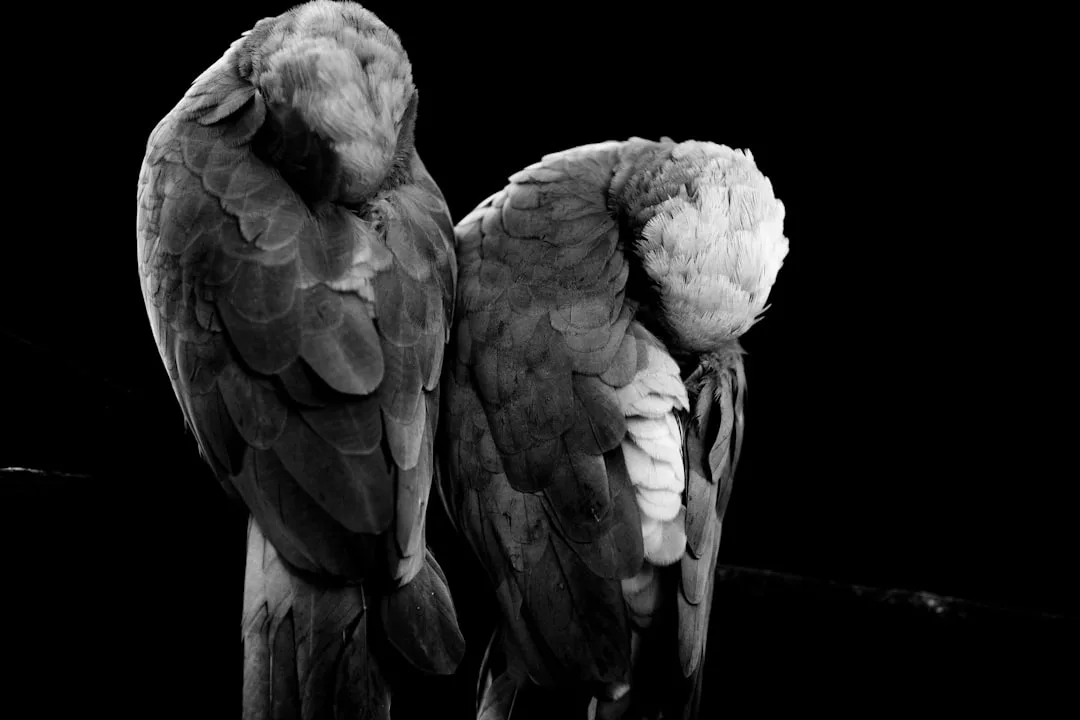
Do parrots actually understand what they are saying, or are they just mimicking sounds?
Research by Dr. Irene Pepperberg with Alex the African Grey demonstrated that parrots can genuinely understand and use language, not merely mimic it. Alex could identify over 50 objects by name, distinguish 7 colors and 5 shapes, understand concepts of 'same' and 'different,' and even grasped the concept of zero - a mathematical abstraction that human children typically do not.
There is no other group of birds on Earth that has captivated the human imagination quite like parrots. They are the only birds that can genuinely talk back to us - not merely producing sound, but in some documented cases, understanding the meaning behind the words they speak. They use tools. They solve puzzles that stump human toddlers. They dance to music with rhythmic precision.
They grieve, they play, they deceive, and they form bonds with their mates that can last half a century or more. In the world of avian cognition, parrots occupy a position analogous to great apes among mammals: they are the intellectual heavyweights, and the depth of their mental abilities continues to astonish researchers.
Yet parrots are also among the most threatened groups of birds on the planet. Nearly one-third of all parrot species face some level of extinction risk, driven by habitat destruction, the illegal pet trade, and climate change. Understanding these extraordinary animals - their biology, their intelligence, and the threats they face - is not an academic luxury. It is an ecological imperative.
A Staggering Diversity: Over 400 Species Strong
The order Psittaciformes encompasses more than 400 recognized species distributed across three superfamilies: the Psittacoidea (true parrots), Cacatuoidea (cockatoos), and Strigopoidea (New Zealand parrots). They range in size from the Buff-faced Pygmy Parrot of Papua New Guinea, weighing a mere 10 grams and measuring just 8 centimeters, to the Hyacinth Macaw of South America, which stretches a full meter from beak to tail and weighs up to 1.7 kilograms.
Parrots are found on every continent except Antarctica, though their diversity is concentrated in tropical and subtropical regions. Australia is home to the greatest variety of cockatoos and lorikeets. South and Central America harbor the majority of macaw and Amazon parrot species. Africa contributes the iconic Grey Parrots, while the islands of the Pacific and Indian Oceans support dozens of endemic species found nowhere else.
What unites this diverse order is a suite of shared anatomical features:
- Zygodactyl feet - two toes pointing forward and two backward, providing a powerful grip for climbing and manipulating objects
- A strong, curved bill with the upper mandible hinged to the skull, allowing exceptional bite force and dexterity
- A thick, muscular tongue capable of fine manipulation - essential for both feeding and, in some species, producing articulate speech
- Large brain-to-body ratios, particularly in the nidopallium and mesopallium regions, which are analogous to the mammalian prefrontal cortex
The evolutionary origin of parrots remains debated, but fossil evidence places their divergence from other bird lineages at approximately 59 million years ago, during the Paleocene epoch. The oldest known parrot fossil, Mopsitta tanta, was discovered in Denmark, suggesting that parrots may have originally radiated from the Northern Hemisphere before becoming predominantly tropical [1].
Alex the African Grey: The Bird Who Changed Everything
No account of parrot intelligence can begin anywhere other than with Alex, the African Grey Parrot (Psittacus erithacus) who spent 30 years as the primary research subject of Dr. Irene Pepperberg at Brandeis University and later Harvard. Alex was not merely a clever pet performing tricks. He was a scientific subject whose documented cognitive abilities forced the academic community to fundamentally reconsider the intellectual capacity of birds.
Pepperberg acquired Alex from a pet store in 1977 - deliberately choosing a random bird to avoid claims that she had selected an exceptional individual. Over three decades of rigorous training using the model/rival technique (in which Alex observed two humans interacting with objects, modeling the communication Pepperberg wished him to learn), Alex developed a vocabulary of more than 100 English words. But vocabulary alone was not the point. Alex demonstrated comprehension.
He could identify 50 different objects by name, distinguish 7 colors and 5 shapes, and understand the concepts of "same," "different," "bigger," and "smaller." When presented with a tray of objects and asked "How many green keys?" he could parse the question, filter by both color and shape, count the relevant items, and answer correctly. His accuracy on novel object identification tests exceeded 80 percent.
Most remarkably, Alex grasped the concept of zero - a mathematical abstraction that eluded even the ancient Greeks and that human children typically do not acquire until age three or four. When shown a tray and asked about a quantity of objects that was not present, Alex would respond "none." He was the first non-human animal to demonstrate a clear understanding of this concept.
"Alex taught me that minds can be very different from ours and still be sophisticated, complex, and worthy of respect. He changed the way we think about animal intelligence ." - Dr. Irene Pepperberg, Alex and Me: How a Scientist and a Parrot Discovered a Hidden World of Animal Intelligence (2008)
Alex died unexpectedly on September 6, 2007, at the age of 31 - roughly half the expected lifespan of an African Grey. His last words to Pepperberg, spoken the evening before, were: "You be good. I love you." These were the same words he spoke to her every night when she left the laboratory. His death made international headlines and was reported by outlets from the New York Times to the BBC, an extraordinary level of media attention for a research animal.
"The fact that he could combine words in new ways, ask questions, and express preferences tells us that the psittacine brain is capable of far more than we ever imagined. We are only beginning to understand what these birds know." - Dr. Irene Pepperberg, addressing the Association for the Study of Animal Behaviour (2009)
Alex's legacy extends beyond his own achievements. He inspired an entire generation of comparative cognition research and demonstrated that avian intelligence, despite evolving along a completely separate evolutionary trajectory from mammalian intelligence, could converge on remarkably similar cognitive solutions. His work remains the gold standard in animal language research and continues to be cited in hundreds of peer-reviewed papers annually [2].
Macaws: The Giants of the Parrot World
The macaws comprise 18 species in the genera Ara, Anodorhynchus, Cyanopsitta, Primolius, Orthopsittaca, and Diopsittaca. They are the largest parrots on Earth, and their vivid plumage - electric blues, fiery reds, sun-bright yellows - makes them among the most visually spectacular of all birds.
The Hyacinth Macaw: A Gentle Giant Under Siege
The Hyacinth Macaw (Anodorhynchus hyacinthinus) is the world's largest flying parrot, measuring up to 100 centimeters in length with a wingspan exceeding 120 centimeters. Its cobalt-blue plumage is unmistakable, and its bill is powerful enough to crack the shells of palm nuts that no other bird can open.
Despite its size and strength, the Hyacinth Macaw is classified as Vulnerable by the IUCN, with an estimated wild population of only 4,300 individuals, concentrated primarily in Brazil's Pantanal wetlands.
The species has been devastated by a combination of habitat loss (particularly the destruction of Manduvi trees, in which over 90 percent of Hyacinth Macaws nest), the illegal pet trade (a single Hyacinth Macaw can fetch $10,000 or more on the black market), and the conversion of the Cerrado grasslands to soybean agriculture.
Conservation efforts led by the Hyacinth Macaw Project in the Pantanal have helped stabilize populations through artificial nest box programs and community engagement, but the species' future remains precarious [3].
Clay Licks: A Remarkable Dietary Behavior
One of the most striking behaviors observed in wild macaws is their regular visitation of clay licks - exposed riverbank cliffs where hundreds of macaws gather at dawn to consume clay. This behavior, known as geophagy, has been studied extensively at sites such as the Tambopata Research Center in southeastern Peru, where as many as 600 macaws of multiple species congregate simultaneously.
The prevailing scientific explanation is that the clay serves as a natural detoxification agent. Many of the seeds and unripe fruits in the macaw diet contain alkaloids and other plant toxins. The sodium-rich clay binds to these toxins in the digestive tract, neutralizing them before they can be absorbed. The spectacle of hundreds of brilliantly colored macaws covering a clay cliff face is one of the great wildlife experiences on Earth and a major driver of ecotourism in the Amazon basin.
| Macaw Species | Length (cm) | Weight (kg) | IUCN Status | Estimated Wild Population |
|---|---|---|---|---|
| Hyacinth Macaw | 100 | 1.2-1.7 | Vulnerable | ~4,300 |
| Scarlet Macaw | 81-96 | 1.0-1.5 | Least Concern | ~20,000-50,000 |
| Blue-and-Gold Macaw | 76-86 | 0.9-1.3 | Least Concern | ~10,000+ |
| Spix's Macaw | 56 | 0.3 | Extinct in Wild | ~180 (captivity) |
| Great Green Macaw | 77-90 | 1.2-1.4 | Critically Endangered | ~500-1,000 |
| Red-fronted Macaw | 55-60 | 0.4-0.5 | Critically Endangered | ~800-1,000 |
The Spix's Macaw (Cyanopsitta spixii) deserves special mention. Declared extinct in the wild in 2000, this small blue macaw from northeastern Brazil became the inspiration for the animated film Rio. A captive breeding program has maintained approximately 180 individuals, and a reintroduction program began releasing birds into the Caatinga habitat in 2022 - one of the most ambitious parrot conservation efforts ever attempted.
Cockatoos: Tool Makers and Emotional Communicators
The family Cacatuidae comprises 21 species found primarily in Australasia. Cockatoos are distinguished from other parrots by their prominent erectile crests, which serve as remarkably expressive communication devices. A raised crest can signal excitement, alarm, aggression, or courtship intent, and studies have shown that other cockatoos can read these crest positions with high accuracy - a form of visual signaling analogous to facial expressions in primates.
Goffin's Cockatoo: The Engineer
The most remarkable demonstration of cockatoo intelligence has come from studies of Goffin's cockatoos (Cacatua goffiniana) conducted by Dr. Alice Auersperg and her team at the University of Vienna.
In a landmark 2012 study published in Current Biology, a captive Goffin's cockatoo named Figaro was observed spontaneously manufacturing a tool from a wooden beam to rake a nut toward himself through the wire mesh of his enclosure. This was not a trained behavior - Figaro invented the solution independently.
Subsequent experiments revealed that Goffin's cockatoos could:
- Manufacture tools from materials they had never encountered, including cardboard, wood, and beeswax
- Solve multi-step mechanical puzzles requiring the sequential removal of five different locking mechanisms (a pin, a screw, a bolt, a wheel, and a bar) - in the correct order
- Transport tools to locations where they would be needed, demonstrating planning and foresight
- Innovate new tool designs when existing tools were made unsuitable for the task
These findings are extraordinary because wild Goffin's cockatoos are not known to use tools, suggesting that the cognitive architecture for tool manufacture exists as a latent capacity that can emerge when ecological conditions demand it. This parallels findings in great ape research and has profound implications for our understanding of how intelligence evolves [4].
Crest Communication
The cockatoo crest is far more than decorative. Research has documented at least seven distinct crest positions, each associated with a different emotional or behavioral state. A fully erect crest with fanned feathers signals high arousal - either excitement or alarm. A half-raised crest indicates curiosity or mild alertness. A fully slicked-back crest often accompanies relaxation or submission.
Cockatoos in social groups adjust their behavior based on the crest positions of others, suggesting that the crest functions as a reliable emotional signal within the flock.
Budgerigars: The People's Parrot
The Budgerigar (Melopsittacus undulatus) - known colloquially as the "budgie" - is the most popular pet bird in the world, with an estimated global captive population exceeding 5 million individuals. Native to the arid interior of Australia, wild budgerigars are nomadic, traveling in flocks of hundreds or even thousands in search of seeding grasses and water.
Despite their small size (just 18 centimeters and 30-40 grams), budgerigars possess extraordinary vocal learning abilities. The all-time record for the largest vocabulary of any bird belongs to a budgerigar named Puck, who was documented using 1,728 words before his death in 1994 - a feat recognized by Guinness World Records.
Puck did not merely repeat words; he combined them in contextually appropriate ways, often producing novel phrases that entertained and astonished his owner, Camille Jordan.
Budgerigars in the wild display sophisticated social learning. Research published in Animal Behaviour has shown that budgerigars preferentially learn foraging techniques from successful flock members, and that they can distinguish between individuals based on vocal characteristics alone - effectively recognizing each other by "name" [5].
Kea: New Zealand's Mountain Genius
The Kea (Nestor notabilis) is the world's only alpine parrot, found exclusively in the mountainous regions of New Zealand's South Island. Living at altitudes up to 1,500 meters, the kea has adapted to one of the harshest environments inhabited by any parrot species - enduring snow, freezing rain, and temperatures well below zero.
Kea intelligence is legendary, and not always appreciated by the humans who share their habitat. These birds are notorious for their insatiable curiosity and destructive problem-solving. They disassemble windshield wipers, steal wallets from open car windows, remove rubber sealing strips from vehicles, and have been documented working cooperatively to open dumpster lids.
Ski resort operators in Queenstown and Arthur's Pass have long waged a losing battle against kea that systematically remove screws, bolts, and weather stripping from buildings.
In controlled experiments, kea have demonstrated the ability to understand probability and make statistically informed decisions - a cognitive feat previously documented only in great apes and humans. A 2020 study published in Nature Communications showed that kea could integrate information about both the relative frequency and physical arrangement of tokens to choose the option most likely to yield a reward, performing at levels comparable to human children aged six to eight.
The kea population is estimated at only 3,000 to 7,000 individuals and is classified as Endangered by the IUCN. Lead poisoning from old roofing materials, predation by introduced mammals (particularly stoats), and conflict with farmers who historically shot kea as livestock pests have all contributed to their decline. A bounty system that operated from 1867 to 1970 resulted in the killing of an estimated 150,000 kea before the species received full legal protection.
Kakapo: The World's Most Unusual Parrot
If the kea is New Zealand's mountain genius, the Kakapo (Strigops habroptilus) is its nocturnal enigma. The kakapo is unlike any other parrot on Earth: it is flightless, nocturnal, and the heaviest parrot species, with males weighing up to 4 kilograms. It is also one of the longest-lived birds, with a potential lifespan exceeding 90 years.
The kakapo's mating system is extraordinary. Males gather at traditional display sites called leks, where they excavate bowl-shaped depressions in the ground and produce a series of deep, resonant boom calls that can be heard up to 5 kilometers away. These infrasonic booms, produced by inflating a thoracic air sac, are among the lowest-frequency vocalizations of any bird.
Males may boom for up to eight hours per night over a breeding season that lasts several months, losing up to half their body weight in the process.
By the early 1990s, the kakapo was on the very edge of extinction, with only 51 individuals remaining. Intensive management by the New Zealand Department of Conservation - including relocation to predator-free islands, supplementary feeding, nest monitoring with infrared cameras, and artificial insemination - has gradually increased the population. As of 2024, the kakapo population stands at approximately 252 individuals, each one known by name and fitted with a radio transmitter.
Sirocco, a hand-raised male kakapo, became an unlikely conservation celebrity after a 2009 BBC film crew captured him attempting to mate with the head of zoologist Mark Carwardine during filming of the series Last Chance to See with Stephen Fry. The footage went viral, and Sirocco was subsequently appointed New Zealand's official "Spokesbird for Conservation" - a role he has held ever since, drawing international attention to the plight of his species.
Parrot Longevity: A Lifetime Commitment
Parrots are among the longest-lived birds on Earth, and their longevity presents both a biological marvel and a practical challenge for those who keep them in captivity.
| Species | Average Lifespan (Captivity) | Maximum Recorded |
|---|---|---|
| Budgerigar | 5-8 years | 18 years |
| Cockatiel | 15-20 years | 32 years |
| Amazon Parrot | 40-60 years | 70+ years |
| African Grey | 40-60 years | 73 years |
| Macaw (large) | 50-60 years | 70+ years |
| Cockatoo (large) | 40-70 years | 80-90+ years |
| Kakapo | 60-90+ years | 90+ years (estimated) |
The mechanisms behind parrot longevity are an active area of research. Studies have identified unusually effective telomere maintenance in parrot cells, slower rates of oxidative damage, and robust DNA repair mechanisms.
A 2022 genomic study published in Proceedings of the Royal Society B found that parrot species with larger relative brain sizes tended to live longer, even after controlling for body size - suggesting that cognitive complexity and longevity may be co-evolved traits, possibly because intelligent animals are better at avoiding predators and finding food in variable environments [6].
The practical consequence of this longevity is that acquiring a large parrot is a multi-decade commitment comparable to raising a child. Cockatoos and macaws routinely outlive their owners, and parrot rescue organizations are overwhelmed with surrendered birds whose owners did not anticipate the duration of the commitment.
The Gabriel Foundation, Midwest Avian Adoption and Rescue Services, and dozens of similar organizations across the United States alone care for thousands of surrendered parrots.
Feather Plucking and Psychological Needs
One of the most visible signs of psychological distress in captive parrots is feather plucking (also called feather-destructive behavior or pterotillomania). Affected birds systematically pull out their own feathers, sometimes stripping themselves nearly bare. The condition affects an estimated 10 to 15 percent of captive parrots, with African Greys, cockatoos, and Eclectus parrots being particularly susceptible.
The causes are complex and often multifactorial:
- Social isolation - Parrots are intensely social animals that, in the wild, spend virtually every moment in the company of flock mates. A solitary parrot kept in a cage while its owner works an eight-hour day is experiencing a profoundly unnatural level of isolation.
- Cognitive deprivation - Intelligent animals require mental stimulation. A parrot with no foraging challenges, no puzzles, and no novel experiences develops stereotypic behaviors analogous to those seen in primates in under-stimulating zoo enclosures.
- Dietary inadequacy - Seed-only diets lack essential nutrients and have been linked to increased rates of feather plucking.
- Hormonal disruption - Inappropriate light cycles, excessive petting of the back and wings (which parrots interpret as mating behavior), and other husbandry errors can trigger chronic hormonal imbalances.
The veterinary and behavioral science literature is unequivocal: parrots are not domesticated animals. They are wild animals held in captivity, and their psychological needs - for social interaction, intellectual challenge, flight, and autonomy - are fundamentally similar to those of their wild counterparts. Meeting these needs in a domestic setting requires a level of commitment, knowledge, and resources that many prospective parrot owners drastically underestimate.
The Illegal Pet Trade: A Crisis of Global Proportions
The illegal trade in wild-caught parrots is one of the most significant threats to parrot populations worldwide. Despite the Convention on International Trade in Endangered Species (CITES) banning or restricting trade in most parrot species, enforcement remains woefully inadequate, particularly in Southeast Asia, Latin America, and West Africa.
Key statistics illustrate the scale of the crisis:
- An estimated 1.3 million parrots were illegally traded between 2015 and 2020, according to a TRAFFIC analysis
- Mortality rates during capture and transport are staggering - for every parrot that reaches a buyer alive, an estimated 3 to 5 birds die in transit from stress, dehydration, crushing, or suffocation
- Indonesia is the global epicenter of the illegal parrot trade, with species such as the Yellow-crested Cockatoo (Cacatua sulphurea, Critically Endangered) and the Palm Cockatoo (Probosciger aterrimus) under extreme trapping pressure
- In Mexico, an estimated 65,000 to 78,500 parrots are captured illegally each year, driving species like the Thick-billed Parrot (Rhynchopsitta pachyrhyncha) toward extinction
- The global illegal wildlife trade is valued at an estimated $23 billion annually, with parrots representing a significant portion of the avian component
The demand side of the equation is driven by a combination of cultural tradition, status signaling, and social media - where videos of "cute" talking parrots drive desire for ownership without any awareness of the ecological and ethical costs. Combating the trade requires a coordinated approach encompassing stricter enforcement, demand reduction campaigns, habitat protection, and support for sustainable livelihoods in source communities.
Conservation: Reasons for Cautious Hope
Despite the severity of the threats facing parrots, there are genuine conservation success stories that demonstrate what is possible with sufficient resources and political will.
The Echo Parakeet (Psittacula eques) of Mauritius was reduced to just 8 to 12 individuals in the 1980s, making it the world's rarest parrot at the time. Intensive captive breeding and habitat restoration by the Mauritian Wildlife Foundation has increased the population to over 800 birds - one of the most dramatic recoveries in avian conservation history.
The Puerto Rican Amazon (Amazona vittata) declined to just 13 individuals in 1975. A multi-agency recovery program involving captive breeding at two facilities and the establishment of a second wild population at Rio Abajo State Forest has increased the total population to approximately 500 birds (wild and captive combined).
These successes share common elements: long-term funding commitments, integration of captive breeding with habitat protection, community engagement, and adaptive management based on ongoing scientific monitoring. They prove that even species at the very brink can be pulled back - but only if the will and resources exist to do so.
Conclusion
Parrots challenge our most fundamental assumptions about intelligence, language, and the boundary between human and animal cognition. They demonstrate that complex thought, emotional depth, and cultural learning are not the exclusive province of large-brained mammals.
A cockatoo fashioning a tool from a tree branch, a Grey Parrot understanding the concept of nothing, a kea calculating probability, a kakapo booming through the New Zealand night in a mating ritual that has continued unbroken for millions of years - these are not simple behaviors. They are the expressions of minds shaped by evolution to be flexible, curious, and socially sophisticated.
The question facing us is not whether parrots are intelligent enough to deserve our attention and protection. That question was answered decades ago. The question is whether we are wise enough to ensure that these extraordinary birds continue to share the planet with us. Given that a third of parrot species are threatened with extinction, the answer remains very much in doubt.
References
[1] Waterhouse, D. M. (2006). "Parrots in a nutshell: The fossil record of Psittaciformes." Historical Biology, 18(2), 227-238.
[2] Pepperberg, I. M. (2006). "Grey parrot numerical competence: A review." Animal Cognition, 9(4), 377-391.
[3] Guedes, N. M. R. (2009). "Hyacinth Macaw conservation in the Pantanal." The Neotropical Ornithological Society, Special Publication, 394-404.
[4] Auersperg, A. M. I., Szabo, B., von Bayern, A. M. P., & Kacelnik, A. (2012). "Spontaneous innovation in tool manufacture and use in a Goffin's cockatoo." Current Biology, 22(21), R903-R904.
[5] Hile, A. G., Plummer, T. K., & Striedter, G. F. (2000). "Male vocal imitation produces call convergence during pair bonding in budgerigars." Animal Behaviour, 59(6), 1209-1218.
[6] Smeele, S. Q., Conde, D. A., Baudisch, A., et al. (2022). "Coevolution of relative brain size and life expectancy in parrots." Proceedings of the Royal Society B, 289(1971), 20212397.
[7] Wright, T. F., Schirtzinger, E. E., Matsumoto, T., et al. (2008). "A multilocus molecular phylogeny of the parrots (Psittaciformes)." PLoS ONE, 3(1), e1560.
Frequently Asked Questions
Do parrots actually understand what they are saying, or are they just mimicking sounds?
Research by Dr. Irene Pepperberg with Alex the African Grey demonstrated that parrots can genuinely understand and use language, not merely mimic it. Alex could identify over 50 objects by name, distinguish 7 colors and 5 shapes, understand concepts of ‘same’ and ‘different,’ and even grasped the concept of zero - a mathematical abstraction that human children typically do not understand until age three or four.
While not all parrot speech reflects comprehension, the cognitive capacity for true understanding has been scientifically established.
How long do macaws live, and what is the longest-lived parrot species?
Large macaws such as the Blue-and-Gold Macaw and Scarlet Macaw regularly live 50 to 60 years in captivity, with some individuals exceeding 70 years. Cockatoos hold the record for parrot longevity - a Sulphur-crested Cockatoo named ‘Cocky Bennett’ reportedly lived to 120 years in Australia, though verified records place the upper limit closer to 80-90 years.
The commitment required to care for these long-lived birds is comparable to raising a child, as they may outlive their owners.
Are cockatoos really intelligent enough to make and use tools?
Yes. Goffin’s cockatoos have demonstrated remarkable tool-manufacturing abilities in controlled laboratory experiments at the University of Vienna. These birds can fashion tools from raw materials they have never encountered before, shaping sticks and cardboard strips to retrieve out-of-reach food.
They have also been observed solving complex multi-step mechanical puzzles requiring sequential lock manipulation - a feat that places their problem-solving abilities on par with great apes in certain experimental contexts.