
How do emperor penguins survive temperatures of -60C in Antarctica?
Emperor penguins survive extreme cold through a combination of physiological and behavioral adaptations. They have dense, waterproof feathers providing insulation equivalent to a wetsuit, a counter-current heat exchange system in their flippers and legs that prevents heat loss, and thick subcutaneous fat reserves.
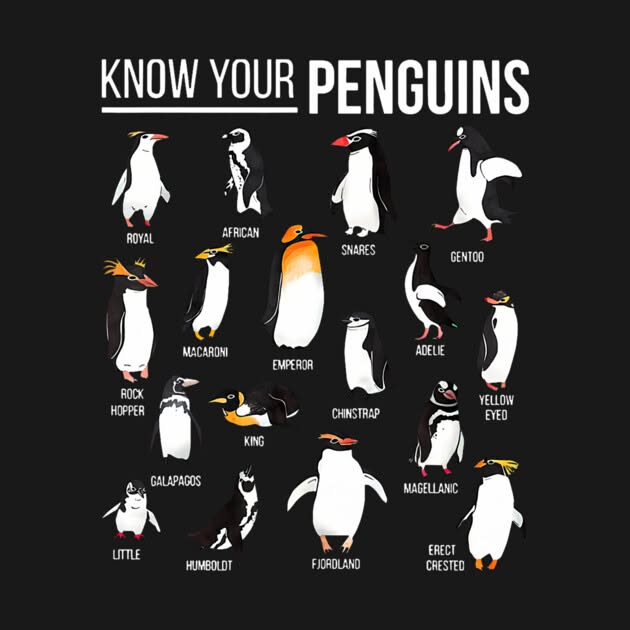
When most people think of penguins, they picture a huddle of black-and-white figures bracing against an Antarctic blizzard. The image is not wrong, but it is radically incomplete. Penguins are among the most successful marine birds on the planet, occupying habitats from the frozen interior of Antarctica to the sun-scorched lava fields of the Galapagos Islands.
They have traded flight for an underwater mastery that puts most fish to shame, developed thermoregulation systems that rival anything in engineering textbooks, and built social structures so dense and coordinated that they would make a city planner envious. There are 18 recognized species of penguin, and their collective story is one of adaptation pushed to its biological limits.
Few animal families have captured human fascination so completely. Penguins have inspired documentary films, animated blockbusters, scientific expeditions, and conservation movements that span the globe. Yet behind the charm lies a group of birds under mounting pressure from climate change, industrial fishing, and habitat degradation. Understanding what makes penguins remarkable is the first step toward ensuring they survive.
A Family More Diverse Than You Think
The order Sphenisciformes contains a single family, Spheniscidae, with 18 living species distributed across six genera. The common misconception that penguins are exclusively Antarctic animals could not be further from the truth. Only four species - the emperor, Adelie, chinstrap, and gentoo - breed on the Antarctic continent itself.
The remaining 14 species are spread across subantarctic islands, the coasts of South America, South Africa, New Zealand, and Australia, and even the equatorial Galapagos Islands.
This geographic range spans from latitude 77 degrees South (the emperor penguin's breeding colonies near the Ross Ice Shelf) to just north of the equator (the Galapagos penguin at roughly 0 degrees latitude). The temperature range these birds collectively tolerate is extraordinary - from -60C (-76F) in the Antarctic interior to +40C (104F) on the Galapagos coastline.
| Species | Height (cm) | Weight (kg) | Range | Population Estimate |
|---|---|---|---|---|
| Emperor Penguin | 110-130 | 22-45 | Antarctica | ~595,000 |
| King Penguin | 85-95 | 9-16 | Subantarctic islands | ~3,200,000 |
| Gentoo Penguin | 75-90 | 4.5-8.5 | Antarctic Peninsula, subantarctic | ~774,000 |
| Adelie Penguin | 70-73 | 3.8-6 | Antarctic coast | ~7,560,000 |
| Chinstrap Penguin | 68-77 | 3-5 | Antarctic Peninsula, S. Atlantic | ~8,000,000 |
| Macaroni Penguin | 70 | 3.2-6.4 | Subantarctic islands | ~12,000,000 |
| Little Blue Penguin | 30-33 | 1-1.5 | Australia, New Zealand | ~470,000 |
| African Penguin | 60-70 | 2.2-3.5 | Southern Africa | ~41,000 |
| Galapagos Penguin | 49-53 | 1.7-2.5 | Galapagos Islands | ~1,200 |
| Humboldt Penguin | 56-70 | 3.6-5.9 | Peru, Chile | ~32,000 |
The diversity within this family underscores a fundamental principle of evolutionary biology: when a body plan works, natural selection will push it into every available niche.
Emperor Penguins: Monarchs of the Antarctic
The emperor penguin (Aptenodytes forsteri) is the largest of all penguin species and one of the most extraordinary birds on Earth. Standing up to 130 cm (4.3 feet) tall and weighing as much as 45 kg (99 lbs), it is built for one purpose: survival in the most hostile environment inhabited by any warm-blooded animal.
The Breeding Cycle
What sets the emperor penguin apart from virtually every other bird species is its decision to breed during the Antarctic winter. After feeding at sea through the austral summer, emperors trek 50 to 120 kilometers inland across the sea ice to reach their traditional breeding colonies in March and April - the beginning of the Antarctic autumn. Females lay a single egg in May or early June, then immediately transfer it to the male and depart on a return journey to the open ocean to feed.
The male is left alone on the ice with the egg balanced on his feet, covered by a flap of feathered skin called the brood pouch. He will incubate this egg for approximately 70 days - through the darkest, coldest months of the Antarctic winter - without eating. By the time the female returns with a crop full of partially digested fish and squid, the male may have lost 40 to 45 percent of his body weight.
"The emperor penguin's breeding cycle is arguably the most demanding of any bird. No other species voluntarily subjects itself to four months of continuous fasting in temperatures that would kill an unprotected human in minutes." - Dr. Gerald Kooyman, Diverse Divers: Physiology and Behavior (2006)
This grueling reproductive strategy was brought to worldwide attention by Luc Jacquet's 2005 documentary March of the Penguins, which followed a colony of emperor penguins through an entire breeding season at Dumont d'Urville Station. The film earned an Academy Award for Best Documentary Feature and introduced millions of viewers to the staggering endurance of these birds.
The footage of males huddling against hurricane-force winds while clutching eggs on their feet became one of the most iconic sequences in nature documentary history.
The Huddle: Engineering Through Behavior
The emperor penguin huddle is one of the most studied examples of collective thermoregulation in the animal kingdom. When wind speeds exceed 30 km/h and temperatures drop below -40C, thousands of males press together into a dense mass, reducing the exposed surface area per individual by up to 80 percent. The result is a heat savings of approximately 50 percent compared to standing alone.
But the huddle is not a static structure. It is a continuously rotating system. Birds on the outer edge, exposed to the wind, gradually push inward. As they do, birds from the sheltered center are displaced outward.
High-resolution time-lapse studies published in PLOS ONE in 2011 revealed that this rotation follows a predictable wave-like pattern, with each bird spending roughly equal time on the exposed perimeter and the warm interior. The core temperature inside a large huddle can reach 37C (98.6F) - so warm that birds in the center occasionally raise their flippers or pant to avoid overheating. This is a remarkable problem to have at minus sixty degrees.
King Penguins: The Elegant Subantarctic Giants
The king penguin (Aptenodytes patagonicus) is the second-largest penguin species, standing 85 to 95 cm tall and weighing up to 16 kg. Often confused with emperor penguins due to their similar coloring - vivid orange-gold ear patches against a steel-grey back - king penguins are distinguished by their more slender build, brighter plumage, and their preference for subantarctic islands rather than the Antarctic continent itself.
King penguin colonies are found on South Georgia, the Crozet Islands, Kerguelen Islands, Macquarie Island, Heard Island, and the Falkland Islands. The colony at St. Andrews Bay on South Georgia is one of the largest, containing an estimated 150,000 breeding pairs - a spectacle that ranks among the most visually stunning gatherings of wildlife on Earth.
Unlike emperor penguins, king penguins do not endure the Antarctic winter for breeding. Their reproductive cycle is, however, uniquely prolonged. The entire cycle from egg laying to fledging takes approximately 14 to 16 months, meaning that a successful pair can only raise two chicks every three years.
Chicks that hatch late in the season must survive the subantarctic winter as juveniles, standing in creche groups while their parents make periodic feeding trips to sea. These overwintering chicks, covered in dense brown down, were mistakenly identified as a separate species - the so-called "woolly penguin" - by early explorers.
Adelie Penguins: Pebble Diplomats and Climate Sentinels
The Adelie penguin (Pygoscelis adeliae) is the most abundant penguin species on the Antarctic continent, with a circumpolar distribution and a population estimated at over 7.5 million individuals. Named by French explorer Jules Dumont d'Urville after his wife, Adelie penguins are medium-sized birds standing about 70 cm tall, instantly recognizable by their entirely black head, white eye rings, and stubby orange-red bill.
Pebble Courtship
Adelie penguins are nest builders, constructing simple platforms of small stones to elevate their eggs above meltwater on the rocky Antarctic shoreline. Pebbles are a valuable commodity in these colonies, and their exchange forms a central part of Adelie courtship behavior.
Males collect and present pebbles to prospective mates, and females assess potential partners partly based on the quality and quantity of stones offered. This behavior has been widely popularized - sometimes with anthropomorphic embellishment - as "penguin proposals," but the underlying biology is straightforward: a male who can secure good nesting material demonstrates fitness and territory-holding ability.
Theft is rampant. Studies at Cape Crozier have documented individual Adelie penguins stealing pebbles from neighboring nests with remarkable brazenness, sometimes making dozens of pilfering trips per hour. The social dynamics of an Adelie colony are perpetually noisy, confrontational, and chaotic.
Climate Change Indicators
Adelie penguins have become one of the most important indicator species for monitoring the effects of climate change on Antarctic ecosystems. Their dependence on sea ice for access to krill - their primary food source - makes them acutely sensitive to changes in ice extent and duration.
Studies along the western Antarctic Peninsula, one of the fastest-warming regions on Earth, have documented population declines of over 65 percent in some Adelie colonies since the 1970s [1]. As sea ice retreats, krill populations diminish, and Adelie penguins lose both feeding habitat and the ice platforms they depend on for resting between foraging dives.
Conversely, in parts of East Antarctica where conditions have remained more stable, some Adelie populations are growing. This regional divergence has made the species a living barometer for the uneven progression of climate change across the Antarctic.
Little Blue Penguins: The World's Smallest
At the opposite end of the size spectrum stands the little blue penguin (Eudyptula minor), also known as the fairy penguin in Australia or korora in New Zealand. Standing just 30 to 33 cm tall and weighing barely 1 to 1.5 kg, it is the smallest penguin species in the world - roughly the size of a large pigeon.
Little blue penguins are found along the coastlines of southern Australia, New Zealand, and the Chatham Islands. Unlike their Antarctic relatives, they are nocturnal on land, coming ashore only after dark to avoid predators such as gulls, skuas, and introduced mammals.
The famous "Penguin Parade" at Phillip Island, Victoria, where tourists watch hundreds of little blue penguins waddle ashore at dusk, draws over 700,000 visitors annually and is one of Australia's most popular wildlife attractions.
Despite their diminutive size, little blue penguins are accomplished divers, routinely reaching depths of 20 to 30 meters on foraging dives that last up to a minute. They feed primarily on small fish, cephalopods, and crustaceans, making multiple foraging trips per day during the breeding season.
African Penguins: The Braying Endangered
The African penguin (Spheniscus demersus) is the only penguin species found on the African continent, breeding on islands and coastal sites in South Africa and Namibia. Commonly known as the jackass penguin for its loud, donkey-like braying call, the African penguin has experienced one of the most devastating population declines of any seabird in modern history.
In 1900, the African penguin population was estimated at approximately 1.5 million breeding pairs. By 2024, that number had collapsed to roughly 20,000 pairs - a decline of over 98 percent [2]. The causes are multiple and compounding: historical egg harvesting, guano collection that destroyed nesting habitat, competition with commercial fisheries for sardines and anchovies, oil spills, and climate-driven shifts in fish distribution.
"The African penguin is on a trajectory toward extinction within our lifetimes if current trends continue. It is not an exaggeration to call this a conservation emergency." - Dr. Lorien Pichegru, Nelson Mandela University Marine Predator Research Group
The Robben Island colony, situated in Table Bay off Cape Town - the same island famous for Nelson Mandela's imprisonment - has become a critical site for African penguin conservation. The colony, which numbered over 16,000 pairs in the 1990s, had declined to fewer than 1,000 pairs by the early 2020s.
Conservation efforts include artificial nest boxes to replace lost natural habitat, fishing exclusion zones to protect food supply, and one of the world's most remarkable oil spill rescue operations.
In June 2000, the bulk ore carrier MV Treasure sank near Robben Island, spilling 1,300 tonnes of crude oil into the surrounding waters. Approximately 19,000 adult African penguins were oiled.
In what became the largest animal rescue operation in history, volunteers and wildlife organizations captured, cleaned, and rehabilitated the oiled birds while simultaneously relocating 19,500 unoiled penguins to prevent further contamination. The operation saved an estimated 91 percent of the oiled birds - a survival rate without precedent in oil spill wildlife response [3].
Galapagos Penguins: Survivors at the Equator
The Galapagos penguin (Spheniscus mendiculus) defies every preconception about what a penguin should be. It is the northernmost penguin species, the only one found in the Northern Hemisphere (a tiny portion of its range on Isabela Island extends just above the equator), and it lives in a volcanic tropical archipelago roughly 6,000 kilometers from the nearest Antarctic ice.
With a population of only about 1,200 individuals, the Galapagos penguin is among the rarest penguin species in the world. Its survival on the equator is made possible by the Cromwell Current (also called the Equatorial Undercurrent), a deep, cold, nutrient-rich ocean current that upwells along the western Galapagos Islands, bringing water temperatures down to 15-20C and supporting abundant fish populations.
This dependence on a single oceanographic feature makes the Galapagos penguin extraordinarily vulnerable to El Nino events, which suppress the Cromwell Current and cause sea surface temperatures to spike. During the severe 1982-83 El Nino, the Galapagos penguin population crashed by 77 percent. It has never fully recovered.
Swimming Adaptations: Built for the Sea
Penguins are, in essence, birds that fly through water. Their evolutionary trajectory traded aerial flight for aquatic flight over a period of roughly 60 million years, and the result is a body plan optimized for underwater propulsion to a degree matched by few other vertebrates.
Wing-to-Flipper Transition
The penguin flipper is a modified wing in which the bones are flattened, fused, and rigidified into a structure that functions as a hydrofoil. Unlike the flexible, feathered wings of flying birds, penguin flippers cannot fold. The elbow and wrist joints are essentially locked, and the bones are dense and solid rather than pneumatic (hollow).
This increased density helps penguins achieve neutral buoyancy at depth and provides the rigidity necessary for efficient thrust generation against the far greater resistance of water compared to air.
The pectoral muscles that power the flippers are proportionally enormous, accounting for up to 30 percent of a penguin's total body mass. Both the downstroke and the upstroke generate thrust - a biomechanical feature that is unusual among birds and more analogous to the flight mechanics of sea turtles.
Porpoising
Many penguin species employ a locomotion technique called porpoising - repeatedly leaping clear of the water surface in a series of shallow arcs while swimming at high speed. This behavior serves multiple purposes: it allows the bird to breathe without breaking its forward momentum, it may reduce overall drag by alternating between water and air (water being roughly 800 times denser than air), and it may help penguins evade underwater predators such as leopard seals.
The gentoo penguin (Pygoscelis papua) holds the title of fastest penguin species, with recorded swimming speeds of up to 36 km/h (22 mph), making it the fastest-diving bird on Earth. Emperor penguins, while slower in sustained cruising speed, are the deepest divers, reaching recorded depths of 564 meters on dives lasting over 27 minutes - feats that exceed the capabilities of many marine mammals.
Thermoregulation: Engineering at Both Extremes
The Counter-Current Heat Exchange System
Penguins that live in cold environments face a fundamental engineering problem: how to maintain a core body temperature of approximately 38C while standing on ice or swimming in water at -1.8C (the freezing point of seawater). The solution is the counter-current heat exchange system, a vascular arrangement found in the flippers, legs, and nasal passages.
In this system, arteries carrying warm blood from the core run in close parallel to veins returning cold blood from the extremities. Heat transfers from the warm arterial blood to the cold venous blood across the thin vessel walls, effectively pre-warming returning blood before it reaches the core and pre-cooling outgoing blood before it reaches the flippers and feet.
The result is that a penguin's feet may operate at temperatures just above freezing - warm enough to prevent tissue damage but cold enough to minimize heat loss to the ice beneath.
This system is so efficient that thermal imaging of an emperor penguin standing on ice shows the bird's outer surface as colder than the surrounding air in some areas. The feathers and fat are such effective insulators that body heat barely reaches the surface.
Huddling Thermodynamics
The emperor penguin huddle, described earlier, has been modeled mathematically and found to reduce individual energy expenditure by approximately 50 percent compared to solitary standing. A huddle of 5,000 penguins creates a collective heat output sufficient to maintain interior temperatures of 20-37C even at ambient temperatures of -40 to -60C.
The rotating system ensures equitable distribution of the thermal burden - a form of cooperative thermoregulation that has no parallel among other bird species.
Life in the Colony: Numbers and Noise
Penguin colonies - called rookeries - are among the largest and most densely packed aggregations of any vertebrate. The chinstrap penguin colony at Bailey Head on Deception Island in the South Shetlands contains an estimated 100,000 breeding pairs, covering the volcanic hillside in a continuous carpet of birds. King penguin colonies on South Georgia can exceed 150,000 pairs, stretching for kilometers along the shoreline.
The noise in a large penguin colony is staggering. Each species has a distinctive call, and within each species, individual penguins can identify their partner or parent by voice alone among tens of thousands of simultaneous callers. Studies using spectrographic analysis have shown that penguin calls contain individually unique frequency patterns - essentially vocal fingerprints - that allow recognition even when the caller is hundreds of meters away in a colony of shouting neighbors.
Colony life also brings conflict. Territorial disputes are frequent and physical. Penguins fight with their flippers, which are dense enough to deliver punishing blows, and with their bills, which can draw blood. Egg and chick theft occurs in several species. Skua predation on eggs and young chicks is a constant threat, and larger colonies attract larger numbers of predatory birds.
Penguins in Popular Culture: From Happy Feet to Conservation Icons
No discussion of penguins would be complete without acknowledging their outsized presence in human culture. The 2006 animated film Happy Feet, directed by George Miller, told the story of Mumble, an emperor penguin who could not sing the "heartsong" necessary for courtship but instead expressed himself through tap dancing.
The film was both a commercial success - grossing over $384 million worldwide - and an unexpectedly effective vehicle for environmental messaging. Its depiction of overfishing and habitat destruction resonated with audiences and contributed to increased public awareness of threats facing Antarctic ecosystems. Happy Feet won the Academy Award for Best Animated Feature in 2007.
The cultural appeal of penguins has proven to be one of their greatest conservation assets. Organizations such as the Global Penguin Society, BirdLife International, and the Antarctic and Southern Ocean Coalition have leveraged public affection for penguins to advance marine protected areas, fishing regulations, and climate policy.
In 2022, the designation of the Ross Sea Marine Protected Area - the largest marine reserve on Earth at 1.55 million square kilometers - was driven in part by campaigns centered on protecting emperor and Adelie penguin foraging habitat.
Threats and Conservation: A Fight on Multiple Fronts
Climate Change
Climate change is the single greatest long-term threat to penguin populations globally. For Antarctic and subantarctic species, rising temperatures reduce sea ice extent, alter krill distribution, and change the timing of seasonal productivity.
A 2021 study published in Global Change Biology projected that up to 80 percent of emperor penguin colonies could be functionally extinct by 2100 under high-emissions scenarios [4]. The mechanism is straightforward: emperor penguins need stable, fast sea ice to breed on for approximately nine months. If that ice breaks up prematurely, eggs and chicks fall into the sea and drown.
For temperate and tropical species like the African and Galapagos penguins, climate change manifests as shifting ocean currents, increased frequency of extreme El Nino events, and displacement of prey fish populations away from traditional foraging grounds.
Overfishing
Industrial fishing for anchovies, sardines, and krill directly competes with penguins for food. In southern Africa, the collapse of sardine and anchovy stocks off the western coast has been directly linked to the precipitous decline of the African penguin. In the Southern Ocean, krill fishing operations - primarily supplying the aquaculture and dietary supplement industries - remove millions of tonnes of krill annually from waters that penguins, whales, and seals depend on.
Oil Spills and Pollution
Penguins are highly vulnerable to oil contamination because they spend extensive time in the water and their waterproofing depends on the precise alignment of densely packed feathers. Even a small amount of oil disrupts the feather structure, destroys insulation, and causes hypothermia. The MV Treasure incident in South Africa demonstrated both the scale of the threat and the potential for human intervention, but not every spill receives that level of response.
Plastic pollution is an emerging threat. Penguins have been documented ingesting microplastics, and nesting sites in both the Falkland Islands and the Antarctic Peninsula have been found to contain significant concentrations of plastic debris.
Introduced Predators
On subantarctic and temperate breeding islands, introduced mammals - particularly rats, cats, stoats, and ferrets - devastate penguin populations. In New Zealand, stoat predation on yellow-eyed penguin chicks is a leading cause of reproductive failure.
Conservation programs involving predator eradication on breeding islands have achieved dramatic results: the removal of rats from South Georgia, completed in 2018 in the world's largest island rodent eradication project, has led to measurable recoveries in several seabird populations including penguins.
Looking Forward
The future of penguins depends on decisions being made now about carbon emissions, fisheries management, marine protected areas, and invasive species control. The science is unambiguous: without significant reductions in greenhouse gas emissions, several penguin species face population collapse within this century. The emperor penguin, the very symbol of endurance against impossible odds, may not survive its current form of existence if the sea ice it depends on disappears.
Yet there are reasons for measured optimism. Public engagement with penguin conservation is at an all-time high. Marine protected areas are expanding. Oil spill response capabilities have improved dramatically since the Treasure disaster. And penguins themselves have demonstrated, across 60 million years of evolution, an extraordinary capacity to adapt.
The question is whether human-driven change will outpace biological adaptation - and whether we will act quickly enough to ensure that it does not.
References
[1] Lynch, H. J., & LaRue, M. A. (2014). "First global census of the Adelie penguin." The Auk: Ornithological Advances, 131(4), 457-466.
[2] Sherley, R. B., et al. (2017). "Metapopulation tracking juvenile penguins reveals an ecosystem-wide ecological trap." Current Biology, 27(4), 563-568.
[3] Crawford, R. J. M., et al. (2000). "The Treasure oil spill and its effect on African penguins at Robben Island and Dassen Island." Ostrich: Journal of African Ornithology, 71(1-2), 182-186.
[4] Jenouvrier, S., et al. (2021). "The Paris Agreement objectives will likely halt future declines of emperor penguins." Global Change Biology, 27(8), 1770-1780.
[5] Kooyman, G. L., & Ponganis, P. J. (1998). "The physiological basis of diving to depth: Birds and mammals." Annual Review of Physiology, 60, 19-32.
[6] Gilbert, C., et al. (2006). "Huddling behavior in emperor penguins: Dynamics of huddling." Physiology and Behavior, 88(4-5), 479-488.
[7] Borboroglu, P. G., & Boersma, P. D. (Eds.). (2013). Penguins: Natural History and Conservation. University of Washington Press.
Frequently Asked Questions
How do emperor penguins survive temperatures of -60C in Antarctica?
Emperor penguins survive extreme cold through a combination of physiological and behavioral adaptations. They have dense, waterproof feathers providing insulation equivalent to a wetsuit, a counter-current heat exchange system in their flippers and legs that prevents heat loss, and thick subcutaneous fat reserves. Behaviorally, they form tightly packed huddles of thousands of individuals, rotating positions so each bird takes a turn on the cold outer edge.
This huddling behavior reduces heat loss by up to 50 percent, allowing birds in the center to experience temperatures as warm as 37C even when the outside air is -60C.
Why can't penguins fly despite being birds?
Penguins lost the ability to fly through millions of years of evolutionary adaptation to an aquatic lifestyle. Flying and diving place contradictory demands on wing structure - flight requires large, lightweight wings with flexible joints, while diving requires small, rigid, dense flippers for underwater propulsion.
As penguins became more specialized for swimming and diving to hunt fish, krill, and squid, natural selection favored shorter, denser wing bones and powerful chest muscles optimized for the resistance of water rather than air. Their bones also became denser and less pneumatic than those of flying birds, which aids in diving but makes flight physically impossible.
How fast can penguins swim?
Swimming speed varies significantly across penguin species. The gentoo penguin holds the record as the fastest penguin, reaching speeds of up to 22 mph (36 km/h), making it the fastest swimming bird in the world. Emperor penguins typically cruise at about 4-9 mph (6-14 km/h) but can reach bursts of 12 mph (19 km/h).
Many penguin species use a technique called porpoising - leaping in and out of the water at high speed - which reduces drag and allows them to breathe without slowing down significantly.