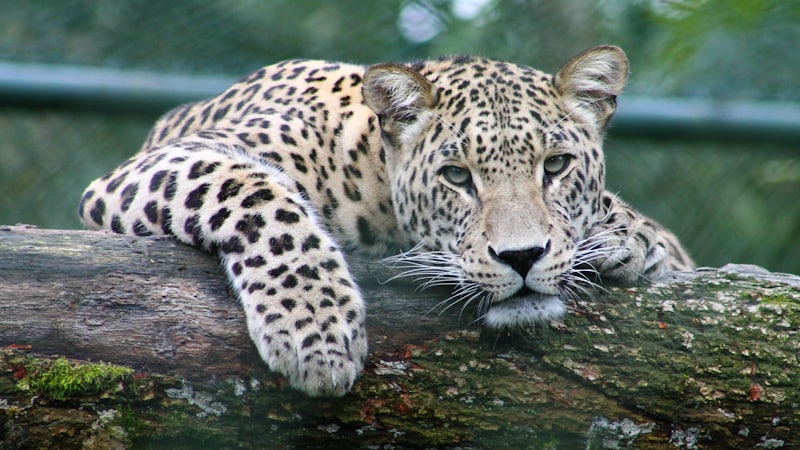
Cheetah: The Fastest Land Animal
The Animal Built for One Thing
Every aspect of a cheetah's body is a compromise in favor of raw speed. The spine is too flexible to support weight efficiently. The skull is too small to accommodate strong jaw muscles. The claws are shaped wrong for climbing. The lungs are oversized to the point of pushing other organs out of position. The bones are light to the point of fragility. Nothing about the cheetah works well except running -- but at running, nothing alive is better.
At 112 km/h in short bursts and 0 to 96 km/h in 3 seconds, the cheetah represents the outer limit of what a terrestrial vertebrate can accomplish through pure speed. Understanding how it works, and what it costs, is a lesson in how extreme specialization shapes an animal's entire existence.
The Speed Record
The official top speed for a cheetah is approximately 112 km/h (70 mph), though the exact peak is difficult to measure in wild animals.
Laboratory and zoo measurements:
- Sarah, Cincinnati Zoo (2013): Ran a 100-meter course in 5.95 seconds, with a measured peak speed of approximately 98 km/h. At age 11 (old for a cheetah), she was not at peak physical capability.
- Various zoo timing studies: Young, healthy cheetahs in controlled settings have reached 105 km/h in straight-line measurement.
- Wild telemetry studies (2013): Researchers from the Royal Veterinary College attached GPS collars to cheetahs in Botswana. The fastest wild chase recorded reached 93 km/h.
The 112 km/h figure represents the theoretical maximum for a prime-age cheetah under ideal conditions. Most actual chases occur between 80 and 100 km/h.
Acceleration is more remarkable than top speed. A cheetah reaches 96 km/h (60 mph) in approximately 3 seconds from a standing start. By comparison:
| Acceleration to 60 mph | Time |
|---|---|
| Cheetah | 3 seconds |
| Bugatti Chiron | 2.4 seconds |
| Ferrari 458 Italia | 3.3 seconds |
| Porsche 911 Turbo S | 2.7 seconds |
| Tesla Model S Plaid | 2.1 seconds |
A cheetah accelerates like a supercar. The primary difference is that a cheetah can also turn, pivot, and strike at its target while accelerating.
The Biomechanics of Speed
Cheetah anatomy is a catalog of speed adaptations.
Flexible Spine
A cheetah's spine is extraordinarily flexible. When running, the spine curves deeply during the contraction phase and straightens completely during the extension phase. This effectively doubles the length of each stride -- the cheetah reaches forward with its front legs while the back legs are still extended behind, and the spine acts as a spring storing and releasing energy.
Each stride of a running cheetah covers 6-7 meters, twice what its leg length alone would suggest. At peak speed, a cheetah is taking approximately 3.5 strides per second, each covering 7 meters.
Semi-Retractable Claws
Most cats have fully retractable claws, which they retract when walking to keep the claws sharp for climbing and fighting. Cheetahs' claws do not fully retract. They remain partially extended at all times, providing traction like running spikes or cleats.
This trade-off is characteristic of cheetah specialization. Blunter claws mean cheetahs cannot climb trees like leopards or fight effectively like lions. But always-extended claws mean cheetahs do not lose traction at high speed.
Long Muscular Tail
A cheetah's tail is approximately 85 cm long -- nearly the length of its body. The tail acts as a rudder and counterweight, allowing the cheetah to execute sharp turns at high speed. When a fleeing gazelle zigzags, the cheetah counter-swings its tail to keep balance during the matching maneuver.
Without this tail, a cheetah could still run straight at top speed but could not turn effectively while at speed. Prey animals specifically use zigzag escape patterns because they exploit cheetahs' balance limitations.
Oversized Lungs and Heart
A cheetah's lungs occupy a larger fraction of its body cavity than in any other cat. The nasal passages are also enlarged, allowing more air intake per breath. The heart is approximately 33 percent larger than expected for body size.
Combined, these features allow cheetahs to oxygenate blood at approximately four times the rate of a house cat of equivalent proportional size. At full sprint, a cheetah takes 150 breaths per minute and moves through its full lung capacity with every stride.
Reduced Jaw and Teeth
Cheetahs have smaller heads than other big cats because evolution has reduced jaw musculature to save weight. A cheetah's bite force is approximately 475 PSI -- stronger than a human but less than half the bite force of a leopard.
Cheetahs kill prey through suffocation rather than bone-crushing bites. The cheetah grabs prey by the throat and clamps down, holding until the animal stops breathing. This works only for medium-sized prey like gazelles and impalas; cheetahs cannot take down larger prey that lions or leopards can handle.
Lightweight Legs
Muscle mass in the cheetah's legs is concentrated high in the leg (near the body), with minimal muscle below the knee or elbow. This reduces rotational inertia -- the effort required to swing a leg forward during running. Less mass at the end of the leg means faster cycling.
This is the same principle that makes composite bicycle wheels faster than steel wheels. The cheetah is not just strong; it is engineered to be efficient.
Why Cheetahs Cannot Sustain Speed
All this specialization comes with catastrophic costs.
A cheetah running at full speed generates enormous heat. Running at 100 km/h consumes approximately 60 times the cheetah's resting metabolic rate, producing heat at a rate that would cook the animal from the inside within minutes if not dissipated.
The cheetah's cooling systems are inadequate for sustained speed. Cheetahs cannot sweat significantly -- they lack the sweat glands of humans and some other mammals. They pant to cool down, but their small lungs limit panting capacity. Their large nasal passages provide some evaporative cooling, but not enough.
During a 30-second chase, a cheetah's core body temperature can rise from 38.5°C to 41°C -- approaching the lethal ceiling of 42°C for mammalian enzyme function. If the chase lasts longer, the cheetah must stop or risk death from hyperthermia.
This is why cheetahs almost always give up a chase within 30-60 seconds if the prey is still ahead of them. The chase is a commitment to either kill quickly or stop entirely.
The Recovery Problem
After a successful hunt, cheetahs face a second problem. They need 15-30 minutes of rest before they can begin eating, because their overheated muscles cannot support feeding behavior immediately. During this recovery window, their kill is vulnerable to theft.
Lions, leopards, hyenas, and even vultures will drive cheetahs off their kills. The cheetah, exhausted from the chase, cannot defend the carcass. Studies in the Serengeti have shown that cheetahs lose approximately 10-15 percent of their kills to larger predators, and the loss rate rises dramatically in areas with high lion or hyena density.
This kleptoparasitism (theft of kills by larger predators) is the single greatest ecological limitation on cheetah populations. In areas with many competing carnivores, cheetahs must hunt more frequently to make up for stolen kills, which raises their total metabolic cost and reduces their reproductive success.
Female cheetahs with cubs are particularly vulnerable. They must hunt larger prey to feed their cubs but also defend those kills from larger predators that specifically target cheetah kills. Cub mortality in cheetah populations is extraordinarily high -- approximately 90 percent of cubs die before reaching independence, with predation by lions being the leading cause.
Hunting Strategy
Cheetahs hunt primarily during daylight hours, unlike most African cats which hunt at night. This is because their eyes are specialized for daylight acuity rather than low-light sensitivity, and their speed advantage is greatest in flat open terrain during clear visibility.
A typical cheetah hunt follows this pattern:
Spot prey from elevated terrain. Cheetahs climb termite mounds, fallen trees, or anthills to scan for prey. They can identify potential targets at distances exceeding 5 kilometers.
Stalk to within 50-100 meters. The cheetah approaches slowly using whatever cover is available. Unlike leopards or lions, cheetahs do not need to get extremely close -- they just need to reach striking distance.
Burst acceleration. When the prey is within range, the cheetah explodes into a full-speed chase. This is the 0-to-60-in-3-seconds phase.
Target acquisition. During the chase, the cheetah uses its tail for balance while the front paws deliver a "trip strike" to the prey's hindquarters, tumbling the animal to the ground.
Kill bite. The cheetah grabs the prey's throat and holds until the animal suffocates -- typically 5-15 minutes.
Recovery and defense. The cheetah rests, panting, for 15-30 minutes before eating. This is the most vulnerable moment in the hunt.
Cheetahs have a hunting success rate of approximately 50-60 percent, significantly higher than lions (25 percent) or leopards (40 percent). The speed advantage translates directly to hunting efficiency in open grassland.
The Genetic Bottleneck
Modern cheetahs have extraordinarily low genetic diversity compared to other large mammals. DNA studies show the entire current population passes through only a small fraction of the genetic variation present in the species 10,000 years ago.
The cause was a population crash at the end of the last Ice Age. Cheetahs were once distributed across most of Africa, Asia, and parts of North America. A combination of climate change and human hunting pressure reduced the global population to a few hundred animals approximately 10,000 years ago.
All modern cheetahs descend from this small founding population. The genetic consequence is that any two cheetahs alive today are so genetically similar that skin grafts between unrelated individuals can succeed without rejection -- a level of genetic uniformity normally seen only between identical twins or inbred laboratory animals.
Low genetic diversity creates several problems:
Disease vulnerability. A single pathogen that one cheetah cannot resist is likely to affect every cheetah the same way. The species has limited capacity to evolve resistance.
Reproductive difficulties. Cheetahs have high rates of infertility, miscarriage, and sperm abnormalities compared to other big cats. This is consistent with the effects of prolonged inbreeding.
Reduced adaptability. A species with low genetic variation has fewer genetic variants from which natural selection can work. Cheetahs cannot adapt as quickly to environmental changes as species with diverse gene pools.
Conservation Status
Fewer than 7,100 adult cheetahs remain in the wild today, down from approximately 100,000 in 1900. The species is classified as Vulnerable by the IUCN, with populations declining across most of its range.
Primary threats:
Habitat loss. Cheetahs require vast open grasslands to hunt effectively. Agricultural expansion, human settlement, and infrastructure development have reduced suitable habitat by approximately 90 percent in the last century.
Human-wildlife conflict. Cheetahs occasionally prey on livestock, particularly goats and young calves. Farmers shoot cheetahs in self-defense or retribution, killing hundreds annually.
Illegal wildlife trade. Approximately 300 cheetah cubs are trafficked from the Horn of Africa to Gulf states each year to be sold as luxury pets. Most die during transport.
Kleptoparasitism. In protected areas where cheetah habitat overlaps with lion and hyena populations, cheetahs lose enough kills to suffer chronic malnutrition.
Conservation success stories:
Livestock guardian dogs. The Cheetah Conservation Fund in Namibia has placed over 700 Kangal and Anatolian shepherd puppies with farmers. The dogs scare cheetahs away from livestock, reducing farmer retaliation and cheetah-human conflict by over 80 percent in participating farms.
Captive breeding. Global captive populations now exceed 1,700 cheetahs in coordinated breeding programs, ensuring genetic diversity is preserved even if wild populations continue to decline.
Anti-trafficking work. Coordination between African source countries and Gulf state destination markets has begun to reduce the illegal pet trade, though much work remains.
The Future of the Cheetah
The cheetah is caught between its extreme specialization and a changing world. It evolved to exploit open grassland ecosystems that are now among the most converted habitats on Earth. It requires large territories that are incompatible with dense human populations. Its low genetic diversity limits its ability to adapt to new challenges.
Yet the cheetah also represents something unique. It is the fastest land animal that has ever lived, and no close competitor exists among living or recently extinct species. Losing cheetahs would mean losing not just a species but the very concept of extreme terrestrial speed from Earth's ecosystems.
Conservation in the coming decades will determine whether the cheetah survives. The tools are available -- guardian dog programs, habitat protection, anti-trafficking enforcement, captive breeding, and genetic management. The question is whether the political will and financial resources can match the scale of the challenge.
For now, in the grasslands of Namibia, Botswana, and Tanzania, cheetahs still hunt as they have for millions of years -- exploding from standing start to 100 km/h in three strides, chasing prey across open ground with a speed no other land animal can match. That this still happens, in a world that has changed so profoundly around them, is one of the more remarkable continuities in modern biology.
Related Articles
- The Secret Lives of Big Cats
- Lion vs Tiger: Who Would Win in a Fight
- Biggest Predators in the World Ranked by Size
Frequently Asked Questions
How fast is a cheetah?
Cheetahs can reach 112 km/h (70 mph) in short bursts, making them the fastest land animal alive. A 2013 study at Cincinnati Zoo measured Sarah, a captive cheetah, running the 100-meter sprint in 5.95 seconds -- approximately 61 km/h average speed with a peak of 98 km/h. Wild cheetahs typically reach 93-98 km/h during chases, but they cannot sustain this speed -- most chases last only 20-60 seconds before the cheetah overheats. Acceleration is even more remarkable than top speed. A cheetah can go from 0 to 96 km/h in 3 seconds, faster than any production sports car. This explosive acceleration is what makes cheetahs such effective hunters in open grassland habitat.
Why can cheetahs run so fast?
Cheetahs have multiple specialized adaptations for extreme speed. Their spine is extraordinarily flexible, curving and uncurling with each stride to effectively double the length of the step. Their claws do not fully retract like other cats, providing traction like cleats. Their tails are long and muscular, functioning as counterweights that allow sharp turns at speed. Their lungs, heart, and nasal passages are significantly larger than expected for their body size -- cheetahs can oxygenate blood at four times the rate of a normal cat. Their long legs have minimal muscle mass below the knee to reduce rotational inertia, and their shoulders are not rigidly connected to the spine, allowing extreme range of motion. Every anatomical feature has been refined by evolution for pure speed.
Why do cheetahs get tired so quickly?
Running at extreme speed produces massive heat. A cheetah's body temperature can rise to 41°C (106°F) during a 30-second chase, approaching the upper limit of mammalian survival. Cheetahs cannot sweat significantly to cool down, and their small lungs cannot dissipate heat quickly enough through panting. After a chase, cheetahs must rest for 15-30 minutes before they can eat their kill -- a period during which lions, hyenas, or other predators often steal the prey. This is the primary ecological limitation of cheetah speed. They are the fastest hunters but also the most vulnerable to kleptoparasitism (theft of kills by larger predators), which is why cheetahs often drag kills into cover before feeding or eat rapidly once recovered.
Are cheetahs going extinct?
Cheetahs are classified as Vulnerable by the IUCN with fewer than 7,100 adults remaining in the wild, down from 100,000 in 1900. The species faces multiple severe threats: habitat loss from agricultural expansion, conflict with farmers who shoot cheetahs attacking livestock, illegal pet trade (approximately 300 cheetah cubs are trafficked to the Gulf states annually), and genetic bottlenecks from near-extinction events 10,000 years ago that left modern cheetahs with extraordinarily low genetic diversity. The total cheetah population has declined 30 percent in the past 15 years. Conservation efforts include the Cheetah Conservation Fund's livestock guardian dog programs in Namibia (which have reduced farmer-cheetah conflicts by over 80 percent), captive breeding programs, and anti-trafficking work. Without continued intervention, cheetahs could be extinct in the wild within 50 years.
Can cheetahs roar?
No, cheetahs cannot roar. This is one of the features that distinguishes them from 'true big cats' (lions, tigers, leopards, jaguars) in the genus Panthera. Cheetahs belong to the genus Acinonyx and possess a different hyoid bone structure that prevents the low-frequency roaring sounds other big cats produce. Instead, cheetahs communicate through chirps, purrs, hisses, and a distinctive bird-like yelp called a 'yip' that females use to call their cubs. Cheetahs can purr continuously, similar to domestic cats -- a feature lions, tigers, and leopards have lost. The evolutionary separation between cheetahs and Panthera big cats occurred approximately 6 million years ago, and cheetah vocalizations have developed along a different trajectory ever since.