
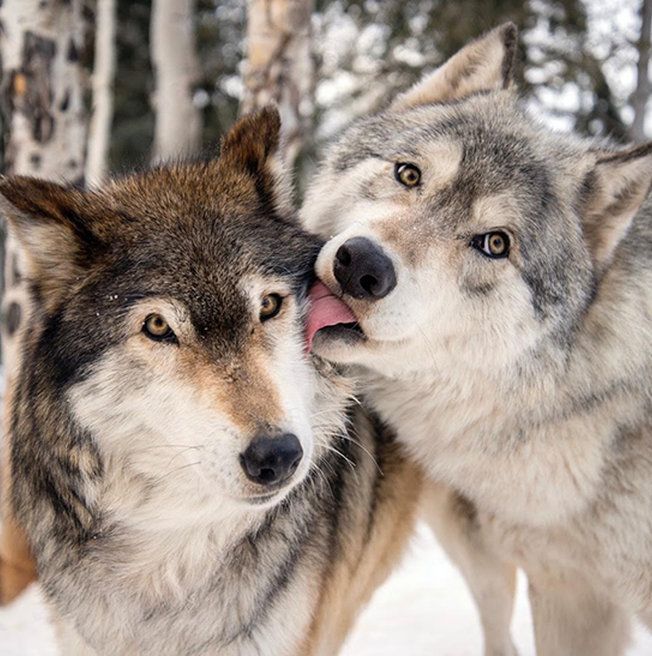
How do wolf packs actually work, and is the alpha wolf concept real?
Among wolves and wild canines, the popular concept of an 'alpha wolf' dominating a pack through aggression is largely a myth based on studies of captive wolves. In the wild, wolf packs are family units led by a breeding pair (the parents) with their offspring. Wolf biologist L.
The family Canidae is one of the great success stories of mammalian evolution. From the frozen Arctic tundra to the scorching savannas of sub-Saharan Africa, from the dense forests of Southeast Asia to the grasslands of South America, wild canines have colonized nearly every terrestrial habitat on Earth. With 36 living species spread across every continent except Antarctica, canines have proven themselves among the most adaptable and resilient predators the natural world has ever produced.
What makes canines so successful? The answer lies in a combination of traits that few other carnivore families can match: social intelligence, endurance-based hunting strategies, remarkable communication systems, and a willingness to exploit diverse food sources. While big cats rely on stealth and explosive power, canines bet on cooperation, stamina, and collective problem-solving. It is a strategy that, over 40 million years of evolution, has paid extraordinary dividends.
This guide examines the most fascinating members of the wild canine family - from the iconic gray wolf to the little-known dhole - exploring their behavior, ecology, and the conservation challenges they face in a rapidly changing world.
Gray Wolves: The Architects of Ecosystems
The gray wolf (Canis lupus) is the largest wild member of the Canidae family and arguably the most studied carnivore on the planet. Once ranging across the entirety of the Northern Hemisphere, gray wolves occupied habitats from the high Arctic to the deserts of the Middle East. Today, their range is significantly reduced, though recovery efforts in North America and Europe have produced remarkable results.
Pack Structure and the Alpha Myth
For decades, popular culture portrayed wolf packs as rigid hierarchies ruled by a dominant "alpha" male and female who maintained control through aggression and intimidation. This understanding was based on research conducted on captive wolves in the mid-20th century - animals that were unrelated strangers forced to coexist in confined spaces. Under those artificial conditions, dominance hierarchies did emerge.
In the wild, the picture is fundamentally different. Wolf packs are family units, typically consisting of a breeding pair and their offspring from one or more years. The "alpha" pair are simply the parents. Leadership is not won through combat but inherited through the basic structure of family life.
"The concept of the alpha wolf is well ingrained in the popular wolf literature, at least partly because of my book The Wolf. This concept was based on the erroneous idea that captive wolf packs consisted of unrelated individuals that competed for rank. In natural wolf packs, the alpha male or alpha female are merely the breeding animals, the parents of the pack, and dominance contests with other wolves are rare, if they exist at all." - L. David Mech, wildlife biologist, in his 1999 paper calling for the retirement of the alpha terminology
A typical wolf pack consists of 5 to 10 individuals, though packs of up to 30 have been documented in areas with abundant prey such as Yellowstone National Park. The breeding pair leads the group, makes decisions about travel routes and hunt targets, and is primarily responsible for territorial defense. Older offspring often serve as "helpers," assisting with pup-rearing and hunting before eventually dispersing to find mates and establish their own territories.
Wolf territories are vast, ranging from 80 to 1,000 square kilometers depending on prey density. Packs defend these territories through scent marking (urinating on prominent landmarks approximately every 240 meters along travel routes), howling, and occasionally direct confrontation with rival packs. Territorial conflicts are, in fact, the leading natural cause of death among wolves.
The Yellowstone Reintroduction: A Trophic Cascade
Perhaps no single event in modern wildlife management has been as thoroughly studied - or as dramatically impactful - as the reintroduction of gray wolves to Yellowstone National Park in 1995 and 1996. After a 70-year absence, 31 wolves from Canada were released into the park, setting off a chain reaction that reshaped the entire ecosystem.
Before the wolves' return, Yellowstone's elk population had swelled to roughly 20,000 animals. Without predation pressure, elk grazed freely and heavily along riverbanks and valley floors, stripping willow, aspen, and cottonwood stands to the ground. Streamside vegetation had been devastated, and with it, the habitat of countless other species.
The wolves changed everything. Their presence triggered what ecologists call a trophic cascade - a top-down ecological effect that rippled through every level of the food web:
- Elk behavior changed. Elk became wary of lingering in open valleys and near rivers where they were vulnerable to wolf predation. This "ecology of fear" reduced browsing pressure on riparian vegetation.
- Vegetation recovered. Willows, aspens, and cottonwoods began regenerating along streams for the first time in decades. Some willow stands grew from less than 10 centimeters to over 2 meters in height within a few years.
- Beavers returned. With willows available again, beaver populations rebounded from one colony in 1996 to nine colonies by 2009. Beaver dams created pools and wetlands.
- Songbird populations increased. Migratory songbirds that depended on riparian thickets for nesting - species that had declined or vanished - returned in measurable numbers.
- Rivers changed course. With stabilized banks reinforced by root systems and beaver dams, some river channels actually narrowed and deepened, reducing erosion.
- Scavenger species benefited. Wolf kills provided carcasses that fed ravens, magpies, eagles, bears, and even beetles through the winter months.
"We've seen things we never expected. The wolves are not just controlling the elk - they're changing how the elk use the landscape. And that behavioral shift has consequences that cascade through the entire system in ways that continue to surprise us." - Doug Smith, Senior Wildlife Biologist and Yellowstone Wolf Project leader
The Yellowstone example has become the textbook case for the ecological importance of apex predators and has been instrumental in shifting public and political attitudes toward wolf conservation.
African Wild Dogs: The Most Efficient Predators on Earth
The African wild dog (Lycaon pictus) holds a distinction no other large predator can claim: an approximately 80% hunt success rate. For comparison, lions succeed roughly 25% of the time, leopards around 38%, and even wolves manage only about 14% in some habitats. The African wild dog is, by this measure, the most efficient large predator on the planet.
Cooperative Hunting at Its Finest
African wild dogs hunt in coordinated packs of 6 to 20 adults. Their strategy is endurance pursuit - they chase prey at speeds of up to 44 mph (71 km/h) for distances of 3 to 5 kilometers, with pack members rotating the lead position to conserve individual energy. This relay-style hunting is devastatingly effective against medium-sized antelope such as impala, kudu, and wildebeest calves.
Once prey is caught, wild dogs feed cooperatively. Unlike lions, where dominant individuals gorge first and subordinates may go hungry, wild dogs regurgitate food for pups, injured members, and those who stayed behind to guard the den. This equitable sharing system is one of the most democratic in the animal kingdom.
A Species in Crisis
Despite their hunting prowess, African wild dogs are among the continent's most endangered large carnivores. Fewer than 6,600 individuals remain in the wild, fragmented across a handful of populations in southern and eastern Africa. They face habitat loss, conflict with livestock farmers, disease transmission from domestic dogs (particularly rabies and canine distemper), and accidental snaring.
Their enormous home ranges - packs may roam territories of 400 to 1,500 square kilometers - make them particularly vulnerable to habitat fragmentation.
Arctic Foxes: Masters of the Extreme Cold
The arctic fox (Vulpes lagopus) is a study in physiological extremes. Weighing just 3 to 8 kilograms, this small canine survives and thrives in conditions that would kill most mammals within hours. Temperatures in their range regularly plunge below -50 degrees Celsius (-58 degrees Fahrenheit), and winter darkness can last months at a time.
Adaptations for Survival
The arctic fox possesses a suite of adaptations that make it uniquely suited to polar life:
- Fur insulation. Arctic fox fur has the highest insulative value of any mammal. The dense underfur and longer guard hairs trap air so effectively that the animal does not begin shivering until ambient temperatures drop below -70 degrees Celsius.
- Counter-current heat exchange. Blood vessels in the paws are arranged so that warm arterial blood heats cold venous blood returning from the feet, keeping paw pad temperature just above freezing while conserving core body heat.
- Seasonal coat change. In winter, the fur is thick and white (or blue-gray in some populations), providing camouflage against snow. In summer, it thins dramatically and turns brown or gray.
- Metabolic suppression. Arctic foxes can reduce their basal metabolic rate by up to 36% during winter, conserving energy during periods of food scarcity.
- Food caching. In summer and autumn, arctic foxes cache hundreds of food items - lemmings, bird eggs, fish - across the tundra, creating a network of frozen food reserves for winter retrieval.
Arctic foxes are opportunistic omnivores, feeding primarily on lemmings (whose population cycles directly drive fox reproduction), but also on birds, eggs, fish, berries, seaweed, and carrion. They famously follow polar bears across sea ice, scavenging seal carcasses left behind.
Dholes: Asia's Forgotten Wild Dog
The dhole (Cuon alpinus), also called the Asiatic wild dog or red dog, is one of the least-known large predators in Asia. Once ranging from Siberia to Java, dholes now occupy a fraction of their former range, with an estimated 4,500 to 10,500 adults surviving in fragmented populations across South and Southeast Asia.
Unique Among Canines
Dholes differ from other canids in several striking ways:
- They have fewer molars than other canids (two rather than three in the lower jaw), an adaptation for a more exclusively carnivorous diet.
- They produce an unusual whistling call to coordinate pack movements through dense forest, a vocalization unlike the howls and barks of wolves and other canids.
- They can bring down prey 10 times their body weight, including sambar deer, gaur (Indian bison), and even water buffalo.
- Packs of 5 to 12 individuals have been documented successfully driving tigers and leopards off kills.
Dholes are classified as Endangered by the IUCN, threatened by habitat loss, depletion of prey species, disease from domestic dogs, and persecution by humans. Their secretive nature and dense forest habitats make them extremely difficult to study, and conservation efforts remain underfunded.
Maned Wolves: South America's Evolutionary Oddity
The maned wolf (Chrysocyon brachyurus) is a creature that defies easy categorization. Standing up to 90 centimeters (35 inches) at the shoulder on remarkably long, stilt-like legs, it looks like a fox stretched to the proportions of a deer. Despite its name, it is not a wolf. Despite its appearance, it is not a fox. It is the sole member of its genus, a unique lineage that diverged from other South American canids roughly 3 to 4 million years ago.
An Omnivore in Wolf's Clothing
Unlike most canids, the maned wolf is a solitary omnivore. Its diet consists of approximately 50% plant matter, with the lobeira fruit (Solanum lycocarpum) - sometimes called the "wolf apple" - making up a significant portion. The rest of its diet includes small mammals, birds, insects, and reptiles. Its long legs are an adaptation not for speed but for seeing over the tall grass of the South American cerrado (tropical savanna).
Maned wolves are Near Threatened, with an estimated 17,000 individuals remaining in the wild. Habitat conversion of the Brazilian cerrado for soybean farming and cattle ranching is their primary threat, with road mortality and domestic dog diseases as secondary concerns.
Communication: The Language of Canines
Wild canines possess some of the most sophisticated communication systems in the animal kingdom, employing vocalizations, body language, and chemical signaling in complex combinations.
Howling
Wolf howls can be heard up to 16 kilometers (10 miles) away under favorable conditions. Howling serves multiple functions:
- Territory advertisement - warning rival packs of an occupied area
- Pack coordination - locating separated pack members during hunts or travel
- Social bonding - communal howling strengthens group cohesion
Each wolf has an individually distinct howl, and pack members can identify each other by voice. Wolves also modulate their howling frequency and harmonics to make small packs sound larger, a form of acoustic deception aimed at deterring rivals.
Body Language
Canine body language is extraordinarily nuanced. Key signals include:
- Tail position - raised tails indicate confidence or dominance; tucked tails signal submission or fear
- Ear orientation - forward-facing ears indicate alertness or aggression; flattened ears signal submission
- Play bows - the front-end-down, rear-end-up posture that universally signals playful intent across canid species
- Facial expressions - lip curling, teeth baring, and mouth gaping each convey distinct messages
Scent Marking
Chemical communication through urine, feces, and glandular secretions is perhaps the most information-rich channel for canines. A single scent mark can convey the marker's identity, sex, reproductive status, health, diet, and emotional state. Wolves mark territory boundaries with raised-leg urinations approximately every 240 meters, creating an olfactory fence that persists for days or weeks.
The Wolf-Dog Relationship: 15,000 Years of Domestication
The domestic dog (Canis lupus familiaris) is not merely related to the gray wolf - it is a gray wolf, a subspecies that diverged through the process of domestication beginning roughly 15,000 to 40,000 years ago (the exact timing remains debated among researchers).
How It Happened
The leading theory holds that domestication began not with humans capturing wolf pups but with wolves domesticating themselves. As human hunter-gatherer groups established semi-permanent camps, the boldest and least aggressive wolves began scavenging from refuse piles at the edges of settlements. Over generations, natural selection favored wolves that tolerated human proximity - a process scientists call self-domestication.
Genetic evidence suggests that all modern dogs descend from a now-extinct population of Pleistocene wolves, likely from Europe or Central Asia. The domestication process involved selecting (consciously or unconsciously) for traits such as:
- Reduced fear and aggression toward humans
- Juvenile behavioral traits retained into adulthood (neoteny) - playfulness, dependency, sociability
- Altered physical features - floppy ears, curled tails, varied coat colors (likely as byproducts of selection on behavior-linked genes)
The relationship between humans and dogs is the oldest interspecies partnership on Earth, predating the domestication of any other animal by thousands of years. It has shaped both species profoundly - dogs gained reliable food and shelter, while humans gained hunting partners, sentinels, herders, and companions.
Comparing Wild Canine Species
The following table provides a comparison of key traits across the wild canine species discussed in this article:
| Species | Weight (kg) | Pack Size | Territory (km2) | Diet | Hunt Success | IUCN Status |
|---|---|---|---|---|---|---|
| Gray Wolf | 30-80 | 5-10 | 80-1,000 | Carnivore (ungulates) | ~14% | Least Concern |
| African Wild Dog | 20-30 | 6-20 | 400-1,500 | Carnivore (antelope) | ~80% | Endangered |
| Arctic Fox | 3-8 | Solitary/pair | 5-60 | Omnivore (lemmings, eggs) | N/A | Least Concern |
| Dhole | 12-20 | 5-12 | 40-170 | Carnivore (deer, bovids) | ~75% | Endangered |
| Maned Wolf | 20-30 | Solitary | 25-80 | Omnivore (fruit, small prey) | N/A | Near Threatened |
| Ethiopian Wolf | 11-19 | 6-13 | 6-15 | Carnivore (rodents) | ~30% | Endangered |
Conservation Challenges Facing Wild Canines
Wild canines face an array of threats that, in combination, have pushed several species toward the brink of extinction:
Habitat Loss and Fragmentation
This is the single greatest threat to most wild canine species. As human agriculture, infrastructure, and urban areas expand, canine habitats shrink and become fragmented into isolated patches. Species with large territory requirements - wolves and African wild dogs in particular - are especially vulnerable, as fragmentation prevents gene flow between populations and reduces prey availability.
Human-Wildlife Conflict
Wolves, dholes, and African wild dogs all come into conflict with livestock farmers. Retaliatory killings, poisoning campaigns, and government-sanctioned culls have devastated canine populations worldwide. In parts of Africa, a single poisoned carcass intended for one predator can kill an entire wild dog pack when members share the tainted meat.
Disease
Domestic dogs are reservoirs for diseases including rabies, canine distemper virus, and parvovirus that can devastate wild canine populations. In 1991, a rabies outbreak killed nearly the entire African wild dog population in the Serengeti - roughly 50 animals. The Ethiopian wolf, the world's rarest canid with approximately 500 individuals remaining, faces recurrent rabies outbreaks transmitted by domestic dogs in the Ethiopian highlands.
Climate Change
Arctic foxes face a dual threat from warming temperatures. As the Arctic warms, the red fox (Vulpes vulpes) is expanding northward into arctic fox territory, outcompeting the smaller species. Simultaneously, changes in lemming population cycles - driven by altered snow conditions - disrupt the arctic fox's primary food source.
Key Conservation Successes
Not all the news is grim. Several conservation efforts have produced meaningful results:
- Wolf recovery in Yellowstone and the Northern Rockies - from zero wolves in 1994 to approximately 500 in the Greater Yellowstone Ecosystem by the 2020s
- European wolf recovery - wolves have recolonized much of Western Europe, with an estimated 17,000 wolves across the continent as of 2023
- African wild dog translocation programs in South Africa, Mozambique, and Malawi have established new populations in protected areas
- Vaccination programs targeting domestic dogs around Ethiopian wolf habitat have reduced rabies transmission
Conclusion
The canine family represents one of evolution's most versatile experiments in predator design. From the cooperative precision of wolf packs reshaping entire ecosystems in Yellowstone to the extraordinary endurance hunting of African wild dogs, from the physiological extremes of arctic foxes to the evolutionary independence of the maned wolf, wild canines demonstrate that there is no single formula for survival.
What unites this diverse family is a set of traits - intelligence, adaptability, social complexity, and resilience - that has allowed them to persist through ice ages, continental shifts, and the rise of humanity. Whether they can persist through the current era of habitat destruction, climate change, and human-wildlife conflict depends largely on the choices we make in the coming decades.
The story of wolves in Yellowstone offers the most hopeful lesson: when given the chance, these animals do not merely survive - they transform the landscapes they inhabit, restoring ecological processes that benefit hundreds of other species. The case for conserving wild canines is not merely sentimental. It is ecological, scientific, and ultimately practical.
References
Mech, L. D. (1999). "Alpha status, dominance, and division of labor in wolf packs." Canadian Journal of Zoology, 77(8), 1196-1203.
Smith, D. W., Peterson, R. O., & Houston, D. B. (2003). "Yellowstone after Wolves." BioScience, 53(4), 330-340.
Creel, S., & Creel, N. M. (2002). The African Wild Dog: Behavior, Ecology, and Conservation. Princeton University Press.
Woodroffe, R., Thirgood, S., & Rabinowitz, A. (2005). People and Wildlife: Conflict or Coexistence? Cambridge University Press.
Sillero-Zubiri, C., Hoffmann, M., & Macdonald, D. W. (2004). Canids: Foxes, Wolves, Jackals and Dogs - Status Survey and Conservation Action Plan. IUCN/SSC Canid Specialist Group.
Ripple, W. J., & Beschta, R. L. (2012). "Trophic cascades in Yellowstone: The first 15 years after wolf reintroduction." Biological Conservation, 145(1), 205-213.
Fuglei, E., & Ims, R. A. (2008). "Global warming and effects on the arctic fox." Science Progress, 91(2), 175-191.
Frequently Asked Questions
How do wolf packs actually work, and is the alpha wolf concept real?
The popular concept of an ‘alpha wolf’ dominating a pack through aggression is largely a myth based on studies of captive wolves. In the wild, wolf packs are family units led by a breeding pair (the parents) with their offspring. Wolf biologist L. David Mech, who originally popularized the term ‘alpha,’ later retracted it, explaining that wild wolf packs function more like human families than rigid dominance hierarchies.
Leadership is based on parentage, not combat.
Why are African wild dogs the most successful hunters in the animal kingdom?
African wild dogs (Lycaon pictus) achieve a remarkable 80% hunt success rate, far exceeding lions at roughly 25% and leopards at around 38%. Their success comes from extraordinary cooperative strategies: the pack hunts as a coordinated unit with relay-style pursuit, members take turns leading the chase to conserve energy, and they share food equitably. Their endurance running approach at speeds up to 44 mph exhausts prey over distances of 3-5 kilometers.
How do arctic foxes survive in temperatures as low as -50 degrees Celsius?
Arctic foxes possess several remarkable adaptations for extreme cold. Their fur has the best insulative properties of any mammal, and they do not begin shivering until temperatures drop below -70 degrees Celsius. They have a counter-current heat exchange system in their paws that keeps foot pad temperatures just above freezing.
They also reduce their metabolic rate by up to 36% during winter, change fur color seasonally for camouflage, and cache hundreds of food items across the tundra for lean months.