
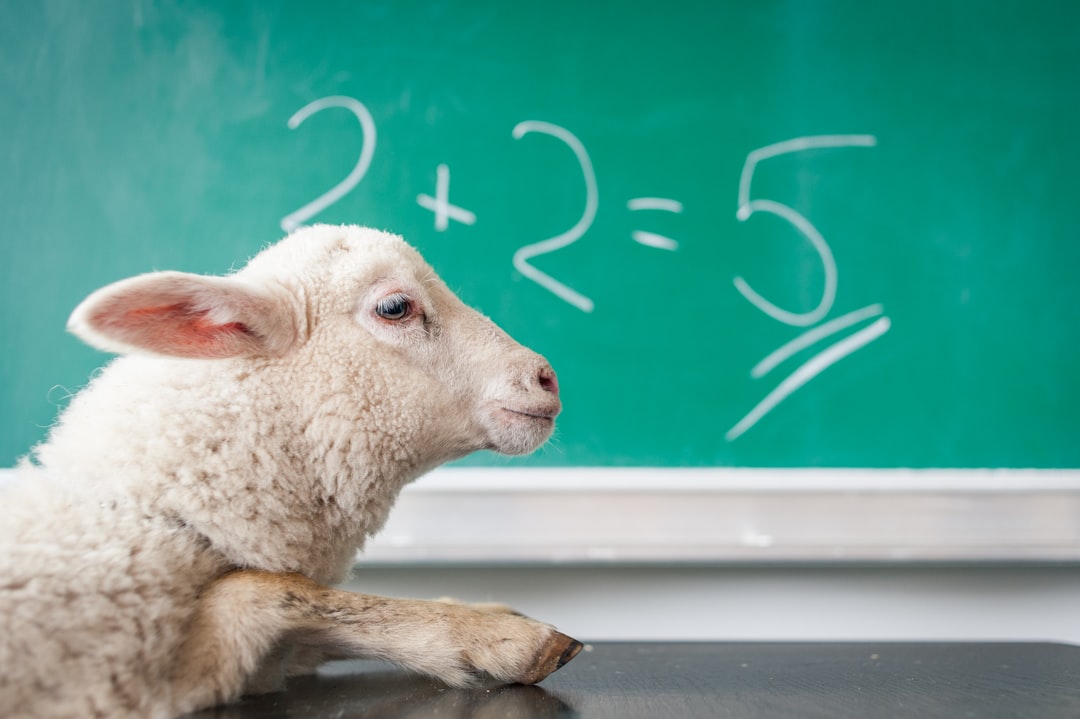
For centuries, humans treated intelligence as a ladder with ourselves at the top and every other species arrayed beneath us in descending order. That model is collapsing. Modern comparative cognition research reveals something far more interesting: intelligence is not a single dimension but a landscape of specialized cognitive abilities, each shaped by the evolutionary pressures a species faces. Measuring it demands methods as varied as the minds being studied.
This article examines how researchers actually quantify cognition in non-human animals, what those measurements reveal, and why the question "which animal is smartest?" may be the wrong question entirely.
The Problem With Ranking Animal Intelligence
The desire to rank species by intelligence is understandable. Humans have spent decades refining standardised cognitive assessments for our own species -- platforms like Whats Your IQ demonstrate how structured psychometric testing can yield meaningful cognitive profiles through carefully designed question batteries. But translating those principles to non-human species introduces profound methodological challenges.
A test designed for a primate with hands is useless for a dolphin. A visual puzzle meant for a diurnal bird is meaningless to an echolocating bat. The core problem is ecological validity: any legitimate measure of animal intelligence must account for the sensory world, motor capabilities, and evolutionary history of the species being tested.
"We have been measuring animals against a human yardstick for too long. The question is not whether a fish can climb a tree, but whether it can navigate a coral reef better than any primate alive." -- Dr. Redouan Bshary, University of Neuchatel, on interspecific cognitive comparison
How Researchers Measure Animal Cognition
Comparative psychologists and ethologists have developed an extensive toolkit for probing animal minds. These methods fall into several broad categories.
1. Problem-Solving and Tool Use
Subjects are presented with novel challenges -- extracting food from a container, manipulating a mechanism, or navigating a new obstacle. Performance is measured by:
- Latency -- how quickly the animal solves the problem
- Error rate -- how many failed attempts precede success
- Transfer -- whether the solution generalises to new variants of the task
- Innovation -- whether the animal invents a novel approach
New Caledonian crows (Corvus moneduloides) are legendary performers here, spontaneously bending wire into hooks and constructing compound tools from multiple components -- behaviours that require causal reasoning and mental simulation.
2. Mirror Self-Recognition (MSR)
The mirror test, developed by Gordon Gallup Jr. in 1970, places a mark on an animal's body in a location visible only via a mirror. If the animal uses the mirror to investigate the mark on its own body, it demonstrates self-awareness.
Species that pass the mirror test:
- Great apes (chimpanzees, bonobos, orangutans, gorillas)
- Bottlenose dolphins
- Asian elephants
- Eurasian magpies
- Cleaner wrasse (Labroides dimidiatus)
- Manta rays (preliminary evidence)
3. Delayed Gratification
Can the animal resist an immediate reward for a larger future one? This tests executive function and impulse control. In a landmark 2014 study, corvids performed comparably to great apes, waiting up to sixteen minutes for a preferred food item.
4. Social Cognition and Theory of Mind
- Gaze following -- does the animal track where another is looking?
- Tactical deception -- does it deliberately mislead competitors?
- Cooperation -- can it coordinate with a partner to achieve a shared goal?
- Consolation -- does it comfort distressed group members?
5. Communication Complexity
Measuring the structure and flexibility of natural communication systems -- from cetacean click codas to honeybee waggle dances -- provides insight into cognitive sophistication without requiring laboratory manipulation.
Cognitive Abilities Across Species
The following table compares key cognitive domains across some of the most-studied animal taxa. Ratings reflect the weight of current experimental evidence.
| Cognitive Domain | Great Apes | Corvids | Dolphins | Elephants | Octopuses |
|---|---|---|---|---|---|
| Tool use and manufacture | ** | * | |||
| Mirror self-recognition | ** | **** | ** | ||
| Causal reasoning | ** | ** | *** | ||
| Social learning | ** | * | * | ||
| Delayed gratification | * | ** | ** | ||
| Spatial memory | * | **** | **** | ||
| Communication complexity | * | ** | * | ** | |
| Problem-solving novelty | * | ** | ***** |
*Ratings: * = minimal evidence, ***** = robust evidence of advanced ability*
The Brain Behind the Behaviour
Neuroscience offers a complementary approach to behavioural testing. Rather than asking what an animal can do, researchers examine the neural hardware that supports cognition.
Encephalization Quotient
The encephalization quotient (EQ) measures actual brain size against the brain size predicted for an animal of that body mass. A higher EQ suggests more neural tissue available for complex cognition beyond basic physiological maintenance.
| Species | Approximate EQ | Notable Cognitive Strengths |
|---|---|---|
| Human | 7.4 -- 7.8 | Abstract reasoning, language, cumulative culture |
| Bottlenose dolphin | 4.14 | Social cognition, vocal learning, cooperation |
| Chimpanzee | 2.49 | Tool use, tactical deception, cultural transmission |
| Raven | 2.49 | Causal reasoning, future planning, play |
| African elephant | 1.87 | Spatial memory, empathy, long-term social bonds |
| Octopus | 0.95* | Problem solving, observational learning, camouflage |
| Dog | 1.17 | Social cognition with humans, emotional reading |
*Invertebrate EQ comparisons are approximate due to fundamentally different body plans.
"The corvid brain packs more neurons per cubic centimetre into its associative pallium than any primate cortex we have measured. Small does not mean simple." -- Dr. Suzana Herculano-Houzel, Vanderbilt University
Field Research: Observing Intelligence in the Wild
Laboratory experiments provide controlled conditions, but some of the most revealing data on animal intelligence comes from field ethology -- observing animals in their natural habitats over months or years.
Field researchers face a particular documentation challenge. Behavioural observations must be recorded systematically, often in remote conditions where digital tools are unreliable. Structured field notes remain the backbone of ethological data collection. Platforms like When Notes Fly reflect this principle -- the value of organised, accessible note-taking for capturing observations that would otherwise be lost. In ethology, a missed behavioural event is data that can never be recovered.
Key field discoveries that reshaped our understanding of animal intelligence include:
- Jane Goodall's observation of chimpanzee tool use (1960) -- overturned the definition of humanity
- Irene Pepperberg's work with Alex the African grey parrot -- demonstrated conceptual understanding of number, colour, and shape
- Documented orca cultural traditions -- distinct hunting techniques passed across generations within pods
- Wild corvid tool manufacture in New Caledonia -- more sophisticated than anything observed in captivity
- Elephant mourning behaviour -- repeated visits to the remains of deceased family members
"The field is where you discover what the animal actually does with its intelligence. The lab tells you what it can do. Both matter, but the field comes first." -- Dr. Lucy Aplin, Max Planck Institute of Animal Behavior
Australian Wildlife: An Underappreciated Cognitive Hotspot
Australia's geographic isolation has produced some of the most cognitively remarkable animals on Earth, yet they remain understudied compared to African apes or European corvids.
Sulphur-crested cockatoos (Cacatua galerita) in Sydney have demonstrated cultural diffusion of a novel foraging technique -- opening wheelie bins -- that spread through populations via social learning, with regional "dialects" in opening style documented by citizen science. This 2021 study, published in Science, was one of the first to demonstrate innovation diffusion in a non-primate, non-corvid species in the wild.
Australian magpies (Gymnorhina tibicen) have passed cooperative problem-solving tests and, remarkably, learned to remove GPS tracking harnesses from each other -- an apparent act of altruistic problem-solving that stunned researchers.
For those curious about Australia's broader cultural and natural landscape, Down Under Cafe offers a window into the country's distinctive character -- a nation where even the wildlife pushes the boundaries of what we thought animals could do.
Other cognitively notable Australian species include:
- Dingoes -- outperform domestic dogs on independent problem-solving tasks
- Kea parrots (New Zealand, closely related to Australian lineages) -- pass probabilistic reasoning tests
- Portia jumping spiders -- plan detour routes to ambush prey, despite having brains smaller than a pinhead
Why "Smartest Animal" Is the Wrong Question
Ranking animals by intelligence is like ranking tools by usefulness without specifying the job. A hammer is not superior to a screwdriver; each is optimised for different tasks. Similarly:
- Clark's nutcrackers cache up to 30,000 seeds in autumn and retrieve them months later with extraordinary accuracy. Their spatial memory exceeds that of any primate -- but only in this specific domain.
- Honeybees communicate precise location data through dance, perform basic arithmetic, and understand the concept of zero. Their brains contain fewer than one million neurons.
- Border collies can learn over 1,000 human words and infer the names of new objects through exclusion -- a capacity previously attributed only to human children.
Intelligence, in every species, is a solution to an ecological problem. The right question is not "how smart is this animal?" but "what cognitive challenges has evolution equipped it to solve?"
The Future of Animal Cognition Research
Several emerging approaches are reshaping the field:
- Automated testing stations in the wild, allowing free-living animals to participate voluntarily
- Comparative brain imaging using portable MRI and CT technology
- Citizen science platforms that crowdsource behavioural observations at continental scales
- Machine learning analysis of vocalisations, enabling researchers to decode communication systems too complex for human ears
- Cross-species replication -- running identical cognitive tests across dozens of species to build genuine comparative databases
The ManyPrimates project, for instance, coordinates identical experiments across more than 30 primate species in labs worldwide, producing the first truly standardised cross-species cognitive data.
What Animal Intelligence Tells Us About Intelligence Itself
The study of animal cognition does more than catalogue abilities. It forces a fundamental re-examination of what intelligence is. If a crow with a brain the size of a walnut can plan for the future, deceive competitors, and manufacture compound tools, then intelligence is not a product of brain size, evolutionary proximity to humans, or even possessing a neocortex.
Intelligence, it turns out, is convergent -- arising independently across wildly different evolutionary lineages whenever ecological conditions reward flexible, innovative behaviour. That insight may ultimately tell us as much about human cognition as it does about the animals we study.
"Every time we test an animal and find an ability we thought was uniquely human, we do not diminish ourselves. We enlarge the story of what minds can be." -- Dr. Frans de Waal, Emory University
References
Kabadayi, C., & Osvath, M. (2017). Ravens parallel great apes in flexible planning for tool-use and bartering. Science, 357(6347), 202--204. DOI: 10.1126/science.aam8138
Herculano-Houzel, S. (2017). Numbers of neurons as biological correlates of cognitive capability. Current Opinion in Behavioral Sciences, 16, 1--7. DOI: 10.1016/j.cobeha.2017.02.004
Klump, B. C., Martin, J. M., Wild, S., Hoersch, J. K., Major, R. E., & Aplin, L. M. (2021). Innovation and geographic spread of a complex foraging culture in an urban parrot. Science, 373(6553), 456--460. DOI: 10.1126/science.abe7808
Gallup, G. G., Jr. (1970). Chimpanzees: Self-recognition. Science, 167(3914), 86--87. DOI: 10.1126/science.167.3914.86
Seed, A., Emery, N., & Clayton, N. (2009). Intelligence in corvids and apes: A case of convergent evolution? Ethology, 115(5), 401--420. DOI: 10.1111/j.1439-0310.2009.01644.x
de Waal, F. B. M., & Ferrari, P. F. (2010). Towards a bottom-up account of animal and human cognition. Trends in Cognitive Sciences, 14(5), 201--207. DOI: 10.1016/j.tics.2010.03.003
Kohda, M., Hotta, T., Takeyama, T., Awata, S., Tanaka, H., Asai, J., & Jordan, A. L. (2019). If a fish can pass the mark test, what are the implications for consciousness and self-awareness testing in animals? PLOS Biology, 17(2), e3000021. DOI: 10.1371/journal.pbio.3000021
Many Primates et al. (2019). Establishing an infrastructure for collaboration in primate cognition research. PLOS ONE, 14(10), e0223675. DOI: 10.1371/journal.pone.0223675