
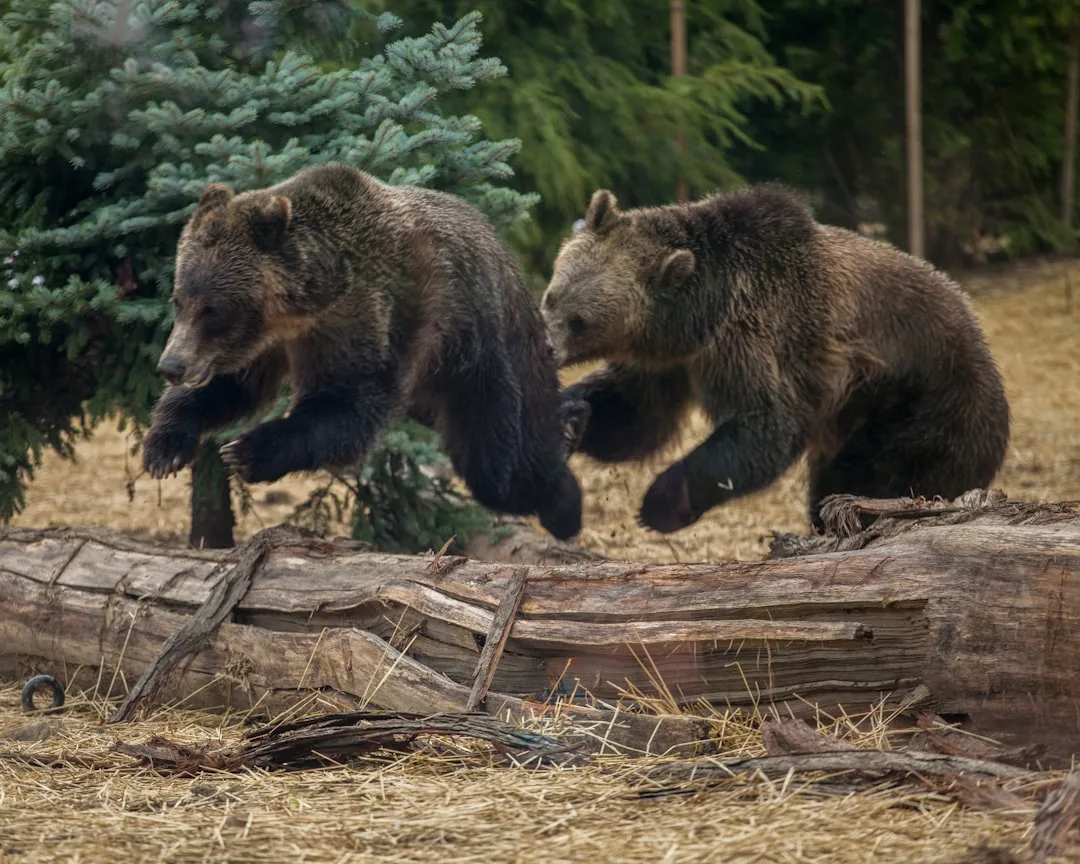
Ask a thousand people how fast a polar bear can run and most will guess wrong in both directions. Some imagine a lumbering creature barely faster than a walking dog. Others picture an unstoppable white blur, closing on a sled team at highway speeds. The truth sits between those extremes, and the details are more interesting than either cartoon.
A healthy adult Ursus maritimus can sprint at roughly 40 km/h (25 mph), about the same pace as a fast horse at a gallop, and roughly the same as the quickest domestic dogs. It can swim at 10 km/h for hours, and one tagged female famously swam 687 km in nine days without touching solid ground.
What the polar bear cannot do is sustain that sprint. The same biology that lets a 500-kilogram predator live on drifting ice at minus forty degrees Celsius makes it overheat within minutes when it runs hard. Understanding polar bear speed therefore means understanding the whole thermoregulatory trap the species has built for itself, and the remarkable swimming economy it has evolved to compensate.
This article is a research-driven walk-through of everything we currently know about polar bear locomotion. It is a companion piece to our main polar bear species profile, which covers the broader biology of the species. Here we focus narrowly on movement: how fast, how far, how costly, and how it compares to other large mammals and to humans.
The Short Answer, with Numbers
Before the physiology, the numbers you probably came here for.
| Locomotion mode | Speed | Sustainable duration | Typical context |
|---|---|---|---|
| Land sprint | 40 km/h (25 mph) | Under 100 seconds | Chasing prey, escaping rival male |
| Land trot | 8-10 km/h | Hours | Normal travel on ice |
| Land walk | 5.5 km/h | All day | Foraging, seal stalking |
| Steady swim | 10 km/h | 6-10 hours | Island to island, ice to ice |
| Endurance swim | 6-8 km/h | Up to 9 days continuous | Long open-water crossings |
| Diving (short) | 3-4 m/s descent | Up to 3 minutes | Ambushing seals at breathing holes |
The headline figures, 40 km/h on land and 10 km/h in water, are not contested. They appear in peer-reviewed studies, in the field notes of researchers like Ian Stirling and Andrew Derocher, and in telemetry data from Polar Bears International and the USGS Alaska Science Center.
What is contested, because it depends heavily on body condition, snow depth, air temperature and individual variation, is how long a bear can actually maintain those speeds in the wild. That question turns out to have a beautiful, brutal answer rooted in thermodynamics.
Why Polar Bears Overheat When They Run
A polar bear is a walking parka. Its coat is built from two layers: dense underfur close to the skin, and long guard hairs up to 15 centimetres long, each of which is a hollow transparent tube rather than a pigmented strand. Beneath the fur sits 5 to 10 centimetres of subcutaneous blubber. Beneath the blubber sits jet-black skin. The whole system is optimised to stop heat from escaping outward, which is exactly the opposite of what an animal sprinting hard needs.
"A running polar bear is essentially wearing a down jacket while doing sprints. They generate enormous amounts of metabolic heat and have very limited ways to dump it. In experimental settings we have seen core temperature climb from 37 to 39 degrees Celsius in about 12 minutes of moderate running. Beyond 39.5 the bear will stop on its own, whether it has caught the prey or not."
- Andrew Derocher, Professor of Biological Sciences, University of Alberta; author of Polar Bears: A Complete Guide to Their Biology and Behavior
The mechanics are simple enough. Running a 500-kilogram mass at 40 km/h takes enormous muscular work, and mammalian muscle is only about 25 per cent efficient at converting chemical energy into motion. The other 75 per cent becomes heat. A cheetah running at the same speed can dump that heat through a thin-skinned body, a long tail acting as a heat radiator, and short fur. A polar bear cannot. Its radiator is sealed.
Physiologists at the Journal of Experimental Biology demonstrated this in a now-classic series of treadmill and telemetry studies. Polar bears running at 7 km/h (a slow trot) on a treadmill at ambient temperatures above 10 degrees Celsius showed rectal temperatures climbing 0.15 degrees per minute, with no plateau. In other words, they never reached thermal steady state. The only way they cooled down was by stopping.
Practical consequences of the overheating problem:
- Pursuit hunting is not the bear's strategy. Ringed seals are the primary prey, and they are almost never caught in a chase. Polar bears catch them by still-hunting beside breathing holes, sometimes for twelve hours at a stretch.
- Sprints are rare. A wild polar bear may sprint only a handful of times per week, usually over less than 50 metres, almost always downhill or onto a seal hauled out on ice.
- Warm days are dangerous. At air temperatures above roughly 10 degrees Celsius even resting bears begin to pant. This is a growing problem as Arctic summers warm and pack ice retreats.
- Adult males overheat faster than females because of absolute mass and thicker blubber reserves.
The central paradox is worth stating plainly: the polar bear is an animal shaped entirely by cold, and its speed limit on land is set by heat.
Land Speed in Context
Forty kilometres per hour sounds fast because it is. For a human it is about as fast as a competitive track cyclist going flat-out. For a quadrupedal predator weighing half a tonne, it is genuinely impressive. But polar bears do not live in a vacuum, and the meaningful question for most readers is how the species compares to others they have heard of.
Speed comparison of large mammals
| Animal | Top sprint speed (km/h) | Sustainable duration | Notes |
|---|---|---|---|
| Cheetah | 110-120 | 20-30 seconds | Purpose-built sprinter |
| Pronghorn antelope | 89 | Over 10 minutes | Endurance specialist |
| Thoroughbred horse | 70-75 | 2-3 minutes | Selectively bred for speed |
| African wild dog | 66 | Over 3 km at 50 km/h | Persistence hunter |
| Grey wolf | 60 | Long-distance trot all day | |
| Lion | 58 | Under 20 seconds | |
| Grizzly bear | 56 | 1-2 minutes | |
| Black bear | 48 | 1-2 minutes | |
| American bison | 55 | Minutes | |
| Polar bear | 40 | Under 100 seconds | Overheats rapidly |
| Domestic dog (average) | 30-45 | Variable | |
| Elite human (Usain Bolt) | 44 | 10 seconds | Over 100 m |
| Fit recreational runner | 18-22 | Minutes |
Two things jump out of that table. First, the polar bear is actually the slowest of the major bear species despite being the largest. A grizzly bear outruns a polar bear in a direct comparison, a fact that surprises many readers but follows directly from the insulation tax we discussed above. A grizzly has a shorter, thinner coat and less blubber and can therefore dissipate heat better during exertion.
Second, the polar bear is roughly matched with a fit domestic dog and exceeds any human sprinter except world-class professionals, and those only over a short straight.
"The myth that polar bears are slow is really a confusion between speed and endurance. Over the first fifty metres a polar bear will run down almost any human being alive. Over the first five hundred metres, the bear is gassed and the story is different. You should never, ever count on that."
- Polar Bears International, field safety briefing, Churchill research station
A closely related question: if bears overheat so badly on land, why are they fast at all? The answer is that sprints still matter for a few specific behaviours: chasing a seal that is already halfway off the ice, catching an ill-timed pup, fighting off a rival male during mating season, or, unfortunately, running down a human who has panicked and broken into a run. The sprint does not have to last long to do its job.
Can You Outrun a Polar Bear?
No. This is not a trick question and there is no clever answer. On flat ground, over any distance from 10 to 500 metres, you lose.
The honest numbers:
- Average untrained adult human running hard: 15 to 22 km/h, sustainable for 30 to 120 seconds.
- Fit recreational runner at threshold pace: 15 to 17 km/h for 20 minutes.
- Olympic 100 m finalist: 36 to 38 km/h average, 44 km/h peak.
- Polar bear sprint: 40 km/h for around 100 seconds, covering more than a kilometre before it has to stop.
Put another way: a polar bear covers 100 metres in 9 to 10 seconds. A very fit human in running shoes covers 100 metres in 14 to 18 seconds. The gap widens the moment the bear accelerates past you, because bears have a much higher stride rate relative to their size than humans do at top speed.
The more useful question is what you should do when you realise a polar bear is aware of you and closing, and the answer has been carefully worked out by Inuit communities and Arctic research stations over many decades.
Correct procedure in polar bear country:
- Do not run. Running triggers predatory pursuit. Back away slowly while facing the bear.
- Make yourself large and loud. Raise your arms, open a jacket, shout in a deep voice.
- Use deterrents in escalating order: air horn or bear banger, pepper spray at 3-5 metres, rubber slugs, then lethal rounds. Never skip steps unless you have no choice.
- Get to a vehicle or hard structure. A sturdy building, a truck, or even a snowmobile at speed outruns a polar bear.
- If attacked, fight back. Unlike grizzlies, polar bears rarely bluff-charge. A committed polar bear attack is a predatory one and playing dead is not recommended.
For a deeper look at the risk calculus see our article on whether polar bears are dangerous to humans.
Swimming: Where Polar Bears Actually Excel
Running is not the polar bear's strength. Swimming is. In the water the insulation that cripples them on land becomes an asset, because the hollow guard hairs trap air and contribute to buoyancy as well as warmth, and because seawater cooling effortlessly dumps any excess metabolic heat the bear generates.
Polar bears swim with a modified dog-paddle. The large forepaws do nearly all the propulsion work, acting like paddles up to 30 centimetres across. The hind legs function as rudders, steering and stabilising. The paws have partially webbed toes, a trait that further distinguishes the species from brown bears. This gait is slow compared to a seal or dolphin but extraordinarily efficient for a large terrestrial carnivore.
Swimming speed comparison
| Animal | Sustained swim speed (km/h) | Top burst | Notes |
|---|---|---|---|
| Bottlenose dolphin | 30-35 | 40+ | Fully aquatic |
| Sea lion | 18 | 40 | |
| Orca | 45 | 55 | |
| Ringed seal | 8-12 | 25 | Polar bear's primary prey |
| Bearded seal | 7-9 | 20 | |
| Polar bear (cruise) | 10 | - | Steady forepaw paddle |
| Polar bear (long-haul) | 6-8 | - | Over multi-day swims |
| Olympic freestyle swimmer | 8 | - | Over 100 m |
| Average human | 3-4 | - | |
| Brown bear | 6 | - | Much less buoyant |
Ten kilometres per hour in water may not sound dramatic until you remember the context. The polar bear cruises at roughly the same speed as its seal prey, while carrying a body mass five to ten times larger than the largest ringed seal. It does so at water temperatures that would kill an unprotected human in under thirty minutes. And it can keep going, day after day.
"We tracked one adult female from the southern Beaufort Sea that swam 687 kilometres in nine days without ever touching ice or land. She lost 22 per cent of her body mass, and her dependent cub, during that journey. Nothing in the mammalian literature outside the cetaceans comes close to this kind of swim."
- USGS Alaska Science Center, summarising Durner et al. (2011) in Polar Biology
That 687-kilometre swim, recorded by a GPS collar in 2008, rewrote what biologists thought was physiologically possible for a bear. The female in question averaged roughly 3.2 km/h over the whole nine-day period, including currents and drift, but spent most of her active hours actually paddling at 6 to 8 km/h. Her core temperature remained elevated for the entire trip, meaning she was metabolising stored fat at a rate similar to a human running a slow marathon, continuously, for 216 hours.
Other tracked bears have logged continuous swims of 200, 300, and 400 kilometres. Routine inter-island crossings of 50 to 100 km are considered unremarkable. In total, many bears in the Beaufort and Chukchi seas now swim more than 1,000 cumulative kilometres per summer as pack ice retreats farther from land, a behaviour that barely existed before 1990.
For more on the marine-mammal classification that makes polar bears unique among ursids, see our breakdown of polar bears as marine mammals.
The Physiology Behind the Performance
A polar bear is a surprisingly well-engineered machine once you look past the fluffy exterior. Several traits work together to produce both the sprint capability and the swimming endurance.
Muscle architecture
Polar bears carry a higher proportion of Type IIb fast-twitch muscle fibres in their hindquarters than grizzlies or black bears, which is part of why they can sprint at all despite their insulation problem. Their forelimb muscles, by contrast, are richer in Type I slow-twitch fibres adapted for low-speed endurance, which is the profile you want for hours of paddling.
Paw morphology
The paws are the single most specialised locomotor feature. Key traits:
- Surface area up to 900 square centimetres per paw (30 cm across)
- Slightly webbed toes that spread under load
- Soft papillae on the pads, providing grip on ice without compromising the swim stroke
- Fur between the toes that insulates from cold ice but sheds water cleanly
- Claws that are shorter and more curved than a grizzly's, better for gripping seal flesh and climbing out of water than for digging
The paws distribute the bear's weight, between 350 and 680 kg for adult males, at a pressure lower than most sled dogs, which is why polar bears can cross thin ice that would snap under a human on foot.
Hollow-tube fur
Each guard hair is a clear hollow shaft. This serves at least three functions relevant to locomotion:
- Insulation that keeps body heat in at minus 40 degrees Celsius
- Buoyancy because the trapped air reduces effective density in water
- Water shedding, because the outer cuticle is hydrophobic and the bear can shake itself roughly dry in seconds after emerging
Together these traits allow the bear to exit the water at minus 30 degrees Celsius and not freeze. The fur design is covered in more detail in our piece on polar bear fur and black skin.
Circulatory adaptations
Polar bears have a counter-current heat exchanger in the limbs. Warm arterial blood heading down to the paws runs alongside cold venous blood returning to the core, transferring heat across the vessel walls before it reaches the periphery. The result is paws that stay just above freezing rather than at body temperature, saving enormous amounts of energy. During sprinting the same system can reverse slightly, dumping heat into the paw pads to shed some of the thermal load.
Fat-first metabolism
Unlike most mammals, polar bears can fuel sustained activity almost entirely on fatty acids from stored blubber and seal consumption. This matters in both swimming and long walks. Fat provides roughly 37 kilojoules per gram compared to 17 for carbohydrate, and a polar bear starting a long swim with a healthy blubber layer has, in energetic terms, something like 1,500 human-marathon equivalents of fuel on board.
"The thing people miss is that a polar bear running is using muscle glycogen and getting hot fast, while a polar bear swimming is burning seal blubber in cold water and could in principle keep going until the fat runs out. Two completely different engines."
- Ian Stirling, emeritus research scientist, Canadian Wildlife Service; author of Polar Bears: The Natural History of a Threatened Species
The Energetic Cost of Arctic Locomotion
Moving in the Arctic is expensive. Deep snow, fractured pack ice, strong currents, and air temperatures that can strip body heat faster than a bear can generate it all raise the metabolic price tag of every kilometre travelled.
Recent work using accelerometers on wild bears, combined with doubly-labelled water studies, gives us some hard numbers.
- Resting metabolic rate, adult bear: about 220 kilojoules per hour
- Walking at 5.5 km/h on ice: 800 to 1,000 kJ/h
- Trotting at 8-10 km/h: 1,800 to 2,400 kJ/h
- Sprinting at 40 km/h: 7,000 to 9,000 kJ/h (unsustainable)
- Steady swimming at 10 km/h: 3,500 to 4,500 kJ/h
- Long-haul swimming at 7 km/h: 2,200 to 2,800 kJ/h
The swimming number is the most striking. Because water takes heat away as fast as the bear produces it, there is no overheating cap, and the bear can keep paying that metabolic cost for days. The same absolute effort on land would kill the animal in under an hour from heatstroke.
This has ecological consequences. As Arctic sea ice shrinks and bears are forced to swim farther between increasingly distant floes, the energetic debt adds up. A female bear that burns 20 per cent of her body mass in a long swim may not have enough reserves to produce or nurse cubs the following winter. This is part of why climate change is the primary threat to the species, even though the species is arguably the best mammalian swimmer on land.
Cubs, Juveniles, and Age-Related Speed
Speed is not constant across the life cycle. Cubs emerging from the den in March weigh 10 to 12 kilograms and can barely keep up with their mother's walking pace. By six months they can trot alongside her for hours. By two years old, when they leave her care, sub-adult bears can hit roughly 35 km/h on land and swim at 8 km/h.
Peak athletic performance falls between ages 5 and 15. Older bears slow down, with top speeds dropping perhaps 15 per cent by age 20 and more dramatically if arthritis or tooth wear has compromised hunting success. Wild polar bears rarely live past 30 years, and those that do are typically not breeding or hunting actively anymore.
Cub mortality is high, and one of the reasons is the 687-kilometre swim story. Cubs have far less blubber and a much worse surface-area-to-volume ratio, meaning they lose heat faster in cold water. Long swims kill cubs at rates approaching 45 per cent when the mother is forced to cover more than 50 km in a single crossing. Swimming, the adult bear's superpower, is the juvenile bear's greatest hazard.
Diving and Underwater Speed
Polar bears are not deep divers by cetacean standards, but they are capable underwater hunters when they need to be. Tagged bears regularly dive to 3 to 5 metres and occasionally to 10. Dive durations average 20 to 40 seconds, with rare events up to 3 minutes recorded.
Descent speeds underwater are around 3 to 4 metres per second. The bear uses its forelimbs to swim down and often keeps its eyes open, relying on a transparent nictitating membrane for protection. This matters for ambushing seals at or just below the surface, particularly ringed seal pups in their snow lairs, which sometimes open directly into the water.
Underwater work is metabolically expensive and polar bears do not make a habit of it. But it is one more reason the simple question "how fast is a polar bear?" has more than one answer.
Speed and Hunting Success
All of the numbers above matter because they determine how polar bears eat. A species that cannot sustain a chase cannot hunt by pursuit. Instead polar bears have developed some of the most patience-intensive hunting strategies of any mammal.
Still-hunting at breathing holes. The bear identifies a ringed seal breathing hole, waits motionless on the ice for anywhere from 30 minutes to 14 hours, and strikes in a single explosive lunge when a seal surfaces. Sprint speed matters for the final two or three metres, not for the approach.
Stalking hauled-out seals. The bear uses ice ridges for cover, creeps within 20 to 30 metres, and then sprints. If the seal makes the water the bear usually loses. Success rate on this method is roughly 5 per cent.
Breaking into birth lairs. In spring the bear detects the heat and scent of a newborn seal pup beneath the snow and smashes through. Speed matters only for the crash-through moment.
Aquatic stalking. In shallow water the bear swims slowly and silently toward resting seals and attacks from below. This is where the 10 km/h swim speed meets the seal's 8-12 km/h cruise and the outcome depends on surprise.
Opportunistic pursuit. Occasionally on flat ice with an injured seal the bear will just chase. These are the spectacular short sprints that make it into nature documentaries. They account for a small fraction of actual meals.
Polar bears succeed on perhaps 2 to 10 per cent of hunting attempts depending on method and season. For context, lions succeed on 15 to 30 per cent and African wild dogs on 60 to 90 per cent. The African wild dog achieves its staggering success rate through endurance pursuit, a strategy the polar bear could never use. See also our main polar bear diet article.
How Polar Bears Compare to Other Bears
The brown bear is a revealing comparison because the two species are genetic cousins and diverged only 150,000 to 500,000 years ago.
| Trait | Polar bear | Grizzly / brown bear | Why the difference |
|---|---|---|---|
| Top land speed | 40 km/h | 56 km/h | Grizzlies dissipate heat faster |
| Sustained running | Under 100 seconds | 2-3 minutes | Grizzly coat is less insulating |
| Swim speed (steady) | 10 km/h | 6 km/h | Polar bear has webbed, paddle-shaped paws |
| Long-distance swim | 687 km record | Rarely over 10 km | Polar bear fur is buoyant; blubber is marine-mammal grade |
| Overheat threshold | Above 10 C ambient | Above 25 C ambient | Insulation layer much thicker in polar bear |
| Typical paw width | 30 cm | 15-18 cm | Ice flotation in polar bear |
The grizzly is faster on land, the polar bear is far superior in water. It is one of the clearest examples in mammalian evolution of a genus splitting into two distinct locomotor specialists within a few hundred thousand years. If you are curious about the broader face-off, see our polar bear vs grizzly bear comparison.
Comparisons with distance specialists like the cheetah are instructive in a different way. A cheetah sustains 110 km/h for about 20 seconds and then needs 30 minutes to cool down. A polar bear sustains 40 km/h for up to 100 seconds and then needs several minutes to cool. Both animals are thermally limited sprinters; the polar bear simply operates at a lower absolute speed because it is three to four times heavier and wrapped in what amounts to a survival suit.
What This Means for Climate Change and the Future
Every locomotor fact in this article is becoming more relevant, not less, as the Arctic warms. Sea ice has retreated by about 40 per cent in summer extent since 1979. The gaps between ice floes are now regularly so large that bears must swim for days between them. The energetic cost of those swims, combined with warming air temperatures that push bears toward heat stress even at rest, compounds every year.
A 2011 study in Polar Biology (Durner et al.) argued that long-distance swimming will become a significant population-level mortality driver for polar bears within this century, particularly for females with cubs. More recent modelling from the USGS Alaska Science Center suggests that the combination of thermal stress and increased swim distances could reduce reproductive output by 25 to 40 per cent in the Beaufort and Chukchi sea populations by 2050.
The polar bear is an animal that evolved for a specific set of locomotor challenges: walking huge distances on ice, sprinting short bursts to catch seals, swimming between floes when necessary. The challenges are changing faster than evolution can keep up. Speed is not the species' ultimate problem - ice is. But every kilometre it has to swim and every minute it has to run in warmer air adds to the cost of staying alive.
Readers who find the broader cognitive and physiological questions interesting may also enjoy our work on animal intelligence at whats-your-iq.com, the learning science pieces at whennotesfly.com, and the language and cognition material at evolang.info.
Frequently Misunderstood Claims
A few persistent myths about polar bear speed are worth correcting directly.
Myth: "Polar bears can run 60 km/h." Actual verified top speed is around 40 km/h. The 60 km/h figure usually originates from old travelogue accounts or confusion with grizzly bears.
Myth: "Polar bears can swim 100 hours at 10 km/h." The endurance swims are real, but speed drops over time. Most long swims average 6 to 8 km/h when you actually track the GPS points.
Myth: "Running uphill tires a polar bear." Any running tires a polar bear within minutes. Uphill does not grant you a meaningful advantage; it is a common mistaken survival tip.
Myth: "Polar bears can't run through deep snow." They can. Their paws spread weight effectively and they break through less than most animals their size. Deep snow slows them somewhat but does not immobilise them.
Myth: "Polar bears are the fastest bears." They are actually the slowest major bear species on land. Grizzlies, American black bears, and sloth bears all sprint faster.
References
Durner, G. M., Whiteman, J. P., Harlow, H. J., Amstrup, S. C., Regehr, E. V., & Ben-David, M. (2011). Consequences of long-distance swimming and travel over deep-water pack ice for a female polar bear during a year of extreme sea ice retreat. Polar Biology, 34(7), 975-984. https://doi.org/10.1007/s00300-010-0953-2
Pagano, A. M., Durner, G. M., Rode, K. D., Atwood, T. C., Atkinson, S. N., Peacock, E., Costa, D. P., Owen, M. A., & Williams, T. M. (2018). High-energy, high-fat lifestyle challenges an Arctic apex predator, the polar bear. Science, 359(6375), 568-572. https://doi.org/10.1126/science.aan8677
Hurst, R. J., Leonard, M. L., Watts, P. D., Beckerton, P., & Oritsland, N. A. (1982). Polar bear locomotion: body temperature and energetic cost. Canadian Journal of Zoology, 60(1), 40-44. https://doi.org/10.1139/z82-005
Best, R. C. (1982). Thermoregulation in resting and active polar bears. Journal of Comparative Physiology B, 146(1), 63-73. https://doi.org/10.1007/BF00688718
Pilfold, N. W., McCall, A., Derocher, A. E., Lunn, N. J., & Richardson, E. (2017). Migratory response of polar bears to sea ice loss: to swim or not to swim. Ecography, 40(1), 189-199. https://doi.org/10.1111/ecog.02109
Whiteman, J. P., Harlow, H. J., Durner, G. M., Anderson-Sprecher, R., Albeke, S. E., Regehr, E. V., Amstrup, S. C., & Ben-David, M. (2015). Summer declines in activity and body temperature offer polar bears limited energy savings. Science, 349(6245), 295-298. https://doi.org/10.1126/science.aaa8623
Stirling, I., & Derocher, A. E. (2012). Effects of climate warming on polar bears: a review of the evidence. Global Change Biology, 18(9), 2694-2706. https://doi.org/10.1111/j.1365-2486.2012.02753.x
Griffen, B. D. (2018). Modeling the metabolic costs of swimming in polar bears (Ursus maritimus). Polar Biology, 41(3), 491-503. https://doi.org/10.1007/s00300-017-2209-x
Frequently Asked Questions
How fast can a polar bear run?
A polar bear can sprint at roughly 40 km/h (25 mph) on land for short bursts, typically no more than 100 to 200 metres. They cannot sustain this speed because their insulating hollow fur and 5-10 cm of subcutaneous blubber push their body temperature above 39 degrees Celsius within about 12 minutes of hard running.
In practice, a pursuing polar bear usually slows to a trot below 10 km/h within a minute, and will stop and pant to shed heat long before covering a kilometre. Over level ice they are somewhat faster than on broken pack ice or deep snow, where their bulk works against them.
Can you outrun a polar bear?
No. The fastest verified human sprinter, Usain Bolt, reached about 44 km/h over a 100 metre straight, and no ordinary person comes close. A healthy adult polar bear cruising at 35 to 40 km/h will cover that same 100 metres in roughly 9 to 10 seconds. An average person running for their life manages 15 to 24 km/h and only for a minute or two. The correct response in polar bear country is never a footrace.
Firearms, flares, bear-spray, vehicles, and sturdy shelter matter. Running triggers the chase response and the bear wins every time on open terrain. The one narrow advantage humans have is distance: if you can stay calm and retreat slowly for more than 500 metres, the bear may overheat and disengage.
How far can a polar bear swim without stopping?
The longest verified continuous swim by a polar bear is 687 kilometres over 9 days, recorded by a GPS-collared adult female in the Beaufort Sea in 2008 (Durner et al., 2011). Her core body temperature stayed elevated for the entire journey and she lost 22 per cent of her body mass. She also lost her yearling cub during the swim.
Routine long swims of 50 to 100 km between ice floes are common, and tagged bears regularly log more than 1,000 km of total swim distance in a single summer as pack ice retreats. Steady cruising speed in open water is about 10 km/h, dropping to 6 to 8 km/h over truly long hauls.