
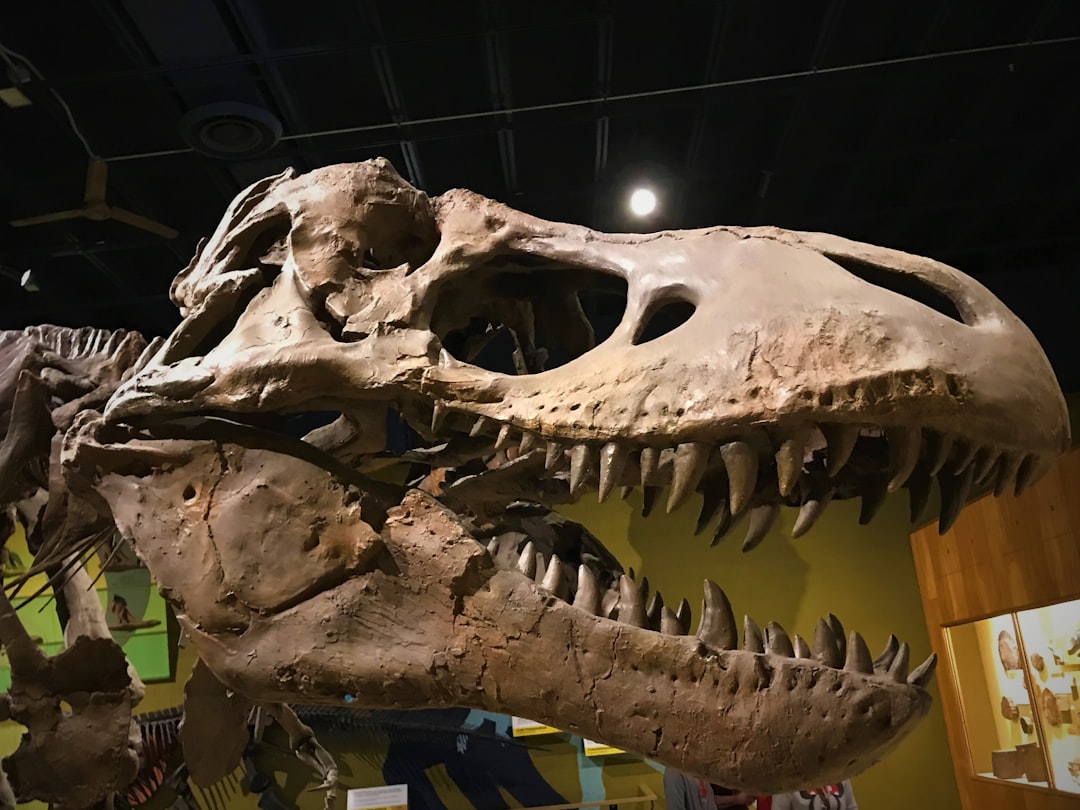
Every generation inherits its own mental image of Tyrannosaurus rex. The early 20th-century reconstructions showed a lumbering, tail-dragging lizard. The 1990s brought us the fast-running, horizontally-postured theropod of Jurassic Park. The 2020s have delivered something stranger still: a feathered, slow-walking, apex predator whose bite force crushed bone, whose binocular vision rivaled modern raptors, and whose juveniles grew through a biomechanical identity crisis that transformed them from slender pursuit predators into skull-dominated bone-crushers.
Tyrannosaurus rex is the most thoroughly studied dinosaur species in the history of paleontology. Every major museum in the world wants one. Every biomechanical technique invented in the last three decades has been applied to its skeleton. And still, new findings keep rewriting what we thought we knew.
Basic Biometrics
Adult Tyrannosaurus rex reached lengths of 12 to 13 meters from nose to tail tip. Adult body mass ranges from 6.8 metric tons in smaller specimens to roughly 8.9 metric tons in the largest. The skull alone reached 1.5 meters in length, and its weight, when fully articulated with jaw musculature in life, has been estimated at close to 500 kilograms.
| Specimen | Designation | Length | Mass estimate | Completeness | Institution |
|---|---|---|---|---|---|
| Scotty | RSM P2523.8 | 13.0 m | 8,870 kg | 65 percent | Royal Saskatchewan Museum |
| Sue | FMNH PR 2081 | 12.3 m | 8,462 kg | 90 percent | Field Museum, Chicago |
| Stan | BHI 3033 | 11.7 m | 7,000 kg | 65 percent | Private collection (2020) |
| Trix | RGM 792.000 | 12.0 m | 6,500 kg | 75 percent | Naturalis, Leiden |
| Tristan Otto | MB.R.91216 | 12.0 m | 7,000 kg | 50 percent | Museum fur Naturkunde, Berlin |
Scotty currently holds the record for largest verified specimen based on femoral circumference, the most reliable proxy for dinosaur body mass. Sue remains the most complete skeleton and the most heavily studied in scientific literature.
When and Where
Tyrannosaurus rex lived during the last 2 million years of the Cretaceous, from approximately 68 to 66 million years ago. Its range covered what is now western North America, spanning modern-day Alberta, Saskatchewan, Montana, the Dakotas, Wyoming, Colorado, and as far south as Texas. At the time, this region was the landmass of Laramidia, separated from eastern North America by the Western Interior Seaway.
T. rex was the last and largest of the Tyrannosauridae, a family of large theropods that dominated Asian and North American ecosystems through the Late Cretaceous. Its extinction at the Cretaceous-Paleogene (K-Pg) boundary, triggered by the Chicxulub asteroid impact 66 million years ago, ended the age of non-avian dinosaurs.
For paleontologists producing formal species descriptions, phylogenetic analyses, and character-matrix data tables, structured scientific writing platforms including academic writing and LaTeX-compatible tools have become standard in handling the complex multi-author collaborations these descriptions increasingly require.
The Bite
The most distinctive biological feature of Tyrannosaurus rex is the bite. A 2012 study by Gregory Erickson and Paul Gignac reconstructed the bite force using finite-element modeling of the skull combined with electromyographic data from modern archosaur relatives. Their posterior bite force estimate of 35,000 to 57,000 newtons (roughly 7,900 to 12,800 pounds-force) made T. rex the hardest-biting land animal ever documented.
For context, a modern saltwater crocodile bites at approximately 16,460 newtons. An African lion bites at roughly 4,100 newtons. A great white shark bites at approximately 18,000 newtons. T. rex exceeded all of them.
"The tooth-puncture patterns we see in Triceratops bones and the fragmented bone fragments in T. rex coprolites tell us unambiguously that this animal was not just a scavenger or a specialist in soft tissue. It crushed bone as part of routine feeding behavior." -- Gregory Erickson, Professor of Biological Science, Florida State University
The teeth themselves were not the serrated blade-like teeth of smaller theropods. T. rex teeth were thick, banana-shaped, and adapted to withstand the compressive and torsional stresses of bone-crushing. The largest tooth ever found, from the upper maxilla of Sue, measured 30.5 centimeters including the root.
Growth Curves: A Radical Transformation
One of the most important findings of the last 20 years is that Tyrannosaurus rex did not simply grow larger as it aged. It transformed. Juveniles were slender, gracile pursuit predators with narrow skulls and blade-like teeth. Adults were massive, skull-dominated bone-crushers. The transition occurred during an explosive growth spurt between roughly ages 14 and 18.
Bone histology analysis by Gregory Erickson and colleagues reconstructed the following growth trajectory:
| Age (years) | Estimated mass | Body form |
|---|---|---|
| 2 | 30 kg | Slender, cursorial |
| 6 | 250 kg | Fast runner, small skull |
| 10 | 1,100 kg | Transitioning body plan |
| 14 | 2,500 kg | Rapid skull reorganization |
| 18 | 5,200 kg | Near-adult proportions |
| 20 | 6,000 kg | Sexually mature |
| 28 | 8,400 kg | Peak adult mass |
The existence of distinct juvenile morphotypes has fueled an ongoing debate about whether the species Nanotyrannus lancensis represents a separate species or is simply a juvenile stage of Tyrannosaurus rex. A 2024 analysis of the Chicago specimen "Jane" and the privately held "Bloody Mary" and "Petey" specimens by Lindsay Zanno and James Napoli argued for Nanotyrannus as a valid separate species, though this remains contested.
Sensory Biology
Tyrannosaurus rex was not the crude, semi-reptilian predator of early 20th-century reconstructions. Its sensory biology rivaled that of modern apex predators, and in some respects exceeded them.
Vision
Reconstructions of the T. rex skull based on binocular field of view indicate approximately 55 degrees of overlap between the left and right eyes, compared to roughly 20 degrees in modern alligators and 30 degrees in modern chickens. Modern hawks show 30 to 60 degrees of binocular overlap. By this metric, T. rex vision was comparable to a modern eagle, providing excellent depth perception for targeting prey at distance.
Kent Stevens of the University of Oregon calculated that T. rex could resolve details 13 times sharper than a human and could spot an object the size of a cow at a distance of six kilometers.
Olfaction
The olfactory bulbs of Tyrannosaurus rex were the largest of any theropod relative to brain volume. This led to the long-held inference that T. rex was primarily a scavenger relying on carrion detection. A 2013 study by Darla Zelenitsky and colleagues, however, concluded that large olfactory bulbs are common across the Coelurosauria and do not specifically indicate scavenger specialization. T. rex had excellent smell, but it was a capable hunter.
Hearing
CT scanning of the T. rex endocranium by Lawrence Witmer at Ohio University showed a long cochlea comparable to modern crocodilians, indicating sensitivity to low-frequency sounds. Vocalizations are speculative but likely involved low-frequency rumbles and hisses rather than the high-pitched roar of Hollywood depictions.
"When we CT scan a T. rex braincase, we see an animal with sensory systems that would not look out of place on a modern bird of prey. This was a predator operating with excellent vision, excellent smell, and low-frequency hearing well-tuned to hunting large prey across open landscapes." -- Lawrence Witmer, Professor of Paleontology, Ohio University Heritage College
Researchers producing CT reconstruction papers require exacting image-metadata chains to document scan parameters, institution, and slice thickness. Tools that provide inspection and normalization of this imaging metadata, such as image metadata and EXIF viewers, have become essential components of modern vertebrate paleontology workflows.
Feathers or No Feathers
The feathering of Tyrannosaurus rex remains one of the most publicly debated questions in paleontology. The broader Tyrannosauroidea are known to have had filamentous feathers, confirmed in Yutyrannus huali from China, a 9-meter tyrannosaurid with preserved integumentary filaments. The reasonable inference is that juvenile T. rex had filamentous feathers similar to those of modern ratite hatchlings.
For adult T. rex, skin impressions from multiple specimens including Wyrex (HMNS 2006.1743.01) show scaly integument across the tail, neck, and pelvic regions. The current consensus is that adult T. rex was largely scaly with possible dorsal feather ridges or sparse filaments. Juveniles were likely more fully feathered for thermoregulation, becoming scalier as they grew.
Speed and Locomotion
Jurassic Park famously depicted a Tyrannosaurus rex chasing a Jeep at 50 to 70 kilometers per hour. The biomechanics do not support this. A 2002 biomechanical study by John Hutchinson and Mariano Garcia, published in Nature, calculated that T. rex running at the speeds shown in the film would require roughly 86 percent of its total body mass in leg muscle, a physiologically impossible figure.
More recent modeling, including a 2021 study by Pasha van Bijlert using the natural swaying dynamics of the tail, estimated preferred walking speed at 4.6 kilometers per hour, almost exactly matching the natural walking speeds of large modern birds and mammals. Maximum sprint speeds for adults likely fell between 17 and 25 kilometers per hour.
Juveniles were a different story. At masses of 500 to 2,000 kilograms, young T. rex had the biomechanics to genuinely run. This supports the hypothesis that juvenile and adult T. rex occupied different ecological niches, with juveniles acting as fast pursuit predators and adults as heavy ambushers and power scavengers.
Intelligence and Behavior
The brain-to-body ratio of Tyrannosaurus rex falls between modern crocodilians and modern birds, with estimates of the encephalization quotient around 2.4. This places it above large crocodilians but below ravens and parrots. Social behavior has been inferred from mass mortality sites showing multiple T. rex individuals preserved together, though whether these represent true pack behavior, family groups, or simply concentrated prey-based aggregations remains debated.
The question of dinosaur intelligence broadly, and whether apex theropod cognition approached that of modern corvids and parrots, intersects with the comparative literature on animal intelligence measurement and cognitive assessment that applies psychometric principles across species.
Sue: The Most Famous Skeleton in the World
The specimen known as Sue (FMNH PR 2081) was discovered by Sue Hendrickson on August 12, 1990, in Cheyenne River Reservation land near Faith, South Dakota. The skeleton is approximately 90 percent complete by bone count and represents the most complete T. rex specimen ever found. After a contested legal battle over ownership, Sue was auctioned at Sotheby's in 1997 for 8.36 million dollars and acquired by the Field Museum in Chicago with funding from McDonald's, Walt Disney World, and the California State University System.
Sue has been the subject of more scientific publications than any other dinosaur specimen. Her age at death is estimated at 28 years based on bone histology. Pathologies visible on the skeleton include healed rib fractures, a fused caudal vertebra, and a possible brucellosis lesion on the humerus. Her tooth count, bite trauma patterns, and growth banding remain reference datasets for tyrannosaur biology.
Museum specimens of this caliber are tracked under voucher codes linking physical bones to tissue subsamples, CT scans, and histological thin sections. Modern collections generate machine-readable specimen labels with QR codes to maintain the provenance chains required for the cross-institutional loan programs that drive tyrannosaur research today.
Regional Fossil Tourism
Tyrannosaur fossils draw significant tourism to towns across the Western Interior, particularly Drumheller in Alberta, Bozeman in Montana, and Faith in South Dakota. Operators offering guided dig experiences and fossil-preparation workshops typically register as specialized paleontological tourism entities, and the business formation pathway for these regional operators is documented across nature and scientific tourism company registration resources.
Australian paleontology has its own Cretaceous-age tyrannosauroid finds from Victoria, including the controversial NMV P186069 pubic bone that may represent a Southern Hemisphere tyrannosauroid. This sits alongside the broader Australian paleontology and wildlife tourism ecosystem that includes sites such as Dinosaur Cove and the Eric the Pliosaur exhibit in Adelaide.
Career Pathways in Tyrannosaur Research
Professional paleontology careers require formal credentialing, field experience, and often multiple postgraduate degrees. Vertebrate paleontologists typically pursue geology, biology, or anatomy undergraduate pathways, followed by specialized master's or PhD programs. Wildlife biology and related scientific credentialing, including the exam-preparation frameworks documented across professional certification platforms, are common entry points for adjacent careers in state geological surveys, park service interpretation, and museum curation.
Field paleontology also overlaps significantly with formal scientific field notebook and observation logging practices that structured digital platforms have been modernizing across wildlife biology, geology, and archaeology over the past decade.
The End of T. Rex
The Cretaceous-Paleogene extinction event ended Tyrannosaurus rex and roughly 75 percent of all terrestrial species 66 million years ago. The Chicxulub asteroid impact, striking what is now the Yucatan Peninsula, generated immediate regional destruction and prolonged global cooling as ejecta and soot darkened the atmosphere for months to years. Plant primary productivity collapsed, herbivore populations followed, and large predators at the top of the food pyramid went extinct almost simultaneously.
"Tyrannosaurus rex did not die out because of any biological flaw. It died because a ten-kilometer-wide asteroid struck the planet on a geologically ordinary Tuesday. Everything above a certain body mass went with it." -- Steve Brusatte, Professor of Paleontology and Evolution, University of Edinburgh
What remained were a handful of small, feathered theropods that radiated over the next 15 million years into the 11,000 species of modern birds. The true descendants of T. rex are the sparrows on your windowsill and the hawks soaring over your city. They carry forward the evolutionary lineage that the impactor could not end.
References
- Erickson, G. M., Gignac, P. M., Steppan, S. J., et al. (2012). Insights into the ecology and evolutionary success of crocodilians revealed through bite-force and tooth-pressure experimentation. PLOS ONE, 7(3), e31781. DOI: 10.1371/journal.pone.0031781
- Persons, W. S., Currie, P. J., & Erickson, G. M. (2020). An older and exceptionally large adult specimen of Tyrannosaurus rex. The Anatomical Record, 303(4), 656-672. DOI: 10.1002/ar.24118
- Hutchinson, J. R., & Garcia, M. (2002). Tyrannosaurus was not a fast runner. Nature, 415, 1018-1021. DOI: 10.1038/4151018a
- van Bijlert, P. A., van Soest, A. J. K., & Schulp, A. S. (2021). Natural frequency method: estimating the preferred walking speed of Tyrannosaurus rex based on tail natural frequency. Royal Society Open Science, 8(4), 201441. DOI: 10.1098/rsos.201441
- Zelenitsky, D. K., Therrien, F., Ridgely, R. C., et al. (2011). Evolution of olfaction in non-avian theropod dinosaurs and birds. Proceedings of the Royal Society B, 278(1725), 3625-3634. DOI: 10.1098/rspb.2011.0238
- Erickson, G. M., Makovicky, P. J., Currie, P. J., et al. (2004). Gigantism and comparative life-history parameters of tyrannosaurid dinosaurs. Nature, 430, 772-775. DOI: 10.1038/nature02699
- Stevens, K. A. (2006). Binocular vision in theropod dinosaurs. Journal of Vertebrate Paleontology, 26(2), 321-330. DOI: 10.1671/0272-4634(2006)26[321:BVITD]2.0.CO;2
- Brusatte, S. L., Norell, M. A., Carr, T. D., et al. (2010). Tyrannosaur paleobiology: new research on ancient exemplar organisms. Science, 329(5998), 1481-1485. DOI: 10.1126/science.1193304