
How toxic are poison dart frogs, and can they actually kill a human?
The golden poison frog (Phyllobates terribilis) is the most toxic poison dart frog and one of the most poisonous animals on Earth. A single specimen carries roughly one milligram of batrachotoxin in its skin glands, which is enough to kill approximately 10 adult humans.
On a warm spring evening, a chorus of tiny voices erupts from a woodland pond. Thousands of spring peepers, each no larger than a thumbnail, belt out mating calls that carry over a mile through the still air. This ancient symphony has played out for hundreds of millions of years. But tonight, somewhere in the world, the chorus is growing quieter.
Frogs and toads - the diverse, resilient, endlessly strange amphibians that survived asteroid impacts and ice ages - are now disappearing faster than any other vertebrate group on Earth.
Their decline is not a slow fade. It is a collapse. And understanding why requires knowing what we stand to lose.
A Class in Crisis
The numbers are staggering. According to a comprehensive 2023 reassessment published in Nature, approximately 41% of all amphibian species are now threatened with extinction, making amphibians the most imperiled vertebrate class on the planet. That figure surpasses the threat levels facing mammals (roughly 27%) and birds (roughly 13%). Between 2004 and 2022, more than 300 amphibian species moved closer to extinction on the IUCN Red List, while fewer than 50 improved in status.
"Amphibians are disappearing faster than we can study them. We are losing species before we even know what they do, what chemicals they produce, or what ecological roles they fill." - Dr. Jonathan Kolby, amphibian disease ecologist, James Cook University
This is not an abstract statistical exercise. Frogs serve as both predator and prey in nearly every terrestrial and freshwater ecosystem. A single frog can consume thousands of mosquitoes, agricultural pests, and disease-carrying insects each year. Their permeable skin makes them exquisitely sensitive biological indicators of environmental health. When frogs vanish from an ecosystem, it is often a warning that broader ecological damage is underway.
The Staggering Diversity of Frogs
The order Anura - frogs and toads - encompasses more than 7,000 described species, with new species still being discovered each year. They inhabit every continent except Antarctica, from tropical rainforest canopies to arid deserts, from sea-level mangrove swamps to mountain streams above 5,000 meters in the Andes.
Their size ranges from the Paedophryne amauensis of Papua New Guinea, the world's smallest known vertebrate at just 7.7 millimeters long, to the goliath frog of Cameroon and Equatorial Guinea, which can reach over 30 centimeters and weigh more than 3 kilograms.
This diversity is not merely cosmetic. Frogs have evolved an astonishing range of survival strategies, reproductive methods, chemical defenses, and physical adaptations. Each species represents millions of years of evolutionary refinement. And many of them are extraordinary enough to rewrite what we think we know about biology.
Poison Dart Frogs: Beautiful and Deadly
In the lowland rainforests of western Colombia lives a small, brilliant yellow frog that may be the most toxic animal on Earth. The golden poison frog (Phyllobates terribilis) measures just five centimeters in length, yet a single individual carries approximately one milligram of batrachotoxin - a steroidal alkaloid so potent that this amount is sufficient to kill roughly 10 adult humans, or about 20,000 laboratory mice.
The Embera people of Colombia's Choco department have used this toxin for centuries, carefully rubbing blowdart tips across the frog's back to create weapons capable of bringing down monkeys and birds. The darts remain lethally toxic for up to two years. This practice, which gives the entire family Dendrobatidae its common name of "poison dart frogs," represents one of the most remarkable examples of indigenous peoples harnessing animal chemistry.
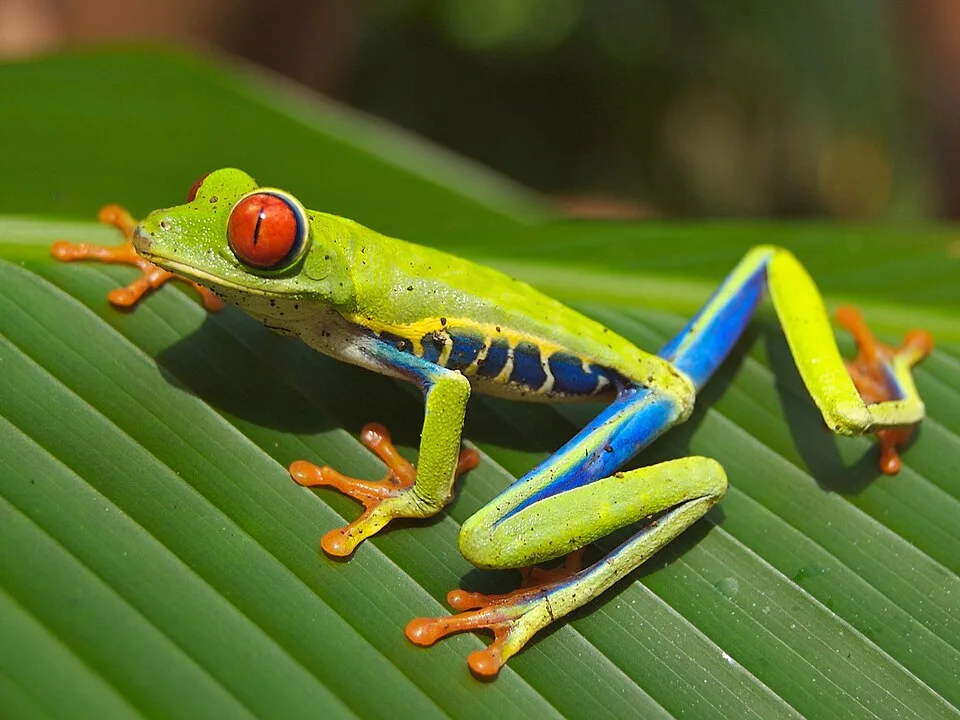
There are over 170 species of poison dart frogs, displaying a dazzling palette of warning colors - electric blue, strawberry red, emerald green, and jet black. Their vivid appearance is a textbook case of aposematism, the evolutionary strategy of advertising toxicity through bright coloration. Predators that survive an encounter with a poison dart frog quickly learn to avoid anything with similar coloring.
Intriguingly, poison dart frogs raised in captivity lose their toxicity entirely. Their poison is diet-derived, sequestered from the alkaloid-rich ants, mites, and beetles they consume in the wild. Remove those food sources, and the frogs become harmless. Researchers have identified over 800 different alkaloid compounds from the skins of various dendrobatid species, many of which are being studied for pharmaceutical applications including novel painkillers and heart medications.
Glass Frogs: Windows Into a Living Body
In the cloud forests of Central and South America, a group of frogs has evolved one of the most visually striking adaptations in the animal kingdom. Glass frogs, belonging to the family Centrolenidae, possess translucent or fully transparent ventral skin. Looking at a glass frog from below reveals a living anatomy lesson: the beating heart, the looping intestines, the dark liver, and even developing eggs in females are clearly visible through the skin.
More than 150 species of glass frogs have been described, most of them small, nocturnal, and arboreal. Their dorsal (upper) surfaces are typically bright green, providing camouflage against the leaves where they rest during the day. It is only when you flip the frog over, or observe it on a glass surface, that the transparency becomes apparent.
Recent research published in Science in 2022 revealed that glass frogs achieve their remarkable transparency partly by hiding nearly 89% of their red blood cells in their liver while they sleep. Red blood cells absorb and scatter light, making tissue opaque. By sequestering these cells during rest, the frogs become significantly more transparent, improving their camouflage against predators.
When active, the red blood cells return to circulation without causing the deadly blood clots that would kill a human under similar conditions. Understanding this mechanism could have implications for human medicine, particularly in blood clotting and circulatory research.
Cane Toads: An Invasive Species Disaster
Not all frog stories are tales of decline. Some are cautionary tales of ecological havoc caused by human meddling. The cane toad (Rhinella marina), native to Central and South America, was deliberately introduced to northeastern Australia in June 1935. The plan was straightforward: release 102 toads to control the cane beetle, which was devastating sugarcane crops in Queensland.
The plan failed spectacularly. The cane toads showed little interest in cane beetles. Instead, they began eating virtually everything else they could fit into their mouths - insects, small mammals, birds, other frogs, pet food, and even garbage. They bred prolifically, with females producing up to 30,000 eggs per clutch, sometimes breeding twice a year. And they spread.
By the early 2020s, the cane toad population in Australia was estimated at over 200 million individuals, occupying more than 1.2 million square kilometers across Queensland, the Northern Territory, New South Wales, and Western Australia.
The toads carry large parotoid glands behind their heads that secrete bufotoxin, a cardiac glycoside potent enough to kill dogs, cats, snakes, and native predators such as quolls, goannas, and freshwater crocodiles. Native Australian predators, which evolved without exposure to toad toxins, have no innate avoidance of the species. The ecological damage has been severe, with documented population crashes of multiple native predator species in areas where cane toads have arrived.
Eradication has proven essentially impossible. Australian researchers have instead focused on teaching native predators to avoid cane toads through "taste aversion" programs, breeding genetically modified toads with reduced fertility, and investigating biological control agents. The cane toad invasion stands as one of the most dramatic examples of introduced species catastrophe in ecological history.
Wood Frogs: Freezing Solid and Coming Back to Life
In the boreal forests of North America, from Alaska to the Appalachian Mountains, the wood frog (Rana sylvatica) performs a feat that seems to defy the fundamental limits of biology. Each autumn, as temperatures plunge, the wood frog allows itself to freeze solid. Its heart stops beating. Its lungs stop breathing. Ice crystals form between its cells and beneath its skin. By every conventional measure, the frog is dead.
Then spring arrives. The frog thaws. Its heart resumes beating. Within hours, it hops away to breed.
This process, called freeze tolerance, relies on a sophisticated biochemical cascade. As ice begins forming on the frog's skin, the liver floods the bloodstream with glucose, raising blood sugar concentrations to levels that would be lethal in humans - up to 10 times normal levels. This glucose acts as a cryoprotectant, preventing ice from forming inside cells where it would rupture cell membranes. Urea concentrations also increase dramatically, providing additional cellular protection.
Up to 65-70% of the water in a wood frog's body can convert to ice during winter dormancy. The frog can survive temperatures as low as minus 16 degrees Celsius for weeks at a time. Multiple freeze-thaw cycles within a single winter cause no apparent damage.
Cryopreservation researchers have studied wood frogs extensively, seeking insights that could improve organ preservation and transplantation medicine. Currently, human organs for transplant must be used within hours of harvesting. If scientists could replicate even a fraction of the wood frog's freeze tolerance, the implications for medicine would be transformative - potentially allowing organs to be stored for days, weeks, or longer.
Frog vs. Toad: A Comparison
The question "What is the difference between a frog and a toad?" is one of the most common in herpetology. The short answer is that all toads are technically frogs - they all belong to the order Anura. However, the family Bufonidae, commonly called "true toads," share a set of characteristics that distinguish them from what most people picture when they think of a typical frog.
| Feature | Typical Frogs | Typical Toads (Bufonidae) |
|---|---|---|
| Skin texture | Smooth, moist | Dry, bumpy, warty |
| Body shape | Slender, streamlined | Stout, rounded |
| Hind legs | Long, powerful (for jumping) | Shorter (for walking/hopping) |
| Habitat preference | Near water, wetlands | Drier environments, gardens |
| Egg laying pattern | Clusters or masses | Long chains or strings |
| Movement | Long leaps | Short hops or walking |
| Teeth | Tiny teeth on upper jaw (most species) | No teeth |
| Skin glands | Mostly non-toxic (many exceptions) | Parotoid glands produce bufotoxin |
| Eyes | Bulging, prominent | Less prominent |
| Typical range from water | Stays close | Can wander far |
It is important to note that these are generalizations. Many frog species blur these lines entirely, and some non-Bufonidae species are commonly called toads due to their appearance.
The Chytrid Pandemic: A Fungus Destroying Frog Populations Worldwide
If amphibians have a single greatest enemy, it is a microscopic fungus called Batrachochytrium dendrobatidis, known simply as Bd. This aquatic chytrid fungus causes the disease chytridiomycosis, which attacks the keratin in amphibian skin. Since frogs and other amphibians breathe and absorb water through their skin, infection disrupts electrolyte balance, eventually causing cardiac arrest.
The story of chytrid's discovery reads like a scientific thriller. In the late 1990s, herpetologists worldwide were documenting mysterious mass die-offs of frogs in pristine, protected habitats - places with no obvious pollution, habitat destruction, or other threats. Streams in the mountains of Central America and Australia that had teemed with frogs fell eerily silent within months.
In 1998, researchers at the National Zoo in Washington, D.C. and James Cook University in Australia independently identified Bd as the culprit.
The scale of the chytrid pandemic is unprecedented for any known wildlife disease. A landmark 2019 study published in Science determined that Bd has caused declines in at least 501 amphibian species across six continents, with 90 species confirmed or presumed extinct. The fungus is believed to have originated in East Asia, where native amphibians show resistance, and spread globally through the international wildlife trade.
"Chytrid fungus has caused the greatest documented loss of biodiversity attributable to a disease in recorded history. No other pathogen has decimated so many species across so many continents in such a short period." - Dr. Ben Scheele, lead author, Australian National University, in Science (2019)
Some populations have developed resistance. Others persist only in captive breeding programs. A second chytrid species, Batrachochytrium salamandrivorans (Bsal), was identified in 2013 and primarily threatens salamanders, adding another layer to the amphibian disease crisis.
Metamorphosis: One of Nature's Great Transformations
The life cycle of most frogs involves one of the most dramatic transformations in the animal kingdom. A frog egg hatches into a tadpole - an aquatic, gill-breathing, herbivorous creature with a long tail and no legs. Over weeks or months, depending on species and conditions, this tadpole undergoes metamorphosis: legs develop, the tail is reabsorbed, lungs replace gills, the digestive system restructures from herbivore to carnivore, and the skull reshapes entirely.
This process is governed by thyroid hormones, primarily thyroxine (T4) and triiodothyronine (T3). The cascade of changes is precisely timed and sequenced. Hind legs emerge first, then front legs. The tail does not simply fall off - its tissues are broken down through programmed cell death (apoptosis) and the materials are recycled to build new structures.
The ecological significance of metamorphosis is profound. It means that a single frog species occupies two entirely different ecological niches during its lifetime: an aquatic herbivore as a tadpole and a terrestrial or semi-aquatic carnivore as an adult. Tadpoles are critical grazers in freshwater ecosystems, controlling algal growth and processing organic matter.
Adults regulate insect populations on land. The loss of frog populations thus impacts both aquatic and terrestrial food webs simultaneously.
Not all frogs follow this pattern. Some species, particularly in the family Eleutherodactylidae, undergo direct development - the eggs hatch into miniature froglets, bypassing the tadpole stage entirely. Others, like the Surinam toad, embed eggs in the skin of the mother's back, where they develop fully before emerging as tiny toadlets.
Frog Communication: The Chorus of the Night
The calls of frogs are among the most recognizable sounds in nature. Each species produces a unique call, used primarily by males to attract females and establish territory. The spring peeper (Pseudacris crucifer) of eastern North America produces a high-pitched, piercing call that, when hundreds or thousands of individuals call simultaneously, creates a wall of sound audible over a mile away.
Frog calls are produced by the larynx and amplified by vocal sacs - expandable pouches of skin beneath the chin or on the sides of the head. The diversity of frog vocalizations is remarkable. The common coqui of Puerto Rico produces a two-note call ("ko-kee") loud enough to reach 100 decibels at close range, roughly equivalent to a chainsaw.
The concave-eared torrent frog of China is one of the few frogs known to communicate using ultrasonic frequencies, above the range of human hearing, an adaptation to its noisy stream-side habitat.
Frog choruses are not random cacophony. Males time their calls to avoid overlapping with neighbors, a behavior called call alternation. Females actively choose mates based on call characteristics including pitch, duration, and repetition rate. In many species, deeper calls indicate larger males, and females preferentially approach lower-frequency callers.
Climate change is altering frog breeding choruses. Warmer springs cause some species to begin calling weeks earlier than historical norms, potentially creating mismatches with food availability and leading to competition with species whose breeding seasons now overlap when they previously did not.
The Gastric Brooding Frog: A Lost Marvel of Evolution
Among the thousands of frog species, few were as extraordinary as the gastric brooding frogs of Australia. Two species were known: the southern gastric brooding frog (Rheobatrachus silus), discovered in 1973, and the northern species (Rheobatrachus vitellinus), discovered in 1984. Both are now extinct.
Their reproductive strategy was unique in the entire animal kingdom. The female swallowed her fertilized eggs. Her stomach then ceased producing hydrochloric acid - effectively shutting down digestion - and the eggs developed into tadpoles and then froglets inside her stomach over a period of approximately six weeks. During this time, the mother did not eat. When development was complete, she opened her mouth and regurgitated fully formed baby frogs.
The chemical mechanism that allowed the froglets to suppress gastric acid production was of intense interest to medical researchers studying peptic ulcers and other gastrointestinal conditions. A prostaglandin secreted by the developing young appeared to inhibit acid production. Before this research could be completed, both species vanished - the southern species was last seen in 1981, and the northern species in 1985. Chytrid fungus and habitat degradation are the suspected causes.
In 2013, researchers at the University of New South Wales attempted to resurrect Rheobatrachus silus through somatic cell nuclear transfer, creating embryos from preserved tissue using the "Lazarus Project." The embryos developed to the early cell-division stage before failing. The project demonstrated that de-extinction research for amphibians is technically conceivable, though enormous challenges remain.
The Panamanian Golden Frog: Functionally Extinct in the Wild
The Panamanian golden frog (Atelopus zeteki) is a cultural icon in Panama, appearing on lottery tickets, in folk art, and as a national symbol. It is a small, brilliantly yellow toad (despite its common name, it belongs to the family Bufonidae) that once inhabited the cloud forests and streams of central Panama. It is also one of the most toxic amphibians in the Americas, producing zetekitoxin, a compound related to the saxitoxin found in shellfish that causes paralytic poisoning.
The Panamanian golden frog possesses another unusual trait: it communicates partly through semaphore, using hand-waving gestures to signal to other frogs. This visual communication supplements its calls and is an adaptation to the noisy stream environments it inhabited.
By the mid-2000s, the chytrid fungus had swept through the golden frog's habitat. Despite frantic efforts to collect individuals for captive breeding before the wave of infection arrived, wild populations crashed. The species has not been reliably observed in the wild since approximately 2009 and is considered functionally extinct outside of captivity.
Several hundred individuals survive in zoos and breeding facilities in Panama and the United States, their future depending entirely on human intervention and the hope that chytrid-resistant populations might someday be established.
The Panamanian golden frog's story encapsulates the broader amphibian crisis: a unique, ecologically and culturally significant species reduced to a captive relic by a disease that arrived faster than conservation could respond.
What Can Be Done
The amphibian crisis demands action on multiple fronts. Captive breeding programs, such as the Amphibian Ark initiative, maintain assurance colonies of the most endangered species. Research into probiotic skin bacteria that protect frogs from chytrid offers a potential biological defense. Habitat protection remains fundamental - frogs cannot recover if their wetlands, forests, and breeding sites are destroyed.
Reducing the global wildlife trade, which spreads pathogens like Bd across continents, is critical. Stricter biosecurity measures for amphibian imports have been implemented in some countries but remain inadequate globally. Citizen science programs that monitor frog populations provide valuable data, and wetland restoration projects directly benefit amphibian communities.
The frogs that still fill the night with their calls represent hundreds of millions of years of evolutionary success. They have survived mass extinctions that eliminated the dinosaurs. Whether they survive the current era - an era of habitat loss, climate disruption, and pandemic disease driven largely by human activity - depends on choices made now.
The chorus is still singing. But it is growing quieter. And once a species falls silent, it does not sing again.
References
Luedtke, J. A., et al. (2023). "Ongoing declines for the world's amphibians in the face of emerging threats." Nature, 622, 308-314.
Scheele, B. C., et al. (2019). "Amphibian fungal panzootic causes catastrophic and ongoing loss of biodiversity." Science, 363(6434), 1459-1463.
Daly, J. W., et al. (2005). "The chemistry of poisons in amphibian skin." Proceedings of the National Academy of Sciences, 102(39), 14159-14164.
Taboada, C., et al. (2022). "Glassfrogs conceal blood in their liver to maintain transparency." Science, 378(6626), 1315-1320.
Shine, R. (2010). "The ecological impact of invasive cane toads (Bufo marinus) in Australia." The Quarterly Review of Biology, 85(3), 253-291.
Costanzo, J. P., & Lee, R. E. (2013). "Avoidance and tolerance of freezing in ectothermic vertebrates." Journal of Experimental Biology, 216(11), 1961-1967.
Archer, M., et al. (2013). "Second chance for gastric-brooding frogs? De-extinction, ecology, and conservation." Lazarus Project, University of New South Wales, conference proceedings.
Frequently Asked Questions
How toxic are poison dart frogs, and can they actually kill a human?
The golden poison frog (Phyllobates terribilis) is the most toxic poison dart frog and one of the most poisonous animals on Earth. A single specimen carries roughly one milligram of batrachotoxin in its skin glands, which is enough to kill approximately 10 adult humans. Indigenous Embera people of Colombia have historically used this toxin to coat the tips of blowdarts for hunting.
Importantly, these frogs are only dangerous through direct contact with their skin secretions. They do not inject venom and are not aggressive toward humans. Captive-bred poison dart frogs lose their toxicity because their poison derives from the alkaloid-rich insects they consume in the wild.
What is the actual difference between a frog and a toad?
Scientifically, all toads are frogs because they belong to the order Anura, but not all frogs are toads. In common usage, toads generally refer to members of the family Bufonidae. Typical frogs have smooth, moist skin, long hind legs built for jumping, and live near water. Toads tend to have dry, bumpy or warty skin, shorter legs suited for walking rather than leaping, and can survive in drier habitats farther from water.
Frogs usually lay eggs in clusters, while toads lay eggs in long chains. However, these are generalizations with many exceptions across the more than 7,000 known anuran species.
Why are frogs disappearing around the world?
Frogs are vanishing due to a combination of threats that make them the fastest-declining vertebrate class on the planet. The chytrid fungus Batrachochytrium dendrobatidis (Bd) has driven at least 90 species to extinction and caused severe population declines in over 500 species across six continents. Beyond disease, habitat destruction from agriculture and urban development eliminates breeding wetlands and forest habitats.
Climate change alters temperature and rainfall patterns that amphibians depend on for reproduction. Pollution, pesticides, increased UV radiation, and invasive species compound these pressures. According to a 2023 assessment, approximately 41% of all amphibian species are now threatened with extinction.