
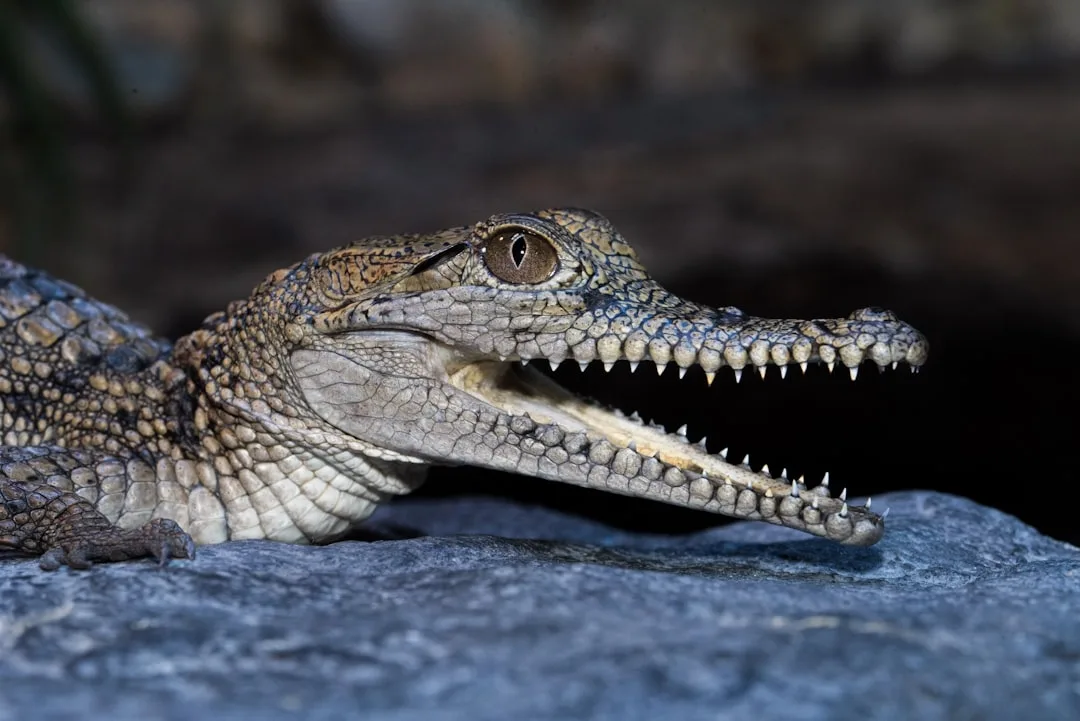
How big does a saltwater crocodile actually get?
The saltwater crocodile (Crocodylus porosus) is the largest living reptile. Adult males typically reach 4 to 6 meters in length and 400 to 1,000 kilograms in mass. The largest verified specimen on record is Lolong, captured in the Philippines in 2011, measuring 6. 17 meters and weighing 1,075 kilograms.
A saltwater crocodile entering its fifth decade of life has seen and survived more than almost any other animal alive. It has hunted sharks in estuarine rapids, drowned water buffalo three times its own mass, navigated open ocean crossings between Pacific islands, and defeated other crocodiles in territorial disputes that left scars running the length of its armored flanks.
It is a biologically conservative animal whose body plan has barely changed in 80 million years, and yet it remains the single most formidable predator in the Indo-Pacific tropics.
This is Crocodylus porosus, the saltwater crocodile, also called the estuarine crocodile or simply "salty" by Australians. It is the largest living reptile. It is the hardest-biting animal on Earth. It kills more humans per year than any other reptile species. And after teetering on the edge of extinction through the mid-20th century, its population in northern Australia has recovered to numbers that nobody alive today remembers from before industrial hunting began.
Size and the Verified Records
Adult saltwater crocodiles exhibit pronounced sexual dimorphism. Males reach 4 to 6 meters and 400 to 1,000 kilograms. Females are substantially smaller, typically 2.5 to 3.5 meters and 100 to 200 kilograms.
| Specimen | Location | Length | Mass | Year | Status |
|---|---|---|---|---|---|
| Lolong | Agusan, Philippines | 6.17 m | 1,075 kg | 2011 | Died 2013 in captivity |
| Cassius | Green Island, Australia | 5.48 m | 1,300 kg | 1984 | Living, est. 120+ years old |
| Gomek | Papua New Guinea | 5.42 m | 860 kg | 1985 | Died 1997 at St. Augustine |
| Sarcosuchus | Queensland, Australia | 5.40 m | 1,000 kg | 2020 | Wild, GPS-tracked |
| Dominator | Adelaide River, Australia | 5.50 m (estimated) | Unknown | 2011 | Wild, still observed |
| Brutus | Adelaide River, Australia | 5.60 m (estimated) | Unknown | 2014 | Wild, missing front limb |
Lolong remains the only saltwater crocodile measured to museum standards at a length exceeding 6 meters. His capture in the Agusan marshland of Mindanao in September 2011 followed the deaths of two humans in the preceding year, and it took 100 people and three weeks to secure him. He died in captivity in February 2013, and his body is preserved at the Philippine National Museum.
Historical claims of saltwater crocodiles exceeding 7 meters exist but lack verifiable measurements. A specimen shot in the Norman River in Queensland in 1957, measured by bush lore rather than scientific instrument, was reported at 8.63 meters but has never been corroborated by skeletal material or photographs with reliable scale references.
Bite Force: The Highest Ever Measured
The saltwater crocodile produces the highest bite force ever directly measured in any living animal. A landmark 2012 study by Gregory Erickson and Paul Gignac at Florida State University used a calibrated bite-force meter inserted into the jaws of restrained crocodilians to measure the force generated during a maximum effort bite.
The result for adult saltwater crocodiles: 16,460 newtons (approximately 3,700 pounds-force). This exceeded all previous measurements in the study, including the American alligator at 13,172 newtons and the Nile crocodile at 4,547 newtons. Extrapolating to the largest observed specimens like Lolong, Erickson and Gignac estimated bite forces exceeding 34,000 newtons.
| Species | Directly measured bite force |
|---|---|
| Saltwater crocodile | 16,460 N |
| American alligator | 13,172 N |
| Nile crocodile | 4,547 N |
| Great white shark | ~18,000 N (estimated) |
| Lion (African) | ~4,100 N |
| Spotted hyena | ~4,500 N |
| Tasmanian devil | 553 N (highest bite:body ratio) |
| Tyrannosaurus rex | 35,000-57,000 N (modeled) |
"The saltwater crocodile's bite force is so high that the evolutionary constraint is no longer the jaw muscles. It is the teeth themselves. If the bite became any more powerful, the teeth would fracture before they could transmit the force into the prey." - Paul Gignac, Associate Professor of Cell Biology, University of Arizona
The teeth of saltwater crocodiles are conical and are not designed for cutting. The animal's hunting strategy relies on seizing prey, dragging it underwater, and performing the death roll, a rapid spinning maneuver that dismembers the prey through torsional forces generated by the crocodile's whole body rather than by cutting edges.
The Death Roll
The death roll is a signature crocodilian behavior used to subdue and dismember large prey. The crocodile bites down, then rotates its body about its long axis at angular velocities of up to 150 degrees per second for the largest adults. The rotational inertia of the prey, combined with the grip of the crocodile's teeth, tears muscle attachments and dismembers the carcass at joint interfaces.
High-speed video analysis of the death roll by Frank Fish at West Chester University showed that the maneuver is biomechanically optimized to maximize torque at minimum metabolic cost. The crocodile's flattened tail, curled laterally during the roll, acts as a hydrodynamic counterweight, allowing the body to rotate without significant translational motion.
For researchers documenting crocodilian hunting behavior in the field, integrating underwater camera footage, bite-force telemetry, and prey-response kinematics requires the structured field observation documentation platforms that modern behavioral ecology routinely uses.
Range and Distribution
The saltwater crocodile has the broadest geographic range of any crocodilian, extending from eastern India across Southeast Asia, through Indonesia and the Philippines, to northern Australia, New Guinea, the Solomon Islands, and Vanuatu. Individual crocodiles have been recorded at open-ocean distances exceeding 500 kilometers from the nearest land, and the species is known to traverse oceanic gaps between Pacific islands.
Satellite telemetry studies by Hamish Campbell and colleagues in Australia have documented individual saltwater crocodiles using ocean currents rather than sustained swimming to travel long distances. Crocodiles have been tracked drifting with tidal and wind-driven currents for hundreds of kilometers, resting on the surface when currents were favorable and retreating to shore when currents opposed their intended direction.
| Range country | Estimated population | Trend |
|---|---|---|
| Australia (NT, QLD, WA) | 100,000+ | Recovering |
| Indonesia | 5,000-15,000 | Declining |
| Papua New Guinea | 10,000-20,000 | Stable to declining |
| Philippines | 100-250 | Critically endangered |
| Malaysia (Sarawak, Sabah) | 2,000-5,000 | Declining |
| India (Andaman, Odisha) | 1,500-2,500 | Stable |
| Solomon Islands | 1,000-3,000 | Stable |
| Vietnam | Functionally extinct | Declining |
Australia holds the largest and most genetically diverse population. The Northern Territory alone hosts roughly 80,000 saltwater crocodiles, with densities in the Mary River and Adelaide River systems exceeding 5 adults per kilometer of shoreline.
The broader context of Australian saltwater crocodile distribution and the tourism economy built around crocodile viewing is documented across Australian wildlife observation and regional tourism resources that cover northern Queensland, the Northern Territory, and the Kimberley region.
Australian Population Recovery
Commercial hunting of saltwater crocodiles in Australia began in the late 19th century and intensified after World War II as demand for crocodile leather grew in global fashion markets. Between 1945 and 1971, an estimated 98 percent of the Australian saltwater crocodile population was killed. The remaining population of perhaps 3,000 individuals was concentrated in remote river systems inaccessible to hunting boats.
The Northern Territory banned commercial hunting in 1971, Western Australia in 1970, and Queensland in 1974. The species was protected federally under the Wildlife Protection (Regulation of Exports and Imports) Act in 1982.
Recovery was slow at first, as wild populations rebuilt from a severely depleted base. By 1984, Northern Territory population estimates had reached 30,000. By 2000, they exceeded 70,000. Current estimates sit at approximately 100,000 individuals across Australian waters, a recovery of more than 30-fold from the nadir.
"We have watched the saltwater crocodile go from near-extinction in Australian waters to one of the most robust large-predator recoveries ever documented. The lesson is that when you stop killing them, crocodiles come back." - Grahame Webb, Director, Wildlife Management International, Darwin
The recovery has created its own problems. Encounters between crocodiles and humans are now common in the Top End of Australia, and the number of attacks has risen in proportion to the population. Between 1971 and 2023, Australia recorded 47 fatal attacks, concentrated in the Northern Territory and Far North Queensland.
Attacks on Humans
Globally, saltwater crocodiles kill an estimated 1,000 people per year. Indonesia records the highest annual fatality count, with over 100 deaths per year in recent years according to CrocBITE, the international crocodilian attack database maintained at Charles Darwin University.
| Region | Estimated annual fatalities | Trend |
|---|---|---|
| Indonesia | 40-130 | Increasing |
| Philippines | 5-15 | Stable |
| Papua New Guinea | 10-20 | Stable |
| Solomon Islands | 3-8 | Stable |
| Malaysia (Borneo) | 5-15 | Increasing |
| Australia | 1-2 | Stable |
| India | 10-15 | Variable |
The overwhelming majority of attacks occur during fishing, bathing, or river crossings in areas without adequate crocodile awareness signage or community education programs. Australia's low fatality rate relative to its crocodile density is attributed to aggressive public warning systems, habitat zoning, and the cultural assumption, enforced by signage at every relevant waterway, that freshwater bodies in the Top End are crocodile habitat.
Australia also operates one of the world's most sophisticated crocodile management programs, including capture and relocation of problem animals, population monitoring via aerial surveys, and incentivized egg collection for commercial farming that reduces pressure on wild nests.
Wildlife biologists and rangers working in crocodilian management often pursue formal credentials in wildlife biology and herpetology. Professional certification pathways for wildlife biology and environmental science structure the exam preparation and continuing education required for state parks and wildlife agency roles across Australia, the United States, and internationally.
Biology and Reproduction
Saltwater crocodiles are long-lived. Wild individuals routinely reach 70 years, and captive specimens have exceeded 120 years. Cassius, the largest verified saltwater crocodile in captivity, is estimated at over 120 years old in 2024 based on skeletal and scale analysis at the time of his capture in 1984.
Females reach sexual maturity at roughly 12 years of age and 2.2 meters length. Males mature later, at 16 years and 3.2 meters. Mating occurs in the wet season. Females construct nest mounds of vegetation and soil on floodplain margins and lay 40 to 90 eggs. Incubation temperature determines sex: temperatures around 31.6 degrees Celsius produce males, while higher and lower temperatures produce females.
Hatching success in wild populations is highly variable. Nest failure due to flooding can exceed 70 percent in wet seasons. Hatchlings face intense predation from fish, birds, and other crocodiles. First-year survival rates are typically below 10 percent. Those that survive to 2 meters in length have few natural predators other than larger crocodiles.
Cognition and Behavior
Saltwater crocodiles have been historically underrated as cognitively complex animals. Recent research has documented tool use, coordinated hunting, and long-term memory of specific individuals and locations.
A 2013 study by Vladimir Dinets at the University of Tennessee documented American alligators and mugger crocodiles balancing sticks on their snouts during the nesting season of wading birds that use sticks to build nests, an apparent behavioral adaptation to lure the birds within striking range.
Saltwater crocodiles have shown similar capacities. Individual animals have been documented maintaining preferred ambush sites across multiple years, recognizing specific humans at research stations, and learning to associate boat engine sounds with feeding in operations that habituate them for research access.
This work intersects with the broader literature on reptile cognition, which has in recent decades begun to dismantle the assumption that "cold-blooded" animals are cognitively primitive. The comparative perspective on animal intelligence measurement across species has been applied increasingly to crocodilians, with results suggesting that the distance between reptile and mammalian cognition is smaller than traditional neuroanatomy suggested.
Crocodile Farming and Sustainable Use
Australia, Papua New Guinea, and Zimbabwe operate commercial saltwater crocodile farming programs that integrate wildlife economics with conservation. The Northern Territory program allows licensed egg collection from wild nests (up to 66,000 eggs annually), which are then incubated in commercial facilities. A portion of hatchlings are returned to the wild to replace the harvested eggs, while others are raised for meat and skin production.
The program generates roughly 40 million Australian dollars annually in export revenue, provides employment to remote Indigenous communities holding egg collection rights, and maintains political support for crocodile protection by making live crocodiles economically valuable rather than purely a threat to local livelihoods.
Crocodile ecotourism operators, meat producers, and leather exporters register as specialized wildlife industry entities, and the business formation workflow for these operators is documented across nature and wildlife tourism business registration resources.
Research Writing and Specimen Curation
The scientific literature on saltwater crocodile biology is extensive and growing. Modern papers on crocodilian phylogenetics, conservation genetics, and population ecology require complex multi-institutional collaboration and LaTeX-compatible manuscript formatting. Structured scientific writing platforms such as Evolang handle the technical writing infrastructure modern crocodilian research publications demand.
Museum specimens of historical saltwater crocodiles are cataloged at the South Australian Museum, the Australian Museum in Sydney, the Natural History Museum London, and the Smithsonian. Each skull, scale sample, and tissue voucher is tracked through institutional databases, and modern collections increasingly adopt QR-coded specimen labels to maintain cross-institutional loan provenance.
Researchers processing photographic specimen records, field site images, and aerial survey photography rely on image metadata integrity. Tools that inspect and normalize this metadata, including image metadata viewers and EXIF tools, support the documentation workflows these multi-agency research programs require.
The Future of the Species
The saltwater crocodile exists at an uneasy equilibrium. Its Australian populations are thriving. Its Southeast Asian populations are fragmented and declining.
Climate change is shifting nest incubation temperatures in ways that may skew sex ratios toward females at the low end of the temperature range and toward females at the high end as well, through the peculiar dual-peak temperature-sex determination curve of crocodilians. Sea level rise is flooding nesting habitat in low-lying Papuan and Indonesian coasts.
Plastic pollution and microplastics are being recorded in crocodile tissue samples at concentrations that have doubled in the past decade.
The species that survived the asteroid that killed the dinosaurs and the glacial cycles of the Pleistocene will likely survive the next century. Whether it does so as a recovering population across its full Indo-Pacific range, or as a conservation success confined to Australian waters while collapsing elsewhere, depends on the decisions of governments, conservation agencies, and local communities in the coming decades.
References
- Erickson, G. M., Gignac, P. M., Steppan, S. J., et al. (2012). Insights into the ecology and evolutionary success of crocodilians revealed through bite-force and tooth-pressure experimentation. PLOS ONE, 7(3), e31781. DOI: 10.1371/journal.pone.0031781
- Webb, G. J. W., & Manolis, S. C. (1989). Crocodiles of Australia. Reed Books. DOI: 10.1086/417034
- Campbell, H. A., Watts, M. E., Sullivan, S., et al. (2010). Estuarine crocodiles ride surface currents to facilitate long-distance travel. Journal of Animal Ecology, 79(5), 955-964. DOI: 10.1111/j.1365-2656.2010.01709.x
- Fish, F. E., Bostic, S. A., Nicastro, A. J., & Beneski, J. T. (2007). Death roll of the alligator: mechanics of twist feeding in water. Journal of Experimental Biology, 210(16), 2811-2818. DOI: 10.1242/jeb.004267
- Fukuda, Y., Manolis, C., & Appel, K. (2014). Management of human-crocodile conflict in the Northern Territory, Australia: Review of crocodile attacks and removal of problem crocodiles. The Journal of Wildlife Management, 78(7), 1239-1249. DOI: 10.1002/jwmg.767
- Grigg, G. C., & Kirshner, D. (2015). Biology and Evolution of Crocodylians. CSIRO Publishing. DOI: 10.1071/9781486300679
- Britton, A. R. C., Whitaker, R., & Whitaker, N. (2012). Here be a dragon: exceptional size in a saltwater crocodile (Crocodylus porosus) from the Philippines. Herpetological Review, 43(4), 541-546. DOI: 10.5281/zenodo.6498192
- Dinets, V. (2015). Play behavior in crocodilians. Animal Behavior and Cognition, 2(1), 49-55. DOI: 10.12966/abc.02.04.2015
Frequently Asked Questions
How big does a saltwater crocodile actually get?
The saltwater crocodile (Crocodylus porosus) is the largest living reptile. Adult males typically reach 4 to 6 meters in length and 400 to 1,000 kilograms in mass. The largest verified specimen on record is Lolong, captured in the Philippines in 2011, measuring 6.17 meters and weighing 1,075 kilograms. Anecdotal historical reports have described individuals exceeding 7 meters, but none have been verified to modern scientific standards.
Most adult males today top out around 5 to 5.5 meters due to hunting pressure having selectively removed the largest individuals from wild populations before protection measures took effect.
Where are saltwater crocodiles most dangerous to humans?
The Indo-Pacific range of the saltwater crocodile includes northern Australia, Papua New Guinea, Indonesia, the Philippines, Malaysia, and parts of India and Bangladesh. The species is estimated to kill approximately 1,000 people per year globally, making it the deadliest reptile on Earth. Indonesia records the highest annual fatality count, with over 100 deaths per year in some recent years, concentrated in East Kalimantan, Maluku, and West Papua.
Australia has among the lowest fatality rates relative to crocodile population density, averaging one to two fatal attacks per year, largely due to extensive public education and signage programs.
Have saltwater crocodile populations recovered after protection?
Yes, dramatically in some regions. The Northern Territory of Australia protected the saltwater crocodile in 1971 after decades of unregulated hunting had reduced the wild population to an estimated 3,000 individuals. By 2020, the population had recovered to approximately 100,000 adults and juveniles. The species has been downlisted from Endangered to Least Concern in Australian waters.
Recovery has been more uneven in Southeast Asia, where habitat loss and poaching continue to pressure populations. The Philippine and Indonesian populations remain classified as Critically Endangered in some local assessments.