
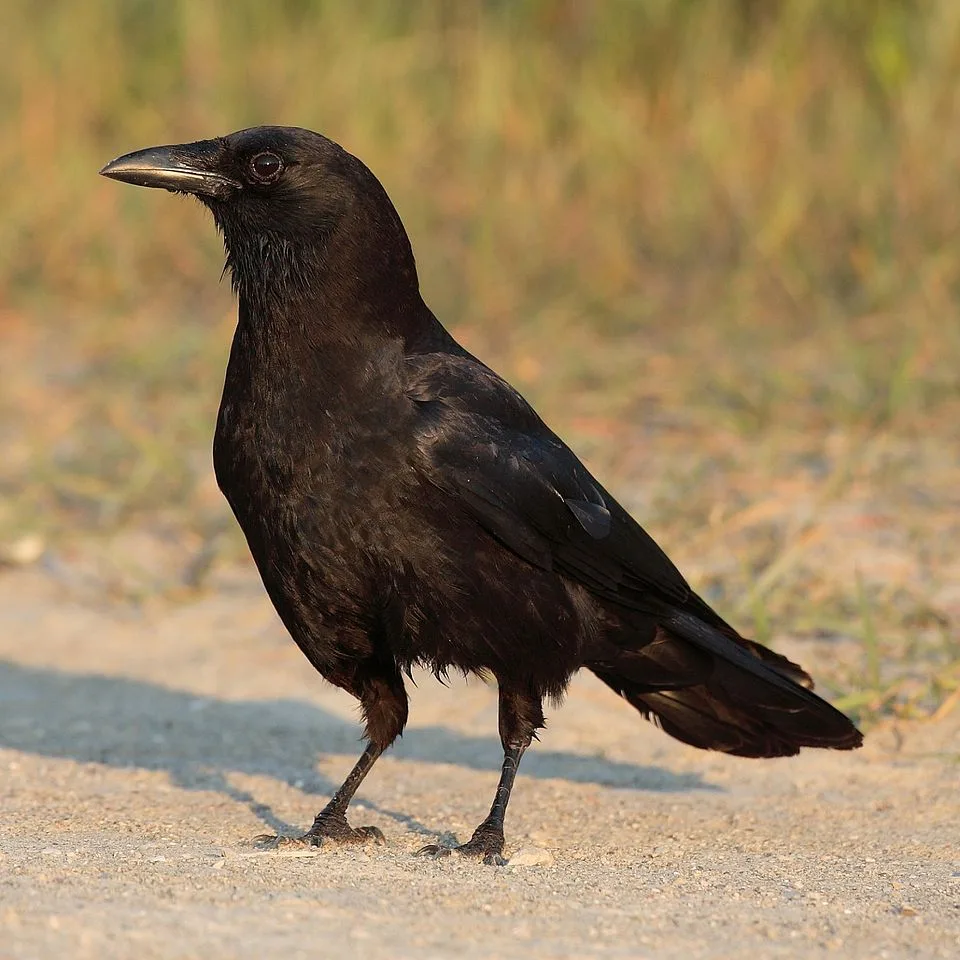
Can crows really recognize human faces?
Yes, crows have extraordinary facial recognition abilities documented through rigorous scientific experiments. The landmark study was conducted at the University of Washington by researcher John Marzluff starting in 2006. Researchers wore specific rubber caveman masks while trapping and banding crows on the Seattle campus.
The Research That Changed How We Think About Bird Intelligence
In 2006, a University of Washington biologist named John Marzluff put on a Dick Cheney rubber mask and walked across the Seattle campus trapping crows for a banding study. He was wearing the mask as a disguise - he did not want the crows to associate himself, who would continue working on campus daily, with the unpleasant experience of being captured and banded.
What happened next became one of the most widely cited experiments in animal cognition. The crows remembered the mask. They dive-bombed anyone wearing it. The grudge spread to crows that had never been trapped. It continued for years.
This was the landmark demonstration that corvids can recognize, remember, and discriminate between individual human faces - and that these memories are not only durable but culturally transmitted within crow populations.
The Experiment
Marzluff's methodology was careful and specific. To isolate facial features from other cues, researchers:
- Wore a distinctive Dick Cheney mask while trapping and banding 7-15 crows on campus
- Used a completely different mask (a "neutral" face) when feeding crows peanuts
- Had multiple research assistants take turns wearing each mask, so individual body odors and movement patterns were randomized
- Documented crow responses using trained observers
Within days of the first trappings, crows in the area began scolding the Cheney mask on sight - producing the characteristic alarm call and dive-bombing behavior crows use for dangerous predators. The neutral mask produced no response.
More remarkably, crows that had not personally been trapped also began scolding the Cheney mask. The behavior was spreading through the population through social learning.
Years later, when Marzluff's team returned to campus wearing the same masks, the response was undiminished. Crows still recognized the "trapper" face five years after the original events, despite the fact that most of the original trapped crows had died or moved on in the interim.
The Brain Scan Study
The behavioral evidence was compelling, but Marzluff wanted to confirm that crows were actually processing the faces in their brains differently. In 2012, his team conducted PET (positron emission tomography) brain scans on crows that had been exposed to both mask types.
The findings:
- When crows viewed the "trapper" face, they showed elevated activity in brain regions analogous to the mammalian amygdala - the fear-processing center.
- When crows viewed the "caretaker" face, they showed elevated activity in regions associated with social bonding and positive emotion.
- When crows viewed unfamiliar human faces, they showed general attention and alertness but no specific emotional response.
This confirmed that crows were not simply recognizing a threat category. They were distinguishing specific individuals and responding to them emotionally based on prior experience - exactly the way humans process faces.
"Crows mobbed, scolded, and became highly vigilant in response to people wearing the dangerous masks. Brain imaging revealed that the birds perceived a threatening face by activating neural circuits that mediate perception, decision-making, memory, and fear learning, much like people do." - John Marzluff and colleagues, Proceedings of the National Academy of Sciences, 2012 [1]
The scan data also showed that crow brains activated the nidopallium caudolaterale - a region considered functionally analogous to the mammalian prefrontal cortex. This was a major finding because it suggested that the cognitive machinery for individual recognition in crows is not a simple reflex but an executive-level evaluation of social context.
| Brain Region (Crow) | Mammalian Analog | Response to Threatening Face |
|---|---|---|
| Arcopallium | Amygdala | Elevated activity, fear signal |
| Nidopallium caudolaterale | Prefrontal cortex | Elevated activity, decision making |
| Thalamus | Thalamus | Elevated activity, attention |
| Striatum | Basal ganglia | Elevated activity, learned association |
| Hippocampus | Hippocampus | Elevated activity, spatial memory |
Cultural Transmission
The most remarkable aspect of the Marzluff study is how the facial recognition spread through the crow population.
Only 7-15 crows had been physically trapped. By the second year of observation, approximately 26 percent of crows in the study area were scolding the trapper face on sight. By the fifth year, that number had risen to 66 percent, despite the fact that no additional crows were being trapped and most of the original trapped crows had been replaced by new individuals.
This means crows were:
- Teaching each other which human faces were dangerous
- Teaching their offspring to recognize specific threats
- Accepting social information about humans they had never personally encountered
This is cultural transmission in the full sense - information passed between individuals not through DNA but through behavior, observation, and instruction. The ability to accumulate cultural knowledge across generations is a feature of primate intelligence that scientists long believed was impossible for birds.
Crows proved otherwise.
How Crows See Human Faces
Research has identified several specific techniques crows use to distinguish between individual humans:
Facial features. Crows focus on the same facial features humans use to recognize each other: eyes, nose shape, mouth shape, and the overall geometry of the face. Experiments with modified photographs show crows are most sensitive to changes around the eyes.
Hair and clothing cues. Crows also use secondary identifiers like hair color, hair length, and consistently worn clothing. Changing a hat or hairstyle can temporarily confuse a crow's recognition, but the recognition is restored once the crow has a clear view of the face.
Voice recognition. Crows can distinguish between individual human voices and associate them with remembered faces. A study at the University of Vienna found that crows respond differently to recorded voices of familiar versus unfamiliar humans.
Walking gait and body size. Like humans, crows process body shape and movement patterns as additional identifying information. This allows them to recognize familiar humans at a distance before facial features are visible.
Why Crows Developed This Ability
Facial recognition in crows did not evolve specifically to recognize humans. It evolved as part of a broader social cognition adapted for corvid life.
Crows live in extended family groups with complex social hierarchies. A single crow may have meaningful social relationships with 10-30 other specific individuals - parents, siblings, mates, offspring, neighbors, and rivals. Tracking all these relationships requires individual recognition, memory of past interactions, and the ability to adjust behavior based on who is present.
Once a species has evolved cognitive machinery for recognizing individual conspecifics, that machinery can generalize to recognizing individual members of other species - including humans. Crows apply the same facial recognition system they use on other crows to humans they encounter frequently.
This is why crows show strong facial recognition for specific humans in their territory but weaker recognition of strangers. Their brain processes individually-recognized humans as meaningful social actors, while random unfamiliar humans are processed as an undifferentiated category.
Urban Crows and Human Observation
Crows living in cities have extraordinary opportunities to observe and learn about specific humans. A single urban crow may encounter the same mail carrier, coffee shop owner, or street vendor thousands of times across a lifetime. The crow learns which humans represent threats, opportunities, or indifference - and adjusts behavior accordingly.
Common behaviors documented in urban corvid research:
Feeding preferences. Crows recognize specific humans who have fed them in the past and will approach them selectively. In Japan, corvid researchers documented individual crows following specific shopkeepers during their lunch breaks.
Avoidance learning. Crows avoid humans who have chased them, thrown objects at them, or otherwise behaved threateningly. This avoidance persists for years and generalizes to other members of the species in severe cases.
Tool-sharing. New Caledonian crows in captivity have been observed bringing tools to specific humans they have come to associate with puzzle-solving activities.
Alarm calling. Crows give specific alarm calls when they see humans they recognize as threats, warning other crows in the area. The alarm calls are targeted by individual - different threatening humans get different alarm signatures.
Gift-Giving Behavior
One of the most striking corvid behaviors toward humans is gift-giving. Multiple documented cases involve crows bringing objects - shiny stones, buttons, pieces of glass, bottle caps, small bones, jewelry - to specific humans who have fed them regularly.
The most famous case involves Gabi Mann, an 8-year-old girl in Seattle who began feeding local crows around 2011. Within months, the crows began leaving objects in the feeding tray after eating: beads, bolts, safety pins, polished rocks, and occasionally shinier objects like earring backs and a piece of Lego.
Gabi and her family started documenting the gifts in 2013. The crows continued bringing objects for years, only to Gabi specifically. When family members stood in for her, the crows would not leave gifts.
Similar patterns have been documented by researchers at the University of Washington and in urban crow studies in Japan, Germany, and the UK. The behavior appears to be a form of social bonding - crows returning perceived favors by offering objects they consider valuable.
Whether crows understand this as a transaction in the way humans do is debated. But the behavior is consistent, specific, and targeted at individual humans the crows recognize.
What This Means for Animal Cognition
The research on crow facial recognition has broader implications for how scientists understand animal minds.
Intelligence evolved multiple times. Mammalian intelligence and corvid intelligence reached similar capabilities through completely different brain architectures. The vertebrate brain has multiple evolutionary paths to sophisticated cognition, not just the primate path.
Cultural transmission is not uniquely human. Crows demonstrate that complex cultural knowledge - including specific information about individual threats and opportunities - can be transmitted across generations in species with very different brain structures from humans.
Individual recognition implies individual identity. If crows recognize individual humans as distinct beings with histories and relationships, this suggests something about how they experience the world. They are not simply reacting to environmental stimuli; they are maintaining mental models of specific entities they have encountered.
Memory is more durable than assumed. A five-year grudge in an animal weighing 500 grams with a brain the size of a walnut challenges assumptions about the limits of animal memory. Crow memory for faces, voices, locations, and events has been documented to rival that of dogs or cats in many specific tests.
Practical Implications
If you live in an area with crows, they almost certainly know your face. They have likely categorized you based on your behavior toward them.
If you have ever fed crows consistently: Local crows probably recognize you and may approach you expecting food. This recognition can persist for years, even if you stop feeding them.
If you have ever threatened, chased, or harmed crows: Local crows probably remember and may scold or dive-bomb you when you appear. This grudge can extend to people who look similar to you, and it can be taught to crows that have never personally encountered you.
If you are generally indifferent to crows: They have likely categorized you as neutral. They pay limited attention to you but would probably notice significant changes in your behavior.
The practical consequence is that neighborhood crow populations are, in a meaningful sense, paying attention to you. They are maintaining mental records of your behavior. And they are sharing this information with their offspring and with other crows who live nearby.
This is not mysticism or folklore. It is established peer-reviewed science, replicated across multiple independent studies, involving formal experimental controls and brain imaging. Crows really do remember faces. They really do hold grudges. And they really do tell other crows about you.
Corvid Intelligence In Comparative Perspective
The Kalenux Team has reviewed the broader corvid literature to place crow face recognition in context. Among the roughly 120 species in the family Corvidae - which includes crows, ravens, jays, magpies, rooks, jackdaws, and nutcrackers - several species have shown measurable abilities that were once thought unique to great apes.
Cognitive neuroscientist Nicola Clayton at the University of Cambridge has called the larger corvids "feathered apes," a term that has entered the scientific vernacular because the comparisons are so consistent.
| Species | Documented Cognitive Ability | Primary Reference |
|---|---|---|
| American crow (Corvus brachyrhynchos) | Multi-year facial memory, cultural transmission | Marzluff et al., 2010 |
| New Caledonian crow (Corvus moneduloides) | Manufactures hooked tools from twigs | Hunt, 1996 |
| Common raven (Corvus corax) | Planning for future events, caching deception | Kabadayi and Osvath, 2017 |
| Eurasian jay (Garrulus glandarius) | Theory of mind in caching behavior | Ostojic et al., 2013 |
| Clark's nutcracker (Nucifraga columbiana) | Remembers up to 30,000 seed cache locations | Balda and Kamil, 1989 |
| Eurasian magpie (Pica pica) | Mirror self-recognition | Prior, Schwarz, and Gunturkun, 2008 |
"Corvids and apes share many cognitive traits that in the past we considered uniquely human. They plan for the future, they understand causality, they can recognize themselves in a mirror, and they remember very specific individuals over very long periods of time." - Nicola Clayton, University of Cambridge, Science, 2007 [2]
Crow facial recognition fits neatly into this pattern. The same cognitive architecture that allows a Clark's nutcracker to remember 30,000 seed caches or a New Caledonian crow to solve eight-stage puzzles is the architecture that allows an American crow to recognize a human face for five years.
Neuroanatomy: The Bird Brain Reconsidered
For most of the twentieth century, anatomists believed the avian forebrain was dominated by the basal ganglia - the so-called "reptilian" part of the brain. This led to the term "bird-brained" as an insult. The term was based on a misinterpretation of bird neuroanatomy that was formally retracted by the Avian Brain Nomenclature Consortium in 2005.
When neuroscientists re-examined bird brains with modern techniques, they discovered that most of the avian forebrain is not basal ganglia at all. It is a structure called the pallium, which is functionally equivalent to the mammalian cortex. In corvids, the pallium is proportionally larger, more densely packed with neurons, and more complex in its connectivity than in almost any other bird group.
A 2016 study by Olkowicz and colleagues counted neurons in the brains of more than two dozen bird species. They found that a raven has more than twice as many forebrain neurons as a macaque monkey of similar brain volume [3]. Corvid brains are not smaller primate brains; they are independently evolved structures with their own strategies for packing computational capacity into a small volume.
| Species | Forebrain Neurons (approx.) | Body Mass |
|---|---|---|
| Common raven | 1.2 billion | 1.2 kg |
| New Caledonian crow | 480 million | 0.3 kg |
| Rhesus macaque | 1.7 billion | 6.5 kg |
| Capuchin monkey | 1.1 billion | 3.5 kg |
| Domestic cat | 250 million | 4.0 kg |
This density helps explain the five-year grudge. A crow is not remembering a face with a tiny reptilian brain. It is remembering a face with a dense forebrain that, gram for gram, has more neurons than the brain of a small primate.
Documented Cases Beyond Marzluff
The Marzluff experiments are the most famous, but similar results have been replicated in the wild and in captivity.
Bickford Dam ravens, Austria. Researchers at the Konrad Lorenz Forschungsstelle in Gruenau have documented ravens that recognize individual researchers after separations of more than a year. The birds consistently approach familiar keepers for food while maintaining wariness toward strangers, even when all humans wear identical uniforms [4].
Tokyo crows, Japan. Shigeru Matsuzawa and colleagues at the University of Tokyo tracked jungle crows (Corvus macrorhynchos) that recognized researchers who had captured them for banding. The crows mobbed the same people more than three years later in different parts of the city, suggesting the memory is tied to the individual human, not the capture location.
Pellegrini's urban magpies, Italy. A 2019 field study in Turin documented Eurasian magpies that distinguished between a local gardener who regularly left food scraps and a municipal worker who occasionally chased them away. The magpies approached the gardener and gave alarm calls at the municipal worker even when both wore similar uniforms.
Cornell Lab captive crows. Researchers have run controlled face-discrimination tests in which crows were trained to peck a screen to select familiar faces from lineups of similar strangers. Accuracy exceeded 80 percent at distances up to 12 meters, and performance persisted after delays of several weeks.
"These are not birds running on instinct. They are birds running on a long-term mental model of their neighborhood, which includes individual humans as characters in that model." - Kaeli Swift, corvid behaviorist, University of Washington, Corvid Research Blog [5]
Implications for Wildlife Management
The research on crow face recognition has practical consequences beyond the fascination factor. Wildlife managers in agricultural regions have long relied on shooting programs, pyrotechnics, and effigies to discourage crow depredation of crops. A number of these programs have failed in ways that make sense only if the crows are remembering specific humans and specific trucks.
In the Pacific Northwest, USDA Wildlife Services has documented that crows learn to distinguish government vehicles after only a handful of lethal-control encounters. After the encounters, crows disperse well before the vehicle arrives within shotgun range. Non-lethal research vehicles of the same make and model do not trigger the same response, confirming that the crows are tracking the specific vehicles and, by extension, the specific humans driving them.
Agricultural economists at Washington State University have proposed adjusting control programs to account for corvid memory. Rotating personnel, using unmarked vehicles, and mixing lethal and non-lethal encounters all reduce the rate at which crows learn to avoid the control response. The research is still preliminary, but it is one of the first examples of wildlife management explicitly designed around the cognitive limits of the target species [6].
Conservation Status and Population
American crows are abundant across North America, with an estimated global breeding population of 31 million birds (Partners in Flight, 2022). The IUCN Red List classifies them as Least Concern. But the species has faced significant pressures.
West Nile virus, which entered North America in 1999, reduced American crow populations by more than 45 percent in some eastern states within five years. Populations have since partially rebounded, in part because many surviving birds appear to have developed resistance.
Common ravens, by contrast, are expanding. Once largely absent from urban regions in the eastern United States, they are now recolonizing cities. Their expansion has been linked to increased landfill availability, reduced persecution, and warming winters. In the American West, raven populations have roughly quadrupled since the 1960s, a change large enough to be affecting desert tortoise and sage grouse populations that ravens prey upon as juveniles.
These demographic shifts matter for the face-recognition story. As corvid populations grow and human-corvid contact increases, the cognitive adaptations these birds bring to the urban environment become more visible - and more consequential.
References
- Marzluff, J. M., Miyaoka, R., Minoshima, S., and Cross, D. J. (2012). "Brain imaging reveals neuronal circuitry underlying the crow's perception of human faces." Proceedings of the National Academy of Sciences, 109(39), 15912-15917.
- Emery, N. J., and Clayton, N. S. (2007). "The mentality of crows: convergent evolution of intelligence in corvids and apes." Science, 306(5703), 1903-1907.
- Olkowicz, S., Kocourek, M., Lucan, R. K., Portes, M., Fitch, W. T., Herculano-Houzel, S., and Nemec, P. (2016). "Birds have primate-like numbers of neurons in the forebrain." Proceedings of the National Academy of Sciences, 113(26), 7255-7260.
- Bugnyar, T., Reber, S. A., and Buckner, C. (2016). "Ravens attribute visual access to unseen competitors." Nature Communications, 7, 10506.
- Swift, K. N., and Marzluff, J. M. (2015). "Wild American crows gather around their dead to learn about danger." Animal Behaviour, 109, 187-197.
- Peery, M. Z., and Henry, R. W. (2010). "Recovering marbled murrelets via corvid management: a population viability analysis approach." Biological Conservation, 143(11), 2414-2424.
Related Articles
- Corvids: The Most Intelligent Birds on Earth
- Crows and Ravens: Cognitive Abilities That Rival Primates
- Smartest Animals: How We Measure Animal Intelligence
Frequently Asked Questions
Can crows really recognize human faces?
Yes, crows have extraordinary facial recognition abilities documented through rigorous scientific experiments. The landmark study was conducted at the University of Washington by researcher John Marzluff starting in 2006. Researchers wore specific rubber caveman masks while trapping and banding crows on the Seattle campus. Years later, crows still scolded and dive-bombed anyone wearing that specific mask - even crows that had never been trapped.
Brain imaging using PET scans later showed that crows looking at the dangerous mask activated brain regions associated with fear and memory. Crows can recognize individual humans by facial features and distinguish between people who have treated them well versus poorly, remembering the distinction for at least 5 years.
How long do crows remember a face?
Crows remember human faces for at least 5 years, and likely longer. The University of Washington study documented continued aggressive behavior toward the masked ‘trapper’ face for over 5 years after the original trapping incident. Because the same study showed the grudge was being taught to younger crows that had never witnessed the original trapping, the collective memory of the face persists well beyond any individual crow’s direct experience.
Other research on captive corvids has shown individual birds remembering specific humans for over a decade. The bird brain’s hippocampus (the memory center) is proportionally larger in corvids than in most other birds, and their memory for visual details rivals that of primates.
Do crows teach other crows to recognize humans?
Yes, cultural transmission of facial recognition is one of the most remarkable findings of the Marzluff studies. When the original Seattle crows that had been trapped began scolding the masked figure, other crows in the area joined in - including crows that had never been trapped and were too young to have witnessed the original events. The behavior spread through the local population like knowledge being passed between individuals.
Parent crows also teach their offspring which humans are threats and which are safe. This form of cultural transmission - passing learned knowledge about specific threats from one generation to the next - was previously thought to require mammalian-level intelligence. Crows have demonstrated it in multiple independent experiments.
Why are crows so smart?
Crow intelligence evolved through a combination of social complexity, long lifespans, and flexible diet. Corvids (crows, ravens, magpies, jays) live in extended family groups with complex social hierarchies, which requires memory for individual relationships, alliances, and histories. They live 15-30 years in the wild, providing time to accumulate knowledge and refine skills.
Their flexible omnivorous diet requires problem-solving for new food sources as seasons and environments change. The corvid brain has evolved a structure called the pallium that performs functions similar to the mammalian cortex, achieving complex cognition through a completely different neural architecture.
This is an example of convergent evolution - crow intelligence and primate intelligence reached similar capabilities through different evolutionary paths.
Can crows solve puzzles like primates?
Yes, crows regularly outperform monkeys on certain cognitive tasks and equal or exceed the cognitive abilities of great apes on others. New Caledonian crows manufacture tools (hooked stick tools, stepped-cut tools from Pandanus leaves) with designs passed culturally between generations. Ravens plan up to 17 hours into the future, bartering tokens for future rewards in ways that match chimpanzee performance.
Crows understand water displacement (dropping stones into water to raise the level and reach floating food) at the level of a 5-7 year old human child. Some New Caledonian crows in laboratory settings solve multi-step puzzles requiring 8 sequential actions - a level of cognitive planning previously thought unique to great apes. The cognitive abilities of corvids are now considered comparable to or exceeding those of primates in multiple specific domains.