
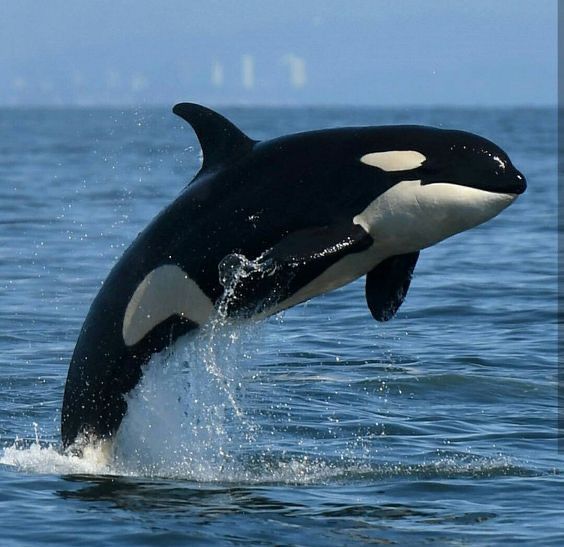
Why are orcas called killer whales?
The name 'killer whale' comes from 18th-century Spanish whalers who called them 'asesina de ballenas' (whale killer) after watching orcas hunt larger whales. The English translation reversed the word order, giving us 'killer whale. ' Despite the name, orcas are not whales in the strict taxonomic sense - they are the largest members of the dolphin family (Delphinidae).
The Only Predator Great White Sharks Fear
In May 1997, off the Farallon Islands near San Francisco, a whale-watching boat filmed something no human had ever documented before: an orca killing an adult great white shark. The shark - 3.6 meters long and weighing nearly a tonne - died within minutes. The orca extracted its liver and swam away. The rest of the body drifted to the bottom.
That footage rewrote the rules of ocean ecology. Great white sharks had been considered the apex predators of the temperate marine world. But orcas, apparently, were not impressed. What followed over the next three decades was a growing realization: the orca is the true ocean superpower, and nothing in the water - not the great white, not the largest squid, not even the blue whale - is beyond its reach.
What Exactly Is an Orca?
The orca (Orcinus orca) is the largest member of the oceanic dolphin family (Delphinidae), not a true whale despite the common name "killer whale." Adults reach:
- Length: 6-9 meters (20-30 feet), with males larger than females
- Weight: 3-10 tonnes
- Dorsal fin height: up to 1.8 meters in males (the tallest dorsal fin of any animal)
- Lifespan: 50-80 years for females, 30-50 for males
- Population: approximately 50,000 globally
The name "killer whale" comes from 18th-century Spanish whalers who called them asesina de ballenas - literally "whale killer." English translators reversed the word order, producing the more sinister-sounding "killer whale." The original Spanish was more accurate: orcas kill whales, not the reverse.
Orcas are found in every ocean on Earth, from Arctic pack ice to tropical coasts. They are one of the most widely distributed mammal species after humans.
Hunting Great White Sharks
The 1997 Farallon Islands incident was the first documented case of orca predation on great whites. It was not the last.
Since 2015, a pair of orcas named Port and Starboard (for the direction their dorsal fins lean) have systematically hunted great white sharks off the South African coast. Marine biologists at Marine Dynamics Shark Tours have documented multiple kills and recovered shark carcasses showing a specific pattern:
- The orcas approach the shark from below and behind
- They grip the shark by the pectoral fins, immobilizing it
- They flip the shark upside down, triggering tonic immobility - a reflex paralysis response in sharks
- They make a single precise incision into the shark's abdomen
- They extract only the liver, which is the most calorie-dense organ
- They abandon the rest of the carcass
The precision of the attack pattern shows deliberate technique, not opportunistic feeding. The orcas target the liver specifically because it is approximately 25 percent of the shark's body weight and contains extraordinary lipid concentrations - up to 90 percent by weight - providing enormous caloric value.
The impact on great white populations has been significant. Since Port and Starboard began hunting in Gansbaai, the historical great white aggregation site in False Bay has largely collapsed. Sharks have fled to other regions or gone to deeper water. Entire commercial shark-cage diving operations have relocated.
This demonstrates the ecological power orcas can wield. Two individuals, hunting systematically, can alter the distribution of an entire apex predator species across hundreds of kilometers of coastline.
Hunting Blue Whales
If orcas can kill great whites, what about blue whales - the largest animals that have ever lived?
They hunt those too.
Blue whale predation by orcas is rarer and harder to document because blue whales live in deeper water and over vaster ranges. But multiple attacks have been filmed or photographed:
Bremer Canyon, Australia, 2019. A pod of orcas attacked and killed an adult blue whale in what researchers called one of the largest predatory events ever witnessed. The attack lasted six hours and involved approximately 70 orcas working in coordinated shifts. The whale was ultimately drowned when orcas held its blowhole underwater long enough to prevent breathing.
Multiple documented cases in Monterey Bay, California and Isla de los Estados, Argentina. Blue whale carcasses bearing orca tooth marks appear occasionally, and adult blue whales sometimes carry scars from surviving attacks.
Adult blue whales are 30 meters long and weigh up to 200 tonnes - vastly larger than any orca. A successful attack requires dozens of orcas attacking simultaneously, with specific individuals assigned to drown the whale, prevent escape, and tear at the tongue (the most calorie-dense part of the body). The hunt typically focuses on calves or juveniles, but adults are not invulnerable.
The Wave-Washing Technique
Perhaps the most famous orca hunting technique is the wave-washing strategy used by Antarctic Type B orcas to hunt seals on ice floes.
The technique:
- Orcas identify a seal resting on a small ice floe
- Several orcas line up and charge the ice in formation
- They swim at matching speed and dive beneath the ice, creating a coordinated bow wave
- The wave crashes over the ice, sweeping the seal into the water
- Other orcas wait in the water to catch the dislodged seal
The technique requires coordination between multiple orcas, timing of dives to within fractions of a second, and wave physics that only works at specific speeds and angles. It is taught from adult orcas to juveniles, and calves practice for years before successfully contributing to a hunt.
Researchers at the University of Nottingham have filmed multigenerational teaching of the wave-washing technique. A mother orca will create a smaller, practice wave to push a seal toward her calf, allowing the juvenile to practice the final interception without risking losing the prey.
This is cultural transmission of a complex hunting technique - information passed from generation to generation through observation and practice. Only orcas and a few other intelligent species engage in this kind of transgenerational skill transfer.
The Many Types of Orca
Not all orcas are the same. Research over the past 40 years has identified at least 10 distinct ecotypes - populations that differ in diet, behavior, appearance, and genetics.
Pacific Northwest Ecotypes
Resident orcas. Live in matriarchal family groups called pods. Specialize in eating salmon, particularly Chinook. Vocal, social, and stable in group composition. Southern Resident orcas (offspring of J, K, and L pods) are critically endangered with fewer than 75 individuals remaining.
Transient or Bigg's orcas. Same geographic region but hunt marine mammals - seals, sea lions, porpoises, and occasionally minke whales. Smaller group sizes, quieter, more nomadic. Recently reclassified as a separate species, Orcinus rectipinnus.
Offshore orcas. Less studied because they live far from coastlines. Hunt sharks and large fish. Heavily worn teeth from eating sharks (their denticle-covered skin abrades orca teeth).
Antarctic Ecotypes
Type A. Large, similar in appearance to familiar orcas. Hunt minke whales in open water.
Type B (Large). Brownish-gray coloration from diatom algae on skin. The wave-washing seal specialists.
Type B (Small or Gerlache). Smaller body size. Hunt penguins and fish.
Type C or Ross Sea. Smallest orca ecotype. Hunt Antarctic toothfish (Chilean sea bass). Heavily sloping eye patches.
Type D. The most mysterious ecotype, with a distinctive rounded head and small eye patches. Only photographed a handful of times; lives in subantarctic waters.
Other Ecotypes
North Atlantic types. Multiple populations with different diets and behaviors.
Russian Far East. Specific populations hunting fish and occasionally larger prey.
Each ecotype has distinct genetics, vocalizations ("dialects"), and cultural traditions. Orcas of different ecotypes living in overlapping waters rarely interact and do not interbreed. The differences are profound enough that several ecotypes are being formally reclassified as separate species.
Culture and Language
Orcas have the most complex non-human culture scientifically documented. Different populations have:
Distinct vocalizations. Orca calls, whistles, and clicks form discrete "dialects" that differ between pods. Calves learn their specific dialect from their mother and other pod members. Two orcas from different populations cannot understand each other's dialects initially, though they can learn them with exposure.
Different hunting techniques. The wave-washing technique described above is used only by specific Antarctic populations. Other populations use beaching (deliberately stranding to catch seals), carousel feeding (coordinated fish herding), and various other specialized techniques. Each is cultural knowledge, not instinct.
Different prey preferences. Some populations refuse to eat fish. Others refuse to eat mammals. Offered the "wrong" food, an orca will starve rather than eat outside its cultural norm.
Different social structures. Residents have strict matrilineal groups where offspring stay with mothers for life. Transients have looser associations. Some populations are monogamous during breeding seasons; others are promiscuous.
Distinct physical traditions. Some populations have specific rubbing beaches where they scratch against smooth rocks. Others engage in social behaviors like "greeting ceremonies" between pods that have been separated.
This level of cultural variation within a single species is matched only by humans and possibly sperm whales. Orcas are not just intelligent animals - they are animals with civilizations, in a meaningful ecological sense.
Intelligence and Self-Awareness
Orca cognition rivals that of great apes in many documented capabilities.
Brain size. The orca brain weighs approximately 8 kg, the second largest in the animal kingdom after the sperm whale (9 kg). Human brains, by comparison, weigh 1.3-1.4 kg. The encephalization quotient (brain-to-body ratio) is approximately 2.57 - comparable to chimpanzees at 2.3.
Mirror self-recognition. Orcas pass the mirror test, recognizing themselves in reflections rather than treating the image as another orca. This is considered strong evidence of self-awareness.
Long-term memory. Orcas recognize individuals they have not seen for decades. Researchers at the Center for Whale Research in Washington State have documented pod members recognizing each other after years of separation.
Planning. Orcas plan multi-hour hunts with coordinated roles for different pod members. Specific individuals are assigned specific tasks that must occur in specific sequences.
Teaching. Unlike most animals, orcas deliberately teach their young. Mothers demonstrate hunting techniques and allow juveniles to practice before trusting them with real prey.
Problem-solving in captivity. Captive orcas have developed strategies to catch seagulls by regurgitating fish as bait - learned independently by multiple individuals and transmitted to other orcas through observation.
Why Orcas Do Not Attack Humans
Despite their capability to kill any human swimmer, no wild orca has ever killed a person in recorded history. Approximately 20 documented cases of wild orcas injuring humans exist, but none resulted in fatalities.
Several possible explanations:
Humans are not recognized prey. Orcas hunt specific prey items that they have learned from their pod. Humans are not part of any orca population's cultural prey list. Individual orcas do not attack unfamiliar objects without pod-learned recognition of them as food.
Cultural taboo. Some researchers speculate that orcas have passed down a cultural prohibition against attacking humans, possibly dating from historical interactions. This is speculative but not dismissible given orca cultural sophistication.
Risk calculation. Orcas are highly intelligent and calculate risks carefully. A human in a boat might represent an unknown danger. Unknown dangers are avoided by sophisticated predators.
Recognition of non-prey status. Orcas can distinguish human swimmers from seals. Their echolocation is precise enough to identify species at distances of hundreds of meters. Humans are simply not on the menu.
The contrast with captive orca behavior is striking. Captive orcas have killed and seriously injured trainers - most famously Tilikum, who killed trainer Dawn Brancheau at SeaWorld in 2010 and was implicated in two other deaths. The difference appears to be psychological: captive orcas held in small concrete tanks develop stress-related aggression that wild populations do not show.
The 2013 documentary Blackfish brought public attention to these issues and contributed to the phase-out of orca shows at most major marine parks in North America and Europe.
Conservation Status
Most orca populations are doing reasonably well, with the species listed as Data Deficient by the IUCN (insufficient data for a formal threat assessment). Global populations are estimated at approximately 50,000.
However, specific populations face severe threats:
Southern Resident orcas (Pacific Northwest) are critically endangered with fewer than 75 individuals. They are starving because Chinook salmon - their primary food - have collapsed due to dam construction, overfishing, and habitat loss in Pacific Northwest rivers. The pod has not successfully produced a surviving calf in several years.
Bigg's orcas (Pacific Northwest) are actually increasing in population because seal and sea lion populations have recovered under the Marine Mammal Protection Act.
European orcas (Mediterranean, Iberian Peninsula) are critically endangered from pollution - PCB contamination from decades of industrial waste has reduced their reproductive success to near zero.
Strait of Gibraltar orcas have become known for ramming sailing yachts, an unusual behavior thought to represent cultural learning in response to a specific trauma suffered by one individual. This behavior has resulted in damaged rudders and several sunk boats since 2020.
Orca conservation is complicated by their ecotype diversity - saving "orcas" as a species requires protecting multiple distinct populations each with their own threats, diets, and habitats.
The Ocean's Ultimate Apex Predator
An orca can kill a great white shark, drown a blue whale, flip a sea lion off an ice floe, teach its children complex hunting techniques, recognize itself in a mirror, and maintain cultural traditions across generations. It is the most intelligent predator in the ocean, the most physically capable, and the only species on Earth that preys on the largest animals alive today.
The label "killer whale" is technically incorrect but emotionally accurate. Orcas kill the biggest, the fastest, and the most dangerous animals in the sea, and they do so through intelligence and cooperation rather than overwhelming physical force. They are what the natural world produces when it combines the size of a large whale with the cognitive complexity of a primate.
And they do all this while almost entirely ignoring humans, despite being capable of killing us easily. Whatever orca culture contains, it does not include killing people. That fact is as remarkable as anything else about these animals.
Ecotype Comparison and Prey Specialization
Our research team finds the scale of ecotype divergence within Orcinus orca astonishing. These populations are morphologically similar enough that early whalers lumped them all together, but they are genetically and behaviorally as distinct as many bird species are from each other.
Orca Ecotype Reference Table
| Ecotype | Region | Adult body length | Primary prey | Pod size | Estimated population |
|---|---|---|---|---|---|
| Resident (NE Pacific) | Pacific Northwest | 6.0-7.5 m | Chinook salmon | 5-30 | ~300 |
| Bigg's / Transient | NE Pacific coast | 6.5-8.0 m | Marine mammals | 2-6 | ~520 |
| Offshore (NE Pacific) | Open NE Pacific | 5.5-6.7 m | Sharks (Pacific sleeper) | 20-75 | ~300 |
| Type A (Antarctic) | Antarctic open water | 8.0-9.0 m | Minke whales | 10-30 | Unknown |
| Type B Large (Antarctic) | Antarctic Peninsula | 7.0-7.5 m | Weddell seals | 5-15 | ~500 |
| Type B Small (Gerlache) | Antarctic Peninsula | 6.0-6.7 m | Penguins, fish | 10-30 | ~1,000 |
| Type C (Ross Sea) | Ross Sea | 5.3-6.1 m | Antarctic toothfish | 50-100 | ~2,000 |
| Type D (Subantarctic) | Subantarctic | 6.0-7.0 m | Unknown (likely toothfish) | 10-15 | Under 1,000 |
| Northeast Atlantic | Iceland, Norway | 5.8-7.0 m | Herring, mackerel, seals | 5-50 | ~15,000 |
| Strait of Gibraltar | SW Europe | 5.0-6.5 m | Bluefin tuna | 3-15 | Under 50 |
Data adapted from de Bruyn et al. (2013), Morin et al. (2010), and NOAA Fisheries population estimates. Several ecotypes are currently under formal taxonomic review, and recent molecular work has supported elevating Residents and Bigg's to separate species.
"We used to ask whether orcas were a single species with cultural variation. The evidence now says they are in the process of speciating in real time. Different ecotypes rarely interbreed, even where their ranges overlap, because their cultures are incompatible - the fish-eaters will not hunt mammals, and the mammal-eaters will not eat fish." - Phillip Morin, NOAA Southwest Fisheries Science Center [1]
Grandmother Whales and Menopause
One of the most remarkable findings in marine mammal biology is that orcas are one of only a handful of species that undergo menopause. Female orcas stop reproducing around age 35 to 40 but can live another 40 or 50 years after that. Only orcas, short-finned pilot whales, false killer whales, beluga whales, narwhals, and humans are known to undergo true menopause.
Darren Croft at the University of Exeter has spent two decades analyzing the Center for Whale Research's 50-year dataset on Southern Resident orcas to understand why. The answer points to a phenomenon called the "grandmother effect." Post-reproductive females significantly improve the survival of their grandchildren by sharing food, guiding pods to salmon in years of poor returns, and providing social stability.
"The grandmother effect in orcas is one of the strongest cases we have for why menopause evolved. When a grandmother orca dies, her grandchildren are up to four and a half times more likely to die in the following years. These old females are carrying the ecological knowledge that keeps their families alive." - Darren Croft, University of Exeter [2]
Orca Life History Statistics
| Metric | Female | Male |
|---|---|---|
| Sexual maturity | 10-15 years | 15-20 years |
| First calf | 12-14 years | n/a |
| Menopause | 35-40 years | n/a (lifelong fertility) |
| Average lifespan | 50-60 years | 30 years |
| Maximum documented | 105+ years (Granny J2, disputed) | 60 years (Ruffles J1) |
| Inter-birth interval | 5 years | n/a |
| Lifetime calves | 4-6 | many |
| Pod fidelity | Lifelong matriline | Lifelong matriline |
The lifelong matriline fidelity in Resident orcas is unusual. Male orcas in Resident populations never leave their mother, even into old age. When their mother dies, their own survival probability drops sharply - a 2012 study found that males over 30 were eight times more likely to die in the year after their mother's death [3]. This is perhaps the most extreme mother-son dependency documented in any mammal.
Notable Research Findings
- Orca vocalizations include unique "signature calls" for individual pods. Members of J pod in Puget Sound produce a set of seven characteristic call types; K pod produces 17; L pod produces 7 different ones. Pod members use these as a form of shibboleth when pods meet.
- Orcas have been observed teaching penguins to surface from beneath ice in Antarctica - a behavior that appears to be neither cooperation nor predation, leading researchers to consider whether it may be a form of play.
- The Strait of Gibraltar yacht-ramming behavior has spread through learned cultural transmission. What began with a single female orca (named White Gladis by researchers) has diffused through her pod and beyond. As of 2024, more than 700 yacht interactions have been recorded since the behavior emerged in 2020.
- Orca populations in Kamchatka, Russia were observed synchronizing breath-holding during extended cooperative dives. Alpha orcas coordinate submerged positioning for 6 to 12 minutes per hunt, a level of collective breath-hold behavior unmatched in any other cetacean.
Related Articles
- Marine Mammals: Giants of the Ocean
- Whales and Dolphins: The Singing Giants of the Deep
- Are Dolphins Smarter Than Humans?
References
[1] Morin, P. A., Archer, F. I., Foote, A. D., et al. (2010). Complete mitochondrial genome phylogeographic analysis of killer whales (Orcinus orca) indicates multiple species. Genome Research, 20(7), 908-916. DOI: 10.1101/gr.102954.109
[2] Croft, D. P., Johnstone, R. A., Ellis, S., et al. (2017). Reproductive conflict and the evolution of menopause in killer whales. Current Biology, 27(2), 298-304. DOI: 10.1016/j.cub.2016.12.015
[3] Foster, E. A., Franks, D. W., Mazzi, S., et al. (2012). Adaptive prolonged postreproductive life span in killer whales. Science, 337(6100), 1313. DOI: 10.1126/science.1224198
[4] Ford, J. K. B., Ellis, G. M., & Balcomb, K. C. (2000). Killer Whales: The Natural History and Genealogy of Orcinus orca in British Columbia and Washington (2nd ed.). UBC Press.
[5] de Bruyn, P. J. N., Tosh, C. A., & Terauds, A. (2013). Killer whale ecotypes: Is there a global model? Biological Reviews, 88(1), 62-80. DOI: 10.1111/j.1469-185X.2012.00239.x
[6] Towers, J. R., Pilkington, J. F., Gisborne, B., et al. (2019). Photo-identification catalogue and status of the northern resident killer whale population in 2018. Canadian Technical Report of Fisheries and Aquatic Sciences, 3311.
[7] Esteban, R., Verborgh, P., Gauffier, P., et al. (2022). Killer whales of the Strait of Gibraltar, an endangered subpopulation showing a disruptive behavior. Marine Mammal Science, 38(3), 1166-1180.
Frequently Asked Questions
Why are orcas called killer whales?
The name ‘killer whale’ comes from 18th-century Spanish whalers who called them ‘asesina de ballenas’ (whale killer) after watching orcas hunt larger whales. The English translation reversed the word order, giving us ‘killer whale.’ Despite the name, orcas are not whales in the strict taxonomic sense - they are the largest members of the dolphin family (Delphinidae).
The original Spanish name was actually more accurate: orcas kill whales, so they are ‘whale killers,’ not ‘killer whales.’ Many modern biologists prefer the name ‘orca’ (from the scientific name Orcinus orca) to avoid the misleading species classification and the sinister connotation that led to historical persecution of the species.
Do orcas eat great white sharks?
Yes, orcas prey on great white sharks and have become the only documented natural predator of adults. The first documented case was in 1997 off the Farallon Islands, California, where an orca was filmed killing an adult great white and eating its nutrient-rich liver.
Since 2015, a specific pair of orcas named Port and Starboard have been systematically hunting great white sharks off the South African coast, eating only their livers and abandoning the rest of the body. This predation has driven great whites away from multiple traditional aggregation sites.
The orcas use sophisticated hunting techniques - they grip the shark by the gills to immobilize it, flip it upside down into tonic immobility (a shark paralysis response), and then extract the liver with surgical precision before the shark can recover.
How intelligent are orcas?
Orcas are among the most intelligent animals on Earth, with brain sizes second only to sperm whales in absolute terms and remarkable cognitive sophistication. They have the second-largest brain of any animal (8 kg versus 9 kg for sperm whales).
They demonstrate self-awareness in mirror tests, coordinate complex multi-step hunting strategies, teach hunting techniques to their young, recognize themselves and specific individuals, and maintain distinct cultural traditions across different pods. Different orca populations eat different prey, communicate using different dialects, and follow different social rules - showing that orca culture is as significant to their survival as their genetics.
Their encephalization quotient (brain-to-body ratio) is approximately 2.57, comparable to chimpanzees at 2.3. In terms of social intelligence, orcas likely exceed all non-human animals with the possible exception of great apes.
Do orcas ever attack humans in the wild?
No wild orca has ever killed a human in recorded history. There are approximately 20 documented instances of wild orcas injuring humans, mostly through curiosity or misidentification (particularly when humans were mistaken for seals on ice). None of these resulted in fatalities. Captive orcas, however, have killed humans - most famously Tilikum, the SeaWorld orca who killed trainer Dawn Brancheau in 2010 and was implicated in two other deaths.
The difference is likely psychological - captive orcas held in small concrete tanks develop stress-related aggression that wild populations do not show. The 2013 documentary Blackfish brought public attention to these issues and contributed to the phase-out of orca shows at major marine parks. In the wild, orcas and humans coexist peacefully; orcas appear to actively avoid conflict with humans despite being capable of easily killing swimmers if they chose.
How many types of orcas are there?
Scientists now recognize at least 10 distinct orca ecotypes that differ significantly in diet, behavior, and physical appearance - some are being reclassified as separate species.
The main ecotypes include: Resident orcas (Pacific Northwest, specialize in fish, live in matriarchal family groups), Transient or Bigg’s orcas (same region but hunt marine mammals, travel in smaller groups), Offshore orcas (eat sharks and fish), Type A Antarctic (hunt minke whales), Type B Antarctic (hunt seals using wave-washing technique), Type C Antarctic (hunt fish, smallest ecotype), Type D subantarctic (unique rounded head shape), and several more.
Recent genetic studies suggest some of these ecotypes have been reproductively isolated for hundreds of thousands of years and should probably be classified as separate species. The 2024 recognition of Bigg’s orcas as Orcinus rectipinnus was the first formal species split, and others are expected to follow.