
Why do whales sing, and what is the purpose of whale songs?
Among whales and dolphins, song serves multiple purposes depending on the species. Humpback whale songs, which can last up to 20 minutes and be repeated for hours, are performed exclusively by males and are believed to function primarily in mating - either to attract females or to establish dominance among competing males.
From Land to Sea: The Extraordinary Evolution of Cetaceans
Fifty-three million years ago, a wolf-sized, hoofed mammal waded into the shallow, warm waters of what is now Pakistan. Pakicetus inachus, as paleontologists would eventually name it, looked nothing like a whale. It had four legs, a long tail, and nostrils at the tip of its snout. It hunted fish in rivers and estuaries, returning to land to rest and breed. Yet this unassuming creature - or something very much like it - was the ancestor of every whale, dolphin, and porpoise alive today.
The fossil record of cetacean evolution is one of the most complete and dramatic in all of biology.
From Pakicetus, the lineage moved through a series of increasingly aquatic forms: Ambulocetus (the "walking whale," 49 million years ago) resembled a crocodile-sized otter that could both walk and swim; Rodhocetus (47 million years ago) had shortened limbs and a powerful tail for propulsion; Basilosaurus (40 million years ago), despite its reptilian name, was a fully aquatic mammal reaching 18 meters in length, with vestigial hind limbs no larger than a human hand.
By 35 million years ago, the two modern suborders had diverged: the Mysticeti (baleen whales), which filter-feed using keratinous plates, and the Odontoceti (toothed whales), which hunt using echolocation. This land-to-sea transition took roughly 15 million years - an eyeblink in geological terms - and involved the reshaping of virtually every organ system. Nostrils migrated to the top of the skull to form blowholes.
Hind limbs shrank and disappeared externally, though vestigial pelvic bones persist in modern whales. Hair was lost almost entirely. A thick layer of blubber replaced fur as insulation. The spine adapted for vertical undulation rather than the lateral flexion of fish.
Molecular genetics confirmed what fossils had suggested: cetaceans are artiodactyls, most closely related to hippopotamuses. Whales are, in essence, highly modified ungulates - hoofed mammals that traded grasslands for the open ocean.
Blue Whales: Superlatives Made Flesh
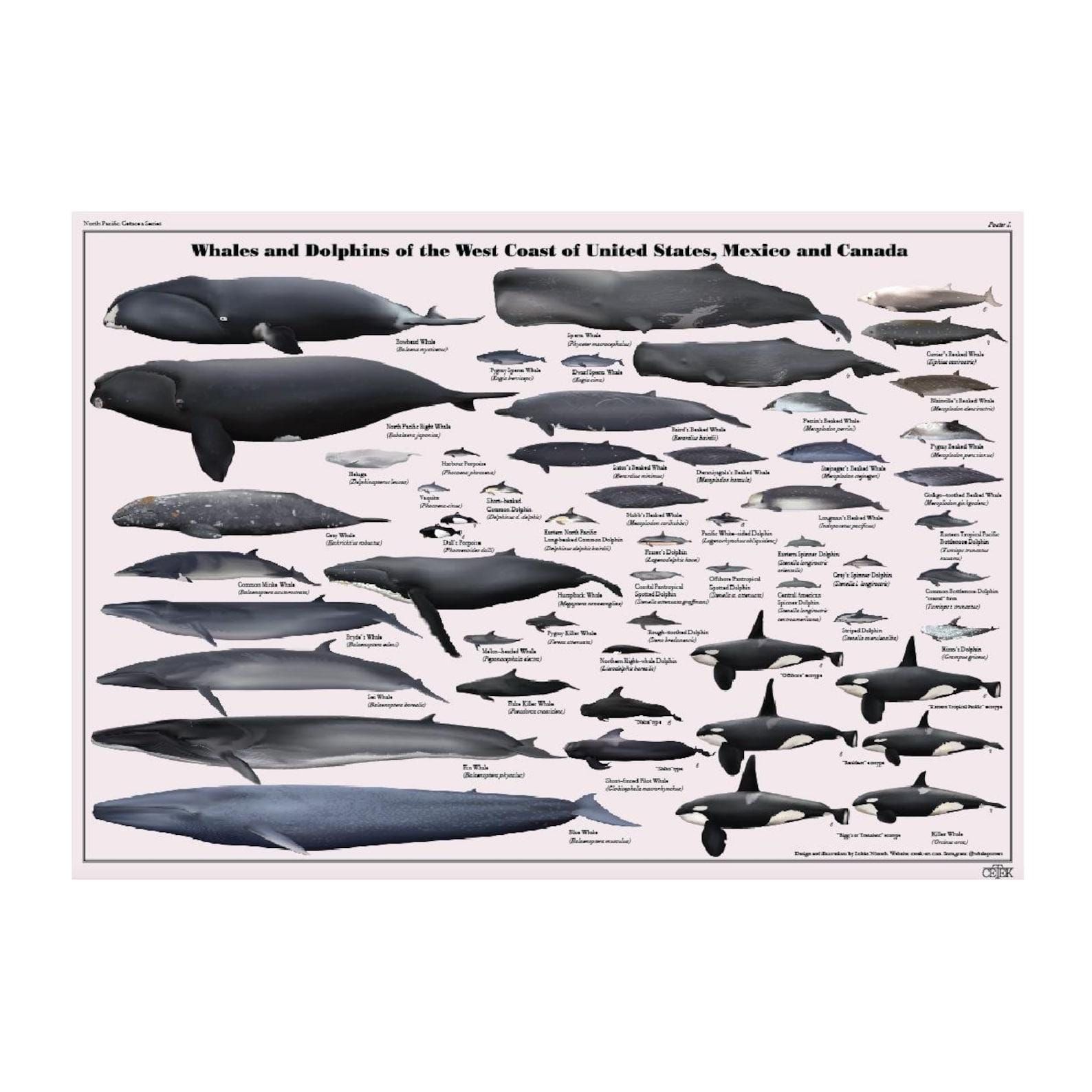
The blue whale (Balaenoptera musculus) is the largest animal that has ever existed on Earth - larger than any dinosaur, larger than any creature the planet has produced in 4.5 billion years of evolutionary experimentation. An adult female can reach 30 meters (98 feet) in length and weigh 190 tonnes. A newborn blue whale calf is already 7 meters long and weighs roughly 2,700 kilograms.
A Heart the Size of a Volkswagen Beetle
The blue whale's heart weighs approximately 180 kilograms (400 pounds) and is roughly the size of a Volkswagen Beetle. Its aorta is wide enough for a human toddler to crawl through, and each heartbeat pumps approximately 220 liters of blood. In 2019, Stanford University researchers led by Jeremy Goldbogen attached a suction-cup heart rate monitor to a diving blue whale for the first time.
They documented the heart rate dropping to as low as 2 beats per minute during deep dives - a rate of bradycardia so extreme that the researchers concluded the heart was operating at its absolute physiological limit.
The blue whale's tongue alone weighs as much as an adult elephant - approximately 2,700 kilograms. Its blood vessels are so wide that a trout could swim through them. These are not merely interesting facts; they represent the absolute boundaries of what biology can achieve. Larger animals may be physically impossible due to constraints on oxygen delivery, thermoregulation, and structural support.
The Loudest Voice on Earth
Blue whales produce low-frequency vocalizations that reach up to 190 decibels - louder than a jet engine at close range. These calls, typically in the 10-39 Hz range (often below the threshold of human hearing), can travel hundreds or even thousands of miles through the deep sound channel of the ocean, known as the SOFAR channel.
Researchers believe these calls serve for long-distance communication, mate location, and possibly navigation. Disturbingly, studies have shown that blue whale call frequencies have been steadily declining over the past several decades, a phenomenon that may be linked to increasing ocean noise pollution from shipping, or alternatively to changes in population density as stocks slowly recover from whaling.
Blue whale populations were devastated by industrial whaling in the 20th century. An estimated 360,000 were killed in the Southern Hemisphere alone between 1904 and 1967. Pre-whaling populations numbered roughly 250,000; today, between 10,000 and 25,000 remain worldwide. Recovery has been agonizingly slow - females produce only one calf every two to three years.
Sperm Whales: Leviathans of the Abyss
The sperm whale (Physeter macrocephalus) is the largest toothed predator on Earth and the deepest diving mammal ever recorded. Adult males can reach 18 meters and 57 tonnes. Their enormous, block-shaped heads - comprising up to one-third of their total body length - house the largest brain of any animal (averaging 7.8 kilograms) and the mysterious spermaceti organ, a massive chamber filled with a waxy substance that was once the primary target of the whaling industry.
Diving to Impossible Depths
Sperm whales routinely dive to depths of 1,000 to 2,000 meters, and the deepest confirmed dive reached 2,250 meters (7,382 feet) - well over a mile below the surface. At these depths, the pressure exceeds 200 atmospheres. A human diver would be crushed instantly. Sperm whales can remain submerged for up to 90 minutes, hunting in complete darkness.
Their survival at these extremes depends on a suite of remarkable adaptations. Their flexible ribcages collapse under pressure rather than shattering. They store oxygen primarily in myoglobin-rich muscles rather than in their lungs, which actually collapse during deep dives to prevent nitrogen narcosis. Blood flow is selectively restricted to essential organs - the brain and heart - while peripheral tissues tolerate temporary oxygen deprivation.
Click Communication and Clan Identity
Sperm whales communicate using a system of rhythmic clicks called codas. Each social unit - typically a group of 10-12 related females and their young - uses a distinctive repertoire of coda patterns. Research by Hal Whitehead of Dalhousie University has revealed that these codas function as cultural identity markers, analogous to human dialects.
Sperm whale clans spanning thousands of miles of ocean share the same coda repertoire, and different clans using different coda patterns will avoid one another even when their ranges overlap.
Whitehead, one of the foremost authorities on sperm whale society, has argued:
"Sperm whale societies are based on culture. The things that define them - their dialects, their movement patterns, their feeding strategies - are learned, not genetic. In this sense, they are more like human societies than like any other animal group."
Ambergris: Whale Waste Worth More Than Gold
One of the strangest chapters in the human relationship with sperm whales involves ambergris - a waxy, foul-smelling substance produced in the whale's intestines, possibly as a response to irritation from the sharp beaks of squid. Fresh ambergris is black and has an unpleasant fecal odor.
After floating in the ocean for years or decades, however, it oxidizes into a hard, grey, sweet-smelling substance prized by perfumers as a fixative that allows fragrances to last on the skin. Historically, high-quality ambergris has sold for more than its weight in gold, fetching prices exceeding $25 per gram.
Humpback Whales: Composers of the Deep
The humpback whale (Megaptera novaeangliae) is perhaps the most charismatic of all cetaceans - a 16-meter, 36-tonne acrobat known for its spectacular breaching, its haunting songs, and its remarkable annual migrations of up to 16,000 kilometers round trip between tropical breeding grounds and polar feeding areas.
Songs That Change Like Pop Music
Humpback whale songs are among the most complex vocalizations in the animal kingdom. Only males sing, producing structured sequences of moans, cries, howls, and chirps that are organized into phrases, themes, and songs lasting 10 to 20 minutes, repeated for hours on end. What makes humpback songs truly extraordinary is that they change.
Over the course of a breeding season, all males in a given population progressively modify their songs in the same way, so that by season's end, the song sounds markedly different from its beginning - yet all singers remain synchronized.
Research by Ellen Garland and colleagues, published in Current Biology in 2011, demonstrated that these song changes can spread horizontally across entire ocean basins. New song types originating in eastern Australian populations were documented spreading westward across the South Pacific, reaching populations near French Polynesia within just two to three years. This represents cultural transmission on a scale previously documented only in humans.
Roger Payne, the biologist who first recorded humpback whale songs in 1967 and whose subsequent album Songs of the Humpback Whale became one of the best-selling nature recordings in history, reflected on their significance:
"I didn't expect anything. I certainly didn't expect what I heard. It was so beautiful, so utterly unexpected, that I simply sat there with tears streaming down my face. Here were these enormous creatures, in the dark ocean, singing to each other with a complexity and beauty that rivaled anything produced by human culture."
Payne's recordings were instrumental in galvanizing the Save the Whales movement of the 1970s and directly contributed to the International Whaling Commission's moratorium on commercial whaling in 1986.
Bubble Net Feeding
Humpback whales in Alaska and Antarctica have developed one of the most sophisticated cooperative hunting strategies in the animal kingdom: bubble net feeding. A group of whales dives beneath a school of fish or krill. One whale begins swimming in an upward spiral, releasing a steady stream of bubbles from its blowhole. The rising column of bubbles forms a cylindrical "net" that concentrates and traps the prey.
At a coordinated signal - a specific vocalization - all whales in the group lunge upward simultaneously through the center of the net with mouths agape, engulfing enormous quantities of prey.
Not all humpback populations use this technique. It appears to be a culturally transmitted behavior, taught by experienced individuals and adopted within specific groups - further evidence of the cultural complexity of cetacean societies.
Orcas: Culture, Grief, and Generational Knowledge
The orca (Orcinus orca) challenges almost every assumption about what it means to be a non-human animal. These 8-meter apex predators live in matriarchal societies led by post-reproductive females, maintain culturally distinct ecotypes that do not interbreed despite sharing the same waters, and pass hunting innovations from one generation to the next.
Ecotypes: Species in All but Name
Orca populations worldwide are divided into ecotypes - groups that are genetically, behaviorally, and ecologically distinct. In the northeastern Pacific, three ecotypes coexist:
- Resident orcas live in large, stable matrilineal pods and specialize in salmon, particularly Chinook. Each pod maintains unique vocal dialects that serve as identity markers.
- Transient (Bigg's) orcas hunt marine mammals - seals, sea lions, porpoises, and even other whale species - using stealth and coordination. They travel in smaller groups and remain acoustically silent during hunts to avoid alerting prey.
- Offshore orcas range widely over deep continental shelf waters, targeting sharks and schooling fish. Their teeth are often worn flat from the abrasive denticles of shark skin.
Genetic studies suggest some of these ecotypes diverged hundreds of thousands of years ago. The cultural and ecological differences between them are so profound that many cetacean researchers advocate splitting Orcinus orca into multiple distinct species.
Matriarchal Wisdom and Hunting Innovation
Orca societies are centered on the oldest females. Post-menopausal matriarchs serve as repositories of ecological knowledge, leading their families to salmon streams during lean years and mediating social conflicts. A 2015 study published in Current Biology found that the death of a post-reproductive matriarch increased the mortality risk of her descendants by a factor of 14 in the year following her death.
Hunting strategies are culturally transmitted. In Patagonia, mothers deliberately push their calves onto beaches to teach the dangerous technique of intentional stranding for catching sea lion pups. In Norway, pods use "carousel feeding" - herding herring into tight bait balls with coordinated swimming and tail slaps. In Antarctica, orcas create synchronized waves to wash seals off ice floes, a technique taught to juveniles who practice on empty floes.
Tahlequah: A Mother's Grief
In July 2018, a Southern Resident orca known as J35, or Tahlequah, gave birth to a female calf that died within 30 minutes. What followed captivated the world: Tahlequah carried her dead calf on her rostrum for 17 days and over 1,600 kilometers, repeatedly diving to retrieve it when it slipped from her head. Scientists documented this "tour of grief" as Tahlequah traveled through the Salish Sea with her pod, her deteriorating body condition visible from research vessels.
The behavior, which marine biologists recognized as mourning, drew global attention to the plight of the Southern Resident orca population - a critically endangered community of just 74 individuals at the time, starving due to declining Chinook salmon runs, poisoned by accumulated toxins, and disturbed by vessel noise.
Tahlequah's grief became a symbol of the Southern Residents' struggle. In 2020, she gave birth to a healthy calf, J57, offering a rare moment of hope for the beleaguered population.
Bottlenose Dolphins: Naming, Tools, and Self-Knowledge
The bottlenose dolphin (Tursiops truncatus) is the most studied cetacean on Earth, and its cognitive abilities consistently astonish researchers. With an encephalization quotient second only to humans among mammals, bottlenose dolphins exhibit a suite of advanced cognitive traits once thought exclusive to great apes.
The Mirror Test and Self-Awareness
In 2001, researchers Diana Reiss and Lori Marino published a landmark paper demonstrating that bottlenose dolphins pass the mirror self-recognition test. When marked with non-toxic zinc oxide on parts of their bodies they could not see directly, dolphins repeatedly positioned themselves before mirrors to examine the marks, twisting and turning to get a better view.
This behavior - actively using a mirror to inspect oneself - is accepted as strong evidence of self-awareness and has been confirmed in only a handful of species, including humans, great apes, elephants, and magpies.
Signature Whistles: Dolphin Names
Each bottlenose dolphin develops a unique signature whistle within the first few months of life - a specific tonal pattern that functions, effectively, as a name. Dolphins use these whistles to identify themselves to others and to call specific individuals.
Research by Vincent Janik at the University of St Andrews demonstrated that dolphins respond selectively when they hear their own signature whistle played back, even from a speaker, but ignore the whistles of unfamiliar individuals. They also copy the signature whistles of close associates - essentially calling them by name.
Sponge Tool Use in Shark Bay
In Shark Bay, Western Australia, a population of bottlenose dolphins has independently developed tool use. Certain individuals - predominantly females - tear conical marine sponges from the seafloor and wear them over their rostrums like protective gloves while probing sandy bottoms for buried fish. This "sponging" behavior protects their sensitive snouts from stonefish spines and abrasive substrate.
Genetic and behavioral analysis has shown that sponging is transmitted almost exclusively from mother to daughter, representing a matrilineal cultural tradition sustained across multiple generations.
Narwhals: The Unicorns of the Arctic
The narwhal (Monodon monoceros) is one of the most enigmatic cetaceans. Males - and roughly 15% of females - possess a single spiraling tusk that can reach 3 meters in length, giving rise to centuries of unicorn mythology.
A Sensory Organ With 10 Million Nerve Endings
For decades, the narwhal tusk was assumed to be a weapon or a tool for breaking ice. In 2014, research led by Martin Nweeia of Harvard University overturned these assumptions entirely. Detailed anatomical study revealed that the tusk is in fact a sensory organ of extraordinary sensitivity.
Its surface is permeated with up to 10 million nerve endings connected to the central nervous system, capable of detecting changes in water temperature, salinity, pressure, and the presence of chemical compounds. The tusk essentially allows narwhals to "taste" the ocean through a 3-meter antenna.
Narwhals are exclusively Arctic, inhabiting the waters around Greenland, Canada, and Svalbard. They spend winter months in deep, ice-covered waters, diving to depths exceeding 1,500 meters - among the deepest dives recorded for any marine mammal. Their extreme habitat specialization makes them particularly vulnerable to climate change, as warming Arctic temperatures alter the sea ice conditions upon which they depend.
Beluga Whales: The Canaries of the Sea
The beluga whale (Delphinapterus leucas) earned the nickname "canary of the sea" from early mariners who could hear their vocalizations through the wooden hulls of their ships. Belugas produce an extraordinarily diverse repertoire of sounds - clicks, whistles, chirps, squeals, and bell-like tones - that can be heard above water without any amplification.
Unlike most cetaceans, belugas possess unfused cervical vertebrae, allowing them to turn their heads independently of their bodies - a trait shared only with river dolphins among cetaceans. Combined with a highly flexible, muscular melon (the fatty structure in their forehead used for echolocation), this mobility gives belugas an unusual capacity for facial expressions.
They can alter the shape of their lips and melon to produce what appear to be distinct facial configurations, leading researchers to investigate whether these expressions carry communicative significance.
Belugas are highly social, congregating in summer estuaries in groups of hundreds or even thousands. The St. Lawrence River beluga population in Quebec, numbering roughly 900 individuals, has become a focal point for toxicology research: these whales carry some of the highest concentrations of industrial pollutants (PCBs, heavy metals, pesticides) of any marine mammal population, and their carcasses must legally be treated as toxic waste.
Right Whales: On the Brink of Extinction
The North Atlantic right whale (Eubalaena glacialis) is among the most critically endangered large animals on Earth. As of 2024, fewer than 350 individuals remain - and the population has been declining since 2010, with deaths from human causes outpacing births.
Why "Right" Whale?
The name itself is a grim monument to exploitation. Whalers called them the "right" whale to hunt because they swam slowly, floated when killed (due to their high blubber content), and frequented coastal waters. By the early 1900s, centuries of whaling had reduced the North Atlantic population to perhaps fewer than 100 individuals.
Ship Strikes and Entanglement
Despite legal protections since 1935, North Atlantic right whales face two primary threats that continue to kill them at unsustainable rates:
- Ship strikes account for roughly 30% of documented right whale deaths. These whales feed at or near the surface in some of the busiest shipping corridors in the world, including the approaches to Boston, New York, and the Bay of Fundy. Mandatory vessel speed reductions in designated Seasonal Management Areas have helped, but compliance is inconsistent and enforcement is limited.
- Fishing gear entanglement is even deadlier. Over 85% of North Atlantic right whales bear scars from entanglement in vertical buoy lines used in the lobster and crab fishing industries. Entangled whales may drag heavy gear for months, suffering deep lacerations, infection, emaciation, and eventually death. Females are disproportionately affected, and chronic sublethal entanglement has been linked to reduced reproductive success.
Climate change compounds these threats. As ocean temperatures rise, the copepods (tiny crustaceans) that right whales depend upon have shifted northward into the Gulf of St. Lawrence - waters where there were historically no protections in place, exposing whales to new shipping routes and fishing gear.
Cetacean Comparison Table
| Species | Max Length | Max Depth | Notable Trait | Conservation Status |
|---|---|---|---|---|
| Blue whale | 30 m (98 ft) | 500 m | Largest animal ever; 190 dB calls | Endangered (~10,000-25,000) |
| Sperm whale | 18 m (59 ft) | 2,250 m | Deepest diving mammal; loudest clicks (230 dB) | Vulnerable (~300,000) |
| Humpback whale | 16 m (52 ft) | 200 m | Complex songs; bubble net feeding | Least Concern (~80,000+) |
| Orca | 9.8 m (32 ft) | 300 m | Cultural ecotypes; matriarchal societies | Data Deficient (varies by ecotype) |
| Bottlenose dolphin | 4 m (13 ft) | 300 m | Mirror self-recognition; signature whistles | Least Concern |
| Narwhal | 5.5 m (18 ft) | 1,500 m+ | Sensory tusk with 10 million nerve endings | Near Threatened (~80,000) |
| Beluga whale | 5.5 m (18 ft) | 700 m | Facial expressions; "canary of the sea" | Near Threatened (~150,000) |
| North Atlantic right whale | 17 m (56 ft) | 300 m | Critically endangered; surface feeding | Critically Endangered (~350) |
Whaling History and the Long Road to Recovery
The history of commercial whaling is a history of systematic destruction on an industrial scale. Between the 17th century and the late 20th century, humans killed an estimated 2.9 million whales across all species. The 20th century alone accounted for the majority of this slaughter, enabled by explosive harpoons, factory ships, and aircraft spotting.
The consequences were devastating. Blue whale populations in the Southern Hemisphere fell from roughly 250,000 to fewer than 400. North Atlantic right whales were reduced to double digits. Humpback whales in the North Pacific declined by over 90%.
The turning point came gradually. The International Whaling Commission (IWC), established in 1946 ostensibly to manage whale stocks, initially served the interests of whaling nations. But growing scientific evidence of population collapse, combined with the cultural shift catalyzed by Roger Payne's whale song recordings and the broader environmental movement, led to a global moratorium on commercial whaling in 1986.
Recovery has been real but uneven. Humpback whale populations have rebounded from roughly 10,000 to over 80,000 globally - one of conservation's great success stories. Gray whales in the eastern Pacific have returned to near pre-exploitation levels. But blue whales remain at a fraction of their historical numbers. North Atlantic right whales continue to decline.
And several nations - Japan, Norway, and Iceland - have continued or resumed whaling under various justifications, killing hundreds of whales annually.
The legacy of whaling extends beyond numbers. Recent research has revealed that whales play critical roles in marine ecosystems: their fecal plumes fertilize phytoplankton blooms that absorb carbon dioxide, their carcasses sustain deep-sea ecosystems for decades, and their movements redistribute nutrients across ocean basins. The removal of millions of whales may have fundamentally altered ocean productivity in ways we are only beginning to understand.
The Future of Cetaceans
The threats facing whales and dolphins today are less visible than the harpoons of the past but no less lethal. Ocean noise pollution from shipping, military sonar, and seismic surveys interferes with the acoustic world upon which cetaceans depend for communication, navigation, and foraging.
Plastic pollution pervades every ocean; necropsy studies regularly find dozens of kilograms of plastic debris in the stomachs of stranded whales. Chemical contaminants - PCBs, heavy metals, flame retardants - accumulate in cetacean blubber at concentrations that suppress immune function and impair reproduction.
Climate change is reshaping cetacean habitats at an accelerating pace. Arctic species like narwhals and belugas face a future of diminishing sea ice. Temperate species must track shifting prey distributions. And the ocean acidification driven by rising CO2 levels threatens the very base of the marine food web - the tiny crustaceans and fish upon which the largest animals on Earth ultimately depend.
Yet there are reasons for guarded optimism. Whale-watching has grown into a $2.1 billion global industry, creating powerful economic incentives for conservation. Acoustic monitoring networks now track whale movements in real time, enabling dynamic management of shipping lanes. Ropeless fishing gear technologies are being developed to eliminate the entanglement threat to right whales.
And the growing recognition of cetacean intelligence and culture has begun to shift the ethical framework through which humans view these animals - from resources to be exploited toward fellow minds deserving of protection.
Hal Whitehead, reflecting on decades of studying sperm whale societies, has written:
"The more we learn about whales and dolphins, the harder it becomes to draw a bright line between their minds and ours. They have culture, they have language, they grieve, they play, they innovate. The question is no longer whether they deserve our respect, but whether we are wise enough to give it."
The singing giants of the deep have survived asteroid impacts, ice ages, and the worst predator they have ever encountered - us. Whether they survive the 21st century depends on choices being made right now.
References
Goldbogen, J. A., et al. (2019). "Extreme bradycardia and tachycardia in the world's largest animal." Proceedings of the National Academy of Sciences, 116(50), 25329-25332.
Nweeia, M. T., et al. (2014). "Sensory ability in the narwhal tooth organ system." The Anatomical Record, 297(4), 599-617.
Garland, E. C., et al. (2011). "Dynamic horizontal cultural transmission of humpback whale song at the ocean basin scale." Current Biology, 21(8), 687-691.
Reiss, D., & Marino, L. (2001). "Mirror self-recognition in the bottlenose dolphin: A case of cognitive convergence." Proceedings of the National Academy of Sciences, 98(10), 5937-5942.
Whitehead, H. (2015). The Cultural Lives of Whales and Dolphins. University of Chicago Press.
Payne, R., & McVay, S. (1971). "Songs of humpback whales." Science, 173(3997), 585-597.
Thewissen, J. G. M., et al. (2007). "Whales originated from aquatic artiodactyls in the Eocene epoch of India." Nature, 450(7173), 1190-1194.
Brent, L. J. N., et al. (2015). "Ecological knowledge, leadership, and the evolution of menopause in killer whales." Current Biology, 25(6), 746-750.
Frequently Asked Questions
Why do whales sing, and what is the purpose of whale songs?
Whale songs serve multiple purposes depending on the species. Humpback whale songs, which can last up to 20 minutes and be repeated for hours, are performed exclusively by males and are believed to function primarily in mating - either to attract females or to establish dominance among competing males. These songs change progressively each year, with all males in a population adopting the same modifications, demonstrating cultural transmission.
Blue whale vocalizations at up to 190 decibels serve long-range communication across hundreds of miles of ocean. Sperm whales use rhythmic click patterns called codas as identity markers for their social groups. Research by Roger Payne, who first recorded humpback songs in 1967, revealed their extraordinary complexity and helped galvanize the global movement to end commercial whaling.
Can dolphins recognize themselves, and what evidence exists for dolphin self-awareness?
Yes, bottlenose dolphins have conclusively demonstrated self-awareness through the mirror self-recognition test. In a landmark 2001 study by Diana Reiss and Lori Marino published in the Proceedings of the National Academy of Sciences, dolphins marked with non-toxic ink actively used mirrors to inspect the marks on their bodies - behavior that indicates they understand the reflection is themselves rather than another animal.
Beyond mirror recognition, dolphins exhibit additional markers of advanced cognition: they use individualized signature whistles that function as names, employ tools such as marine sponges for foraging protection in Shark Bay, Australia, and can comprehend artificial grammar systems demonstrating syntactic understanding. These capabilities place dolphins among an elite group of self-aware animals alongside great apes, elephants, and magpies.
How deep can sperm whales dive, and how do they survive at extreme depths?
Sperm whales are the deepest diving mammals on Earth, regularly reaching depths of 1,000-2,000 meters and with confirmed dives to 2,250 meters (7,382 feet). They can hold their breath for up to 90 minutes during these extreme dives.
Survival at these crushing depths is enabled by remarkable physiological adaptations: their flexible ribcages collapse under pressure rather than fracturing, they store large quantities of oxygen in myoglobin-rich muscles rather than in their lungs, their heart rate slows dramatically through bradycardia to conserve oxygen, and they can selectively restrict blood flow to essential organs.
Their enormous heads house the spermaceti organ - a waxy substance once prized by whalers - which may help regulate buoyancy during deep dives. At depth, they hunt giant squid using powerful biosonar clicks that can exceed 230 decibels, making them the loudest animals on the planet.