
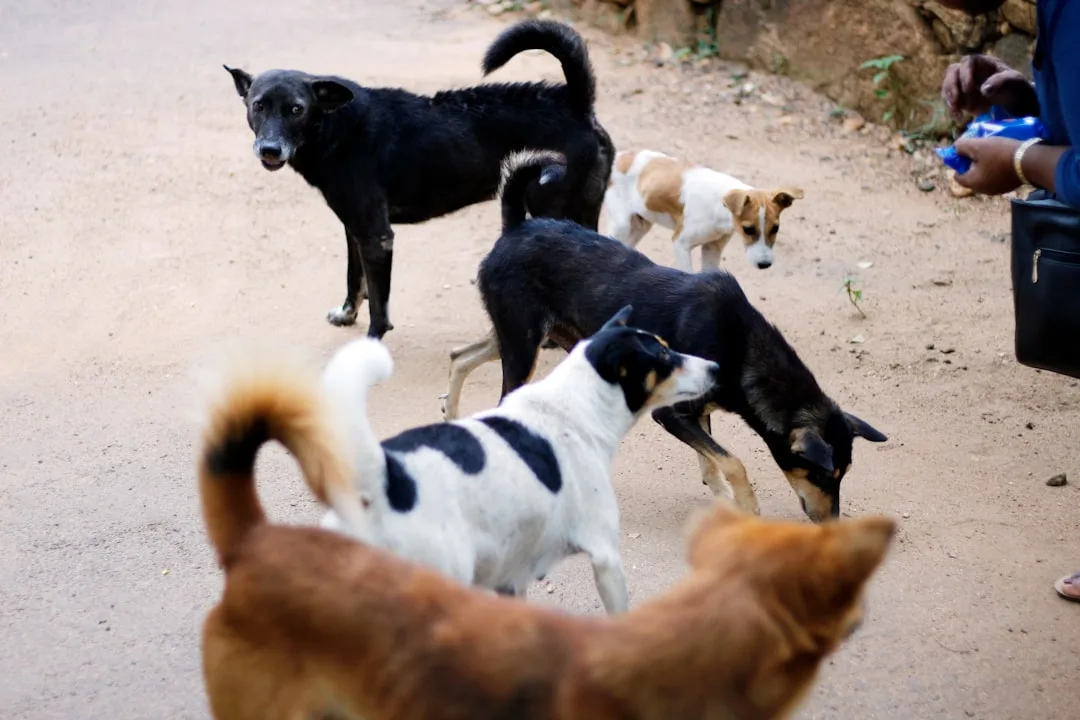
Dogs bury bones and other valued items as a food-caching behavior inherited from wild ancestors. In wolves and other wild canids, burying surplus food prevents competitors from stealing it and preserves the food's freshness in cooler soil. Modern domestic dogs retain this hardwired impulse even when they have no food insecurity, making bone-burying one of the clearest examples of ancestral behavior surviving into domesticated life.
The Evolutionary Origin of Caching Behavior
Food caching is widespread across the animal kingdom, foxes, corvids, squirrels, and many other species store food for later consumption. In wild canids, caching serves a critical survival function: large kills provide far more food than a single animal can consume immediately, and burying the surplus protects it from scavengers, slows bacterial decay through cooler soil temperatures, and creates a reserve for lean periods.
Wolves have been documented burying and returning to caches days or weeks later. The behavior requires spatial memory capable of encoding cache location accurately, wolves relocate caches with high precision. Domestic dogs retain this spatial memory capacity, though they are far less reliable about returning to recover what they buried, which is a direct consequence of food security eliminating the selective pressure to retrieve.
The somatic experience of digging and burying is itself rewarding for dogs. Neurologically, the behavior likely activates the same dopaminergic reward pathways associated with hunting and other predatory motor sequences. This explains why dogs bury items even in inappropriate environments, on carpet, under couch cushions, behind furniture, where no functional caching is occurring.
"Caching behavior in domestic dogs is a vestigial survival strategy. The dog's environment has changed completely, but the neural programs driving the behavior remain fully intact. The impulse to cache does not require a threat to trigger it, the presence of a surplus resource is sufficient." Dr. Alexandra Horowitz, Horowitz Dog Cognition Lab, Barnard College
What Dogs Actually Bury
Bones are the canonical example, but dogs bury a wide variety of items. The common thread is perceived high value. Items most frequently cached include:
- Bones (cooked or raw), rawhides, and other chews
- Toys, particularly those that have received significant owner attention
- Food items including kibble, treats, and human food scraps
- Personal belongings including socks, shoes, and clothing that carry owner scent
- Novel items with intense or interesting odors
The burial of owner-scented personal items has a dual explanation: these items may be cached as valued resources, or the behavior may have a comfort function, similar to nesting behavior. Dogs that bury their owner's socks typically belong to more anxious dogs with strong owner-attachment. In contrast, dogs caching toys and food items are engaging in the straightforward food-caching behavioral sequence.
The Role of Surplus Resources
The probability that a dog will bury an item increases significantly when the dog perceives it as a surplus. If a dog receives a single bone, it typically chews it immediately. If a dog receives two or three bones simultaneously, it is far more likely to chew one and bury the others. This mirrors the wild caching context precisely: surplus triggers preservation behavior.
This is important information for dog owners. Dogs that receive very large meals may attempt to cache food. Dogs with access to multiple high-value chews at once frequently bury some. Managing resource presentation, offering one high-value item at a time rather than several, reduces burial behavior in dogs for whom it has become problematic.
| Item Type | Burial Frequency | Notes |
|---|---|---|
| Bones and rawhide | Very high | Classic cache item; high perceived value |
| Valued toys | High | Especially after intensive owner-play sessions |
| Treats and food scraps | High | Surplus treats particularly common |
| Owner-scented clothing | Moderate | Comfort function possible in anxious dogs |
| Kibble | Moderate | More common in food-insecure or anxious dogs |
| Neutral toys | Low | Low perceived value reduces caching drive |
| Non-food household items | Low | Occasionally cached if novel scent present |
Why Dogs Bury Items Indoors
Indoor burying attempts are universal among dogs with caching instincts. Unable to dig actual soil, dogs use available alternatives: couch cushions, blankets, laundry piles, under pillows, and behind furniture. The dog typically goes through the full behavioral sequence, sniffing out a location, placing the item, making pawing or pushing motions to simulate covering, even when no actual burial occurs.
This behavioral displacement can look comical to owners, but it is a serious motor sequence from the dog's neurological perspective. The dog is executing an inherited program with complete internal commitment. The fact that the program does not achieve its functional outcome (underground food preservation) is irrelevant to the dog's experience.
Dogs that persistently attempt indoor burial of items can be redirected by providing access to a dedicated digging area outside, a sandbox or a designated garden section where digging is permitted.
Breed Differences in Caching Behavior
Caching tendency varies significantly between breeds. Breeds with strong prey drive and working heritage show the highest rates of caching behavior, while breeds with lower prey drive or those selected for less independent work show lower rates.
| Breed | Caching Tendency | Notes |
|---|---|---|
| Basset Hound | Very high | Scent-driven; strong foraging instinct |
| Dachshund | Very high | Originally bred to follow quarry underground |
| Terrier breeds | High | Earthwork heritage; strong digging drive |
| Beagle | High | Pack hunter with strong foraging instinct |
| Labrador Retriever | High | Retrieves and hoards objects readily |
| Miniature Schnauzer | High | Ratting heritage; strong resource guarding instinct |
| Poodle | Moderate | Waterfowl retriever; variable caching |
| German Shepherd | Moderate | Variable; often related to anxiety in this breed |
| Greyhound | Low | Sight hunter; less object-fixation |
| Bulldog | Low | Low prey drive; low interest in caching |
Resource Guarding and Caching: The Connection
Caching behavior exists on a continuum with resource guarding, the defensive protection of valued items from competitors. Dogs that cache heavily are often also dogs that resource-guard, because both behaviors reflect high perceived value of resources. A dog that growls when another dog approaches its bone may be the same dog that buries bones when it cannot guard them actively.
"Resource guarding and caching are both expressions of the same underlying motivational system: the dog places high value on certain resources and employs different strategies to protect them depending on context. Caching is a passive protection strategy; guarding is an active one." Patricia McConnell, Ph.D., certified applied animal behaviorist
Resource guarding and its associated caching behavior can become problematic in multi-dog households, particularly when one dog consistently monopolizes high-value items. Management strategies include feeding dogs in separate spaces, removing high-value items after fixed sessions, and ensuring all dogs in a household have equal access to resources.
When Bone Burial Becomes Excessive
For most dogs, occasional caching is normal and harmless. It becomes a behavioral concern in specific circumstances:
Obsessive caching, where a dog spends large amounts of time attempting to cache, repeatedly retrieving and re-hiding the same item, or becoming highly agitated when unable to cache, can indicate anxiety. This is particularly common in rescue dogs with histories of food insecurity, where the caching impulse is reinforced by a genuine past need to protect food.
Dogs that cache food and return to eat it later can sometimes be consuming spoiled food (particularly in warm climates or outdoor environments). Monitoring what is being buried and retrieved is important for these dogs.
Dogs that bury items in the garden can cause significant damage to plantings. Management through providing a designated dig zone and removing high-value items after sessions is the most practical solution.
Is It Safe for Dogs to Bury and Chew Bones?
The safety of the underlying item, typically a bone, is the more significant concern for most owners. Cooked bones, particularly poultry bones, can splinter and cause serious internal injuries. The ASPCA and most veterinary authorities advise against cooked bones of any type for dogs. Raw bones present lower but non-zero risk of bacterial contamination and tooth fracture.
If a dog buries and later retrieves a cooked bone, it may chew it in a more degraded state, increasing splintering risk. Owners who give bones should supervise all chewing sessions and remove bones after each session to prevent unmonitored caching and retrieval.
For more on related topics, see Why Do Dogs Eat Grass?, Why Do Dogs Lick People?, How Smart Are Dogs?, How to Train a Puppy, and Signs of a Healthy Dog.
References
Horowitz, A. (2009). Inside of a Dog: What Dogs See, Smell, and Know. Scribner.
Macdonald, D. W., & Carr, G. M. (1995). Variation in dog society: Between resource dispersion and social flux. In J. Serpell (Ed.), The Domestic Dog: Its Evolution, Behaviour and Interactions with People. Cambridge University Press.
McConnell, P. B. (2002). The Other End of the Leash: Why We Do What We Do Around Dogs. Ballantine Books.
Bradshaw, J. W. S., Blackwell, E. J., & Casey, R. A. (2009). Dominance in domestic dogs, useful construct or bad habit? Journal of Veterinary Behavior, 4(3), 135-144. https://doi.org/10.1016/j.jveb.2008.08.004
American Society for the Prevention of Cruelty to Animals (ASPCA). (2024). People Foods to Avoid Feeding Your Pets. Retrieved from https://www.aspca.org/pet-care/animal-poison-control/people-foods-avoid-feeding-your-pets
Coppinger, R., & Coppinger, L. (2001). Dogs: A New Understanding of Canine Origin, Behavior and Evolution. University of Chicago Press.
Frequently Asked Questions
Why do dogs bury bones?
Dogs bury bones as an ancestral food-caching behavior inherited from wolves. Wild canids bury surplus food to protect it from competitors and preserve it in cooler soil. Domestic dogs retain this instinct even with no food insecurity.
Why does my dog bury things in the couch or under blankets?
Dogs without access to soil execute the same caching behavioral sequence using available substitutes. They go through the full motor program of selecting a location, placing the item, and making covering motions even when no actual burial occurs.
Which dog breeds bury bones the most?
Breeds with strong foraging and prey drive instincts cache most frequently. Top caching breeds include Basset Hounds, Dachshunds, terrier breeds, Beagles, and Labrador Retrievers.
Is it safe for dogs to bury and dig up bones?
The safety depends on the bone type. Cooked bones become brittle and can splinter. Raw bones carry lower but non-zero risk. Bones retrieved from burial may be more degraded. Supervise all chewing and remove bones between sessions.
How do I stop my dog from burying things?
Reduce caching by offering one high-value item at a time rather than multiples. Provide a designated digging area outdoors. Remove items after supervised sessions to prevent unsupervised caching.
Is excessive bone burying a sign of anxiety?
Occasional caching is normal. Obsessive or compulsive caching, repeated retrieving and re-hiding, extreme agitation when unable to cache, can indicate anxiety, particularly in rescue dogs with food-insecurity histories.