
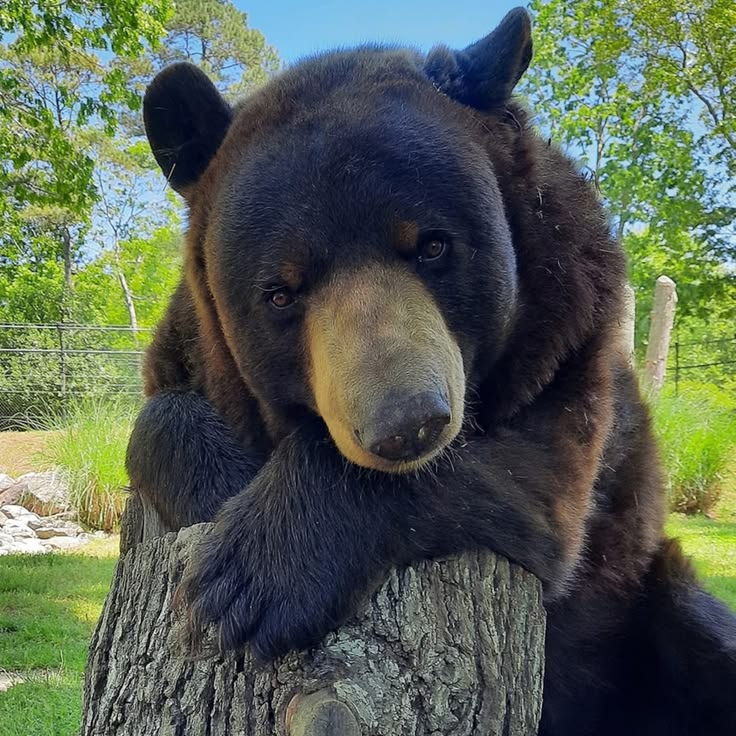
The American black bear is the most numerous and most widely distributed bear in the Western Hemisphere. Roughly 600,000 to 800,000 of them roam across 41 US states, 11 Canadian provinces and territories, and mountainous Mexico, a population larger than every other bear species on Earth combined.
Despite the plain English name, Ursus americanus is also one of the strangest bears alive: a single litter can produce a black cub, a cinnamon cub, a chocolate cub, and a creamy white spirit bear, all from one mother. The species defies the visual stereotype it gave its name to.
This guide covers the full biology and ecology of the American black bear: classification, the 16 recognised subspecies, size and physical anatomy, the famous colour phases, range and habitat, diet and foraging, hibernation, reproduction, conservation status, and the long human history of conflict and coexistence. Expect specifics: kilograms, kilometres, percentages, and citations rather than generalities.
Etymology and Classification
The scientific name Ursus americanus was assigned by Pieter Boddaert in 1785, three decades after Linnaeus formalised the genus Ursus for the Old World brown bear. The species epithet simply means 'American'. The English common name 'black bear' reflects the dominant coat colour east of the Mississippi but is misleading across much of the western range, where cinnamon, blond, and chocolate phases dominate.
American black bears belong to the family Ursidae, which contains eight living bear species. Within Ursidae they sit in the genus Ursus alongside the brown bear (U. arctos), the polar bear (U. maritimus), and the Asiatic black bear (U. thibetanus). Despite the shared common name, U. americanus and U. thibetanus are separate species that diverged several million years ago and do not interbreed.
Genetic evidence places the split between American black bears and the arctos-maritimus lineage at roughly 5-6 million years ago. American black bears are therefore not a regional variant of the brown bear; they are an evolutionarily distinct lineage that colonised North America and radiated across nearly every wooded habitat the continent offers.
Full taxonomy:
- Kingdom: Animalia
- Phylum: Chordata
- Class: Mammalia
- Order: Carnivora
- Family: Ursidae
- Genus: Ursus
- Species: U. americanus
Subspecies and Regional Variation
Sixteen subspecies of Ursus americanus are formally recognised. Modern molecular work has questioned the validity of several, but the taxonomy remains widely used in regional management and field guides.
| Subspecies | Common name | Range | Notable features |
|---|---|---|---|
| U. a. americanus | Eastern black bear | Eastern North America, central Canada | The nominate form, almost always jet black |
| U. a. floridanus | Florida black bear | Florida, southern Georgia | Long muzzle, mild-climate population, often skips hibernation |
| U. a. luteolus | Louisiana black bear | Louisiana, eastern Texas, Mississippi | Recovered from federal Threatened status in 2016 |
| U. a. emmonsii | Glacier bear | Yakutat region, southeast Alaska | Slate-blue to silver-grey coat unique to a tiny gene pool |
| U. a. kermodei | Kermode or spirit bear | Central coast of British Columbia | About one in ten on Princess Royal Island is creamy white |
| U. a. cinnamomum | Cinnamon bear | Rocky Mountain interior, US Southwest | Reddish-brown to blond coat dominant in many western valleys |
| U. a. carlottae | Haida Gwaii black bear | Haida Gwaii archipelago, BC | Largest skull of any black bear subspecies |
| U. a. machetes | Mexican black bear | Sierras of northern Mexico | Small, isolated, threatened by habitat loss |
| U. a. altifrontalis | Olympic black bear | Pacific Northwest coast | Dark coat, dense rainforest specialist |
| U. a. amblyceps | New Mexico black bear | Southwest US, northern Mexico | Wide colour-phase variation |
| U. a. californiensis | California black bear | California, western Nevada | Common across Sierra Nevada and coastal ranges |
| U. a. eremicus | East Mexican black bear | Northeast Mexico, far south Texas | Critically reduced |
| U. a. hamiltoni | Newfoundland black bear | Island of Newfoundland | Long claws, large size, isolated by sea |
| U. a. perniger | Kenai black bear | Kenai Peninsula, Alaska | Large coastal population |
| U. a. pugnax | Dall black bear | Alexander Archipelago, Alaska | Often sympatric with brown bears |
| U. a. vancouveri | Vancouver Island black bear | Vancouver Island, BC | Large, dense forest specialist |
The subspecies divisions are driven mostly by geographic isolation, climate, and food regime rather than by deep genetic separation. Mainland populations show modest mitochondrial structure but still exchange genes along contact zones. Island and peninsula populations like Kermode, glacier, Newfoundland, Haida Gwaii, and Vancouver Island show the cleanest separation, which is also where the most distinctive coat colours and skull shapes appear.
Size and Physical Description
American black bears are mid-sized in the bear family. They are clearly smaller than brown bears or polar bears of the same continent but considerably larger than the tropical bears (sun, sloth, spectacled). Size scales strongly with food supply.
Typical males:
- Length: 1.4-2.0 m from nose to tail
- Shoulder height: 0.7-1.0 m on all fours
- Standing height: 1.7-2.1 m on hind legs
- Weight: 60-300 kg, with verified individuals over 400 kg in the North Carolina coastal population
Typical females:
- Length: 1.2-1.7 m
- Weight: 40-180 kg
- Roughly 30-40% lighter than males of the same population
Cubs at birth:
- Length: 18-25 cm
- Weight: 200-450 g, smaller than a softball despite a 90 kg mother
The North Carolina coastal population is the heaviest known anywhere, fed by abundant oak mast, farm corn, and unsecured residential food. The North American Bear Center documents wild males there exceeding 350 kg routinely, and the all-time record black bear, shot in New Brunswick in 1972, weighed 902 lb (409 kg). Interior bears in arid mountain ranges may top out at 90-130 kg.
The black bear silhouette is distinct from the brown bear. Black bears have a flat or 'Roman' facial profile, short curved claws, and no shoulder hump; their highest point is the rump rather than the shoulder. Grizzlies show the opposite pattern - dished face, long straight claws, prominent hump - and the contrast is reliable enough to identify a bear at distance from a single side-on photograph.
"If you can see a clear shoulder hump and the highest point of the back is the shoulder rather than the rump, it is a grizzly. If the line of the back rises smoothly from neck to rump and the face is flat in profile, it is a black bear. The colour of the coat tells you nothing." - Stephen Herrero, Bear Attacks: Their Causes and Avoidance
The coat is short and glossy in summer, dense and double-layered in winter. The chest often carries a white V or crescent blaze, especially in eastern bears. Eyes are small and dark, ears short and rounded, the muzzle pale tan in most colour phases.
The Colour Phases
The most photographed feature of Ursus americanus is something the species is poorly named for: it is rarely uniformly black across its full range. Coat colour is controlled primarily by the MC1R gene, with at least one well-characterised loss-of-function variant producing the lighter phases. East of the Great Plains nearly all bears are jet black with a brown muzzle. West of the plains the colour phases proliferate.
| Phase | Range | Description |
|---|---|---|
| Black | Continent-wide, dominant in east | Standard glossy black coat |
| Cinnamon | Rocky Mountains, Southwest, BC interior | Red-brown to bright cinnamon coat |
| Chocolate | Western interior | Dark chocolate brown |
| Blond | Arizona, New Mexico, southern Rockies | Pale sandy or buff coat |
| Kermode (white) | Central coast of British Columbia | Creamy white from MC1R recessive |
| Glacier (blue) | Yakutat Bay region, southeast Alaska | Slate-blue to silver-grey coat |
The Kermode bear, sacred to the Kitasoo and Heiltsuk First Nations as the moksgm'ol or 'spirit bear', is the best known of the rare phases. It is not albino. Both parents carry a recessive MC1R variant; on Princess Royal and Gribbell Islands roughly 10-20% of bears are homozygous and therefore white.
The trait persists because pale bears appear to be more successful salmon hunters in daylight: experimental and field data suggest fish are less likely to spot a white silhouette against the bright sky overhead. The glacier bear of Yakutat shows a slate-blue coat from a different mutation; the population is small, isolated, and apparently in decline.
"The white coat of the Kermode bear is not a mistake or a curiosity. It is a 10,000-year-old adaptation that helps these bears catch more salmon than their darker siblings, in a place where salmon runs are the difference between cubs surviving and not." - Tom Reimchen, University of Victoria, on Kermode bear ecology
Range and Habitat
American black bears occupy more land than any other bear in the Western Hemisphere. Their range stretches from the Atlantic coast of Newfoundland to the Pacific coast of Alaska and British Columbia, and from the boreal tree line in northern Quebec south through the Rocky Mountains into Sierra Madre Oriental in northern Mexico. They are present in 41 of the 50 US states and 11 Canadian provinces and territories, with significant populations in every Canadian province except Prince Edward Island.
Habitat use is extraordinarily flexible. Black bears thrive in:
- Boreal and mixed-coniferous forest across Canada and the northern Rockies
- Eastern deciduous hardwood forest from Maine to Georgia
- Cypress and hardwood swamps along the Gulf Coast and into Florida
- Pocosin and bottomland forests of the North Carolina coast
- Chaparral and oak woodland in California
- Subalpine spruce-fir forests of the Sierra Nevada and Cascades
- Cloud forest and pine-oak woodland in mountainous northern Mexico
Common requirements across all of these habitats are tree cover for escape and dens, a mosaic of food types, and seasonal water. Black bears avoid open grassland and intensive agriculture but will use farmland edges adjacent to forest. Range has expanded notably over the past 50 years across the Eastern United States as second-growth forest has matured, and bears now live in suburbs of New Jersey, Connecticut, and Pennsylvania that had no resident bears for a century.
Diet and Foraging
Black bears are opportunistic omnivores. Across the species' range roughly 85% of food by weight is plant material, even higher in some interior populations and lower along salmon-rich coastlines. Detailed scat analysis from across North America consistently shows the same broad pattern of seasonal plant dominance with seasonal pulses of insect and animal protein.
Seasonal food categories:
- Spring: emerging grasses, sedges, forbs, skunk cabbage, fresh buds, spawned-out fish carcasses, ungulate calves and fawns
- Early summer: ants, bee and wasp larvae, early berries, soft mast
- Late summer: huckleberry, blueberry, serviceberry, manzanita, blackberry, elderberry
- Autumn: acorns, beechnuts, hazelnuts, hickory, whitebark pine seeds, hyperphagia
- Winter: hibernation in most populations; year-round foraging in mild southern ranges
Animal protein is opportunistic. Spring is the only season when adult black bears regularly hunt large prey, and the targets are almost always neonate ungulates. A black bear in northern New Mexico, Idaho, or Pennsylvania may take 15-50% of locally produced elk or deer fawns over a roughly six-week window in May and June. Outside that window adult ungulates are eaten almost entirely as scavenged carrion.
Salmon-feeding black bears in coastal British Columbia and southeast Alaska behave like miniature brown bears, fishing along streams and selectively eating the fattiest parts of each kill. The Kermode coat may be a salmon-fishing adaptation. Inland populations rely heavily on hard mast in autumn; in years of acorn or beechnut failure cubs and yearlings starve in larger numbers and some bears descend on human food sources instead.
"It is a striking finding that a bear can convert the leaves and berries of a temperate forest into 200 kg of body mass and survive seven winter months without eating. The American black bear is, gram for gram, one of the most efficient herbivorous predators on Earth." - Lynn Rogers, North American Bear Center
Climbing, Movement, and Senses
The American black bear is the best tree-climber in the bear family. Its claws are short, sharply curved, and very strong, ideal for hooking into bark and ascending fast. Cubs flee from predators including adult male black bears and grizzlies straight up the nearest large tree, where they can sit out a threat for hours.
Adult black bears climb almost as readily, despite their bulk, and routinely use trees as feeding platforms for fruit and beech mast. Grizzly claws are the wrong shape for serious climbing and grizzlies cannot follow a black bear up a mature spruce or oak.
On the ground a sprinting black bear can reach roughly 56 km/h, comparable to a brown bear and substantially faster than any human. Endurance is moderate; most chases are over within a few hundred metres. Black bears swim well and routinely cross lakes and wide rivers; they are not marine specialists like polar bears but are entirely capable in water.
Their senses are tuned for finding scattered seasonal food.
- Vision is roughly comparable to humans, with good colour sensitivity used in selecting ripe berries against green foliage
- Hearing is sharp and covers a wider frequency range than humans, useful for detecting predators and other bears
- Smell is the dominant sense. The olfactory surface area in a black bear's nose is roughly 100 times that of a human. Bears in tracking studies have followed straight-line scent trails to hidden food sources several kilometres upwind
The shoulder hump that defines the brown bear is absent in black bears, which lack the deep digging-muscle architecture of U. arctos. Instead the black bear's strength is concentrated in the climbing forelimbs and the bite. Bite force is estimated at 600-800 psi - enough to crack a deer skull - though black bears use it more often on logs full of insects than on prey.
Hibernation
Black bears hibernate where winters demand it and skip hibernation where they do not. Northern populations in Alaska, the Yukon, and Quebec den six to seven months from October through April or May. Mid-latitude bears typically den late November to early April. Florida bears, coastal North Carolina bears, and bears in the Mexican borderlands may den only briefly or not at all, particularly older males with reliable food.
Hibernation physiology:
- Body temperature drops only 5-7 degrees Celsius, far less than the 30+ degree drop in small mammal hibernators
- Heart rate falls from 40-50 bpm to 8-19 bpm
- Breathing slows to one breath every 45 seconds in deep torpor
- No food, water, urine, or faeces for the entire denning period
- Urea is recycled into amino acids, preserving lean muscle
- Bone density is maintained despite months of zero load-bearing activity
The kidney biology of hibernating black bears - studied intensively at sites in northern Minnesota and Alaska - is of significant interest to medical researchers. A human kept in bed for several months loses muscle, bone density, and renal function; a black bear in the same posture loses none of these. Identifying the molecular pathways involved is an active research area for both kidney medicine and long-duration spaceflight.
Pregnant females give birth in the den in January or February, while still hibernating and fasting. Cubs nurse on milk produced from stored fat. The mother emerges in spring slimmer but ambulatory and ready to lead cubs to forage immediately.
Reproduction and Cubs
Black bears mate in early summer, typically May through July. Males roam widely searching for receptive females and combat between males is frequent and sometimes injurious. Mating is promiscuous on both sides; a single litter can carry cubs sired by multiple fathers.
After mating, black bears use delayed implantation. The fertilised egg pauses development at the blastocyst stage and floats free in the uterus for up to five months. Implantation only proceeds in late autumn if the female has accumulated enough fat during hyperphagia to support gestation and lactation. If she has not, the embryos are reabsorbed, conserving her energy for survival.
Reproductive timeline:
- October to November: female enters the den
- Late November to December: implantation, if fat reserves allow
- January to February: cubs born during hibernation
- April to May: family emerges from the den
- Through summer: cubs follow mother, learn foraging
- Second winter: cubs den with mother as yearlings
- Following spring: family typically separates as the female re-enters oestrus
Litters average two cubs but range from one to six, with three relatively common in productive habitats. Newborn cubs weigh 200-450 g, are blind, toothless, and almost hairless, and are nursed by a mother who is fasting and hibernating. The metabolic feat of producing several kilograms of milk fat per month while drinking nothing and eating nothing remains poorly understood.
"A black bear mother in a Minnesota den fasts for seven months, gives birth to two or three cubs each weighing less than a soda can, nurses them on rich milk, and walks out in April with healthy yearling-bound youngsters at her side. We do not have human medicine that can replicate any single piece of that performance." - Tabitha Graves, USGS, on bear hibernation physiology
Cubs typically separate from their mother during her next breeding season at 16-18 months, slightly earlier than brown bear cubs. Sexual maturity is reached at 3-5 years for both sexes. Wild bears live 15-20 years on average if they avoid hunters, vehicles, and other bears; captive black bears with veterinary care have lived past 35.
Conservation Status
The IUCN Red List classifies Ursus americanus as Least Concern. Population estimates run from 600,000 to 800,000 across North America, larger than any other bear species worldwide. Trends are stable or increasing across most of the range, particularly in the eastern and central United States where second-growth forest has matured into bear habitat over the past century.
Two subspecies were federally protected at one point and have since recovered. The Louisiana black bear (U. a. luteolus) was listed as Threatened under the US Endangered Species Act from 1992 to 2016 and is now delisted. The Florida black bear (U. a. floridanus) has rebounded from a low of fewer than 500 individuals in the 1970s to over 4,000 today.
Conservation success here is largely the result of habitat protection in major federal lands, hunting closures during recovery, and active corridor work between fragmented populations.
Concerns remain at finer scales. Glacier bears (U. a. emmonsii) appear to be in decline as their tiny gene pool around Yakutat shrinks. Mexican black bear populations are reduced and fragmented. Kermode bears face habitat pressure from logging and pipeline development on the central BC coast despite the cultural and tourism value of the spirit bear.
Across the eastern United States vehicle strikes on highways crossing bear habitat are a leading cause of mortality, and lethal control of bears habituated to garbage and bird feeders kills hundreds annually.
Black Bears and Humans
Black bears overlap with more humans than any other bear species, and the encounter rate is high, but the lethality per encounter is dramatically lower than for grizzly or polar bears. The North American Bear Center, drawing on Stephen Herrero's foundational analysis, documents an average of one to two human fatalities from black bear attacks per year across the continent, despite an estimated tens of millions of bear-human encounters in the same period.
Herrero's classic finding, since reinforced by Tom Smith of USGS and other researchers, is that the rare fatal black bear attacks differ in pattern from grizzly attacks. Most fatal black bear attacks are predatory rather than defensive: the bear approaches a human deliberately and attempts to consume them. Most predatory attackers are lone, healthy adult males in areas of low bear-human contact.
Mother black bears with cubs almost never make serious physical attacks on humans; they typically send their cubs up trees and bluff-charge or retreat.
Standard guidance reflects this contrast.
- For grizzlies: avoid surprise encounters, carry bear spray, play dead in defensive contact, fight back only against predatory attack
- For black bears: stand your ground, look large, make noise, and fight back hard if the bear actually makes contact - because contact suggests predatory intent
"The black bear that follows you, that approaches without breaking off, that tests you with a paw rather than a bluff charge, is the one to fight. The mother who roars and slaps the ground and false-charges and then leaves with her cubs is, in the data, almost never the one who hurts you." - Tom Smith, USGS, on black bear attack patterns
Most modern conflict between black bears and humans involves food: garbage, bird feeders, bee hives, fruit trees, livestock feed, and unsecured campsites. Bears that learn to associate humans with calories become bolder, harder to deter, and more likely to be killed under defence-of-property laws. The single most effective conservation tool is bear-resistant garbage infrastructure.
Communities in Aspen, Colorado, Whistler, BC, and Hemlock Farms, Pennsylvania have measurably reduced bear conflict by enforcing bear-proof bins and electric fencing for chicken coops and apiaries.
Tourism built around black bear viewing - the Kermode Spirit Bear Lodge in BC, Smoky Mountain wildlife tours, Florida bear watch programmes - generates significant revenue and creates economic incentives for habitat protection. Done with set distances, professional guides, and clean camps, this tourism is broadly compatible with bear welfare. Done badly, it produces habituated bears that end up shot.
Notable Populations
- Great Smoky Mountains National Park holds the densest black bear population in the eastern United States, with roughly two bears per square mile across 522,000 acres, monitored continuously since the 1960s
- North Carolina coastal plain produces the heaviest black bears anywhere on Earth, with verified males over 400 kg fed by oak mast, farm corn, and pocosin habitat
- Florida supports a recovered population of over 4,000 bears across mostly federal land, with notable density in Ocala and Big Cypress
- British Columbia central coast is the global stronghold of the Kermode spirit bear, with the highest known frequency on Princess Royal and Gribbell Islands
- Yakutat region of southeast Alaska holds the entire glacier bear population, an isolated and apparently declining gene pool
- California Sierra Nevada holds roughly 30,000 bears across diverse colour phases, the largest western US population
- Newfoundland holds an island-isolated population of unusually large bears (U. a. hamiltoni), genetically distinct from mainland Canada
Related Reading
- Grizzly Bear vs Black Bear: How to Tell Them Apart
- Grizzly Bear: North American Predator
- How Bears Hibernate
- Brown Bear: The Most Widely Distributed Bear on Earth
- Polar Bear: Arctic Survival
- Bears of the World: Power, Intelligence, and Survival
External References
For broader writing, learning, and reference resources see What's Your IQ, When Notes Fly, and Evolang.
References
Key peer-reviewed and governmental sources consulted for this entry include the IUCN Bear Specialist Group assessment of Ursus americanus (Garshelis et al., 2016, doi:10.2305/IUCN.UK.2016-3.RLTS.T41687A114251609.en), Herrero S. (2018) Bear Attacks: Their Causes and Avoidance, 3rd ed., Lyons Press, with peer-reviewed underpinnings including Herrero S. & Higgins A.
(2003) "Human injuries inflicted by bears in Alberta: 1960-98" Ursus 14(1):44-54 (doi:10.2192/1537-6176(2003)014), Herrero S. et al. (2011) "Fatal attacks by American black bear on people: 1900-2009" Journal of Wildlife Management 75(3):596-603 (doi:10.1002/jwmg.72), Smith T.S. & Herrero S. (2018) "Human-bear conflict in Alaska: 1880-2015" Wildlife Society Bulletin 42(2):254-263 (doi:10.1002/wsb.870), Hopkins J.B.
III et al. (2010) "Stable isotopes to detect food-conditioned bears" Journal of Wildlife Management 76(4):703-712 (doi:10.1002/jwmg.318), Reimchen T.E. & Klinka D.R. (2017) "Niche differentiation between coat colour morphs in the Kermode bear" Wildlife Biology (doi:10.2981/wlb.00318), Toien O. et al.
(2011) "Hibernation in black bears: independence of metabolic suppression from body temperature" Science 331(6019):906-909 (doi:10.1126/science.1199435), and Hellgren E.C. (1998) "Physiology of hibernation in bears" Ursus 10:467-477.
Population figures draw on US Fish and Wildlife Service, individual state wildlife agency reports, the Canadian Wildlife Service, and the North American Bear Center long-term monitoring data.
Frequently Asked Questions
How big are American black bears?
Adult males typically weigh 60-300 kg and females 40-180 kg, with strong sexual dimorphism. Body length runs 1.2-2.0 m from nose to tail, and a standing bear reaches 1.5-2.1 m. Size varies enormously by region and food supply. North Carolina coastal bears feeding on oak mast and farm crops are the heaviest population on Earth, with verified males over 400 kg and a record of 880 lb (399 kg).
Interior populations in dry mountain habitats often top out at 90-150 kg for males. Black bears are smaller than grizzlies of the same region but larger than sun bears, sloth bears, or spectacled bears.
Are black bears and grizzly bears the same species?
No. The American black bear (Ursus americanus) and the brown/grizzly bear (Ursus arctos) are separate species that diverged roughly 5-6 million years ago. They share a continent but differ in skull shape, claw length, shoulder profile, behaviour, and habitat preference. Black bears have a flat or ‘Roman’ facial profile, short curved climbing claws, no shoulder hump, and rely on dense forest and trees for escape.
Grizzlies have a dish-faced profile, long straight digging claws, a prominent shoulder hump, and prefer open and semi-open habitat. The two species do not interbreed in the wild despite living side by side across much of western North America.
What do American black bears eat?
Black bears are opportunistic omnivores whose diet is roughly 85% plant material across the species’ range. Major foods include grasses and forbs in spring, berries (huckleberry, blueberry, manzanita, elderberry) through summer, hard mast (acorns, beechnuts, hazelnuts, hickory) in autumn, and roots, bulbs, and inner bark when other foods fail. Insects – especially ants, wasps, bees, and bee larvae – are a critical protein source in many regions.
Animal matter rounds out the diet: ungulate calves and fawns in spring, carrion year-round, occasional small mammals, salmon during runs in coastal Alaska and British Columbia, and human-associated foods such as garbage, beehives, orchards, and bird feeders where available.
Where do black bears live?
American black bears occupy a larger range than any other bear in the Western Hemisphere, occurring in 41 US states, 11 Canadian provinces and territories, and mountainous parts of Mexico.
They live in nearly every wooded habitat type the continent offers: boreal and mixed forests in Canada and the northern United States, hardwood forests in the Appalachians and Ozarks, swamps and pocosins in Florida and the Gulf Coast, chaparral and oak woodland in California, mountainous conifer forest across the Rockies, and even cool desert ranges in northern Mexico.
They are absent from open prairie, intensive agriculture, and the high Arctic, but their range has expanded in many regions over the past 50 years as forests have regrown.
Are black bears dangerous to humans?
Black bears cause the majority of bear-human encounters in North America simply because they are so common, but their lethality per encounter is far lower than that of grizzlies or polar bears. Across the continent black bears kill an average of one to two people per year. Most of those rare fatalities are predatory attacks by lone, healthy adult males, often in remote areas with low bear-human contact – a pattern documented in detail by Stephen Herrero.
Defensive attacks by mothers with cubs, the dominant attack scenario for grizzlies, are very rare in black bears, who typically retreat or send cubs up trees instead. Standard guidance differs from grizzly advice: stand your ground, look large, make noise, and fight back hard if a black bear actually makes contact, especially during a predatory attack.
What are the colour phases of the black bear?
Despite the name, American black bears come in a striking range of coat colours. Eastern populations (Maine, the Appalachians, the Carolinas, Florida) are almost uniformly jet black, often with a white chest blaze. Western populations show high colour-phase variation: cinnamon, chocolate brown, sandy blond, and pale buff are common in the Rockies, the Southwest, and parts of California. Two specialty phases stand out.
The Kermode or ‘spirit bear’ (U. a. kermodei) of British Columbia’s central coast carries a recessive MC1R variant that produces a creamy white coat in roughly one in ten bears on Princess Royal Island. The glacier bear (U. a. emmonsii) of the Yakutat region in southeast Alaska has a slate-blue or silver-grey coat that occurs nowhere else. Within a single litter, cubs of different colours are routine.
How long do black bears hibernate?
Black bear hibernation length scales with latitude and food availability. Northern bears in Alaska, Yukon, and northern Quebec den from October through April or May, often six to seven months. Mid-latitude bears in the Rockies and Appalachians typically den from late November through early April, four to five months.
Southern populations in Florida, coastal North Carolina, and the Mexican borderlands may den for only a few weeks, and individuals with reliable food sometimes skip hibernation entirely. During hibernation core body temperature drops only 5-7 degrees Celsius, heart rate falls from 40-50 bpm to 8-19 bpm, and the bear neither eats, drinks, urinates, nor defecates for the entire denning period.
Pregnant females give birth and nurse cubs while still hibernating and fasting.