
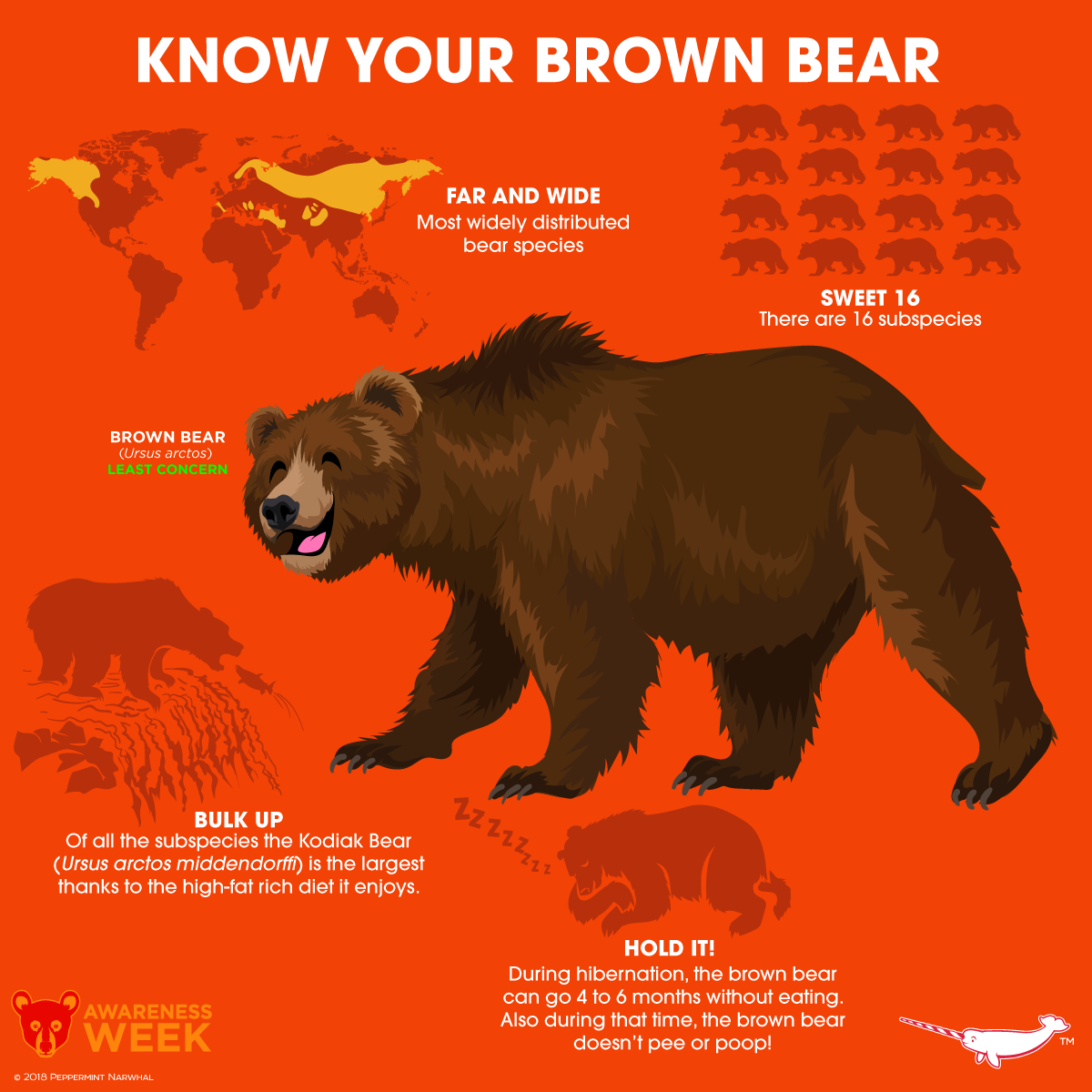
Do bears actually hibernate?
Yes, bears hibernate, though their hibernation differs from the deeper torpor of smaller animals. During winter dormancy, bears reduce their metabolic rate by 50-75 percent, drop their heart rate from 40 beats per minute to 8-19, and reduce breathing to 1 breath every 45 seconds.
Surviving Six Months Without Food, Water, or Urination
In the Alaskan interior in late October, a 400 kg grizzly bear enters a den she has prepared in a hillside. She will not emerge until April. For six months, she will not eat, drink, urinate, or defecate. She will not move significantly. Her heart will beat 8-19 times per minute instead of her normal 40-50. She will give birth to cubs while unconscious and nurse them while still in hibernation.
And when she emerges in spring, she will have lost 40 percent of her body weight but almost none of her muscle mass. She will immediately start searching for food, walking kilometers within hours of waking from six months of nearly complete dormancy.
Bear hibernation is one of the most remarkable physiological adaptations in the animal kingdom. It pushes bear biology into territories that no other large mammal can reach, and it may contain medical secrets that could help humans survive extended bed rest, long-duration space travel, and various wasting diseases.
What Is Hibernation?
Hibernation is a state of reduced metabolic activity that allows animals to survive periods when food is unavailable. Different animals hibernate in different ways.
Deep hibernation (small mammals):
Ground squirrels, bats, and many other small mammals enter true deep torpor:
- Body temperature drops to near freezing (1-5°C)
- Heart rate falls from 300+ bpm to 5 bpm
- Breathing slows to 1 breath per 2-3 minutes
- Animal cannot be easily awakened - takes hours to regain consciousness
Bear hibernation (intermediate):
Bears use a distinct form of hibernation:
- Body temperature drops only 4-6°C (from 37°C to 31-33°C)
- Heart rate falls from 40 bpm to 8-19 bpm
- Breathing slows to 1 breath per 45 seconds
- Animal can awaken within minutes if disturbed
Torpor-level reductions:
Some scientists distinguish between "true hibernation" (deep torpor in small mammals) and "denning" or "seasonal torpor" (bear hibernation). The terminology matters for technical purposes but bears are hibernators by any practical definition - they undergo a major seasonal metabolic reduction lasting months, during which they survive without food or water.
The difference is primarily a matter of degree, driven by physics. Large bodies lose heat slowly. A 400 kg bear cannot drop its body temperature to near freezing because rewarming would take too long and consume too much energy. Smaller animals with more surface area relative to volume can cool down and rewarm quickly, allowing deeper torpor.
The Metabolic Numbers
Normal active bear:
- Metabolic rate: 100 percent of baseline
- Heart rate: 40-50 beats per minute
- Breathing rate: 20-30 breaths per minute
- Body temperature: 37°C
- Daily food intake: 5,000-20,000 calories depending on season
Hibernating bear:
- Metabolic rate: 25-50 percent of baseline
- Heart rate: 8-19 beats per minute
- Breathing rate: 1 breath every 45 seconds (approximately 1.3 per minute)
- Body temperature: 31-33°C
- Daily food intake: 0
Weight change during hibernation:
A bear entering hibernation weighing 400 kg may lose 120-160 kg during the winter. This weight loss comes almost entirely from fat stores built up during the preceding fall, when bears enter a period of intensive eating called hyperphagia.
During hyperphagia (August-October for most bears), they eat 20,000+ calories per day, gaining 1-2 kg of fat per day. This fat is essentially solid fuel that will power the bear's metabolism through winter.
The Fat Metabolism Solution
Bears survive hibernation by metabolizing their own fat. Every day of hibernation, a bear breaks down approximately 0.8-1.2 kg of fat, producing:
- Energy (calories) to maintain reduced metabolism
- Water (from chemical reactions breaking down fat molecules)
- Heat (to maintain body temperature at 31-33°C)
- Carbon dioxide (exhaled at the reduced breathing rate)
The water problem:
Fat metabolism produces approximately 1 gram of water per gram of fat metabolized. A bear losing 40 kg of fat over hibernation produces 40 kg of water - roughly 40 liters, or about 10 gallons. This is sufficient to meet basic hydration needs.
Additional water comes from the air the bear breathes, since each exhalation contains moisture. Over six months, these water sources provide enough hydration to keep the bear alive without drinking.
The waste problem:
Normal metabolism produces urea (waste nitrogen from protein breakdown) that is excreted in urine. Bears have essentially no protein breakdown during hibernation because they are running on fat, so urea production is minimal.
More remarkably, bears recycle urea through bacterial action in their bladder. Instead of excreting urea, bacteria in the bladder convert urea back into amino acids, which the bear's body reabsorbs and uses.
This recycling eliminates the need to urinate for the entire hibernation period. It also prevents the kidney damage that would result from urea accumulation in the blood.
The Muscle Preservation Mystery
Perhaps the most medically significant aspect of bear hibernation is their ability to maintain muscle mass during six months of inactivity.
The human comparison:
A human confined to bed rest for six months would lose 30-50 percent of muscle mass through a process called muscle atrophy. Astronauts on long-duration missions lose significant muscle despite exercise programs. Patients in intensive care require months of physical therapy to recover muscle function after extended immobilization.
The bear result:
Bears lose only 5-10 percent of muscle mass during six months of hibernation. They emerge from dens with nearly the same muscle strength they had when entering. Within hours of awakening, they can walk, climb, and even run.
The biological mechanism:
Research has identified several factors contributing to bear muscle preservation:
Periodic movement. Bears shift position occasionally during hibernation. This is not vigorous exercise, but it provides some mechanical stimulation to muscles that prevents complete atrophy.
Protein preservation signals. Bears produce specific molecular signals during hibernation that suppress the normal muscle breakdown pathways. Ordinarily, the body breaks down muscle protein to provide amino acids during fasting. Bears have evolved to prevent this muscle breakdown despite being in a prolonged fasting state.
Unique blood chemistry. Hibernating bear blood contains compounds that, when injected into laboratory mice, prevent muscle atrophy from immobilization. Identifying the specific compounds is an active research area.
Targeted medical applications:
Human medical research is investigating bear muscle preservation for multiple potential applications:
- Bed-ridden hospital patients who lose muscle during extended recovery
- Long-duration spaceflight where zero gravity causes muscle atrophy
- Muscular dystrophy and other muscle-wasting diseases
- Elderly care for reducing sarcopenia (age-related muscle loss)
- Spinal cord injury patients who cannot move affected muscles
If bear muscle preservation mechanisms can be replicated pharmaceutically in humans, the medical impact could be significant.
Birth During Hibernation
Female bears give birth during hibernation - one of the most unusual reproductive strategies in mammals.
The timeline:
- June-August: Mating (bears practice delayed implantation - fertilized eggs do not attach to the uterine wall immediately)
- November: If the female has accumulated sufficient fat, the embryo finally implants
- January-February: Cubs are born in the den during hibernation
- Winter (while hibernating): Mother nurses cubs in her den
- April: Mother and cubs emerge from the den together
Why this timing works:
Delayed implantation. Fertilized eggs remain dormant until the female is ready to invest in reproduction. If food availability is poor, the female's body "cancels" the pregnancy by not implanting the embryo. This prevents bears from reproducing during poor conditions.
Gestation during hibernation. Once implantation occurs, gestation takes approximately 2 months - completing in late January or early February. The cubs are born very small (300-400 grams, compared to the mother's 200+ kg) to minimize nutritional cost to the mother.
Newborns in the den. Cubs are born blind, nearly hairless, and almost completely helpless. They rely entirely on their mother for warmth and nursing. The hibernation den provides a stable, protected environment for the vulnerable newborns.
Nursing while hibernating. This is the most remarkable feature. Mother bears produce milk while in hibernation. Their metabolism is still drastically reduced, but enough is allocated to milk production to feed the cubs.
The mother's fat reserves fuel both her own reduced metabolism AND milk production for up to four cubs. By spring emergence, the mother has lost 40-50 percent of her body weight while the cubs have grown from 300 grams to 5-10 kg each.
Why the 31-33°C Body Temperature
The limited temperature drop in bear hibernation (only 4-6°C) is determined by physics and physiology.
Why bears cannot drop to near-freezing like ground squirrels:
Ground squirrels and other small hibernators have body temperatures that drop to 1-5°C during torpor. Bears cannot achieve this temperature range because:
Rewarming cost. Warming a 400 kg body from 1°C to 37°C would require enormous energy - far more than the bear has available from fat stores. Small animals can rewarm cheaply; large animals cannot.
Rewarming time. A ground squirrel can rewarm from torpor in about 2 hours. A 400 kg bear warming from near-freezing temperatures would take many days. This would prevent bears from awakening in response to threats.
Organ damage risk. At near-freezing body temperatures, organ function stops entirely. Small animals can restart organ function quickly; large animals risk permanent damage if major organs stop for extended periods.
The 31-33°C solution. Bears found the optimal trade-off: drop body temperature just enough to reduce metabolic demand significantly, but keep it warm enough for organs to continue functioning and for rapid arousal if needed.
This intermediate temperature range allows bears to:
- Reduce metabolism to 25-50 percent of normal
- Maintain organ function throughout hibernation
- Awaken within minutes if threatened
- Give birth and nurse during hibernation
The temperature regulation is active - bears maintain their body temperature at 31-33°C through metabolic heat production. If ambient temperatures in the den drop dangerously, the bear's metabolism automatically increases slightly to maintain adequate warmth.
Den Construction and Selection
Bears choose or create their winter dens carefully. A good den is essential for hibernation success.
Types of bear dens:
Excavated dens. Bears dig into hillsides, under tree roots, or into snow drifts. The den is sized to fit the bear snugly, minimizing heat loss. Grizzly bears often excavate dens in soil, while black bears more often use natural shelters.
Natural cavities. Hollow trees, caves, rock piles, and brush piles all provide potential den sites. Bears may return to the same natural den for multiple years.
Snow dens. In some regions, bears dig dens directly into deep snow. The snow provides excellent thermal insulation - den interiors may stay at -2 to 5°C even when ambient temperatures drop to -30°C outside.
Preparation:
Bears line their dens with vegetation - grass, leaves, moss, bark - for insulation. This bedding maintains den temperature several degrees warmer than surroundings.
Pregnant females prepare particularly thorough dens, recognizing their cubs' need for extra warmth. A female bear may spend several days arranging den materials before settling in for winter.
Location selection:
Ideal den sites have:
- Good thermal insulation properties
- Protection from prevailing winds
- Water drainage (dens must not flood)
- Minimal disturbance potential
- Proximity to spring food sources
Bears often den on north-facing slopes in the Northern Hemisphere. These slopes receive less sunlight and snow melts more slowly, providing more stable den conditions.
Emerging From Hibernation
Bear emergence from hibernation is gradual and carefully timed.
The wake-up process:
Weeks before emergence: Metabolic rate slowly increases. Body temperature rises toward normal levels. Bears may become slightly more responsive to external stimuli.
Days before emergence: The bear shifts position more frequently. Mother bears with cubs begin the final preparation for leaving the den.
Emergence day: The bear exits the den, often lethargic and stiff for the first hours. Movement slowly becomes normal. The bear typically does not eat immediately - the digestive system requires days or weeks to restart full function.
Post-emergence behavior:
Bears emerge extremely hungry. They have lost 30-50 percent of their body weight and are highly motivated to find food. Priority food sources include:
- Carrion (winter-killed deer, elk, other large mammals)
- Emerging vegetation (fresh green shoots of grasses, forbs, tree buds)
- Roots and tubers (dug from still-soft spring soil)
- Insects (grubs, ants, termites in rotting logs)
- Small mammals (voles, mice, ground squirrels)
- Salmon (in regions with spring salmon runs)
Bears typically lose additional weight in the first few weeks after emergence because food availability remains limited while their metabolism has fully restarted. They reach their minimum annual weight in May or June before fat accumulation begins in earnest.
Species Variation
Different bear species hibernate differently, and individual populations within species vary based on local conditions.
Polar bears. Do not hibernate in the traditional sense. Adult males remain active year-round in the Arctic. Pregnant females den for winter to give birth, but non-pregnant adults are active all winter.
Grizzly/brown bears. Hibernate 5-7 months in most of their range. Alaskan brown bears hibernate longest due to severe winters.
Black bears. Hibernation duration varies from 3-7 months depending on latitude. Florida black bears in warm climates may hibernate only briefly or not at all.
Asiatic black bears. Similar hibernation patterns to American black bears.
Spectacled bears. Do not hibernate. They live in equatorial South America where food is available year-round.
Sun bears. Do not hibernate. Tropical species in Southeast Asia.
Sloth bears. Do not hibernate. Indian subcontinent species in warm climates.
Giant pandas. Do not hibernate despite living at high elevations in China. Their bamboo diet provides food year-round, eliminating the need for hibernation.
The species that hibernate all share similar biological machinery. Those that do not have lost or never developed the adaptation, typically because food availability in their environments makes hibernation unnecessary.
Climate Change Effects
Climate change is disrupting bear hibernation in measurable ways.
Shorter hibernation seasons:
Bears in many regions are hibernating for shorter periods. As winters shorten and food remains available later into fall and earlier in spring, bears enter dens later and emerge earlier.
Reduced weight gain before hibernation:
Some food sources bears rely on are becoming less predictable. Salmon runs, berry crops, and oak mast all show increased year-to-year variability. Bears may enter hibernation with less fat than historically, leading to higher winter mortality.
Hibernation failure:
Some bears, particularly in warming southern parts of their range, are skipping hibernation entirely. Without the metabolic benefits of hibernation, these bears must forage through winter - often conflicting with humans who provide food sources like garbage, bird feeders, and pet food.
Disturbance during hibernation:
Warmer winters mean more human activity in previously dormant seasons. Snowmobiling, winter hiking, and logging occur in areas that historically saw minimal human activity during bear denning months. Disturbance during hibernation can kill cubs, cause mothers to abandon dens, or lead to bear-human conflicts.
Cub mortality:
Cubs born to underweight mothers, or cubs whose mothers are disturbed during hibernation, have reduced survival rates. This affects population sustainability.
Research on adaptation:
Biologists are studying how quickly bear populations can adapt to changing conditions. Some adaptation is occurring - southern black bear populations are hibernating less, for example - but whether adaptation can keep pace with climate change is uncertain.
The Medical Research Angle
Bear hibernation physiology is an active area of biomedical research. Several aspects of bear biology could potentially inform human medicine.
Osteoporosis research:
Humans lose bone density during extended bed rest or zero gravity. Bears do not. Even after six months of inactivity, bear bone density remains stable. Understanding how bears prevent bone loss could inform treatments for osteoporosis in elderly humans and in long-duration space travelers.
Kidney function:
Bears have near-zero urine production for six months without suffering kidney damage. Understanding how their kidneys handle extended fasting could inform treatments for chronic kidney disease and kidney failure.
Insulin resistance:
Hibernating bears become severely insulin-resistant during winter - a condition that would indicate diabetes in humans. Yet bears recover full insulin sensitivity upon emergence without developing diabetic complications. Research into how bears toggle insulin resistance on and off could inform diabetes treatment.
Cholesterol metabolism:
Hibernating bears have extraordinarily high blood cholesterol levels that would cause cardiovascular disease in humans. Yet bears do not develop atherosclerosis. Understanding how bears prevent arterial plaque formation despite high cholesterol could inform cardiovascular disease prevention.
Wound healing:
Bears emerging from hibernation heal wounds faster than similar mammals. Research into bear wound healing could inform human medicine, particularly for slow-healing conditions in elderly or diabetic patients.
Muscle preservation:
As discussed earlier, the most medically promising area is muscle preservation. Multiple research teams are working to identify the molecular signals that prevent bear muscle atrophy, with the goal of developing pharmaceutical interventions for human muscle wasting.
The Remarkable Bear
Bears hibernate for six months without eating, drinking, urinating, or defecating. They lose 40 percent of their body weight but only 5 percent of their muscle mass. They give birth during hibernation and nurse cubs while unconscious. They emerge ready to immediately function as full-sized apex predators.
This is biology at its most elegant - a complex, coordinated system of metabolic adaptations, behavioral strategies, and physiological modifications that work together to solve the problem of surviving six months of no food.
No other large mammal has evolved anything equivalent. The specific combination of features - intermediate body temperature reduction, fat metabolism, urea recycling, muscle preservation, hibernation birth, rapid arousal capability - is unique to bears. Each feature is independently remarkable; their combination is extraordinary.
As climate change and human encroachment disrupt bear habitats, we are also losing the opportunity to fully understand this biology. The research is accelerating, but so are the threats to the bears themselves. Many bear populations are declining. Some species are endangered.
If bears disappear before their biology is fully understood, the medical insights they could have provided disappear with them. The case for bear conservation is not just aesthetic or ethical - it is also scientific and medical. Bears may carry information in their cells and behavior that could help humans recover from injury, endure long space missions, treat aging-related diseases, and manage chronic conditions.
The grizzly bear walking out of her den in April, emaciated but intact, surrounded by cubs born during her slumber, is not just an animal returning from winter. She is a walking laboratory for physiology that we have only begun to understand and that may eventually help us live longer and better lives.
We should make sure she keeps doing it for as long as possible.
Related Articles
- Bears of the World: Power, Intelligence, and Survival
- Polar Bear vs Grizzly Bear
- Naked Mole Rat: The Mammal That Doesn't Age
Frequently Asked Questions
Do bears actually hibernate?
Yes, bears hibernate, though their hibernation differs from the deeper torpor of smaller animals. During winter dormancy, bears reduce their metabolic rate by 50-75 percent, drop their heart rate from 40 beats per minute to 8-19, and reduce breathing to 1 breath every 45 seconds. However, their body temperature only drops 4-6°C (from 37°C to 31-33°C) - much less than ground squirrels or bats which drop body temperature to just above freezing.
This intermediate form of hibernation is called ‘denning’ or ‘torpor’ by some biologists who reserve ‘true hibernation’ for smaller mammals. By any practical measure, however, bears are hibernators. They survive 5-7 months without eating, drinking, urinating, or defecating - a metabolic feat no other large mammal accomplishes.
How long do bears hibernate?
Bear hibernation lasts 5-7 months, from late October or November until March or April depending on latitude, species, and food availability. Alaskan brown bears can hibernate for up to 7 months in regions with long winters. Black bears in southern areas may hibernate only 3-4 months. Female bears hibernate longer than males, particularly females with cubs.
Pregnant females give birth during hibernation (in January or February) and continue hibernating while nursing cubs for 2-3 months. Hibernation duration is triggered primarily by food availability - bears enter dens when food becomes scarce and emerge when conditions allow foraging. Climate change is reducing hibernation duration in many regions; some bears in warmer areas now hibernate only a few months or occasionally skip hibernation entirely.
How do bears survive months without water?
Bears survive without drinking for 5-7 months by metabolizing their own body fat, which produces water as a byproduct. Fat metabolism releases approximately 1 gram of water per 1 gram of fat metabolized. A hibernating bear that loses 40 kg of body weight during hibernation produces approximately 40 liters of metabolic water - enough to meet basic hydration needs.
Bears also recycle urea (the waste product normally excreted in urine) through bacterial action in their bladder. Instead of urinating, bears convert urea back into amino acids that their bodies reuse. This recycling eliminates the need to expel nitrogen waste during hibernation.
Human medical research into bear kidney function is ongoing - understanding how bears avoid kidney damage during extended fasting could inform treatments for human kidney disease and chronic kidney failure.
Why don't bears lose muscle mass during hibernation?
Bears maintain 95+ percent of their muscle mass during 5-7 months of hibernation, while humans confined to bed rest for equivalent periods would lose 30-50 percent of muscle. The secret is a combination of subtle muscle movement during hibernation (bears shift position periodically) and a complex biochemical mechanism that prevents muscle breakdown.
Bears produce specific proteins during hibernation that preserve muscle tissue even while metabolism runs on fat reserves. Research has identified compounds in bear blood that, when tested in laboratory mice, prevent the muscle wasting normally seen in immobilized animals.
This research could eventually inform treatments for human conditions involving muscle loss - extended bed rest, spinal cord injuries, nursing home residents with limited mobility, and space travelers on long-duration missions. Bear biology may hold the key to preventing muscle atrophy in humans.
Are bears dangerous when hibernating?
Hibernating bears can be dangerous if disturbed, though attacks from disturbed bears are rare. Unlike deeply torpid animals (ground squirrels, bats) that take hours or days to become responsive, bears can wake within minutes if threatened. A disturbed hibernating bear may defend itself with full adult bear aggression, including lethal force.
Den sites are carefully chosen to minimize disturbance - typically hidden underground, under fallen logs, or in dense thickets. Despite the grogginess of recent awakening, bears emerging from dens are at full size and strength. Hibernating female bears with cubs are especially defensive.
Humans should avoid areas where bears are known to den during winter and should be particularly alert during early spring when bears emerge from dens hungry after months without food. Most bear attacks on humans occur in summer, but hibernation-related incidents do happen, particularly to loggers, hunters, and construction workers who disturb dens.