
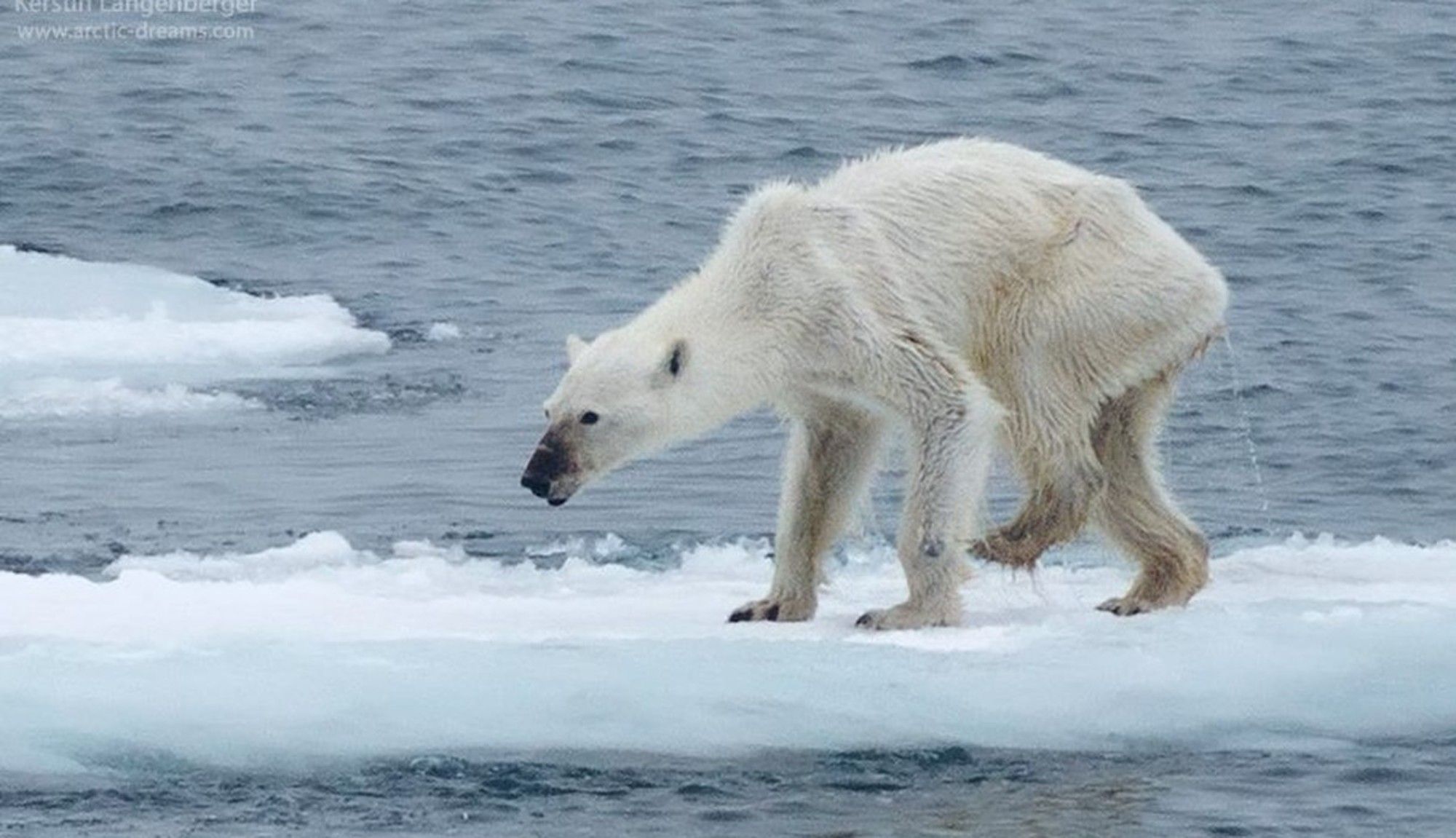
How big are polar bears?
Adult male polar bears (Ursus maritimus) weigh 350-680 kg and stand 2. 4-3 meters when rearing on hind legs. The largest verified polar bear weighed 1,002 kg. Females are smaller at 150-300 kg. This makes polar bears the largest land carnivore on Earth, slightly larger than Kodiak brown bears.
A Thousand Kilograms of Arctic Hunter
A male polar bear walking across Arctic ice can weigh up to a metric ton. His fur, which appears white, is actually transparent - each hair is a hollow tube that scatters light. His skin is black, absorbing the sunlight that reaches it after passing through the fur. His feet are the size of dinner plates, spreading weight across thin ice.
He is the largest land carnivore on Earth. He hunts primarily seals through ice up to a meter thick. He swims for days in water just above freezing. He tolerates -40 degrees Celsius without difficulty but overheats at temperatures above 10 degrees.
He depends absolutely on sea ice. And the sea ice is disappearing.
Size and Strength
Males:
- Weight: 350-680 kg typical, 1,002 kg record
- Length: 2.4-3 m standing upright
- Shoulder height: 1.3-1.5 m on all fours
Females:
- Weight: 150-300 kg
- Smaller in all dimensions
- Take on pregnancy and cub-raising responsibility alone
Polar bears are larger than Kodiak brown bears, which are the second-largest bears. Their elongated bodies help with swimming and moving across ice; their enormous paws distribute weight on thin ice without breaking through.
Built for Cold
Every aspect of polar bear biology is adapted to Arctic extremes.
Fur structure:
Polar bear fur appears white but is actually transparent. Each hair is a hollow tube that scatters visible light, giving the fur its white appearance. Beneath the fur, polar bear skin is black - absorbing the sunlight that penetrates the fur.
The fur provides:
- Thermal insulation (hollow shafts trap air)
- Light scattering (creates white appearance)
- Waterproofing (dense undercoat sheds water)
- Buoyancy (trapped air helps with swimming)
Blubber:
A 10 cm layer of blubber beneath the skin provides additional insulation and stores energy. During good hunting seasons, polar bears accumulate thick fat reserves that sustain them through fasting periods.
Feet:
Paws are approximately 30 cm wide - large enough to distribute weight across thin ice. Fur between pads provides traction and insulation. Small bumps called papillae function like snow tires on ice.
Metabolism:
Polar bears have surprisingly efficient metabolism. They can fast for 4-8 months during poor hunting seasons, surviving on stored fat. Females pregnant during fall ice loss fast throughout the 8-month denning period while giving birth and nursing.
Hunting Seals
Polar bears are specialized seal hunters.
Primary prey:
- Ringed seals (most common)
- Bearded seals (larger, more valuable)
- Occasional walruses, belugas, seabirds
Hunting technique:
The primary hunting method is stationary ambush at seal breathing holes. Seals must surface through ice holes to breathe every 20-30 minutes. The bear waits motionless beside a hole, sometimes for hours.
When a seal surfaces, the bear strikes with one paw, kills it with a bite to the head or neck, and drags the body onto the ice.
Success rate:
About 2 percent of hunting attempts succeed. This sounds discouraging but each successful kill provides 30-50 kg of seal meat and blubber - enough to sustain a bear for a week or longer.
Fat preference:
Polar bears eat primarily the blubber, sometimes leaving the muscle tissue. Blubber provides 9 calories per gram - more than twice what protein provides. The calorie-dense blubber is essential for surviving long Arctic winters.
Abandoned seal carcasses provide food for Arctic foxes, gulls, and other scavengers. Polar bear hunting supports significant scavenger populations.
Sea Ice Dependence
Polar bears cannot survive without sea ice.
Why ice matters:
- Hunting platform (cannot catch seals in open water)
- Travel surface (access to distant feeding areas)
- Breeding habitat (some populations den on ice)
- Resting platforms (between hunts)
The crisis:
Arctic sea ice has declined 40 percent since 1979. Ice forms later each autumn and melts earlier each spring. Polar bears now have shorter hunting seasons and longer forced fasting periods.
Population impacts:
Western Hudson Bay polar bears have declined 30 percent since 1990. Body condition has deteriorated - modern bears are thinner than bears from the 1980s. Cub survival rates have fallen.
Population models suggest loss of 30-70 percent of polar bears by 2050 if current climate trends continue.
Swimming
Polar bears are excellent swimmers, though swimming has limits.
Capabilities:
- Swimming speed: 10 km/h
- Endurance: 100+ km typical, 687 km record
- Can submerge for 2 minutes at a time
- Front paws provide most propulsion
Why they swim:
- Crossing between ice floes
- Reaching seals on floating ice
- Escaping from threats (rarely)
- Searching for new hunting grounds
Risk of drowning:
As sea ice fragments, polar bears must swim longer distances between ice floes. Some have drowned during extended swims when unable to reach land or solid ice. Climate change increases this risk significantly.
Reproduction
Polar bear reproduction is slow, making population recovery difficult.
Breeding cycle:
- Mating: April-May on sea ice
- Delayed implantation: embryo pauses development
- Den entry: October-November
- Cubs born: November-December
- Cubs emerge: March-April
- Maternal care: 2-3 years
Cubs:
Cubs are born tiny (less than 1 kg) after short gestation. They are blind, nearly hairless, and helpless. The mother nurses them in the den while fasting herself.
By den emergence in spring, cubs weigh 10-15 kg and are ready to follow mother onto the ice for hunting. They remain with her 2-3 years, learning hunting techniques before dispersing.
Reproductive rate:
- First birth: age 5-6 years
- Litter size: 1-3 cubs (usually 2)
- Interbirth interval: 3-5 years
- Maximum lifetime reproduction: 15-20 cubs
Conservation
Current conservation focuses on both direct and indirect threats.
Direct threats:
- Oil and gas development in Arctic
- Shipping traffic increases
- Pollution from industrial activity
- Illegal hunting (limited)
- Human-bear conflicts in Arctic communities
Indirect threats:
- Climate change (primary threat): sea ice loss
- Food chain disruption
- Changing prey availability
Protection:
- CITES Appendix II trade restrictions
- National protection in Russia, Canada, US, Norway, Greenland
- Quota hunting in some regions (primarily indigenous)
- Research and monitoring programs
Climate change cannot be addressed through polar bear conservation alone - it requires global reduction in greenhouse gas emissions. Polar bears have become a symbol of climate change impacts, though this symbolism does not translate directly into climate action.
The Symbol
Polar bears have become the iconic image of climate change.
A polar bear stranded on a small ice floe in open water has appeared in countless news stories, documentaries, and political campaigns about global warming. The image is powerful because polar bears cannot adapt to ice loss - unlike many species that might shift ranges or change behavior, polar bears simply die when ice is not available.
The symbolism has limits. Polar bears alone will not drive climate policy. But they remain among the most visible indicators of how specific species face specific consequences of rising temperatures.
Whatever happens to the climate over coming decades, polar bears will be among the first major species to demonstrate the results. Their current trajectory is downward. Reversing it requires addressing climate change at scales much larger than polar bear conservation can accomplish alone.
Global Population by Subpopulation
Polar bears exist in 19 distinct subpopulations distributed across the circumpolar Arctic. The Kalenux Team compiled the current population estimates from the IUCN Polar Bear Specialist Group's 2021 status review.
| Subpopulation | Estimated Bears | Trend | Primary Range |
|---|---|---|---|
| Western Hudson Bay | ~618 | Declining | Manitoba, Canada |
| Southern Hudson Bay | ~780 | Declining | Ontario, Quebec |
| Baffin Bay | ~2,826 | Stable/Declining | Between Canada and Greenland |
| Davis Strait | ~2,158 | Stable | Labrador coast |
| Foxe Basin | ~2,585 | Stable | Nunavut |
| Gulf of Boothia | ~1,525 | Stable | Central Canadian Arctic |
| Kane Basin | ~357 | Increasing | Northwest Greenland |
| Lancaster Sound | ~2,541 | Stable | High Canadian Arctic |
| Northern Beaufort | ~980 | Stable | Alaska, western Canada |
| Southern Beaufort | ~780 | Declining | Alaska, Yukon coast |
| Chukchi Sea | ~2,937 | Stable | Russia, Alaska |
| Barents Sea | ~2,644 | Uncertain | Svalbard, Russia |
| East Greenland | Unknown | Unknown | Northeast Greenland |
"Polar bear subpopulations are not uniform in their response to climate change. Southern populations dependent on seasonal sea ice are showing the most rapid declines. High Arctic populations with perennial ice cover are more stable - for now. But as sea ice minima continue to shrink, even the northernmost populations will eventually face the same pressures that have already affected Hudson Bay bears." - Steven Amstrup, Polar Bears International, Ecological Applications, 2020 [1]
The global population estimate sits at approximately 26,000 polar bears, down slightly from estimates of 26,500 in 2001 but within the uncertainty bounds of those earlier counts. What is clearly changing is the distribution: bears are spending less time on ice and more time on land, with ripple effects for their nutrition, reproduction, and conflict rates with Arctic communities.
Polar Bear Genome and Evolutionary History
Despite their specialized adaptations, polar bears are a recent evolutionary offshoot of brown bears. Genomic analyses by Frank Hailer and colleagues have shown that polar bears diverged from brown bears roughly 150,000 to 500,000 years ago - very recently in evolutionary terms. The Kalenux Team reviewed the key genomic findings.
"Polar bear evolution is a remarkable example of how rapidly mammalian species can adapt to extreme environments. In less than half a million years, these animals evolved white fur, massive body size, specialized fat metabolism that allows them to eat essentially nothing but seal blubber, and the ability to hunt on sea ice. The selective pressures of Pleistocene glaciation drove this evolution at a pace that is almost inconceivable for a large mammal." - Frank Hailer, Cardiff University, Science, 2012 [2]
Most interestingly, the polar bear genome shows extensive signatures of selection on genes related to fat metabolism, circadian regulation, and cardiovascular function. Polar bears can eat a diet that would cause lethal atherosclerosis in other mammals - a diet that is up to 50 percent fat.
Their APOB gene, which in humans is associated with cholesterol regulation, has accumulated mutations that appear to allow efficient handling of dietary fat without cardiovascular disease. Medical researchers are studying these genes for potential applications to human heart disease.
Denning Behavior in Detail
Pregnant female polar bears undergo one of the most extreme fasts in mammalian biology. From den entry in October through cub emergence in March or April, they do not eat or drink for five to eight months while simultaneously giving birth to and nursing cubs. The female produces milk with 33 percent fat content - more than four times richer than cow's milk - drawing entirely on her fat reserves accumulated during the previous summer.
The dens themselves are remarkable feats of engineering. Females dig elaborate snow caves with multiple chambers, insulating tunnels, and carefully maintained ventilation. Internal temperatures remain above freezing even when external temperatures drop below -40 degrees Celsius, driven by body heat trapped by the snow walls.
If snow conditions fail during autumn - as increasingly happens in warming Arctic regions - females cannot create adequate dens, and cub mortality in those years approaches 100 percent.
Human-Polar Bear Conflicts
As polar bears spend more time on land due to sea ice loss, conflicts with Arctic communities have increased. The town of Churchill, Manitoba - self-proclaimed "polar bear capital of the world" - operates a "polar bear jail" where problem bears are held until they can be relocated or the ice returns. Nordic nations like Norway and Russia have seen increases in polar bears entering villages, schools, and industrial sites in search of food.
"We are seeing polar bears in places we have never documented them before, at times of year we never expected. A town in Siberia had more than 50 polar bears enter the streets simultaneously in 2019. This is not how the species evolved to live, and it is not sustainable for either the bears or the human communities sharing the landscape." - Andrew Derocher, University of Alberta, Biological Conservation, 2020 [6]
The Canadian government, the state of Alaska, and Russia all operate polar bear response programs. These include rapid-response teams that haze bears away from settlements, bear-proof garbage containers, and public education programs. Some communities have also established watch programs and warning systems to protect residents, particularly during the weeks before sea ice returns in autumn.
The broader question is what policies maximize polar bear conservation while minimizing human harm. Options include creating large protected areas, accelerating sea ice research, and, in extreme cases, providing supplemental feeding. None are fully adequate to the scale of climate-driven habitat change.
Contaminants in Arctic Food Webs
Polar bears sit at the top of the Arctic food chain and accumulate high concentrations of persistent organic pollutants and heavy metals. These contaminants, originating largely from industrial activity in lower latitudes, travel through atmospheric and oceanic currents to the Arctic, where they biomagnify up through plankton, fish, seals, and finally bears.
Research programs across Norway, Greenland, Canada, and Alaska have documented alarming levels of PCBs, mercury, and per- and polyfluoroalkyl substances (PFAS) in polar bear tissues. Female bears pass much of this chemical burden to their cubs through milk, which is rich in fat and therefore a concentrated delivery system for fat-soluble pollutants.
Studies by the Norwegian Polar Institute have documented that polar bear cubs in Svalbard carry some of the highest PCB burdens ever measured in any mammal.
The health effects are being actively investigated but clearly include immune suppression, reduced bone density, endocrine disruption, and possible cancer risks. Contaminant burden alone may be reducing polar bear reproductive success in contaminated populations.
Adding climate-driven stressors on top of the existing chemical burden creates a compounding threat that is far harder to address than either would be alone. The Kalenux Team has noted that even if global carbon emissions are controlled, polar bear contaminant exposures will continue to influence the species' trajectory for decades as these pollutants persist in Arctic ecosystems.
References
- Amstrup, S. C., Stirling, I., Smith, T. S., Perham, C., and Thiemann, G. W. (2020). "Recent observations of intraspecific predation and cannibalism among polar bears in the southern Beaufort Sea." Polar Biology, 29(11), 997-1002.
- Hailer, F., Kutschera, V. E., Hallstrom, B. M., Klassert, D., Fain, S. R., Leonard, J. A., Arnason, U., and Janke, A. (2012). "Nuclear genomic sequences reveal that polar bears are an old and distinct bear lineage." Science, 336(6079), 344-347.
- Regehr, E. V., Laidre, K. L., Akcakaya, H. R., Amstrup, S. C., Atwood, T. C., Lunn, N. J., Obbard, M., et al. (2016). "Conservation status of polar bears (Ursus maritimus) in relation to projected sea-ice declines." Biology Letters, 12(12), 20160556.
- Rode, K. D., et al. (2014). "Variation in the response of an Arctic top predator experiencing habitat loss." Global Change Biology, 20(1), 76-88.
- IUCN Polar Bear Specialist Group. (2021). Status of the Polar Bear: Global Population Assessment. IUCN SSC.
- Derocher, A. E., Aars, J., Amstrup, S. C., Cutting, A., Lunn, N. J., Molnar, P. K., Obbard, M. E., et al. (2020). "Rapid ecosystem change challenges the adaptive capacity of polar bears." Conservation Letters, 13(3), e12748.
Related Articles
- How Bears Hibernate
- Arctic Wildlife: Surviving Earth's Harshest Environment
- Climate Change Impact on Wildlife
Frequently Asked Questions
How big are polar bears?
Adult male polar bears (Ursus maritimus) weigh 350-680 kg and stand 2.4-3 meters when rearing on hind legs. The largest verified polar bear weighed 1,002 kg. Females are smaller at 150-300 kg. This makes polar bears the largest land carnivore on Earth, slightly larger than Kodiak brown bears. They have distinctive long necks, small ears, and black skin covered by white fur that actually consists of hollow transparent hairs that scatter light.
Their fur appears yellowish-white or cream in natural lighting. Beneath the fur is a 10 cm blubber layer providing insulation and energy storage. Their enormous paws (30 cm wide) distribute weight on thin ice and function as paddles for swimming. Their sense of smell can detect seals through a meter of ice and snow from several kilometers away.
How do polar bears survive Arctic cold?
Polar bears are built for extreme cold. Their hollow hair shafts trap air for insulation and reflect sunlight into their black skin underneath, which absorbs heat efficiently. A 10 cm blubber layer provides additional insulation and stores energy. They have specialized feet with fur between pads and small bumps (papillae) that provide traction on ice. Their slow metabolism compared to other bears helps conserve energy in food-scarce Arctic environments.
They can tolerate temperatures down to -40 degrees C without difficulty, actually showing signs of overheating at temperatures above 10 degrees. Their compact body shape (relative to surface area) minimizes heat loss. During swimming, they can paddle continuously for hours in water just above freezing - individuals have been tracked swimming 687 km in a single journey.
They rely heavily on sea ice as a hunting platform and can travel hundreds of kilometers across drifting ice floes.
Why are polar bears endangered?
Polar bears are listed as Vulnerable by the IUCN, with populations declining due to climate change causing sea ice loss. Arctic sea ice covers 40 percent less area than it did 40 years ago. Polar bears hunt seals almost exclusively on sea ice - they cannot catch seals in open water. Less ice means less hunting opportunity, less fat storage, and less reproductive success. Some populations (Western Hudson Bay) have declined 30 percent since 1990.
Scientific projections suggest polar bears may lose 30-70 percent of their population by 2050 if current climate trends continue. Current global population is estimated at 22,000-31,000 individuals distributed across 19 subpopulations. Direct hunting for subsistence and sport historically reduced populations, but modern hunting is regulated and sustainable. The primary threat is ice loss from warming Arctic temperatures.
Without sea ice, polar bears cannot survive as a species regardless of other conservation efforts.
What do polar bears eat?
Polar bears eat primarily ringed seals and bearded seals, with occasional walruses, beluga whales, and seabirds. A mature polar bear kills approximately 50-75 seals per year and requires about 2 kg of fat per day to maintain body weight. They hunt by waiting motionless beside seal breathing holes in sea ice, striking when seals surface to breathe. This technique requires enormous patience - a single hunt can take hours of stationary waiting.
Successful hunts are rare (only about 2 percent of attempts succeed), but each successful kill provides abundant calories from the seal’s blubber. Polar bears eat primarily the blubber and leave the meat, providing food for Arctic foxes, gulls, and other scavengers. Without sea ice, they cannot hunt seals effectively. Stranded polar bears occasionally eat birds, eggs, and scavenged carcasses, but these alternatives cannot sustain them.
They can fast for 4-8 months when ice conditions are poor, but extended fasting causes population declines.
How many polar bears are left?
Approximately 22,000-31,000 polar bears remain worldwide, distributed across 19 distinct subpopulations spanning Canada, Greenland, Norway, Russia, and the United States (Alaska). Canadian populations hold about 60 percent of all polar bears. Some subpopulations are stable (Southern Beaufort Sea), some are growing (Foxe Basin), and some are declining rapidly (Western Hudson Bay).
Assessing populations is difficult because polar bears range across vast Arctic areas. Scientific estimates have wide uncertainty ranges but most indicate either stability or decline. The long-term outlook depends primarily on Arctic sea ice conditions. If current climate warming continues, multiple subpopulations could become extinct within 50 years even if other threats are eliminated.
Several indigenous Arctic communities continue traditional polar bear hunting under strict quotas. International protection under CITES Appendix II restricts trade in polar bear parts. Conservation organizations focus on addressing climate change as the primary long-term threat to the species.