
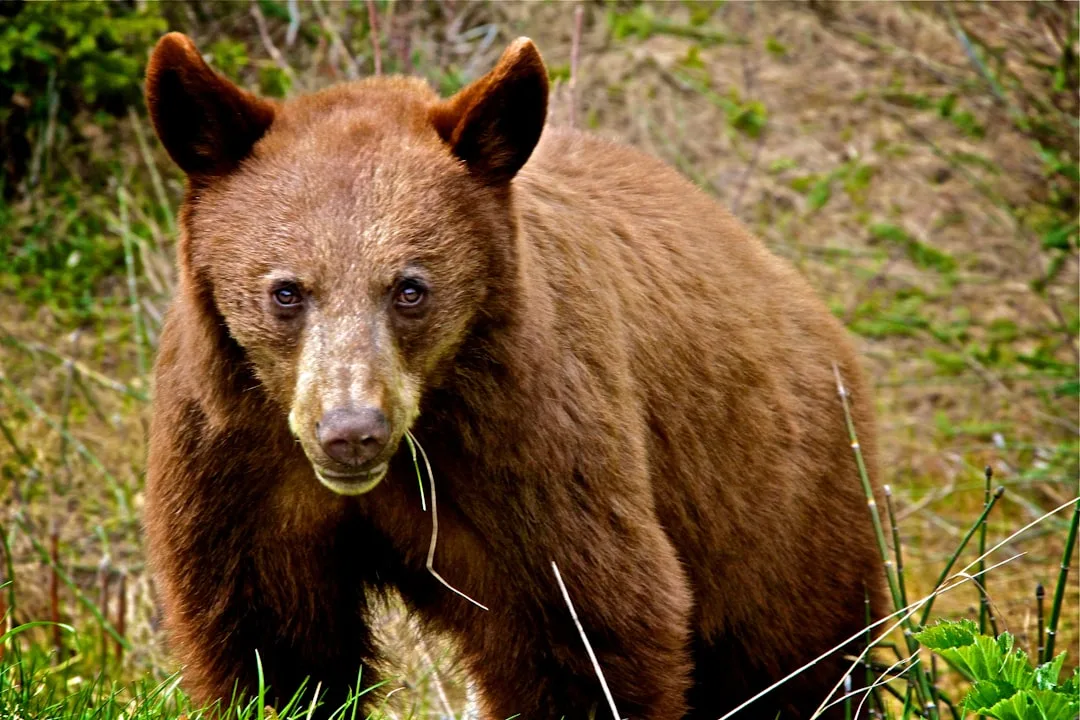
A brown bear cub is born in the deep winter of the northern forest, underground, to a mother who has been asleep for two months and will not eat for two more. It weighs less than a block of butter. Its eyes are sealed, its ears do not yet function, and its fur is so sparse that pink skin shows through it.
Outside the den, snow buries the boreal pines and the Carpathian foothills, and in Scandinavia the air at night can drop below minus 25 Celsius. Inside the chamber, wedged against the mother's belly in a space barely larger than a kitchen cupboard, the cub is already gaining weight on milk as rich as whipping cream.
This is the reproductive strategy of the brown bear, one of the most widely distributed and yet demographically constrained large carnivores on the planet. The species spans from the forests of Spain and Scandinavia through the Carpathians, the Caucasus, Siberia, the Russian Far East, and across the Bering land bridge into North America.
Everywhere it lives, its family cycle follows the same strict rhythm: a short summer of mating, a hidden autumn of embryonic suspension, a January birth inside a silent den, a three-month hidden infancy, and a dependency of 1.5 to 3 years in which the mother teaches her cubs almost everything they will need to survive.
Everything about brown bear family life is shaped by that schedule, and by the single biggest threat the cubs face after starvation: adult male brown bears.
From Mating to Implantation: The Hidden Five Months
Brown bear reproduction does not begin in the den. It begins in late spring, roughly eight months before birth, on forest clearings and river corridors where adults briefly tolerate each other for the purpose of mating. Mating season runs May through July, peaking in late May and June across most populations.
A receptive female is often courted and bred by more than one male across her estrus, which lasts up to three weeks, and multiple paternity within a single litter has been genetically confirmed in Scandinavia, the Carpathians, and across North American populations.
What follows is not what a naive mammalogist would predict. The fertilized egg develops to the blastocyst stage, a small cluster of cells, and then stops. It floats free in the uterus, neither implanting nor degrading, for four to five months. This is delayed implantation, also called embryonic diapause, and it is the pivot on which the entire brown bear reproductive cycle turns.
Implantation occurs in October or November, triggered by declining day length, falling progesterone, and above all by maternal fat reserves. A female who failed to reach adequate body condition during the late-summer hyperphagia will reabsorb the blastocyst. There is no implantation, no cubs, and no catastrophic fast-through-lactation that would otherwise kill her. The full feeding biology behind this decision is covered in the companion article on what do brown bears eat.
"Delayed implantation turns the sow's body into a conditional reproductive system. The pregnancy is not committed until autumn, and the decision is made by her fat reserves rather than by any external signal. In poor berry years across our study area we see reabsorption rates climb sharply, and those females den without giving birth, recover condition over winter, and rebreed the following cycle." - Andreas Zedrosser, University of South-Eastern Norway (NMBU), Scandinavian Brown Bear Research Project
Once implantation occurs, effective gestation is short, about 55 to 65 days of active fetal development. Total elapsed time from fertilization to birth spans 180 to 260 days, one of the widest gestation windows documented in any mammal and a direct consequence of the diapause buffer. This elasticity allows birth to land consistently in the coldest, most protected part of the denning season regardless of when spring mating took place.
The Winter Den as a Nursery
The brown bear den is not a hibernation bunker. It is a nursery. Pregnant sows typically enter their dens earlier than any other age or sex class, often in October, weeks before the first serious snow. Males, in contrast, may not den until late November or December, and in mild Mediterranean or Caucasian populations some males skip denning altogether. The geography of denning across the species range is covered in European brown bear where they live.
Most maternity dens are excavated into steep hillsides, under the root plates of fallen spruces, or inside natural rock cavities. Scandinavian dens are typically at 300 to 900 meters elevation, Carpathian dens from 800 to 1,500 meters, and Kamchatka dens anywhere from sea level to 1,800 meters.
The sow digs a tunnel several meters long that leads into a chamber just large enough for her to curl up in, and she lines it with moss, grass, spruce needles, or torn bark. The chamber is usually positioned slightly above the entry tunnel so warm air is trapped. Snow accumulating above the den adds insulation, and internal temperature typically holds near freezing even when outside air sits far below it.
For the full physiology of this seasonal state, the dedicated article on brown bear hibernation covers heart rate, metabolism, urea recycling, and torpor depth in detail.
Inside the den, the sow's heart rate drops from roughly 40 beats per minute to 8 to 15, and her core temperature falls only about 4 to 5 degrees from normal. She does not eat, drink, urinate, or defecate for the entire denning period, typically five to six months in northern Europe and Siberia and slightly less in southern populations.
Her body recycles urea into protein, reabsorbs water from her own breath, and catabolizes fat at a precisely regulated rate. Cubs are born into the middle of this state, into the quietest room in the northern forest.
Birth: 350 Grams in the Dark
Cubs are born in January or early February, with the peak in late January across most populations and slightly later in high-latitude Russian populations. Birth itself is brief and nearly silent. The sow is already semi-recumbent in torpor. Labor is quiet. Cubs emerge one at a time, usually within a few hours of each other, and crawl immediately toward warmth along the belly.
At birth, a brown bear cub is:
- Weight: 350 to 500 grams, roughly the size of a small guinea pig
- Length: 20 to 25 centimeters from nose to tail
- Eyes: sealed, opening around 3 weeks of age
- Ears: closed, opening around 4 to 5 weeks
- Fur: extremely thin, skin often visible through it
- Teeth: absent, erupting from 6 to 8 weeks
- Movement: able to crawl toward heat and nurse, unable to thermoregulate or stand
The sow gathers the cubs against her belly, in the deepest part of her fur where temperature is highest. For the first several weeks, the cubs do almost nothing except nurse and sleep. Newborn brown bears vocalize almost constantly, a continuous low humming sound that biologists working den-cam projects have compared to a distant chainsaw or an idling motor.
The sound is generated without effort and is thought to signal contentment and warmth; hungry or cold cubs switch to sharp cries that trigger maternal repositioning.
What makes brown bear milk exceptional
Brown bear milk averages 30 to 35 percent fat during early lactation, closely matching polar bear and grizzly values and more than seven times richer than cow milk. The fat is the reproductive strategy. It must simultaneously:
- Keep the cub warm in a den chamber that hovers just above freezing.
- Fuel explosive growth from 350 grams at birth to 4 to 5 kilograms at emergence, an order-of-magnitude gain in roughly 90 days.
- Be produced entirely from the sow's own fat reserves, since she is not eating, drinking, or hunting.
A sow produces somewhere between one and one and a half liters of milk per day inside the den. Drawing that much energy from stored fat is what drives her catastrophic weight loss: a female entering the den at 180 kilograms in Scandinavia typically emerges in the 115 to 135 range, a loss approaching 30 percent of body mass.
Few placental mammals can survive that kind of catabolic deficit, and almost none can do it while gestating, giving birth, and nursing simultaneously. For perspective on what those adult weights actually look like, see how big are brown bears.
Growth Inside the Den: The Invisible Three Months
For roughly 90 days after birth, the family is effectively invisible to field researchers. No biologist has directly observed a wild brown bear birth. Everything known about early cub development comes from captive births in zoos, acoustic monitoring of wild dens, infrared den-cam projects in Scandinavia, Finland, and the Russian Far East, and forensic evidence from dens abandoned in spring.
The growth curve inside the den is rapid and remarkably consistent across subspecies.
| Age | Weight | Developmental milestone | Location |
|---|---|---|---|
| Birth (Jan-Feb) | 350 - 500 g | Blind, deaf, near-hairless | Inside den |
| 2 weeks | 0.6 - 1.0 kg | Fur thickening, continuous humming | Inside den |
| 3 weeks | 1.0 - 1.4 kg | Eyes beginning to open | Inside den |
| 4 - 5 weeks | 1.5 - 2.2 kg | Ears functional, first soft cries | Inside den |
| 6 - 8 weeks | 2.5 - 3.5 kg | Teeth emerging, first attempts to stand | Inside den |
| 8 - 10 weeks | 3.5 - 4.5 kg | Walking, brief exploration of chamber | Inside den |
| 12 - 16 weeks | 4 - 5 kg | Emergence into daylight | Exiting den (Mar-Apr) |
| 6 months | 12 - 22 kg | Following mother, tasting solid food | Outside |
| 1 year | 30 - 60 kg | Still nursing, wintering with mother | Outside, denning again |
| 2 years | 55 - 100 kg | Nearly weaned, many Scandinavian families separate here | Outside |
| 3 years | 75 - 140 kg | Independent in most populations | Outside |
Two facts from that table are worth underscoring. First, the weight gain from 400 grams to 5 kilograms over roughly 100 days represents a multiplier above 12x, achieved entirely on milk produced from catabolized fat. Second, and less obvious, the emergence weight is similar across subspecies, but the adult weight trajectory diverges sharply afterward based on food quality and latitude.
Den Emergence and the First Outside World
Families emerge from the den in March or April, with timing varying by latitude, elevation, and that year's snowpack. Emergence is cautious and slow. The sow typically exits first, sometimes several days before her cubs, and lingers at the den mouth assessing scent, wind, sound, and snow depth. If anything worries her, she may retreat back inside for days. Cubs follow on her schedule, nursing still, exploring tentatively, and learning how to walk on packed snow and then on soft thawing earth.
The first four to six weeks outside the den are a continuation of denning in miniature. The family stays close to the den, rarely moving more than one or two kilometers, and returns to the chamber or to hollow trees and root wads during cold nights. Milk is still the primary food. The sow begins grazing on early green vegetation, last-year's berries uncovered by snowmelt, and winter-killed ungulate carcasses if she can find them, but cubs sample rather than feed.
"Early post-emergence is the most fragile window in a sow's year. Her fat reserves are gone, the cubs are committed to lactation, and the landscape has not yet produced much to eat. A late spring, a deep snowpack that hides last year's berries, or a bad carcass year can push entire cohorts into mortality within weeks of leaving the den." - Sam Steyaert, University of South-Eastern Norway, writing in Oecologia on maternal foraging constraints in Scandinavian brown bears
By May or June, across most of the range, the family is fully mobile, the cubs begin to eat solid food in volume, and the sow has begun rebuilding her body. The cubs continue nursing opportunistically for another year or more, but the transition to omnivory is rapid once it starts. For the adult diet the cubs are learning to replicate, see what do brown bears eat.
Regional Variation: A Species of Family Styles
Brown bear reproductive biology is strikingly conserved in its core mechanics, but the timing and duration of dependency vary substantially across the species' enormous range. Food quality, infanticide pressure, human density, and ancestry of the subspecies all play roles.
| Region / subspecies | Typical litter size | Dependency length | Reproductive interval | First litter age |
|---|---|---|---|---|
| Scandinavia (U. a. arctos) | 2 - 3 | 1.5 years (most) | 2 - 3 years | 4 - 5 |
| Carpathians / Eastern Europe | 2 - 3 | 2 - 2.5 years | 3 - 4 years | 4 - 6 |
| Cantabrian (Spain) | 1 - 2 | 1.5 - 2 years | 2 - 3 years | 5 - 7 |
| Russian Far East / Siberia | 2 - 3 | 2 - 3 years | 3 - 4 years | 5 - 7 |
| Kamchatka coastal (U. a. beringianus) | 2 - 3 | 2.5 - 3 years | 3 - 4 years | 5 - 7 |
| Greater Yellowstone (U. a. horribilis) | 2 - 3 | 2.5 - 3 years | 3 years (avg) | 5 - 8 |
| Katmai / BC coastal | 2 - 3 | 2.5 - 3 years | 3 - 4 years | 5 - 7 |
| Kodiak (U. a. middendorffi) | 2 - 3 | 3 years | 3 - 4 years | 5 - 7 |
The Scandinavian pattern of early separation at around 18 months is striking. It reflects a shorter productive season, denser bear populations relative to available food, and aggressive use of the landscape by sexually active males. Cantabrian sows in northern Spain show the smallest litters in the table, a correlate of a small, fragmented population with moderate food quality.
Kodiak and coastal populations, with their enormous salmon subsidy, support the largest long-term body sizes and slightly longer dependency periods, though not the largest litters.
The reproductive interval, which is how often a given sow produces a litter, varies from 2 to 4 years across the range. It is driven mechanically by dependency: a sow cannot come into estrus until her current cubs are weaned, so a 3-year dependency forces a 3 to 4 year interval, while an 18-month dependency permits a 2-year interval.
Over a reproductive lifespan of roughly 15 to 20 years (first litter at age 4 to 7, last litter commonly at age 20 to 25), a Scandinavian sow can produce 6 to 9 litters, while a Kodiak sow rarely exceeds 5 to 6.
Total lifetime cub output is therefore surprisingly similar across subspecies once dependency and interval are accounted for, a pattern first quantified by the Scandinavian Brown Bear Research Project's long-term monitoring data.
Male Infanticide and the Human Shield
Adult male brown bears are the single largest source of cub mortality after starvation and maternal failure. Sexually selected infanticide has been documented across the species range, including well-quantified rates in Scandinavia, the Greater Yellowstone Ecosystem (where the local grizzly cubs face identical selection pressure, covered separately in grizzly bear cubs and family life), the Carpathians, and the Russian Far East.
The evolutionary logic is clean. A female with dependent cubs will not cycle into estrus for two to four years depending on subspecies and region. An unrelated adult male who kills her cubs can potentially accelerate her return to breeding readiness, and if he is the one who subsequently mates with her he has converted another male's reproductive effort into his own.
"Cubs of the year are essentially the currency of sexual selection in this species. In Scandinavia we see sows with cubs systematically shifting their home ranges toward areas used intensively by humans, including cabins, roads, and settlements, because the adult males avoid those areas. It is a clear trade-off: higher human-related risk in exchange for much lower infanticide risk. We call it the human shield, and it is one of the most striking spatial responses to intraspecific predation in any large carnivore." - Anne Hertel, Ludwig-Maximilians-Universitat Munich, on long-term Scandinavian Brown Bear Research Project data
Jon Swenson and colleagues in Scandinavia, extended by Sam Steyaert, Andreas Zedrosser, Anne Hertel and others, have shown that cub-rearing sows alter nearly every dimension of their ecology in response to male presence. They shift the times of day they move, the habitats they select, the steepness of terrain they prefer, and the distance they maintain from conspecific scent trails.
They accept lower-quality food patches in exchange for lower encounter rates with boars. In Slovenia, Sweden, Finland, and Romania, GPS telemetry studies consistently find that litters of the year occupy much smaller core areas than single adult females without cubs, with more concentrated use of cover and more frequent bedsite changes.
All of this is directly relevant to human safety around bears. A sow with cubs is not simply defensive out of generic motherhood. She is defending against the single most dangerous agent her cubs will encounter in their first two years. The specific implications for human encounters are covered in are brown bears dangerous to humans.
Teaching: What Cubs Learn in Their 1.5 to 3 Years
A brown bear cub is not born knowing how to be a brown bear. Most of the species' behavioral repertoire is learned from the mother during dependency, and differences across populations largely reflect differences in what sows teach their cubs.
The curriculum varies by region but consistently includes:
- Food identification: which plants are edible, which are seasonal, which are toxic. In Scandinavia cubs learn bilberry, crowberry, lingonberry, and cowberry locations as distinct patches. In the Carpathians they learn beech mast cycles. In Far Eastern populations they learn when pine nuts are available.
- Carcass handling: where to find winter-killed ungulates, how to strip them, when and how to cache them, and how to defend a carcass from conspecifics and from wolves.
- Salmon fishing (coastal populations only): which streams run when, where to stand in the current, how to pin fish against the substrate, and how to strip eggs and skin preferentially.
- Ant and bulb foraging: how to locate anthills, strip the upper layer, and lick up ants and brood; how to dig roots and bulbs efficiently.
- Denning: how to locate a suitable site, how to excavate, how to line a chamber, and how to time entry.
- Male avoidance: where and when to avoid adult boar scent trails, riverbanks, and ridgelines.
- Human landscape navigation: which roads, settlements, and garbage sources are safe, which to avoid, and how to move through human-dominated terrain at night.
Field researchers routinely describe this as teaching, and while the cognitive mechanism is debated, the behavioral outcome is clear. A cub raised in a salmon-fishing population becomes a salmon fisher; a cub raised in a beech-mast population becomes a mast forager. Cubs removed from their mothers prematurely, for example through maternal mortality before age two, show consistently lower survival through their first independent winter, reinforcing that the curriculum matters.
This same teaching pattern appears in the polar bear, where young bears learn sea-ice hunting technique from their mothers over 2 to 2.5 years. The broader context is covered in polar bear cubs denning and survival, and the polar species account itself in polar bear.
Separation and What Comes Next
The end of the family bond is usually abrupt. The trigger is the sow's return to estrus, typically driven by photoperiod and body condition in late spring, roughly 17 to 30 months after the cubs were born depending on population. When she enters estrus, adult males converge on her, and the cubs become both a physical obstacle and an infanticide target.
Most sows drive their cubs away within days or hours, sometimes with aggressive behavior that looks from a distance like the sow attacking her own offspring. She is protecting them. Adult males who catch cubs with the mother are more likely to harm them than males who find them alone.
Newly independent siblings frequently remain loosely associated for another six months to two years, denning together as yearlings, foraging within overlapping ranges, and dispersing only gradually. In Scandinavia and Yellowstone these sibling groups have been tracked forming small temporary social units that dissolve as each animal claims its own home range.
Males typically disperse farther from the natal range, females closer, a sex-biased pattern common in large mammals and well documented in the brown bear across continents. The dispersal pattern also explains the broader distribution patterns described in brown bear and in the geographic article on European brown bear where they live.
Independence does not mean reproductive maturity. Females typically reach first estrus and first successful litter at age 4 to 7 depending on body condition and population density, with southern and food-rich populations reaching breeding age a year or two later than Scandinavian sows.
Males reach physiological sexual maturity at 4 to 5 but in many populations do not secure mating opportunities until age 7 or later, outcompeted by larger dominant males. A sow's reproductive career then typically runs another 15 to 20 years, with peak litter sizes and highest survival between ages 8 and 18 and a gradual decline afterward.
Conservation Implications
Brown bear demographics are defined by the numbers in the tables above: small litters, long dependency, infrequent reproduction, and late first breeding. A Scandinavian sow who dies at age 10 may have produced only two successful litters in her life. A Cantabrian sow in the tiny Iberian population may produce only one or two litters total. Populations of this kind cannot sustain high adult female mortality.
The loss of a single reproductive female removes not just her next litter but her entire remaining lifetime output, and in small populations the effect on population trajectory is measurable in a decade.
This demographic fragility is the reason brown bear conservation everywhere focuses heavily on female survival. Hunting regulations, road-crossing structures, livestock conflict resolution, and public education around encounter avoidance are all ultimately tools for keeping adult females alive long enough to raise successive litters.
The species' deep evolutionary commitment to slow, careful, winter-based reproduction makes it resilient in stable ecosystems and fragile in disturbed ones. The same logic is covered from the conservation-context angle in our broader overview at brown bear.
For readers interested in how cognition, learning, and decision-making develop across animals broadly, whats-your-iq.com covers the comparative side of animal intelligence. Our sister sites whennotesfly.com and evolang.info explore music cognition and professional communication respectively, and pass4-sure.us supports career certification preparation. File-handling tools for field researchers and writers are available at fileformer.com.
References
- Swenson, J.E., Sandegren, F., Soderberg, A., Bjarvall, A., Franzen, R., & Wabakken, P. (1997). Infanticide caused by hunting of male bears. Nature, 386(6624), 450-451. https://doi.org/10.1038/386450a0
- Zedrosser, A., Dahle, B., Swenson, J.E., & Gerstl, N. (2011). Brown bear (Ursus arctos) life history in Europe. Ursus, 22(1), 1-13. https://doi.org/10.2192/URSUS-D-10-00025.1
- Steyaert, S.M.J.G., Kindberg, J., Swenson, J.E., & Zedrosser, A. (2013). Male reproductive strategy explains spatiotemporal segregation in brown bears. Journal of Animal Ecology, 82(4), 836-845. https://doi.org/10.1111/1365-2656.12055
- Steyaert, S.M.J.G., Leclerc, M., Pelletier, F., Kindberg, J., Brunberg, S., Swenson, J.E., & Zedrosser, A. (2016). Human shields mediate sexual conflict in a top predator. Proceedings of the Royal Society B, 283(1833), 20160906. https://doi.org/10.1098/rspb.2016.0906
- Hertel, A.G., Leclerc, M., Warren, D., Pelletier, F., Zedrosser, A., & Mueller, T. (2019). Don't poke the bear: using tracking data to quantify behavioural syndromes in elusive wildlife. Animal Behaviour, 147, 91-104. https://doi.org/10.1016/j.anbehav.2018.11.008
- Dahle, B., & Swenson, J.E. (2003). Family breakup in brown bears: are young forced to leave? Journal of Mammalogy, 84(2), 536-540. https://doi.org/10.1644/1545-1542(2003)084<0536:FBIBBA>2.0.CO;2
- Friebe, A., Evans, A.L., Arnemo, J.M., Blanc, S., Brunberg, S., Fleissner, G., Swenson, J.E., & Zedrosser, A. (2014). Factors affecting date of implantation, parturition, and den entry estimated from activity and body temperature in free-ranging brown bears. PLOS ONE, 9(7), e101410. https://doi.org/10.1371/journal.pone.0101410
- Gonzalez, O., Zedrosser, A., Pelletier, F., Swenson, J.E., & Festa-Bianchet, M. (2012). Litter reductions reveal a trade-off between offspring size and number in brown bears. Behavioral Ecology and Sociobiology, 66(7), 1025-1032. https://doi.org/10.1007/s00265-012-1350-3
Frequently Asked Questions
How many cubs do brown bears have at one time?
A brown bear mother (Ursus arctos) typically produces a litter of two or three cubs, with the complete range running from a single cub to four. Across the Scandinavian population tracked for decades by the Scandinavian Brown Bear Research Project, twins are the most common outcome at roughly 45 to 55 percent of recorded litters, followed by singletons and triplets at about 20 to 25 percent each, with quadruplets a rare event under 3 percent.
Litter size is tightly coupled to maternal body condition entering the den. A female who reached a pre-denning weight above about 130 kilograms in interior Europe, or above 180 kilograms in coastal populations, produces larger litters consistently, while an underweight sow usually produces a singleton or loses the pregnancy through reabsorption during delayed implantation.
Newborns are tiny at 350 to 500 grams, blind, deaf, and nearly hairless, representing a mother-to-cub weight ratio above 300 to 1 in most cases. This extreme disproportion is the direct consequence of the species’ winter-fast reproductive strategy, in which the mother cannot afford to carry large fetuses through hibernation and instead grows her cubs explosively on milk that is 30 to 35 percent fat.
How long do brown bear cubs stay with their mother?
Most brown bear cubs remain with their mother for between one and a half and three years, with strong regional variation driven by food availability, subspecies, and infanticide pressure.
In much of Scandinavia and eastern Europe, family groups commonly separate at about one and a half years, a short dependency that contrasts with North American grizzlies and that appears to be at least partly a response to adult male presence and density-dependent food competition.
In Carpathian and Cantabrian populations, dependency often extends to two and a half years, and in some Far Eastern and Kamchatka populations cubs may stay close to three years, similar to coastal North American brown bears.
During the apprenticeship the cubs learn where seasonal foods appear, how to strip vegetation, how to dig for ants and bulbs, how to handle carcasses, how to avoid human settlements or to raid them selectively, and in coastal populations how to fish salmon.
Separation is typically abrupt, driven by the mother’s return to estrus and by the arrival of adult males seeking mating opportunities, and newly independent siblings frequently remain loosely associated for another year before dispersing.
Why do brown bear mothers avoid adult males?
Adult male brown bears are the single largest direct source of cub mortality after starvation. Sexually selected infanticide is well documented across the species range, from Scandinavia through the Carpathians to the Russian Far East and North America, and the evolutionary driver is reproductive.
A female with dependent cubs will not cycle into estrus for two to four years, so an unrelated adult male can accelerate her return to breeding readiness by killing her cubs. The behavior is not universal in every male, and coastal populations with abundant salmon show lower recorded rates than interior populations with tighter food budgets, but the risk is high enough that cub-rearing sows restructure their entire ecology around it.
Work by Jon Swenson, Andreas Zedrosser, Sam Steyaert, and colleagues in Scandinavia has shown that sows with cubs shift their home ranges toward human-influenced landscapes that adult boars largely avoid, selecting roads, settlements, and cabin areas as what researchers call a human shield.
This trade-off reduces male encounter rates at the cost of higher human-related risk, and it is now considered one of the clearest examples of infanticide-driven spatial behavior in any large carnivore.