
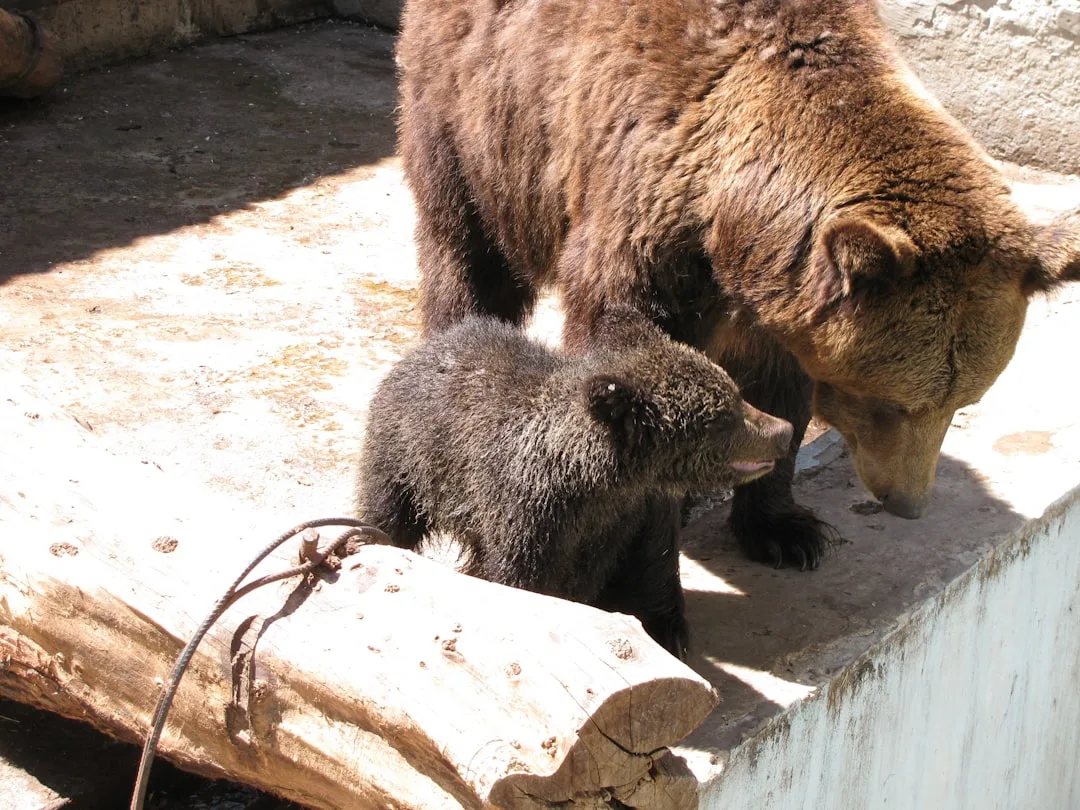
How dangerous are brown bears to humans?
Brown bears kill an estimated six to ten people per year worldwide, with the heaviest concentrations in Romania, Russia, Japan, and western North America. Bombieri and colleagues (2019) compiled 664 brown bear attacks between 2000 and 2015 and identified four recurring triggers: food attraction, surprise encounter, a female defending cubs, and habituation.
Romania carries the highest European attack rate, with twenty to forty non-fatal maulings and two to three fatalities in a typical year. Russia adds roughly ten to fifteen fatalities annually across its enormous range. Japan records one or two fatal attacks per year in Hokkaido, often involving habituated bears near urban edges.
Fatal outcomes in Europe cluster around trail runners, mushroom pickers, and shepherds in landscapes where bears have lost their fear of people.
The Shape of a Global Risk
Ursus arctos is the most widely distributed large carnivore on Earth. The species occupies Kamchatka, the Urals, Scandinavia, the Carpathians, the Dinaric Alps, Hokkaido, Anatolia, the Tian Shan, and western North America. Inside that footprint, an estimated 200,000 individuals share landscapes with several hundred million people.
The global fatality load from brown bears is small in absolute terms. A stable band of six to ten deaths per year across the entire range places the species below dog attacks, bee stings, and even saltwater crocodile incidents in most years. What distinguishes the brown bear is the pattern of its attacks.
Fatalities cluster in predictable geographies, predictable seasons, and predictable types of human activity, and a single habituated animal can account for a disproportionate share of a single year's toll.
For the animal's natural history, see our anchor profile of the brown bear. For the regional subspecies picture, see brown bear subspecies explained.
This article compiles the best global attack data, names the case files that shaped current protocols, and explains where and why the risk is genuinely elevated.
The Numbers: A Global Baseline
The most comprehensive modern dataset is the 2019 analysis in Scientific Reports by Bombieri and colleagues, a multinational team that catalogued brown bear attacks from 2000 to 2015 across every range country with functioning incident reporting. Their conclusions anchor the current conversation.
"Brown bear attacks on humans are rare events globally but show strong regional patterns. The greatest number of attacks were recorded in Romania, followed by the United States, Russia, and Slovakia. Attack scenarios were strongly influenced by human activity, food attraction, and bear habituation to anthropogenic landscapes."
- Giulia Bombieri et al., Scientific Reports, 2019 (DOI 10.1038/s41598-019-44341-w)
Bombieri's team identified four recurring contexts that together explain the overwhelming majority of attacks:
- Food attraction, in which garbage, beehives, livestock, or orchards draw bears into human space
- Surprise encounter, in which a bear and a person meet at close range in thick cover
- Female with cubs, the single most dangerous defensive scenario
- Habituation, in which repeated non-consequence contact with humans erodes flight distance
Estimated Fatal Brown Bear Attacks by Country, Typical Year
The table below compiles typical annual fatality counts from Bombieri et al. (2019), national wildlife agencies, and peer-reviewed regional studies cited in the references. Counts are averages across recent windows and will vary year to year, particularly when a single habituated animal produces a cluster of incidents.
| Country or Region | Fatal Attacks per Year | Non-Fatal Attacks per Year | Dominant Context |
|---|---|---|---|
| Russia (including Kamchatka) | 10-15 | 40-60 | Remote hunters, anglers, habituated camp bears |
| Romania | 2-3 | 20-40 | Tourism edges, shepherds, urban-fringe habituation |
| United States and Canada (grizzly) | Under 1 | 10-20 | Surprise encounter, sow with cubs, elk hunters |
| Japan (Hokkaido) | 1-2 | 10-15 | Habituated bears, foragers, urban edge |
| Slovakia | 0-1 | 5-10 | Shepherds, mushroom pickers, trail hikers |
| Turkey and Caucasus | 1-2 | 5-10 | Shepherds, beekeepers |
| Scandinavia (Sweden, Finland, Norway) | 0-1 | 2-5 | Hunters, dog incidents |
| Croatia, Slovenia, BiH | 0-1 | 2-5 | Rare, mostly surprise encounters |
| Global Total | 6-10 | ~100-150 | Mixed |
The approximately 6 to 10 annual fatalities sit at the upper end when a habituated animal accounts for multiple victims and at the lower end in quiet years. Bombieri et al. found that roughly 15% of incidents involved a bear that had attacked before, a figure that should reshape how managers and the public think about repeat offenders.
Romania: The European Epicentre
No country in Europe has a more concentrated brown bear problem than Romania. The Carpathian population is among the largest in Europe, recently re-estimated at approximately 7,500 to 8,000 individuals by the Romanian Ministry of Environment, although the figure has been contested by ecologists who argue for a lower number. Even at the conservative end, Romania holds more brown bears than any other country in the European Union.
Three factors drive the attack rate.
First, tourism infrastructure penetrates core bear habitat. The Transfagarasan and Transalpina highways carry roadside crowds that hand-feed bears from car windows during the summer. A bear that receives a biscuit from a tourist on Monday is a bear that walks into a picnic on Tuesday. The habituation arc is measured in weeks.
Second, urban-fringe bears have become a political fixture in Brasov, Sinaia, and a dozen smaller Carpathian towns. Unsecured dumpsters on residential streets draw bears into gardens and school yards. Bombieri's data and Romanian emergency services reports from 2019 to 2023 document repeated incidents on the edge of Brasov and in the villages of the Prahova Valley.
Third, the shepherd and mushroom-picker demographic ranges on foot through mixed forest and subalpine meadow, often alone, often without spray, and often with livestock or dogs that trigger defensive responses. The 2019 fatal attack on a trail runner on a marked route in the Bucegi Mountains was the highest-profile European case of that decade and prompted the Romanian authorities to revisit permitted deterrents and culling quotas.
"Romania is unusual in Europe in that it combines a very large brown bear population with an urban-interface problem that most other range states have solved. The density of habituated bears near towns is now the leading driver of serious injury in the country, and the trajectory is not improving."
- Djuro Huber, University of Zagreb, large carnivore ecologist, quoted in the European Large Carnivore Initiative briefings
For a map and habitat detail covering the Eurasian subspecies, see European brown bear: where they live.
Russia and Kamchatka: The Largest Range, The Largest Toll
Russia carries the largest brown bear population in the world, estimated at over 100,000 individuals, concentrated in the taiga belt from the Karelian border to Chukotka. Attack data are less systematically compiled than in Europe, but regional reporting from Kamchatka, Yakutia, and Primorye consistently places annual fatalities in the ten-to-fifteen range across the entire country.
The Russian picture is dominated by three patterns: remote hunters and anglers, habituated camp bears at research stations and fishing lodges, and the occasional mass-casualty event tied to a single bear.
The 1996 Kamchatka Geological Camp Attack
In the summer of 1996, a single large male brown bear killed six geologists and researchers at a remote camp on the Kamchatka Peninsula in a sustained series of attacks over several days before being shot. The case, documented in regional Russian press and later summarised in the IUCN Bear Specialist Group literature, is the most extreme predatory incident attributed to a single brown bear in the modern record.
The bear had been feeding at camp kitchens and had lost its flight response to humans. When food access was interrupted, the animal transitioned from nuisance to predator. The attack pattern, prolonged, nocturnal, with consumption of victims, aligns cleanly with the predatory classification described by Herrero and later by Bombieri.
"The 1996 Kamchatka case remains the clearest modern example of a single habituated brown bear producing multiple predatory fatalities. It is the reason every serious field camp in Russian bear country now separates cooking, sleeping, and waste disposal and treats a camp-raiding bear as a management emergency rather than a curiosity."
- Andreas Zedrosser, large carnivore researcher, Ursus and Wildlife Society Bulletin contributor
Kamchatka remains the highest-risk region within Russia, with coastal salmon concentrations creating both a very high bear density and high overlap with commercial fishing operations.
Japan: Hokkaido's Rising Attack Rate
Japan contains a single brown bear population, the Hokkaido brown bear (Ursus arctos yesoensis), with roughly 12,000 individuals on the northern island. Attack data compiled by the Hokkaido prefectural government and Japanese wildlife research institutes show a rising trend over the last decade, driven by the same habituation and urban-edge dynamics that characterise Romania.
Two incidents anchor the modern Japanese conversation.
The 2016 Hokkaido Child Fatality
In 2016, a four-year-old child was killed by a habituated brown bear near a residential area in Hokkaido. The bear had been frequenting the urban edge for weeks and had repeatedly been recorded in garbage-raid footage before the fatal incident. The case prompted the prefectural government to expand culling quotas for identified problem bears and to fund a new generation of bear-resistant waste containers in affected municipalities.
The 2023 Attack Surge
Japanese news agencies and the prefectural government reported a sharp increase in brown bear incidents on Hokkaido in 2023, attributed to a combination of poor mast crops in the highlands, which pushed bears to lower elevations, and continued urban expansion into former bear range.
The year produced multiple fatalities and dozens of injury incidents, with several bears identified as habitual human-space users before the attacks. For population background, see brown bear and how big are brown bears.
Other European Cases
The remaining European bear range produces a small but non-zero fatality stream, with the dominant pattern being rural foragers, shepherds, and hunters operating alone.
Slovakia
Slovakia carries roughly 1,200 brown bears across the Tatras and the Low Beskids. Attacks are rare but occurring. A notable 2021 double-fatality incident involved two victims in separate encounters with bears associated with the same habituated population near a mountain tourism corridor. The case triggered a national policy debate and an expansion of the intervention quota for problem bears.
Croatia and Slovenia
The Dinaric population straddling Croatia, Slovenia, and Bosnia-Herzegovina totals roughly 1,000 bears and produces rare fatal incidents. Most are associated with surprise encounters on mushroom-picking routes or in blind cover on logging roads. The Croatian bear management service, long shaped by Huber's work at Zagreb, has maintained an active monitoring regime that keeps incident rates low despite significant bear density.
Scandinavia
Sweden, Finland, and Norway hold approximately 3,000 brown bears between them. Fatal incidents are extraordinarily rare, typically one per decade, and usually involve a hunter pursuing a wounded bear or a dog incident that escalates. Scandinavia's low rate despite substantial bear numbers reflects rigorous food waste discipline, remote human settlement patterns, and a long cultural tradition of hunting-based bear management.
The Mechanism: Habituation is the Multiplier
The single most consequential finding from Bombieri et al. (2019) is that the behavioural state of the individual bear matters more than any environmental variable. A wild bear avoiding humans is a low-probability threat. A habituated bear that has learned humans supply food without consequence is a qualitatively different animal.
Wild Versus Habituated: The Key Differences
| Dimension | Wild Bear | Habituated Bear |
|---|---|---|
| Flight distance | 100-500 metres | Under 20 metres, often less |
| Response to human voice | Retreat | Approach or ignore |
| Time of activity near people | Nocturnal, crepuscular | All hours, increasingly diurnal |
| Attack motivation | Defensive, surprise, cubs | Food defence, territorial, predatory |
| Fatality rate per attack | ~3% | 10-20% |
| Typical management outcome | Avoidance sufficient | Culling or translocation required |
| Recurrence risk | Low | High (same bear, multiple incidents) |
The European Large Carnivore Initiative has repeatedly emphasised this asymmetry in its policy briefings.
"The evidence from every major bear range in Europe points in the same direction. Habituation, driven by unsecured food waste and by the normalisation of close-range encounters, is the precursor to the majority of serious incidents. Management that prevents habituation prevents attacks. Management that responds to habituation after the fact only moves the problem."
- Large Carnivore Initiative for Europe, policy briefing to the Bern Convention
The corollary is operational. A bear that has been photographed eating from a dumpster on a Tuesday is not a bear that should be tolerated on a Wednesday. The Kamchatka 1996 case, the Hokkaido 2016 case, and a long tail of Romanian incidents all began as predictable habituation before they became fatal.
For the species' natural foraging behaviour in landscapes without human interference, see what do brown bears eat and brown bear hibernation.
Brown Bear Versus Grizzly Attacks: Same Species, Different Arenas
A common question is whether the Eurasian brown bear is more or less dangerous than the North American grizzly. The species is the same, Ursus arctos. The differences in attack profiles reflect the environment, not the animal.
| Dimension | Eurasian Brown Bear | North American Grizzly |
|---|---|---|
| Population | ~20,000 in Europe, ~100,000 in Russia | ~55,000 (Alaska, Canada, Lower 48) |
| Typical body mass | Smaller (100-250 kg in Europe) | Larger (150-400 kg interior, larger coastal) |
| Dominant attack context | Habituation, urban-edge, shepherds | Surprise, sow with cubs, elk hunters |
| Fatalities per year | 4-8 (Europe and Russia combined) | Under 1 (continent-wide) |
| Deterrent regime | Bear spray legal in key countries, restricted elsewhere | Bear spray universally legal and recommended |
| Food-waste discipline | Uneven across range | Strict in national parks, variable on ranchland |
| Trail density vs bear density | High (Romania) to moderate | Moderate to low |
The North American grizzly produces fewer fatalities despite a comparable population because the baseline regime of food storage, bear spray, and education is tighter. Remove that regime and the fatality rate would rise toward the Romanian or Kamchatkan figure. For the full grizzly picture, see are grizzly bears dangerous to humans and the applied protocols in how to survive a grizzly bear attack.
"The gap between North American and European brown bear attack rates is not a gap between two kinds of bear. It is a gap between two kinds of landscape management. Where food waste is secured and bears are not taught to tolerate humans at close range, incident rates fall. Where the opposite is true, they rise."
- Bombieri et al., Scientific Reports, 2019 (DOI 10.1038/s41598-019-44341-w)
Bear Spray in Europe: A Legal Patchwork
The single most effective deterrent in the Smith et al. (2008) North American evidence base is bear spray, with a documented 98% stop rate against brown bears in close-range encounters. In Europe, the regulatory picture is more complicated.
Where Bear Spray is Legal
- Romania: Legal and widely sold at outdoor retailers, actively recommended by mountain rescue services
- Slovenia: Legal for hiking and professional forestry use
- Croatia: Legal, carried by licensed hunters and many forest workers
- Slovakia: Legal, increasingly promoted by the mountain rescue service following the 2021 incident
- Bulgaria: Legal
- Finland: Legal for outdoor recreation
Where Bear Spray is Restricted or Ambiguous
- Germany: Capsaicin sprays fall under weapons law; civilian carry is restricted and a specific authorisation is required in most Lander
- United Kingdom: Pepper spray is classified as a Section 5 firearm under the Firearms Act 1968 and is prohibited for civilian possession
- Norway and Sweden: Regulated; hunting-grade bear deterrent is generally permitted, but classification varies
- France and Italy: Ambiguous; consult regional rules before travel
The European Large Carnivore Initiative recommends that hikers in bear range countries where spray is legal carry and know how to deploy it. Where spray is restricted, the protocol reverts to the older discipline of group travel, noise, food storage, and avoidance of dawn and dusk movement in thick cover.
Prevention Protocols
The preventative playbook is not a patchwork. It is the same across every brown bear jurisdiction and has been repeatedly validated in the incident literature.
Make Noise on the Trail
Most defensive attacks are surprise encounters in thick cover. A human audible at 100 metres is a human the bear can avoid. Talk loudly on the trail, clap at blind corners, and in dense forest or berry fields shout every few seconds. Bear bells are weak. Human voice carries further and signals a clearer threat.
Travel in Groups
Bombieri et al. (2019), Herrero and Higgins (2003), and every regional study converge on the same statistic. Lone hikers are overrepresented in the fatal and serious injury data by a large margin. A party of four or more is effectively absent from the fatal attack record in any range country.
Store Food Out of Reach
A habituated bear is a product of unsecured food. In developed campgrounds, use bear-resistant containers and boxes. In the backcountry, hang food at least four metres off the ground and two metres from any trunk, or use a certified bear canister. Cook and eat at least 100 metres from where you sleep. Never sleep in clothes worn while cooking.
Avoid Dawn, Dusk, and Dense Cover When Alone
Brown bear activity concentrates at the edges of the day. A solo hiker moving quietly through dense cover at first light in August is precisely the Bombieri et al. high-risk profile. Adjust the schedule, add numbers, add noise, or accept the elevated risk knowingly.
Respect Carcasses and Kill Sites
A bear that has invested calories in a carcass will defend it violently. If ravens are circling or carrion is within scent range, retreat and take a different line. This is as true of a Romanian red deer kill as it is of a Montana elk kill.
What To Do During an Encounter
The response protocol depends on the motivation of the bear and is the same globally, although the subspecies label changes.
Defensive Attack (Most Common)
A bear that has been surprised, is defending cubs, or is defending a carcass charges and makes contact. The bear wants the threat neutralised, not a meal.
- Drop face down on the ground
- Interlace your fingers behind your neck with elbows out to shield the face
- Spread your legs to make rolling you harder, keep your pack on to armour your back
- Do not scream, do not fight back, do not move
- Wait until the bear has left the area before slowly getting up
Defensive maulings typically end within seconds to a minute once the victim goes still.
Predatory Attack (Rare, Usually Habituated)
A bear that has stalked silently, approached a camp at night, or persisted in an attack past the point at which a defensive bear would disengage is in predatory mode. Playing dead invites consumption.
- Fight back with every tool available, rocks, sticks, pot, knife, ice axe
- Target the face, eyes, and muzzle
- Make maximum noise and appear as large as possible
- Keep fighting until the bear breaks off
The Kamchatka 1996 case and the Hokkaido 2016 case both had predatory components. The protocol applies equally in Russia, Romania, Japan, and North America.
For comparison with the polar bear, whose attack profile skews overwhelmingly predatory, see are polar bears dangerous to humans and the species profile at polar bear.
Risk in Perspective
A hiker in the Romanian Carpathians, the Slovak Tatras, Kamchatka, or Hokkaido is far more likely to die of a fall, a cardiac event, or a traffic accident on the drive in than of a bear attack. The attack risk per person per visit remains small. What elevates the brown bear above the statistical noise is the high-consequence tail.
An attack is rare, and when it happens it can be catastrophic, and a single habituated animal can produce a cluster of fatalities that reshapes a country's policy for a decade.
That tail is why the protocols feel heavy relative to the base rate. Food storage, group travel, noise, and spray where legal are not calibrated to the average day. They are calibrated to the one encounter in a hundred thousand that would otherwise end in the coroner's office.
For the anchor context on the animal, return to our profile of the brown bear. Readers preparing for mountain guide certification, biology exams, or field research logistics can find cognitive and exam prep material at Whats Your IQ, expedition-grade professional certification resources at Pass4-Sure, and writing tools for trip reports and grant proposals at Evolang.
For lighter reading away from the mountains, When Notes Fly covers music and culture, and File Converter Free handles the paperwork that comes with permits and research visas.
Frequently Asked Questions
Are brown bear attacks increasing in Europe? Yes, modestly. Bombieri et al. (2019) documented a rising trend across the 2000 to 2015 window, driven primarily by Romania and Slovakia. The rise tracks tourism growth, continued urban expansion into bear range, and ongoing habituation on the urban fringe. Non-fatal incidents have risen faster than fatal ones, which reflects both rising bear-human overlap and improving medical response.
Why is Romania so much more dangerous than other European countries? Romania combines the largest Carpathian bear population in the European Union with a tourism and urban-interface pattern that other range states have largely solved. Roadside feeding, unsecured dumpsters in mountain towns, and a shepherd economy that operates on foot in core habitat all contribute. See European brown bear: where they live for the range picture.
Is playing dead the right response to a Russian or European brown bear? For a defensive attack, yes. The species is the same as the North American grizzly and the defensive response is identical across the range. Drop face down, protect the neck, wait for the bear to disengage. Fight back only if the attack is predatory, which is most common with habituated bears that have approached a camp at night or stalked a victim silently.
How big is the global brown bear population and how do attack rates compare per bear? Approximately 200,000 brown bears share the planet with humans, roughly half in Russia. Per capita, Romanian bears produce more attacks than Russian bears, Russian bears produce more than North American grizzlies, and Scandinavian bears produce the fewest.
The gradient tracks food waste discipline and human land use density more than any biological difference between populations. See brown bear subspecies explained for the taxonomy.
Does bear spray work on Eurasian brown bears? Yes. The species is Ursus arctos across its entire range and the capsaicin response is physiological, not cultural. Smith et al. (2008) and subsequent European field reports all support the same stop rate in the 90-plus percent range. Legality, not efficacy, is the constraint in Europe.
References
- Bombieri, G., Naves, J., Penteriani, V., Selva, N., Fernandez-Gil, A., Lopez-Bao, J. V., Ambarli, H., Bautista, C., Bespalova, T., Bobrov, V., Bolshakov, V., Bondarchuk, S., Camarra, J. J., Chiriac, S., Ciucci, P., Dutsov, A., Dykyy, I., Fedriani, J. M., Garcia-Rodriguez, A., ... Delgado, M. M. (2019). Brown bear attacks on humans: a worldwide perspective. Scientific Reports, 9, 8573. https://doi.org/10.1038/s41598-019-44341-w
- Penteriani, V., Delgado, M. M., Pinchera, F., Naves, J., Fernandez-Gil, A., Kojola, I., Harkonen, S., Norberg, H., Frank, J., Fedriani, J. M., Sahlen, V., Stoen, O. G., Swenson, J. E., Wabakken, P., Pellegrini, M., Herrero, S., & Lopez-Bao, J. V. (2016). Human behaviour can trigger large carnivore attacks in developed countries. Scientific Reports, 6, 20552. https://doi.org/10.1038/srep20552
- Smith, T. S., Herrero, S., Debruyn, T. D., & Wilder, J. M. (2008). Efficacy of bear deterrent spray in Alaska. Journal of Wildlife Management, 72(3), 640-645. https://doi.org/10.2193/2006-452
- Herrero, S., Higgins, A., Cardoza, J. E., Hajduk, L. I., & Smith, T. S. (2011). Fatal attacks by American black bear on people: 1900-2009. Journal of Wildlife Management, 75(3), 596-603. https://doi.org/10.1002/jwmg.72
- Swenson, J. E., Sandegren, F., Soderberg, A., Heim, M., Sorensen, O. J., Bjarvall, A., Franzen, R., Wikan, S., & Wabakken, P. (1999). Interactions between brown bears and humans in Scandinavia. Biosphere Conservation, 2, 1-9. https://doi.org/10.20798/biospherecons.2.1_1
- Huber, D., Kusak, J., & Frkovic, A. (1998). Traffic kills of brown bears in Gorski kotar, Croatia. Ursus, 10, 167-171. https://doi.org/10.2307/3873124
- Zedrosser, A., Steyaert, S. M. J. G., Gossow, H., & Swenson, J. E. (2011). Brown bear conservation and the ghost of persecution past. Biological Conservation, 144(9), 2163-2170. https://doi.org/10.1016/j.biocon.2011.05.005
- Herrero, S. (2018). Bear Attacks: Their Causes and Avoidance (Revised Edition). Lyons Press. ISBN 978-1493032129
Frequently Asked Questions
How many people are killed by brown bears each year worldwide?
Globally, brown bears kill an estimated six to ten people in an average year, with considerable variance between regions. Bombieri and colleagues (2019), writing in Scientific Reports, compiled 664 attacks between 2000 and 2015 across the species range and identified Romania, Russia, Alaska, and the contiguous western United States as the most active arenas.
Romania contributes two to three fatalities in a typical year, Russia adds ten to fifteen across its enormous footprint, Japan records one or two in Hokkaido, and the remaining European countries together rarely exceed a single fatal incident per year. The combined global total sits within a fairly stable band, with sharp spikes when a single habituated bear accounts for multiple victims before management action.
Are brown bears more dangerous than grizzly bears?
They are the same species. Ursus arctos includes the Eurasian brown bear, the Kamchatka brown bear, the Hokkaido brown bear, and the North American grizzly and Kodiak as subspecies or populations of a single taxon. Differences in attack behaviour reflect habitat, food availability, and human land use rather than biology.
Eurasian brown bears in heavily managed landscapes like Romania and Slovakia behave differently from grizzlies in Yellowstone because the density of people, livestock, and unsecured food waste differs, not because the animal is different. A coastal Kamchatka brown bear with seasonal salmon access and a Montana grizzly foraging on whitebark pine are closer to each other than a Romanian bear pulling garbage from a Brasov dumpster is to either.
Is bear spray legal to carry in Europe?
Legality varies by country. Bear spray is legal and widely sold in Romania, Slovenia, Croatia, and Slovakia, the four European countries with the largest brown bear populations and the highest attack rates. It is restricted or prohibited in several EU states that classify capsaicin aerosols as weapons under general civilian arms law, including parts of Germany and the United Kingdom.
Travellers planning to hike in bear country should verify the rule for each country on their itinerary and, where spray is restricted, rely on group travel, noise, and food storage discipline. The European Large Carnivore Initiative for Europe has published guidance on permitted deterrents by member state.