
The question "is a Kodiak bear a grizzly bear?" gets asked more often than almost any other comparison in North American wildlife, usually alongside questions about bear hibernation. The short answer is that they are cousins, not strangers. Both are subspecies of the brown bear, Ursus arctos, which makes them the same species on paper.
Underneath that shared name sit two populations that have gone their separate ways for the last twelve thousand years, and the physical result is dramatic. A typical Kodiak male weighs roughly twice what a typical interior grizzly weighs, stands half a metre taller at the shoulder, and lives at bear densities an interior grizzly would find unrecognisable.
This article walks through the taxonomy, the glacial history that split the two populations, the salmon-driven size difference, the behavioural consequences of island isolation, and the hunting regulations that now govern both. For a full profile of the interior subspecies, see our deeper entry on the grizzly bear, North America's most powerful predator, which this piece builds on throughout.
Both Are Brown Bears
The single most important fact in any grizzly vs Kodiak comparison is the one people tend to miss. There is no species-level difference between the two. Both are Ursus arctos, the same binomial Carl Linnaeus applied to the Eurasian brown bear in 1758. Everything below the species level is subspecies taxonomy, and subspecies exist on a sliding scale of genetic and morphological distinctness rather than as hard categories.
Ursus arctos is the most widely distributed bear on Earth. It stretches from the Cantabrian Mountains in Spain to the Kamchatka Peninsula in eastern Russia, and from Alaskan salmon rivers down through the Rocky Mountains into Wyoming and Montana. Within that vast range, biologists recognise a handful of regional subspecies, of which two concern us here.
| Subspecies | Common name | Range | Adult male mass |
|---|---|---|---|
| U. a. horribilis | Grizzly bear | Interior North America, Rocky Mountains, Alaska mainland | 180 to 360 kg typical |
| U. a. middendorffi | Kodiak bear | Kodiak Archipelago only | 270 to 630 kg typical |
| U. a. arctos | Eurasian brown bear | Europe, western Russia | 100 to 300 kg |
| U. a. beringianus | Kamchatka brown bear | Kamchatka Peninsula | 300 to 650 kg |
| U. a. isabellinus | Himalayan brown bear | High Himalaya | 70 to 220 kg |
| U. a. gobiensis | Gobi bear | Mongolian Gobi desert | 90 to 140 kg |
| U. a. pruinosus | Tibetan blue bear | Tibetan Plateau | 100 to 200 kg |
| U. a. syriacus | Syrian brown bear | Middle East, Caucasus | 100 to 250 kg |
Notice the range within a single species. A Gobi bear and a Kodiak are the same animal, taxonomically speaking, but a large Kodiak can weigh seven times what a large Gobi bear weighs. That elasticity is part of why Ursus arctos has colonised so much of the northern hemisphere. Give the species calories and it grows. Starve it and it shrinks.
For a broader look at how the species varies across the globe, our brown bear reference entry maps the full subspecies list in detail.
The Twelve Thousand Year Split
The Kodiak Archipelago sits about 50 km off the coast of the Alaska Peninsula, separated from the mainland by the Shelikof Strait. During the last glacial maximum, sea levels were roughly 120 m lower than today and the strait was either dry or crossable on sea ice. Brown bears colonised the islands during that period along with other large mammals. When the glaciers retreated and sea levels rose around the end of the Pleistocene, the archipelago was cut off.
Genetic work on the Kodiak population, including mitochondrial DNA analyses published in Ursus and in Molecular Ecology, shows that these bears have been effectively isolated from mainland brown bears for approximately 10,000 to 12,000 years. That is enough time for genetic drift to produce measurable differences in mitochondrial haplotypes and in several skeletal metrics, but not enough to approach speciation.
"The Kodiak bear is a brown bear that has been geographically and reproductively isolated from other brown bears for approximately 12,000 years. They are genetically distinct, but they are still brown bears."
, Larry Van Daele, former Kodiak area wildlife biologist, Alaska Department of Fish and Game
The archipelago itself covers about 13,000 square kilometres across five main islands: Kodiak, Afognak, Shuyak, Raspberry, and Uganik. Kodiak Island is the largest at 8,980 square kilometres, making it the second-largest island in the United States after the Big Island of Hawaii. The population holds around 3,500 individuals, one of the densest brown bear populations anywhere on Earth.
That combination of genetic isolation, geographic confinement, and unusually rich habitat is the setup for everything that follows.
Size Differences Explained
The clearest visible difference between an interior grizzly and a Kodiak is raw size. The numbers tell the story better than any adjective.
| Metric | Interior grizzly (U. a. horribilis) | Kodiak bear (U. a. middendorffi) |
|---|---|---|
| Adult male weight, typical | 180 to 360 kg | 270 to 630 kg |
| Adult female weight, typical | 130 to 200 kg | 180 to 320 kg |
| Shoulder height on all fours | 1.0 to 1.2 m | 1.3 to 1.5 m |
| Standing height on hind legs | 2.0 to 2.4 m | 2.5 to 3.0 m |
| Nose-to-tail length | 1.8 to 2.3 m | 2.4 to 3.0 m |
| Skull length, adult male | 38 to 42 cm | 44 to 50 cm |
| Heaviest verified individual | ~500 to 550 kg | ~751 kg (1894, Kodiak Island) |
| Typical life span | 20 to 25 years | 20 to 25 years |
A mature Kodiak male in autumn, carrying pre-hibernation fat, is simply in a different weight class. Alaska Department of Fish and Game biologists have weighed hunter-killed males at well over 680 kg and have occasionally recorded individuals approaching 730 kg. The 1894 record holder, a bear shot near Kodiak town and measured via its skull dimensions, back-calculates to roughly 751 kg (1,656 pounds). No interior grizzly has ever been verified at that mass.
For a deeper dive into how grizzlies themselves grow, from cub weight to adult dimensions, see our companion piece on how big grizzly bears get.
Why the gap? Diet does almost all of the work.
Salmon Is the Answer
Five species of Pacific salmon spawn in the streams of the Kodiak Archipelago: pink, chum, sockeye, coho, and chinook. The runs overlap from late June through October, giving Kodiak bears approximately four months of near-continuous access to one of the most calorie-dense food sources available to any terrestrial predator.
A single adult Kodiak during peak salmon run will typically kill and eat 10 to 30 fish per day. Bears preferentially consume the fattiest parts, the brain, the skin, and the roe, and often leave the rest. The carcasses fertilise the surrounding spruce-hemlock forest with marine nitrogen, which is one of the reasons Kodiak's riparian zones grow some of the most productive vegetation in coastal Alaska.
Interior grizzlies have no such windfall. A Yellowstone grizzly or a Yukon grizzly lives on a rotating menu of grasses, sedges, roots, army cutworm moths at high altitude, whitebark pine seeds, winter-killed ungulates, and opportunistic predation on elk calves. Cutthroat trout runs in small streams are occasionally important, but there is nothing in the interior range that approaches the sustained calorie flood of a Kodiak salmon summer.
For a full breakdown of what interior grizzlies eat season by season, we have a dedicated article on what grizzly bears eat. The short version is that interior diets are rich in variety and poor in density, while Kodiak diets are the reverse.
"Salmon is the single most important factor in Kodiak bear biology. Everything else, the density, the behaviour, the size, the reproductive rate, traces back to the fact that for four months every year the rivers fill up with food."
, Robin Barefield, Kodiak wildlife guide and author of Kodiak Island Wildlife
The island factor compounds the diet factor. Kodiak bears share the archipelago with Sitka black-tailed deer, mountain goats on Afognak, red fox, and river otters, but there are no wolves, no cougars, and no other bear species. An interior grizzly competes with wolves for carcasses and has to chase black bears off kills. A Kodiak does neither. More calories stay with the bear that earned them.
Behaviour at the Salmon Stream
The second consequence of salmon abundance is density, and the consequence of density is a very different social structure at the river's edge.
Interior grizzlies are famously intolerant of other adult bears. A dominant male in the Yellowstone backcountry typically has a home range of 800 to 1,500 square kilometres and will aggressively drive off rival males. Encounters away from concentrated food are rare and usually brief.
Kodiak bears in salmon season are practically communal. Along productive stretches of stream, researchers have documented up to 75 individual bears using a 2 km stretch simultaneously. Dominant males hold the best fishing spots, subadults take the marginal lies, and sows with cubs operate in the peripheries, but the overall tolerance level is so high that it looks almost cooperative to a first-time observer.
"On the Karluk River during a good pink salmon year you can watch twenty bears from a single vantage point. Nothing like that exists in interior grizzly country. The Kodiak bear has effectively become a social feeder during the salmon season."
, Alaska Dispatch News, feature on Kodiak salmon-viewing platforms
The tolerance is not altruism, it is economics. Fighting over a single salmon costs more calories than winning the salmon earns. Adult males who have figured this out live longer and leave more offspring. Over twelve thousand years of isolation, the Kodiak population has drifted toward a behavioural phenotype that mainland bears, which face different food geometry, have not.
A few more behavioural differences worth noting:
- Reproductive rate. Kodiak sows typically wean cubs at 3 years rather than the 2 to 3 years typical in interior grizzlies, because the cubs reach larger sizes and can be left to a larger range.
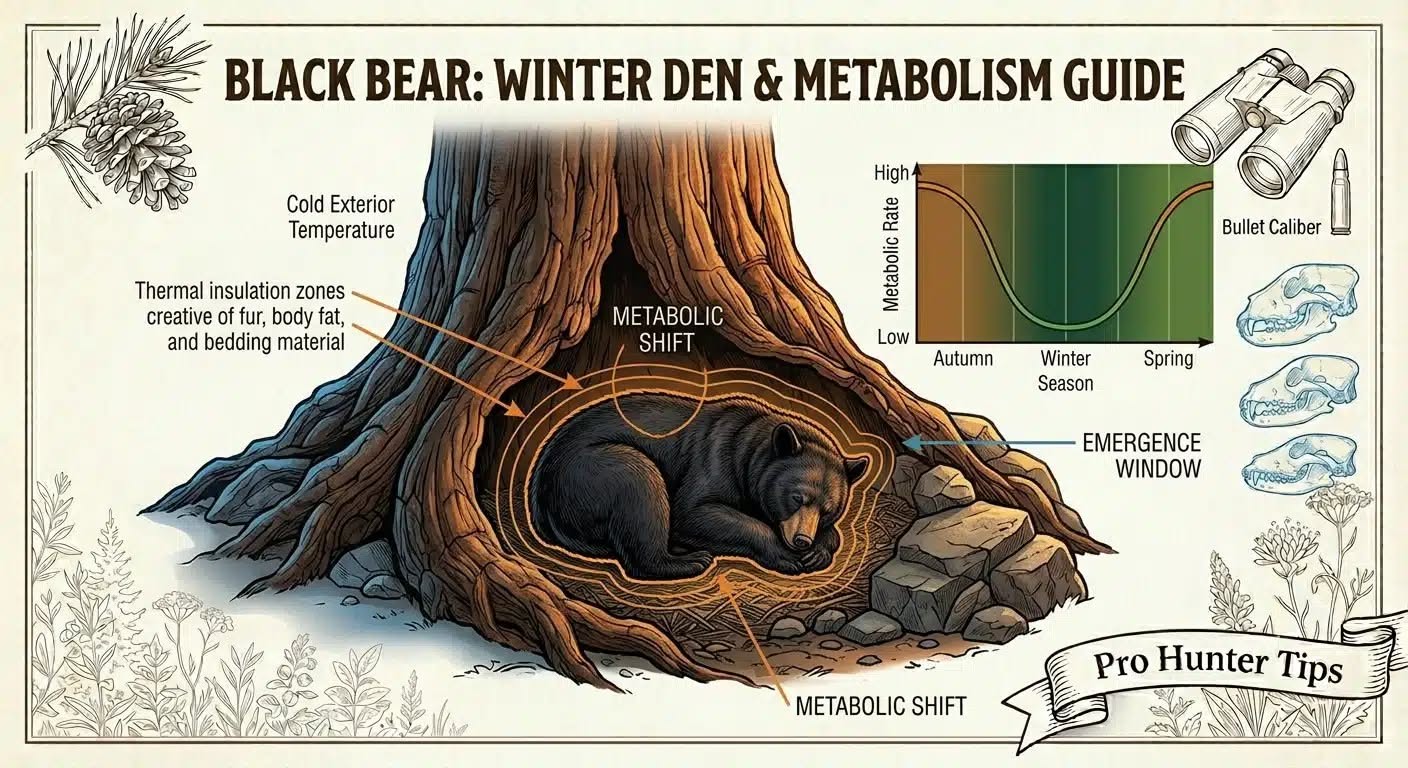
- Denning behaviour. Kodiak bears den at lower elevations than interior grizzlies, often in rock cavities dug into hillsides, and emerge slightly later in spring due to maritime climate.
- Human tolerance. Kodiak bears accustomed to bear-viewing operations are notably less reactive to careful human presence than interior grizzlies, though individual bears still vary and any habituated bear can be dangerous.
- Movement patterns. Home ranges on Kodiak are compact, often 80 to 400 square kilometres for adult males, roughly one tenth to one half the size of interior grizzly ranges.
For the mainland side of these comparisons, our articles on where grizzlies live and how fast a grizzly can run cover interior ecology and physiology in more depth. Readers curious about how grizzlies compare with other large bears may also want our grizzly vs black bear piece and our polar bear vs grizzly comparison, which places both subspecies against the largest living land carnivore, the polar bear.
Hunting Regulations and Management
Both subspecies are managed intensively, but the regulatory structures are different because the populations are different.
Interior grizzly. In the lower 48 states, grizzlies are federally listed as threatened under the Endangered Species Act, with specific recovery zones in the Greater Yellowstone, Northern Continental Divide, Cabinet-Yaak, Selkirk, and Bitterroot ecosystems. Hunting has been prohibited in most of these zones for decades.
In Alaska outside the Kodiak Archipelago, interior grizzlies are managed by Alaska Department of Fish and Game under general brown bear seasons, with bag limits varying by game management unit.
Kodiak bear. Kodiak Archipelago is a separate management system. The Alaska Department of Fish and Game runs a draw-permit system for resident and non-resident hunters, with strict quotas that typically allow 160 to 180 bears to be harvested per year across the archipelago. The hunt is split into spring and fall seasons, and roughly half of the available permits go to non-residents who must hire a registered guide.
The population is surveyed by aerial count in representative watersheds, and the harvest quota is adjusted annually based on those counts.
"The Kodiak brown bear population is stable, but stability is not an accident. It is the product of 70 years of quota management, rigorous guide requirements, and habitat protection across the Kodiak National Wildlife Refuge. Remove any of those pillars and the population would decline within a decade."
, Kodiak Brown Bear Trust, conservation management statement
The Kodiak National Wildlife Refuge covers about 7,700 square kilometres, roughly two thirds of Kodiak Island, and was established in 1941 primarily to protect brown bear habitat. The refuge is the single largest unit of bear-focused land management in the United States and is one of the main reasons the Kodiak population has held steady while many interior grizzly populations have fluctuated.
Identification in the Field
Most people who ask whether a bear is a grizzly or a Kodiak are in the wrong place to be asking. If you are in interior Montana, the Yukon, or British Columbia, the bear is a grizzly, full stop. If you are on the Kodiak Archipelago, the bear is a Kodiak, also full stop. There is no geographic overlap. Both subspecies are classified morphologically, not by visual identification in the field.
That said, a few rough rules apply if you are looking at photographs or trying to verify a location:
- Face shape. Both subspecies share the classic dished brown bear profile with a concave forehead-to-snout curve. A Kodiak's face tends to be proportionally broader and heavier, with a more pronounced jaw.
- Shoulder hump. Present and prominent in both. Neither loses the hump, which is composed of the digging musculature that defines the species.
- Coat. Interior grizzlies are more often silver-tipped or grizzled, which is where the common name comes from. Kodiaks are typically a more uniform dark brown, although individual variation is enormous.
- Bulk. A full-grown Kodiak is visibly blockier and longer than a full-grown interior grizzly, but a fat coastal Alaska grizzly on the Katmai peninsula can approach Kodiak dimensions without actually being one.
Why This Distinction Matters
The grizzly vs Kodiak distinction matters for three reasons.
Taxonomy. Subspecies are the currency of bear conservation biology. Federal listing decisions, state management plans, and international agreements all operate at the subspecies level, so calling a Kodiak a grizzly or vice versa is not just pedantry, it is a misstatement of management jurisdiction.
Ecology. Assuming grizzly behaviour on Kodiak Island or Kodiak behaviour in the Rockies leads to bad predictions about density, movement, and human-bear conflict. A density estimate that works in Yellowstone will undercount Kodiak bears by a factor of ten, and a home-range estimate from Kodiak will overstate Yellowstone bear density by the inverse.
Evolution in action. Kodiak bears are one of the cleanest natural experiments in mammalian ecology. The same genus, the same species, the same general morphology, split for twelve thousand years and subject to radically different food geometry. The result is a population that is measurably bigger, denser, more tolerant of conspecifics, and behaviourally distinctive. If you want to see how fast calorie surplus can reshape a large mammal, look at the Kodiak.
For readers who enjoy this kind of deep comparative biology, we write similar pieces on other topics across our partner sites: the cognition-focused work at whats-your-iq.com, the biology-adjacent musical writing at whennotesfly.com, the language and communication research at evolang.info, and the certification study guides at pass4-sure.us. For practical tools, fileformer.com keeps your research PDFs tidy.
Two Names for One Enormous Bear
Grizzly and Kodiak bears are the same species at a different address. Both are Ursus arctos. The grizzly, U. a. horribilis, lives across interior North America and averages 180 to 360 kg as an adult male. The Kodiak, U. a. middendorffi, lives only on the Kodiak Archipelago in southwestern Alaska and averages 270 to 630 kg. The split is twelve thousand years old and runs along a salmon river.
Give a brown bear five species of Pacific salmon, no wolves, and a 13,000 square kilometre island to itself and it will grow to 600 kg. Make it compete with wolves for elk in the Rockies and it will grow to 300 kg. Same genes, different groceries.
If this comparison sparked a broader interest, the companion pieces linked throughout, particularly the deeper grizzly bear profile and the brown bear reference entry, cover the rest of the family in the same level of detail.
References
- Van Daele, L. J., Barnes, V. G., & Smith, R. B. (2001). Denning characteristics of brown bears on Kodiak Island, Alaska. Ursus, 12, 125-132. https://doi.org/10.2192/1537-6176(2001)012[0125:DCOBBO]2.0.CO;2
- Waits, L. P., Talbot, S. L., Ward, R. H., & Shields, G. F. (1998). Mitochondrial DNA phylogeography of the North American brown bear and implications for conservation. Conservation Biology, 12(2), 408-417. https://doi.org/10.1111/j.1523-1739.1998.96351.x
- Hilderbrand, G. V., Schwartz, C. C., Robbins, C. T., Jacoby, M. E., Hanley, T. A., Arthur, S. M., & Servheen, C. (1999). The importance of meat, particularly salmon, to body size, population productivity, and conservation of North American brown bears. Canadian Journal of Zoology, 77(1), 132-138. https://doi.org/10.1139/z98-195
- Miller, S. D., Sellers, R. A., & Keay, J. A. (2003). Effects of hunting on brown bear cub survival and litter size in Alaska. Ursus, 14(2), 130-152. https://doi.org/10.2192/1537-6176(2003)014[0130:EOHOBB]2.0.CO;2
- Barnes, V. G., & Smith, R. B. (1998). Estimates of brown bear abundance on Kodiak Island, Alaska. Ursus, 10, 1-9. https://doi.org/10.2307/3873103
- Hilderbrand, G. V., Jenkins, S. G., Schwartz, C. C., Hanley, T. A., & Robbins, C. T. (1999). Effect of seasonal differences in dietary meat intake on changes in body mass and composition in wild and captive brown bears. Canadian Journal of Zoology, 77(10), 1623-1630. https://doi.org/10.1139/z99-133
- Talbot, S. L., & Shields, G. F. (1996). Phylogeography of brown bears (Ursus arctos) of Alaska and paraphyly within the Ursidae. Molecular Phylogenetics and Evolution, 5(3), 477-494. https://doi.org/10.1006/mpev.1996.0044
- McLellan, B. N. (2011). Implications of a high-energy and low-protein diet on the body composition, fitness, and competitive abilities of black (Ursus americanus) and grizzly (Ursus arctos) bears. Canadian Journal of Zoology, 89(6), 546-558. https://doi.org/10.1139/z11-026
Frequently Asked Questions
Is a Kodiak bear a grizzly bear?
A Kodiak bear is not a grizzly bear, but both are subspecies of the same species, the brown bear (Ursus arctos). The grizzly is Ursus arctos horribilis and inhabits interior North America. The Kodiak is Ursus arctos middendorffi and lives only on the Kodiak Archipelago in southwestern Alaska.
The two subspecies have been reproductively isolated for roughly 12,000 years, since the end of the last glacial period severed the land connection to the Alaska mainland. A Kodiak is therefore genetically a brown bear, taxonomically its own subspecies, and colloquially never called a grizzly, which is a name reserved for the interior horribilis lineage.
How much bigger is a Kodiak bear than a grizzly bear?
Adult male Kodiak bears average 270 to 630 kg, with well-fed individuals exceeding 680 kg, while interior grizzly males average 180 to 360 kg. On average a mature Kodiak weighs roughly twice what an interior grizzly weighs, and the largest verified Kodiak on record, a bear killed on Kodiak Island in 1894, back-calculates from skull measurements to around 751 kg.
Shoulder height at a normal four-legged posture is about 1.5 m for a Kodiak compared to 1.0 to 1.2 m for a grizzly, and a Kodiak on its hind legs can reach 3 m. The gap is not genetic but dietary. Kodiaks have unlimited access to Pacific salmon and an island without competitors, so they convert that calorie surplus into body mass.
What is the biggest brown bear subspecies?
The Kodiak bear, Ursus arctos middendorffi, is the largest brown bear subspecies on average and tied with the polar bear for the title of largest land carnivore on Earth. Kodiak males typically reach 270 to 630 kg, and the population has the highest average body mass of any brown bear group measured by Alaska Department of Fish and Game biologists.
Coastal brown bears on the Alaska Peninsula and on Admiralty and Baranof islands reach comparable sizes and share the same salmon-driven ecology, but they are classified as Ursus arctos horribilis rather than middendorffi. The Kodiak holds the record because of genetic isolation on an island with a uniquely rich five-species salmon run and no competing bear populations diluting the lineage.