
How strong is a jaguar's bite?
Jaguars have the strongest bite force per pound of body weight of any big cat, with measured forces of approximately 1,500 PSI (pounds per square inch). This is significantly stronger than lions (650 PSI) or tigers (1,050 PSI) proportionally. Their jaw muscles are disproportionately developed compared to body size, giving them extreme bite power relative to their weight.
1,500 PSI Bite That Pierces Turtle Shells
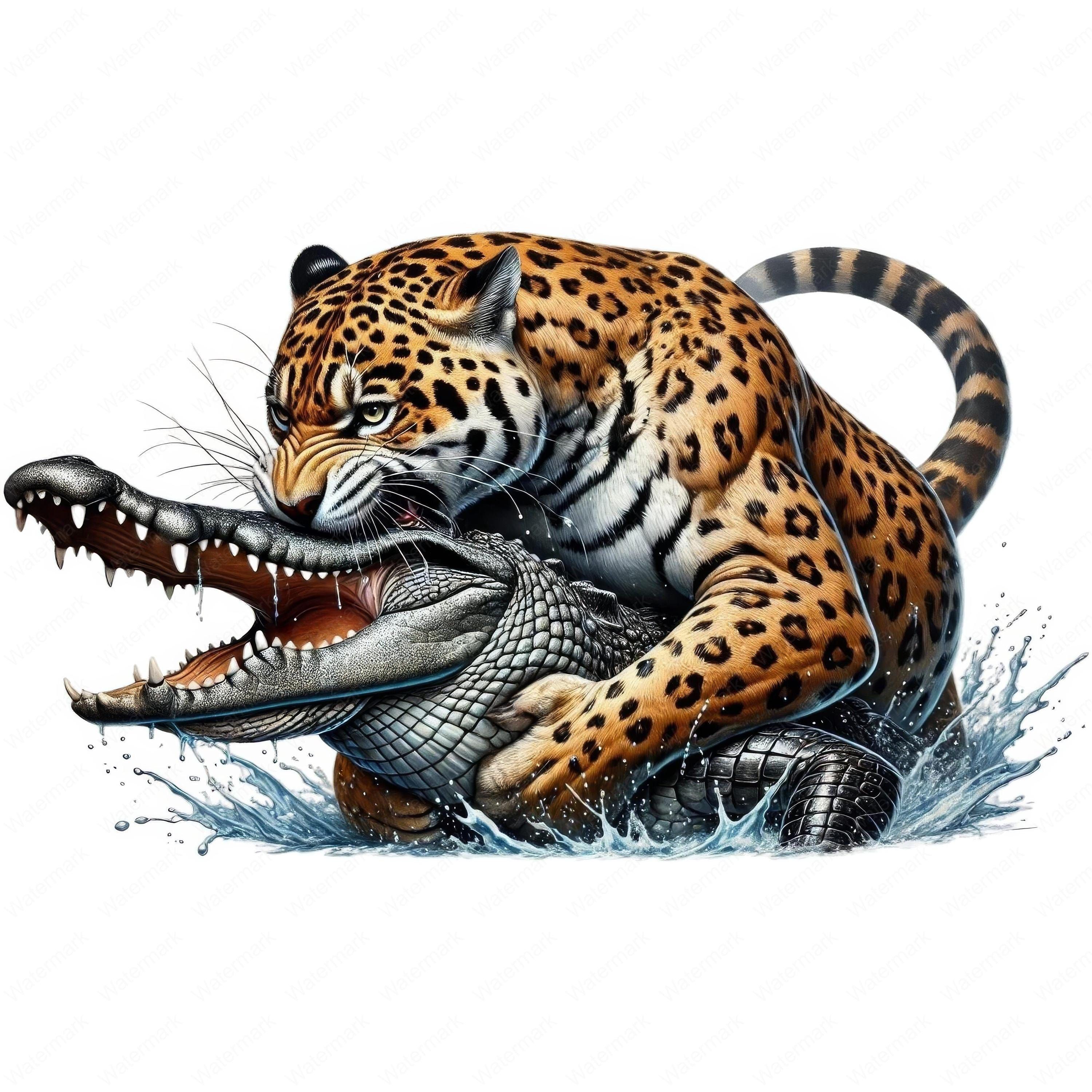
In the Brazilian Pantanal, a jaguar spots a caiman in shallow water. The caiman is large, close to the jaguar's size and heavily armored with scaly hide and dangerous teeth. Most predators would avoid such prey.
The jaguar approaches silently. In one explosive movement, it lunges and delivers a bite precisely to the back of the caiman's skull. The jaguar's 1,500 PSI bite force, the strongest per pound of any big cat, pierces through the caiman's brain case. The caiman dies instantly. The jaguar drags its kill onto land to feed.
This is the jaguar (Panthera onca), the only big cat that kills prey by crushing skulls, and the only big cat native to the Americas.
The Animal
Jaguars are powerful, stocky big cats.
Physical features:
- Males: 90-120 kg, 1.5-1.7 m body length
- Females: 60-100 kg, 1.2-1.5 m body length
- Tail: 45-75 cm (shorter than other big cats)
- Shoulder height: 75-85 cm
- Color: golden-yellow with black rosettes
- Rosettes: distinctive spots with internal dots
- Bite force: 1,500 PSI (strongest per pound of any big cat)
Distinctive features:
- Stockier build than leopards
- Larger head proportionally
- More powerful jaw muscles
- Shorter, thicker tail
- Broader shoulders
The Crushing Bite
Jaguars have uniquely powerful jaws.
Bite force comparison:
- Jaguar: 1,500 PSI
- Tiger: 1,050 PSI
- Hyena: 1,100 PSI
- Lion: 650 PSI
- Gorilla: 1,300 PSI
- Human: 150 PSI
Jaguars have the strongest bite force per pound of body weight of any big cat.
Why so strong:
Jaguar biology includes:
- Oversized jaw muscles
- Massive skull for leverage
- Extended mandible for force
- Specialized temporal muscles
- Dense jawbone structure
What this enables:
Their bite can:
- Pierce turtle shells
- Crack coconuts
- Break bones
- Crush skulls of prey
- Kill armored animals
Hunting advantage:
The bite provides:
- Instant kill capability
- Reduced hunting risk
- Access to unique prey
- Efficient energy use
- Defensive capability
Skull-Crushing Kill Method
Jaguars uniquely kill by piercing skulls.
The technique:
Unlike other big cats that suffocate or bleed prey:
- Stalk prey to close range
- Lunge with decisive strike
- Bite specifically at back of skull
- Canines pierce brain case
- Instant death
- Minimal risk to hunter
Target location:
Jaguars aim for:
- Back of skull (most vulnerable)
- Between eyes (where skull is thinnest)
- Jaw joint (weaker bone)
- Neck base (spinal cord)
Canine teeth:
Jaguar canines:
- Up to 6 cm long
- Sharp points
- Thick at base
- Designed for penetration
Why this method:
Advantages over other techniques:
- Faster kill: prey can't fight back
- Safer for hunter: reduces injury risk
- Works on armor: pierces shells
- Efficient: less energy needed
- Deadly to all: works on any prey
Contrast with other big cats:
Tigers and lions typically:
- Bite throat to suffocate
- Hold prey for minutes
- Risk injury from struggling prey
- Use different hunting technique
Where Jaguars Live
Jaguars are the only big cats of the Americas.
Current range:
- Mexico: still present (reduced)
- Central America: Costa Rica, Panama, Belize
- Amazon Basin: major population center
- Pantanal: famous population
- Bolivia and Peru: significant populations
- Brazilian forest: extensive territory
- Argentina: southern range edge
Historical range:
Extended from southern United States:
- Arizona, New Mexico, Texas (extinct since 1960s)
- Through Mexico
- Across Central and South America
- Down to Argentina
Lost range:
Major losses:
- United States: completely extinct in wild
- Much of Mexico: severely reduced
- Southern Brazil: fragmented
- Coastal regions: many areas lost
Modern strongholds:
- Amazon Basin: largest population
- Pantanal wetlands: famous tourism area
- Atlantic Forest remnants: declining
- Cerrado: Brazilian savanna
Hunting and Prey
Jaguars are versatile hunters.
Primary prey:
- Peccaries: wild pigs, major prey
- Capybaras: largest rodents, frequent prey
- Caimans: aquatic reptiles, regional specialty
- Turtles: including tortoises
- Deer: various species
- Tapirs: large rainforest mammals
- Fish: unique among big cats
- Monkeys: when opportunity
- Birds: various types
- Small mammals: various
Aquatic hunting:
Unlike most big cats, jaguars:
- Swim well
- Hunt fish regularly
- Catch caimans in water
- Cross rivers routinely
- Bathe frequently
Turtle hunting:
Jaguars specifically prey on turtles:
- Pierce shells with bite
- Extract meat carefully
- Regional specialization in some populations
- Unique behavior among big cats
Cooperative hunting:
Jaguars are solitary but:
- Sometimes hunt cooperatively in Pantanal
- Cooperate at caiman kills
- Share territory at times
- Generally each hunts alone
The Pantanal Jaguars
Brazilian wetlands host famous populations.
The Pantanal:
World's largest wetland:
- 210,000 km² seasonal wetland
- Brazil, Bolivia, Paraguay
- Biodiversity hotspot
- Premier jaguar viewing area
Jaguar density:
- Among highest in the world
- Tourism-accessible
- Well-studied population
- Conservation success story
Hunting specialties:
Pantanal jaguars:
- Specialize in caimans
- Hunt capybaras frequently
- Use water extensively
- Large territories
Tourism:
- Multimillion-dollar industry
- Wildlife safaris popular
- Professional photography
- Conservation funding
- Employment for locals
Famous individuals:
Researchers identify specific Pantanal jaguars:
- Scarface: famous male with distinctive scars
- Mick Jaguar: prominent tourist jaguar
- Various others: tracked through photography
Rosettes vs Spots
Jaguar patterns are distinctive.
Rosette structure:
Jaguar spots are "rosettes":
- Larger than leopard spots
- More widely spaced
- Irregular in shape
- Have internal black dots
- 3-5 dots within each rosette
Versus leopard spots:
Leopards have:
- Smaller, more uniform rosettes
- Closer together
- No internal spots
- More uniform pattern
Black jaguars:
Melanistic jaguars exist:
- Appear black but have visible rosettes
- Same species, different color morph
- Caused by specific genetic mutation
- Approximately 6% of jaguar population
- Often called "black panthers" (same in leopards)
Identification:
Individuals identified by:
- Unique rosette patterns
- Size and build
- Scars and markings
- Facial features
- Body distinctive features
Social Behavior
Jaguars are mostly solitary.
Social structure:
- Solitary adults
- Mother-cub units
- Brief male-female interactions
- Some cooperative hunting
- Territorial behavior
Territory:
- Males: 25-100 km²
- Females: 10-65 km²
- Overlap: males overlap multiple females
- Defense: less strict than other species
- Marking: scent and scratches
Communication:
- Roars: distinctive sound
- Grunts: close-range communication
- Scent marking: territorial signals
- Scratches: visual markings
- Vocalizations: various purposes
Solitary vs social:
Why mostly solitary:
- Prey dispersed
- Dense forest habitat
- Ambush hunting favors stealth
- Food availability varies
- No pack benefit
Mother-cub:
- Mothers raise cubs alone
- Intense bonding
- Teaching period 1.5-2 years
- Eventually cubs leave
- Mothers don't receive support
Reproduction
Jaguar breeding is slow.
Sexual maturity:
- Females: 2-3 years
- Males: 3-4 years
Breeding:
- Year-round in tropical regions
- Seasonal in subtropical areas
- Females in estrus 6-17 days
- Brief male-female interaction
Gestation:
- 93-105 days
- 1-4 cubs typically
- Average 2-3 cubs
- Born in hidden den
Cubs:
- Weight: 700-900 g at birth
- Blind and helpless
- Eyes open at 14 days
- Start walking at 3 weeks
- Teethed at 3-4 weeks
Development:
- Nursing to 5-6 months
- Beginning of hunting training at 6 months
- Independence at 1.5-2 years
- Sexual maturity at 2-3 years
Mortality:
- 50% of cubs die before age 2
- Predation by jaguars (rarely, other species)
- Starvation
- Disease
- Natural disasters
Conservation Status
Jaguars face significant threats.
IUCN status:
Near Threatened (downgraded from least concern due to population decline).
Population:
- Total estimate: 64,000-200,000 individuals
- Declining trend
- Regional variations
- Some populations still healthy
Threats:
Deforestation:
- Amazon loss significant
- Agricultural expansion
- Cattle ranching
- Infrastructure development
Human-jaguar conflict:
- Livestock predation
- Retaliatory killing
- Persistent issue
- Difficult to solve
Prey depletion:
- Hunting of native prey
- Fishing reduces aquatic prey
- Forces jaguars to alternative prey
- Increases human conflict
Illegal trade:
- Historical demand reduced
- Still persists in some markets
- CITES protection
- Continued enforcement
Climate change:
- Forest fires
- Habitat shifts
- Water availability
- Ecosystem disruption
Conservation Programs
Multiple efforts work to protect jaguars.
Protected areas:
- Brazilian national parks: extensive
- Pantanal Conservation Areas: wetland protection
- Amazon reserves: multiple
- Corridor projects: connecting habitat
International cooperation:
- Pantanal Conservation Initiative
- Jaguar Corridor Initiative
- Panthera organization
- WWF programs
Community engagement:
- Conflict prevention
- Alternative livelihoods
- Education programs
- Compensation schemes
Research:
- Population monitoring
- Genetic studies
- Behavioral research
- Habitat requirements
Success stories:
- Belize: first jaguar preserve (Cockscomb)
- Pantanal tourism: economic incentive
- Corridors: connecting populations
- Population monitoring: tracking progress
Cultural Significance
Jaguars hold deep cultural importance in the Americas.
Ancient civilizations:
Mayan culture:
- "Balam" (jaguar) was royal symbol
- Supernatural associations
- Rulers identified with jaguar power
- Sacred animal
Aztec culture:
- "Ocelotl" meaning jaguar
- Eagle-jaguar warrior orders
- Religious significance
- War and nobility symbol
Olmec culture:
- Jaguar-baby sculptures (famous)
- Supernatural entity
- Ritual importance
- Earliest Mesoamerican representation
Incan culture:
- Associated with power
- Royal symbol
- Warrior identity
- Part of pantheon
Modern Americas:
- National symbols in multiple countries
- Cultural pride
- Tourism value
- Conservation identity
- Educational importance
Why Jaguars Matter
Jaguars represent ecological and cultural significance.
Ecological role:
- Apex predators in American rainforests
- Ecosystem balance maintenance
- Prey population regulation
- Important to food webs
Biological uniqueness:
- Only big cat in Americas
- Strongest bite force per pound
- Unique skull-crushing hunting
- Only major fish-eating big cat
Cultural value:
- Deep Amerindian traditions
- Modern cultural symbol
- Tourism icon
- Educational focus
Conservation importance:
- Umbrella species for rainforest protection
- Charismatic for funding
- International cooperation focus
- Biodiversity indicator
Scientific value:
- Behavioral research
- Evolutionary studies
- Conservation biology
- Ecology research
The Silent Hunter
Every jaguar in American rainforests represents millions of years of predator evolution.
They are the only big cats native to the Western Hemisphere. Their ancestors crossed from Asia into the Americas, developed into their own lineage, and specialized for rainforest hunting. They've specialized in ways other big cats haven't - skull-piercing kills, aquatic hunting, fish prey, specialized bite force.
They're losing habitat to deforestation. They're losing prey to overhunting. They're losing individuals to human conflict. Their populations are fragmenting.
Yet they persist. The Pantanal maintains famous populations. The Amazon hosts the largest remaining numbers. Protected corridors connect some habitats. Tourism provides economic incentive for conservation in specific regions.
Each jaguar hunting in the Brazilian Pantanal, Peruvian rainforest, or Mexican forest represents both the species' success and its challenges. Whether jaguars continue to exist long-term as viable populations depends on human choices about habitat protection, prey management, and community relationships in jaguar territory.
They were considered divine by multiple ancient civilizations. They remain powerful symbols in modern cultures. They continue doing what they've always done, patrolling territories, hunting with their extraordinary bite, raising cubs, maintaining ecosystem balance.
The cats that walked the Americas since long before humans arrived continue walking these same lands. Whether they keep walking depends on us.
Bite Force Comparisons Across Large Carnivores
The jaguar's bite force is the highest among big cats per unit body size, though absolute bite force is exceeded by several larger animals. The Kalenux Team compiled bite force measurements from peer-reviewed biomechanical literature.
| Species | Bite Force (Newtons) | Body Mass | Relative (force per kg) |
|---|---|---|---|
| Jaguar | 8,100 | 100 kg | 81 |
| Tiger | 10,500 | 200 kg | 53 |
| Lion | 9,000 | 180 kg | 50 |
| Leopard | 5,150 | 60 kg | 86 |
| Cougar | 4,450 | 65 kg | 68 |
| Cheetah | 2,800 | 45 kg | 62 |
| Spotted hyena | 8,900 | 70 kg | 127 |
| Grizzly bear | 5,900 | 400 kg | 15 |
| Wolf | 1,500 | 45 kg | 33 |
| Saltwater crocodile | 16,400 | 1,000 kg | 16 |
"The jaguar has the strongest bite of any big cat by proportion to its body size. The lion and tiger can bite harder in absolute terms, but they are also considerably larger. Per gram of body mass, no felid bites harder than a jaguar." - Stephen Wroe, University of New England Australia, Proceedings of the Royal Society B, 2005 [1]
The jaguar's exceptional bite force relates directly to its hunting technique. While most big cats kill large prey by suffocating them with a throat bite, jaguars pierce the skull. This is particularly useful for their wetland prey: a caiman's scaly hide resists throat bites but is vulnerable to a crushing skull strike, as is a turtle's armored carapace. The jaguar's tooth-to-skull attack is almost unique among modern felids.
Jaguar Subspecies and Distribution
Historically, taxonomists recognized as many as nine jaguar subspecies, but modern molecular analyses have consolidated this to a much smaller number. Recent studies suggest the species is more genetically continuous than previously thought, with only two or three distinct subspecies likely valid.
| Region | Estimated Population | Status |
|---|---|---|
| Brazilian Amazon | 40,000-60,000 | Largest single population |
| Pantanal (Brazil, Bolivia, Paraguay) | 4,000-7,000 | Highest density population |
| Mexican and Central American | 2,500-4,000 | Fragmented |
| Peruvian Amazon | 5,000-8,000 | Variable |
| Colombian and Venezuelan | 6,000-8,000 | Declining |
| Paraguayan Chaco | 500-1,000 | Critically threatened |
| Argentine Yungas | 50-100 | Critically endangered |
| United States | 0-5 individuals | Functionally extinct |
The US population deserves special mention. Historically, jaguars ranged as far north as the Grand Canyon and central California. They were extirpated from the United States in the 1960s, with occasional individual males documented since then wandering up from Mexico.
Recent trail camera evidence in southern Arizona has confirmed several individual jaguars crossing the border, and conservation groups have proposed restoring jaguar habitat in the American Southwest. Border wall construction has complicated these recovery efforts.
Indigenous Knowledge and Research Collaboration
Throughout jaguar range, indigenous communities possess detailed traditional knowledge about the species that is only now being integrated into scientific research. In the Brazilian Pantanal, Terena and Guato communities track individual jaguars using identification techniques older than modern camera traps. In Central America, Maya communities have documented jaguar territories and hunting patterns as part of traditional land management.
"Scientific jaguar research began in the 1980s, but indigenous peoples had been systematically observing jaguars for thousands of years. Modern conservation programs that ignore indigenous knowledge have poorer outcomes than those that include it. Integrating traditional ecological knowledge with GPS tracking and DNA analysis has been the breakthrough of the last decade." - Esteban Payan, Panthera, Biological Conservation, 2019 [2]
The Panthera Jaguar Corridor Initiative, launched in 2007, explicitly incorporates indigenous community partnerships as a core conservation strategy. The 18-country corridor network aims to maintain genetic connectivity across the species' range by protecting movement corridors between larger populations. Indigenous communities serve as both field researchers and local enforcement against poaching and habitat destruction.
References
- Wroe, S., McHenry, C. R., and Thomason, J. (2005). "Bite club: comparative bite force in big biting mammals and the prediction of predatory behaviour in fossil taxa." Proceedings of the Royal Society B, 272(1563), 619-625.
- Payan, E., and de Oliveira, T. G. (2019). "Jaguar conservation in the twenty-first century: a summary of threats, challenges, and opportunities." Biological Conservation, 239, 108299.
- Eizirik, E., Kim, J. H., Menotti-Raymond, M., Crawshaw, P. G., O'Brien, S. J., and Johnson, W. E. (2001). "Phylogeography, population history and conservation genetics of jaguars (Panthera onca)." Molecular Ecology, 10(1), 65-79.
- Quigley, H. B., and Crawshaw, P. G. (1992). "A conservation plan for the jaguar (Panthera onca) in the Pantanal region of Brazil." Biological Conservation, 61(3), 149-157.
- Cavalcanti, S. M. C., and Gese, E. M. (2010). "Kill rates and predation patterns of jaguars (Panthera onca) in the southern Pantanal, Brazil." Journal of Mammalogy, 91(3), 722-736.
Related Articles
Frequently Asked Questions
How strong is a jaguar's bite?
Jaguars have the strongest bite force per pound of body weight of any big cat, with measured forces of approximately 1,500 PSI (pounds per square inch). This is significantly stronger than lions (650 PSI) or tigers (1,050 PSI) proportionally. Their jaw muscles are disproportionately developed compared to body size, giving them extreme bite power relative to their weight.
This allows them to pierce turtle shells, armadillo armor, and even crush skulls of prey - a hunting technique unique to jaguars. Their bite force is actually comparable to larger big cats in absolute terms despite jaguars being smaller. Their skull structure supports this extreme force - with larger jaw muscles relative to head size than other big cats.
Combined with canine teeth up to 6 cm long, jaguars can kill prey through skull penetration - a hunting method other big cats rarely use. Their jaw strength has earned jaguars the nickname ‘skull crushers.’
Why do jaguars bite through skulls?
Jaguars kill prey by biting through the skull, a hunting technique largely unique to their species. They specifically target the back of the skull, piercing into the brain with their massive canine teeth. This method kills prey instantly - unlike the slower suffocation technique used by lions and tigers.
The jaguar’s skull-piercing technique evolved to exploit specific prey types: armored animals (armadillos, turtles, caimans) that need forceful attack, powerful prey (tapirs, capybaras, peccaries) where quick kill prevents escape, aquatic prey (caimans) where prolonged struggle is dangerous for the cat.
Biting through skull provides: immediate prey death, reduced risk to the hunter, ability to kill dangerous prey safely, quick dispatch of powerful resistance. This technique requires: extreme bite strength, massive jaw muscles, specialized teeth, and specific hunting knowledge. Young jaguars learn the technique from mothers over months.
Research suggests this hunting method influenced jaguar evolution - their strength maximized for this specific kill technique.
Are jaguars bigger than leopards?
Yes, jaguars are typically larger and more muscular than leopards, though the two species look superficially similar. Jaguar males reach 90-120 kg and 1.5-1.7 meters long (body), while leopards average 60-70 kg and 1.2-1.4 meters long. Jaguars are more stockily built with heavier bones and larger skulls.
Their distinguishing features: jaguars are heavier and stockier, larger heads with bigger jaws, shorter tails, larger and more widely-spaced rosettes (spots), rosettes have internal spots (black dots within the rosettes), leopards are slimmer and more lithe, longer tails for balance, more uniform rosette pattern.
Jaguars and leopards diverged evolutionarily approximately 2 million years ago and now live on different continents (jaguars in Americas, leopards in Asia/Africa). Behaviorally, jaguars hunt more aquatic prey and use their strength for skull-crushing kills, while leopards specialize in trees and stalk prey. Both species are spotted big cats with similar coloration patterns, leading to frequent confusion.
The internal spots on jaguar rosettes are a key identifier.
Where do jaguars live?
Jaguars are the only big cats native to the Americas, with range extending from Mexico through Central America into South America - primarily in the Amazon basin and surrounding rainforests.
Their historical range included: southern United States (extinct in US since the 1960s, occasional strays), Mexico (still present but reduced), Central America (Belize, Costa Rica, Panama), Amazon basin (major population), Pantanal wetlands (famous population), Southern Argentina. Modern range is approximately 50% of historical due to habitat destruction.
Major remaining populations: Brazilian Pantanal, Peruvian rainforest, Bolivian rainforest, Guiana Shield, Mexican forests. They prefer: tropical forests (primary habitat), wetlands (Pantanal specialists), mountain forests (less common), rivers and lakes (for aquatic hunting), semi-open woodlands. They avoid true deserts, high mountains, and dense human-populated areas. Currently listed as Near Threatened, with fragmentation being a major concern.
The Amazon is their stronghold - maintaining Amazon protection is essential for jaguar conservation globally.
Are jaguars dangerous to humans?
Jaguars are potentially dangerous but rarely attack humans. They are capable of killing humans easily with their strength and bite force, but attacks on humans are extraordinarily rare. Most documented human-jaguar encounters end with the jaguar retreating. Why they rarely attack: humans are not natural prey, jaguars avoid confrontation when possible, healthy jaguars have abundant natural prey, they prefer different habitats than humans.
Attack patterns: most documented attacks involve captive jaguars (zoos, sanctuaries), provoked wild jaguars (trapped, injured, cornered), very rare predatory attacks on humans in remote areas, sleeping humans in traditional villages. In the Pantanal and Amazon, where humans live near jaguars, attacks occur but are rare enough that they become news events. Historical records show jaguars attacking explorers, hunters, and travelers in certain regions.
Modern ecotourism operations in jaguar habitats report no attacks despite thousands of close encounters with tourists in boats and observation platforms. Their danger is primarily to livestock (cattle especially), creating human-jaguar conflict that drives retaliatory killing of jaguars. Respectful observation from appropriate distances is considered safe.