
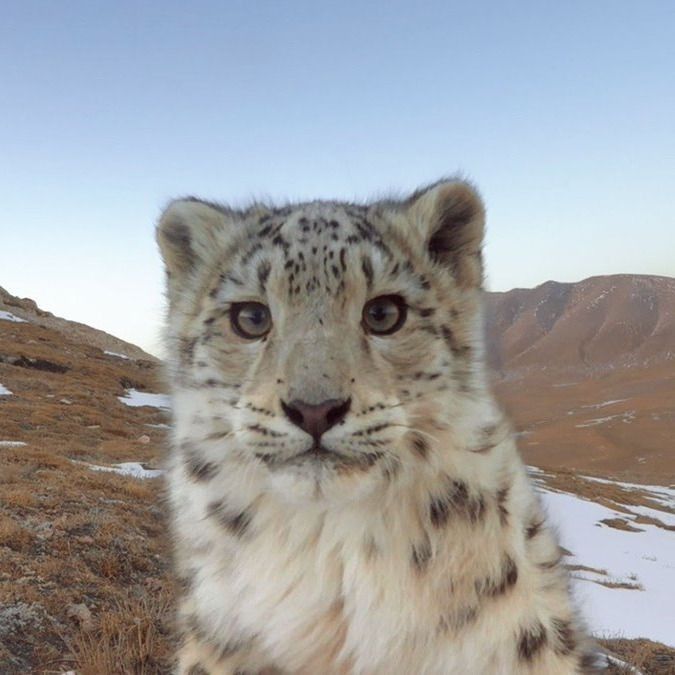
How many snow leopards are left in the wild?
Only 4,000 to 6,500 snow leopards remain in the wild, distributed across 12 countries in Central Asia's high mountain ranges. The species inhabits an enormous range (approximately 1. 8 million square kilometers) but at extremely low densities - typically 0. 1 to 5 cats per 100 square kilometers.
The Rarest Big Cat
Somewhere at 4,500 meters elevation in the Himalayas, a snow leopard is watching. You are unlikely to see her even if you spend weeks in her range. Researchers who have dedicated careers to studying these cats sometimes go years between sightings. Her spotted gray coat matches the rocks and snow so perfectly that she becomes invisible standing ten meters from a trained observer.
Only 4,000 to 6,500 snow leopards remain alive in the world. They occupy one of the largest home ranges of any large cat species - spanning 12 countries across Central Asia - but at densities so low that seeing one in the wild requires extraordinary effort and luck. They are the rarest and most elusive of the big cats, and their survival depends on circumstances that are becoming increasingly difficult.
The Numbers
Population estimates:
- Total wild population: 4,000-6,500 adults
- China: 2,000-2,500 (largest population)
- Mongolia: 800-1,000
- India: 500-700
- Kyrgyzstan: 300-400
- Pakistan: 200-400
- Other 7 countries: 200-1,500 combined
Geographic range:
Snow leopards inhabit approximately 1.8 million square kilometers across:
- Afghanistan
- Bhutan
- China
- India
- Kazakhstan
- Kyrgyzstan
- Mongolia
- Nepal
- Pakistan
- Russia
- Tajikistan
- Uzbekistan
This range spans the major mountain systems of Central Asia: the Himalayas, Karakoram, Hindu Kush, Pamir, Tian Shan, and Altai mountains. The cats typically live at elevations between 3,000 and 5,500 meters, with summer ranges sometimes exceeding 6,000 meters.
Density:
Snow leopard density ranges from 0.1 to 5 cats per 100 square kilometers, among the lowest of any big cat species. For comparison, tigers in healthy habitat reach 10-20 per 100 km², and lions in African prides can reach 20+ per 100 km² in ideal conditions. Snow leopards are naturally spread thin because their prey species live in similarly low densities in the harsh mountain environment.
Physical Adaptations for Extreme Mountain Life
Snow leopards are superbly adapted for one of the harshest environments any big cat inhabits.
Thick Fur
Snow leopards have the thickest fur of any cat species. Fur length varies from 5 cm on the back to 12 cm on the belly, providing extraordinary insulation against temperatures that routinely drop to -40°C in winter. The coat is patterned with rosettes and spots that provide camouflage against rocky, snow-patched mountain terrain.
The fur grows in dense dual layers:
- Undercoat: Fine, dense wool-like fur that traps body heat
- Guard hairs: Longer outer hairs that repel moisture and snow
A snow leopard's fur weighs more proportionally than any other cat's. The insulation is so effective that snow leopards can lie motionless in the snow for hours without losing dangerous amounts of body heat.
Large Nasal Cavities
Snow leopard nasal passages are enlarged compared to other cats, allowing them to warm cold air before it reaches their lungs. At elevations where air temperatures drop to -30°C, breathing unwarmed air directly would chill internal organs. The enlarged nasal chambers provide a warming pathway that protects the respiratory system.
This adaptation also helps with moisture preservation. Air exhaled from the nasal passages is cooler than air from the lungs, which reduces water loss in breath - critical in environments where water is often frozen and difficult to obtain.
Built-In Snowshoes
Snow leopard paws are disproportionately large for their body size - approximately the size of a large dog's paw despite snow leopards weighing only 35-55 kg. The paws are also densely furred between the toes and around the pads.
The combination works like built-in snowshoes:
- Large surface area distributes weight over snow
- Fur prevents snow from packing into the paw
- Fur provides additional insulation on icy rock
Snow leopards can move silently across deep snow that would slow down or trap other predators. This gives them hunting advantages in their signature environment.
The Tail
Snow leopard tails are extraordinary. At up to 1 meter long (75-90 percent of body length), they are the longest tails relative to body size of any cat species.
Multiple functions:
- Balance during leaps. The tail swings as a counterweight during jumps, keeping the cat stable during acrobatic mountain hunting.
- Warmth while resting. Snow leopards curl their tails around their bodies while sleeping, wrapping themselves like a scarf.
- Balance during sprints. Mountain terrain is uneven; the tail provides dynamic balance adjustment during chases.
- Communication. Tail position conveys mood to other snow leopards during close encounters.
The thick fur and length make the tail appear disproportionately massive. Many first-time snow leopard observers comment on how much tail the animal seems to have.
High-Altitude Physiology
Snow leopards breathe air that contains only 50-60 percent of the oxygen available at sea level. Their physiology compensates through:
- Larger lungs relative to body size than other cats
- Higher red blood cell counts
- More efficient hemoglobin-oxygen binding
- Larger hearts with stronger pumping capacity
These adaptations allow normal activity at elevations where humans experience severe altitude sickness. Snow leopards have been camera-trapped hunting at 5,800 meters, at altitudes where most humans struggle to function without supplemental oxygen.
Leaping Ability
Snow leopards can leap up to 15 meters (50 feet) horizontally and 6 meters (20 feet) vertically - the longest jumps of any big cat relative to body size.
Context for 15 meters:
- Length of a school bus
- Height of a 5-story building
- Width of 3 car-widths of roadway
A snow leopard can clear these distances from a standing start in a single leap. This capability evolved for specific ecological reasons.
Why such extreme leaping ability:
Prey capture. Snow leopards hunt mountain goats and sheep that live on cliff faces. The ability to leap from ledges onto prey positioned meters below provides a critical hunting advantage.
Escape from danger. Mountain terrain has few predators of adult snow leopards, but young cubs are vulnerable to wolves, bears, and golden eagles. Adult snow leopards can carry cubs to safety by leaping between rock formations too far apart for wolves to follow.
Territory navigation. Snow leopard territories extend across steep, fragmented terrain. The ability to leap between ridges, across ravines, and onto high ledges allows efficient movement through otherwise impassable landscapes.
Mechanics:
The leap is generated through:
- Strong hind legs providing initial thrust
- Flexible spine that stores and releases elastic energy
- Long tail providing mid-air balance
- Large lungs providing sustained oxygenation
A snow leopard in leap is briefly airborne for approximately 1.5-2 seconds, covering 10-15 meters during that time. The cat uses the tail for mid-air adjustments, landing on all four feet simultaneously to distribute impact.
Hunting Strategy
Snow leopards are ambush predators specialized in mountain-specific hunting techniques.
Primary prey:
- Blue sheep (bharal): primary prey across much of the range
- Asiatic ibex: major prey in Central Asian mountains
- Himalayan tahr: important prey in Himalayas
- Argali sheep: largest wild sheep, taken occasionally
- Markhor: mountain goat with spiral horns
- Smaller prey: pikas, marmots, hares, game birds
Typical hunt:
Locate prey. Snow leopards have excellent vision for spotting prey at long distances in the clear mountain air. They can identify moving animals several kilometers away.
Approach invisibly. The cat uses its camouflaged coat to approach prey through rocks and vegetation, staying out of sight. Snow leopards are patient - a stalk can take hours.
Position for attack. The cat positions itself above the prey, typically on a ledge or cliff face. Attacking from above maximizes the force of impact and minimizes the prey's escape routes.
Leaping attack. When within range, the snow leopard leaps onto the prey, using its massive acrobatic capability to cover distances that would be impossible from level ground.
Killing bite. Like other big cats, snow leopards kill with a bite to the throat or back of the neck. Their canine teeth sever vertebrae or compress the windpipe.
Drag to safety. Snow leopards can carry prey weighing more than themselves. They often drag kills to cliffs or caves where they can feed undisturbed.
Feed for days. A single large kill provides 3-4 days of food. The snow leopard covers the carcass with stones or snow between meals and returns to continue eating.
Success rate:
Snow leopards succeed in approximately 15-20 percent of hunting attempts - a rate comparable to most big cats. Failed hunts may waste enormous energy in mountain terrain, so snow leopards are extremely selective about when to commit to an attack.
Why They Cannot Roar
Snow leopards belong to the genus Panthera - the "big cats" including lions, tigers, leopards, and jaguars. But unlike the other Panthera species, snow leopards cannot roar.
The anatomical difference:
True roaring in Panthera cats requires a specialized structure in the larynx. The hyoid bone (which supports the tongue) is replaced with a flexible ligament, and the vocal cords are structured to produce the low-frequency, high-amplitude sounds we recognize as roaring.
Snow leopards have a more rigid hyoid structure, similar to smaller cat species. Their vocal cords cannot produce the deep roars of lions or tigers.
What snow leopards sound like:
Instead of roaring, snow leopards communicate through:
- Chuffing: A soft friendly sound used for close-range communication between individuals. Similar to domestic cat purring.
- Mewing: Higher-pitched call used between mothers and cubs, and between mating pairs.
- Hissing and growling: Threat displays during confrontations.
- Yowling: Long, haunting moaning calls during mating season. This call gives snow leopards much of their "ghostly" mystique - the sound carries across mountain valleys and has been described as sounding supernatural by people who encounter it.
Evolutionary history:
Genetic analysis shows snow leopards split from other Panthera cats earlier than most of their relatives diverged from each other. The roaring adaptation developed in the Panthera lineage after snow leopards had already branched off, explaining why they never acquired this capability.
Some biologists have proposed reclassifying snow leopards into their own genus (Uncia uncia was the older name) because of these differences. The current consensus keeps them in Panthera, but they remain the odd member of the group.
Reproduction and Family Life
Snow leopards are solitary animals except during mating season and when females are raising cubs.
Mating:
Mating season runs from January to mid-March. During this brief window, males and females associate intensively, with males sometimes traveling outside their normal territories to find receptive females. The long yowling calls during this period help potential mates locate each other across vast mountain territories.
Gestation and birth:
After a 93-110 day gestation, females give birth in caves or rocky dens in June or July. Litters typically contain 2-3 cubs, occasionally up to 5.
Cub development:
- Birth weight: 320-700 grams
- Eyes open: 7-9 days
- First solid food: 2 months
- Weaning: 5 months
- Independence: 18-22 months
Cubs stay with their mother through their second winter, learning hunting techniques and navigating territory. This extended dependency period is longer than most cat species because the complexity of mountain hunting requires extensive learning.
Mortality:
Cub mortality is high - approximately 50 percent die before reaching adulthood. Primary causes include:
- Starvation during poor hunting seasons
- Predation by wolves, bears, and golden eagles
- Exposure to extreme weather
- Occasional abandonment by stressed mothers
Adult snow leopards face fewer natural threats. Most adult mortality comes from human causes: retaliation for livestock predation, poaching for fur and bones, and occasional accidents in difficult terrain.
The Threats
Snow leopards are classified as Vulnerable by the IUCN (upgraded from Endangered in 2017 after population estimates improved slightly). The species faces multiple severe threats.
Human-wildlife conflict:
Snow leopards occasionally kill livestock, particularly in areas where wild prey populations have been depleted. A single snow leopard may kill multiple sheep or goats in one predation event ("surplus killing" behavior that appears to be stress-induced).
Herders in poor mountain villages cannot afford these losses. Retaliation killings have been a major cause of snow leopard deaths historically. Each retaliation killing removes a breeding adult from an already tiny population.
Poaching:
Snow leopard fur, bones, and organs have value in traditional Asian medicine and luxury markets. Despite international protection under CITES Appendix I, poaching continues. An estimated 220-450 snow leopards are poached annually - a significant fraction of the total population.
Prey depletion:
Blue sheep, ibex, and other wild prey species are hunted by humans across much of the snow leopard's range. Reduced prey populations force snow leopards to take more livestock, intensifying human conflict.
Habitat loss:
Mining operations, road construction, and infrastructure development in mountain regions fragment snow leopard habitat. Even when habitat is not directly destroyed, human disturbance causes snow leopards to abandon affected areas.
Climate change:
Perhaps the most existential threat. Snow leopards depend on cold, snowy high-elevation environments. As temperatures rise:
- Tree lines move higher, shrinking the alpine zone snow leopards inhabit
- Prey species shift to higher elevations, reducing overlap with snow leopards
- Glaciers retreat, changing water availability
- Climate-driven conflicts between humans and wildlife intensify
Mining:
The mountains that snow leopards inhabit contain significant mineral resources - gold, copper, rare earth elements. Mining operations across China, Mongolia, and Central Asia are expanding into snow leopard habitat, causing habitat loss and increased human presence.
Conservation Programs
Multiple initiatives work to protect snow leopards across their range.
Snow Leopard Trust. Major international NGO founded in 1981. Works across all 12 range countries on research, community-based conservation, and policy advocacy.
Global Snow Leopard and Ecosystem Protection Program (GSLEP). Coordinated initiative by all 12 snow leopard range states, launched in 2013 with the goal of protecting 20 snow leopard landscapes by 2020. Implementation continues with progress and challenges.
Community-based conservation:
The most effective conservation programs involve local communities. Key strategies:
Livestock compensation schemes. Herders who lose animals to snow leopards receive cash payments. This reduces retaliation killings dramatically - participating villages show 70-80 percent reduction in snow leopard mortality.
Predator-proof corrals. Simple fence and roof modifications to livestock pens prevent snow leopard access. These reduce predation by 90+ percent in villages that implement them.
Livestock insurance programs. Similar to compensation but structured as insurance premiums. Generates sustainable funding and community buy-in.
Ecotourism. Trekking tours in snow leopard habitat (particularly Ladakh, Mongolia, Nepal) generate income for local communities, creating economic incentives to protect the cats.
Research:
Camera trap networks across multiple countries provide the best population estimates. Genetic sampling from scat analyzes population connectivity. GPS collaring programs (though challenging to deploy on such remote cats) reveal movement patterns.
Some notable research findings:
- Snow leopards maintain larger territories than previously thought
- Individual cats sometimes move across international borders
- Climate change is already shifting snow leopard prey distribution
- Prey availability predicts snow leopard population density more strongly than habitat area
The Ghost Cat
The snow leopard's nickname - "ghost of the mountains" - reflects multiple truths about this species:
Extreme elusiveness. Even biologists who study snow leopards for years often go months between sightings. Their camouflage is so effective that observers standing meters away can miss them entirely.
Supernatural-seeming sounds. The yowling calls during mating season, carrying across empty mountain valleys at night, have inspired folklore and ghost stories throughout the snow leopard's range.
Low population density. With only 4,000-6,500 cats spread across 1.8 million square kilometers, encountering one requires extraordinary circumstances.
Cultural associations. Many mountain cultures have supernatural traditions about snow leopards. Tibetan Buddhism considers them sacred. Central Asian folklore features them as guardians of mountain passes. Kyrgyz traditions tell of snow leopards as shape-shifters.
Literary mystique. Peter Matthiessen's 1978 book The Snow Leopard is one of the most acclaimed nature writing works of the 20th century. It documents his expedition to find the cat, which he never saw, and has established snow leopards in Western imagination as symbols of wildness and elusiveness.
The Conservation Calculation
Saving snow leopards is technically possible. The species is not so reduced that recovery is impossible - with adequate protection, habitat, and prey, populations can increase.
What success would require:
- Sufficient habitat preservation (currently pressured but still largely intact)
- Stable wild prey populations
- Reduced retaliation killings (addressed by community programs)
- Effective anti-poaching enforcement
- Climate change mitigation to preserve alpine habitat
- Coordination across 12 countries with varying capacities and political situations
Realistic prospects:
Snow leopards are unlikely to go extinct in the next few decades. Their vast range and relatively stable core populations provide some security. But continued population decline is expected without significantly expanded conservation efforts.
The long-term picture depends largely on climate change. If high-altitude habitats continue to warm and alpine zones shrink, even perfect conservation efforts may not preserve enough habitat for viable populations.
The aspirational goal:
Snow leopard conservation success would mean maintaining current populations through this century, with potential recovery as climate and economic pressures stabilize. This is the middle-case scenario - between complete loss and substantial population recovery.
Why They Matter
Snow leopards are indicator species for entire mountain ecosystems. Their presence signals:
- Sufficient prey populations
- Adequate habitat connectivity
- Limited human disturbance
- Functional alpine ecosystems
Losing snow leopards would indicate broader collapse in mountain ecological health, with cascading effects on herbivore populations, vegetation patterns, and ecosystem services that mountain regions provide to water systems and downstream communities.
Beyond ecological significance, snow leopards hold cultural importance for hundreds of millions of people in mountain regions. They appear in folklore, religious traditions, and national identity across Central Asia. Their loss would be not just a biological event but a cultural one.
And beyond practical considerations, snow leopards are simply remarkable. Their combination of extreme specialization, extraordinary physical capability, and mysterious presence makes them one of the most fascinating big cats. A world without snow leopards would be a world with less wonder in it.
For now, somewhere above 4,000 meters, under an empty blue sky or during a snowstorm, a snow leopard is watching over her territory. She has not seen a human in months, and no human has seen her. She is doing what her species has done for millions of years in these mountains.
Whether she will still be doing it a century from now is the conservation question of our time for this species. The answer depends on choices being made now, in places far from her mountains, by people who may never see her but whose decisions will determine her future.
Related Articles
- The Secret Lives of Big Cats
- Lion vs Tiger: Who Would Win in a Fight
- Cheetah: The Fastest Land Animal
Frequently Asked Questions
How many snow leopards are left in the wild?
Only 4,000 to 6,500 snow leopards remain in the wild, distributed across 12 countries in Central Asia’s high mountain ranges. The species inhabits an enormous range (approximately 1.8 million square kilometers) but at extremely low densities - typically 0.1 to 5 cats per 100 square kilometers.
This makes them one of the rarest big cat species on Earth, and their elusive nature has earned them the nickname ‘ghost of the mountains.’ Populations exist in Afghanistan, Bhutan, China, India, Kazakhstan, Kyrgyzstan, Mongolia, Nepal, Pakistan, Russia, Tajikistan, and Uzbekistan. China holds the largest population with approximately 2,000-2,500 individuals.
Exact population counts remain difficult because snow leopards are so rarely seen even in their known territories - most population estimates come from camera trap surveys and sign counts rather than direct observation.
How high can a snow leopard jump?
Snow leopards can leap up to 15 meters (50 feet) horizontally and 6 meters (20 feet) vertically - making them the longest jumping of all big cats. A 15-meter horizontal leap is approximately the length of a school bus and requires extraordinary muscle power relative to their modest 35-55 kg body weight.
These jumps are made possible by their extremely long hind legs, flexible spine, and powerful thigh muscles developed for navigating steep mountain terrain. Snow leopards use these jumps both for hunting prey (leaping onto ibex and blue sheep from above) and for escaping predators. Their 1-meter-long tail serves as a counterbalance during leaps, and as insulation wrapped around their body while sleeping in cold temperatures.
What do snow leopards eat?
Snow leopards primarily hunt mountain ungulates including blue sheep (bharal), Asiatic ibex, Himalayan tahr, argali sheep, and markhor. They also take smaller prey like pikas, marmots, hares, and game birds. A snow leopard kills approximately 20-30 large prey animals per year, caching the carcasses in caves or under rocks and returning to feed for 3-4 days per kill.
They are opportunistic enough to take livestock - sheep, goats, yaks, and even young horses - when wild prey is scarce. This occasional livestock predation creates significant human-snow leopard conflict, as herders in impoverished mountain villages cannot afford to lose animals.
Many snow leopards are killed in retaliation for livestock predation, though conservation programs now compensate herders for losses in several countries, reducing retaliatory killings.
Why can't snow leopards roar?
Snow leopards cannot roar because they lack the specialized hyoid bone arrangement found in other Panthera cats (lions, tigers, leopards, jaguars). Their hyoid bone is more rigid, similar to the structure found in smaller cats like cheetahs. Instead of roaring, snow leopards produce a distinctive ‘chuff’ sound used for close-range communication between individuals, and a long, eerie moaning call called a ‘yowl’ during mating season.
The yowl can carry several kilometers through mountain valleys but sounds nothing like the deep roar of a lion or tiger. Snow leopards were long considered an odd Panthera species because of this vocalization difference. Recent genetic analysis has confirmed they belong to the Panthera lineage but represent an earlier evolutionary branch that split off before the roaring adaptation fully developed in their relatives.
How do snow leopards survive extreme cold?
Snow leopards have multiple adaptations for surviving temperatures as low as -40°C at elevations above 4,500 meters. Their fur is the thickest of any cat species - up to 12 cm long on the belly - providing extraordinary insulation. Their nose chambers are enlarged to warm cold air before it reaches their lungs. Their paws are large and fur-covered, working like built-in snowshoes to distribute weight and prevent sinking into snow.
Their tail can be wrapped around their body like a scarf for additional warmth while resting. Their small external ears reduce heat loss. Their compact body shape (shorter legs relative to body length compared to other big cats) minimizes surface area exposed to cold.
Physiologically, their lungs are larger than expected for their body size to extract oxygen from thin mountain air at elevations where oxygen levels are only 50-60 percent of sea level concentrations.