
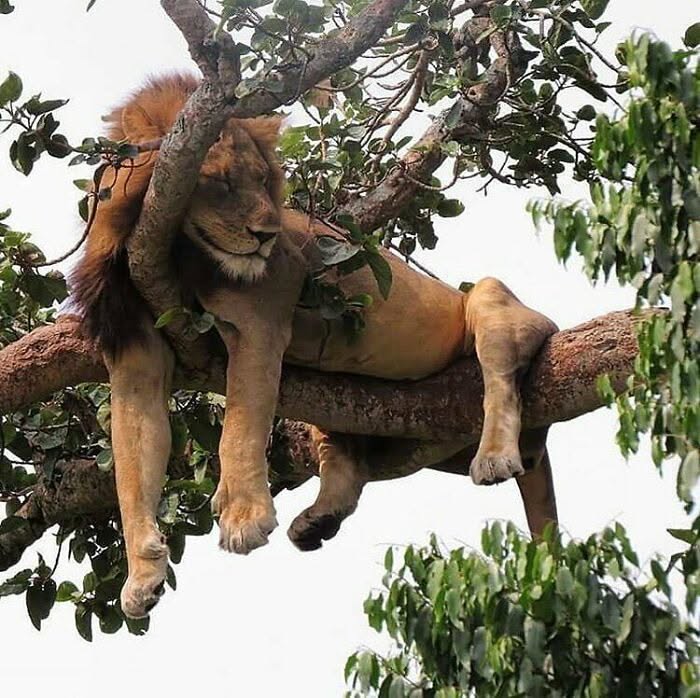
Why are lions the only social big cats?
Lions (Panthera leo) are the only big cats that live in social groups called prides, typically consisting of 2-6 related females with their cubs and 1-4 unrelated adult males. All other big cats (tigers, leopards, jaguars, cheetahs, cougars, snow leopards) are solitary. Lion sociality evolved approximately 1.
The Only Social Big Cat
Imagine the African savanna at dawn. A pride of 15 lions rests in the tall grass, four adult females, their six cubs, and four adult males working together as a coalition. The females shared a hunt last night. The males patrolled the territory border, marking their domain. The cubs played and wrestled. Everyone is now resting together as a family unit.
This is lion society, and it is unique in the big cat world. Tigers hunt alone. Leopards stalk alone. Jaguars move alone. Cheetahs may form small alliances but mostly operate alone. Only lions developed true sociality, complex, cooperative prides that hunt together, defend territory together, and raise young together.
The Animal
Lions are powerful, muscular big cats with distinctive social behavior.
Physical features:
- Males: 150-250 kg, 1.8-2.1 m long (body)
- Females: 120-180 kg, 1.6-1.8 m long (body)
- Shoulder height: 1.1 meters
- Tail: 70-100 cm with dark tuft
- Color: tawny yellow with cream underside
- Mane: only in males, develops from age 2+
- Bite force: 650 PSI
Subspecies:
- African lion (P. leo leo): mainland Africa
- Asian lion (P. leo persica): India only
Lifespan:
- Wild males: 8-12 years
- Wild females: 15-17 years
- Captive: up to 25+ years
Pride Social Structure
Lion prides are family groups.
Typical pride composition:
- 2-6 adult females (related)
- 1-4 adult males (unrelated to females but related to each other)
- 3-12 cubs of varying ages
- Total: 10-25 individuals typically
Female structure:
- Usually sisters and mothers
- Stay with birth pride for life
- Cooperative cub-rearing
- Shared hunting duties
- Stable long-term relationships
Male structure:
- Coalitions of 2-6 males
- Leave birth pride at 2-3 years
- Wander as nomads
- Eventually take over another pride
- Tenure typically 2-5 years before displacement
Takeover violence:
When new males take over a pride:
- Often kill existing cubs
- Drives females back into heat sooner
- Ensures new males' genes pass on
- Brutal but evolutionarily driven
Extended family dynamics:
- Grandmothers often participate
- Aunts help raise each other's cubs
- Multigenerational care
- Complex relationships
Why Social?
Lions evolved sociality for specific reasons.
Evolutionary timing:
- Sociality evolved ~1.2 million years ago
- Unique among big cats
- Coincided with savanna expansion
- Benefits outweigh costs
Advantages:
Cooperative hunting:
- Larger prey possible (buffalo, giraffe)
- Better success rate for large prey
- Coordinated attack strategies
- More food per individual
Territorial defense:
- Defending large territories
- Against other prides
- Against hyenas and wild dogs
- Collective strength
Cub protection:
- More eyes watching for predators
- Cooperative defense of offspring
- Better cub survival
- Teaching opportunities
Competition with hyenas:
- Hyenas are social predators
- Lions need equal social structure
- Prides can defeat hyena clans
- Solo lions often lose to hyenas
Hunting Strategy
Pride hunting is sophisticated.
Cooperative hunting:
Females coordinate through:
- Planning the approach
- Taking positions around prey
- Some drive prey toward ambushers
- Synchronized attack
- Sharing kills
Targets:
Primary prey:
- Wildebeest
- Zebra
- Buffalo
- Antelope
- Warthog
- Giraffe (sometimes)
- Impala
- Various smaller animals
Hunting times:
- Dawn and dusk (twilight hunting)
- Moonless nights (optimal for vision advantage)
- Rarely during hot daytime
- Opportunistic otherwise
Success rate:
- 17-25% average
- Higher for large groups
- Lower for solo hunters
- Practice improves individual hunters
Kill method:
Lions typically:
- Pin prey to ground
- Bite throat to suffocate
- Hold until death
- Don't bite the neck vertebrae like tigers
Male Lions Hunt Too
The "males don't hunt" myth is incorrect.
Common assumption:
Males are seen as:
- Lazy and dependent on females
- Just protecting territory
- Not participating in hunts
- Living off female labor
Reality:
Males actually:
- Hunt significant portions of meals
- Target specific prey types (large, dangerous)
- Hunt buffalo and giraffe more than females
- Bring down large prey requiring strength
- Participate in cooperative hunts
Why the myth:
Observer bias:
- Males rest more visible
- Females hunt at night
- Daytime observations catch males lounging
- Incomplete research coverage
Modern understanding:
Males:
- Contribute roughly equally in many prides
- Specialize in certain prey types
- Provide strength for large kills
- Are essential hunting partners
The Mane
Male lion manes have complex evolutionary significance.
Mane characteristics:
- Develops from 2 years of age
- Reaches full size at 4-5 years
- Varies in color (blonde to black)
- Varies in thickness
- Individual variation significant
Functions:
Protection:
- Shields neck during fights
- Reduces injury from rival males
- Important in male-male combat
- Thicker manes = better protected
Signaling:
- Communicates health status
- Signals testosterone levels
- Attracts females
- Intimidates rival males
Temperature effects:
- Darker, thicker manes in cooler climates
- Reduced manes in hot regions
- Thermoregulation role
Female preferences:
Research shows lionesses prefer:
- Darker manes
- Thicker manes
- Bigger manes
- Indicates mate quality
Regional variations:
- Tsavo lions (Kenya): reduced or no manes (heat adaptation)
- Asiatic lions: less pronounced manes
- Southern African lions: fully developed manes
- Various populations: different patterns
Territory
Lions defend large territories.
Territory size:
- Small prides: 20-50 km²
- Large prides: 200-400 km²
- Serengeti prides: sometimes 500+ km²
Factors affecting size:
- Prey availability (more prey = smaller territory needed)
- Water access
- Pride size
- Neighboring prides
- Predator competition
Territorial behavior:
- Scent marking (urine, scat)
- Roaring (communicates location)
- Physical patrol
- Violent defense
Roaring:
Lion roars:
- Audible for 8 km
- Communicate pride location
- Identify pride members
- Intimidate rivals
- Coordinate pride movements
Where Lions Live
Modern lion distribution is fragmented.
African range:
Major populations:
- Serengeti-Ngorongoro (Tanzania): iconic population
- Kruger National Park (South Africa): dense population
- Okavango Delta (Botswana): famous lions
- Maasai Mara (Kenya): tourism hotspot
- Selous Game Reserve (Tanzania): large numbers
Regional status:
- East Africa: substantial populations
- Southern Africa: generally stable
- Central Africa: declining
- West Africa: critically endangered (<500)
- North Africa: extinct (Atlas lion)
Asian lions:
- Only population: Gir Forest (India)
- Approximately 650-700 individuals
- Critically endangered
- Completely separate subspecies
- Protected national park
Lost range:
Historical range lost:
- Middle East (extinct since 1940s)
- Most of Asia (essentially gone)
- Most of North Africa
- Previously across Europe
Conservation Status
Lions are threatened globally.
IUCN status:
- African lion: Vulnerable
- Asian lion: Endangered
Population trends:
- Total decline: 80-90% from historical
- Pre-1900: 1 million+
- Current: 20,000-25,000 globally
- West African: critically low
- Asian: small but stable
Threats:
Habitat loss:
- Agricultural expansion
- Human population growth
- Infrastructure development
- Savanna fragmentation
Prey depletion:
- Poaching of lion prey
- Bushmeat trade
- Reduced natural food sources
- Forces lions toward livestock
Human-lion conflict:
- Lions kill livestock
- Pastoralists kill lions
- Retaliatory killing
- Poisoning
Trophy hunting:
- Historically significant
- Now restricted
- Still impactful in some areas
- Controversial
Traditional medicine:
- Bones used in some cultures
- Illegal trade continues
- Organized crime involvement
- Driver of poaching
Climate change:
- Altering habitats
- Changing prey patterns
- Water source disruption
- Unpredictable impacts
Conservation Efforts
Multiple programs work to save lions.
Protected areas:
- National parks across Africa
- Conservancies (community-managed)
- Private reserves
- Transfrontier conservation areas
Community programs:
- Reducing human-lion conflict
- Compensation for livestock losses
- Community conservancy models
- Economic incentives for conservation
Research:
- Population monitoring
- Satellite tracking
- Genetic studies
- Behavior research
International cooperation:
- CITES regulation
- IUCN status assessment
- Multi-country conservation
- Funding networks
Notable organizations:
- African Wildlife Foundation
- Lion Recovery Fund
- Panthera
- Wildlife Conservation Society
- Various local NGOs
Cultural Importance
Lions hold special cultural positions worldwide.
Ancient cultures:
- Egyptian (Sphinx)
- Mesopotamian (symbolic importance)
- Greek (mythology)
- Roman (amphitheater victims)
- Persian (royal symbol)
Modern Africa:
- National symbols (many countries)
- Tourism centerpieces
- Cultural pride
- Folk tales
Heraldry:
- Royal symbols worldwide
- National coats of arms
- Power and authority
- Leadership symbolism
Popular culture:
- The Lion King (massive impact)
- Nature documentaries
- Zoo attractions
- Tourism appeal
- Wildlife photography
Sports:
- Many teams named "Lions"
- National football teams
- School mascots
- Sports imagery
Lion vs Tiger
The classic comparison.
Similar:
- Same genus (Panthera)
- Similar size
- Both apex predators
- Both can interbreed (produce ligers)
Different:
Lion advantages:
- Social coordination
- Pride hunting
- Buffalo hunting (cooperative)
- Territory defense
Tiger advantages:
- Individual strength
- Larger individual size
- Solo hunting prowess
- Swimming ability
Historical overlap:
- Asian lions and Asian tigers overlapped
- Occasionally fought
- Tigers generally dominated one-on-one
- Lions' social structure gave them group advantage
Lion Reproduction
Lion breeding involves specific patterns.
Sexual maturity:
- Females: 3-4 years
- Males: 4-5 years
Estrus:
- Females come into heat for 4-5 days
- All pride females often synchronized
- Multiple matings per cycle
- Up to 30-50 matings per day
Gestation:
- 110 days
- Usually 2-4 cubs
- Born in hidden den
- Reintroduced to pride at 6-8 weeks
Cubs:
- Born blind and helpless
- Weight 1.2-2.1 kg at birth
- Eyes open at 7 days
- Walk at 3 weeks
- Nursing until 6 months
- Independent hunting at 15-18 months
Mortality:
- Cub mortality very high (50-80%)
- Predation risks
- Starvation during droughts
- Male takeover kills
- Disease
Asian Lions
Gir Forest hosts India's lions.
Current status:
- 650-700 individuals
- Critically endangered subspecies
- Gir Forest, Gujarat, India
- All descended from ~20 individuals in 1907
Recovery story:
- Near extinction 1900s
- Strict protection from 1960s
- Population recovered from ~20 to 700
- Still vulnerable due to small population
Differences from African lions:
- Slightly smaller
- Less developed manes
- Belly fold distinctive
- Behaviorally similar but separate populations
Future:
- Population growing slowly
- Space limitations in Gir
- Some translocated to other reserves
- Continuing conservation priority
Lions and Humans
Human-lion relationships are complex.
Tourism value:
- Lion safaris major tourism
- Billions in revenue
- Local employment
- Conservation funding
Conflict:
- Lions attack livestock
- Humans kill lions
- Ongoing tension
- Community management attempts
Coexistence:
- Some areas work
- Requires mutual adjustment
- Economic incentives help
- Cultural shifts needed
Future relationship:
- Depends on conservation
- Requires habitat protection
- Community acceptance essential
- Economic solutions necessary
Why Lions Matter
Lions represent ecological and cultural significance.
Ecological role:
- Apex predators
- Control prey populations
- Maintain ecosystem balance
- Indicator species for ecosystem health
Evolutionary significance:
- Only social big cat
- Unique sociality evolution
- Complex behavioral research
- Ancient lineage
Scientific value:
- Behavioral research
- Social structure studies
- Conservation biology
- Ecology research
Cultural importance:
- Global symbol
- Multiple cultural meanings
- Tourism value
- Educational importance
Moral responsibility:
- Species we've reduced dramatically
- Our species' impact on them
- Ethical obligation to protect
- Legacy of stewardship
The King's Future
Every wild lion alive today represents both ecological importance and human responsibility.
They're down to 20,000-25,000 worldwide, from over 1 million historically. They need protected habitat, prey populations, community acceptance, and conservation funding to persist.
Prides still hunt together in Serengeti. Males still roar in Maasai Mara. Cubs still learn from experienced aunts in Kruger. The same basic pride structure exists today as existed 1.2 million years ago when lion sociality evolved.
But protection efforts need to scale with pressures. Climate change is coming. Human populations are growing. Agricultural expansion continues. Traditional hunting persists in some regions.
Whether lions continue to exist as "kings of the savanna" depends on human choices over the next 10-20 years. With commitment, they can recover and remain part of African ecosystems. Without it, populations will continue declining.
For now, the prides persist. The hunts continue. The roars still echo across the savanna. New generations of cubs are being born, learning from their mothers and aunts, eventually growing into new generations of hunters and pride members.
The social system that makes lions unique among big cats - their cooperative pride structure - also makes them fascinating, important, and worth protecting. Every pride represents something that evolved once in cat evolution and succeeded.
Lion Population by Country
The Kalenux Team compiled the latest lion population estimates from IUCN Cat Specialist Group assessments and Panthera range-state reports. The data show how severely lion populations have declined across most of Africa, with a few large refugia holding the majority of remaining animals.
| Country | Estimated Population | Trend |
|---|---|---|
| Tanzania | 8,000-15,000 | Stable/Declining |
| Kenya | 2,000-2,500 | Stable |
| South Africa | 3,000-3,500 | Stable (mostly fenced reserves) |
| Botswana | 2,500-3,000 | Stable |
| Zambia | 1,100-1,500 | Declining |
| Zimbabwe | 1,500-2,000 | Declining |
| Mozambique | 400-900 | Declining |
| Uganda | 400-500 | Stable/Declining |
| Namibia | 700-900 | Stable |
| Ethiopia | 200-300 | Declining |
| Benin, Burkina Faso, Niger | 250-500 (West African subspecies) | Critically endangered |
| India | 670 (Asiatic) | Recovering |
"Roughly 75 percent of all remaining lions on Earth live in just five countries - Tanzania, Kenya, South Africa, Botswana, and Zimbabwe. The concentration is a mixed blessing. Strong protected area networks in these countries harbor most of the global population, but any failure in any of them has outsized consequences." - Hans Bauer, Oxford University, Biological Conservation, 2015 [1]
Pride Social Dynamics
A lion pride is typically organized around a matriline - a core of related females (sisters, mothers, daughters, cousins) who defend a shared territory and raise cubs communally. Males form coalitions of two to four related brothers that hold prides temporarily, typically for 2-4 years before being ousted by younger coalitions.
The social structure has been studied intensively in the Serengeti, where Craig Packer and colleagues at the University of Minnesota have followed individual prides continuously for more than 50 years. This makes Serengeti lions one of the most thoroughly documented wild mammal populations in the world.
"A lion pride is essentially a dynasty of related females holding a territory across multiple generations. The males are visitors - they come and they go. But the lionesses continue, often with the same territory passed from mother to daughter across five or more generations. It is one of the most matriarchal societies we know in mammals." - Craig Packer, University of Minnesota, Into Africa, 1994 [2]
Male takeovers are lethal events for lion cubs. When new males take over a pride, they typically kill all existing cubs fathered by the previous males, bringing the females back into estrus. This infanticide is a major source of cub mortality and has been documented across every lion population studied. Approximately 25 percent of all cub deaths in the Serengeti are attributed to male takeover infanticide.
Cooperative Hunting Dynamics
Lions are the only big cats that hunt cooperatively, and the strategic coordination of pride hunts rivals that of wolves or African wild dogs. Research by Craig Packer and others has shown that pride hunts are not random affairs; they involve specific role allocation, with individual lionesses consistently taking "wing" positions (flanking prey) or "center" positions (making the kill).
A 1997 study by Philippe Stander examined hunts in the Etosha Pan of Namibia and found that prides with six to eight lionesses had the highest hunting success rates, while smaller or larger prides were less efficient. The optimal group size appears to depend on the specific prey available, with larger prides needed to take down buffalo or giraffe and smaller prides sufficient for zebra or wildebeest.
References
- Bauer, H., et al. (2015). "Lion (Panthera leo) populations are declining rapidly across Africa, except in intensively managed areas." Proceedings of the National Academy of Sciences, 112(48), 14894-14899.
- Packer, C. (1994). Into Africa. University of Chicago Press.
- Stander, P. E. (1992). "Cooperative hunting in lions: the role of the individual." Behavioral Ecology and Sociobiology, 29(6), 445-454.
- Riggio, J., Jacobson, A., Dollar, L., Bauer, H., Becker, M., Dickman, A., Funston, P., et al. (2013). "The size of savannah Africa: a lion's view." Biodiversity and Conservation, 22(1), 17-35.
- Schaller, G. B. (1972). The Serengeti Lion: A Study of Predator-Prey Relations. University of Chicago Press.
Related Articles
Frequently Asked Questions
Why are lions the only social big cats?
Lions (Panthera leo) are the only big cats that live in social groups called prides, typically consisting of 2-6 related females with their cubs and 1-4 unrelated adult males. All other big cats (tigers, leopards, jaguars, cheetahs, cougars, snow leopards) are solitary.
Lion sociality evolved approximately 1.2 million years ago and is linked to specific ecological factors: open savanna habitat (where cooperation benefits hunting large prey like buffalo), abundant prey (supports group feeding), and competition with hyenas and wild dogs (social predators themselves). Prides hunt together cooperatively for large prey, defend territories collectively, and protect cubs as a group.
Related females stay together for life while males leave their birth prides at 2-3 years to find new prides. Male coalitions (2-6 males) then take over other prides, often killing cubs sired by displaced males. This complex social structure allows lions to coordinate hunts against prey much larger than themselves and defend large territories.
Their sociality is the key factor separating them from their closest relatives - tigers - who are strictly solitary.
Why do male lions have manes?
Male lion manes serve multiple functions including protection, signaling, and temperature regulation. Research has shown manes: provide physical protection during fights between males (protecting the neck and throat), signal health and testosterone levels to females (thicker, darker manes indicate better health), intimidate rival males (larger manes appear more threatening), and help regulate body temperature (though this varies by climate).
Manes vary significantly: color ranges from blonde to dark black, thickness varies by individual, age and health affect appearance. Males with darker manes are typically: older, healthier, more dominant, preferred by females. However, darker manes are disadvantageous in extremely hot climates - African male lions in the hottest regions (like Kenya’s Tsavo) have reduced or absent manes, likely due to heat tolerance.
Tsavo male lions are famous for being ‘maneless’ or nearly so. This variation shows manes evolved primarily as signals that work in moderate climates but become detrimental in extreme heat. Manes develop gradually starting around age 1 and reach full size at 4-5 years.
How do lions hunt?
Lions hunt cooperatively in prides, primarily targeting large prey like wildebeest, zebra, buffalo, and occasionally giraffe. Their hunting success rate is approximately 17-25% - moderate for big cats. Females do most hunting, though males participate when hunting dangerous large prey.
Hunting strategy involves: scouting prey locations, positioning pride members around the target, driving prey toward waiting ambushers, coordinated attacks with multiple lions striking simultaneously, and systematic consumption. They hunt mostly at night or during twilight when their eyesight gives them an advantage over prey. Individual lions can hunt solo but are less successful - cooperative hunting makes large prey feasible.
Male lions focused on defending territory often scavenge rather than hunt, which contributes to the myth that males don’t hunt. Males actually hunt as much as females in some populations, particularly when large buffalo or similar prey requires male strength. Lions kill prey through suffocation (biting the throat or muzzle) rather than severing the spine. A pride may eat 15-25% of their body weight in a single meal after successful hunts.
They typically consume kills within 24 hours.
How many lions are left in the wild?
Approximately 20,000-25,000 African lions remain in the wild, representing an 80-90% decline over the past century. Historical lion populations (pre-1900) exceeded 1 million individuals across Africa. Current populations are fragmented into 30+ distinct populations, with only about 10% remaining outside protected areas. West and Central African lions are particularly endangered - fewer than 500 remain in West Africa.
Asian lions (Panthera leo persica) are critically endangered with fewer than 700 individuals surviving only in India’s Gir Forest. Lion populations have declined due to: habitat loss (converting savanna to agriculture), prey depletion from poaching, trophy hunting (though reduced in some regions), human-lion conflict (lions kill livestock, farmers kill lions), traditional medicine demand (reduced but persistent), and climate change affecting ecosystems.
Some populations are stable or growing (notably in Kenya, Tanzania, South Africa), while others are collapsing. Without major conservation intervention, global lion populations could drop another 50% in the next 20 years. Current conservation focuses on protected area management, human-lion conflict mitigation, and community-based conservation programs.
Where do lions live now?
Modern lion populations are fragmented across sub-Saharan Africa and a small population in India. African distribution includes: East Africa (Kenya, Tanzania, Uganda - major populations), Southern Africa (South Africa, Botswana, Zimbabwe, Namibia), Central Africa (Zambia, Congo region), and limited West African populations. India’s Gir Forest National Park hosts the world’s only surviving Asian lion population.
Historically, lions lived across: much of Africa (lost from most of North Africa in the 19th-20th centuries), the Middle East (extinct since the 1940s), parts of southern Asia (extinct except Gir), and ancient ranges into Europe and North America. Modern lions prefer savanna and grassland habitats with available prey and water. They cannot thrive in dense forests, true deserts, or high mountains.
Their habitat requirements include access to: large herbivore prey, water sources, protective cover for ambush hunting, and freedom from excessive human disturbance. National parks and conservation areas provide the best lion habitat, while agricultural expansion continues to reduce their natural range. Climate change affects their traditional habitats and hunting patterns.