
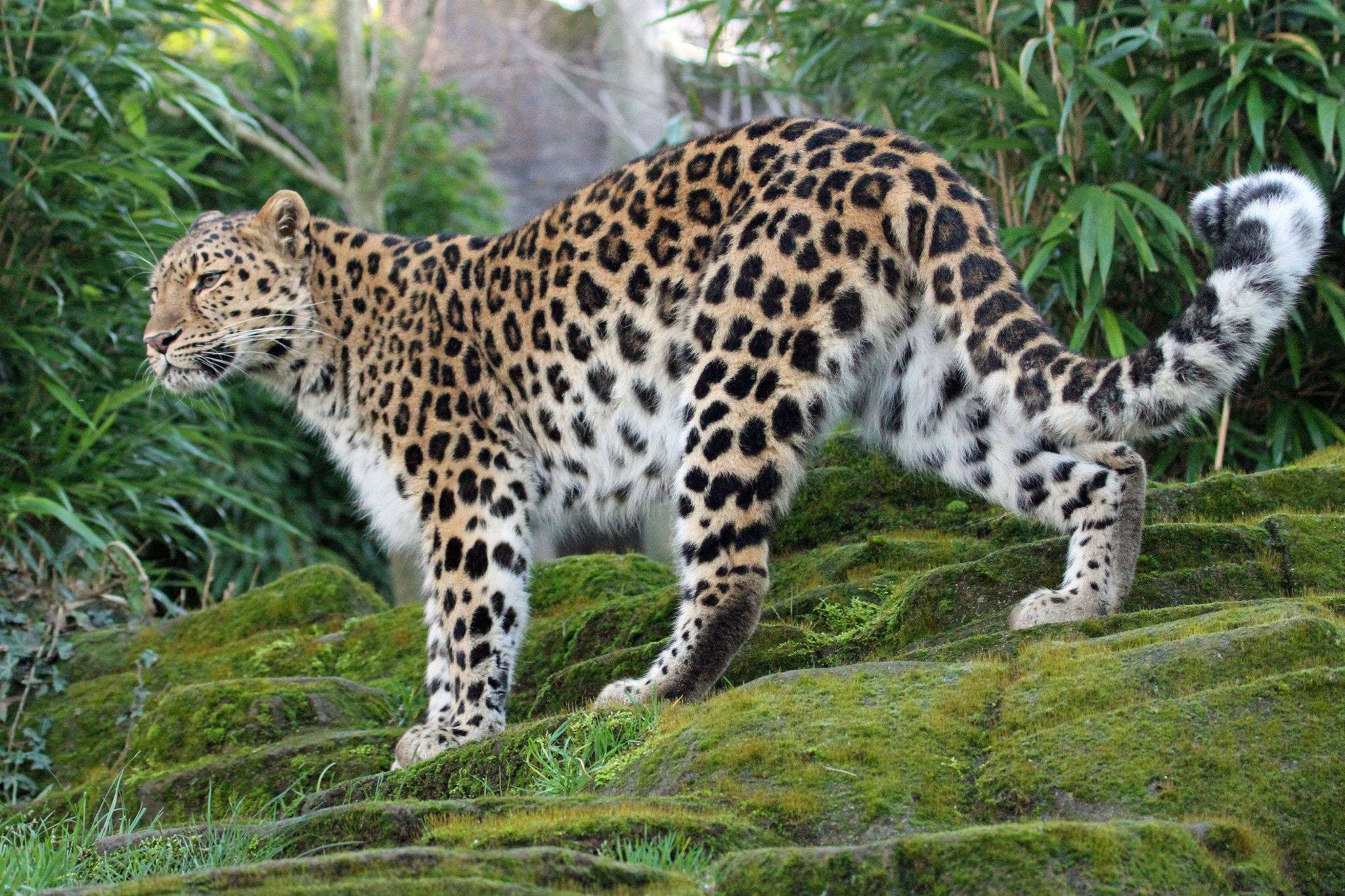
Why are leopards so adaptable?
Leopards (Panthera pardus) are the most adaptable big cats, thriving in more diverse habitats than any other large feline. They live in: African savanna and forests, Middle Eastern mountains, Indian subcontinent (various habitats), Himalayan high altitudes, dense Asian rainforests, and even urban areas including Indian and African cities.
From Savannas to Himalayas to Urban India
A leopard stalks through a suburb in Mumbai, India. Population density: 20,000 people per square kilometer. The leopard hunts stray dogs, monkeys, and occasional livestock. It passes within meters of sleeping residents, moves through narrow streets, and retreats to forest patches at dawn.
Another leopard moves through tall grass in Botswana's Okavango Delta. Yet another stalks deer in snow-covered Himalayan slopes at 4,500 meters. Still another patrols dense rainforest in Borneo.
These are all leopards (Panthera pardus), the same species, adapted to utterly different environments. Leopards are the most versatile big cats on Earth, thriving in more diverse habitats than any other large feline.
The Animal
Leopards are medium-large spotted cats.
Physical features:
- Males: 60-70 kg typical, up to 90 kg (African)
- Females: 35-50 kg
- Length: 90-165 cm (body) + 60-110 cm tail
- Shoulder height: 55-75 cm
- Color: golden-yellow with black rosettes
- Rosettes: smaller than jaguar's, without internal spots
Compared to jaguars:
Leopards are:
- Smaller (jaguars heavier and more muscular)
- More lithe
- Longer-tailed
- Different rosette pattern
- Different habitat preferences
The Adaptability Champion
Leopards thrive across extreme habitat variation.
Habitats:
African savanna:
- Classic leopard territory
- Kruger, Serengeti, Okavango
- Adapted to open grassland
Tropical rainforest:
- Southeast Asian forests
- Amazon? (jaguars instead)
- Indian rainforests
Mountain environments:
- Himalayan slopes
- Atlas Mountains
- Caucasus
- Up to 5,200+ meters
Desert edges:
- Arabian Peninsula
- North African desert margins
- Central Asian deserts
Urban adjacent:
- Mumbai, India (famous)
- Nairobi, Kenya
- Various cities worldwide
- Remarkable behavior
Arctic edges:
- Russian Far East (Amur leopard)
- Northern Korea
- Cold climate adapted
Why so adaptable:
Leopards have:
- Flexible diet (100+ prey species)
- Solitary lifestyle (no pride needs)
- Tree-climbing ability
- Nocturnal habits
- Long-distance travel capability
- Small social footprint
Hunting and Diet
Leopards eat remarkably varied prey.
Extensive prey list:
Medium-sized mammals:
- Antelope (primary)
- Deer
- Wild boar
- Baboons
- Gazelles
- Impala
- Waterbuck
Smaller prey:
- Hares and rabbits
- Birds
- Small monkeys
- Fish
- Reptiles
Unusual items:
- Insects (substantial portion in some regions)
- Small rodents
- Livestock
- Even dogs and cats
Hunting technique:
Ambush specialists:
- Stalk extremely close
- Patience and stealth
- Short rush attacks
- Quick dispatch
From trees:
- Wait in branches
- Drop onto prey below
- Ambush from elevation
- Successful technique
Kill method:
- Throat bite to suffocate (like lions/tigers)
- Quick neck bite
- Sometimes back-of-head bite
- Efficient kills
Success rate:
- 5-10% of hunt attempts succeed
- Lower than some predators
- Consistent with other big cats
- Hunt frequency: every 2-7 days
Tree-Caching
Leopards uniquely carry prey into trees.
The behavior:
After successful hunts:
- Grab prey
- Pull into trees
- Store in high branches
- Return to feed over days
- Can hold 30-50 kg prey aloft
Why cache in trees:
Theft prevention:
- Lions can't reach
- Hyenas can't climb
- Vultures can't access
- Other predators deterred
Extended feeding:
- Multiple meals from one kill
- Leisurely consumption
- Time to rest between meals
- Maximum energy extraction
Safety:
- Elevated above ground predators
- Better visibility for threats
- Secure from scavengers
Physical ability:
Leopards can:
- Carry 50% of body weight
- Climb 6+ meters with prey
- Lift onto narrow branches
- Maintain position while feeding
Unique to species:
Only leopards among big cats:
- Consistently tree-cache
- Designed anatomy for climbing
- Regular behavior pattern
- Essential survival strategy
Amur Leopard
The world's most endangered big cat.
Population:
- ~100 individuals remaining
- Recovered from ~30 in 2000
- Russian Far East
- Small population in China/Korea
Habitat:
- Temperate forest
- Cold climate
- Russian Primorsky Krai region
- Border with China and North Korea
Adaptations:
- Thicker fur than other leopards
- Lighter coloration (more yellow)
- Larger body size
- Cold tolerance
Conservation:
- Intensive protection
- Land of the Leopard National Park (2012)
- International cooperation
- Genetic management
Recovery:
Population tripled from 2000 to today:
- From ~30 individuals
- To ~100 individuals
- Still critically endangered
- Fragile recovery
Indian Leopards
Most leopards live in India.
Population:
- 12,000-14,000 estimated
- Largest single subspecies population
- Widespread across India
- Increasingly urban
Mumbai leopards:
Sanjay Gandhi National Park (within Mumbai):
- 40+ leopards
- In 104 km² area
- Within city of 20+ million
- Hunting in adjacent suburbs
Behavior:
Urban Indian leopards:
- Hunt stray dogs primarily
- Move through city at night
- Stay hidden during day
- Remarkable coexistence
Conflict:
- Occasional attacks on humans
- Particularly on children
- Livestock predation
- Retaliatory killings
Coexistence:
- Education programs
- Community awareness
- Rescue operations
- Scientific monitoring
- Gradual acceptance
Urban Leopards
Remarkable adaptation to human environments.
Where they live:
- Mumbai, India
- Nairobi, Kenya
- Johannesburg suburbs
- Various Indian cities
- African urban edges
Behavior:
- Nocturnal entirely in cities
- Stay hidden during day
- Hunt dogs, rats, monkeys
- Use drainage, vegetation
Research findings:
- High stress levels
- Territorial but adapted
- Different food sources
- Success story of adaptation
Conflict management:
- Tracking programs
- Early warning systems
- Community education
- Respectful distance
Why they survive:
- Abundant food (stray dogs, rats)
- Vegetation corridors
- Urban parks
- Low population density
- Low recognition by humans
Subspecies
Multiple leopard subspecies exist.
African leopard:
- Most widespread
- Most numerous
- Major African populations
- Multiple sub-populations
Indian leopard:
- India, Nepal, subcontinent
- Large numbers
- Urban adaptation
- Diverse habitats
Amur leopard:
- Russian Far East
- Critically endangered
- Cold adapted
- 100 individuals
Javan leopard:
- Indonesia (Java only)
- Critically endangered
- ~250 individuals
- Island endemic
Arabian leopard:
- Arabian Peninsula
- Critically endangered
- ~200 individuals
- Desert edge
Persian leopard:
- Iran, Turkey, Caucasus
- Endangered
- Mountain habitats
- Cultural significance
Indochinese leopard:
- Southeast Asia
- Endangered
- Fragmented populations
- Forest specialist
Sri Lankan leopard:
- Sri Lanka endemic
- Endangered
- Limited range
- Island population
Conservation Status
Leopards face significant threats.
IUCN status:
- Overall species: Vulnerable
- Amur: Critically Endangered
- Javan: Critically Endangered
- Arabian: Critically Endangered
- Persian: Endangered
- Sri Lankan: Endangered
- African: Vulnerable (declining)
- Indian: Vulnerable (stable in many areas)
Population trends:
- African: declining
- Asian: mostly declining
- Some local recoveries
- Fragmentation concerns
Threats:
Habitat loss:
- Agricultural expansion
- Urban encroachment
- Infrastructure development
- Forest fragmentation
Poaching:
- Skin trade (historical)
- Bone trade (traditional medicine)
- Illegal international commerce
- Declining but persistent
Human-leopard conflict:
- Livestock predation
- Retaliatory killings
- Growing with human population
- Challenging to resolve
Prey depletion:
- Hunting of prey species
- Bushmeat trade
- Forcing conflict with humans
- Cycle of problems
Climate change:
- Habitat shifts
- Prey distribution changes
- Fire risks
- Adaptation challenges
Conservation Efforts
Multiple programs protect leopards.
Protected areas:
- African national parks
- Indian tiger reserves (also benefit leopards)
- Amur leopard national park
- Various subspecies reserves
Urban programs:
- Mumbai leopard monitoring
- Johannesburg urban tracking
- Research into urban adaptation
- Conflict reduction
International efforts:
- Panthera organization
- WWF programs
- IUCN Cat Specialist Group
- Range country cooperation
Research:
- Camera trapping
- GPS tracking
- DNA analysis
- Behavioral studies
- Population monitoring
Community programs:
- Conflict prevention
- Compensation for livestock
- Education initiatives
- Local rangers
- Tourism benefits
Leopard vs Jaguar
Similar-looking but different species.
Identification:
Leopards:
- Smaller, lighter
- Longer tail
- Smaller rosettes
- No internal spots in rosettes
- More lithe build
Jaguars:
- Larger, heavier
- Shorter tail
- Larger rosettes
- Internal spots within rosettes
- More muscular build
Geographic:
- Leopards: Africa, Asia
- Jaguars: Americas only
- No natural overlap
- Different continents
Behavioral:
- Leopards: tree-caching, widest habitat
- Jaguars: skull-crushing bites, aquatic hunting
Evolutionary:
- Diverged ~2 million years ago
- Different continental evolution
- Similar ecological roles
- Convergent appearances
Cultural Significance
Leopards appear in cultures worldwide.
African cultures:
- Royal symbols
- Warrior traditions
- Folk tales
- Spiritual significance
Indian culture:
- Cultural reverence
- Mythological connections
- Hindu and Buddhist symbolism
- Urban folklore
Persian/Middle Eastern:
- Royal imagery
- Historical importance
- Cultural heritage
- Modern conservation focus
Asian cultures:
- Chinese art
- Traditional medicine targets (unfortunately)
- Cultural presence
- Mixed symbolism
Modern culture:
- Car brand (Jaguar)
- Sports teams
- Fashion references
- Cultural icons
Athletics:
- Usain Bolt compared to leopard
- Athletic naming
- Speed and agility symbols
- Cultural fitness imagery
Leopard Reproduction
Breeding patterns vary by region.
Sexual maturity:
- Females: 2-3 years
- Males: 3-4 years
Breeding:
- Year-round in tropical areas
- Seasonal in subtropical regions
- Female estrus 6-7 days
- Attracts multiple males
Gestation:
- 90-100 days
- 1-4 cubs typical
- Most often 2-3 cubs
- Born in hidden dens
Cubs:
- Weight 400-700 g
- Blind and helpless
- Eyes open at 10 days
- Walk at 2-3 weeks
- Teach to hunt 6 months
Maternal care:
- 18-24 months
- Teaching period long
- Eventually cubs disperse
- Females can breed every 1-2 years
Mortality:
- High cub mortality (50%+)
- Predation by males
- Starvation
- Disease
- Human impact
Famous Leopards
Individual leopards have become famous.
Big cats of Mumbai:
Several famous Mumbai leopards:
- Featured in documentaries
- Tracked by researchers
- Community awareness
- Educational subjects
Leopard of Panar (India):
- Killed 400+ people (1910)
- Hunted by Jim Corbett
- Historical record
- Famous man-eater
Champawat Tigress vs Leopards:
- Different species but famous historical cases
- Corbett's hunting stories
- Educational about human-wildlife conflict
Amur leopard individuals:
- Critical to monitoring
- Each named individual important
- Photo-identification
- Conservation tracking
Why Leopards Matter
Leopards represent multiple significant values.
Biological:
- Most adaptable big cat
- Widest habitat range
- Versatile hunters
- Evolutionary success story
Ecological:
- Apex predators in many ecosystems
- Biodiversity indicators
- Prey population control
- Ecosystem health signal
Conservation:
- Flagship for wildlife conservation
- Umbrella species
- Cultural significance
- International cooperation focus
Scientific:
- Behavioral research
- Adaptation studies
- Urban ecology
- Conservation biology
Cultural:
- Global cultural presence
- Traditional significance
- Modern symbols
- Educational value
The Silent Shadow
Every leopard currently hunting somewhere in Africa, India, or Russia continues a lineage that has adapted to more environments than any other big cat.
They survive in savannas. They thrive in cities. They climb trees. They hunt in snow. They move through rainforest canopies. They navigate Himalayan mountains. They walk Mumbai suburbs at night.
Their adaptability is their strength. Their diversity of habitats provides multiple populations. Their ability to coexist with humans (despite conflict) means some populations persist where other big cats couldn't.
But adaptability has limits. Some subspecies are critically endangered. Human-leopard conflict continues. Poaching persists in some regions. Climate change will alter habitats.
The leopard that climbs a tree in Africa, the urban leopard hunting in Mumbai, the Amur leopard in Russian Far East cold, the Arabian leopard in desert mountains, each represents different adaptations and different conservation challenges.
Whether leopards continue adapting successfully depends on human management of pressures. They've proven remarkably capable of survival. Their adaptability may ultimately be what saves them - but only if humans also adapt to share space with them.
Leopard Subspecies in Detail
The Kalenux Team compiled the latest taxonomic and conservation data on leopard subspecies from IUCN Cat Specialist Group assessments and peer-reviewed molecular studies.
| Subspecies | Range | Population | IUCN Status |
|---|---|---|---|
| P. p. pardus (African) | Sub-Saharan Africa | 50,000-80,000 | Vulnerable |
| P. p. fusca (Indian) | India, Nepal, Pakistan | 12,000-14,000 | Vulnerable |
| P. p. orientalis (Amur) | Russian Far East, China | ~100 | Critically Endangered |
| P. p. melas (Javan) | Java, Indonesia | ~250 | Critically Endangered |
| P. p. nimr (Arabian) | Arabian Peninsula | ~200 | Critically Endangered |
| P. p. saxicolor (Persian) | Iran, Turkey, Caucasus | ~1,200 | Endangered |
| P. p. delacouri (Indochinese) | Southeast Asia | ~1,000-2,500 | Endangered |
| P. p. kotiya (Sri Lankan) | Sri Lanka | ~700-900 | Endangered |
| P. p. tulliana (Anatolian) | Turkey, Caucasus | ~50-100 | Critically Endangered |
"The Amur leopard is probably the rarest big cat in the world. Persistent conservation work over the last two decades has tripled the population from roughly 30 animals to nearly 100, but it remains critically dependent on the Land of the Leopard National Park in Russia and the adjacent reserve in northeastern China.
One catastrophic event - disease, forest fire, or major poaching incident - could still extinguish it." - Dale Miquelle, Wildlife Conservation Society, Biological Conservation, 2018 [1]
Mumbai Leopards: An Urban Case Study
The leopards of Sanjay Gandhi National Park in Mumbai represent the most thoroughly studied urban big cat population in the world. Between 40 and 45 adult leopards live within a 104 square kilometer protected area surrounded by the world's most densely populated city. They hunt feral dogs, rodents, and occasional livestock within 2-3 kilometers of the park's edge, passing through housing developments, industrial zones, and slums nightly without most residents ever seeing them.
"The density of leopards in Sanjay Gandhi National Park is approximately 30 individuals per 100 square kilometers - comparable to or higher than rural protected areas in India. Yet the leopards coexist with more than 20 million people in the surrounding metropolitan area. This should not be possible, yet it clearly is. We are still learning how the leopards manage it." - Vidya Athreya, Wildlife Conservation Society-India, PLOS ONE, 2016 [2]
The key appears to be the abundance of feral dogs in the urban edge of Mumbai - estimates suggest more than 500,000 dogs, providing leopards with essentially unlimited protein if they are willing to hunt in human-adjacent areas. Conflicts with humans are relatively rare given the population densities involved, though occasional fatal attacks do occur and draw enormous media attention.
References
- Miquelle, D. G., Rozhnov, V. V., Yachmennikova, A., Naidenko, S. V., Hernandez-Blanco, J. A., and Sorokin, P. A. (2018). "Amur leopard status, ecology, and conservation." Biological Conservation, 220, 152-162.
- Athreya, V., Navya, R., Punjabi, G. A., Linnell, J. D., Odden, M., Khetarpal, S., and Karanth, K. U. (2016). "Movement and activity pattern of a collared tigress in a human-dominated landscape in central India." PLOS ONE, 11(10), e0164962.
- Stein, A. B., Athreya, V., Gerngross, P., Balme, G., Henschel, P., Karanth, U., Miquelle, D., et al. (2020). "Panthera pardus." The IUCN Red List of Threatened Species.
- Jacobson, A. P., Gerngross, P., Lemeris Jr, J. R., Schoonover, R. F., Anco, C., Breitenmoser-Wursten, C., Durant, S. M., et al. (2016). "Leopard (Panthera pardus) status, distribution, and the research efforts across its range." PeerJ, 4, e1974.
- Balme, G. A., Slotow, R., and Hunter, L. T. B. (2010). "Edge effects and the impact of non-protected areas in carnivore conservation: leopards in the Phinda-Mkhuze complex, South Africa." Animal Conservation, 13(3), 315-323.
Related Articles
- Jaguar: The Americas' Skull-Crushing Predator
- Snow Leopard: Ghost of the Mountains
- Lion: The King of the Savanna
Frequently Asked Questions
Why are leopards so adaptable?
Leopards (Panthera pardus) are the most adaptable big cats, thriving in more diverse habitats than any other large feline. They live in: African savanna and forests, Middle Eastern mountains, Indian subcontinent (various habitats), Himalayan high altitudes, dense Asian rainforests, and even urban areas including Indian and African cities.
Their adaptability comes from: flexible diet (eats everything from insects to deer to livestock), solitary lifestyle (no pride social requirements), tree-climbing ability (escapes competitors, caches kills), nocturnal behavior (avoids human contact), and ability to travel long distances between food sources.
Unlike lions (tied to pride structure) or tigers (specialized for specific habitats), leopards can survive in almost any environment with sufficient prey. They’ve colonized urban areas in India, hunting dogs, monkeys, and livestock. They survive in Himalayan snows at 5,000+ meter elevations. They thrive in tropical rainforests. This versatility has made them the most widespread big cat species despite conservation pressures.
Their adaptability is both their greatest survival asset and the reason they encounter humans so frequently.
Where do leopards live?
Leopards have the most extensive current range of any big cat, though fragmented compared to historical distribution. Current range includes: All of sub-Saharan Africa (major populations), Middle East (small populations), Caucasus region (extremely rare), Central Asia (rare), Indian subcontinent (large populations), Himalayan region (snow leopards are separate species), Southeast Asia (fragmented), China (fragmented populations), and Russian Far East (Amur leopards, critically endangered).
Different subspecies: African leopard (most common, widespread), Indian leopard (India, subcontinent), Amur leopard (Russian Far East, critically endangered), Javan leopard (only Indonesian island), Arabian leopard (extremely rare, Arabian peninsula), Indochinese leopard (Southeast Asia), Persian leopard (Iran, rare). Their ecological flexibility allows them to occupy: forests (preferred), grasslands, mountains, deserts, urban edges, and rocky areas. They avoid only the most extreme environments (true desert interiors, highest mountain peaks, densest human-populated zones). Population estimates vary - African leopards likely number 250,000-700,000, but exact numbers difficult to determine. Some subspecies are critically endangered (Amur: 100 individuals, Javan: 250, Arabian: <200).
What do leopards eat?
Leopards have the most varied diet of any big cat, eating 100+ different prey species recorded. Primary prey includes: medium-sized mammals (antelope, deer, wild boar, baboons), smaller animals (hares, birds, small monkeys, fish), insects (actually substantial portion in some regions), reptiles (including smaller snakes and monitors), livestock (major source of conflict with humans), and even carrion.
Their dietary flexibility is extraordinary - they’ve been documented eating essentially any meat source they encounter. They hunt primarily at night, using ambush tactics. Their stalking ability is exceptional, and they can approach prey within meters before striking.
A remarkable hunting behavior: leopards cache kills in trees, dragging prey up to 50% larger than themselves into high branches where they can feed safely without theft by lions, hyenas, or other scavengers. They can consume 20-30% of their body weight in a single meal but can also fast for weeks between kills. This dietary versatility allows them to survive in habitats with different prey bases. In urban India, they hunt stray dogs primarily.
In African savannas, they target antelope. In Asian forests, they eat wild boars. Their flexibility is their survival strategy.
Why do leopards hide kills in trees?
Leopards uniquely carry their prey up into trees - a behavior exclusive to their species among big cats. This tree-caching behavior serves multiple purposes: protection from theft by other predators (lions, hyenas, wild dogs would steal ground kills), safety from scavengers (vultures cannot easily reach tree kills), secure feeding over multiple days (leopards eat only part of a kill at once), protection from other leopards (avoiding theft by conspecifics), and ability to consume meals slowly.
They can carry prey weighing up to 50% of their own weight up trees - demonstrating extraordinary strength. This behavior is particularly valuable in areas with larger predators like lions and hyenas who would otherwise steal leopard kills. In the Serengeti, tree-caching allows leopards to coexist with lions and hyenas - their tree-stored meals are safe. Other big cats (lions, tigers) cannot effectively climb with prey. This climbing ability combined with strength is unique to leopards. Their shoulders are specifically adapted for this activity, with muscles supporting vertical lifting with heavy loads. Young leopards learn this behavior from their mothers over their first 1-2 years of life.
Are leopards endangered?
Leopard conservation status varies significantly by subspecies. Overall species status is Vulnerable, but some subspecies are Critically Endangered. The Amur leopard (Russia/China) has only about 100 individuals remaining - one of the most endangered big cats. Javan leopards number approximately 250 in Java, Indonesia. Arabian leopards have fewer than 200 in Arabian Peninsula. Sri Lankan leopards are Endangered with limited range.
Indian leopards are more numerous but face significant pressure. African leopards (multiple subspecies) are Vulnerable. Threats include: habitat loss from agriculture and development, poaching for skins and bones (traditional medicine), retaliatory killing from human-wildlife conflict, prey depletion from overhunting, climate change effects, and fragmentation reducing genetic diversity.
Some populations are recovering due to conservation - Amur leopard numbers increased from 30 in 2000 to about 100 today through intensive protection in Russia. India has strong leopard populations in many reserves. However, leopards’ widespread distribution has masked some local extinctions. Their tendency to live in human-adjacent habitats increases conflict but also provides some populations with secondary habitats.
Their overall situation is concerning but less dire than some big cat species.