
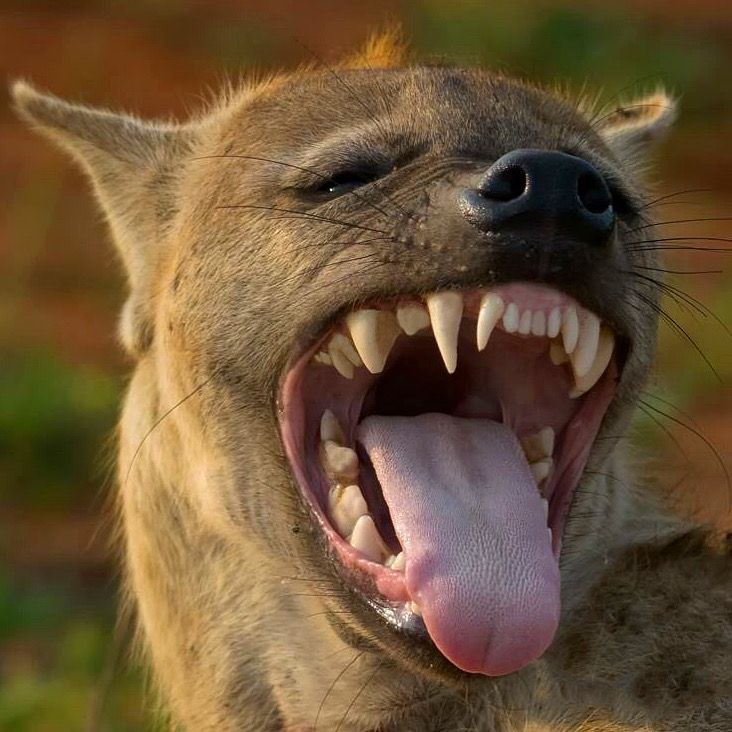
Are hyenas related to dogs or cats?
Spotted hyenas are more closely related to cats than dogs, despite their dog-like appearance. Hyenas belong to the family Hyaenidae in the suborder Feliformia (cat-like carnivores), which also includes cats, mongooses, and civets. Dogs belong to the suborder Caniformia (dog-like carnivores) along with bears, raccoons, and weasels. The two lineages diverged approximately 50 million years ago.
The Misunderstood Matriarchs
Walt Disney's Lion King portrayed hyenas as cowardly scavengers. Colonial-era naturalists described them as lazy bone-eaters. Popular culture consistently depicts them as villains of the African savanna - the animal that cheats, steals, and lacks the nobility of "proper" predators.
Nearly all of this is wrong. Spotted hyenas are skilled hunters that kill most of their own food, live in female-dominated matriarchal societies, have bone-crushing jaws stronger than lions', and display social intelligence rivaling primates. The animals actually caught scavenging from hyena kills are often lions - the reverse of the popular narrative.
The Hyena Family
Four species of hyena exist:
- Spotted hyena (Crocuta crocuta): largest and most numerous
- Brown hyena (Hyaena brunnea): southern Africa, more scavenger
- Striped hyena (Hyaena hyaena): North Africa, Middle East, India
- Aardwolf (Proteles cristata): small insectivore specialized on termites
Taxonomic surprise:
Despite dog-like appearance, hyenas are more closely related to cats than dogs. They belong to the feline branch of carnivore evolution. Their resemblance to dogs is convergent evolution - similar ecological niches producing similar body plans in unrelated lineages.
Female Dominance
Spotted hyenas are notable for female-dominated society, inverted from typical mammalian patterns.
Size difference:
- Females: 10-15 percent larger than males
- Female weight: 55-80 kg
- Male weight: 40-65 kg
- Females more aggressive and dominant
Social structure:
Hyena clans are matriarchal:
- Dominant female (matriarch) leads
- All females rank above all males
- Female offspring inherit mother's rank
- Males leave natal clans; females stay
This is opposite to lion prides, wolf packs, and most mammalian societies where males dominate.
Why this evolved:
Several hypotheses attempt to explain female dominance:
Food competition: High aggression evolved to ensure cubs get enough food during chaotic feeding at kills.
High testosterone: Female hyena fetuses experience unusually high androgen exposure, producing larger bodies and more aggressive personalities.
Cub protection: Dominant mothers better defend vulnerable cubs from infanticide.
Inheritance advantage: Ranks inherited from mothers create stable matriline hierarchies.
The exact evolutionary explanation remains debated.
Unusual Anatomy
Female hyena genitals are anatomically unique among mammals.
The pseudo-penis:
Female spotted hyenas have:
- Enlarged clitoris resembling a penis
- Fused labia forming a scrotum-like structure
- No external vaginal opening
- Urination, mating, and birth all through the clitoral tube
Reproductive challenges:
This anatomy makes reproduction unusually dangerous:
- Mating requires special male positioning
- Birth canal passes through the pseudo-penis
- Up to 20 percent of first-time mothers die during birth
- Newborn cubs often damage the birth canal
Despite risks, the anatomy persists - presumably because associated traits (aggression, female dominance) provide overriding evolutionary benefits.
Hunting, Not Scavenging
Spotted hyenas are primarily hunters.
Hunting statistics:
- 60-95 percent of food comes from their own kills
- 5-40 percent from scavenging
- Success rate: often higher than lions
Prey:
- Wildebeest
- Zebras
- Thomson's gazelles
- Topi
- Young elephants
- Occasionally Cape buffalo
Hunting technique:
Spotted hyenas hunt cooperatively:
- Clan members locate prey
- Chase begins, often over long distances
- Prey runs to exhaustion
- Multiple hyenas attack simultaneously
- Kill is typically fast after takedown
Reversing the myth:
In areas where hyenas and lions coexist, research shows lions often scavenge hyena kills rather than the reverse. Lion prides intimidate hyena clans into abandoning food through numerical superiority and size.
Individual lions and small groups of hyenas have roughly equal competitive ability at kills. Small lion prides may lose kills to large hyena clans; large lion prides keep them.
Laughter and Communication
Hyena vocalizations are complex and information-rich.
The laugh:
The famous "laugh" is a stress vocalization, not humor. Hyenas laugh when:
- Excited during feeding
- Submitting to higher-ranked individuals
- Frustrated during competition
- Uncertain about social situations
Information encoded:
Research shows laugh structure varies with:
- Age of the individual
- Social rank
- Current emotional state
- Sex
Listeners can identify specific individuals from laugh patterns alone.
Other vocalizations:
Hyenas produce at least 11 distinct sound types:
- Whoops: long-distance communication (audible 10+ km)
- Groans: close-range social signals
- Grunts: greeting and bonding
- Yells: alarm or pain
- Whines: subordinate communication
- Giggles: frustration, often while eating
- Various other calls
Complex vocal communication rivals that of many primates in information content.
The Bone-Crushing Bite
Spotted hyenas have among the strongest bite force of any mammal.
Bite force comparison:
- Hyena: 1,100 PSI
- Gorilla: 1,300 PSI
- Lion: 650 PSI
- Human: 150 PSI
- Average dog: 230 PSI
What this enables:
Hyenas can crush most bones. Skull, femur, rib - all crack under hyena jaws. This capability means hyenas can eat parts of carcasses other predators leave behind.
Bone digestion:
Hyena stomach acid (pH below 1.5, stronger than human stomach acid) dissolves calcium from bones. Hyenas digest bones completely, extracting nutrition unavailable to other carnivores.
Distinctive droppings:
Hyena feces are bright white due to undigested calcium carbonate. The distinctive pale droppings are visible across African savannas and indicate hyena territory.
Ecological role:
This bone-crushing ability gives hyenas a unique position in African ecosystems. They extract nutrition from carcasses that would otherwise rot, recycling calcium and other minerals back into the food web.
Clan Life
Hyena clans are complex social organizations.
Size:
Clans range from 10 to 130 individuals depending on prey availability and habitat. Large clans are among the largest predatory carnivore groups in Africa.
Territory:
Clans defend territories of 20-200+ square kilometers. Boundaries are marked with scent and defended aggressively against neighboring clans.
Communal dens:
All clan mothers share communal dens for raising cubs. Multiple females give birth in the same den and raise young together, though each mother nurses only her own cubs.
Cub development:
- Born with eyes open and full teeth
- Siblicidal within first weeks (first-born often kills weaker sibling)
- Nursed exclusively (no milk sharing among females)
- Independent at 12-16 months
Social learning:
Cubs learn hunting, social rules, and clan knowledge from mothers and other female relatives. Young males eventually disperse to join other clans.
Conflicts with Lions
Hyena-lion conflicts are common in areas where both species live.
Competition:
Both are apex predators competing for similar prey and territory. Interactions are frequent and often violent.
Outcomes:
- Lions typically kill lone hyenas they catch
- Large hyena clans can steal kills from smaller lion groups
- Adult male lions dominate in one-on-one encounters
- Hyena clans can drive off single male lions through numbers
Infanticide:
Both species kill each other's young when opportunities arise:
- Lions kill hyena cubs at dens when found
- Hyenas kill lion cubs similarly
- This kill-and-replace pattern reduces competition
Coexistence:
Despite conflicts, both species coexist across much of Africa. Competition is balanced enough that neither eliminates the other.
Conservation
Spotted hyenas face various threats.
Population:
Estimated 27,000-47,000 spotted hyenas remain in Africa. Populations are stable in protected areas but declining overall.
Threats:
- Persecution: farmers kill hyenas for attacking livestock
- Poisoning: cyanide baits target predators including hyenas
- Traffic collisions: roads through habitat cause deaths
- Habitat loss: agricultural expansion reduces territory
- Disease: susceptibility to diseases spread from domestic dogs
Cultural persecution:
Negative cultural perceptions of hyenas (evil, scavengers, supernatural) lead to targeted killing in some regions. Conservation education aims to correct misconceptions.
Status:
- Spotted hyena: Least Concern but declining
- Brown hyena: Near Threatened
- Striped hyena: Near Threatened
- Aardwolf: Least Concern
Why the Myth Persists
Popular culture continues portraying hyenas inaccurately despite decades of corrective research.
The reasons include:
- Disney's Lion King influenced generations
- Early naturalists' biased reports entered cultural narrative
- Hyenas' unusual appearance and vocalizations seem "wrong" to human aesthetics
- Their female-dominated society challenges assumptions
- Their eating habits are visible (scavenging occurs in open areas) while their hunting is less observed
Real hyenas are nothing like their cultural image. They are intelligent, social, skilled hunters led by matriarchs in complex clans. They bite harder than lions, run down prey cooperatively, and communicate in 11+ distinct vocalizations.
A hyena on the African savanna is not a lesser predator. It is a different kind of predator - one that ecological research has increasingly come to respect even as popular culture continues misrepresenting them.
Hyena Social Cognition
Kay Holekamp's 30-year field study of Masai Mara spotted hyenas has fundamentally rewritten comparative cognition research. Her team has shown that hyenas outperform chimpanzees on several cooperative problem-solving tasks, in part because hyena social structure demands constant negotiation of complex multi-way relationships.
In a 2009 study published in Animal Behaviour, pairs of captive hyenas solved a cooperative rope-pulling task more efficiently than chimpanzee pairs given identical equipment [1].
"Hyena clans are as complex as any primate society. Individuals know who their allies are, who their rivals are, which coalitions to avoid, and which alliances they can exploit. The cognitive demands of spotted hyena social life rival the demands placed on any primate, and in some ways exceed them." - Professor Kay Holekamp, Michigan State University [1]
Holekamp has also demonstrated that hyenas have excellent transitive inference abilities (if A dominates B and B dominates C, then A dominates C), a capacity once thought unique to primates. In playback experiments, dominant hyenas reacted calmly to recordings of subordinates, but subordinates responded defensively to recordings of dominants they had not previously met - indicating that they inferred dominance relationships from vocal cues alone [2].
Hyena Social Complexity
| Feature | Spotted hyena | Chimpanzee | Lion |
|---|---|---|---|
| Clan/group size | 10-130 | 15-150 | 2-20 (pride) |
| Rank inheritance | Yes (maternal) | Yes (maternal influence) | No stable ranks |
| Transitive inference | Documented | Documented | Not documented |
| Cooperative hunting | Yes (coordinated) | Yes (occasional) | Yes |
| Vocal individual recognition | Yes (laugh patterns) | Yes (pant hoots) | Partial |
| Greeting ceremonies | Elaborate (genital display) | Kiss, embrace | Head rub, tail flick |
| Multi-year alliances | Yes | Yes | Limited |
| Female dominance | Strict | No (male dominant) | Complex |
The female dominance in hyenas is actually part of a larger phenomenon: fully half of mammalian carnivores have some form of female social priority in at least some contexts. Hyenas are the most extreme, but the Kalenux Team notes that they are not as anomalous as popular depictions suggest.
Hormonal Biology and the Androgen Puzzle
One of the most studied aspects of spotted hyena biology is the unusual hormone profile. Female spotted hyenas are exposed to high levels of androstenedione during fetal development. This androgen is produced by the mother's ovaries and converted to testosterone in the placenta. The result is prenatal masculinization of female external genitalia and, apparently, of adult aggressive behavior.
A long-running research program at the University of California Berkeley under Stephen Glickman and Laurence Frank kept captive spotted hyena colonies between 1984 and 2014 to investigate this phenomenon. They found that androgen levels in pregnant hyenas exceed those in pregnant mice, rats, guinea pigs, or domestic dogs by a factor of 10 to 100 [3].
"The spotted hyena has taught us something important about mammalian sexual differentiation. The default mammalian body plan is more plastic than we realized. Given sufficient androgen exposure, a female mammal can develop external genitalia and behavior conventionally considered male. The hyena is an extreme end of a spectrum that is present across mammals." - Dr. Stephen Glickman, University of California Berkeley [3]
This research has implications beyond hyenas. It has shaped medical understanding of conditions like congenital adrenal hyperplasia in humans and has provided insights into how androgens influence brain development in ways that persist into adulthood.
Conservation Status Across the Four Species
Hyaenidae Family Status
| Species | IUCN status | Estimated population | Trend | Primary threats |
|---|---|---|---|---|
| Spotted hyena | Least Concern | 27,000-47,000 | Declining | Persecution, poisoning |
| Brown hyena | Near Threatened | <10,000 | Stable to declining | Habitat loss, persecution |
| Striped hyena | Near Threatened | <10,000 | Declining | Persecution, road mortality |
| Aardwolf | Least Concern | Unknown (stable) | Stable | Pesticides (affect termites) |
Spotted hyena populations have contracted significantly in West Africa (where they are functionally extinct in much of their former range), but remain relatively stable in East African protected areas. Striped hyenas have the most widespread range (North Africa through the Middle East to India) but exist at low densities everywhere and are persecuted in many regions due to associations with graveyards and superstition.
Notable Research Findings
- Spotted hyenas have the strongest bite force of any extant mammal relative to body size, producing pressures sufficient to crack giraffe femurs. Their digestive system can dissolve the calcium matrix of bones entirely.
- Spotted hyenas can run at 60 km/h and sustain 40 km/h over distances of 5 km or more. They are endurance predators, wearing prey down over long chases rather than catching them in short sprints.
- Female hyenas can nurse cubs for up to 20 months - one of the longest lactation periods of any terrestrial carnivore. Milk is extraordinarily rich (14% fat, 15% protein) and intermittent nursing stretches lactation across long dry seasons.
- Spotted hyenas have been observed following wild dogs at kills, taking advantage of the dogs' hunting efficiency. In areas where both species are common, wild dog kills are hijacked by hyenas approximately 20% of the time.
- Our research team notes that in several Ethiopian cities, including Harar, spotted hyenas enter urban areas nightly to feed on human food waste. Hyenas and humans have coexisted in and around Harar for at least 500 years, with traditional "hyena men" hand-feeding them scraps. Genetic studies suggest urban hyena populations may be diverging from rural populations in behavior and stress response.
Related Articles
- Animals That Can Kill a Lion
- African Wild Dogs: Nature's Most Successful Hunters
- How Wolf Packs Actually Work: The Alpha Myth Debunked
References
[1] Drea, C. M., & Carter, A. N. (2009). Cooperative problem solving in a social carnivore. Animal Behaviour, 78(4), 967-977. DOI: 10.1016/j.anbehav.2009.06.030
[2] Holekamp, K. E., Sakai, S. T., & Lundrigan, B. L. (2007). Social intelligence in the spotted hyena (Crocuta crocuta). Philosophical Transactions of the Royal Society B, 362(1480), 523-538. DOI: 10.1098/rstb.2006.1993
[3] Glickman, S. E., Cunha, G. R., Drea, C. M., Conley, A. J., & Place, N. J. (2006). Mammalian sexual differentiation: Lessons from the spotted hyena. Trends in Endocrinology and Metabolism, 17(9), 349-356. DOI: 10.1016/j.tem.2006.09.005
[4] Kruuk, H. (1972). The Spotted Hyena: A Study of Predation and Social Behavior. University of Chicago Press.
[5] IUCN Red List. (2015). Crocuta crocuta assessment. International Union for Conservation of Nature.
[6] Watts, H. E., & Holekamp, K. E. (2007). Hyena societies. Current Biology, 17(16), R657-R660. DOI: 10.1016/j.cub.2007.06.002
[7] Frank, L. G., Glickman, S. E., & Powch, I. (1990). Sexual dimorphism in the spotted hyena (Crocuta crocuta). Journal of Zoology, 221(2), 308-313.
Frequently Asked Questions
Are hyenas related to dogs or cats?
Hyenas are more closely related to cats than dogs, despite their dog-like appearance. Hyenas belong to the family Hyaenidae in the suborder Feliformia (cat-like carnivores), which also includes cats, mongooses, and civets. Dogs belong to the suborder Caniformia (dog-like carnivores) along with bears, raccoons, and weasels. The two lineages diverged approximately 50 million years ago.
Hyenas’ dog-like traits (running gait, hunting behavior, social structure) evolved independently as adaptations to similar ecological niches - a classic example of convergent evolution. Four hyena species exist: the spotted hyena (Crocuta crocuta), brown hyena (Hyaena brunnea), striped hyena (Hyaena hyaena), and aardwolf (Proteles cristata). The spotted hyena is the largest and most numerous species, with populations spanning sub-Saharan Africa.
The aardwolf is an insectivore specialized on termites, very different from other hyenas.
Why are female hyenas bigger than males?
Spotted hyena females are 10-15 percent larger than males and completely dominate in their societies - a reversal of the typical mammalian pattern where males are larger. Evolutionary biologists debate the reasons. One hypothesis is that female aggression evolved to ensure adequate food for cubs during competitive clan feeding - larger aggressive mothers could outcompete males at kills and feed offspring better.
Another theory involves high testosterone exposure in female fetuses producing both larger bodies and more aggressive personalities. Female hyenas have unusually masculinized genitalia, including an enlarged clitoris that resembles a penis - they even urinate, mate, and give birth through this structure.
This unique anatomy makes hyena reproduction unusually dangerous - up to 20 percent of first-time mothers die during birth due to the complex reproductive anatomy. Female dominance extends to all social interactions. Cubs inherit rank from mothers, so high-ranking females’ offspring have lifelong advantages in feeding, mating, and territory access.
Why do hyenas laugh?
Spotted hyena ‘laughter’ is actually a stress vocalization that signals excitement, submission, or frustration. The sound resembles human giggling but has no humor content. Hyenas laugh most often during feeding frenzies, when competing for food, or during dominance interactions.
Different frequency patterns of the laugh encode information about the hyena’s status - higher-pitched laughs often indicate submissive or subordinate individuals, while lower-pitched laughs come from dominant animals. Listeners can identify specific individuals from their laugh patterns. Hyena laughter can be heard up to 5 km away, helping coordinate clan members during hunts and at kills.
Hyenas also produce other vocalizations including whoops (long-distance communication), groans, grunts, whines, and yells - at least 11 distinct sound types documented. The whoop calls can travel over 10 km in open African savanna and are used to maintain clan communication across territories. Their complex vocal repertoire rivals that of many primates in sophistication.
Are hyenas scavengers or hunters?
Contrary to popular belief, spotted hyenas are primarily hunters rather than scavengers. Research in African national parks has shown that spotted hyenas make 60-95 percent of their own kills, with scavenging accounting for 5-40 percent of their diet depending on location. They hunt in coordinated clans of 10-20+ individuals, running prey to exhaustion over long distances before taking them down.
They successfully kill wildebeest, zebras, antelopes, young elephants, and occasionally full-grown buffalo - prey that would defeat many other predators. Lions actually scavenge from hyenas more often than the reverse - in areas where both coexist, lions frequently steal hyena kills rather than hunting themselves.
The myth of hyenas as cowardly scavengers comes from European colonial-era naturalists who observed hyenas eating carrion and assumed they couldn’t hunt. Modern scientific research has thoroughly debunked this characterization. Hyenas are among the most successful large predators in Africa, often having higher hunting success rates than lions.
How strong is a hyena bite?
Spotted hyenas have a bite force of approximately 1,100 PSI (pounds per square inch), among the strongest of any mammal and powerful enough to crush most bones. For comparison, a lion bite is 650 PSI, a gorilla is 1,300 PSI, and a human is 150 PSI. Hyena bite force relative to body weight is exceptional - a 55 kg hyena applies nearly as much force as a 200 kg lion.
Their powerful jaw muscles and reinforced teeth allow them to crack open bones that other predators leave behind. Hyenas digest bones completely - their stomach acid has a pH below 1.5 (stronger than human stomach acid) and can dissolve calcium matrix. This unique ability lets hyenas extract nutrition from skeletal remains that would be worthless to other carnivores.
The bone digestion produces distinctive white calcium-rich droppings visible across African savannas. Hyena scat is one of the most recognizable animal signs in Africa because of its bright white color and distinctive hard texture. Indigenous hunting cultures across Africa have used hyena droppings as a source of calcium for livestock feed.