
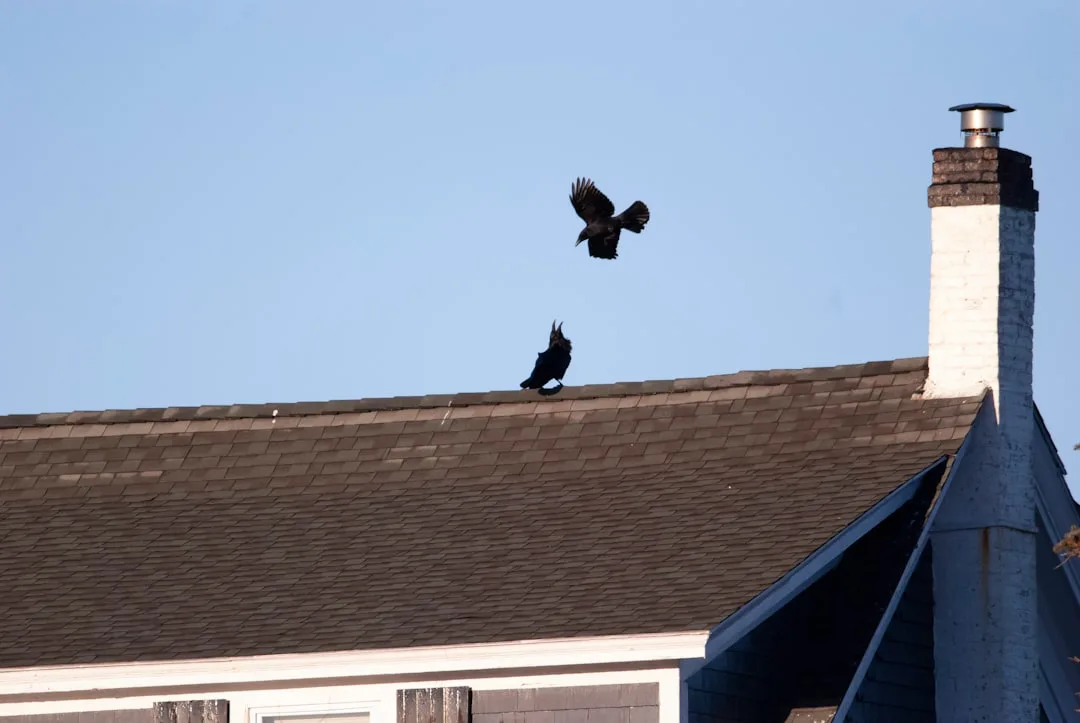
The American crow is one of the most recognisable, adaptable, and thoroughly studied birds in North America. Glossy black from beak to tail, loud enough to define the soundscape of a farmyard or a city square, and cognitively advanced enough to recognise individual human faces, Corvus brachyrhynchos has become the species biologists reach for when they want to test how smart a bird can really be.
It is also one of the most visible success stories of a passerine that has not just tolerated human expansion but exploited it, spreading along with agriculture, roadsides, suburbs, and landfill economies.
This guide covers the bird's taxonomy, size, range, diet, reproduction, social life, intelligence, and conservation status, along with the strange behaviours - face-recognition grudges, million-bird roosts, cooperative breeding, crow funerals - that make the species a flagship for modern corvid research. It is a reference entry, not a summary, so expect numbers: centimetres, grams, clutch sizes, mortality percentages, and specific studies.
Etymology and Classification
The generic name Corvus is the Latin word for crow or raven and has been used taxonomically since Linnaeus. The specific epithet brachyrhynchos combines the Greek brachys (short) and rhynchos (beak), distinguishing the species from its larger, heavier-billed relative the common raven (Corvus corax). The common name simply reflects the species' geographic centre.
In much of rural North America it is known colloquially as the "common crow" or just "the crow"; ornithologists use "American crow" to separate it from its close relatives, the fish crow and the northwestern crow, with which it overlaps or intergrades at the edges of its range.
The American crow sits in the family Corvidae alongside ravens, jays, magpies, nutcrackers, and jackdaws. Corvidae is one of the most intelligent bird families on Earth, and the American crow is often the default model species for North American corvid cognition research. Four subspecies are currently recognised, differing mainly in size, plumage gloss, and voice:
- C. b. brachyrhynchos - eastern and central North America, the nominate form
- C. b. paulus - southeastern United States
- C. b. pascuus - Florida peninsula
- C. b. hesperis - western United States, Pacific slope
Recent genetic studies have folded the former "northwestern crow" into C. brachyrhynchos, though some authorities still treat it as a distinct form. Hybridisation with the fish crow occurs locally where ranges meet, and hybridisation with common ravens has been documented but is extremely rare.
Size and Physical Description
American crows are medium to medium-large passerines. They are large enough to be obvious in silhouette but noticeably smaller than ravens.
Adults:
- Length: 40-50 centimetres from beak to tail
- Wingspan: 85-100 centimetres
- Weight: 316-620 grams, with most birds falling between 400 and 500 grams
- Males slightly larger than females on average, but overlap is broad
Juveniles:
- Size at fledging: almost adult size
- Plumage: duller, browner, and less glossy than adults for the first year
- Eye colour: pale blue-grey, gradually darkening to brown and then near-black over 18-24 months
- Mouth lining: pink inside for the first summer, then blackening
The plumage is entirely black, including the legs, bill, and eyes in adults. Under strong light the feathers show a subtle iridescent sheen that can appear green, violet, or bronze. The bill is heavier and more curved than a songbird's, reflecting the bird's generalist feeding habit. Wing shape is broad and rounded, suitable for sustained flapping flight rather than long soaring.
Crows are often confused with ravens. Useful field differences include:
| Feature | American crow | Common raven |
|---|---|---|
| Length | 40-50 cm | 58-69 cm |
| Weight | 316-620 g | 800-1,500 g |
| Tail shape | Squared or slightly rounded | Wedge-shaped |
| Bill | Heavy but proportionate | Massive, clearly thicker |
| Voice | Sharp, nasal "caw" | Deep, croaking "kraa" or gurgle |
| Flight style | Continuous flapping | Frequent soaring, aerial rolls |
| Social default | Flocks, communal roosts | Pairs or small family groups |
Range, Habitat, and Subspecies
The American crow occurs across an enormous range stretching from southern Canada through almost every US state to northern Mexico. Seasonal movement is partial: northern populations migrate southward in autumn, central populations shift regionally, and southern populations are largely resident.
Habitat tolerance is exceptionally wide. The species occupies deciduous and mixed forest edges, farmland, open grassland with scattered trees, coastal beaches and estuaries, riverine corridors, suburbs, parks, and dense urban centres. It avoids only closed-canopy old-growth forest interiors, high alpine zones, and the driest deserts.
Urbanisation benefits crows overall, providing reliable food, reduced predation pressure from great horned owls, and abundant artificial nesting and roosting structures.
The four subspecies differ subtly in size and voice but share almost all core behaviours. The Florida subspecies pascuus is the smallest and has a higher-pitched call. The western hesperis is intermediate and formerly overlapped confusingly with the northwestern crow on the Pacific coast. The southeastern paulus shows the greatest overlap with the fish crow.
Diet and Foraging
American crows are dietary generalists. Field studies of stomach contents and direct observation show a diet composed of:
- Insects, especially grasshoppers, caterpillars, beetles, and crickets
- Earthworms and other soil invertebrates
- Small vertebrates: mice, shrews, small snakes, frogs, lizards
- Eggs and nestlings of other birds
- Grain: corn, wheat, sorghum, especially in agricultural settings
- Fruit and berries, particularly in autumn
- Carrion, from roadkill to beached fish
- Human refuse: discarded food, compost, dumpsters, landfill
Crows cache surplus food, burying items in soil, hiding them in crevices, and tucking them under leaf litter. Spatial memory for cache locations is excellent and persists for weeks. Crows also watch other crows caching and will steal caches if the original owner is not watching, which has generated a line of research into what birds understand about another individual's knowledge.
Foraging behaviour shows remarkable flexibility. Crows have been documented:
- Dropping hard-shelled nuts and shellfish onto roads or rocks to crack them, sometimes returning to retrieve the meat after traffic has passed.
- Following plows, mowers, and combines to catch exposed invertebrates.
- Cooperatively harassing raptors, raccoons, and even coyotes to drive them away from food or nests.
- Dunking dry food in water before eating, a form of food-washing seen in captive and wild birds.
- Using leaves, sticks, or small stones in captivity to reach food otherwise out of range.
Feeding flocks often post sentinels that call loudly at the first sign of predators, allowing ground-foraging birds to scatter. This organised vigilance is a major reason hawks and owls find crows a difficult target.
Intelligence and Cognition
The American crow has become one of the key species in modern animal-cognition research. Work by John Marzluff and his colleagues at the University of Washington, beginning in 2006, established that crows recognise human faces and remember them across years.
In the foundational experiments, researchers wore distinctive rubber masks while briefly trapping and releasing wild crows on campus. Other researchers wore different masks while passing peacefully. For years afterward the "dangerous" mask triggered scolding, mobbing, and aggressive swoops whenever any staff member wore it anywhere on campus. The "neutral" mask drew no reaction. Follow-up work showed that:
- Face recognition remained stable for at least five years, longer than any other documented wild-bird study.
- Birds hatched after the original trapping still mobbed the dangerous mask, having learned it from parents and flock-mates.
- Birds from neighbouring territories that had never personally encountered the mask also mobbed it after social exposure.
- Knowledge about the "safe" human stayed stable as well, so the crows were not simply biased toward fear.
Brain imaging in trained captive crows showed that seeing a known dangerous face activated the avian equivalent of the amygdala, while a known safe face activated reward-associated regions. The cognitive machinery is therefore not a stimulus-response reflex; it looks much more like how mammals process social recognition.
Beyond face learning, American crows show:
- Tool use and modification in captivity, including bending wire to form hooks
- Multi-step puzzle-solving, including Aesop's-fable-style water displacement
- Counting and quantity discrimination up to small numbers
- Play behaviour - sliding on snow, hanging upside-down, teasing dogs
- Deceptive caching when watched by other crows
- Apparent understanding of cause and effect in problem-solving tests
Their forebrain contains neuron densities comparable to some monkeys despite the smaller total brain volume, and neural architecture in the corvid pallium supports working memory, flexible behaviour, and social learning.
Reproduction and Cooperative Breeding
American crows are monogamous and often pair for life, although extra-pair copulations occur. Breeding begins at around two years of age for females and three or more for males, but many birds delay first breeding while they help at their parents' nest.
Breeding schedule:
- Pair bonding and territory establishment: late winter to early spring
- Nest construction: March to early May
- Egg laying: April to June depending on latitude
- Clutch size: 3-6 eggs, typically 4-5
- Incubation: 16-18 days, mainly by the female
- Nestling period: 28-35 days
- Post-fledging dependence: several weeks to months
- Family group persistence: often multi-year
Nests are bulky stick platforms lined with bark, grass, and hair, placed high in a tree and often reused or rebuilt near old sites. Both parents feed nestlings, and this is where the American crow shows one of its strangest and most important behaviours: cooperative breeding.
Adult offspring from previous years often remain with their parents instead of dispersing. These "helpers" assist with territorial defence, food provisioning, and nest sanitation. Family groups of 5-10 birds built around a breeding pair plus up to two years of retained offspring are common.
Some long-term studies have even recorded grandparent birds participating at the nest, a multigenerational pattern that is otherwise rare in birds. Helpers benefit by learning parenting skills, improving their own future reproductive success, and inheriting a share of the family territory when their parents die.
Roosts, Flocks, and Social Life
Outside the breeding season American crows are intensely social. They form daily foraging flocks and nightly communal roosts that can reach astonishing scale.
Typical roost sizes:
| Roost type | Number of birds |
|---|---|
| Small town winter roost | 500-5,000 |
| Large city winter roost | 25,000-250,000 |
| Historic peak in Danville, Illinois | approximately 2,000,000 |
Roost dynamics follow a predictable pattern. An hour or two before sunset, crows converge on staging areas - groups of tall trees, cell towers, building roofs - where they socialise, feed, and preen. At dusk the entire assembly moves, usually in pulses of several thousand birds at a time, to a central roost. Roost trees are chosen for height, dense branching, and proximity to warm urban microclimates. Some roosts have been continuously used for decades.
Functions proposed for communal roosting include:
- Predator dilution and shared early warning against owls
- Thermal benefits in urban heat-island conditions
- Information sharing about feeding locations, with poorly fed birds apparently following well-fed birds back to foraging sites the next morning
- Mate and helper recruitment before the breeding season
Cities increasingly manage winter crow roosts actively, using noisemakers, lasers, and habitat modification to relocate birds that create sanitation or noise problems.
Communication
American crows have a broad vocal repertoire. More than twenty distinct calls have been catalogued, including territorial caws, alarm calls with enemy-specific variations, assembly calls that summon other crows, rattle calls used in social contexts, and soft cooing calls between pair-bonded birds. Regional dialects exist and individual crows can be identified by voice print.
In captivity American crows can mimic human speech, dog barks, cats, doorbells, and mechanical noises. In the wild mimicry is rare but occasionally documented, particularly for raptor calls - possibly as mobbing reinforcement or deception of competitors.
Conservation Status and Threats
The IUCN Red List classifies the American crow as Least Concern with a large, stable to slightly increasing global population. The species is protected in the United States under the Migratory Bird Treaty Act, although regulated hunting seasons exist in many states because of agricultural damage complaints.
Primary threats and mortality sources:
- West Nile virus. Since the virus arrived in North America in 1999, American crows have suffered roughly 100% mortality when infected. Continent-wide populations dropped by about 50% between 1999 and 2007. Recovery is partial and ongoing, with survivors carrying some resistance.
- Vehicle collisions. Crows foraging on roadkill are themselves frequently struck, particularly in winter when deicing salt draws birds to road edges.
- Pesticide and rodenticide poisoning. Agricultural use of anticoagulants and neonicotinoids can move up the food chain into scavenging crows.
- Shooting. Regulated and unregulated hunting in agricultural areas removes meaningful numbers, although the species' high reproductive output compensates.
- Habitat change. Loss of large roosting trees and traditional roost groves is locally important.
- Collisions with structures. Wind turbines, power lines, and communication towers take annual tolls.
None of these pressures currently threatens the species as a whole. The combination of broad diet, flexible habitat use, high intelligence, and cooperative family structure has made the American crow one of the clear winners among North American birds during the last century of landscape change.
Crows and Humans
American crows have a long, ambivalent relationship with people. Indigenous traditions across North America give the crow a prominent role as trickster, messenger, or spiritual figure. European colonists imported an older folklore of bad luck and battlefield scavengers, reinforced by the birds' genuine habit of raiding corn fields.
Twentieth-century US agriculture waged outright war on crows in some regions. In 1940, a single dynamite attack on a roost in Illinois reportedly killed more than 300,000 birds in a night. Such campaigns have been illegal for decades under the Migratory Bird Treaty Act and are scientifically discredited; crow populations typically rebound within a few years.
Modern urban relationships are calmer but complicated. Crow roosts draw complaints for noise and droppings, yet the same birds remove roadkill, control grasshopper outbreaks in fields, and serve as living sentinels for West Nile virus activity in public health surveillance. Researchers increasingly argue that crow intelligence and social complexity deserve ethical consideration closer to what we grant primates.
Community science projects such as Cornell's Celebrate Urban Birds and eBird track American crow distributions at continental scale, and long-running marked-bird studies at the University of Washington, Cornell, and elsewhere continue to turn up new findings about what these birds can do.
Related Reading
- Corvids: The Thinking Birds of the Northern Hemisphere
- Common Raven: Master of the Northern Sky
- How Birds Recognise Faces
- Urban Birds: Species That Thrive Alongside People
References
Relevant peer-reviewed and institutional sources consulted for this entry include work by John Marzluff and Kaeli Swift at the University of Washington on face recognition and social learning in crows, the Cornell Lab of Ornithology Birds of the World species account for Corvus brachyrhynchos, US Geological Survey Breeding Bird Survey trend data, Centers for Disease Control and Prevention West Nile virus surveillance summaries, and published research in Animal Behaviour, Proceedings of the Royal Society B, Ethology, and PLOS ONE.
Population figures and subspecies treatments reflect the most recent consolidated IUCN and American Ornithological Society assessments.
Frequently Asked Questions
How big is an American crow?
Adult American crows (Corvus brachyrhynchos) measure 40-50 centimetres from beak to tail and weigh 316-620 grams, with males averaging slightly heavier than females. Wingspan ranges between 85 and 100 centimetres. They are noticeably smaller than the common raven, with which they are often confused, and larger than the fish crow, which overlaps with them in the southeastern United States.
All four recognised subspecies show minor size variations, with birds of the northern and interior subspecies generally running larger than the coastal southern forms. Crow chicks fledge at roughly the same size as adults but are distinguishable for months afterward by pale blue-grey eyes, pinkish mouth linings, and slightly duller plumage.
What do American crows eat?
American crows are extreme omnivores and will exploit almost any food source available. Their natural diet includes insects, earthworms, small reptiles, amphibians, mice, the eggs and nestlings of other birds, fruit, seeds, grain, and carrion. In human-modified landscapes they add discarded food, compost, roadkill, agricultural refuse, and pet food to the menu.
They cache food for later retrieval, burying or hiding items and returning hours or days later with striking spatial memory. Crows also practise food-washing, dunking dry or dirty items into water before eating. The species’ dietary flexibility is a major reason it has thrived as agriculture and suburbs expanded across the continent while many specialist birds declined.
Where do American crows live?
American crows occur across almost all of North America, from southern Canada through the contiguous United States to northern Mexico, with seasonal movements into and out of the coldest northern portions of the range. Four recognised subspecies occupy different regions: the eastern nominate form, a Florida form, a southern form, and a western form.
They tolerate an exceptionally wide range of habitats - deciduous and mixed forest edges, farmland, open grassland, coastal beaches, river corridors, suburbs, city parks, and full urban centres. They avoid only closed-canopy old-growth forest and the highest alpine zones. Urbanisation generally helps the species, since cities offer reliable food, scarce predators, and plentiful roost trees.
Are American crows intelligent?
American crows are among the most cognitively advanced birds studied. They recognise individual human faces and remember them for at least five years, learn by watching other crows, use and occasionally modify tools in captivity, solve multi-step puzzles, and demonstrate what researchers interpret as causal reasoning. Their brain-to-body ratio is comparable to that of chimpanzees, and the corvid pallium contains neuron densities rivalling some primates.
John Marzluff’s long-term studies at the University of Washington demonstrated that crows teach threat information to their offspring and flock-mates, so that birds who have never encountered a dangerous human still recognise and mob that individual’s face. Crows also show play behaviour, deception, and apparent mourning, pushing them well beyond what classical ethology expected of birds.
How long do American crows live?
Wild American crows typically live 7-8 years, although many individuals die during their first year from predation, disease, collisions, and poisoning. The oldest wild banded American crow documented was just under 30 years old, a dramatic outlier. Captive crows regularly exceed 20 years, with the record above 59 years reported for a captive individual named Tata, although 20-30 years is more typical for well-kept captives.
Mortality in the wild is dominated by predation on eggs and nestlings (mainly from raccoons, owls, and snakes), vehicle strikes, and infectious disease. West Nile virus remains a significant mortality source across much of the range since its arrival in 1999.
How did West Nile virus affect American crows?
West Nile virus reached the United States in 1999 and spread rapidly across the continent, with the American crow emerging as the most susceptible native bird species. Infected crows die at rates approaching 100%, compared to far lower mortality in most other species. Continent-wide populations dropped by roughly 50% between 1999 and 2007, with local declines exceeding 70% in some regions.
Because crows die so visibly and so consistently from the virus, public health agencies used crow mortality reports as an early-warning system for human risk. Populations have partially recovered, apparently through a combination of surviving birds carrying some resistance and high reproductive output refilling the empty territories, but the species is still below its 1998 peak in parts of the range.
Why do crows gather in huge winter roosts?
American crows form communal winter roosts ranging from a few hundred to well over a million birds, with a Danville, Illinois roost historically estimated at around two million individuals. Birds gather an hour or two before sunset at staging areas, then move together to a central roost tree or grove at dusk.
Proposed benefits include predator detection in numbers, information sharing about food sources, warmth retention in tightly packed trees, and mate assessment outside the breeding season. Roost sites are often reused for decades and show a preference for urban or suburban locations with city-warmed air and reduced great horned owl pressure.
The same birds disperse daily over huge foraging areas, so a two-million-bird roost can draw from thousands of square kilometres.
Do American crows really hold funerals?
American crows routinely gather around dead members of their species, often cawing loudly, circling overhead, and sometimes landing near the body. Experiments by Kaeli Swift and John Marzluff at the University of Washington showed that these gatherings function as hazard assessment rather than mourning in any sentimental sense. Crows that encounter a dead crow held by a masked human later scold and mob that face far more aggressively than control crows.
The birds appear to use the event to learn what a dangerous place, object, or person looks like. Whether something emotional accompanies the behaviour is debated, but the functional role in learning about threats is well documented and helps explain why crows generalise fear from one incident to their whole flock.