
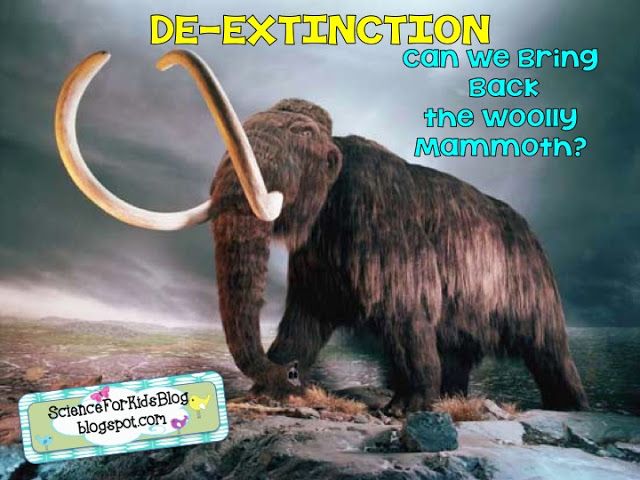
When did woolly mammoths actually go extinct?
The mainland populations of the woolly mammoth (Mammuthus primigenius) went extinct roughly 10,500 to 11,000 years ago at the end of the last glacial period. However, an isolated dwarf population survived on Wrangel Island in the Arctic Ocean until approximately 4,000 years ago.
The woolly mammoth is the archetypal ice age animal, and it is also the species that best illustrates how much paleontology has changed. We no longer study mammoths solely through bones.
We study them through intact tissue, preserved gut contents, sequenced genomes, preserved stomach bacteria, and, increasingly, through the laboratory reconstruction of mammoth-specific genes inserted into the cells of their closest living relatives.
The mammoth is the first extinct species that may plausibly be resurrected, and even the attempt to do so is forcing a generation of geneticists, conservationists, and ethicists to confront what extinction actually means in the 21st century.
This article compiles the biological evidence on Mammuthus primigenius, the frozen specimens that have survived against all odds, the cascade of causes that ended the species, and the current state of the de-extinction science that may one day return a mammoth-like animal to the tundra.
Anatomy of an Ice Age Specialist
The woolly mammoth (Mammuthus primigenius) was the last of a lineage of cold-adapted elephants that originated in Africa roughly 5 million years ago and spread across the Northern Hemisphere during the Pleistocene ice ages. At peak glacial extent, the species occupied a mammoth steppe ecosystem spanning from the British Isles across continental Europe, all of northern Asia, the Bering land bridge, and most of Alaska and Canada north of the Laurentide ice sheet.
Adult woolly mammoths were slightly smaller than modern African elephants. Shoulder heights ranged from 2.7 to 3.4 meters. Adult male mass is estimated at 6,000 kilograms, with females at approximately 3,000 kilograms. This is notably smaller than the steppe mammoth (Mammuthus trogontherii) ancestor, which reached 4 meters at the shoulder and 10,000 kilograms in the largest males.
| Trait | Woolly mammoth | Modern African elephant |
|---|---|---|
| Shoulder height (male) | 2.7-3.4 m | 3.2-4.0 m |
| Body mass (male) | 5,000-6,000 kg | 5,000-6,500 kg |
| Tusk length (max) | 4.2 m | 3.0 m |
| Ear size | Small (heat retention) | Large (heat dissipation) |
| Tail length | 36-60 cm | 1.2-1.5 m |
| Fur | Dense double coat, up to 90 cm | Sparse bristles |
| Hemoglobin | Cold-optimized variant | Standard mammalian |
| Subcutaneous fat | Up to 10 cm thick | Minimal |
| Anus flap | Present (heat retention) | Absent |
The tusks of adult bull woolly mammoths reached over 4 meters in length and weighed 90 kilograms each. Cross-sectional analysis of tusk dentine reveals annual growth rings that allow reconstruction of individual life histories, diet shifts, and even reproductive cycles in females. This is paleobiology at a resolution unavailable for most extinct vertebrates.
The Mammoth Steppe Ecosystem
The mammoth steppe was an ecosystem without modern parallel. It combined the productivity of a cold grassland with the biodiversity of a savanna, supporting mammoths, woolly rhinoceros, steppe bison, horses, saiga antelope, musk oxen, Irish elk, and dozens of other megafaunal species. Predators included cave lions, scimitar cats, dire wolves, and cave bears.
Core studies of pollen, beetle remains, and ancient DNA from Siberian and Alaskan permafrost indicate that the mammoth steppe was dominated by graminoid vegetation, with grasses, sedges, and forbs supporting a grazing fauna more ecologically similar to the Serengeti than to any modern Arctic ecosystem.
"The mammoth steppe was the most productive large-mammal ecosystem that has ever existed at high latitudes. Its disappearance changed the face of the Northern Hemisphere. The modern tundra is a thin echo of what was there before." - Sergey Zimov, Director, Northeast Science Station, Chersky, Russia
Zimov's ongoing Pleistocene Park project in Yakutia is attempting to experimentally reconstruct portions of the mammoth steppe by reintroducing large herbivores, including Yakutian horses, musk oxen, and bison, to densities approximating ice age levels. Results after 30 years of effort support the hypothesis that grazing pressure itself maintains the productive grassland, and that the ecosystem collapsed when the grazers disappeared rather than the other way around.
For field researchers documenting vegetation transects, herbivore density counts, and soil carbon measurements at Pleistocene Park and similar rewilding sites, structured field observation and data logging platforms provide the multi-parameter notebook infrastructure these long-term projects require.
Frozen Specimens: Windows into the Pleistocene
The Siberian and Alaskan permafrost have preserved mammoth carcasses with soft tissue intact for tens of thousands of years. The most famous specimens provide extraordinary biological detail.
Yuka
The Yuka mammoth, discovered in 2010 along the Oyogos Yar coast of the Laptev Sea, is a juvenile female estimated at 6 to 9 years old and approximately 39,000 years before present. The carcass retains reddish-brown fur, most internal organs, and intact brain tissue in preservation condition unmatched by any other mammoth specimen.
In 2019, researchers at Kindai University in Japan reported that Yuka cell nuclei implanted into mouse oocytes showed some biological activity, including spindle assembly, though none reached cell division.
Lyuba
The Lyuba baby mammoth was discovered in 2007 by a Nenets reindeer herder named Yuri Khudi in the Yamal Peninsula. Radiocarbon-dated to approximately 41,800 years before present, Lyuba is a one-month-old female with nearly perfect soft tissue preservation. Her stomach contained her mother's milk and traces of adult mammoth feces, indicating the calf was already coprophagic, a behavior that colonizes the gut microbiome in modern elephants.
Khroma
The Khroma baby mammoth, discovered in Yakutia in 2009, is slightly older than Lyuba at approximately two months of age, and similarly well-preserved. CT scanning and dissection have yielded the most detailed anatomical reference dataset available for any mammoth juvenile.
Zhenya
The Zhenya mammoth, discovered in 2012 on the Taymyr Peninsula, is an adult male with partial hair preservation and substantial muscle tissue. Isotope analysis of his tusks reconstructed a life history including seasonal migration patterns, diet shifts, and a death date around 45,000 years before present.
These specimens are cataloged under voucher codes at the Russian Academy of Sciences in Moscow, the Institute of Applied Ecology in Yakutsk, and the Mammoth Museum in Yakutsk. Each specimen's tissue subsamples, genomic libraries, and CT scans are linked through institutional databases, and modern cataloging workflows increasingly attach QR-coded specimen labels to eliminate the transcription errors that plague large natural history collections.
The Mammoth Genome
The first complete mammoth genome was sequenced in 2008 from a woolly mammoth hair sample by Webb Miller and Stephan Schuster at Penn State. Multiple high-coverage mammoth genomes have since been sequenced from various specimens dating from 45,000 to 4,000 years before present.
Genomic analysis has identified the genetic variants that distinguish woolly mammoths from Asian elephants, their closest living relatives. These include:
- TRPV3 variants affecting cold-sensing receptors
- EP400 variants implicated in thick fur development
- LCORL affecting body size
- MC1R variants associated with hair color variation
- Hemoglobin subunits optimized for oxygen release at low temperatures
- Fat metabolism genes enabling the deep subcutaneous layer
- Sebaceous gland expression producing the dense underfur
The mammoth genome diverged from the Asian elephant approximately 5 to 6 million years ago, with African elephants splitting earlier at roughly 7.6 million years ago. Asian elephants and woolly mammoths are genetically closer to each other than either is to African elephants.
For geneticists producing phylogenomic manuscripts on extinct species, the LaTeX-compatible manuscript workflows available through scientific writing and journal submission platforms like Evolang handle the complex multi-institutional reference management that modern paleogenomics papers require.
Why the Mammoth Went Extinct
The extinction of the woolly mammoth occurred in two phases. Mainland populations in Eurasia and North America collapsed between 14,000 and 10,000 years before present, coincident with both rapid climate warming at the end of the last glacial period and the expansion of modern humans across the mammoth's range. Island populations on Wrangel Island and St Paul Island persisted until approximately 4,000 and 5,600 years before present, respectively.
Two hypotheses dominate the debate on mainland extinction causes.
The climate hypothesis argues that the end-Pleistocene warming rapidly converted the productive mammoth steppe grassland into less productive tundra, boreal forest, and waterlogged peatlands, eliminating the species' food base.
The overkill hypothesis argues that expanding human populations with increasingly sophisticated hunting technology depleted mammoth populations faster than they could reproduce, particularly in the final centuries before local extirpation.
Current evidence supports a combined interpretation. Climate change degraded habitat; human hunting pressure accelerated decline. Ancient DNA studies by Love Dalen and colleagues at the Swedish Museum of Natural History have documented reduced genetic diversity and accumulation of deleterious mutations in the final Wrangel Island population, suggesting genomic meltdown in small isolated populations as the terminal cause.
"The Wrangel Island mammoths did not simply die from climate. They accumulated so many broken genes from inbreeding that even a stable environment could not sustain them. By the time the last mammoth died, its genome was a slow-motion train wreck." - Love Dalen, Professor of Evolutionary Genomics, Stockholm University
De-Extinction: Science and Ethics
Colossal Biosciences, founded in 2021 by Harvard geneticist George Church and entrepreneur Ben Lamm, is the first serious commercial effort to produce a mammoth-like proxy animal through gene editing. The company has raised over 225 million US dollars and employs a team of over 100 scientists working on the woolly mammoth, thylacine, and dodo projects.
The approach is not cloning. No viable cells have ever been recovered from any mammoth specimen, and DNA degradation over 4,000 to 45,000 years makes direct cloning biologically impossible. Instead, Colossal:
- Identifies mammoth-specific gene variants through comparative genomics
- Uses CRISPR-Cas9 to edit these variants into Asian elephant fibroblast cells
- Produces embryos via somatic cell nuclear transfer or induced pluripotent stem cells
- Gestates embryos in a surrogate or artificial womb system
The company announced in March 2024 the creation of Asian elephant induced pluripotent stem cells, a critical technical milestone. A 2025 announcement reported successful gene editing of 14 mammoth-specific variants into Asian elephant cell lines. The company has projected first-generation hybrid calves by 2028, though this timeline is considered optimistic by independent geneticists.
| De-extinction approach | Status | Key limitations |
|---|---|---|
| Cloning from viable cells | Not possible | No viable cells exist |
| Somatic cell nuclear transfer | Experimental | Requires functional nuclei |
| CRISPR gene editing (proxy) | Active (Colossal) | Produces hybrid, not true mammoth |
| Induced pluripotent stem cells | Active (Colossal) | 2024 achievement in Asian elephant |
| Artificial womb gestation | Research phase | 22-month elephant gestation |
| Ecosystem engineering | Pleistocene Park | Requires rewilding framework |
The ethical debate is substantial. Critics argue that de-extinction diverts funding from conservation of currently endangered species, produces chimeric animals whose welfare is uncertain, and creates false hope that extinction can be reversed.
Supporters argue that the technology has broader applications for endangered species genetic rescue and that restoration of mammoth-like herbivores to the Arctic could stabilize carbon sequestration by maintaining permafrost through grazing-induced albedo effects.
The Mammoth in Modern Culture and Tourism
Mammoth fossils are a significant economic driver in parts of Siberia, where ivory tusks from naturally-thawed permafrost support a legal trade worth roughly 100 million US dollars annually. The trade is controversial: it provides income to remote communities and meets demand for mammoth ivory in Asian markets, but it also contributes to the destruction of important paleontological sites through unsupervised digging.
Mammoth-themed tourism and museum exhibits operate across Siberia, the Netherlands (the Hoogeveen mammoth site), the United Kingdom, and North America. Operators offering paleontological tours and dig experiences typically register as specialized scientific tourism entities, and the business formation process for these operators is documented in nature and scientific tourism business registration resources.
While the woolly mammoth did not inhabit Australia, the continent's own megafauna extinction, including Diprotodon, Thylacoleo, and the giant short-faced kangaroo, represents a parallel story. The overlap with broader Australian megafauna and paleontology resources documents the sites and tourism infrastructure covering Australian Pleistocene fossil localities including Naracoorte Caves and the Lake Callabonna region.
Professional Pathways in Paleogenomics and De-Extinction
Careers in paleogenomics, conservation genetics, and de-extinction research require advanced training in molecular biology, bioinformatics, and paleontology. Entry points include master's and PhD programs in genomics, ancient DNA laboratories, and conservation biology programs.
For adjacent roles in state and federal wildlife agencies, museum curation, and biotechnology industry positions, formal credentialing through professional certification programs in wildlife biology and molecular ecology provides structured exam preparation and continuing education.
Ancient DNA laboratories operate under exacting contamination protocols, and specimen tracking across multiple institutions requires meticulous image metadata handling. Tools that inspect and normalize image provenance records, including image metadata viewers, support the quality control workflows these collaborations demand.
What a Returned Mammoth Would Mean
The hypothetical return of a mammoth-like animal to the Siberian tundra would be an ecological experiment without precedent. Proponents argue that grazing pressure from mammoth-sized herbivores would suppress shrub expansion, restore grassland productivity, and maintain permafrost through winter trampling and snow compaction. Modeling studies by the Zimov laboratory suggest that a restored mammoth steppe could sequester substantial carbon currently locked in degrading permafrost soils.
Critics respond that a hybrid elephant-mammoth proxy would not replicate the full ecological behavior of the original species, that releasing such animals into the Arctic without comprehensive welfare and ecosystem safeguards is reckless, and that the resources would be better spent protecting living elephant species whose populations continue to decline.
The question of whether to bring back the mammoth is, in the end, a question about what humans owe to the species we drove to extinction. It is a question about whether extinction is truly permanent or whether the technologies of the 21st century have created a new category of absence, one that may now be, to a partial degree, reversible. The mammoth is the test case. Whatever we decide about it will shape how we approach every other vanished species for the rest of this century and beyond.
References
- Palkopoulou, E., Mallick, S., Skoglund, P., et al. (2015). Complete genomes reveal signatures of demographic and genetic declines in the woolly mammoth. Current Biology, 25(10), 1395-1400. DOI: 10.1016/j.cub.2015.04.007
- Vartanyan, S. L., Garutt, V. E., & Sher, A. V. (1993). Holocene dwarf mammoths from Wrangel Island in the Siberian Arctic. Nature, 362(6418), 337-340. DOI: 10.1038/362337a0
- Yamagata, K., Nagai, K., Miyamoto, H., et al. (2019). Signs of biological activities of 28,000-year-old mammoth nuclei in mouse oocytes. Scientific Reports, 9, 4050. DOI: 10.1038/s41598-019-40546-1
- Lynch, V. J., Bedoya-Reina, O. C., Ratan, A., et al. (2015). Elephantid genomes reveal the molecular bases of woolly mammoth adaptations to the Arctic. Cell Reports, 12(2), 217-228. DOI: 10.1016/j.celrep.2015.06.027
- Shapiro, B. (2015). How to Clone a Mammoth: The Science of De-Extinction. Princeton University Press. DOI: 10.1515/9781400865482
- Zimov, S. A., Zimov, N. S., Tikhonov, A. N., & Chapin, F. S. III. (2012). Mammoth steppe: a high-productivity phenomenon. Quaternary Science Reviews, 57, 26-45. DOI: 10.1016/j.quascirev.2012.10.005
- MacPhee, R. D. E., Tikhonov, A. N., Mol, D., et al. (2002). Radiocarbon chronologies and extinction dynamics of the late Quaternary mammalian megafauna of the Taimyr Peninsula, Russian Federation. Journal of Archaeological Science, 29(9), 1017-1042. DOI: 10.1006/jasc.2001.0802
- van der Valk, T., Pecnerova, P., Diez-del-Molino, D., et al. (2021). Million-year-old DNA sheds light on the genomic history of mammoths. Nature, 591, 265-269. DOI: 10.1038/s41586-021-03224-9
Frequently Asked Questions
When did woolly mammoths actually go extinct?
The mainland populations of the woolly mammoth (Mammuthus primigenius) went extinct roughly 10,500 to 11,000 years ago at the end of the last glacial period. However, an isolated dwarf population survived on Wrangel Island in the Arctic Ocean until approximately 4,000 years ago. This means the last woolly mammoths were alive at the same time the Egyptian pyramids were being built.
A smaller population on St Paul Island in the Bering Sea persisted until roughly 5,600 years ago. Radiocarbon dating of mammoth remains from Wrangel Island continues to refine the final extinction date.
Can scientists really bring back the woolly mammoth?
Colossal Biosciences, a company founded in 2021 by George Church and Ben Lamm, is actively pursuing the creation of a mammoth-like proxy using CRISPR gene editing of Asian elephant genomes. The approach does not involve cloning actual mammoths, since no viable cells have ever been recovered from any frozen specimen.
Instead, the project identifies mammoth-specific gene variants for cold tolerance, thick fur, subcutaneous fat, small ears, and hemoglobin adapted to low temperatures, and edits these variants into Asian elephant cells. The company has announced a target of producing living elephant-mammoth hybrid calves by 2028, though independent scientists have noted significant technical and ethical challenges with this timeline.
What is the best-preserved mammoth specimen ever found?
The Yuka mammoth, discovered in 2010 in Siberian permafrost at the Oyogos Yar coast of the Laptev Sea, is among the most complete and best-preserved mammoth specimens on record. Estimated at 6 to 9 years old at death and approximately 39,000 years old, Yuka retained most soft tissue including skin, hair, internal organs, and even intact muscle fibers that responded weakly to electrical stimulation when tested by Kindai University researchers in 2019.
The Lyuba and Khroma baby mammoth specimens found in Yamal (2007) and Yakutia (2009) are similarly exceptional and provide detailed preservation of juvenile anatomy including stomach contents.