
Stand a fully grown male sun bear next to an adult human male and the comparison is awkward, not because the bear is intimidating but because the bear is the same size as the human. A 60 kilogram sun bear, reared on his hind legs to 1.5 metres, occupies almost exactly the body envelope of a slightly stocky person in a thick fur coat.
Visitors at Hangzhou Zoo in eastern China discovered this the hard way in 2017, when a viral video of a sun bear named Angela standing on her hind legs and waving at the crowd convinced thousands of online viewers that the zoo had quietly replaced its bears with humans in costume.
The zoo had to issue an official statement clarifying that no, Angela was a real Malayan sun bear, and yes, sun bears really are that small.
The sun bear (Helarctos malayanus) is the smallest of the eight living bear species. It is not "one of the smaller bears." It is the smallest, by a clear margin, in every dimension biologists measure. Adult males max out around 65 kilograms. Adult females rarely exceed 45 kilograms.
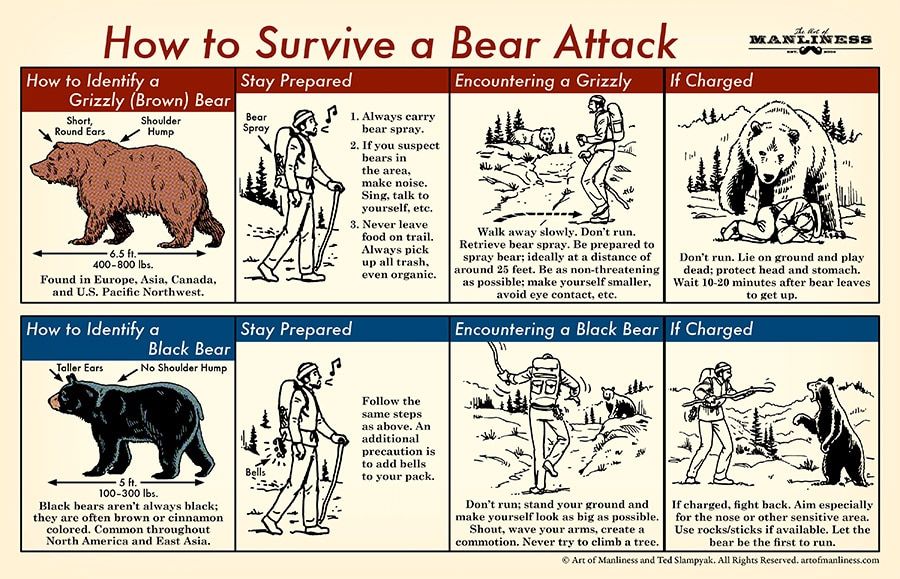
The species is so much smaller than its ursid relatives that most popular bear infographics simply leave it off, or shrink the polar bear to fit the page rather than admit how unfair the comparison would look at true scale.
This article is the full size profile of the sun bear: weight, length, shoulder height, standing height, sexual dimorphism, the two subspecies and their differences, the ecology that produced such a small body, and a head-to-head comparison with every other living bear species.
It is the dedicated companion piece to our main sun bear species profile, which covers behaviour, diet, and conservation in broader strokes. Here the focus is narrow and quantitative: exactly how small is the sun bear, and why?
The Short Answer, in Numbers
Before the ecology, the records, and the famous Hangzhou Zoo incident, the headline figures.
| Measurement | Adult male | Adult female | Notes |
|---|---|---|---|
| Body mass | 27-65 kg | 20-45 kg | Largest verified male specimens approach 80 kg in captivity |
| Body length (nose to rump) | 1.20-1.50 m | 1.00-1.40 m | Tail is a 3-7 cm stub, not included |
| Shoulder height (on all fours) | 65-72 cm | 60-68 cm | Roughly the height of a Labrador retriever |
| Standing height (reared on hind legs) | 1.30-1.50 m | 1.20-1.40 m | Comparable to a 12-year-old child |
| Skull length | 22-27 cm | 20-25 cm | Shortest skull in absolute terms of any bear |
| Canine length | 4-5 cm | 3.5-4.5 cm | Disproportionately large for body size |
| Sexual dimorphism (male:female mass) | ~1.4-1.6x | - | Modest by ursid standards |
These figures synthesise field data from the Bornean Sun Bear Conservation Centre in Sabah, decades of camera-trap and live-trap morphometrics from peninsular Malaysia and Sumatra, and captive specimen data from European and North American zoos.
The species-wide envelope, 20 kilograms at the bottom for small adult females to 65 kilograms at the top for large adult males, is narrower than that of almost any other bear, because sun bears do not have the dramatic seasonal fat-loading cycle that drives huge mass swings in northern bears.
"People always ask me how big a sun bear gets, expecting me to say something dramatic. The honest answer is that a big male sun bear is about the size of a medium dog. Around 60 kilograms is normal. Anything over 70 kilograms is unusual and probably a captive animal on an unrestricted diet. The sun bear's body plan is small for a reason. It is built to live in the canopy, and the canopy does not reward bulk."
- Wong Siew Te, founder, Bornean Sun Bear Conservation Centre, Sabah, Malaysia
What "Smallest Bear" Actually Means
The Ursidae family contains eight living species. Ranked by typical adult male body mass, from largest to smallest:
- Polar bear (Ursus maritimus), 350-700 kg
- Brown bear (Ursus arctos), 80-630 kg depending on subspecies
- American black bear (Ursus americanus), 60-280 kg
- Asiatic black bear (Ursus thibetanus), 60-200 kg
- Sloth bear (Melursus ursinus), 80-145 kg
- Giant panda (Ailuropoda melanoleuca), 85-125 kg
- Spectacled bear (Tremarctos ornatus), 60-150 kg
- Sun bear (Helarctos malayanus), 27-65 kg
Even at the very top of its mass range, an exceptional male sun bear at 65 kilograms is lighter than the smallest end of every other bear species. A 60 kg sun bear and a 60 kg American black bear are not the same. The black bear at 60 kg is a juvenile or a small female in a poor year. The sun bear at 60 kg is a fully grown, prime-condition adult male.
To find an adult male of any other bear species at sun-bear weight, you would have to look at malnourished individuals or remnant subspecies on the brink of collapse, like the Gobi brown bear.
"The sun bear is the dwarf of the family Ursidae, but the word dwarf misleads. There is nothing stunted about it. Every measurement is in proportion. Every organ system scales coherently. It is a small bear in the way that a fennec fox is a small fox: an evolutionary specialist, not a degraded version of something larger."
- Gabriella Fredriksson, sun bear ecologist, lead author of multiple studies on East Kalimantan sun bear ecology
A Detailed Size Comparison: Sun Bear vs the Other Seven Bears
The numbers above land harder when laid out side by side. The table below uses adult male typical mass for each species, because that is the metric most consistently reported in the literature, and gives a relative-to-sun-bear ratio so the disparity is unmistakable.
| Species | Typical adult male mass | Standing height | Mass relative to sun bear |
|---|---|---|---|
| Sun bear (Helarctos malayanus) | 50 kg (avg) | 1.4 m | 1.0x (baseline) |
| Spectacled bear (Tremarctos ornatus) | 110 kg | 1.7 m | ~2.2x |
| Sloth bear (Melursus ursinus) | 110 kg | 1.7 m | ~2.2x |
| Giant panda (Ailuropoda melanoleuca) | 110 kg | 1.6 m | ~2.2x |
| Asiatic black bear (Ursus thibetanus) | 130 kg | 1.7 m | ~2.6x |
| American black bear (Ursus americanus) | 150 kg | 1.8 m | ~3.0x |
| Brown bear (Ursus arctos, Eurasian) | 250 kg | 2.4 m | ~5.0x |
| Grizzly bear (Ursus arctos horribilis) | 270 kg | 2.5 m | ~5.4x |
| Kodiak bear (Ursus arctos middendorffi) | 450 kg | 2.9 m | ~9.0x |
| Polar bear (Ursus maritimus) | 500 kg | 3.0 m | ~10.0x |
Read the bottom of that column. A polar bear is ten times the mass of a sun bear. Two animals in the same family of mammals, both called bears in every language that has the word, with one weighing as much as ten of the other.
For comparison, a tiger is roughly four times the mass of a leopard, a lion is roughly twice the mass of a spotted hyena, and a gray wolf is roughly six times the mass of a coyote. A polar bear to sun bear ratio of 10:1 is one of the widest size ranges in any closely related vertebrate radiation.
For more on the largest end of that spectrum, see our profile of the polar bear and the comparison piece polar bear vs grizzly bear. For the middle of the league, how big are spectacled bears gives the size profile of the sun bear's nearest living analogue in body plan, the South American spectacled bear.
Sexual Dimorphism in Sun Bears
Sun bears show modest sexual dimorphism by ursid standards. The male-female mass ratio is roughly 1.4 to 1.6, with adult males averaging around 50 kilograms and adult females around 35 kilograms. Compare that with brown bears, where the ratio is 1.5 to 2.0 and the mass gap can reach 250 kilograms in coastal Alaskan populations. In sun bears the absolute gap is small, perhaps 15 to 20 kilograms in most populations.
The reason is partly behavioural. Brown bears, polar bears, and American black bears compete intensely for mates, and a larger male wins more breeding opportunities, which selects for runaway male size. Sun bears live at low population densities in dense rainforest, with limited direct male-male combat, and the selection pressure for outsized males is weaker. The result is a sexually dimorphic species in which the male is noticeably bigger but not dramatically so.
Female sun bears do still face the energetic costs of lactation in a hollow-tree den, raising one or two cubs over roughly two and a half years, which keeps female body size lower than it would otherwise be. Helarctos malayanus females are not just smaller males. They are bears built around a different reproductive budget.
Why Sun Bears Are So Small: the Ecology
Tropical bears are smaller than temperate or arctic bears as a rule. The sun bear is the most extreme case of that rule, but it is not the only one. The sloth bear of South Asia and the spectacled bear of the Andes are both well below the size of brown bears or polar bears. The pattern has three connected explanations.
1. No hibernation, no fat-loading. The most powerful driver of large body size in northern bears is the need to survive five to seven months of winter dormancy on stored fat. A grizzly bear that fails to deposit 40 to 50 per cent body fat by November will not see April. Selection has tuned northern bears, especially female bears with cubs, to maximise pre-denning fat.
Sun bears live in a tropical rainforest where temperatures stay between 22 and 32 degrees Celsius year-round and food, while seasonally variable, is never absent. They do not hibernate. They do not need a fat depot. Their bodies are sized for active foraging twelve months a year, and that pressure favours leaner, smaller frames.
2. Arboreal foraging niche. Sun bears spend a large fraction of their feeding time in trees. They climb to access stingless bee colonies, raid arboreal termite nests, harvest figs, durians, and other rainforest fruit, and rip open dead wood for grubs and insect larvae.
The species' famously long tongue, covered in detail in why the sun bear's tongue is the longest of any bear, is a direct adaptation to extracting honey from deep in tree cavities. A bear that climbs forty metres up a hardwood tree pays a steep biomechanical cost for every extra kilogram of body mass. Selection for climbing ability tightly caps body size.
3. Low-density, dispersed food base. Tropical rainforest is famously species-rich but biomass-poor. The calorie density per square kilometre is far lower than a temperate berry field or a salmon stream. A bear in this environment cannot support a large body unless it expands its home range to impossible sizes. Smaller bodies foraging over moderate ranges are the energetically stable solution. For the full diet picture see what do sun bears eat.
"Body size in Helarctos is constrained by the rainforest's calorie geometry. There is no salmon, no caribou, no fall mast crop, no winter to hibernate through. There is just steady moderate productivity, dispersed across the canopy and the litter. A bear evolves to that environment by becoming small, agile, and tireless, not by becoming large."
- Ursus, journal of the International Association for Bear Research and Management, on tropical ursid body size constraints
Two Subspecies, Two Slightly Different Sizes
Most authorities recognise two subspecies of sun bear:
- Helarctos malayanus malayanus, the mainland sun bear, distributed across peninsular Malaysia, Thailand, Myanmar, Cambodia, Laos, Vietnam, and southern China, and also Sumatra.
- Helarctos malayanus euryspilus, the Bornean sun bear, restricted to the island of Borneo (Sabah, Sarawak, Kalimantan, and Brunei).
The Bornean subspecies is generally reported as smaller than the mainland form, sometimes by 10 to 20 per cent in mass, although the sample sizes for both are limited and overlap is substantial. Bornean sun bears also tend to have more variable chest markings, often smaller and more individualistic blazes than the broader U-shape typical of mainland animals. For the full species range, see where do sun bears live, and for the chest marking story, why do sun bears have chest markings.
Insular dwarfism on islands is a well-documented evolutionary phenomenon, seen in everything from elephants to hippos to deer. Borneo's slightly smaller sun bear may be a mild expression of the same pattern, although the genetic and ecological data are not yet conclusive.
The Hangzhou Zoo Incident, August 2017
The single most viral event in the history of the sun bear's public profile was a 22-second video clip filmed at Hangzhou Zoo in Zhejiang Province, China, in late July 2017. It showed a Malayan sun bear named Angela rearing onto her hind legs in front of the public viewing window, holding the upright posture for several seconds, and offering what looked very much like a wave of her front paw before dropping back to all fours.
Within 48 hours the video had crossed onto Western platforms and was being passed around as evidence of one of three things, depending on the commenter:
- The zoo had hired a person in a bear costume.
- The video was a hoax filmed somewhere else.
- Bears are secretly humans.
Hangzhou Zoo issued a formal statement on 4 August 2017, with photographs, veterinary records, and on-site press access, confirming that Angela was a genuine Helarctos malayanus, that she was healthy, and that no costumed humans had ever been on display. The zoo's spokesperson noted, with some exasperation, that confused visitors had been asking the same question in person for years, and that this was simply the first time the question had hit the global internet.
The episode is genuinely informative about sun bear morphology. Three features made the species so easy to mistake for a human:
- Standing height. At 1.4 to 1.5 metres reared, Angela's silhouette was indistinguishable from that of a moderately short adult human male.
- Loose skin folds at the neck and shoulders. Sun bears have notably loose skin around the throat, an adaptation that allows them to twist and bite back when grabbed by predators or by prey defending its hive. The loose skin reads, on camera, like a baggy costume.
- Long, slender hind legs relative to body. Sun bears have proportionally longer hind limbs than most bears, an adaptation for climbing and for the hind-leg standing posture they use to scan the forest understorey.
"The Hangzhou Zoo wave is a wonderful natural ad for the sun bear's anatomy. Everything that made online viewers think 'this is a human in a costume' is real, measurable bear morphology. Loose skin, long hind limbs, an upright posture they can hold comfortably for thirty seconds, and a body roughly the height of a person. The bear is really that small. The bear is really that human-shaped when it stands up. There was no costume, but the confusion is honest."
- Wong Siew Te, Bornean Sun Bear Conservation Centre
Why the Standing Posture Is So Common
Sun bears stand on their hind legs frequently, more often per hour than any other bear species except possibly the spectacled bear. The behaviour serves three functions in the wild:
- Sensory. Rainforest understorey is visually cluttered. Standing up gives a 1.5 metre vantage point and a clearer line of sight along trails and through gaps in the vegetation.
- Olfactory. Sun bears have an acute sense of smell, and standing samples a higher, often less-disturbed air column. This is the same reason brown bears and grizzly bears stand, although a sun bear's standing height puts its nose well below a grizzly's.
- Reach. A standing sun bear can reach branches, fruit, and stingless bee colonies on lower limbs that would otherwise require a full climb. It is an energy-saving feeding posture.
This is also the behaviour most often confused with aggression by uninformed observers. A standing sun bear is rarely about to charge. It is sampling the environment. Genuine aggressive posturing in sun bears tends to involve open-mouth threats, growls, and forward lunges from a four-legged stance, not a calm rear onto the hind legs.
Bear of the Night: Why You Rarely See One
The other reason sun bears feel small in the popular imagination is that almost nobody has ever seen one. Sun bears are predominantly nocturnal and crepuscular in much of their range, especially in areas with human disturbance.
Camera-trap data from the Bornean Sun Bear Conservation Centre, Sabah Wildlife Department, and partner studies in Sumatra and peninsular Malaysia consistently show peak activity between dusk and the first few hours after dawn, with substantial nighttime movement and a daytime rest period in tree hollows or dense thicket.
A nocturnal bear, in dense rainforest, weighing the same as a teenager, almost never crosses the path of a casual visitor. The species' very rarity in tourist sightings reinforces a kind of public invisibility, which in turn keeps the sun bear underrepresented in bear documentaries and undersized in the public's mental ranking of bear species.
Most viewers see a sloth bear, a spectacled bear, and a moon bear (Asiatic black bear) on screen for every one sun bear, and even on screen the sun bear's true size is rarely calibrated against a human reference.
For a side-by-side comparison with the species most often confused with the sun bear in Asian wildlife coverage, see sun bear vs moon bear.
How a Sun Bear Compares to Animals You Already Know
For readers without a mental scale for ursid masses, a few non-bear comparisons help ground the sun bear's size.
| Familiar animal | Typical adult mass | Sun bear comparison |
|---|---|---|
| German shepherd dog | 30-40 kg | A male sun bear is roughly 1.3-2x the mass |
| Saint Bernard dog | 65-90 kg | A large male sun bear matches the smallest Saint Bernard |
| Adult human male (global average) | 70-80 kg | A large sun bear is slightly lighter than an average man |
| Adult human female (global average) | 55-65 kg | A large male sun bear is roughly equal to an average woman |
| Capybara | 35-65 kg | Comparable to an adult sun bear |
| Adult chimpanzee (male) | 40-70 kg | Almost identical mass range |
| American black bear (smallest females) | 40-60 kg | Lower bound matches male sun bear range |
A useful mental image: imagine a 12-year-old child in a thick fur coat with claws. That is, very approximately, the visual envelope of a sun bear standing in front of you. That is also exactly why the Hangzhou Zoo footage went viral, and why pretty much every first-time sun bear observer in the wild reports the same surprise on the same axis: "I thought it would be bigger."
"Across the Bear Specialist Group's eight species, Helarctos malayanus is consistently the smallest, with adult body mass typically not exceeding 65 kilograms in males and 45 kilograms in females. This places it as a clear outlier within the Ursidae and a reminder that body size in bears is shaped by ecology, not by the popular image of bears as uniformly large mammals."
- IUCN/SSC Bear Specialist Group, sun bear status assessment
What the Small Body Means for Conservation
The sun bear's small size is not just a curiosity. It has direct conservation consequences.
Sun bears are easier to poach. A 50 kilogram bear can be carried out of the forest by two people. The species is heavily targeted for the wildlife trade, both for bear-bile farming, where small bodies are paradoxically attractive because they consume less feed in captivity, and for the cub trade, where infants are hand-portable and bushmeat trade, where a single carcass is a manageable load.
Sun bears are easier to keep illegally. Backyard captivity of sun bear cubs is widespread across Indonesia, Vietnam, and Cambodia. The bears are small enough to fit in domestic cages, which would be impossible for a brown bear or even an Asiatic black bear. This is one reason rescue centres like the Bornean Sun Bear Conservation Centre receive a steady inflow of confiscated and relinquished animals.
Sun bears need less food per individual. This is the one piece of good news in the size profile. A small bear needs a smaller home range to meet its energetic budget, which means that even modest forest fragments can support viable populations if connectivity and protection are adequate. The challenge, in practice, is that Sundaic rainforest is being lost faster than any biome in Asia, and even small home ranges cannot persist on land that is being converted to oil palm.
For the full ecological and conservation picture, return to the main sun bear species profile.
Curiosity Cabinet: Other Tools and Topics
Strange Animals is part of a small network of human-curated reference sites. If size questions and odd biological facts are your thing, the following companions may interest you:
- whats-your-iq.com for cognitive testing and human ranking curiosities, the size-and-rank instinct applied to a different domain.
- whennotesfly.com for music education with the same depth-first writing style applied to a non-biological topic.
- fileformer.com when you need to convert wildlife photos or PDFs into formats that actually behave.
Every one of those, like Strange Animals, is built and edited by human writers. No AI-generated content. No filler.
References
- Fredriksson, G. (2005). Predation on sun bears by reticulated python in East Kalimantan, Indonesian Borneo. Raffles Bulletin of Zoology, 53(1), 165-168. https://doi.org/10.5281/zenodo.5346041
- Wong, S. T., Servheen, C. W., & Ambu, L. (2004). Home range, movement and activity patterns, and bedding sites of Malayan sun bears Helarctos malayanus in the rainforest of Borneo. Biological Conservation, 119(2), 169-181. https://doi.org/10.1016/j.biocon.2003.10.029
- Servheen, C., Herrero, S., & Peyton, B. (1999). Bears: Status Survey and Conservation Action Plan. IUCN/SSC Bear Specialist Group. https://doi.org/10.2305/IUCN.CH.1999.SSC-AP.2.en
- Augeri, D. M. (2005). On the biogeographic ecology of the Malayan sun bear. PhD thesis, University of Cambridge. https://doi.org/10.17863/CAM.16204
- Steinmetz, R., Garshelis, D. L., Chutipong, W., & Seuaturien, N. (2013). Foraging ecology and coexistence of Asiatic black bears and sun bears in a seasonal tropical forest in Southeast Asia. Journal of Mammalogy, 94(1), 1-18. https://doi.org/10.1644/11-MAMM-A-351.1
- Te Wong, S., Gadas, R., Hearn, A. J., & Adul. (2019). Conservation of the sun bear in Borneo: Lessons from a 14-year programme. Ursus, 30(2), 132-145. https://doi.org/10.2192/URSUS-D-18-00029.1
- Scotson, L., Fredriksson, G., Augeri, D., Cheah, C., Ngoprasert, D., & Wai-Ming, W. (2017). Helarctos malayanus. The IUCN Red List of Threatened Species 2017: e.T9760A123798233. https://doi.org/10.2305/IUCN.UK.2017-3.RLTS.T9760A45033547.en
- Christiansen, P. (2008). Feeding ecology and morphology of the upper canines in bears (Carnivora: Ursidae). Journal of Morphology, 269(7), 896-908. https://doi.org/10.1002/jmor.10643
Frequently Asked Questions
How big is a sun bear?
Adult male sun bears (Helarctos malayanus) weigh 27 to 65 kilograms, and adult females weigh 20 to 45 kilograms. Body length from nose to rump is 1.0 to 1.5 metres, shoulder height on all fours is around 70 centimetres, and a fully reared adult on its hind legs reaches 1.2 to 1.5 metres tall.
That standing height puts a sun bear roughly at the chest of an average adult human male, which is why visitors at Hangzhou Zoo in 2017 famously suspected the resident sun bear of being a costumed person. Sun bears are the smallest of all eight living bear species, lighter than a male German shepherd in many cases, and dramatically smaller than the polar bears, brown bears, and grizzly bears that dominate Northern Hemisphere bear imagery.
Why are sun bears so much smaller than other bears?
Sun bears are small for three connected ecological reasons. First, they live in tropical lowland rainforest in Southeast Asia, an environment without the seasonal fat-loading bonanzas (salmon runs, mast crops, calorie-dense berry fields) that drive large body size in northern bears. Second, they do not hibernate, so they have no selective pressure to deposit huge pre-winter fat reserves and can run smaller, more energy-efficient bodies year-round.
Third, their feeding niche is built around climbing for honey, fruit, and arboreal insect colonies rather than terrestrial predation, and a small body climbs better. The other tropical bear, the sloth bear of South Asia, is larger but still well below the size of temperate or arctic bears, supporting the broader pattern that tropical, non-hibernating bears scale down.
How does a sun bear compare to a polar bear or grizzly bear?
A male sun bear at the top of his range weighs about 65 kilograms. A male polar bear averages around 450 to 600 kilograms, and a male grizzly averages 180 to 360 kilograms. That means a sun bear is roughly one tenth the mass of a polar bear and roughly one quarter the mass of a typical grizzly. Standing height tells the same story: a reared sun bear reaches 1.5 metres, a reared grizzly reaches 2.5 metres or more, and a reared polar bear can clear 3 metres.
Even the South American spectacled bear, often described as a medium-small ursid, is roughly twice the mass of a sun bear. The sun bear is not just slightly smaller than other bears. It is in a different size league entirely, the only living bear that a healthy adult human can credibly outweigh.