
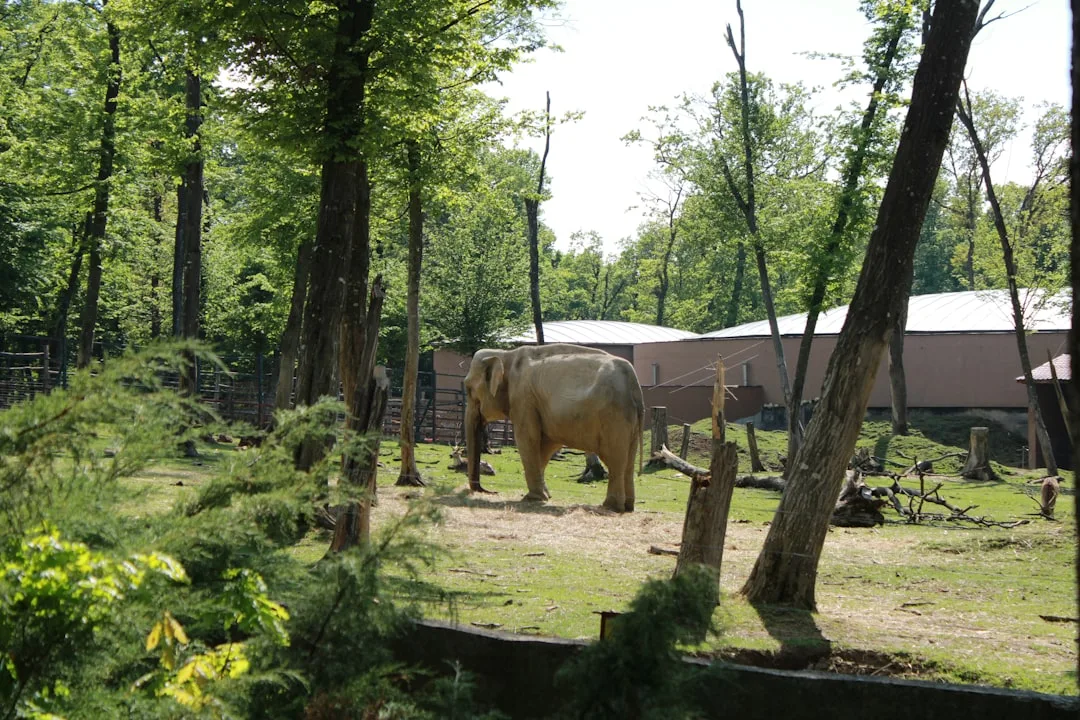
The Asian elephant is the smaller, quieter, and more culturally interwoven cousin of the African elephants - and also, by several measures, the more endangered.
Unlike Loxodonta africana, which has ranged across open savanna in enormous herds largely outside human settlement, Elephas maximus has spent the last several thousand years sharing forests, river valleys, and rice paddies with some of the most densely populated human civilisations on Earth.
The result is an animal whose biology is still defiantly wild, whose culture is shaped by millennia of close contact with people, and whose future depends almost entirely on how Asian nations manage the shrinking mosaic of forest, corridor, and farmland it still occupies.
This guide covers every major aspect of Asian elephant biology and ecology: taxonomy and subspecies, size and anatomy, the one-fingered trunk tip, matriarchal social structure, diet and feeding, the 22-month pregnancy, conservation status, and the extraordinary 4,000-year relationship between Asian elephants and the humans who have worked alongside them in temples, forests, and armies.
It is a reference entry, not a summary - so expect specifics: kilograms, kilometres, sub-populations, and documented behaviours.
Etymology and Classification
The scientific name Elephas maximus was assigned by Carl Linnaeus in 1758 as part of the tenth edition of Systema Naturae. The genus name Elephas derives from the Ancient Greek elephas meaning 'elephant' or 'ivory', and the species epithet maximus simply means 'greatest'. Linnaeus worked from Sri Lankan specimens, which is why the nominate subspecies (E. m. maximus) is the Sri Lankan elephant rather than the more numerous Indian form.
The Asian elephant belongs to the order Proboscidea, a group of trunked mammals that was once far more diverse than today. Where Proboscidea once contained dozens of species - mammoths, mastodons, stegodons, gomphotheres - only three living species remain: the Asian elephant, the African bush elephant (Loxodonta africana), and the African forest elephant (Loxodonta cyclotis).
Genetic evidence shows Elephas and Loxodonta diverged roughly 7 million years ago, a gap comparable to the split between humans and chimpanzees. Despite superficial similarity, Asian and African elephants are genetically and anatomically distinct on the order of different genera.
The closest living relative of the Asian elephant is actually not the African elephant at all, but the extinct woolly mammoth (Mammuthus primigenius). Genetic analysis of preserved mammoth tissue shows Elephas and Mammuthus share a more recent common ancestor than either does with Loxodonta.
Recognised Subspecies
Three subspecies of Asian elephant are formally recognised by the IUCN:
- Sri Lankan elephant (Elephas maximus maximus) - the nominate subspecies. Largest of the three, darker pigmentation, heavily depigmented patches on the face, ears, and trunk, and most individuals are tuskless. Restricted to Sri Lanka.
- Indian elephant (Elephas maximus indicus) - the most numerous subspecies, distributed across mainland South and Southeast Asia from India through Nepal, Bhutan, Bangladesh, Myanmar, Thailand, Laos, Cambodia, Vietnam, and southern China. A higher proportion of males carry tusks than in Sri Lanka.
- Sumatran elephant (Elephas maximus sumatranus) - the smallest, lightest-coloured, confined to the island of Sumatra in Indonesia. Listed as Critically Endangered.
A fourth population, the Borneo elephant (sometimes Elephas maximus borneensis), is treated inconsistently. Genetic analysis suggests it diverged from other Asian elephants roughly 300,000 years ago and may deserve full subspecies status. Whether the Borneo population arrived naturally or was introduced from captive stock in antiquity is still debated.
Size and Physical Description
Asian elephants are the second largest living land animals, after the African bush elephant. They show moderate sexual dimorphism: males are larger and heavier than females but not by the extreme margin seen in polar bears or gorillas.
Males (bulls):
- Shoulder height: 2.5-3.0 metres
- Body length: 5.5-6.5 metres including trunk and tail
- Weight: 3,000-5,000 kg, occasionally higher
- Tusks: present in some individuals, absent in others
Females (cows):
- Shoulder height: 2.1-2.4 metres
- Weight: 2,000-3,500 kg
- Tusks: almost always absent; small incisor-like tushes may appear briefly
Calves at birth:
- Shoulder height: roughly 85-95 cm
- Weight: 90-110 kg
- Already able to stand and walk within hours
Asian elephants are substantially smaller than African bush elephants, which can exceed 4 metres at the shoulder and 6,000 kg. They also differ in several diagnostic body features:
- Ears: small and rounded, shaped roughly like the Indian subcontinent. African bush elephant ears are much larger and shaped like the African continent.
- Forehead: twin-domed with a concave dip between two bulges. African elephants have a single rounded dome.
- Back: humped or level across the spine. African elephants have a pronounced sway or dip.
- Skin: darker on average, often mottled with pink depigmentation around the face, ears, trunk, and chest, especially in Sri Lankan individuals.
- Toenails: five on the front feet and four on the back. African bush elephants usually have four in front and three in back.
The skin is 2.5-3 cm thick across most of the body but only 1-2 mm thin inside the ears, which functions as a thermoregulation surface. Mudbathing, dusting, and shade-seeking are essential daily behaviours.
The One-Fingered Trunk
The trunk (correctly called the proboscis) is a fusion of the nose and upper lip containing approximately 40,000 individual muscle fascicles and no bone whatsoever. It is simultaneously a respiratory organ, a sensory probe, a vocalisation resonator, and a manipulator more dextrous than any primate hand.
Asian elephants differ from African elephants in a small but critical way: the trunk tip has a single finger-like projection on the upper surface, while African elephants have two (one upper, one lower). The practical effect is a subtly different grasping style. Asian elephants tend to wrap objects rather than pinch them, curling the flexible tip around a target and pressing it against the lower lip pad. African elephants can pinch items between their two opposing tips with finer precision.
Despite this anatomical difference, Asian elephant trunk dexterity is extraordinary. An adult can:
- Lift logs weighing more than 300 kg.
- Pluck a single blade of grass or a peanut from a flat surface.
- Siphon 8-10 litres of water per load and spray it into the mouth.
- Modify branches into tools (fly swatters, back scratchers).
- Smell odours several kilometres away under favourable wind.
Olfaction is the elephant's strongest sense. Genetic studies have identified roughly 2,000 functional olfactory receptor genes in elephants - more than any other mammal studied, and roughly twice as many as in dogs.
Tusks, Teeth, and the Tuskless Trait
Tusks in elephants are elongated upper incisor teeth that grow continuously throughout life. In Asian elephants, external tusks are expressed far less consistently than in African bush elephants. Some generalisations:
- Male Indian elephants: about half carry visible tusks ('tuskers'); the rest carry small tusk-like structures called 'tushes' that usually do not protrude.
- Male Sri Lankan elephants: only about 7 per cent are tuskers. The majority are tuskless ('makhna').
- Female Asian elephants of any subspecies: almost always tuskless. Tushes, where present, rarely protrude.
Molars are replaced horizontally, not vertically, across the elephant's lifetime. Each side of the jaw uses six sets of molars in sequence, the new set pushing the worn set forward and out. When the sixth and final set wears down in old age - typically around 60-70 years - the elephant can no longer chew effectively and starvation follows. This tooth wear limit, not disease or predation, is the usual biological cap on elephant lifespan.
Herds, Matriarchs, and Musth
Asian elephant society is matriarchal and female-centred. The core social unit is a family group of 6-15 related females and their offspring led by the oldest, most experienced female - the matriarch. Her memory of water sources, safe crossings, and ancestral routes guides every major herd decision, and research consistently shows that herds led by older matriarchs survive droughts and crises at higher rates than those led by younger females.
Male calves remain with the family until roughly 12-15 years of age, at which point they are gradually pushed out and join loose bachelor groups or roam alone. Adult bulls rejoin female herds only during mating. This creates a sharp segregation of adult social life by sex.
Adult bulls cycle through a periodic state called musth - a hormonal condition marked by a 60-fold rise in testosterone, a pungent temporal gland discharge, urine dribbling, heightened aggression, and a willingness to confront larger rivals.
Musth lasts weeks to months and confers mating advantage: females preferentially accept musth bulls, and musth bulls dominate non-musth rivals regardless of body size. Musth timing is staggered among bulls in a region, so the strongest male of the moment is a rotating title.
Communication is layered and rich:
- Infrasonic rumbles (below 20 Hz) travel up to 10 km through air and further through the ground.
- Trumpets, roars, and snorts convey alarm, excitement, and greeting.
- Seismic signals are detected through mechanoreceptors in the feet and trunk tip.
- Chemical signals flow through temporin (temporal gland secretion), urine, and dung.
- Visual and tactile cues - ear flaring, trunk touching, body pressing - dominate close-range interaction.
Gestation, Birth, and Growing Up
The Asian elephant gestation period of approximately 22 months is the longest of any living mammal. The extraordinary length reflects the neurological sophistication of the calf: babies are born with brains already a third of adult size and with enough motor development to stand and walk within hours of birth.
Reproductive timeline:
| Stage | Age / Duration |
|---|---|
| Female sexual maturity | 9-12 years |
| First calf | 13-16 years |
| Gestation | 20-22 months |
| Calf nursing period | 3-5 years |
| Inter-birth interval | 4-5 years |
| Male sexual maturity | 10-15 years |
| First musth | 20-30 years |
| Reproductive lifespan | ~40-50 years in females |
Calves are raised cooperatively by the entire matriarchal group. 'Allomothers' - often young females gaining parenting experience - help care for and protect calves, an arrangement biologists call alloparental care. This cooperative model increases calf survival substantially.
Calf mortality is high in the first five years, with drought, predation by tigers (across the Indian subcontinent) or clouded leopards, and in some regions human-caused injury representing the main causes.
Diet, Feeding, and Ecosystem Role
Asian elephants are bulk-feeding generalist herbivores. An adult consumes around 150 kg of plant matter and 100-200 litres of water per day and spends 16-19 hours daily feeding. The diet is remarkably broad - more than 100 plant species are recorded across studies.
Seasonal shifts:
- Wet season: grasses, bamboo shoots, young leaves dominate.
- Dry season: bark, roots, twigs, fibrous stems, and fallen fruit fill the gap.
- Year-round: wild bananas, figs, jackfruit, mango, wood apple, and cultivated crops where available.
Digestive efficiency is poor - only about 40-50 per cent of what an elephant eats is absorbed - so dung volume is enormous (roughly 100 kg per day) and supports entire dependent communities of dung beetles, seed-dispersing birds, and plants.
A single elephant can disperse the seeds of more than 30 plant species across tens of kilometres, acting as one of the most important long-distance seed dispersers in South and Southeast Asian forests. Some tree species, such as certain dipterocarps and large-fruited figs, depend almost exclusively on elephants for viable seed dispersal.
Where forests have been fragmented by agriculture, elephants frequently raid crops - rice, sugarcane, bananas, maize, jackfruit - which is the single largest source of human-elephant conflict in India, Sri Lanka, and parts of Southeast Asia.
Humans, Temples, War, and Work
The relationship between Asian elephants and humans is deeper and older than with any other elephant species. Archaeological evidence from the Indus Valley civilisation shows Asian elephants were being captured, trained, and kept by humans at least 4,000 years ago, and likely considerably earlier.
Three traditional roles:
- Temple and ceremony. Temple elephants have featured in Hindu and Buddhist religious practice across South and Southeast Asia for more than 3,000 years. The god Ganesha, one of the most widely worshipped deities in Hinduism, bears the head of an Asian elephant. Temple elephants participate in processions, festivals, and ritual offerings - and in some traditions are regarded as living embodiments of the divine.
- Logging and forestry. Trained elephants hauled teak and other tropical hardwoods in Myanmar, Thailand, and northeast India through most of the 19th and 20th centuries, able to work terrain no machinery could reach. Commercial elephant logging largely ended with timber-export restrictions in Myanmar in 2014 and Thailand in 1989, leaving thousands of former logging elephants in uncertain circumstances.
- Warfare. War elephants date to at least the 4th century BCE, with the first major deployments by the Magadha and Mauryan armies of northern India. Alexander the Great's forces encountered Indian war elephants at the Battle of the Hydaspes in 326 BCE. Carthaginian and later Mediterranean armies used captured or acquired elephants - most famously under Hannibal, who took them across the Alps in 218 BCE, although his elephants were probably mostly the now-extinct North African subspecies rather than Asian. War elephants remained battlefield weapons in parts of South and Southeast Asia into the 17th century, when cannon fire finally made them obsolete.
Crucially, despite millennia of captive use, the Asian elephant has never been truly domesticated in the genetic sense. Every captive Asian elephant is biologically a wild animal, either captured from the wild or born into captivity and trained individually. No selective breeding programme has ever produced a genetically distinct tame lineage. This is why captive elephants, even after decades of gentle handling, retain unpredictable wild behaviours and periodically injure or kill their handlers.
Conservation Status and Threats
The IUCN Red List classifies Elephas maximus as Endangered, with the Sumatran subspecies listed as Critically Endangered. The global wild population is estimated at 40,000-50,000 individuals, down by approximately 50 per cent over the last three generations. By contrast, captive populations (temple, tourism, former logging, and sanctuary) number another 15,000 or so, heavily concentrated in India, Myanmar, Thailand, and Sri Lanka.
Primary threats:
- Habitat loss and fragmentation. Conversion of forest to agriculture, plantations (especially oil palm in Indonesia and Malaysia), roads, dams, and urban expansion has reduced Asian elephant habitat to a fraction of its historical range. Populations are isolated in small protected areas with shrinking or absent wildlife corridors.
- Human-elephant conflict. In India alone roughly 100 elephants and 400 people die each year from mutual conflict: crop raiding, retaliatory killing, trampling, and electrocution. Low-hanging farm electrification lines are a significant and preventable killer.
- Poaching. Because most females and many males are tuskless, ivory poaching is a smaller threat than in Africa - but selective killing of the tuskers that do exist has skewed sex ratios and reduced genetic diversity, especially in India and Myanmar. Skin poaching for traditional medicine has emerged as a growing threat in Myanmar in the past decade.
- Capture for the captive trade. Asian elephants continue to be taken from the wild for tourism, ceremony, and private ownership, particularly in parts of Southeast Asia.
- Train and vehicle strikes. Rail lines through forested habitat in India kill dozens of elephants per year.
- Disease spillover. Elephant endotheliotropic herpesvirus (EEHV) causes acute haemorrhagic disease in young Asian elephants both captive and wild, with survival rates under 50 per cent in outbreaks.
Protected Areas and Reserves
India's national response, Project Elephant (launched 1992), operates 33 Elephant Reserves spanning approximately 80,000 square kilometres. The initiative focuses on corridor preservation, mitigation of human-elephant conflict, anti-poaching work, and monitoring of wild and captive populations. Other range states maintain parallel programmes of varying scope and funding.
Conservation corridor design - linking isolated protected areas so elephant herds can move between them - is increasingly recognised as the single most important measure for long-term viability.
Related Reading
- African Bush Elephant
- Elephant Memory and Intelligence
- Elephants: Memory, Intelligence, and the Fight for Survival
- Why Elephants Are Afraid of Mice
References
Sources consulted for this entry include IUCN Red List species assessments for Elephas maximus and its subspecies, the Asian Elephant Specialist Group reports, the Indian Ministry of Environment Project Elephant annual monitoring reports, peer-reviewed research in Animal Behaviour, PNAS, Biological Conservation, and Journal of Mammalogy, and the WWF and Wildlife Conservation Society Asian elephant programme assessments.
Population figures reflect consolidated estimates from recent national censuses and IUCN assessments.
Frequently Asked Questions
How is the Asian elephant different from the African elephant?
The two lineages are different genera separated by roughly 7 million years of evolution. The Asian elephant (Elephas maximus) is smaller, standing 2.5-3 m at the shoulder and weighing 3,000-5,000 kg, compared to African bush elephants at 3-4 m and 4,000-6,000 kg. Asian elephants have smaller, rounded ears shaped roughly like the Indian subcontinent; African elephants have larger ears shaped roughly like the African continent.
The Asian trunk tip has one finger-like projection; the African trunk tip has two. Asian elephants have a twin-domed forehead and a humped or level back; African elephants have a single-domed forehead and a sway back. In Asian elephants, only some males carry external tusks, while in African elephants both sexes grow tusks.
Asian molars have narrow parallel enamel ridges - well suited to grass - while African molars have diamond-shaped ridges better for browsing.
How many subspecies of Asian elephant are there?
Three subspecies are currently recognised. The Sri Lankan elephant (Elephas maximus maximus) is the largest, darker in colour, mostly tuskless, and restricted to Sri Lanka with roughly 2,500-4,000 wild individuals. The Indian elephant (Elephas maximus indicus) occupies mainland Asia from India east through Indochina and is the most numerous subspecies, with the largest population in India.
The Sumatran elephant (Elephas maximus sumatranus) is the smallest and is Critically Endangered, with only about 2,400-2,800 individuals left on the island of Sumatra. The Borneo elephant, sometimes called the Borneo pygmy elephant, is often treated as a fourth subspecies (Elephas maximus borneensis) and its taxonomic status is actively debated - genetic analysis suggests it may have been isolated on Borneo for 300,000 years.
Where do Asian elephants live?
Wild Asian elephants occur in 13 countries across South and Southeast Asia: India, Sri Lanka, Nepal, Bhutan, Bangladesh, Myanmar, Thailand, Laos, Cambodia, Vietnam, China (a tiny population in Yunnan), Malaysia, and Indonesia (Sumatra and Borneo). India holds roughly 60 per cent of the global wild population. The species inhabits tropical and subtropical broadleaf forests, grasslands, swamp forests, scrub, and cultivated margins.
Habitat has become severely fragmented: today the species occupies less than 15 per cent of its historical range, and most populations are isolated in small protected areas surrounded by farmland, plantations, and human settlement. A typical herd’s home range covers 100-600 km^2 depending on forest quality and water availability.
Are Asian elephants endangered?
Yes. The IUCN Red List classifies Elephas maximus as Endangered, with the Sumatran subspecies upgraded to Critically Endangered. The global wild population is estimated at 40,000-50,000 individuals, down by roughly 50 per cent over the last three generations (about 75 years). Habitat loss from agriculture, plantations (particularly oil palm), roads, and hydroelectric projects is the primary driver.
Human-elephant conflict kills roughly 100 wild elephants and 400 people per year in India alone. Poaching for ivory is a smaller issue than in Africa because most Asian females and many males are tuskless, but selective poaching of tusker bulls has skewed sex ratios and reduced genetic diversity. Capture for the captive elephant trade, electrocution from low-hanging power lines, train strikes, and retaliatory killing by farmers all add further pressure.
What do Asian elephants eat?
Asian elephants are bulk-feeding herbivores. An adult consumes approximately 150 kg of plant matter and 100-200 litres of water every day, and feeds for 16-19 hours daily. The diet is broad and seasonal: grasses dominate in the wet season, while bark, roots, twigs, bamboo, and fallen fruit become more important in the dry season.
Favoured foods include wild bananas, bamboo shoots, figs, mangoes, wood apple, and cultivated crops when available - which is a major driver of human-elephant conflict. The digestive system is inefficient, extracting only about 40-50 per cent of available nutrients, so the animals must eat vast quantities and their dung supports entire communities of beetles, birds, and seed-dispersed plants.
A single elephant can disperse the seeds of more than 30 plant species across tens of kilometres.
How long have Asian elephants been domesticated?
Asian elephants have been captured, trained, and worked by humans for more than 4,000 years, with the earliest clear archaeological evidence from the Indus Valley civilisation around 2,000 BCE. Three traditional roles dominate. Temple elephants participate in Hindu and Buddhist religious ceremonies across South and Southeast Asia; some temple elephants have been in continuous ceremonial use for over 60 years.
Logging elephants were used throughout Myanmar, Thailand, and northeast India for moving teak and other hardwoods, a practice that declined after commercial logging restrictions. War elephants were military units used from at least the 4th century BCE - most famously in the armies of the Mauryan Empire, Alexander the Great’s opponents, and Hannibal - and remained battlefield weapons in parts of Asia until the 17th century.
Despite millennia of captive use, the Asian elephant is not truly domesticated in the genetic sense: captive elephants remain biologically wild animals trained individually from capture or birth.
How long do Asian elephants live and how do they reproduce?
Wild Asian elephants typically live 60-70 years, similar to the human lifespan, though few captive records have exceeded 80. Females reach sexual maturity around age 9-12 and produce their first calf around age 13-16. Gestation lasts roughly 22 months - the longest of any living mammal on Earth. Births almost always produce a single calf weighing around 90-110 kg and standing about 85 cm tall.
Calves nurse for 3-5 years, although they begin eating vegetation from a few months old. Inter-birth intervals are 4-5 years, meaning a single female rarely produces more than 4-7 offspring in her lifetime. Bulls enter a periodic state called musth in adulthood, marked by a 60-fold rise in testosterone, aggressive behaviour, and a characteristic temporal gland secretion.
Calf mortality can reach 30 per cent in the first five years, heavily influenced by drought, conflict, and predation from tigers.
How intelligent are Asian elephants?
Asian elephants are among the most cognitively advanced non-human animals. Happy, an Asian elephant at the Bronx Zoo, became the first elephant to pass the mirror self-recognition test in 2006, indicating self-awareness. They use tools spontaneously, modifying branches into fly swatters and back scratchers.
They cooperate on novel problems, demonstrate episodic-like memory of locations and individuals, and mourn their dead - herds have been documented returning to bones of relatives, touching them with trunks, and falling silent for extended periods. They distinguish individual humans by voice and face, discriminate between human languages by tonal features, and respond differently to speech associated with groups that have historically threatened them.
Matriarchs retain spatial memory of water sources and routes across decades, knowledge that repeatedly saves entire herds during droughts. Research populations in India, Thailand, and Sri Lanka have also documented cross-population cultural variation - different learned behaviours between herds with no genetic basis.