
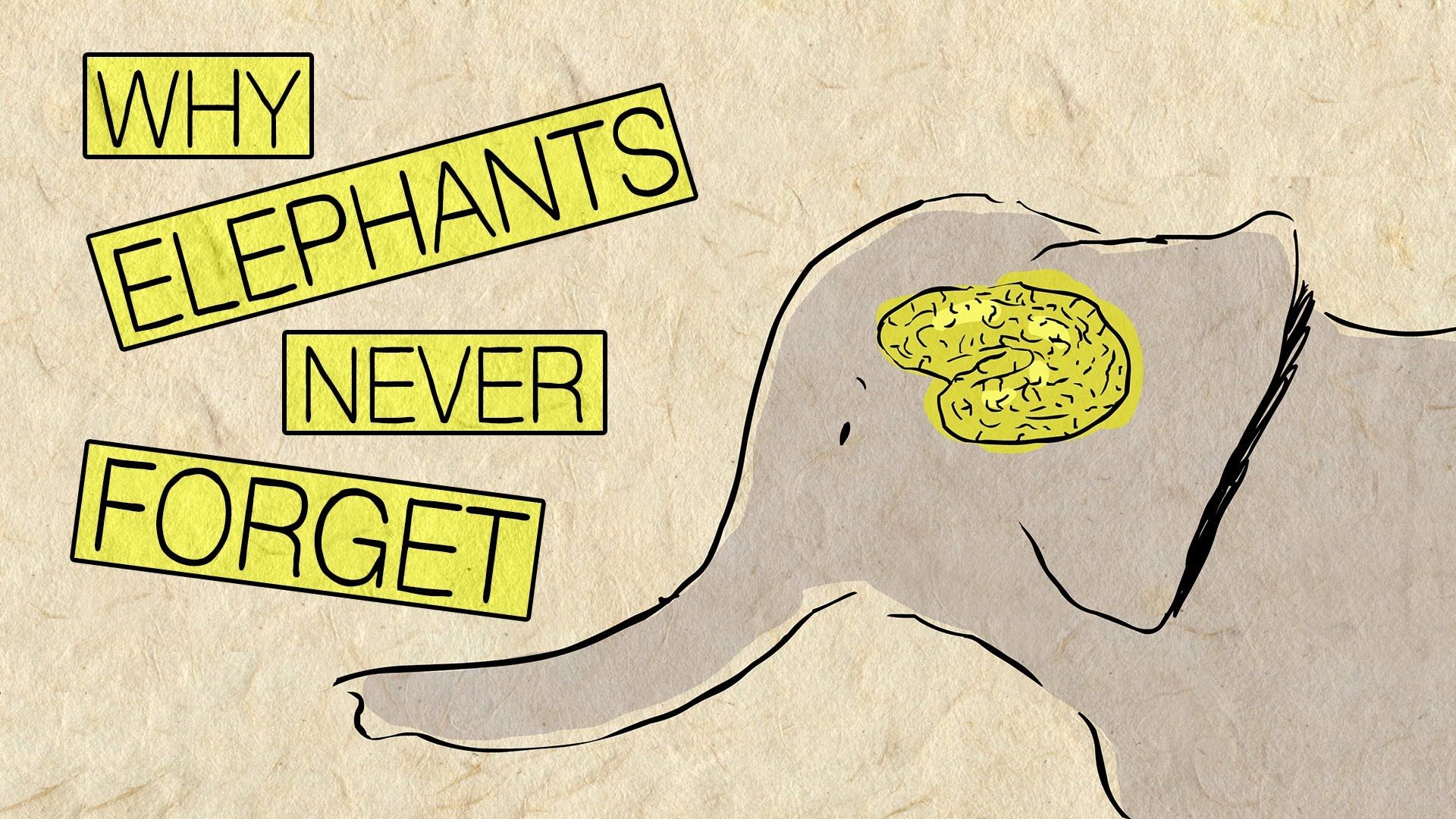
Do elephants really never forget?
Elephant memory and intelligence are not folklore: elephants do have exceptional long-term recall. Research has documented elephants recognizing specific humans decades after brief encounters, remembering watering holes across hundreds of square kilometers of range, and recalling individual members of their herd even after years of separation. Matriarchs serve as repositories of critical knowledge - locations of food and water during drought, migration routes, and recognition of dangerous.
The Mind of the Matriarch
A 60-year-old elephant matriarch leads her extended family across the dry African savanna during a severe drought. Water is scarce. Most herds in the area are dying. But this matriarch remembers - from a drought 40 years earlier, when she was a young calf - a seasonal waterhole hidden in a rocky valley 50 kilometers north of their usual territory.
She leads her family there. They drink. They survive. Without her memory of that forty-year-old location, the herd would likely have died.
This is elephant intelligence in action, and it is one of the most extensively documented examples of long-term memory in any animal. The phrase "an elephant never forgets" is not mythology. It is, approximately, true - and the implications for elephant social structure, survival, and conservation are profound.
The Elephant Brain
Elephants have the largest brain of any land animal.
Brain statistics:
- Weight: approximately 5 kg (11 lbs)
- Neurons: 257 billion (three times the 86 billion in human brains)
- Structure: 97.5 percent of neurons are in the cerebellum (the human brain has 80 percent)
- Cortex: smaller proportion than humans but absolutely larger in total neurons
The massive cerebellum coordinates elephant's enormous body - their trunks alone contain 40,000 muscles requiring precise control. The remaining 2.5 percent of neurons in the cerebral cortex still represent about 6.4 billion neurons - comparable to many primate species.
Temporal lobe:
The temporal lobe, which processes memory and auditory information, is proportionally larger in elephants than in humans. This neuroanatomical feature correlates with elephants' exceptional memory capabilities.
Memory Capabilities
Research has documented extraordinary elephant memory in multiple contexts.
Geographic memory:
Elephants remember locations of water sources across hundreds of square kilometers. Drought-stricken herds led by experienced matriarchs can survive by remembering seasonal water locations used decades earlier.
Social memory:
Elephants recognize individual members of their own herd and can identify members of other herds encountered briefly. They remember specific humans over years or decades - researchers have documented elephants recognizing individual human researchers who had not visited them for 20+ years.
Threat memory:
Elephants distinguish between human groups based on past experiences. Maasai tribesmen, who occasionally spear elephants, trigger defensive responses. Kamba farmers, who rarely harm elephants, get less reaction. Elephants learn these distinctions and pass them through generations.
Voice recognition:
Elephants can identify specific human voices, even recordings, and respond differently based on familiarity. They distinguish family members' calls from unfamiliar calls across miles of open savanna.
Self-Awareness
Elephants have passed one of the most demanding tests of animal cognition.
Mirror self-recognition:
In 2006, researchers at the Bronx Zoo tested Asian elephant Happy with a mirror test. A white cross was marked on her face where she could not see it without a mirror. When shown the mirror, Happy examined herself and used the reflection to investigate the mark on her own body.
This behavior indicates understanding of self as distinct from others. Only a handful of species have definitively passed this test:
- Great apes (chimpanzees, bonobos, orangutans, gorillas)
- Bottlenose dolphins
- Elephants (at least Asian)
- Eurasian magpies
- Cleaner wrasses (a fish)
- Manta rays (tentatively)
Humans pass the mirror test around age 18 months. Passing it implies a sophisticated cognitive capability that was long considered uniquely human.
Emotional Complexity
Elephants display behaviors consistent with complex emotional lives.
Mourning behaviors:
When a herd member dies, elephants show multiple responses:
- Standing vigil over the body, sometimes for days
- Gently touching the remains with their trunks
- Attempting to cover the body with branches or dirt
- Revisiting the death site for years afterward
- Reduced food intake and social activity
- Elevated cortisol (stress hormone) levels
Mother elephants who lose calves sometimes carry the dead calf for days before accepting the loss. Young elephants orphaned from poaching display behaviors consistent with post-traumatic stress, including nightmares, aggression, and social withdrawal that can last years.
Empathy:
Elephants show what appears to be empathy across contexts:
- Rescuing other elephants from mud pits or other traps
- Comforting distressed herd members with trunk touches
- Helping injured animals of other species
- Protecting calves that are not their own
- Responding to emotional distress in humans they know
Joy:
Elephants also show apparent joy: elaborate greeting ceremonies for returning herd members, play behavior in juveniles and even adults, and what appears to be pleasure in water, mud baths, and favorite foods.
Tool Use
Elephants use tools in ways that require planning and understanding of physics.
Common tool use:
- Branches as fly swatters: breaking off branches of appropriate size to wave away flies
- Branches as back scratchers: using sticks to scratch places their trunks cannot reach
- Rocks for breaking fences: throwing or using rocks to break barriers
- Logs for electric fences: covering electric wires with logs to cross safely
- Tree trunks as levers: using leverage to knock down larger trees for food
Planning:
Tool use often shows planning. An elephant will carry a useful branch considerable distances to where it will be needed. This indicates understanding of future needs, not just reactive behavior.
Teaching:
Mother elephants demonstrate tool use to calves, who watch and imitate. Over time, calves master specific techniques used by their mothers and aunts, suggesting cultural transmission of tool use within herds.
Social Structure
Elephant intelligence operates within a sophisticated social framework.
Matriarchal herds:
Elephant family groups consist of related females - mothers, daughters, aunts, grandmothers, sisters - and their offspring. The oldest, most experienced female leads as matriarch.
Male dispersal:
Males leave the family herd at approximately 12-15 years of age. They live relatively solitary lives or form loose bachelor groups with other males. Males return to family herds only briefly during mating.
Matriarch knowledge:
The matriarch's role is not just leadership but knowledge preservation. She remembers:
- Water locations during various seasons
- Migration routes used during different climate conditions
- Individual relationships with other herds
- Dangerous locations and circumstances
- Successful strategies used during past crises
When matriarchs die, this knowledge is lost. New matriarchs inherit leadership but may lack critical information.
Bond groups:
Multiple family herds often form "bond groups" - extended networks that help each other in emergencies. Members of bond groups recognize each other even after long separations, coordinate movements, and share territorial information.
Communication
Elephants communicate through multiple channels simultaneously.
Infrasound:
Elephants produce and hear frequencies as low as 14 Hz - below human hearing range. These infrasonic calls travel up to 10 km through air and even farther through ground vibrations that elephants detect through their feet.
Seismic communication:
Elephants drum the ground with their feet. Other elephants detect these vibrations through specialized sensors in their foot pads. This communication mode works over several kilometers regardless of wind or terrain.
Vocal range:
Normal elephant vocalizations include trumpets, rumbles, roars, chirps, and barks, each carrying different meanings. Herd members have distinctive voice signatures recognizable to others.
Tactile:
Elephants communicate through physical contact - trunk-twining in greetings, gentle touches during reassurance, and specific postures for various social messages.
Chemical:
Elephants communicate through chemical signals. Males in "musth" (a period of heightened reproductive aggression) release distinctive scents identifying their status. Urine and dung also carry chemical information about individual identity and physiological state.
The Poaching Crisis
Current elephant intelligence research has direct implications for conservation.
Ivory poaching:
African elephant populations have declined dramatically due to poaching for ivory. Between 2007 and 2014, African savanna elephant populations dropped by approximately 30 percent.
Targeting matriarchs:
Poachers often target the largest elephants - typically older matriarchs with the largest tusks. This strategy removes the knowledge-keeping individuals from herds.
Cascading consequences:
When matriarchs are killed, their herds lose:
- Critical water location knowledge
- Predator recognition and avoidance
- Migration route familiarity
- Social network connections to other herds
- Teaching resources for younger elephants
Herds led by inexperienced younger females show higher calf mortality, worse drought survival, and weaker social stability.
Generational trauma:
Orphaned elephants who witness their mothers and matriarchs being killed show long-term behavioral problems. Research on orphaned elephants in Uganda's Queen Elizabeth National Park found elevated aggression, poor social skills, and reproductive problems persisting into adulthood.
Why Elephant Intelligence Matters
Elephant intelligence is not just scientifically interesting - it has ethical implications for how humans treat elephants.
If elephants have genuine emotional complexity, self-awareness, long-term memory, and cultural transmission of knowledge, then poaching, captivity, and habitat destruction cause suffering comparable to similar impacts on humans.
Conservation efforts increasingly recognize these cognitive and emotional capabilities. Elephant sanctuaries emphasize rehabilitation of traumatized individuals. Herd-based protection strategies recognize the importance of preserving matriarchal knowledge. Anti-poaching efforts target organized ivory networks that exploit elephant social structures.
An elephant is not just a large mammal. It is an intelligent, emotional, self-aware being with knowledge that cannot be replaced when lost. The saying "an elephant never forgets" becomes, from this perspective, both a scientific observation and an ethical argument - an elephant that remembers everything about its herd and its world is an elephant whose loss matters in ways that extend far beyond biological statistics.
Comparative Brain Anatomy and the Cognitive Evidence
Our research team finds that elephant cognition is best understood by putting it next to other large-brained animals. The comparisons often upend intuitions about what "big brain" really means.
Brain Statistics Across Large-Brained Species
| Species | Brain mass | Total neurons | Cortical neurons | Encephalization quotient |
|---|---|---|---|---|
| African elephant | ~5.0 kg | 257 billion | 5.6 billion | 1.1-2.3 |
| Sperm whale | 7.8 kg | ~200 billion (est.) | ~10 billion (est.) | 0.6-0.9 |
| Human | 1.3-1.4 kg | 86 billion | 16 billion | 7.4-7.8 |
| Chimpanzee | 0.4 kg | 28 billion | 6.2 billion | 2.2-2.5 |
| Bottlenose dolphin | 1.5-1.7 kg | 37 billion | 11 billion | 4.0-4.5 |
| Orca | 5.6 kg | 43 billion | 10.5 billion | 2.5-3.0 |
The numbers for the elephant in this table come directly from Herculano-Houzel and Kaas (2011), the landmark isotropic fractionator study that first counted elephant neurons [1]. Note the unusual distribution: most of those 257 billion neurons are in the cerebellum, a pattern not seen in any primate.
Our research team reads this as evidence that elephant brains evolved under strong selection for trunk control as well as cognition, which makes the cortical neuron count (still higher than a chimpanzee) all the more remarkable.
"The African elephant brain is unique in the animal kingdom. It has more total neurons than any other mammal, yet the distribution across brain regions shows a pattern that reflects an evolutionary history shaped by the need to control a complex prehensile organ alongside demanding social cognition." - Suzana Herculano-Houzel, neuroanatomist, Vanderbilt University [1]
Cultural Transmission and Matriarchal Knowledge
The clearest demonstration that elephant knowledge is truly cultural - not just individually learned - comes from long-term studies at Amboseli in Kenya, where Cynthia Moss and colleagues have tracked individual elephants since 1972. Families that lose matriarchs older than 35 show measurably worse outcomes across multiple metrics.
McComb and colleagues published a now-classic 2001 study in Science demonstrating that families with older matriarchs are significantly better at distinguishing the contact calls of familiar versus unfamiliar elephants. Families with younger matriarchs either did not respond at all or responded inappropriately, bunching defensively in response to friendly calls [2].
"Older matriarchs have social knowledge that the rest of the family depends on. When we lose them, we are not just losing an individual animal. We are losing a library." - Cynthia Moss, Amboseli Elephant Research Project [3]
Matriarch Age and Family Outcomes
| Matriarch age group | Calf survival in drought | Correct response to stranger calls | Average family size |
|---|---|---|---|
| Under 20 years | 45-60% | 30-40% | 6-8 |
| 20-35 years | 65-75% | 60-70% | 9-12 |
| Over 35 years | 80-90% | 85-95% | 12-18 |
| Over 50 years | 85-95% | 90-98% | 15-25 |
Data adapted from Foley et al. (2008) tracking calf mortality during the 1993 and 2000 Tarangire droughts, and McComb et al. (2001) on call discrimination [2][4].
Evolutionary History of Elephant Cognition
The elephant lineage (order Proboscidea) split from its closest living relatives - the hyraxes and sirenians - roughly 60 million years ago. The expansion of the elephant brain is a relatively recent evolutionary event. Early proboscideans like Moeritherium, which lived about 35 million years ago, were pig-sized animals with brains proportionate to their body mass.
The dramatic increase in brain size began about 20 million years ago with Gomphotherium and related genera, and accelerated in the last 5 million years as the true elephantids evolved. The fossil record of endocasts - impressions of brain cavities - shows that the temporal lobe expansion in elephants happened in parallel with (but independently from) the temporal lobe expansion in hominins.
Two different lineages converged on very similar brain features, likely because both faced selection pressures favoring long memory and complex social tracking.
The extinct straight-tusked elephant (Palaeoloxodon antiquus), which lived in Europe until about 30,000 years ago, had an even larger brain than living elephants - an estimated 5.5 to 6 kg. Our research team notes that the Pleistocene elephant was contemporary with Neanderthals and anatomically modern humans, which raises the intriguing but unanswerable question of how two large-brained species interacted.
Notable Research Findings
- Elephants appear to mourn members of their own species specifically. Observations by Shifra Goldenberg and George Wittemyer of reactions to elephant remains versus remains of other large mammals showed distinct, sustained interest only in elephant bones and tusks, even when the remains were from unrelated individuals [5].
- Elephants count. Irie-Sugimoto and colleagues showed that Asian elephants can distinguish between quantities up to 4, and in some tests can track larger ratios accurately. They appear to use a non-symbolic number sense similar to that used by human infants.
- Elephants recognize themselves in mirrors at about the age of human infants. Plotnik and de Waal replicated the 2006 Happy test at Thailand Elephant Conservation Center with multiple individuals [6].
- Elephants appear to understand human pointing without training, one of the very few non-domesticated species to do so. Anna Smet and Richard Byrne demonstrated this with African elephants at Adventures with Elephants in Zimbabwe in 2013 [7].
- Infrasonic calls travel up to 10 km through air but can travel further through the ground. Elephants coordinate movements across landscapes too large for any visual or normal acoustic contact.
"What we used to think were simple stereotyped behaviors in elephants are turning out to be nuanced, context-sensitive, and individually varied. Every time we design a more careful experiment, the elephants pass it." - Joshua Plotnik, comparative psychologist, Hunter College [6]
Conservation Status Today
The African savanna elephant (Loxodonta africana) was reclassified as Endangered by the IUCN in 2021, and the African forest elephant (Loxodonta cyclotis) as Critically Endangered. The Asian elephant (Elephas maximus) remains Endangered. Continental African populations dropped from an estimated 1.3 million in 1979 to approximately 415,000 today, with forest elephants in Central Africa falling by more than 86% in 31 years.
Intelligence-aware conservation approaches now include:
- Protecting older matriarchs as a distinct conservation priority, not just protecting overall population numbers.
- Community ranger programs in Kenya, Botswana, and northern Tanzania that treat elephants as neighbors to be understood rather than resources to be managed.
- Sanctuary models that prioritize social rehabilitation for orphaned calves, keeping them together for years and reintroducing them through small social groups rather than returning them individually to the wild.
- Cross-border corridor agreements that preserve long-distance movement routes encoded in matriarchal memory.
Our research team notes that many of these approaches would be meaningless if we did not accept the cognitive science showing that elephants retain, teach, and depend on socially transmitted knowledge. Conservation policy is finally catching up to what elephant researchers have been saying since the 1970s.
Related Articles
- African Elephants vs Asian Elephants: Key Differences
- How Intelligent Are Dolphins? The Smartest Marine Mammals
- Animal Self-Recognition: Which Species Know Themselves?
References
[1] Herculano-Houzel, S., Avelino-de-Souza, K., Neves, K., et al. (2014). The elephant brain in numbers. Frontiers in Neuroanatomy, 8, 46. DOI: 10.3389/fnana.2014.00046
[2] McComb, K., Moss, C., Durant, S. M., Baker, L., & Sayialel, S. (2001). Matriarchs as repositories of social knowledge in African elephants. Science, 292(5516), 491-494. DOI: 10.1126/science.1057895
[3] Moss, C. (1988). Elephant Memories: Thirteen Years in the Life of an Elephant Family. William Morrow.
[4] Foley, C. A. H., Pettorelli, N., & Foley, L. (2008). Severe drought and calf survival in elephants. Biology Letters, 4(5), 541-544. DOI: 10.1098/rsbl.2008.0370
[5] Goldenberg, S. Z., & Wittemyer, G. (2020). Elephant behavior toward the dead: A review and insights from field observations. Primates, 61, 119-128. DOI: 10.1007/s10329-019-00766-5
[6] Plotnik, J. M., de Waal, F. B. M., & Reiss, D. (2006). Self-recognition in an Asian elephant. Proceedings of the National Academy of Sciences, 103(45), 17053-17057. DOI: 10.1073/pnas.0608062103
[7] Smet, A. F., & Byrne, R. W. (2013). African elephants can use human pointing cues to find hidden food. Current Biology, 23(20), 2033-2037. DOI: 10.1016/j.cub.2013.08.037
[8] IUCN Red List. (2021). Loxodonta africana and Loxodonta cyclotis assessments. International Union for Conservation of Nature.
Frequently Asked Questions
Do elephants really never forget?
Elephants do have exceptional long-term memory. Research has documented elephants recognizing specific humans decades after brief encounters, remembering watering holes across hundreds of square kilometers of range, and recalling individual members of their herd even after years of separation.
Matriarchs serve as repositories of critical knowledge - locations of food and water during drought, migration routes, and recognition of dangerous animals including specific humans. Elephants’ brains weigh approximately 5 kg (the largest brain of any land animal) and contain 257 billion neurons, three times more than human brains though arranged differently.
Their temporal lobe, which processes memory in mammals, is proportionally much larger than in humans. The saying ‘an elephant never forgets’ has substantial scientific basis, though elephants do forget - they simply remember extraordinarily more than most animals.
Can elephants recognize themselves in mirrors?
Yes, Asian elephants have passed the mirror self-recognition test, a landmark cognitive achievement. In 2006, researchers at the Bronx Zoo demonstrated that an Asian elephant named Happy could recognize herself in a mirror - using the reflection to inspect a mark on her body that she could not otherwise see.
This places elephants in an exclusive cognitive club alongside great apes, bottlenose dolphins, magpies, and manta rays - species demonstrating self-awareness. African elephants have shown mixed results in similar tests. Mirror self-recognition indicates that an animal understands the concept of ‘self’ as distinct from others, a cognitive capability long thought unique to humans.
Elephant intelligence goes beyond memory - they use tools, solve novel problems, teach skills to their offspring, and show empathy toward injured or dying companions in ways that suggest complex emotional processing.
Do elephants mourn their dead?
Yes, elephants display what appears to be grief and mourning behavior when members of their herd die. They visit the remains of deceased relatives for days or years, gently touching bones with their trunks and sometimes attempting to cover or protect the body. They show reduced social activity, food intake changes, and elevated cortisol (stress hormone) levels during mourning periods.
Researchers have documented elephants standing silent vigils over dying companions, carrying dead calves for days, and revisiting death sites years after the event. Whether this constitutes emotional grief in the human sense is debated, but the behaviors are consistent with complex emotional processing. Elephants have specific vocalizations associated with the loss of herd members.
Younger elephants who witness these mourning behaviors appear to learn them from adults. The closest parallel in the animal world comes from dolphins, who also seem to mourn. Elephants’ mourning behaviors are among the strongest evidence for complex emotions in non-human animals.
How intelligent are elephants compared to humans?
Direct comparisons are difficult because intelligence takes different forms, but elephants demonstrate cognitive abilities rivaling or exceeding human children in some areas. They pass tests designed to measure problem-solving, tool use, emotional recognition, and social intelligence.
Their brains contain 257 billion neurons - three times more than humans at 86 billion - though arranged differently (most elephant neurons are in the cerebellum, controlling coordinated movement of their massive bodies). Elephants use tools including branches as fly swatters, rocks to break fences, and logs to cover electric wires. They understand human pointing gestures, a skill most other animals lack.
They solve cooperative puzzles requiring two elephants to coordinate their actions. They show empathy, including rescuing companions in distress and comforting injured animals of other species. Studies of elephant-human interactions show elephants can read human facial expressions and body language in nuanced ways. Their intelligence is clearly extensive and differs from human intelligence in interesting ways rather than being simply inferior.
Why are elephant herds led by females?
Elephant herds follow matriarchal social structure - the oldest, largest, most experienced female leads extended family groups. Males leave their birth herds at roughly 12-15 years old and live relatively solitary lives or form loose bachelor groups. Females stay with their birth herd for life, with daughters remaining alongside mothers, aunts, and grandmothers. The matriarch’s role is critical.
She remembers where water can be found during drought, recognizes predator threats including humans, leads the herd along traditional migration routes, and makes decisions about when to move, feed, or rest. Research on African elephants has shown that herds with older, experienced matriarchs have significantly higher calf survival rates than herds led by inexperienced younger females.
This matriarchal structure evolved because female-line knowledge is most valuable for long-term herd survival in unpredictable environments. The current poaching crisis particularly threatens matriarchs (who have the largest tusks), removing the herds’ knowledge repositories and disrupting social structures that cannot be quickly rebuilt.