
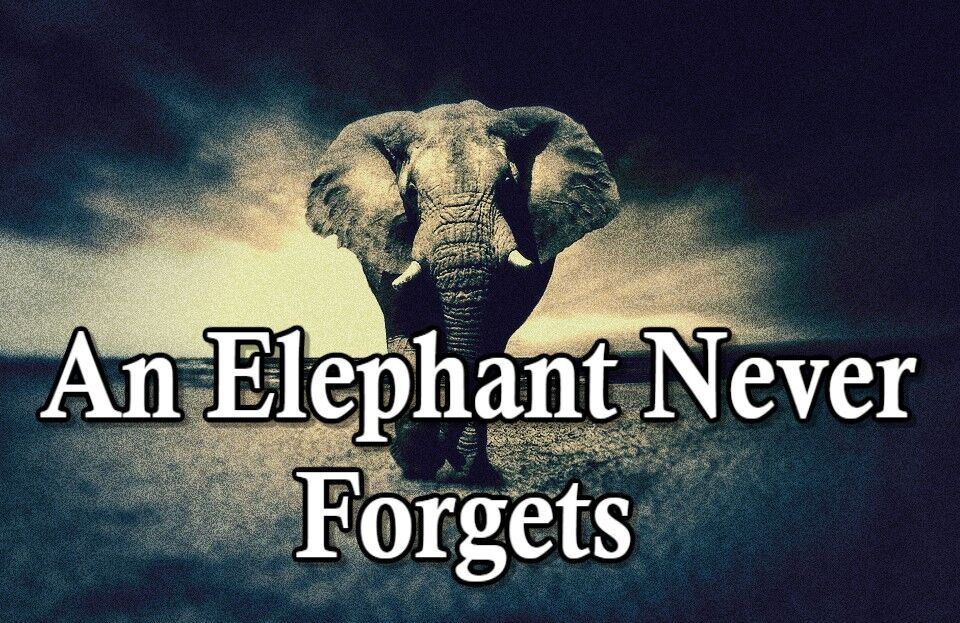
Do elephants really never forget?
The saying 'elephants never forget' is an exaggeration, but the underlying biology is remarkable. Elephants have among the longest memories documented in any animal. Research in Amboseli National Park has shown African elephant matriarchs remembering the specific contact calls of individual elephants 14 years after last hearing them.
The Science Behind the Famous Saying
"Elephants never forget." The phrase has been around so long that it feels like folk wisdom rather than something scientifically testable. But the saying has been tested extensively over the past few decades, particularly by researchers at Amboseli National Park in Kenya who have been studying individual elephants continuously since 1972.
The results are striking. Elephants do not literally never forget - that would be biologically impossible. But their memory is so much better than most animals' memories, and so specifically adapted to their social and ecological lives, that the saying captures something real.
The Memory Evidence
Research on elephant memory has documented several specific capabilities that seem almost supernatural compared to typical animal memory.
Recognizing individual voices after 12+ years:
Research by Karen McComb and colleagues played recorded elephant contact calls to wild African elephant families. They used calls from specific individual elephants that had died or left the population 12-14 years earlier. Living family members responded strongly to these recordings, showing behaviors indicating they recognized the specific callers as family members - despite not having heard those voices in over a decade.
Recognizing specific humans:
Elephants have been documented recognizing individual humans they had not seen for decades. In several well-documented cases, elephants showed clear recognition behaviors (specific greeting postures, vocalizations, affectionate responses) when reunited with humans who had cared for them decades earlier.
Shirley and Jenny reunion:
In 1999, two elephants named Shirley and Jenny were both sent to the Elephant Sanctuary in Tennessee. They had performed together briefly in a circus 22 years earlier, as young elephants. Upon first encountering each other at the sanctuary, they displayed immediate and dramatic recognition behaviors - entwining trunks, producing specific greeting vocalizations used for family members, staying close to each other constantly for months afterward.
The reunion was filmed and became widely known. Whatever exactly elephant memory contains, it clearly preserves specific recognition of individual beings across decades of separation.
The Elephant Brain
The biological basis for elephant memory is a large and specifically organized brain.
Size comparisons:
| Species | Brain Weight |
|---|---|
| Blue whale | 7-9 kg |
| Elephant | 4-5 kg |
| Sperm whale | 7-8 kg |
| Human | 1.3-1.4 kg |
| Chimpanzee | 0.4 kg |
| Dog | 0.1 kg |
Elephants have the largest brain of any land animal - though not the largest overall (whale brains are larger). A 5 kg brain is a significant biological investment, requiring substantial energy to maintain.
Neuron counts:
Recent research using precise neuron counting techniques has revealed surprising details about elephant brain composition:
- Total neurons: approximately 257 billion
- Cerebellum neurons: ~251 billion
- Cerebrum (higher cognition): ~5.6 billion
The cerebrum neuron count is relatively low compared to the total. Most elephant neurons are in the cerebellum (involved in motor coordination and trunk control) rather than the cerebral cortex (involved in higher thinking).
For comparison, humans have:
- Total neurons: 86 billion
- Cerebellum: 69 billion
- Cerebrum: 16 billion
Humans have 3 times as many cerebral neurons as elephants. By neuron count in the higher cognition regions, humans should be "smarter" than elephants. Yet elephants show cognitive capabilities that seem to match or exceed human abilities in specific domains - particularly memory.
The explanation:
Neuron count is not the only measure of cognitive capability. How neurons are organized, how they connect, and what specialized structures exist all affect cognitive performance.
Elephant brains have:
- Enlarged temporal lobe (memory-related region)
- Complex hippocampus (critical for spatial memory)
- Large olfactory bulb (elephant memory may be partially chemical/olfactory)
- Specialized neurons in key cognitive regions
- Extensive connections between memory and sensory regions
The elephant brain is not just smaller than it could be by neuron count - it is organized differently, with particular emphasis on memory-related structures.
Brain development:
Elephant brain development is extraordinarily slow. Full brain maturity is not reached until age 25-30. This is among the slowest brain development in the mammal world.
This long developmental period allows elephants to accumulate experience before their brains reach final configuration. An elephant at age 30 has effectively "grown up" knowing a complex world of family relationships, migration routes, water sources, seasonal changes, and social hierarchies. This experience is built into the final brain structure.
The Matriarch System
Elephant family groups are led by matriarchs - older females who have accumulated decades of experience. The matriarch's memory is a critical survival resource for the entire herd.
Why matriarchs matter:
African elephant family groups (typically 10-15 related females and their offspring) are led by the oldest and most experienced female. Her role includes:
- Navigation. Leading the herd to water, food, and safe areas across vast territories.
- Social coordination. Managing relationships between family members and other herds.
- Danger assessment. Deciding whether to approach or avoid potential threats.
- Resource memory. Knowing where critical resources are located, sometimes from decades of experience.
The Amboseli research:
The Amboseli Elephant Research Project, started in 1972 by Cynthia Moss, has tracked individual elephants continuously for 50+ years. The accumulated data shows that matriarchs with longer life experience (older matriarchs) produce better outcomes for their families.
Specifically:
- Herds led by older matriarchs have higher calf survival rates
- Older matriarchs better recognize threats
- Older matriarchs better manage resource access during droughts
- Older matriarchs maintain stronger social networks with other herds
The 1993 drought study:
During a severe drought in Tanzania in 1993, researchers documented that elephant herds led by older matriarchs had significantly higher survival rates than herds led by younger females.
The difference was linked to water access. Older matriarchs remembered water sources that remained wet during drought conditions - sources they had visited during previous severe droughts decades earlier. Younger matriarchs, who had not experienced comparable droughts, did not know where these emergency water sources were.
Herds with older matriarchs walked directly to remembered water sources. Herds with younger matriarchs wandered searching for water, often unsuccessfully.
The conservation implication:
The matriarch memory findings transformed elephant conservation strategy. Historical ivory poaching disproportionately killed older animals (who have larger tusks). This removed the most experienced matriarchs from affected populations, leaving younger, less experienced females in leadership roles.
The effect cascaded. Herds without experienced matriarchs suffered higher mortality during subsequent environmental challenges. Population recovery from poaching has been slower than expected partially because lost matriarch knowledge cannot be replaced quickly.
Modern conservation recognizes the value of older animals beyond simple reproductive capacity. Protecting older matriarchs protects the knowledge base that allows herds to survive.
Mirror Self-Recognition
Beyond memory, elephants demonstrate self-awareness through mirror recognition tests.
The mirror test:
A mark is placed on an animal's body in a location the animal cannot see directly. The animal is presented with a mirror. If the animal uses the mirror to inspect the mark, it is inferred that the animal recognizes the reflection as itself.
This test identifies animals with some form of self-awareness - the cognitive capacity to understand oneself as a distinct being separate from others.
Species that pass the mirror test:
The list is short:
- Great apes (chimpanzees, orangutans, bonobos, gorillas)
- Humans (from about 18-24 months of age)
- Bottlenose dolphins
- Orcas
- Asian elephants
- African elephants
- Eurasian magpies
- Ants (recent controversial finding)
- Some cleaner fish (contested)
The elephant test:
Research by Diana Reiss and Joshua Plotnik at the Bronx Zoo in 2006 placed a large mirror in the enclosure of three Asian elephants: Maxine, Patty, and Happy.
Happy (one of the elephants, named for her sunny disposition) was presented with a mirror plus a small paint mark on her forehead - a location she could not see directly.
Upon seeing herself in the mirror with the mark, Happy used her trunk to touch and inspect the mark, then attempted to remove it. This behavior is the clearest possible evidence that Happy recognized the mirror image as herself rather than as another elephant.
Other elephants in the study did not pass the mark test, which is actually typical - not all individuals within a species pass these tests. The fact that any elephant passes it demonstrates the species has the cognitive capability, even if individual variation exists.
What this means:
Self-awareness is a significant cognitive milestone. Animals that recognize themselves in mirrors have demonstrated internal awareness that:
- They exist as distinct entities
- They are separate from their environment
- They have bodies that can be seen from outside perspectives
This is foundational for higher cognitive abilities. It suggests elephants have rich inner lives with self-conscious experiences similar to - though not necessarily identical to - human consciousness.
Elephant Mourning
Perhaps the most emotionally charged observation about elephant cognition is their behavior toward deceased elephants.
The documented behaviors:
When an elephant dies, other elephants often:
Approach and touch the body. Family members and sometimes unrelated elephants will examine the deceased animal carefully. They touch the body with their trunks, smell it thoroughly, and sometimes rest their trunks on it for extended periods.
Cover the body. Elephants often cover deceased elephants with branches, leaves, and soil. This behavior is consistent across populations and seems deliberate rather than random.
Stand vigil. Elephants sometimes remain with deceased family members for hours or days, eating and drinking only minimally.
Return repeatedly. Elephants have been documented visiting death sites and skeletal remains for years after the original death. They show specific interest in elephant bones that they do not show for bones of other mammals.
Respond emotionally. Vocalizations, trunk postures, and behavior during these visits suggest emotional engagement. Elephants sometimes produce low-frequency sounds (inaudible to humans) at death sites.
Mother-calf cases. Mothers who lose calves sometimes carry the bodies for days. One documented case involved a mother elephant who carried her dead calf for over a week before eventually abandoning it.
Species-specific recognition:
Research has shown elephants distinguish between elephant bones and other mammal bones. Presented with a pile of mixed bones (some from deceased elephants, some from cattle or other animals), elephants spend significantly more time examining the elephant bones.
This suggests they recognize the bones as belonging to their own species specifically - not just as "bones" in general.
Whether it is "grief":
The question of whether elephants experience grief in the human emotional sense is philosophically complex. Researchers generally avoid claiming emotional equivalence with human grief but use the word "mourning" to describe observable behaviors.
What we can say definitively:
- Elephants show specific behaviors around deceased elephants
- These behaviors persist over extended time periods
- They are different from behaviors around other dead animals
- They suggest emotional engagement with death
Whether this constitutes "grief" in the full human sense may be unanswerable with current science. But the behaviors are real, consistent, and significant.
Communication and Social Intelligence
Elephant cognition extends beyond memory and self-awareness into complex social behavior.
Vocal communication:
Elephants communicate through multiple channels:
Infrasonic calls. Elephants produce calls at frequencies below 20 Hz - below the lower limit of human hearing. These low-frequency sounds travel several kilometers through the ground and air, allowing elephants to communicate across vast territories.
Audible vocalizations. Trumpet calls, rumbles, grunts, bellows, and various other sounds used for closer communication.
Seismic signaling. Elephants can detect ground vibrations through their feet. They may pick up information about distant herds, approaching predators, or environmental events through vibration detection.
Visual signaling. Elephants use ear positions, trunk positions, and body postures for communication. These visual signals convey mood, intent, and social relationships.
Chemical signaling. Elephants have extensive chemical communication through glandular secretions. Males produce "musth" secretions during heightened reproductive states. Females and calves recognize family members partly through chemical signatures.
Social networks:
Wild elephant populations maintain complex social networks spanning multiple family groups. Individual elephants track relationships with:
- Immediate family (mother, siblings, cousins)
- Extended family (grandmother's lineage)
- Associated families (friendly neighbors)
- Other groups (potential allies or competitors)
Mature elephants may maintain meaningful social relationships with 50-100 other specific individuals. Some relationships are maintained across decades despite irregular contact.
Leadership and learning:
Young elephants learn from older family members through observation and participation. Traditional knowledge includes:
- Migration routes
- Water source locations
- Seasonal food availability
- Dangerous areas
- Recognition of specific humans
- Social etiquette with other herds
This knowledge transfer is not genetic. It is cultural - passed from generation to generation through learning. If a matriarch dies before transferring her knowledge, her specific experience is lost.
The Trunk
Elephant memory and intelligence interact intimately with their most unique anatomical feature: the trunk.
The trunk as sensory organ:
The elephant trunk contains approximately 40,000 muscles (no bones) and is one of the most sensitive sensory organs in the animal kingdom. It provides:
- Touch sensitivity enough to pick up a single blade of grass
- Smell sensitivity up to ten times greater than dogs
- Taste receptors at the trunk tip
- Air sensing for breathing and communication
The trunk as memory interface:
Elephants use their trunks to investigate new objects, bones, and deceased animals. The trunk is the primary way elephants access chemical information about their world.
Elephant memory may be significantly chemical/olfactory in nature. Specific smells may trigger specific memories, the way specific smells trigger memories in humans but potentially with much greater precision and persistence.
When an elephant examines bones with its trunk, it is likely performing a sophisticated chemical identification process - potentially determining the specific individual the bones belonged to based on chemical signatures still present decades after death.
Why Elephants Matter for Cognition Research
Elephant cognition research has broader implications for understanding intelligence and consciousness generally.
Independent evolution:
Elephants and humans diverged from common ancestors approximately 100+ million years ago. We have evolved independently since then. Cognitive abilities shared between elephants and humans evolved separately in each lineage.
This means elephant cognition provides an independent test of how intelligence works. If both elephants and humans demonstrate specific cognitive capabilities, those capabilities are less likely to be quirks of mammalian evolution and more likely to be general features of what complex cognition produces.
Comparative research:
Studying elephants alongside primates, dolphins, corvids, and other intelligent animals allows researchers to identify:
- What cognitive features commonly emerge in intelligent species
- What neural structures support specific cognitive abilities
- Whether certain abilities require specific brain architectures
- How intelligence evolves in response to ecological pressures
Conservation implications:
Understanding that elephants have sophisticated memory, social complexity, and apparent emotional lives has conservation implications. Threats to elephants are not just biological (killing individual elephants) but cultural (destroying accumulated knowledge held by specific individuals).
Protecting elephant populations means protecting accumulated elephant culture. Losing matriarchs means losing knowledge that cannot be recovered.
What Elephant Memory Tells Us
The scientific evidence for elephant memory has grown substantially over the past few decades. What we have learned:
Elephants have exceptional long-term memory. Individual recognition across 10+ years is routinely documented. Some memories likely persist for the animal's entire lifetime.
Memory is crucial for herd survival. Matriarch knowledge of water sources, migration routes, and social relationships directly determines herd survival during environmental challenges.
Memory is cultural, not just individual. Elephant knowledge is transferred from generation to generation through social learning. Losing older animals means losing accumulated knowledge.
Memory connects to emotional experience. Elephants show behaviors around death and separation that suggest emotional responses linked to memories of lost individuals.
Memory has physical substrate. The enlarged temporal lobe, complex hippocampus, and other memory-related brain regions in elephants provide the biological basis for their memory capabilities.
The saying "elephants never forget" is not literally true - but the underlying biology is remarkable enough that the exaggeration captures something real. Elephants remember things that most animals never remember, and they use those memories in sophisticated ways that directly affect their survival and social lives.
Every time a 50-year-old matriarch leads her herd to a water source she remembers from 30 years ago, or recognizes a distant cousin's voice after 14 years of separation, or returns to the bones of a family member who died a decade before, she is demonstrating cognitive capabilities that were once thought exclusive to humans and great apes.
The elephant reminds us that intelligence, memory, and possibly consciousness are not uniquely human. They are features of how complex brains work in response to complex ecological pressures. Elephants evolved them through independent evolutionary paths from our own, arriving at capabilities that both overlap with and differ from human cognition in fascinating ways.
When humans finally recognize the full cognitive complexity of other species, elephants are likely to be among the first we understand deeply. They have been showing us these capabilities for as long as humans have been watching them. It has taken us this long to develop the science to confirm what careful observers have always suspected.
Related Articles
- Elephants: Memory, Intelligence, and the Fight for Survival
- Why Are Elephants Afraid of Mice?
- Are Dolphins Smarter Than Humans?
Frequently Asked Questions
Do elephants really never forget?
The saying ‘elephants never forget’ is an exaggeration, but the underlying biology is remarkable. Elephants have among the longest memories documented in any animal. Research in Amboseli National Park has shown African elephant matriarchs remembering the specific contact calls of individual elephants 14 years after last hearing them. Studies have documented elephants recognizing individual human voices they had not heard for 12+ years.
The famous case of Shirley and Jenny - two circus elephants reunited after 22 years apart at a Tennessee elephant sanctuary - showed clear immediate recognition between the two elephants despite decades of separation. However, elephants do forget some things over time, and their memory is not literally infinite.
The phrase reflects the reality that elephants have exceptional long-term memory compared to most animals, but they are not literal ‘never forget’ beings.
How big is an elephant brain?
Elephant brains weigh approximately 5 kg (11 lb) - the largest brain of any land animal. For comparison, human brains weigh 1.3-1.4 kg, and blue whale brains (the largest overall) weigh 7-9 kg. Elephant brain-to-body ratio is lower than humans’ (approximately 0.08 percent vs. our 2 percent), but the total neural complexity is enormous.
Elephants have approximately 257 billion neurons compared to humans’ 86 billion - but most elephant neurons are in the cerebellum (motor coordination) rather than the cerebrum (higher cognition). The specific region involved in higher cognition in elephants (the pallium) contains approximately 5.6 billion neurons.
Elephant brain structure includes an extremely large temporal lobe - the region associated with memory in mammals - consistent with their reputation for remarkable memory. Brain development in elephants is among the slowest of any mammal, with full brain maturity not reached until age 25-30.
Can elephants remember where water is?
Yes, elephant matriarchs serve as living maps of water sources across enormous territories. During severe droughts, matriarchs lead their herds to water holes that the younger elephants have never seen. Research in Tanzania documented matriarchs guiding their herds to water sources that the matriarchs had not visited for 30+ years and that no elephant in the herd under 30 had ever seen. This spatial memory is critical for herd survival.
In one documented case, during a catastrophic 1993 drought, herds led by older matriarchs survived at higher rates than herds with younger, inexperienced leaders. The older matriarchs knew water sources from previous droughts decades earlier.
This finding fundamentally changed elephant conservation - authorities realized that killing older matriarchs (which was common during ivory poaching) left herds unable to navigate droughts, leading to cascading mortality even among surviving animals.
Do elephants recognize themselves in mirrors?
Yes, African elephants pass the mirror self-recognition test, making them one of a small group of species confirmed to show self-awareness. In 2006 research by Diana Reiss and Joshua Plotnik at the Bronx Zoo, elephants Maxine, Patty, and Happy were presented with a large mirror.
Happy (the most studied individual) passed the classic mark test - she used the mirror to inspect and attempt to remove a paint mark placed on her head that she could not see directly. This is one of the strongest indicators of self-awareness available in animal behavioral testing. The list of species that pass mirror tests is short: great apes (chimpanzees, orangutans, gorillas, bonobos), dolphins, elephants, magpies, humans.
The fact that elephants pass the test suggests they have internal awareness of themselves as distinct beings - not just reactive behavior but something closer to what humans consider self-consciousness.
Why do elephants mourn their dead?
Elephants show extensive behavior toward deceased elephants that researchers characterize as mourning. When an elephant dies, other elephants often visit the body, touching it with their trunks and feet, covering it with branches and vegetation, and standing silent vigil for extended periods. Herd members may return to death sites repeatedly over years, visiting the bones of deceased family members.
Mothers who lose calves sometimes carry the bodies for days or weeks before reluctantly abandoning them. Joyce Poole’s research at Amboseli has documented these behaviors consistently across decades. Whether elephants experience grief in the human emotional sense is philosophically complex, but the behaviors are real, species-specific, and emotionally charged enough that researchers use words like ‘mourning’ without apology.
Elephants also show behaviors that suggest they recognize bones as belonging to deceased relatives - they respond differently to elephant bones than to other mammal bones, suggesting something like species-specific mourning.