
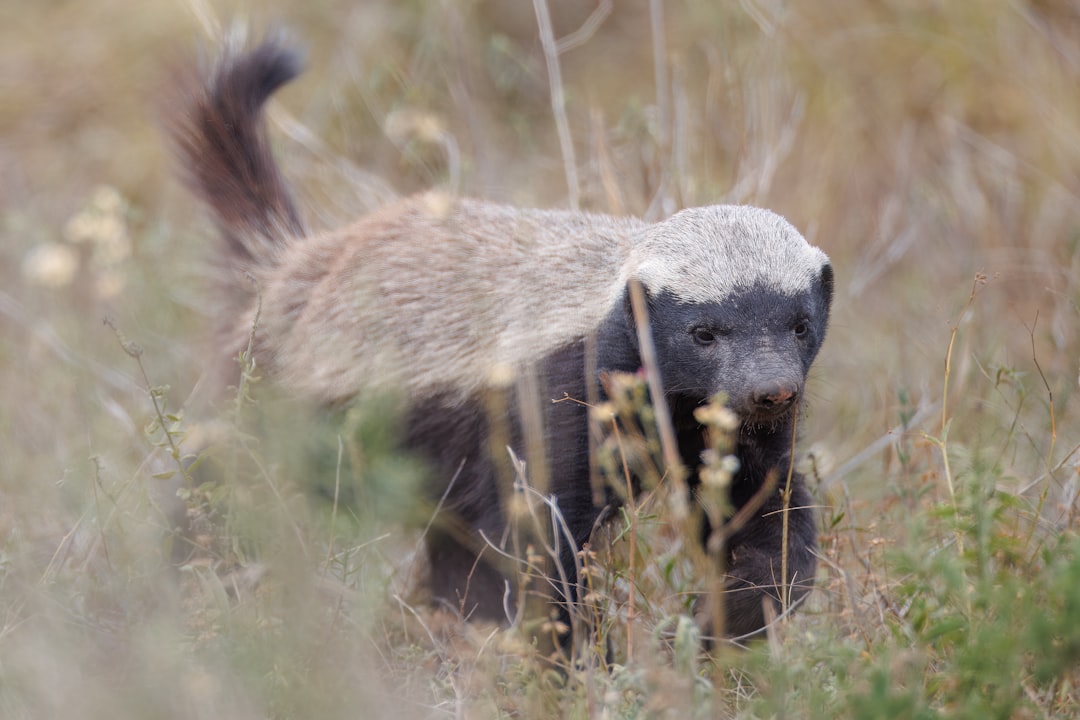
Quick Answer: The honey badger (Mellivora capensis), also known as the ratel, is renowned for its fearless temperament and remarkable escape abilities. This medium-sized carnivore, native to Africa and parts of Asia, is highly adaptable and displays unique resistance to venom. Its combination of intelligence, physical toughness, and audacious behavior makes the honey badger one of the most formidable and resourceful predators in the animal kingdom.
The honey badger’s reputation for fearlessness is not mere legend. Observed across a range of habitats from arid savannas to dense forests, the honey badger has demonstrated a capacity to thrive in some of the world’s most challenging environments.
Its diet is extremely varied, encompassing everything from insects and rodents to venomous snakes and even honey, which it raids from beehives with little hesitation. This adaptability is matched by a physical resilience that sets the honey badger apart from many other carnivores.
The honey badger’s build is compact and muscular, with a broad head, powerful jaws, and strong forelimbs equipped with long claws. Its skin is exceptionally thick and loose, allowing it to twist and turn even when gripped by predators or caught in traps. This anatomical advantage is complemented by a notorious willingness to confront threats much larger than itself, including lions and leopards.
The honey badger’s defensive strategies are as varied as its diet, ranging from emitting foul-smelling secretions to launching aggressive counterattacks.
Perhaps most astonishing is the honey badger’s reputation as an escape artist. Individuals have been documented manipulating locks, digging through reinforced enclosures, and using tools to aid their escape. These behaviors, rare among carnivores, underscore a high level of problem-solving ability and persistence. The honey badger’s combination of physical and cognitive traits has made it a subject of fascination for zoologists and wildlife enthusiasts alike.
The Honey Badger: Defining a Fearless Predator
Mellivora capensis, commonly known as the honey badger or ratel, is a medium-sized mustelid native to Africa, the Middle East, and the Indian subcontinent. The honey badger is distinguished by its robust body, broad head, and a striking coloration: a white or gray dorsal stripe contrasting with black lower parts. This species is solitary, highly territorial, and primarily nocturnal, though it may be active during the day in undisturbed areas.
The honey badger’s reputation for fearlessness is well-earned. Unlike many carnivores, it regularly confronts animals much larger than itself, including big cats and hyenas. The honey badger’s thick, loose skin provides a unique defense mechanism, allowing it to twist and bite attackers even when seized. This anatomical feature, combined with formidable claws and powerful jaws, makes it a challenging adversary for would-be predators.
In terms of diet, the honey badger is an opportunistic feeder. It consumes a wide array of prey, from insects and larvae to reptiles, birds, and small mammals. Notably, it is one of the few mammals that actively hunts venomous snakes, displaying an unusual resistance to snake venom.
The honey badger’s diet also includes honey, which it obtains by raiding beehives, often braving the stings of African honeybees. This dietary flexibility enables the species to survive in diverse and sometimes inhospitable environments.
Key Insight: The honey badger’s combination of physical adaptations and behavioral boldness has earned it a reputation as one of the most fearless animals in the world.
The species’ scientific classification places it within the family Mustelidae, which includes weasels, otters, and wolverines. However, the honey badger’s unique traits set it apart from its relatives. Its aggressive temperament, resilience to injury, and willingness to face danger head-on have made it a subject of both scientific study and popular fascination.
The International Union for Conservation of Nature (IUCN) currently lists the honey badger as a species of Least Concern, reflecting its wide distribution and adaptability (IUCN Red List).
Anatomy and Physical Adaptations
The honey badger’s anatomy is a study in evolutionary resilience. Its body is low-slung and muscular, built for digging and confrontation. The skin is especially noteworthy: up to 6 millimeters thick in some areas and remarkably loose, it allows the animal to twist within its own hide if seized by a predator. This adaptation is critical in close combat, enabling the honey badger to counterattack even when restrained.
The skull is broad and robust, housing powerful jaw muscles capable of crushing bones and cracking open hard-shelled prey. The dentition includes large canines and strong molars, suited to a diet that encompasses everything from insects to reptiles. The forelimbs are particularly strong, with long, curved claws that facilitate both digging and defense. These claws are essential for excavating burrows, unearthing prey, and raiding beehives.
A unique feature of the honey badger is its anal gland, which secretes a foul-smelling substance used in defense. When threatened, the animal can release this odor to deter predators and competitors. This chemical defense is similar to that of skunks and other mustelids but is especially potent in the honey badger. Combined with its aggressive behavior, this adaptation makes the honey badger a formidable presence in its ecosystem.
The honey badger’s physical adaptations extend to its senses. Its eyesight is adequate for nocturnal activity, but its sense of smell is highly developed, aiding in the detection of prey underground or concealed in vegetation. The ears are small and protected by thick fur, reducing vulnerability to bites and stings. These anatomical features, collectively, enable the honey badger to exploit a wide range of ecological niches.
Takeaway: The honey badger’s physical adaptations, from its resilient skin to its powerful claws, are integral to its survival and success as a predator.
Venom Resistance: A Remarkable Defense
One of the most extraordinary aspects of the honey badger’s biology is its resistance to venom. The honey badger is among the few mammals that regularly prey on venomous snakes, including cobras and puff adders. This behavior is supported by a physiological resilience that allows the animal to survive bites that would be lethal to most other species.
Venom resistance in the honey badger is not absolute, but it is highly effective. When bitten by a venomous snake, the honey badger may experience symptoms such as lethargy or temporary paralysis. However, in most documented cases, the animal recovers within a few hours and resumes feeding, sometimes even consuming the snake that bit it.
The underlying mechanisms are not fully understood, but research suggests that the honey badger’s blood serum contains components that neutralize or mitigate the effects of neurotoxins and hemotoxins.
This adaptation is not unique to the honey badger; similar resistance is found in other snake-eating mammals such as mongooses and hedgehogs. However, the honey badger’s combination of behavioral boldness and physiological resilience makes it particularly adept at exploiting this ecological niche. Its ability to consume dangerous prey without succumbing to venom provides a significant survival advantage, especially in regions where snakes are abundant.
A notable example involves the honey badger’s interactions with the highly venomous Cape cobra. Observers have recorded honey badgers surviving multiple bites during predation attempts, only to recover and finish consuming their prey. This resistance has been the subject of scientific investigation, with studies published in journals such as the Journal of Experimental Biology exploring the molecular basis of this phenomenon.
Key Fact: The honey badger’s venom resistance enables it to occupy a unique ecological role as a predator of dangerous snakes.
The Art of Escape: Intelligence and Problem-Solving
The honey badger’s reputation as an escape artist is grounded in both anecdotal accounts and systematic observation. In captivity, honey badgers have demonstrated remarkable problem-solving abilities, manipulating locks, moving objects to climb over barriers, and even using tools to aid their escape. These behaviors are rare among carnivores and indicate a high degree of cognitive flexibility.
Intelligence in the honey badger manifests in various ways. Individuals have been observed stacking rocks or branches to reach higher ground, opening latches by trial and error, and exploiting weaknesses in enclosures. Such actions suggest not only persistence but also an ability to learn from experience and adapt strategies accordingly. This level of behavioral plasticity is more commonly associated with primates and certain bird species, making the honey badger an outlier among mustelids.
A famous case from a wildlife rehabilitation center documented a honey badger named Stoffel escaping from multiple enclosures, each time using a different method. These incidents have been widely reported and analyzed, highlighting the species’ capacity for innovation and determination. The honey badger’s escape artistry is not limited to captivity; in the wild, it uses similar skills to access food sources, evade predators, and navigate complex environments.
Observation: The honey badger’s problem-solving abilities and escape behaviors set it apart as one of the most intelligent carnivores outside the primate order.
Fearless Behavior: Confronting Danger Head-On
Few animals exhibit the sheer audacity of the honey badger when faced with danger. Reports of honey badgers chasing off lions, leopards, and hyenas are not uncommon. This boldness is not reckless; rather, it is supported by a suite of defensive adaptations and a willingness to escalate confrontations when necessary.
When threatened, the honey badger employs a range of tactics. It may emit loud growls, bare its teeth, and charge at aggressors. If seized, it twists within its loose skin to bite attackers, targeting sensitive areas such as the face and eyes. The honey badger’s anal gland secretion adds a chemical deterrent, making it an unappealing target for predators. These behaviors, combined with physical resilience, often persuade larger animals to abandon their pursuit.
The honey badger’s fearlessness extends to interactions with humans. While not typically aggressive without provocation, honey badgers will defend themselves vigorously if cornered or threatened. Farmers and beekeepers in some regions regard them as pests due to their raids on poultry and beehives, but direct encounters are generally avoided due to the animal’s reputation.
Key Takeaway: The honey badger’s confrontational tactics and refusal to back down contribute to its status as one of the most fearless animals in the wild.
Diet and Foraging Strategies
The honey badger’s diet is among the most varied of any carnivore. It consumes insects, larvae, rodents, birds, reptiles, amphibians, fruits, and roots. Notably, it is one of the few mammals that regularly seeks out honey, braving the stings of African honeybees to access this high-energy food source. The honey badger’s foraging behavior is opportunistic and highly adaptable, allowing it to exploit seasonal and regional food availability.
In addition to honey and insects, the honey badger preys on venomous snakes, using its agility and venom resistance to subdue dangerous prey. It also raids bird nests, digs for rodents, and scavenges carrion when available. The species’ powerful claws and keen sense of smell are instrumental in locating and capturing food. In some regions, honey badgers are known to follow larger predators, scavenging leftovers from kills.
Foraging strategies vary by habitat. In arid regions, honey badgers may dig extensively for subterranean prey, while in forested areas, they exploit a wider range of plant and animal foods. This dietary flexibility contributes to the species’ resilience and wide distribution. The honey badger’s ability to consume a broad spectrum of foods, including those avoided by other predators, is a key factor in its ecological success (Britannica).
| Food Type | Foraging Method | Special Adaptation |
|---|---|---|
| Insects | Digging, sniffing | Powerful claws, keen smell |
| Venomous snakes | Stalking, biting | Venom resistance |
| Honey | Raiding beehives | Thick skin, pain tolerance |
| Small mammals | Excavation, pursuit | Strong jaws, claws |
| Fruits/roots | Digging, foraging | Omnivorous diet |
Social Structure and Reproduction
Honey badgers are primarily solitary, with individuals maintaining large territories that they mark with scent from their anal glands. Social interactions are limited, typically occurring during the breeding season or between mothers and their young. The species’ solitary nature is reflected in its foraging and territorial behaviors, with minimal overlap between individuals except in areas of high food abundance.
Reproduction in honey badgers is not strictly seasonal, though peaks may occur in response to environmental factors. After a gestation period of approximately six to eight weeks, females give birth to one or two cubs in a burrow or other concealed location. The young are born blind and helpless, relying on maternal care for several months. Mothers are fiercely protective, relocating cubs frequently to avoid detection by predators.
Juvenile honey badgers remain with their mothers for up to 18 months, learning essential survival skills such as foraging, hunting, and escape tactics. This extended period of parental care is relatively unusual among mustelids and contributes to the high survival rate of young in stable environments. The species’ reproductive strategy emphasizes quality over quantity, with significant investment in each offspring.
Distribution, Habitat, and Conservation Status
The honey badger occupies a vast range, extending across most of sub-Saharan Africa, the Middle East, and parts of the Indian subcontinent. Its preferred habitats include savannas, grasslands, forests, and even semi-desert regions. The species is highly adaptable, capable of surviving in both arid and humid environments, provided that sufficient food and shelter are available.
Despite its wide distribution, the honey badger faces localized threats from habitat loss, persecution by humans, and incidental poisoning. In some areas, it is hunted for its skin or killed in retaliation for livestock predation. However, the species’ adaptability and reproductive resilience have enabled it to maintain stable populations across much of its range. The IUCN Red List categorizes the honey badger as Least Concern, though continued monitoring is recommended (IUCN Red List).
Conservation efforts focus on mitigating human-wildlife conflict, particularly in agricultural regions. Education programs and improved livestock management practices have reduced retaliatory killings in some areas. The honey badger’s role as a top mesopredator is increasingly recognized as vital for ecosystem balance, controlling populations of rodents, insects, and other small animals.
Cultural Significance and Popular Perception
The honey badger has achieved near-mythical status in popular culture, often portrayed as the epitome of fearlessness and tenacity. Folklore across Africa and Asia features the honey badger as a symbol of courage, cunning, and resilience. In modern times, viral videos and documentaries have amplified its reputation, showcasing dramatic encounters with predators and seemingly impossible escapes.
This cultural fascination is not without basis. The honey badger’s documented behaviors, raiding beehives, surviving venomous bites, and confronting apex predators, have inspired admiration and curiosity. Wildlife documentaries, such as those produced by the BBC and National Geographic, have contributed to the species’ global profile, emphasizing its unique adaptations and survival strategies.
Cultural Note: The honey badger’s image as an indomitable survivor has made it a symbol of persistence and bravery in both traditional and contemporary narratives.
The Honey Badger’s Place in the Animal Kingdom
Within the family Mustelidae, the honey badger occupies a distinctive niche. While related to weasels, otters, and wolverines, its combination of physical toughness, behavioral audacity, and cognitive flexibility sets it apart. The honey badger is a top mesopredator, exerting significant influence on the structure of local food webs.
Comparisons with other mustelids highlight both similarities and differences. Like wolverines, honey badgers are solitary, wide-ranging, and capable of taking down prey larger than themselves. However, the honey badger’s venom resistance and escape artistry are unique within the family. Its ecological role is multifaceted, encompassing predation, scavenging, and competition with other carnivores.
The honey badger’s evolutionary success can be attributed to its adaptability, resilience, and willingness to exploit opportunities that others avoid. Its presence in diverse habitats across continents underscores its status as one of the most successful and intriguing members of the animal kingdom. For further reading on mustelid diversity, the Wikipedia page on Mustelidae provides a comprehensive overview.
Understanding the Legacy of the Honey Badger
The honey badger’s legacy is built on a foundation of adaptability, intelligence, and unyielding spirit. Its ability to confront danger, solve complex problems, and survive in harsh environments has secured its place as one of nature’s most remarkable predators. The species exemplifies the interplay between anatomical adaptation and behavioral innovation, offering valuable insights into the evolution of resilience in the animal world.
As scientific research continues to uncover the mechanisms underlying the honey badger’s unique traits, its status as a subject of fascination is unlikely to diminish. The honey badger’s story is a testament to the power of persistence, adaptability, and the relentless pursuit of survival. For those interested in animal behavior, evolutionary biology, or the dynamics of predator-prey interactions, the honey badger remains an enduring symbol of nature’s ingenuity.
Frequently Asked Questions
How does the honey badger survive venomous snake bites?
The honey badger has a physiological resistance to venom, allowing it to recover from bites that would be fatal to most animals and continue hunting.
What makes the honey badger an escape artist?
Honey badgers display advanced problem-solving skills, using tools, manipulating locks, and exploiting enclosure weaknesses to escape captivity.
Are honey badgers dangerous to humans?
Honey badgers are not typically aggressive toward humans but will defend themselves vigorously if threatened, making close encounters risky.
Why do honey badgers raid beehives despite bee stings?
Their thick skin and high pain tolerance allow honey badgers to withstand bee stings while accessing honey and larvae, which are valuable food sources.
What habitats do honey badgers prefer?
Honey badgers inhabit diverse environments, including savannas, forests, grasslands, and semi-deserts, adapting to regions with sufficient food and shelter.
Do honey badgers live in groups?
Honey badgers are primarily solitary, except for mothers with cubs or during the breeding season.