
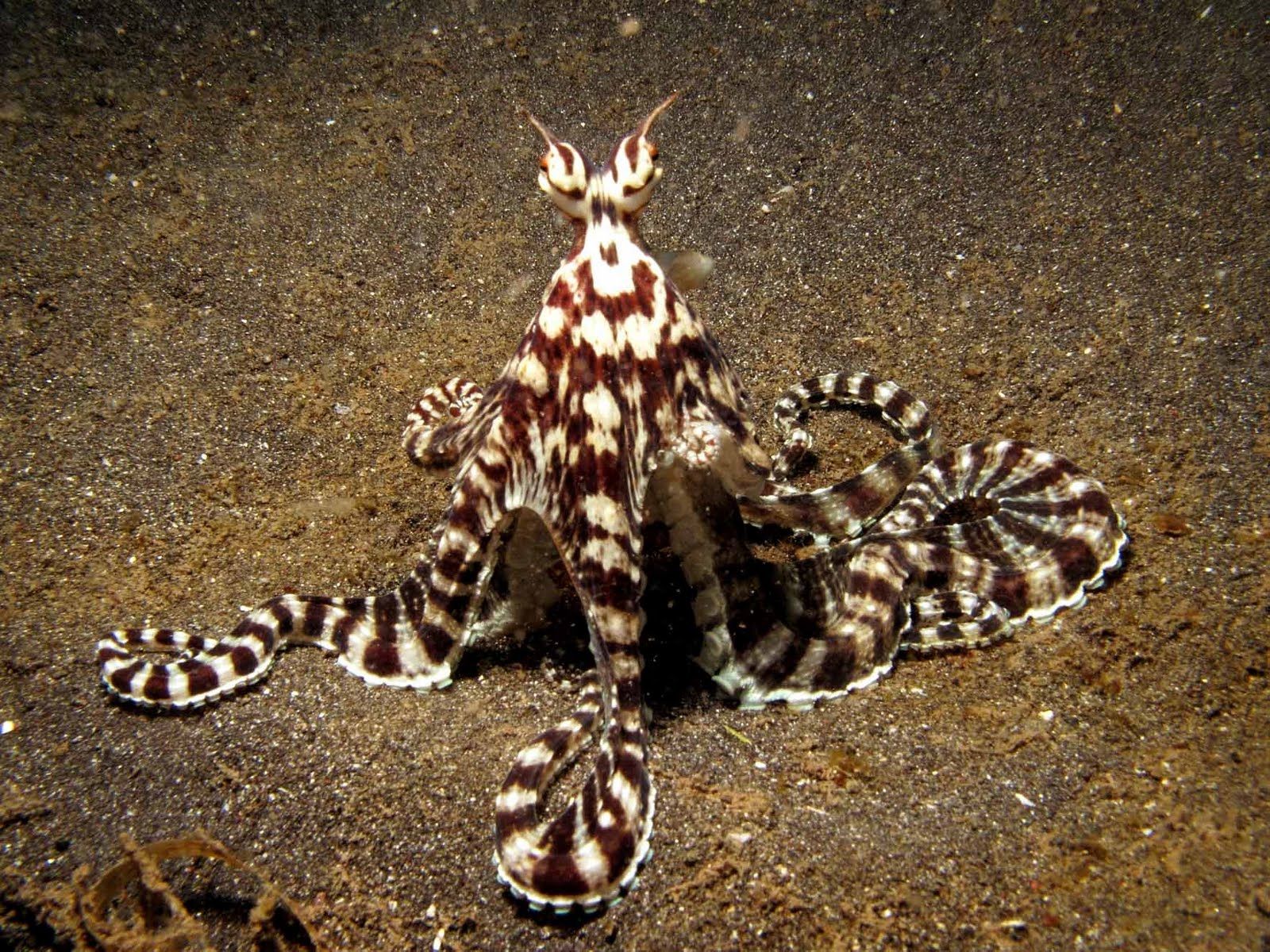
How deadly is a blue-ringed octopus?
Blue-ringed octopuses (genus Hapalochlaena) carry enough tetrodotoxin venom in a single bite to kill 26 adult humans. Their venom is 1,200 times more toxic than cyanide by weight, making them among the deadliest marine animals on Earth despite weighing only 28 grams. A single blue-ringed octopus bite typically kills within 30 minutes without treatment.
28 Grams of Paralyzing Venom
A small octopus sits in a tide pool in Australia. It weighs 28 grams, less than a lemon. A curious tourist picks it up, not recognizing the species. The octopus flashes dozens of iridescent blue rings across its body, then bites once, quickly and imperceptibly.
Within minutes, the tourist collapses. The small bite delivered enough tetrodotoxin to kill 26 adult humans. Without immediate artificial respiration, the victim will suffocate while remaining fully conscious. No antivenom exists. The only treatment is mechanical ventilation for 24 hours while the body metabolizes the venom.
This is the blue-ringed octopus, one of the most lethal marine animals on Earth, packaged in a body smaller than your hand.
The Animal
Blue-ringed octopuses are small Indo-Pacific cephalopods.
Physical features:
- Length: 5-10 cm body plus arms
- Weight: 10-50 grams (typically 28g)
- Color: yellow-brown normally
- Rings: 50-60 blue rings on body and arms
- Size: fits in a human palm easily
Four species exist:
- Greater blue-ringed octopus (H. lunulata): most common
- Southern blue-ringed octopus (H. maculosa): Australian specialty
- Blue-lined octopus (H. fasciata): less ring pattern
- Hapalochlaena nierstraszi: lesser-known species
The Venom
Blue-ringed octopus venom is extraordinarily toxic.
Tetrodotoxin (TTX):
- 1,200 times more toxic than cyanide by weight
- Also found in puffer fish (fugu), some newts
- Acquired from diet + bacterial symbiosis
- Stored in salivary glands
Lethal dose:
- Single bite: enough to kill 26 humans
- Immediate action: minutes to hours
- No antivenom exists
- Treatment: mechanical ventilation only
How it works:
TTX blocks sodium channels in nerve cells:
- Nerves cannot fire
- Muscles receive no signals
- Paralysis spreads from bite site
- Victim remains fully conscious
- Breathing muscles eventually paralyze
- Suffocation if untreated
Treatment:
The only effective treatment:
- Immediate artificial respiration (CPR)
- Mechanical ventilation
- Support vital functions for 24 hours
- Body metabolizes toxin naturally
The Warning Rings
Blue-ringed octopuses advertise their deadliness.
Normal coloration:
- Yellow-brown or tan
- Camouflaged against rocks
- Small dark spots visible
- Not obviously threatening
Warning display:
When threatened, they:
- Flash iridescent blue rings
- All 50-60 rings light up simultaneously
- Intense electric blue color
- Can flash rings on/off in milliseconds
Why rings:
Aposematic (warning) coloration communicates:
- "I am venomous"
- "Do not attack"
- "Consequences if you do"
- Works without physical threat
Effectiveness:
- Most predators avoid them
- Display works across species
- Visible from significant distance
- Survival advantage clear
How the Display Works
The rings flash through specialized cells.
Iridophores:
Structural color cells containing:
- Reflective plates
- Adjustable layer spacing
- Selective wavelength reflection
- Rapid response to nerve signals
Color change mechanics:
- Nerve signal triggers change
- Iridophores adjust reflective plates
- Different wavelengths reflect
- Dark rings become iridescent blue
- Reverse process returns to normal
Speed:
- On/off transitions in milliseconds
- Faster than human visual perception
- Produces "flashing" appearance
- Enhances warning signal
Where They Live
Blue-ringed octopuses inhabit specific regions.
Primary range:
- Australia: east, south, and west coasts
- Indonesia: widespread
- Philippines: Pacific waters
- Papua New Guinea: coastal regions
- Japan: southern coasts
- Red Sea: northern populations
Habitat:
- Tide pools (main danger zone for humans)
- Shallow coastal waters
- Rock crevices
- Coral reef edges
- Empty shells (prefer large shells)
- Beer bottles and debris
Depth range:
- Typical: 0-50 meters
- Common: 0-5 meters (very shallow)
- Accessible: where people wade
Human Encounters
Human-octopus meetings are typically accidental.
Most common scenarios:
- Picking up shells on beaches
- Reaching into tide pools
- Wading in shallow waters
- Children exploring marine life
- Curiosity-driven handling
Why they bite:
- Defensive response to handling
- Perceived threat
- Rarely aggressive without provocation
- Quick strike when threatened
Statistical reality:
Despite extreme toxicity:
- Only ~11 confirmed human fatalities globally in last century
- Thousands of close encounters without incident
- Most people never encounter them
- Deaths from handling, not attacks
Australian incidents:
Most fatalities have occurred in Australia:
- Sydney area incidents
- Queensland tide pools
- Western Australian coasts
- Sometimes involving tourists unfamiliar with species
Warning Signs
Multiple cues indicate danger.
Visual indicators:
- Small octopus in shallow water
- Yellow-brown coloration
- Presence of rings (even dark ones)
- Found in tide pools or shelters
Behavioral signs:
- Octopus flashing blue rings (active warning)
- Aggressive posture
- Ink clouds (defensive response)
- Retreating to shelter
Protection:
- Don't touch any small Australian octopus
- Don't handle shells without checking
- Keep children from unknown tide pools
- Wear water shoes in coastal waters
- Don't disturb natural habitats
Diet and Hunting
Blue-ringed octopuses are active hunters.
Prey:
- Small crabs (primary)
- Shrimp and small crustaceans
- Small fish occasionally
- Other small invertebrates
Hunting technique:
- Stalk prey slowly
- Strike with venom-filled beak
- Paralyze prey with tetrodotoxin
- Feed on paralyzed victim
- Return to shelter
Venom source:
Part of TTX comes from their diet:
- Crabs they eat contain trace amounts
- Accumulated in octopus tissues
- Bacterial symbiosis produces additional
- Storage in salivary glands
Why venomous:
The venom serves dual purposes:
- Prey capture: kills prey quickly
- Defense: deters predators
- Makes them both hunter and potential threat
Life Cycle
Blue-ringed octopus reproduction is brief.
Life stages:
- Eggs: laid in clutches of 50-100
- Brooding: female guards for 50 days
- Hatching: young are planktonic briefly
- Juvenile: drift then settle to bottom
- Adult: reach maturity quickly
Female sacrifice:
After laying eggs, females:
- Don't eat during brooding
- Guard eggs continuously
- Die shortly after hatching
- Typical cephalopod pattern
Male life:
Males die shortly after mating:
- Common cephalopod pattern
- Reproductive effort ends life
- No parental care from male
Total lifespan:
- Just 1-2 years total
- Rapid maturation
- Intense reproductive effort
- Short but venomous life
Conservation Status
Blue-ringed octopuses are not formally threatened.
IUCN status:
Not specifically assessed.
Population:
- Appear stable in most habitats
- Abundant in suitable environments
- Not targeted by fisheries
- Hidden lifestyle aids survival
Threats:
- Habitat destruction: coastal development
- Pollution: chemical contamination
- Climate change: ocean acidification
- Tourism impact: tide pool disturbance
- Aquarium trade: some collection occurs
Protection:
- No specific legal protections
- Benefit from general marine protections
- Awareness campaigns for safety
- Habitat preservation important
Research
Blue-ringed octopuses are studied for multiple reasons.
Medical research:
- Tetrodotoxin mechanism studies
- Neural biology applications
- Potential medical uses
- Pain management research
Ecology:
- Predator-prey dynamics
- Tide pool ecosystems
- Venom evolution
- Aposematic signaling
Genetic studies:
- Species relationships
- Evolutionary history
- Population genetics
- Geographic variation
In Popular Culture
Blue-ringed octopuses have cultural presence.
Media representations:
- Nature documentaries
- Australian wildlife features
- "Deadliest animal" lists
- Educational materials
James Bond:
- Featured in "Octopussy"
- Not technically correct but memorable
- Brought them to mainstream attention
- Continued cultural reference
Australian identity:
- Part of Australian wildlife image
- Caution signs at beaches
- Tourist education materials
- Cultural awareness
Safety Advice
Understanding reduces risk dramatically.
If you see one:
- Don't touch: most important rule
- Back away slowly: don't startle
- Warn others: prevent accidents
- Don't attempt capture: for any reason
In tide pools:
- Wear shoes: prevent stepping on them
- Don't reach into crevices: without checking
- Watch where you step: they hide in obvious places
- Keep children supervised: especially curious ones
If bitten:
- Call emergency immediately: "possible blue-ringed octopus bite"
- Start CPR if needed: breathing support critical
- Don't wait for symptoms: act quickly
- Keep victim calm: reduces venom spread
What NOT to do:
- Don't apply tourniquet (increases damage)
- Don't try to suck out venom
- Don't give food or drinks
- Don't move victim unless necessary
Why They Matter
Blue-ringed octopuses represent important biology.
Scientific value:
- Model for tetrodotoxin studies
- Aposematic signaling research
- Venom evolution
- Cephalopod biology
Ecological role:
- Tide pool predator
- Prey for larger animals
- Food web participant
- Shoreline ecosystem component
Medical relevance:
- Pain research applications
- Potential medical compounds
- Understanding neurological processes
- Research model for nerve function
Cultural importance:
- Public awareness about marine dangers
- Tourism safety education
- Wildlife appreciation
- Respectful coexistence
The Small Killer
The blue-ringed octopus is a reminder that size doesn't determine danger.
At 28 grams, they're smaller than most household pets. They can fit in a child's hand. They don't look threatening in their normal coloration. They don't seek out humans.
Yet they can kill in minutes with venom 1,200 times more toxic than cyanide. They can deliver this venom with a bite that victims often don't notice. They exist in tide pools and shallow coastal waters where people interact with marine life.
Their beauty serves as warning, the same blue rings that make them photogenic also signal deadly venom. Nature's design perfectly balanced: the more impressive the display, the more dangerous the animal.
For most people, the solution is simple: don't touch small octopuses in Australia or surrounding Pacific waters. Don't pick up shells without checking. Don't reach into tide pool crevices. Keep children away from unfamiliar marine life.
With basic caution, blue-ringed octopuses pose minimal risk. They don't hunt humans. They're not aggressive. They're not trying to attack anyone. They simply defend themselves when handled.
As a species, they represent what's possible in biological design - concentrated lethality in a small, beautiful package, surviving through venom and warning coloration rather than size or strength. They've thrived in their niche for millions of years, using the same strategy they use today: be too dangerous to attack, too small to pursue, and never provoke human beings unless they provoke you first.
The Biology of Tetrodotoxin
Tetrodotoxin is one of the most studied natural toxins in pharmacology. Our research team has tracked its appearance across the animal kingdom because it represents a remarkable example of convergent toxic chemistry. Animals that contain TTX do not synthesize it themselves - they host bacteria (typically Pseudoalteromonas, Vibrio, and Bacterium species) that produce the toxin, and then accumulate it in their tissues.
The blue-ringed octopus acquires TTX from symbiotic bacteria in its salivary glands and possibly also from its diet of crabs. The toxin is stored in posterior salivary glands and injected via a hardened beak when biting prey or a perceived threat.
"Tetrodotoxin is a weapon of such precision that it essentially short-circuits nervous system function at the level of individual sodium channels. A pinhead of the substance would kill an adult human in minutes. Nature's chemistry has produced no more elegant a poison, and yet the animals that carry it are fragile, small, and utterly dependent on warning displays to avoid wasting the toxin on predators they cannot eat." - Dr. Takeshi Yasumoto, pioneer of tetrodotoxin biochemistry [1]
Tetrodotoxin Distribution Across Species
| Species | Tissue with TTX | Origin | Function |
|---|---|---|---|
| Blue-ringed octopus | Salivary glands | Bacterial symbionts | Predation + defense |
| Pufferfish (fugu) | Liver, ovaries, skin | Dietary + bacterial | Defense only |
| California newt | Skin | Likely bacterial | Defense only |
| Harlequin toad (various) | Skin | Bacterial | Defense only |
| Blue-lined sea slug | Skin | Dietary | Defense only |
| Xanthid crabs (some) | Muscle tissue | Dietary | Possibly defense |
| Flatworms (some) | Whole body | Unknown | Defense only |
The Kalenux Team notes that this distribution shows TTX evolved as a defensive molecule long before octopuses emerged as a lineage. The blue-ringed octopus is unique among TTX-carrying animals in using the toxin for both defense and prey capture.
Aposematism and Warning Displays
The iridescent blue rings of Hapalochlaena are produced by structural color rather than pigment - specialized iridophore cells contain stacked reflective platelets that can be tilted or separated by nerve signals to change wavelength reflection.
A 2012 study by Lydia Maethger and colleagues at the Marine Biological Laboratory in Woods Hole described how blue-ringed octopuses can toggle their rings from dark (when the platelets allow light to pass) to brilliant iridescent blue (when the platelets align for reflection) in approximately one-third of a second [2].
"Blue-ringed octopus displays are among the fastest controlled color changes documented in any animal. What makes them so remarkable is that this color system produces blue without pigment, using only the arrangement of microscopic reflective plates. The same structural principle produces the blue on butterfly wings, peacock feathers, and morpho beetles." - Dr. Lydia Maethger, Marine Biological Laboratory [2]
The warning coloration only appears under threat. In normal conditions, the octopus is yellow-brown and barely visible against rocks and sand. This two-state display system is energetically efficient: the animal pays the cost of warning signaling only when necessary, while remaining cryptic the rest of the time.
Notable Research Findings
- Blue-ringed octopuses are one of the few animals whose bites are almost invariably painless. Victims frequently do not realize they have been bitten until paralysis begins. This is because the venom contains analgesic components in addition to the tetrodotoxin neurotoxin.
- The oldest confirmed case of blue-ringed octopus envenomation occurred in 1954, when a 21-year-old Australian soldier died within 90 minutes of handling one near Darwin.
- Female blue-ringed octopuses brood their eggs continuously for 50 days without eating, losing up to 50% of their body mass. They die shortly after the eggs hatch, a process known as senescence that is typical of most octopus species.
- Blue-ringed octopus hatchlings are briefly planktonic, then settle to the seafloor within weeks. They reach sexual maturity at approximately 6 to 9 months, have very short lives of 1 to 2 years, and reproduce only once.
- Our research team notes that blue-ringed octopuses are remarkably temperature-tolerant, surviving in water temperatures from 12 C to 30 C. This thermal flexibility may explain their wide Indo-Pacific distribution.
What Venomous Animals Are in Australia?
Australia's venomous fauna is among the world's most dangerous, and the blue-ringed octopus (genus Hapalochlaena) is one of its most lethal - a 28-gram marine predator whose single bite carries enough tetrodotoxin to kill 26 adult humans, 1,200 times more toxic than cyanide by weight.
Other Australian venomous threats include the inland taipan (Oxyuranus microlepidotus) and eastern brown snake, the Sydney funnel-web spider (Atrax robustus) and redback spider (Latrodectus hasselti), the box jellyfish (Chironex fleckeri), the Irukandji jellyfish, cone snails (Conus species), stonefish (Synanceia species), and platypuses with venomous hind spurs.
Of roughly 170 Australian land snake species, about 100 are venomous. The southern blue-ringed octopus (H. maculosa) is the Australian specialist, and its 50-60 iridescent blue rings flash only when the animal is threatened.
References
[1] Yasumoto, T., & Murata, M. (1993). Marine toxins. Chemical Reviews, 93(5), 1897-1909. DOI: 10.1021/cr00021a011
[2] Maethger, L. M., Bell, G. R. R., Kuzirian, A. M., Allen, J. J., & Hanlon, R. T. (2012). How does the blue-ringed octopus (Hapalochlaena lunulata) flash its blue rings? Journal of Experimental Biology, 215(21), 3752-3757. DOI: 10.1242/jeb.076869
[3] Cavazzoni, E., Lister, B., Sargent, P., & Schibler, A. (2008). Blue-ringed octopus (Hapalochlaena sp.) envenomation of a 4-year-old boy: A case report. Clinical Toxicology, 46(8), 760-761.
[4] Sheumack, D. D., Howden, M. E. H., Spence, I., & Quinn, R. J. (1978). Maculotoxin: A neurotoxin from the venom glands of the octopus Hapalochlaena maculosa identified as tetrodotoxin. Science, 199(4325), 188-189.
[5] Williams, B. L. (2010). Behavioral and chemical ecology of marine organisms with respect to tetrodotoxin. Marine Drugs, 8(3), 381-398. DOI: 10.3390/md8030381
[6] Narita, H., Tsuruda, K., Abe, H., et al. (1989). Distribution of tetrodotoxin among tissues of the puffer fish Fugu niphobles. Toxicon, 27(7), 827-830.
Related Articles
- Mimic Octopus: The Shapeshifter of the Indo-Pacific
- Box Jellyfish: The Most Venomous Sea Creature
- Deathstalker Scorpion: The Most Venomous Scorpion
Frequently Asked Questions
How deadly is a blue-ringed octopus?
Blue-ringed octopuses (genus Hapalochlaena) carry enough tetrodotoxin venom in a single bite to kill 26 adult humans. Their venom is 1,200 times more toxic than cyanide by weight, making them among the deadliest marine animals on Earth despite weighing only 28 grams. A single blue-ringed octopus bite typically kills within 30 minutes without treatment.
The venom causes paralysis of voluntary muscles, including breathing muscles, leading to respiratory failure while the victim remains fully conscious. No antivenom exists - treatment requires immediate artificial respiration until the toxin metabolizes, which can take 24 hours. Despite their extreme toxicity, blue-ringed octopuses rarely bite humans - approximately 11 confirmed fatalities have been recorded globally in the last century.
Most deaths result from handling the octopuses or accidentally stepping on them in shallow Australian waters. Their beautiful blue rings actually serve as warning coloration - they flash the rings when threatened to warn predators of their deadly capability.
Why do blue-ringed octopuses show their rings?
Blue-ringed octopuses flash their iridescent blue rings as aposematic (warning) signals when they feel threatened. The rings appear dark blue or black normally and become intensely iridescent blue only when the octopus is alarmed. This color change happens within milliseconds - the octopus can turn the warning display on and off rapidly.
The warning tells potential predators and other animals: ‘I am venomous, don’t touch me.’ The display is effective enough that few predators will attack once they see the flashing rings, even though they could easily overpower the small octopus physically. This aposematic signal combined with their tetrodotoxin venom is one of nature’s most effective defense systems.
The specific blue color is produced by iridophores - structural color cells that reflect specific wavelengths. Blue-ringed octopuses cannot flash rings while camouflaged - they must switch between hiding and warning modes. This means they’re only dangerous to handlers when they feel threatened and activate the warning display.
Where do blue-ringed octopuses live?
Blue-ringed octopuses inhabit tide pools and shallow coastal waters of the western Pacific and Indian Oceans. Their main range includes coastal Australia, Indonesia, Philippines, Papua New Guinea, and Japan, with smaller populations in the Red Sea. Within Australia, they’re particularly common along eastern and southern coasts, including popular tourist areas like Sydney, Melbourne, and the Great Barrier Reef region.
Four species exist: Hapalochlaena lunulata (greater blue-ringed), H. maculosa (southern blue-ringed), H. fasciata (blue-lined octopus), and H. nierstraszi. They hide in rock crevices, empty shells, beer bottles, and other shelter at depths of 0-50 meters, typically in tide pools and shallow coastal environments where people most commonly encounter them. They are primarily nocturnal but can be active during day.
Accidental human encounters happen when beachgoers pick up shells or touch tide pool rocks where the octopuses hide. They are often called the ‘pygmy octopus’ because of their small size relative to other octopus species.
How does tetrodotoxin work?
Tetrodotoxin (TTX) is a neurotoxin that blocks sodium channels in nerve cells, preventing nerve signals from reaching muscles. The paralysis progresses from peripheral to central muscles over 5-30 minutes, depending on dose. Victims experience: initial numbness around the bite site, then spreading paralysis through body, then diaphragm paralysis causing suffocation, while cardiovascular function continues.
Critically, victims remain fully conscious throughout paralysis - they can see, hear, think, and feel pain, but cannot move, speak, or breathe. Without artificial respiration, death occurs from respiratory failure. With immediate CPR and ventilation, victims typically recover completely within 24 hours as the body metabolizes the toxin. No antivenom exists because the toxin binds too specifically and rapidly for antibody-based treatment.
TTX is also found in puffer fish (fugu), newts, and some other animals - blue-ringed octopuses acquire theirs through their diet (small crabs and shrimp that contain trace TTX) plus some bacterial symbiosis producing additional toxin.
Do blue-ringed octopus bites hurt?
Surprisingly, blue-ringed octopus bites typically don’t hurt immediately - the bite itself is often imperceptible because the beak is small and the venom immediately numbs the area. Many victims don’t realize they’ve been bitten until symptoms begin appearing 5-30 minutes later. The initial numbness around the bite site is followed by spreading paralysis. Victims often describe initial sensations as tingling or slight numbness.
Pain perception may be blocked by the venom’s effects. This lack of immediate pain makes the bites particularly dangerous because victims may not seek immediate medical attention. By the time symptoms develop clearly, significant paralysis may already be spreading. Because bites are often missed initially, cases have been misdiagnosed as sudden medical emergencies.
Research into blue-ringed octopus bites has improved clinical recognition - any sudden paralysis near Australian beaches is now evaluated for potential marine envenomation. The lack of immediate pain combined with rapid paralysis makes these among the most medically urgent marine envenomations in the world.