
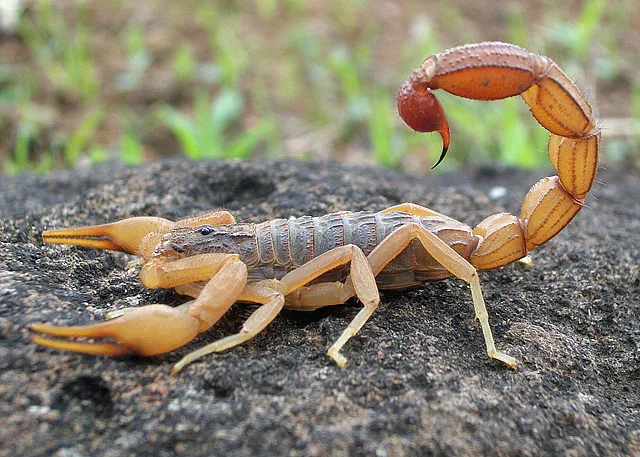
What is the most venomous scorpion?
The deathstalker scorpion (Leiurus quinquestriatus) is the most venomous scorpion species, producing a cocktail of neurotoxins including chlorotoxin, agitoxins, and scyllatoxins that attack the nervous system. The LD50 (lethal dose for 50 percent of test subjects) of deathstalker venom is approximately 0. 25 mg per kg, making it roughly 100 times more toxic than cyanide by weight.
$39 Million Per Gallon
The deathstalker scorpion produces venom that sells, legally, for approximately $39 million per gallon. No other natural substance approaches this price. Saffron costs $11,000 per kilogram. Gold costs about $66 million per ton. Deathstalker venom, drop for drop, is the most valuable liquid on Earth.
This extraordinary price exists because the venom contains compounds that revolutionize cancer surgery, enable new types of medical imaging, and may lead to treatments for diseases from epilepsy to autoimmune disorders. The same venom that kills children in Middle Eastern villages is simultaneously one of the most promising research substances in pharmaceutical science.
The Scorpion
The deathstalker (Leiurus quinquestriatus) is a small to medium-sized scorpion widely distributed across arid regions of North Africa and the Middle East.
Physical characteristics:
- Length: 8-11 cm (3-4 inches)
- Color: yellow to sandy tan (excellent desert camouflage)
- Pincers: relatively small and narrow
- Tail: long and flexible, tipped with a prominent stinger
- Lifespan: 5-7 years
The deathstalker's narrow pincers are a warning sign. Scorpions with large, robust pincers typically use them for prey capture and have weaker venom. Scorpions with small pincers depend on venom potency - narrow-pincer species are usually the most dangerous.
Habitat:
Deathstalkers live in dry desert and semi-desert environments. They shelter during the day in burrows, under rocks, or in cracks in walls and terrain. They emerge at night to hunt.
Range:
The species spans from Algeria across all of North Africa, through the Middle East, to Pakistan and northwestern India. This covers extremely arid regions where the deathstalker is often the dominant scorpion species.
The Venom
Deathstalker venom is a complex cocktail of neurotoxins.
Primary components:
Chlorotoxin. A peptide that binds to chloride channels and to specific receptors found on glioma (brain cancer) cells. This is the most medically valuable component.
Agitoxins. Peptides that block potassium channels in nerve cells, preventing normal nerve function.
Scyllatoxins. Another family of potassium channel blockers.
Charybdotoxin. A potassium channel blocker that also affects calcium-activated channels.
Numerous other peptides. Deathstalker venom contains over 300 distinct bioactive compounds, most of which are still being characterized.
Toxicity metrics:
The LD50 (lethal dose in 50 percent of test subjects, by body weight) for deathstalker venom is approximately 0.25 mg/kg in mice. For comparison:
- Cyanide LD50: approximately 6 mg/kg
- Deathstalker venom: approximately 0.25 mg/kg
- Ratio: deathstalker venom is 24 times more toxic than cyanide per unit weight
The full venom yield of a single deathstalker is approximately 2 mg - theoretically enough to kill several small mammals or seriously harm a healthy adult human.
What a Sting Does
A deathstalker sting triggers progressive symptoms over hours.
Immediate effects (0-30 minutes):
- Intense burning pain at the sting site
- Redness and swelling
- Sometimes numbness spreading from the site
Early systemic effects (30 minutes - 3 hours):
- Muscle twitching and involuntary contractions
- Sweating and salivation
- Elevated heart rate
- Rising blood pressure
- Nausea and sometimes vomiting
- Anxiety and restlessness
Severe envenomation (3-12 hours):
- Difficulty swallowing
- Difficulty breathing
- Cardiac arrhythmias
- Potential pulmonary edema (fluid in lungs)
- Possible cardiac failure
- Possible respiratory arrest
Critical threshold:
Children under 10 kg body weight face the highest risk. The fixed venom dose from a single sting represents a larger fraction of a child's body mass than an adult's, producing proportionally greater toxic effect. Historic fatality rates in children before antivenom were 30-50 percent of severe stings.
Treatment:
Antivenom, developed primarily in Egypt and Israel, effectively neutralizes deathstalker venom if administered within hours of the sting. With modern treatment, fatality rates drop below 1 percent. Without treatment, severe stings killed 10-20 percent of victims historically.
Why Such Extreme Venom?
Deathstalkers are small animals (10 grams) preying on insects and small lizards. Why evolve venom powerful enough to kill humans many thousand times their mass?
Prey immobilization.
Scorpions cannot physically restrain prey. Small insects and lizards can struggle free quickly. Powerful venom must immobilize prey within seconds.
Predator deterrence.
Scorpions are themselves prey for larger animals - birds, mammals, reptiles. Venom toxic enough to kill or sicken predators provides defense. Animals that survive encountering a deathstalker learn to avoid them.
Desert conditions.
In harsh desert environments, scorpions cannot afford failed prey captures. A single missed meal may represent days without food. Overbuilt venom ensures every strike succeeds.
Small arms race.
Scorpion venom chemistry has co-evolved with insect nervous systems. As insects develop resistance to specific toxins, scorpions evolve new toxin variants. The resulting complexity produces venoms with hundreds of components, many of which have incidentally devastating effects on mammal physiology.
Chlorotoxin and Cancer
The single most valuable component of deathstalker venom is chlorotoxin.
Discovery:
Chlorotoxin was isolated from deathstalker venom in 1993 by researchers studying ion channel function. Initial interest was purely academic - understanding how the toxin worked.
The critical finding:
In 1998, researchers discovered that chlorotoxin binds specifically to glioma cells (brain cancer cells) while leaving healthy brain tissue untouched. This tumor-targeting specificity is extraordinarily rare - most chemicals that affect cancer cells also affect normal cells.
The mechanism:
Chlorotoxin binds to matrix metalloproteinase-2 (MMP-2), a protein highly expressed on glioma cell surfaces but not on healthy brain cells. This selective binding means chlorotoxin attaches only to cancer, not to normal tissue.
Tumor paint:
Dr. Jim Olson at Seattle Children's Hospital developed a fluorescent version of chlorotoxin called "tumor paint." Injected before brain surgery, tumor paint binds to cancer cells and makes them glow under special illumination.
Before tumor paint, brain cancer surgery often left behind small clusters of cancer cells that appeared identical to healthy tissue under normal vision. These residual cells regrew tumors. With tumor paint, surgeons can see exactly where cancer ends and healthy tissue begins, allowing complete removal.
Clinical trials of tumor paint began in the 2010s and have shown dramatic improvements in surgical outcomes for brain, breast, prostate, and colorectal cancers. The technology has been licensed to Blaze Bioscience, a company commercializing tumor-visualization products.
Beyond imaging:
Chlorotoxin's tumor-binding specificity makes it valuable as a delivery vehicle for cancer treatments:
- Radiolabeled chlorotoxin delivers radiation directly to tumor cells
- Drug-chlorotoxin conjugates concentrate chemotherapy in tumors
- Chlorotoxin-coated nanoparticles enhance targeted drug delivery
Multiple experimental treatments using chlorotoxin are in clinical development.
Other Medical Applications
Beyond chlorotoxin, deathstalker venom contains compounds with diverse potential uses.
Pain management.
Several scorpion venom peptides block pain signaling in nerve cells. Research is ongoing into non-addictive painkillers based on scorpion venom chemistry.
Epilepsy treatment.
Some scorpion toxins affect potassium channels involved in seizure generation. Derivatives are being studied as novel anti-epileptic drugs.
Antibiotic alternatives.
Scorpion venom contains antimicrobial peptides effective against bacteria that resist conventional antibiotics. As antibiotic resistance grows, these compounds become increasingly valuable.
Autoimmune diseases.
Peptides that modulate specific ion channels in immune cells may help treat multiple sclerosis, lupus, and rheumatoid arthritis.
Heart disease.
Certain scorpion venom components affect cardiac ion channels and may lead to new treatments for arrhythmias.
The pharmaceutical industry views scorpion venom as a library of pre-evolved bioactive compounds - millions of years of natural selection have optimized each peptide to target specific biological systems.
Why Venom Costs So Much
The $39 million per gallon price reflects the extreme difficulty of producing deathstalker venom.
Yield per scorpion:
A single deathstalker produces approximately 2 mg of venom per milking. A gallon of venom (3.8 liters) contains 3.8 kg, or 3,800,000 mg. Producing a gallon requires 1.9 million milkings.
The milking process:
To extract venom, a scorpion must be:
- Captured alive without damaging its stinger
- Held carefully (without being stung)
- Stimulated electrically to produce venom (applying mild current to the tail)
- Venom collected in a sterile tube
- Scorpion returned to captivity
- Fed, watered, and kept alive for future milkings
A trained handler can milk perhaps 20-30 scorpions per day. At 2 mg each, that is 40-60 mg daily per handler.
Labor calculation:
Producing a gallon requires approximately 60,000 handler-days of work, plus supporting infrastructure (scorpion husbandry, feeding, climate control, equipment). Specialized venom producers operate in Morocco, Israel, and a few other countries, with scorpion colonies of thousands of individuals.
Purification costs:
Raw venom must be processed, purified, and in many cases separated into specific components for pharmaceutical use. Chlorotoxin alone can be sold at prices exceeding the raw venom value.
Synthetic alternatives:
For components like chlorotoxin, synthetic or recombinant production (making the peptides in yeast or bacterial cultures) has reduced dependence on natural venom for commercial applications. But for research requiring whole venom or minor components, natural extraction remains necessary.
Encounters with Humans
Deathstalker stings occur regularly in the species' range.
Who gets stung:
- Agricultural workers in rural Middle East and North Africa
- Residents clearing rocks or debris in yards
- Children playing barefoot
- Construction and mining workers
- Military personnel in desert environments
- Hikers and campers
- Exotic pet keepers (deathstalkers are sometimes kept as pets)
Statistics:
Reliable sting statistics are limited. Estimates suggest thousands of deathstalker stings per year across its range, though precise numbers are unclear. Fatality rates depend heavily on access to medical care.
Precautions:
In deathstalker habitat, standard precautions include:
- Checking bedding, shoes, and clothing before use
- Not walking barefoot at night
- Lifting rocks or debris carefully with tools
- Using headlamps when moving outside after dark
- Knowing local emergency protocols for scorpion stings
The Economic Paradox
The deathstalker sits at an unusual intersection of danger and value.
To rural populations in its native range, it is a serious hazard, killing children annually and causing medical emergencies. Anti-scorpion programs in some Middle Eastern countries have focused on population control near human settlements.
To pharmaceutical researchers, it is among the most valuable natural products on Earth. A single scorpion produces milligrams of liquid that, properly processed, could be worth tens of thousands of dollars.
To the scorpion itself, the venom is simply tool for catching prey and deterring predators - a molecular toolkit refined over hundreds of millions of years of scorpion evolution.
Scorpions have existed on Earth for over 430 million years, longer than trees, dinosaurs, or mammals. The venom that kills humans today was produced by lineage that survived five mass extinctions. Whatever else it is, the deathstalker's venom represents one of the oldest and most refined chemical arsenals in animal biology - and humans are only starting to understand its potential.
Medically Important Scorpion Species Compared
The deathstalker is the most medically significant scorpion, but it is not alone. Several other species cause substantial human harm each year, particularly in regions where envenomation is common and antivenom supplies are limited. The Kalenux Team compiled comparative data from peer-reviewed toxicology literature.
| Species | Common Name | LD50 (mg/kg, mice) | Annual Deaths (estimate) | Range |
|---|---|---|---|---|
| Leiurus quinquestriatus | Deathstalker | 0.25 | 100-500 | North Africa, Middle East |
| Androctonus australis | Fat-tailed scorpion | 0.32 | 500-1,000 | North Africa |
| Tityus serrulatus | Brazilian yellow scorpion | 0.43 | 100+ | Brazil |
| Centruroides noxius | Mexican bark scorpion | 0.36 | 200+ | Mexico |
| Hottentotta tamulus | Indian red scorpion | 0.75 | 100-200 | India |
| Parabuthus transvaalicus | South African thicktail | 0.80 | 10-20 | Southern Africa |
| Buthus occitanus | Common yellow scorpion | 2.0 | Rare | Mediterranean |
"The deathstalker gets the most press, but Tityus serrulatus may cause more human mortality because of the density of human populations within its Brazilian range. The deathstalker's medical importance is more about toxicity per individual sting; the Brazilian yellow scorpion's is about sheer encounter frequency with a growing urban population." - Carlos Goyffon, Institut Pasteur, Toxicon, 2012 [1]
The global burden of scorpion envenomation is estimated at 1.2 million stings per year, causing approximately 3,250 deaths. The highest death tolls occur in regions where antivenom is scarce and pediatric access to critical care is limited - rural Morocco, rural Brazil, rural Mexico, and parts of rural India and the Sahel.
The Chlorotoxin Story: A Venom Protein That Finds Cancer
The most famous component of deathstalker venom is a 36-amino-acid peptide called chlorotoxin. Originally studied for its effect on chloride channels in neurons, chlorotoxin turned out to have an unexpected property: it binds selectively to a glioma marker called MMP-2 that is expressed on brain tumor cells but not on healthy brain cells. This specificity makes chlorotoxin an almost perfect tumor-imaging agent.
"We attached a fluorescent dye to chlorotoxin and injected it into children with brain tumors. The tumor lit up brilliantly against the normal brain tissue. For the first time, surgeons could see exactly where the tumor ended and healthy brain began. This has transformed outcomes for pediatric brain cancer surgery." - James Olson, Fred Hutchinson Cancer Center, Journal of Clinical Oncology, 2019 [2]
The chlorotoxin-based agent "Tumor Paint" (developed by Blaze Bioscience) is now in clinical trials for several brain cancer types. Early results suggest that surgeons can achieve more complete tumor resection while preserving more healthy tissue, which directly improves both survival and quality of life outcomes. The therapy is expected to reach general clinical practice before 2030.
A peptide that kills children in their thousands in rural Morocco may save children's lives in thousands of operating rooms worldwide.
Fluorescence Under UV: The Scorpion's Glow
One of the more curious features of deathstalker and most other scorpions is that they glow brilliantly under ultraviolet light. A UV flashlight shined at a scorpion causes it to fluoresce a striking blue-green, making them easy to find at night. The fluorescence is produced by compounds in the cuticle called beta-carboline and 7-hydroxy-4-methylcoumarin, which absorb UV and emit visible light.
Why scorpions fluoresce is still debated. Current hypotheses include: using UV as a signal to conspecifics; detecting their own exposure to UV light (which can damage their cuticle); attracting or avoiding prey that sense UV; and simply being a metabolic byproduct with no adaptive function.
Field research by Carl Kloock and colleagues has provided evidence for the UV-detection hypothesis, showing that scorpions become less active in UV-illuminated conditions, consistent with the idea that their own fluorescence serves as an exposure warning.
Whatever its function, the fluorescence has practical uses. Biologists surveying scorpion populations in deserts around the world routinely walk at night with UV flashlights, counting fluorescing scorpions for ecological studies. Deathstalkers thus contribute to their own research.
References
- Goyffon, M., and Chippaux, J. P. (2008). "Scorpionism and scorpions: the problem in Africa." Bulletin de la Societe de Pathologie Exotique, 101(3), 190-197.
- Veiseh, M., et al. (2007). "Tumor paint: a chlorotoxin: Cy5.5 bioconjugate for intraoperative visualization of cancer foci." Cancer Research, 67(14), 6882-6888.
- Chippaux, J. P., and Goyffon, M. (2008). "Epidemiology of scorpionism: a global appraisal." Acta Tropica, 107(2), 71-79.
- Kloock, C. T. (2005). "Aerial insects avoid fluorescing scorpions." Euscorpius, 21, 1-7.
- Ortiz, E., Gurrola, G. B., Schwartz, E. F., and Possani, L. D. (2015). "Scorpion venom components as potential candidates for drug development." Toxicon, 93, 125-135.
Related Articles
- Box Jellyfish: The Most Venomous Sea Creature
- Inland Taipan: The Most Venomous Snake
- Poison Dart Frogs: Tiny and Deadly
Frequently Asked Questions
What is the most venomous scorpion?
The deathstalker scorpion (Leiurus quinquestriatus) is the most venomous scorpion species, producing a cocktail of neurotoxins including chlorotoxin, agitoxins, and scyllatoxins that attack the nervous system. The LD50 (lethal dose for 50 percent of test subjects) of deathstalker venom is approximately 0.25 mg per kg, making it roughly 100 times more toxic than cyanide by weight.
A full sting delivers enough venom to kill a child, though healthy adults usually survive with proper medical treatment. The deathstalker is found across North Africa and the Middle East, from Algeria to Iran. Symptoms include severe pain, muscle convulsions, difficulty breathing, and potential heart failure.
Despite its reputation, most deathstalker stings are not fatal - antivenom is effective when administered quickly, and fatality rates are estimated at 10-20 percent of severe envenomations, mostly in children and elderly victims.
Why is deathstalker venom so expensive?
Deathstalker scorpion venom sells for approximately \(39 million per gallon (\)10 million per liter), making it one of the most expensive substances on Earth. The extreme price reflects how difficult the venom is to produce. A single deathstalker scorpion yields approximately 2 milligrams of venom per milking session - meaning a gallon requires millions of extractions.
Scorpions must be kept alive, fed, and milked individually with electrical stimulation to express venom. The process is slow, labor-intensive, and requires specialized equipment. Commercial suppliers typically sell in small quantities (microliters or milligrams) to research laboratories. Synthetic versions of specific deathstalker venom components (like chlorotoxin) are now available, reducing the need for natural venom in many applications.
However, natural venom remains valuable for research requiring the full chemical complexity that synthetic versions cannot fully replicate.
How is scorpion venom used in medicine?
Scorpion venom contains thousands of bioactive compounds being studied for diverse medical applications. Chlorotoxin from deathstalker venom binds specifically to brain cancer cells (gliomas) without affecting healthy brain tissue. This selectivity has led to ‘tumor paint’ - a fluorescent compound that makes cancer cells visible during surgery, helping surgeons remove tumors completely.
Other scorpion venom peptides show promise for treating autoimmune diseases, pain management, and as alternatives to traditional antibiotics. Researchers have developed synthetic chlorotoxin conjugates to deliver drugs or radioactive markers directly to tumor cells. Beyond cancer, scorpion venom components are being studied for treating epilepsy, heart conditions, and multiple sclerosis.
The complexity of scorpion venom - 300+ different peptides in a single species - provides a vast library of bioactive molecules that pharmaceutical research is only beginning to explore.
Where do deathstalker scorpions live?
Deathstalker scorpions live in arid and desert regions across North Africa, the Middle East, and parts of South Asia. Their range includes Algeria, Egypt, Libya, Tunisia, Israel, Jordan, Lebanon, Syria, Iraq, Kuwait, Saudi Arabia, Qatar, United Arab Emirates, Oman, Yemen, Iran, Afghanistan, and Pakistan. They prefer rocky desert habitats, dry grasslands, and scrubland environments with temperatures between 20-40 degrees Celsius.
Deathstalkers are nocturnal, hiding in burrows or under rocks during the hot day and emerging at night to hunt insects, spiders, and small lizards. They can survive in extremely harsh conditions, tolerating temperature extremes, drought, and limited food. Human encounters often occur when people move rocks, dig in gardens, or walk barefoot at night. Many stings happen to agricultural workers, hikers, and residents of rural Middle Eastern communities.
Deathstalkers are also popular in the exotic pet trade, though their toxicity makes them dangerous companions.
Can a deathstalker scorpion kill a human?
Yes, a deathstalker scorpion sting can kill a human, though fatalities are relatively rare with modern medical treatment. Historically, deathstalker stings killed an estimated 3-5 percent of victims, with higher rates among children, elderly people, and those with weakened immune systems or heart conditions. Modern antivenom has reduced fatality rates dramatically in regions with access to medical care.
Severe envenomation causes progressive symptoms over several hours: intense pain at sting site, muscle twitching and cramps, sweating, difficulty swallowing, elevated heart rate, high blood pressure, and potential cardiac failure or respiratory arrest. Children under 10 kg body weight are particularly vulnerable because their smaller bodies cannot tolerate the neurotoxin dose. Untreated severe stings can cause death within 7 hours.
In modern hospitals with antivenom availability, fatality rates are below 1 percent of total stings. However, in remote desert regions without quick medical access, deaths still occur regularly.