
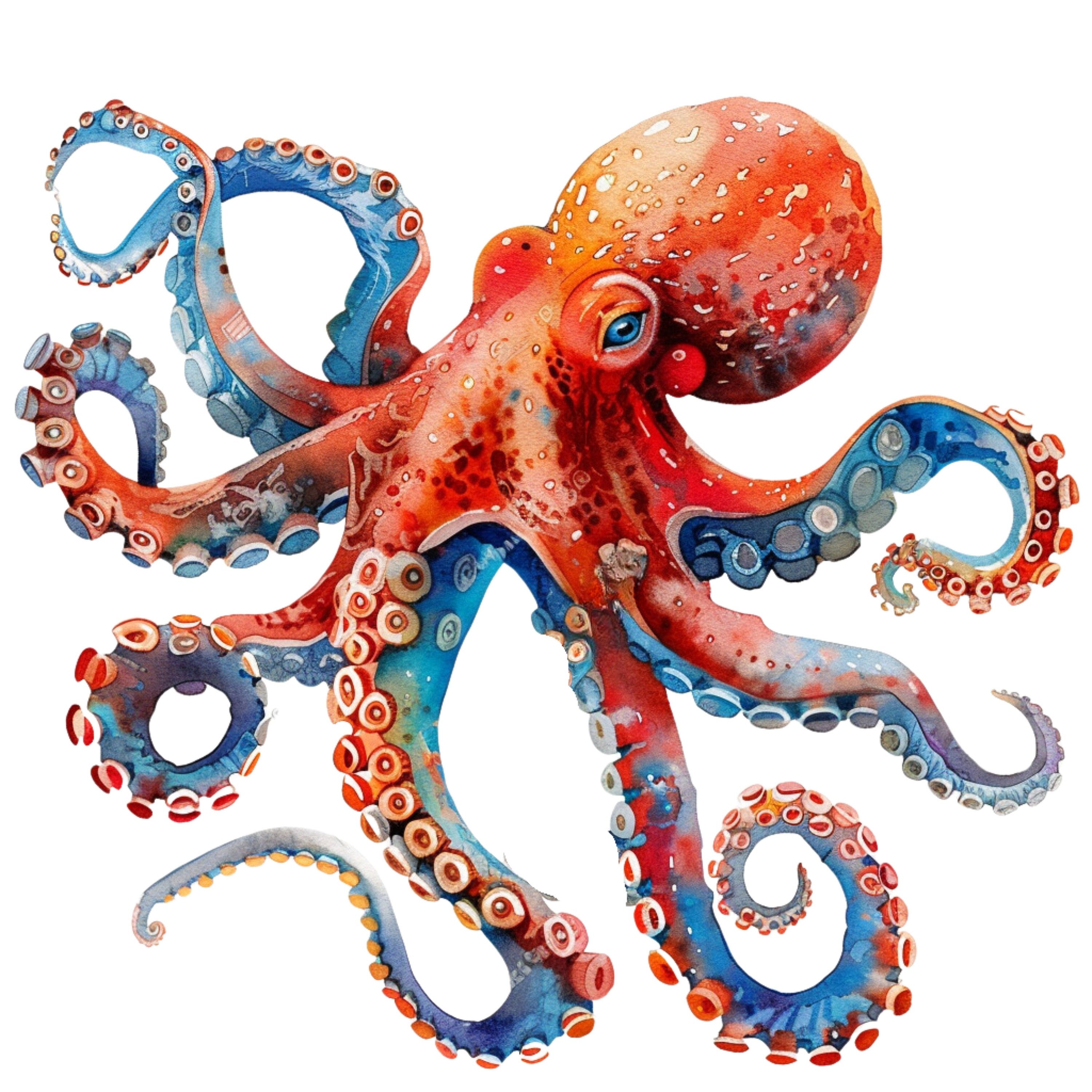
How intelligent are octopuses compared to other animals?
Octopus intelligence rests on approximately 500 million neurons, comparable to a dog, and demonstrate cognitive abilities including tool use, maze navigation, jar opening, observational learning, and play behavior. They solve novel problems within minutes, remember solutions for weeks to months, and show individual personality differences.
Among invertebrates, no group has challenged our assumptions about the nature of intelligence more profoundly than the octopuses. These soft-bodied mollusks - lacking anything resembling a backbone, an internal skeleton, or a centralized brain in the mammalian sense - routinely demonstrate cognitive abilities that rival those of crows, parrots, and some primates.
They solve novel puzzles, learn through observation, remember solutions for months, use tools, and escape from seemingly secure enclosures with a persistence and ingenuity that has baffled marine biologists for over a century.
What makes octopus cognition especially remarkable is that it evolved along an entirely independent trajectory from vertebrate intelligence. The last common ancestor of octopuses and humans lived approximately 600 million years ago - a simple, worm-like organism with no complex brain at all.
Every cognitive capacity an octopus possesses was built from scratch by evolution, using a fundamentally different neural architecture from the one that produced mammalian consciousness. Studying octopus intelligence is therefore not merely studying another smart animal; it is studying an alternative experiment in the evolution of mind.
"The octopus is the closest we will come to meeting an intelligent alien. Its mind evolved independently from ours for 600 million years, using completely different neural hardware, yet it arrived at many of the same cognitive solutions." - Peter Godfrey-Smith, philosopher of science, Other Minds: The Octopus, the Sea, and the Deep Origins of Consciousness (2016) [1]
A Radically Different Nervous System
The octopus nervous system is unlike anything found in vertebrates. With approximately 500 million neurons (comparable to a dog), an octopus possesses formidable neural resources - but their distribution is extraordinary. Only about one-third of these neurons reside in the central brain, a doughnut-shaped structure wrapped around the esophagus.
The remaining two-thirds are distributed throughout the eight arms, organized into a chain of ganglia that give each arm a substantial degree of autonomous processing power.
This means that an octopus arm can taste, touch, grip, and manipulate objects with local neural processing - without requiring instructions from the central brain. A severed octopus arm will continue to respond to stimuli, grasp objects, and even pass food toward where the mouth would be for up to an hour after separation.
Researchers have described this architecture as a "distributed intelligence" system, in which the central brain sets high-level goals while the arms execute detailed motor programs semi-independently.
The central brain itself is organized into approximately 40 distinct lobes, each specializing in different functions. The vertical lobe and sub-frontal lobe are particularly involved in learning and memory - lesion studies have shown that damage to the vertical lobe impairs an octopus's ability to learn visual discrimination tasks, while leaving tactile learning intact.
This suggests functionally specialized learning systems operating in parallel, analogous (though not homologous) to cortical specialization in mammals.
Neural Architecture Compared to Vertebrates
| Feature | Octopus | Typical Mammal | Implications |
|---|---|---|---|
| Total neuron count | ~500 million | 86 billion (human); 530 million (dog) | Comparable to dog-level neural resources |
| Brain centralization | ~170 million in central brain | ~99% centralized | Radically distributed processing |
| Arm neurons | ~330 million across 8 arms | N/A | Arms possess local decision-making capacity |
| Brain lobes | ~40 specialized lobes | 4 major lobes with subregions | Parallel specialization |
| Myelination | Unmyelinated axons | Myelinated axons | Slower signal transmission; limits body size |
| Lifespan | 1-5 years (most species) | Highly variable (2-80+ years) | All learning must occur rapidly |
The absence of myelin - the fatty sheath that insulates vertebrate nerve fibers and speeds electrical transmission - places a fundamental constraint on octopus neurobiology. Without myelination, nerve signals travel at approximately 4 meters per second, compared to 120 meters per second in myelinated mammalian neurons. This is one reason octopuses cannot grow to enormous size: a very large octopus would experience unacceptable delays between its brain and the tips of its arms.
Problem Solving and Tool Use
Jar Opening and Container Manipulation
One of the most widely replicated demonstrations of octopus problem-solving involves presenting a hungry octopus with a screw-top jar containing a crab or other food item. Octopuses consistently solve this problem, gripping the jar with some arms while using others to unscrew the lid, typically within 2-5 minutes on first exposure and as quickly as 60 seconds on subsequent trials.
This performance requires understanding that the food is inside the container, that the lid must be removed, and that rotational force applied to the lid achieves this - a multi-step logical chain.
Anderson and Mather (2010) conducted systematic studies of jar-opening behavior in giant Pacific octopuses (Enteroctopus dofleini) at the Seattle Aquarium, documenting significant individual variation in strategy. Some individuals used primarily pulling force; others developed a twisting technique; a few combined sucker adhesion with mantle-jet water pressure to dislodge lids. Crucially, successful individuals improved their performance across trials, demonstrating procedural learning [2].
Coconut Shell Tool Use
In a 2009 study published in Current Biology, Finn, Tregenza, and Norman reported the first documented case of tool use in an invertebrate. Veined octopuses (Amphioctopus marginatus) in Indonesian waters were observed carrying coconut shell halves across the seafloor, then assembling them into a shelter - pulling two halves together to form a complete spherical hiding space. The researchers argued this constitutes genuine tool use because:
- The shells conferred no immediate benefit during transport (and actually impeded locomotion)
- The octopuses carried the shells in anticipation of future use
- The assembly of two halves into a functional shelter required planning and spatial reasoning
This finding placed octopuses in an elite cognitive category previously reserved for primates, corvids, and a handful of other vertebrates.
"The octopus was stilt-walking across the seafloor carrying these coconut shells, which is cumbersome and awkward. There is no immediate benefit - only a future payoff. That implies planning, which we did not expect to find in a mollusk." - Dr. Julian Finn, Museum Victoria, on the coconut shell discovery [3]
Maze Navigation and Spatial Memory
Laboratory maze studies have demonstrated that octopuses can learn and remember spatial layouts with remarkable efficiency. Boal et al. (2000) showed that Octopus bimaculoides could learn a simple T-maze in as few as four trials, retaining the solution for at least three weeks. More complex maze designs with multiple decision points were solved through a combination of tactile exploration and visual landmark use.
Richter et al. (2016) extended this work by examining spatial learning in Octopus vulgaris, finding that octopuses used both egocentric (body-relative) and allocentric (environment-relative) spatial strategies, switching between them depending on the availability of visual landmarks.
When landmarks were present, octopuses preferentially used allocentric navigation - the same strategy employed by rats and humans in analogous tasks. When landmarks were removed, they reverted to egocentric strategies based on turn sequences [4].
Memory Systems: Short-Term and Long-Term
Octopuses demonstrate both short-term and long-term memory, housed in anatomically distinct brain regions. Short-term memory (lasting seconds to minutes) appears to depend on the median superior frontal lobe, while long-term memory formation requires the vertical lobe - a structure that functions analogously (though not homologously) to the mammalian hippocampus.
Visual Discrimination Learning
Classic experiments by Boycott and Young in the 1950s-60s at the Naples Zoological Station established that octopuses can learn to discriminate between visual shapes (circles vs. squares, horizontal vs. vertical rectangles) and retain these discriminations for weeks to months. Training typically required 10-30 trials, with performance plateauing at 80-90 percent accuracy.
The researchers discovered that surgical removal of the vertical lobe abolished the ability to form new long-term visual memories while leaving short-term memory intact - a dissociation remarkably similar to the effects of hippocampal lesions in mammals.
Observational Learning
Perhaps the most striking cognitive finding is evidence for observational learning - learning by watching another individual perform a task. Fiorito and Scotto (1992) demonstrated that untrained Octopus vulgaris could learn a ball-color discrimination task by watching a trained "demonstrator" octopus perform it.
Observer octopuses subsequently chose the correct color on 86 percent of trials, compared to chance performance in control subjects. This study remains controversial - replication attempts have yielded mixed results - but if confirmed, it would place octopuses among a very small number of invertebrates capable of social learning.
Learning Speed Compared to Other Taxa
| Task | Octopus Performance | Comparable Vertebrate Performance | Notes |
|---|---|---|---|
| Visual discrimination | 10-30 trials to criterion | 15-50 trials (rat) | Comparable learning speed |
| Maze learning | 4-8 trials (T-maze) | 3-10 trials (rat) | Similar or slightly slower |
| Jar opening (novel) | 2-5 minutes first trial | N/A (tool-use analog) | Rapid problem solving |
| Object permanence | Stage 5 (Piaget scale) | Stage 6 (great apes) | Understanding hidden objects |
| Observational learning | 86% accuracy (if replicated) | 70-95% (primates, corvids) | Controversial finding |
| Long-term retention | Weeks to months | Months to years (mammals) | Limited by short lifespan |
The comparison between octopus and vertebrate cognitive testing methods raises interesting parallels with how human intelligence is assessed. Standardized cognitive evaluations, such as those available through IQ testing platforms, measure many of the same underlying capacities - pattern recognition, spatial reasoning, working memory - that researchers test in octopuses, albeit using very different methods.
The Escape Artists
Octopuses have earned a legendary reputation in aquariums worldwide for their ability to escape from enclosures that their keepers believed to be secure. These escapes are not random; they demonstrate planning, persistence, and an understanding of physical barriers.
Documented Escape Behaviors
The most famous escape artist was Inky, a common New Zealand octopus (Pinnoctopus cordiformis) at the National Aquarium of New Zealand in Napier. In 2016, Inky squeezed out of his tank through a gap at the top, traveled across the aquarium floor, and entered a drainpipe that led directly to the ocean.
The gap was approximately 15 centimeters wide - large enough for Inky's boneless body (his only rigid structure, the beak, was smaller than the gap) but small enough that keepers had not considered it a viable exit.
This was not an isolated incident. Documented octopus escapes include:
- Crossing between tanks to eat fish in neighboring aquariums, then returning to the home tank before morning (reported at multiple aquariums worldwide)
- Disassembling tank filtration systems by unscrewing valves and removing tubes
- Short-circuiting aquarium lights by squirting jets of water at overhead lamps (an apparent attempt to reduce illumination, as octopuses are photophobic)
- Opening childproof pill bottles in laboratory settings (reported at the Seattle Aquarium)
"People say octopuses are escape artists, but that implies they are performing tricks. What they are actually doing is systematically testing every boundary of their environment, remembering which points are weak, and exploiting them. That is not artistry - it is engineering." - Jennifer Mather, Professor of Psychology, University of Lethbridge, octopus cognition researcher [5]
These behaviors demonstrate several high-level cognitive capacities: spatial mapping (understanding the layout of their enclosure), means-end reasoning (identifying that a gap leads to a different space), flexibility (adapting body shape to fit through narrow openings), and persistence (continuing to work on a problem over extended periods).
Documenting these behavioral observations systematically is essential for research - the kind of structured note-taking and data organization that platforms like When Notes Fly are designed to support.
Camouflage as Cognitive Performance
Octopus camouflage is not merely a reflexive color change - it is an active, rapid, and context-dependent decision-making process that represents one of the most sophisticated visual-motor integrations in the animal kingdom.
An octopus can change its color, pattern, and skin texture in approximately 200-300 milliseconds - faster than the blink of a human eye. This is achieved through three layers of specialized skin cells:
- Chromatophores: Pigment-containing sacs surrounded by radial muscles. When muscles contract, the sac expands, displaying its pigment (red, orange, yellow, or brown). When muscles relax, the sac contracts to a barely visible point. Each chromatophore is individually innervated by nerves under direct brain control.
- Iridophores: Cells containing stacks of reflective protein platelets that produce structural colors (blues, greens, silvers) through thin-film interference.
- Leucophores: White-reflecting cells that scatter all wavelengths of light, producing a bright white base layer.
A single octopus may possess 200,000 or more chromatophores, each independently controlled. The combinatorial possibilities for pattern generation are essentially infinite. Yet octopuses consistently produce camouflage patterns that closely match their surroundings - despite being colorblind. Octopus eyes contain only a single photoreceptor type, meaning they cannot perceive color through the standard mechanism used by most color-sighted animals.
How do they match colors they cannot see? Recent research suggests several possible mechanisms: chromatic aberration in the pupil (the unusual W-shaped pupil may allow wavelength-dependent focusing), photosensitive opsins in the skin itself (allowing the skin to "see" local light conditions independently of the eyes), or matching brightness and contrast patterns rather than true color.
The cognitive dimension of camouflage is evident in how octopuses select patterns. Roger Hanlon and colleagues at the Marine Biological Laboratory have identified three major camouflage pattern categories:
- Uniform/Stipple - used on fine-grained substrates (sand, mud)
- Mottle - used on medium-grained substrates (pebbles, gravel)
- Disruptive - high-contrast, irregular patterns used on complex substrates (rocks, coral)
Octopuses assess the visual features of their surroundings and select the appropriate pattern category within milliseconds, then fine-tune the specific pattern over seconds. This is not a reflex; it is a perceptual judgment about the statistical properties of the visual background.
Other Strange Animals articles explore related topics of animal adaptation and perception - the octopus entry in our cephalopod coverage provides additional context on their broader biology, while our coverage of reptile camouflage in chameleons offers an interesting vertebrate comparison.
Play Behavior and Individual Personality
One of the most intriguing findings in octopus cognition research is evidence for play - behavior that serves no immediate survival function and appears to be performed for its own sake. Play has historically been considered a hallmark of advanced cognition, documented primarily in mammals and birds.
Kuba et al. (2006) observed that Octopus vulgaris individuals would repeatedly blow plastic bottles back and forth across their tanks using jets of water from their funnels. The behavior had no food reward, no social context, and no apparent survival value. The octopuses engaged in it repeatedly over multiple sessions, often for 10-20 minutes at a time.
The researchers classified this as object play, meeting the established behavioral criteria: the behavior was voluntary, repeated, modified in form across bouts, and performed in a relaxed (non-stressed) state.
Individual octopuses also show consistent personality differences across time and contexts - what behavioral ecologists term "behavioral syndromes." Mather and Anderson (1993) identified three major personality dimensions in Octopus rubescens:
- Activity level (how much the animal moved and explored)
- Reactivity (how strongly it responded to novel stimuli)
- Avoidance (how quickly it retreated from perceived threats)
These personality dimensions were consistent within individuals across weeks of testing, demonstrating that octopuses are not interchangeable automatons but distinct individuals with characteristic behavioral profiles.
Consciousness and the Ethics of Cephalopod Research
The mounting evidence for octopus cognition has prompted serious philosophical and ethical debate. If octopuses can solve problems, learn from experience, remember solutions, play, and show individual personalities, do they experience subjective states? Are they conscious? Do they suffer?
The question is not merely academic. In 2012, a group of prominent neuroscientists signed the Cambridge Declaration on Consciousness, which stated that non-human animals including octopuses possess the neurological substrates that generate consciousness. In 2021, the United Kingdom passed the Animal Welfare (Sentience) Act, which for the first time recognized cephalopods (along with decapod crustaceans) as sentient beings under law, extending protections previously limited to vertebrates.
This legislative change was driven partly by a comprehensive review by Birch et al. (2021) at the London School of Economics, which evaluated over 300 scientific studies and concluded that there is "strong scientific evidence" that octopuses and other cephalopods experience pain, distress, and other negative affective states [6].
"We evaluated the evidence across eight criteria for sentience, including nociception, learning from noxious stimuli, wound-directed behavior, and balancing pain against other motivations. Cephalopods met most or all of these criteria. The evidence for their sentience is now strong enough to warrant legal protection." - Dr. Jonathan Birch, London School of Economics, lead author of the UK sentience review [6]
The Short Life Paradox
Perhaps the most poignant aspect of octopus intelligence is its brevity. Most octopus species live only 1-2 years; even the giant Pacific octopus, the longest-lived species, rarely exceeds 5 years. All the learning, all the problem-solving, all the accumulated experience of an individual octopus is lost when it dies. There is no generational transfer of knowledge, no cultural accumulation, no teaching.
This creates what researchers have called the "short life paradox": why did evolution produce such extraordinary cognitive abilities in an animal that lives barely long enough to use them? Several hypotheses have been proposed:
- Predation pressure: Octopuses are soft-bodied prey for fish, marine mammals, and birds. Without a shell (lost early in cephalopod evolution), intelligence and camouflage became the primary survival strategies.
- Ecological generalism: Octopuses occupy diverse habitats and eat a wide range of prey, requiring flexible problem-solving rather than fixed behavioral programs.
- Semelparity: Most octopuses reproduce only once and then die. The intense selective pressure on survival to reproductive age may have favored rapid cognitive development.
The tragedy - if that word applies to evolution - is that the octopus brain represents what intelligence might look like without cultural accumulation. Every octopus starts from zero, builds a repertoire of learned behaviors during its brief life, and then takes all of it to the grave. If octopuses lived as long as parrots or primates, the history of intelligence on Earth might look very different.
What Is Camouflage Which Animals Demonstrate This?
Camouflage is the biological ability to blend into surroundings or disguise oneself as something else, and octopuses demonstrate the most sophisticated version on Earth.
With approximately 500 million neurons (comparable to a dog) and two-thirds of those distributed through the eight arms, octopuses change skin color, pattern, and three-dimensional texture in under a second using chromatophores, iridophores, leucophores, and papillae muscles.
The common octopus (Octopus vulgaris), giant Pacific octopus (Enteroctopus dofleini), and mimic octopus (Thaumoctopus mimicus) all camouflage dynamically. Other camouflage masters include cuttlefish, stick insects, leaf-tailed geckos, chameleons (using iridophore nanocrystal lattices), ghost pipefish, arctic foxes, and snowshoe hares.
Octopuses are colorblind yet match colors perfectly - possibly by using color-sensitive photoreceptors in their skin itself.
References
Godfrey-Smith, P. (2016). Other Minds: The Octopus, the Sea, and the Deep Origins of Consciousness. Farrar, Straus and Giroux. doi:10.1093/oso/9780199226962.003.0002
Anderson, R.C. & Mather, J.A. (2010). It's all in the cues: Octopuses (Enteroctopus dofleini) learn to open jars. Ferrantia, 59, 8-13. doi:10.13140/RG.2.1.1579.2481
Finn, J.K., Tregenza, T., & Norman, M.D. (2009). Defensive tool use in a coconut-carrying octopus. Current Biology, 19(23), R1069-R1070. doi:10.1016/j.cub.2009.10.052
Richter, J.N., Hochner, B., & Kuba, M.J. (2016). Pull or push? Octopuses solve a puzzle problem. PLoS ONE, 11(3), e0152048. doi:10.1371/journal.pone.0152048
Mather, J.A. & Anderson, R.C. (1999). Exploration, play, and habituation in octopuses (Octopus dofleini). Journal of Comparative Psychology, 113(3), 333-338. doi:10.1037/0735-7036.113.3.333
Birch, J., Burn, C., Schnell, A., Browning, H., & Crump, A. (2021). Review of the evidence of sentience in cephalopod molluscs and decapod crustaceans. London School of Economics Report commissioned by Defra. doi:10.31219/osf.io/t7643
Hanlon, R.T. & Messenger, J.B. (2018). Cephalopod Behaviour (2nd ed.). Cambridge University Press. doi:10.1017/9780511843600
Kuba, M.J., Byrne, R.A., Meisel, D.V., & Mather, J.A. (2006). When do octopuses play? Effects of repeated testing, object type, age, and food deprivation on object play in Octopus vulgaris. Journal of Comparative Psychology, 120(3), 184-190. doi:10.1037/0735-7036.120.3.184
Frequently Asked Questions
How intelligent are octopuses compared to other animals?
Octopuses possess approximately 500 million neurons, comparable to a dog, and demonstrate cognitive abilities including tool use, maze navigation, jar opening, observational learning, and play behavior. They solve novel problems within minutes, remember solutions for weeks to months, and show individual personality differences.
Their intelligence rivals that of corvids and some primates, despite evolving along a completely independent trajectory from vertebrates.
How do octopuses escape from aquarium tanks?
Octopuses systematically test every boundary of their enclosures, remember weak points, and exploit them. Their entirely boneless bodies can squeeze through any gap larger than their beak, the only rigid structure.
Documented escapes include crossing between tanks to eat fish in neighboring aquariums, disassembling filtration systems, and traveling across floors to reach drainpipes leading to the ocean, as in the famous case of Inky at the National Aquarium of New Zealand.
Why are two-thirds of octopus neurons in their arms instead of their brain?
The octopus nervous system uses a distributed architecture where approximately 330 million neurons reside in the eight arms, giving each arm semi-autonomous processing power. This allows arms to taste, touch, grip, and manipulate objects using local neural computation without requiring instructions from the central brain.
The central brain sets high-level goals while the arms independently execute detailed motor programs, enabling the complex multi-arm coordination needed for tasks like jar opening and camouflage.