
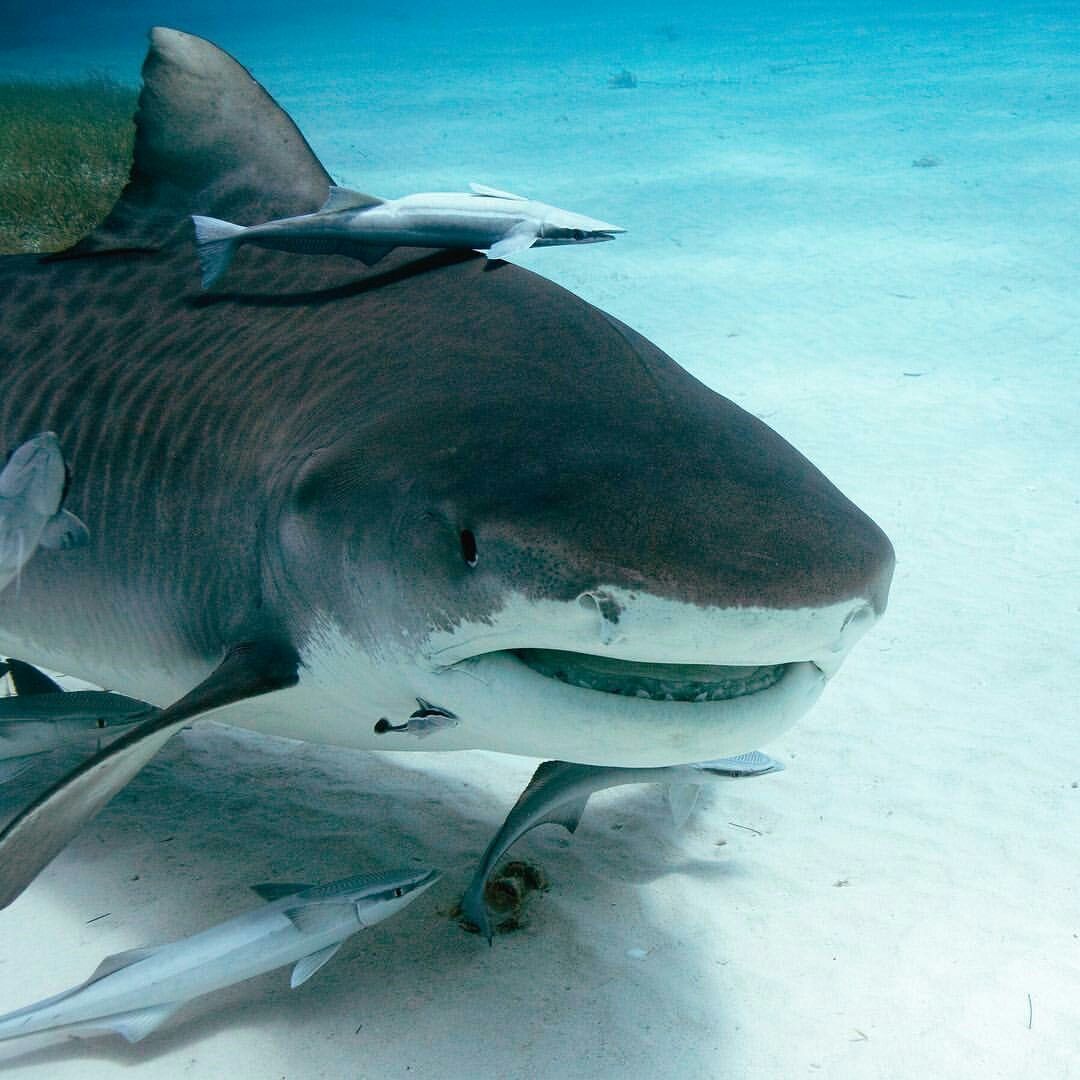
Why are bull sharks so aggressive?
Bull sharks (Carcharhinus leucas) have the highest testosterone levels of any vertebrate on Earth, contributing to their famously aggressive behavior. Their testosterone is 10-20 times higher than humans. They have a stocky, muscular build, aggressive territorial behavior, and will attack without provocation when they feel threatened.
The Shark in Your Backyard River
A fisherman casts his line into an Alabama river, 200 kilometers from the nearest coast. Something hits the line with tremendous force. When he reels it in, he finds a 2-meter bull shark, in fresh water, in a river that's supposedly safe from sharks.
Bull sharks can do this. They are the only sharks that thrive in both saltwater and freshwater, and they use this ability to travel hundreds of kilometers up rivers where no other large sharks can follow. They are also the most aggressive shark species, responsible for more unprovoked attacks on humans than any other shark.
They have 20x the testosterone of humans. They attack without provocation. They swim in water you'd swear was shark-free.
The Animal
Bull sharks are stocky, powerful, and built for aggressive hunting.
Physical features:
- Length: 2.1-3.4 meters typical; up to 4 meters maximum
- Weight: 90-315 kg
- Body shape: thick, muscular, barrel-like
- Color: gray on top, white underneath (typical shark camouflage)
- Eyes: relatively small compared to other sharks
- Teeth: triangular, serrated, around 50 active
- Lifespan: 15-25 years in wild
Why stocky:
Unlike streamlined great whites, bull sharks are built for power in short bursts:
- Stocky build increases muscle mass relative to length
- Shorter acceleration distances required
- Maximum force in close combat
- Less efficient for long-distance swimming
Extreme Testosterone
Bull sharks have the highest testosterone of any vertebrate.
Measured levels:
- Bull shark testosterone: 358 ng/dL (average)
- Male lion testosterone: 250 ng/dL
- Male elephant testosterone: 180 ng/dL
- Human male testosterone: 300-1000 ng/dL (average 600)
- Bull shark: consistently higher than humans
What this produces:
- Extremely aggressive behavior
- Territorial defense
- Ready to attack minimal threats
- Heightened hunting drive
- Rapid strike decisions
Biological significance:
Their testosterone levels are unusual for marine animals and contribute to:
- Muscular body composition
- Growth patterns
- Hunting efficiency
- Reproductive behavior
Comparison to humans:
A bull shark's testosterone response is roughly equivalent to a constantly-angry, ready-to-fight state that humans rarely achieve.
The Freshwater Advantage
Bull sharks' unique ability sets them apart.
How they do it:
Through specialized kidneys that:
- Process salt differently
- Adjust to salt gradient
- Allow extensive freshwater travel
- Enable saltwater return
Where they've been found:
North America:
- Mississippi River (up to 1,100 km from ocean)
- Amazon River (documented 2,500 km inland)
- Lake Nicaragua (Central America)
- Lake Pontchartrain (Louisiana)
Africa:
- Zambezi River
- Limpopo River
- Various coastal African rivers
Asia:
- Ganges River (India)
- Various southeast Asian rivers
- Mekong River region
Australia:
- Brisbane River
- Gold Coast canals
- Tropical Queensland rivers
Why this matters:
Most people assume river or freshwater lake environments are shark-free. This false assumption leads to bull shark attacks where humans never expect them.
The Attack Record
Bull sharks are involved in more shark attacks on humans than any other species.
Attack statistics:
- Total unprovoked attacks: ~125+ confirmed
- Percentage of all shark attacks: 10-15%
- Fatality rate: varies by region
- Trend: attacks increasing with coastal development
Comparison to other sharks:
- Great whites: highest total historical attacks
- Tiger sharks: second most attacks
- Bull sharks: third most common but most aggressive
- Others: rarely attack humans
Why high attack numbers:
Bull sharks attack in places where humans actually swim:
- Shallow coastal water
- River mouths and estuaries
- Lakes and slow rivers
- Bays and harbors
- Beach break surf zones
Attack patterns:
- Usually in murky water (reduced visibility)
- Often without warning
- Strike from below or side
- Deliver multiple bites
- Sometimes attack swimmers, surfers, and waders
Why So Dangerous
Bull sharks combine multiple factors making them uniquely dangerous.
Aggressive behavior:
- High testosterone drives aggressive responses
- Territorial behavior
- Will attack perceived threats readily
- Indiscriminate about targets
Preferred habitat:
- Shallow coastal water (where people swim)
- Murky water (reduced visibility helps them hunt)
- River and lake environments (unexpected by people)
- Estuaries and bays (many people present)
Biological factors:
- Powerful muscular build
- Strong jaws (1,350 PSI bite)
- Fast acceleration
- Aggressive hunting instinct
Physical characteristics:
- Stocky, hard to discourage
- Thick skin resistant to injury
- Continuous tooth replacement
- Large enough to kill humans easily
Encounter frequency:
- Live in areas humans frequent
- Don't avoid human activity
- Sometimes actively investigate people
- Reduced flight response compared to other sharks
Where They Live
Bull sharks inhabit coastal waters worldwide.
Distribution:
- North America: US East Coast, Gulf of Mexico, Caribbean
- South America: Brazilian coast, Caribbean
- Africa: West and East coasts
- Asia: South and Southeast Asian coasts
- Oceania: Australia, Indonesia, Pacific Islands
- Atlantic: most warm-water coastlines
Habitat preferences:
- Shallow coastal waters (under 30m)
- Estuaries and river mouths
- Bays and harbors
- Murky water environments
- Tropical and subtropical regions
Seasonal variation:
- Summer: move to cooler temperate regions
- Fall/Winter: retreat to tropical waters
- Breeding: specific nursery areas in estuaries
Why tropical:
They thrive in warmer water (22-28°C ideal) and are limited by cold temperatures. Climate change may expand their range as oceans warm.
Hunting and Diet
Bull sharks are opportunistic, aggressive hunters.
Prey:
- Primary: fish, other sharks, rays
- Secondary: turtles, seabirds, marine mammals
- Occasional: dolphins, sea lion pups, larger marine animals
- Unusual: terrestrial animals near water, livestock, dogs
Hunting technique:
- Ambush from murky water: hide in turbid conditions
- Bump-and-bite: test prey by bumping before attacking
- Group hunting: sometimes cooperate with other bull sharks
- Patient pursuit: can tail prey for hours
Attack speed:
- Accelerate from still to 40 km/h in seconds
- Short-distance speed (not sustained)
- Generate massive force in close combat
- Difficult to escape once committed
Eating behavior:
- Can consume whole prey up to large size
- Tear chunks from too-large prey
- Teeth designed for biting through thick skin
- Powerful jaw closure for crushing prey
Reproduction
Bull shark breeding is specialized.
Sexual maturity:
- Males: 10 years
- Females: 15 years
- Relatively late maturation
Breeding season:
- Varies by region
- Typically late summer to fall
- Pairs seek sheltered bays or estuaries
Gestation:
- 10-11 months
- Live birth (viviparous)
- Embryos develop inside mother
Young:
- 6-15 pups per litter
- Born in nursery areas (shallow estuaries)
- Newborns: 70-80 cm long, independent immediately
- High mortality rate for pups
Nursery areas:
Coastal estuaries and shallow bays serve as:
- Protected nursery habitat
- Abundant food for young
- Separation from adult bull sharks
- Gradual transition to adult waters
Famous Attacks
Several high-profile attacks have involved bull sharks.
1916 Jersey Shore Attacks:
A series of attacks along New Jersey beaches and a river:
- 4 deaths, 1 injury over 12 days
- Inspired Jaws novel and film
- Initially blamed on great whites
- Modern analysis suggests bull sharks likely
Lake Nicaragua attacks:
Indigenous Mosquito Coast inhabitants:
- Called bull sharks "niño" or child
- Regular attacks in freshwater
- Only lake-dwelling shark population known
- Demonstrate freshwater attack capability
Ganges River attacks:
- Hindu religious pilgrims attacked
- Bull sharks mistaken for "river sharks"
- Cultural impact significant
- Continued occurrence
Gold Coast, Australia:
Canal systems in urban areas:
- Regular attacks on residents
- Waders, swimmers, surfers
- Bull sharks thriving in urban coastal waters
Bull Sharks in Fiction
The 1916 attacks inspired major literary work.
Jaws:
Peter Benchley's 1974 novel:
- Based partly on 1916 NJ attacks
- Created "great white shark" narrative
- Modern analysis suggests bull sharks likely the actual culprit
- Influenced public shark perception for decades
Other fiction:
- Numerous films featuring bull sharks
- Action thrillers using their aggression
- Survival stories involving freshwater attacks
- Nature documentaries exploring their behavior
Conservation Status
Bull sharks face specific threats.
IUCN status:
Near Threatened (2009 assessment).
Population trends:
- Declining in most regions
- Overfishing significant factor
- Habitat loss major issue
- Climate change affecting them
Threats:
Commercial fishing:
- Bycatch in fisheries
- Targeted for fins
- Shark fin soup market
Beach netting:
- Australia and South Africa have beach nets
- Kill bull sharks among other species
- Controversial conservation vs safety balance
Coastal development:
- Estuary destruction (their nurseries)
- River alteration
- Pollution impacts
- Ocean warming changing habitat
Finning:
- Illegal but continues
- Demand from Asian markets
- Significant mortality source
Protection:
- CITES Appendix II (restricts international trade)
- Protected in some countries
- Research into populations ongoing
- Management programs in several regions
Scientific Interest
Bull sharks are studied for multiple reasons.
Research areas:
Osmoregulation:
- How they handle freshwater vs saltwater
- Applications to medical kidney research
- Unique physiological capabilities
Aggression biology:
- Testosterone and behavior
- Predatory decision-making
- Learning and memory
Ecology:
- Coastal ecosystem impacts
- Food web positions
- Climate change response
- Population dynamics
Biomechanics:
- Bite force mechanics
- Swimming dynamics
- Sensory biology
Coexistence Strategies
Reducing bull shark attacks requires informed precautions.
Prevention:
Avoid known habitat:
- Murky river mouths
- Tropical bay areas
- Beach areas with recent attack history
- Dawn/dusk swimming in bull shark territory
Swimmer behavior:
- Don't swim in murky water
- Avoid wearing shiny jewelry
- Stay in groups
- Leave water during twilight
Community measures:
- Shark spotters in high-risk areas
- Beach nets (controversial)
- Tracking and monitoring
- Public education
Response to encounter:
- Don't flee rapidly (triggers pursuit)
- Face the shark if possible
- Slowly retreat while watching
- Leave water if you can
If attacked:
- Fight back aggressively
- Aim for eyes and gills
- Sharp objects can deter
- Get to shore/safety as quickly as possible
Why Bull Sharks Matter
Bull sharks represent both specific danger and ecological importance.
Ecological role:
- Apex predators in coastal waters
- Control prey populations
- Part of complex coastal food webs
- Nutrient cycling contributions
Scientific value:
- Unique osmoregulation abilities
- Behavioral study opportunities
- Evolution of aggression
- Conservation challenges
Public awareness:
- Most dangerous shark encounters
- Cultural icons of shark danger
- Educational about unexpected environments
- Tourism implications
Conservation need:
- Declining populations
- Habitat loss pressure
- Climate change impacts
- Commercial fishing pressure
The Freshwater Predator
Every bull shark on a coast or in a river is a reminder that the ocean-freshwater boundary isn't absolute.
They are uniquely positioned to exploit both environments. Their aggressive behavior makes them particularly dangerous. Their testosterone levels explain their readiness to attack. Their stocky powerful build gives them the physical tools.
Where other large sharks stay in open ocean, bull sharks follow rivers upstream hundreds of kilometers. They live in lakes where bull sharks "shouldn't" exist. They swim in coastal waters where swimmers regularly encounter them.
For swimmers, divers, and beach-goers in bull shark territory, awareness is critical. Many attacks happen because people assume they're safe in freshwater or nearshore waters. Bull sharks teach otherwise.
Yet they're also declining due to human pressures, fishing, habitat loss, pollution. Protecting them matters both for their role as coastal apex predators and for scientific understanding of their unique physiology.
Whether they'll continue thriving or decline further depends on conservation choices. The bull sharks currently swimming in rivers, bays, and coastal waters worldwide continue doing what bull sharks have always done: hunting aggressively, moving between saltwater and freshwater, and occasionally encountering humans in environments where such encounters have consequences for both species.
The Three Most Dangerous Sharks Compared
Of more than 500 shark species known, only three are consistently implicated in the majority of unprovoked attacks on humans - the great white, tiger, and bull shark. Our research team has compiled a comparison of their biological and behavioral traits using data from the Florida Museum of Natural History's International Shark Attack File.
| Trait | Great White (Carcharodon) | Tiger (Galeocerdo) | Bull (Carcharhinus leucas) |
|---|---|---|---|
| Maximum length | 6.1 m | 5.5 m | 4 m |
| Maximum mass | 2,268 kg | 1,524 kg | 318 kg |
| Bite force (Newtons) | 18,216 | 6,000 | 5,914 |
| Habitat | Temperate coastal | Tropical coastal and oceanic | Tropical coastal + freshwater |
| Unprovoked attacks (ISAF) | 358 (80 fatal) | 139 (39 fatal) | 121 (26 fatal) |
| Salinity tolerance | Marine only | Marine only | Marine and freshwater |
| Testosterone level | Moderate | Moderate | Very high |
Bull sharks show the highest testosterone levels of any shark species and indeed of any animal tested to date. A 1982 study by Samuel Gruber and colleagues at the University of Miami measured serum testosterone in adult male bull sharks at levels exceeding those of rutting male elephants, which correlates with the species's documented aggression [1].
Osmoregulatory Physiology
Bull sharks are among only 43 known species of fish within the class Chondrichthyes capable of tolerating freshwater for extended periods. This capability depends on the rectal gland, which selectively excretes excess salt when in seawater, and the kidneys, which greatly increase urea retention when in freshwater to maintain osmotic balance.
"The bull shark's osmoregulatory system is a marvel of physiological engineering. Within a 24-hour transition from full seawater to full freshwater, a bull shark can switch from actively excreting salt to actively retaining urea, maintaining its internal osmotic balance across a thousand-fold change in environmental salt concentration. Very few vertebrates can do this, and the bull shark does it better than any other large predator." - Dr. James Gelsleichter, University of North Florida [2]
Bull sharks have been confirmed 4,200 kilometers up the Amazon River in Iquitos, Peru, and equally far up the Mississippi River in Illinois during historical records. They sustain populations in Lake Nicaragua, where the San Juan River connects the lake to the Caribbean, and have been documented leaping rapids and waterfalls in the course of upstream migration.
Documented Attacks and Behavioral Patterns
The International Shark Attack File maintained by the Florida Museum of Natural History identifies bull sharks as responsible for 121 confirmed unprovoked attacks with 26 fatalities through 2023, placing the species third behind only great whites and tiger sharks in documented dangerous encounters.
However, many attacks attributed to other species in murky coastal waters may in fact have been bull sharks, and some researchers estimate the true bull shark attack count is substantially higher than the confirmed tally.
"Bull sharks are the most likely culprit in the majority of unidentified shark attacks occurring in shallow coastal and estuarine waters. Their tolerance for turbid water, their presence in freshwater and estuarine environments where other large sharks cannot go, and their tendency to take exploratory bites make them the default suspect in the absence of visible identification." - Dr. George Burgess, former director, Florida Program for Shark Research [3]
The series of 1916 attacks along the New Jersey shore that killed four people and inspired the novel Jaws are now considered probably attributable to a bull shark rather than a great white, based on the pattern of estuarine incursion and the lack of typical great white habitat in the region.
References
- Rasmussen, L. E. L., & Gruber, S. H. (1993). Serum concentrations of reproductively-related circulating steroid hormones in the free-ranging lemon shark, Negaprion brevirostris. Environmental Biology of Fishes, 38(1-3), 167-174. DOI: 10.1007/BF00842912
- Pillans, R. D., & Franklin, C. E. (2004). Plasma osmolyte concentrations and rectal gland mass of bull sharks Carcharhinus leucas, captured along a salinity gradient. Comparative Biochemistry and Physiology Part A, 138(3), 363-371. DOI: 10.1016/j.cbpb.2004.05.006
- Burgess, G. H., Bruce, B. D., Cailliet, G. M., et al. (2014). A re-evaluation of the size of the white shark (Carcharodon carcharias) population off California, USA. PLOS ONE, 9(6), e98078. DOI: 10.1371/journal.pone.0098078
- Heupel, M. R., & Simpfendorfer, C. A. (2008). Movement and distribution of young bull sharks Carcharhinus leucas in a variable estuarine environment. Aquatic Biology, 1(3), 277-289. DOI: 10.3354/ab00030
Related Articles
- Great White Shark: The Ocean's Apex Predator
- Do Sharks Actually Attack Humans?
- How Many People Do Sharks Kill Per Year?
Frequently Asked Questions
Why are bull sharks so aggressive?
Bull sharks (Carcharhinus leucas) have the highest testosterone levels of any vertebrate on Earth, contributing to their famously aggressive behavior. Their testosterone is 10-20 times higher than humans. They have a stocky, muscular build, aggressive territorial behavior, and will attack without provocation when they feel threatened.
They are responsible for more shark attacks on humans than any other species - more than great whites and tiger sharks combined. Their aggression stems from multiple factors: high testosterone, territorial behavior, tendency to hunt in shallow coastal waters near humans, and their willingness to swim in freshwater where other dangerous sharks cannot. They often attack swimmers, surfers, and waders in shallow water - the worst environments for both species.
Bull sharks are also notably indiscriminate in what they’ll attack, having been documented attacking fish, other sharks, dolphins, sea turtles, and terrestrial animals that come near water. Their biting force is approximately 1,350 PSI, among the highest of any shark.
Can bull sharks really live in freshwater?
Yes, bull sharks are the only widely-distributed sharks that can thrive in both saltwater and freshwater. They have specialized kidneys that allow them to process different salt concentrations efficiently. This ability is called osmoregulation, and it’s extremely rare in marine predators.
They’ve been documented traveling hundreds of kilometers up rivers from the ocean - specimens have been found in the Amazon (2,500 km inland), the Mississippi River, Lake Nicaragua, and the Ganges in India. They can swim in both directions, returning to ocean water after extended freshwater periods.
This freshwater capability makes them extraordinarily dangerous to humans because they can attack in rivers, lakes, and coastal waters where most people don’t expect large sharks. Many freshwater shark attack fatalities attributed to mythical ‘river sharks’ in various regions are actually bull shark attacks.
Their ability to move between saltwater and freshwater also gives them access to prey that other sharks cannot reach, contributing to their evolutionary success.
Where do bull sharks live?
Bull sharks have the widest geographic range of any shark species, inhabiting tropical and subtropical coastlines worldwide. Their range includes all major ocean basins and their estuaries/rivers. They are found along coasts of North and South America, Europe, Africa, Asia, and Oceania - essentially every warm-water coastline on Earth.
They prefer shallow coastal waters (typically under 30 meters) and are most abundant in estuaries, bays, harbors, and river mouths. They thrive in murky water environments, which helps them hunt effectively. During summer months, they migrate to cooler waters. Fall brings them to warmer tropical waters for breeding. They are particularly abundant in the Gulf of Mexico, along Australian coasts, in South African waters, and in tropical Pacific islands.
Their tolerance for freshwater extends their range into rivers where they can travel thousands of kilometers upstream. Bull sharks are responsible for attacks in areas where people don’t expect to encounter sharks - river mouths, calm bays, and even lakes.
How big do bull sharks get?
Adult bull sharks reach 2.1-3.4 meters (7-11 feet) in length and weigh 90-230 kg (200-500 pounds). The largest verified bull sharks reached 4 meters and 315 kg. They are smaller than great white sharks but stockier and more muscular - essentially barrel-shaped rather than streamlined. Females are larger than males (unusual for most animals but common in sharks). Their reproductive cycle involves 10-11 month gestation, giving birth to 6-15 pups.
Young bull sharks are born in nursery areas in shallow estuaries, where they stay until reaching 2 meters. They mature sexually at around 10-15 years of age. Bull sharks can live 15-25 years in the wild. Their size and strength make them particularly dangerous in close encounters with humans. Unlike sleeker shark species, their thick-bodied build allows them to generate extreme force in short-distance attacks.
They can accelerate from nearly stationary to 40 km/h in seconds, making escape very difficult once they commit to an attack.
Are bull sharks the most dangerous to humans?
Bull sharks are generally considered the most dangerous shark species to humans, though rankings vary by analysis. They are responsible for approximately 10-15% of all confirmed unprovoked shark attacks on humans globally, making them second only to great whites in total attacks. However, bull sharks attack in settings where most shark attacks occur - shallow coastal water where swimmers, surfers, and waders are most vulnerable.
Great whites typically attack in deeper water where most people don’t swim regularly. When combined with their freshwater presence (where people don’t expect sharks), their willingness to attack in shallow water (where people are most often), and their aggressive behavior, bull sharks pose disproportionate danger relative to attack numbers.
Researchers increasingly recognize bull sharks as the shark species most likely to be encountered and attack humans in the environments where humans actually swim. Bull shark attacks are also more likely to be fatal because their habitat preferences (murky coastal water) delay rescue compared to clearer deeper water attacks.