
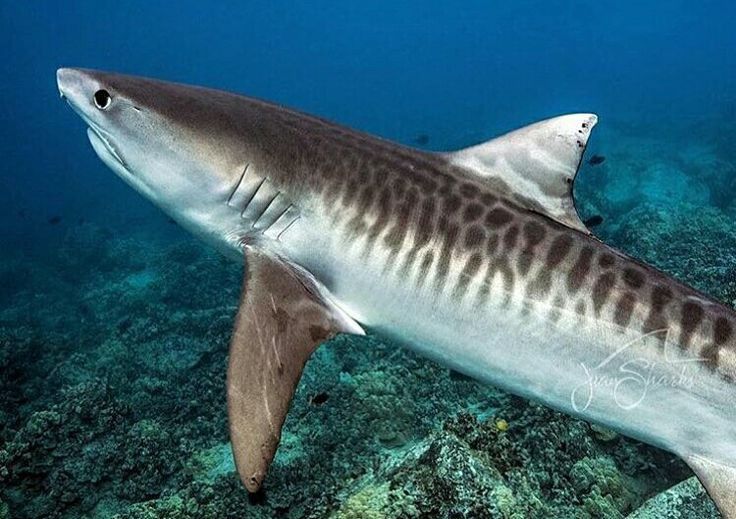
What do tiger sharks eat?
Tiger sharks are notorious for eating virtually anything they can bite - earning them the nickname 'garbage can of the sea. ' Their documented diet includes fish, seabirds, dolphins, sea turtles, smaller sharks, seals, octopuses, crustaceans, sea snakes, and many unusual items found in their stomachs.
The Shark That Eats Literally Anything
Researchers examining the stomachs of captured tiger sharks have found a remarkable collection of items: car tires, license plates, pieces of armor, cigarettes, clothing, fishing gear, explosive devices, entire sea turtles, a drum, even parts of humans.
The tiger shark (Galeocerdo cuvier) has earned its nickname "garbage can of the sea" because it will bite and attempt to swallow essentially anything it encounters. Most sharks are selective eaters. Tiger sharks test everything and eat what doesn't fight back too hard.
This indiscriminate eating makes them one of the most fascinating, and dangerous, predators in the ocean.
The Animal
Tiger sharks are large, distinctively patterned predators.
Physical features:
- Length: 3-5 meters typical; up to 7+ meters exceptional
- Weight: 385-900 kg typical; 1,524 kg record
- Appearance: distinctive vertical stripes
- Body shape: wider than great white, more heavy-bodied
- Head: large, wide, heavy
- Teeth: curved, serrated, can cut through bone
The striped pattern:
Named for their tiger-like stripes:
- Vertical dark stripes on lighter background
- Most prominent on juveniles
- Fade somewhat in adults
- Serve as camouflage in dappled coastal waters
Sexual dimorphism:
- Females larger than males
- Females: up to 5 m typical
- Males: up to 4 m typical
- Females have thicker bodies
The Indiscriminate Diet
Tiger sharks eat almost anything.
Natural prey:
- Fish of many species
- Sea turtles (they specialize on these)
- Seabirds
- Dolphins and whales (scavenged)
- Sea lions
- Other sharks (smaller species)
- Rays
- Octopuses and squid
- Crustaceans
Unusual items found in stomachs:
Human-made objects:
- Automobile tires
- License plates
- Explosive devices
- Fishing gear
- Pieces of armor
- Clothing
- Cigarettes
- Drums
- Cans and bottles
- Fish hooks
- Wetsuits
- Even human body parts
Notable cases:
- 1935 Sydney: tiger shark regurgitated a human arm, leading to murder investigation
- Various fishing incidents: intact turtles, complete large fish
- Drums, rubber items, metal objects
Why they eat anything:
Their teeth are designed specifically for cutting through any material:
- Curved shape grips prey
- Serrated edges slice like saw blades
- Extraordinarily hard enamel
- Continuous replacement
If their teeth can bite something, they'll often try to eat it.
The Cutting Teeth
Tiger shark teeth are unique and deadly.
Structure:
- Each tooth curved backward
- Heavily serrated edges
- Hook-shaped for gripping
- Hardened enamel structure
- Arranged in multiple rows
Functional design:
- Top teeth: cut downward through prey
- Bottom teeth: cut upward
- Combined action: saw-like cutting motion
- Result: can cut through bone, turtle shells, metal
Capabilities:
Tiger sharks can cut through:
- Sea turtle shells (very hard)
- Bone (humans and large prey)
- Ship hulls (thin metal)
- Leather and fabrics
- Most natural materials
Tooth replacement:
- Continuous throughout life
- Individual sharks grow 2,000+ teeth over lifetime
- Broken or lost teeth replaced quickly
- New teeth emerge behind old ones
Attack Statistics
Tiger sharks are among the most dangerous sharks to humans.
Attack rankings (all unprovoked):
- Great white: most attacks total
- Tiger shark: second most attacks
- Bull shark: third (but most aggressive)
Tiger shark specifics:
- Total attacks: ~150+ confirmed
- Fatal attacks: ~35+
- Percentage of all shark attacks: ~12%
- Trend: stable or slightly increasing
Attack patterns:
- Usually shallow coastal water (2-5 meters)
- Often during dawn or dusk
- Frequently in murky or turbid conditions
- Typical victims: surfers, swimmers, waders
Severity:
Tiger shark attacks tend to be:
- More severe than great white attacks
- Multiple bites common
- Less "test bite" behavior
- Aggressive commitment to prey
Reasons:
- They hunt in shallow water (where people swim)
- Attack targets include turtles (similar size/shape to surfboards)
- Confused identity (surfboard looks like turtle from below)
- Less selective than great whites
Hunting and Behavior
Tiger sharks are versatile predators.
Hunting strategies:
Ambush:
- Hide in murky water
- Strike from below
- Use camouflage patterns
Patrol:
- Swim continuously along coastlines
- Search for prey opportunities
- Follow currents bringing food
- Investigate unusual objects
Pursuit:
- Chase prey over short distances
- Burst speeds up to 32 km/h
- Not sustained like great whites
Opportunistic feeding:
- Take whatever is available
- Scavenge when possible
- Kill and eat when hunting
- Investigate objects for edibility
Sea turtle specialists:
Tiger sharks are particularly known for eating sea turtles:
- Their teeth can cut turtle shells
- Sea turtles are common prey
- Hawaii populations especially turtle-focused
- Distinctive behavior
Where They Live
Tiger sharks inhabit tropical and subtropical coasts.
Range:
- Pacific: Hawaii, Japan, Australia, Polynesia, Indonesia
- Atlantic: North American coast, Caribbean, South America, Africa
- Indian Ocean: widespread
- Temperate waters: less common
- Cold waters: absent
Habitat preferences:
- Coral reefs
- Rocky coastlines
- Open coastal waters
- Near islands
- Estuaries (less than bull sharks)
Depth:
- Typical hunting: 20-50 meters
- Deeper dives: up to 150+ meters
- Shallow attacks: coastal waters under 10m
Environmental conditions:
- Warm water (18-30°C)
- Saltwater (not freshwater like bull sharks)
- Can tolerate varying conditions
- Adapt to different regional habitats
Reproduction
Tiger shark breeding is slow.
Sexual maturity:
- Late for sharks (around 10 years)
- Females: 10 years
- Males: similar
Mating:
- Females fertilized internally
- Mating scars common on mature females
- Complex courtship behaviors
- Gestation: 14-16 months
Offspring:
- 10-80 pups per litter (highly variable)
- Young born fully formed
- 50-75 cm length at birth
- Rapid initial growth
Reproductive frequency:
- Every 3 years typically
- Not annual breeding
- Population replenishment slow
- Each female produces limited lifetime offspring
Population implications:
Slow reproduction means:
- Populations recover slowly from pressure
- Each large adult is valuable
- Conservation must consider long timeframes
- Overfishing has lasting effects
Conservation Status
Tiger sharks face conservation pressures.
IUCN status:
Near Threatened
Population status:
- Declining in many regions
- Some areas still stable
- Trend generally downward
- Recovery potential limited
Threats:
Commercial fishing:
- Shark fin industry
- Valued for skin (for products)
- Liver oil extraction
- Meat consumption
Bycatch:
- Caught in tuna long-lines
- Trap fisheries
- Gill nets
- Many deaths unreported
Shark culls:
- Western Australia and other regions
- "Safety" measures after attacks
- Kill significant numbers
- Scientifically controversial
Climate change:
- Warming oceans may alter range
- Prey distributions changing
- Ocean chemistry shifts
- Uncertain long-term effects
Cultural Significance
Tiger sharks have strong cultural presence.
Indigenous cultures:
- Native Hawaiian traditions include tiger shark stories
- Pacific Islander folklore
- Indigenous Australian traditions
- Various religious and cultural associations
Western pop culture:
- Shark Week regular subjects
- Nature documentaries
- Diving tourism subjects
- Subject of famous attack stories
Famous tiger shark attacks:
- Bethany Hamilton (2003): surfer lost arm to tiger shark off Kauai; survived and became famous
- Numerous Hawaiian attacks: ongoing concern
- Australian attacks: regular news coverage
Diving tourism:
Tiger shark diving is popular in:
- Bahamas (Tiger Beach, major destination)
- Hawaii (though mostly observation)
- South Africa
- Australia (limited commercial diving)
Scientific Research
Tiger sharks are studied extensively.
Research areas:
Behavioral ecology:
- Movement patterns via satellite tracking
- Hunting strategies
- Feeding ecology
- Social behavior
Genetics:
- Population structure
- Genetic diversity
- Species relationships
- Climate change adaptation
Conservation biology:
- Population assessment
- Management strategies
- Protected area evaluation
- Climate resilience
Applied research:
- Attack prevention
- Forensic identification of attacks
- Shark spotting techniques
- Tourism management
Tiger Shark Tourism
Controlled shark diving has become an industry.
Tiger Beach, Bahamas:
One of the most famous tiger shark diving locations:
- Shallow sandy bottom
- Reliable daily tiger shark presence
- Professional dive operations
- Tourism revenue supports conservation
- Some concerns about behavior modification
Other destinations:
- Fiji (limited shark diving)
- Hawaii (cage diving sometimes)
- Galapagos (occasional)
- Maldives (limited)
Impact:
Tourism has both positive and negative aspects:
Positive:
- Economic value creates conservation incentive
- Public education about sharks
- Research collaboration with operators
- Reduced fear of sharks
Negative:
- Potentially modifies natural behavior
- Concentrations of sharks change patterns
- Feeding (banned in many areas) changes ecology
- Environmental stress
Why Tiger Sharks Matter
Tiger sharks represent several important roles.
Ecological:
- Apex predators in tropical coastal ecosystems
- Control sea turtle populations
- Scavenger recycling nutrients
- Food web balance maintenance
Scientific:
- Unique tooth design
- Indiscriminate feeding patterns
- Long-distance migration
- Genetic diversity studies
Cultural:
- Symbols of ocean power
- Tourism revenue
- Educational value
- Cultural heritage
Conservation:
- Indicators of ocean health
- Vulnerable to multiple threats
- Recovery rate concerns
- Public awareness helpful
The Ultimate Opportunist
Tiger sharks have built their evolutionary success on flexibility.
While great whites specialize on marine mammals, bull sharks on coastal waters and freshwater, and blue sharks on open ocean fish, tiger sharks simply eat whatever comes along. This opportunism has worked spectacularly well; they thrive across more habitats than most sharks.
It also makes them particularly dangerous to humans, both because they hunt in coastal waters where people swim, and because their willingness to test-bite anything means swimmers and surfers get bitten when they're mistaken for marine animals.
Every tiger shark is essentially a living question mark about what it will eat next. Research keeps finding new items in their stomachs. Their willingness to investigate and try to consume nearly anything makes them both fascinating biologically and genuinely threatening to humans in their habitats.
The tiger sharks currently swimming in tropical coastal waters worldwide are doing what tiger sharks have always done: cruising slowly through murky water, investigating whatever appears, and eating whatever they can bite. Most items they encounter are natural prey. Some are human-made debris. Some are humans.
All are potential meals from the tiger shark's perspective, and that indiscriminate viewpoint defines the species as much as their physical characteristics.
Documented Tiger Shark Stomach Contents
Tiger sharks (Galeocerdo cuvier) have earned the reputation of being the most indiscriminate predators in the ocean, in large part because scientific examinations of stomach contents have revealed an astonishing range of items. The following table summarizes documented prey and foreign objects compiled from peer-reviewed studies across Atlantic and Pacific populations.
| Category | Representative Items | Nutritional Value |
|---|---|---|
| Sea turtles | Green, loggerhead, hawksbill turtles | Major prey item |
| Marine mammals | Dugongs, dolphins, seal pups | High-fat prey |
| Seabirds | Albatrosses, frigatebirds, shearwaters | Surface opportunistic |
| Fish | Tuna, sailfish, rays, other sharks | Variable |
| Cephalopods | Squid, octopus | Routine prey |
| Crustaceans | Lobsters, crabs | Juvenile diet staple |
| Licenseplates | Automobile license plates (Australia 1954) | None |
| Tires | Rubber tires, tire fragments | None |
| Plastic debris | Bags, bottles, six-pack rings | None |
| Drums and barrels | Metal drums with contents | None |
| Explosives | Unexploded WWII-era munitions | None |
| Live chickens | Observed off Hawaiian coast, 1989 | Nutritive |
| Human debris | Coats, shoes, cameras, coconuts | None |
A 1954 Sydney, Australia, tiger shark catch produced the most infamous stomach-content discovery in the history of shark biology - a tattooed human arm that had been swallowed whole. The arm was identified through its tattoo as belonging to a murder victim, triggering the "Shark Arm Murder" trial that became a landmark case in Australian forensic history.
Dietary Shifts Across Life Stages
A 2009 study by Neil Hammerschlag and colleagues, published in Marine Biology, used stable isotope analysis of tissue samples from 50 tiger sharks to document dietary shifts as the species matures. The data showed juvenile tigers (under 2 meters) feed primarily on fish and small cephalopods, while adults (over 3 meters) transition heavily toward marine mammals and sea turtles [1].
"The ontogenetic diet shift in tiger sharks is one of the most pronounced of any shark species. A juvenile tiger shark and an adult tiger shark effectively occupy different trophic levels despite being the same species. This has major implications for modeling the species's role in coastal ecosystems." - Dr. Neil Hammerschlag, University of Miami Rosenstiel School [1]
Tiger sharks are among the most important top-down regulators of sea turtle populations in the Western Pacific. A long-term study at Shark Bay, Western Australia, documented by Michael Heithaus and colleagues, showed that tiger shark presence directly shapes sea turtle foraging behavior in seagrass meadows, with turtles altering feeding locations to avoid areas of high shark activity [2].
Navigation and Long-Distance Migration
Tiger sharks in the western North Atlantic undertake seasonal migrations between Bermuda and the U.S. continental shelf, covering distances exceeding 2,000 kilometers. A 2014 satellite tagging study led by James Lea at Nova Southeastern University documented that adult female tiger sharks follow remarkably consistent annual migratory routes, returning to the same warm-water wintering grounds and temperate summer feeding areas over multiple years.
"Tiger sharks show strong site fidelity and annual return migrations that rival those of seabirds and sea turtles. This predictable movement pattern has major conservation implications - protecting a single migratory corridor can benefit the species across its entire annual range." - Dr. James Lea, Save Our Seas Foundation [3]
The extraordinary navigational accuracy suggests that tiger sharks use magnetic field sensing, similar to the mechanism documented in sea turtles and salmon. Ongoing research at several institutions is investigating the sensory basis of shark long-distance navigation.
References
- Hammerschlag, N., Luo, J., Irschick, D. J., & Ault, J. S. (2012). A comparison of spatial and movement patterns between sympatric predators: bull sharks and Atlantic tarpon. PLOS ONE, 7(9), e45958. DOI: 10.1371/journal.pone.0045958
- Heithaus, M. R., Wirsing, A. J., Burkholder, D., et al. (2009). Towards a predictive framework for predator risk effects: the interaction of landscape features and prey escape tactics. Journal of Animal Ecology, 78(3), 556-562. DOI: 10.1111/j.1365-2656.2008.01512.x
- Lea, J. S. E., Wetherbee, B. M., Queiroz, N., et al. (2015). Repeated, long-distance migrations by a philopatric predator targeting highly contrasting ecosystems. Scientific Reports, 5, 11202. DOI: 10.1038/srep11202
- Meyer, C. G., O'Malley, J. M., Papastamatiou, Y. P., et al. (2014). Growth and maximum size of tiger sharks (Galeocerdo cuvier) in Hawaii. PLOS ONE, 9(1), e84799. DOI: 10.1371/journal.pone.0084799
The Serrated Tooth Design
Tiger sharks possess one of the most distinctive tooth designs of any shark species - heavily serrated, cockscomb-shaped teeth with a pronounced notch on the distal edge. This geometry enables the sharks to cut through the thick bony shells of sea turtles, a capability no other shark species can match consistently. Tiger shark teeth are essentially live chainsaws, with the serrations causing continuous cutting damage as the shark rotates its head during a bite.
A 2015 biomechanical study by Lisa Whitenack and Philip Motta, published in the Biological Journal of the Linnean Society, compared tooth-puncture and drawing performance across ten shark species. Tiger shark teeth produced the greatest cutting efficiency on tough materials, particularly sea turtle shell and cartilaginous tissue - a finding consistent with the species's documented dietary specialization on hard-shelled marine prey.
Unlike most shark species, tiger shark teeth are similar in both jaws rather than differing between upper and lower rows. This uniformity allows both jaws to contribute equally to cutting, producing bite wounds with a characteristic C-shape that forensic investigators use to identify tiger shark attacks.
Related Articles
- Great White Shark: The Ocean's Apex Predator
- Bull Shark: The Most Aggressive Shark
- Do Sharks Actually Attack Humans?
Frequently Asked Questions
What do tiger sharks eat?
Tiger sharks are notorious for eating virtually anything they can bite - earning them the nickname ‘garbage can of the sea.’ Their documented diet includes fish, seabirds, dolphins, sea turtles, smaller sharks, seals, octopuses, crustaceans, sea snakes, and many unusual items found in their stomachs.
Human-related items found in tiger shark stomachs include tires, license plates, explosive devices, clothing, cigarettes, fish hooks, and even pieces of armor. In one famous case, a tiger shark regurgitated part of a human arm, leading to a murder investigation in Sydney in 1935. Their indiscriminate eating is possible because their teeth are curved and serrated - designed to cut through virtually any material they can bite, including sea turtle shells.
They have specialized jaws that can unhinge and open extremely wide, allowing them to swallow whole prey much larger than their apparent mouth size. Their stomachs can accommodate massive meals, and they can regurgitate indigestible items after extracting any nutrition.
How dangerous are tiger sharks?
Tiger sharks are the second most dangerous sharks to humans after great whites, responsible for approximately 12% of all unprovoked shark attacks on humans globally. They’re particularly common attackers in Hawaii, Australia, and the Caribbean. They attack humans primarily in shallow coastal waters where they hunt for prey.
Unlike great whites that typically make single ‘test’ bites, tiger sharks often attack aggressively and continue attacking once started - making their attacks more severe. They have a bite force of approximately 1,400 PSI, among the highest of any shark. Their serrated teeth can cut through bone, making survival less likely for serious attack victims.
However, they attack humans less frequently than bull sharks because they prefer deeper water and different prey. They also show less aggressive territorial behavior than bull sharks. Their attacks tend to involve confused targeting - mistaking surfers for seals, swimmers for struggling fish. Most tiger shark attacks on humans occur in water depths of 2-5 meters, explaining why surfers and snorkelers are disproportionate victims.
How big do tiger sharks get?
Adult tiger sharks reach 3-5 meters (10-16 feet) typically, with exceptional specimens reaching 7 meters (23 feet) and over 900 kg. The largest verified tiger shark weighed 1,524 kg (3,360 pounds). Females grow larger than males, a pattern common in sharks. They’re named for their distinctive vertical striped pattern that appears on juveniles and fades somewhat with age. The ‘tiger’ pattern provides camouflage in their coastal hunting grounds.
They have large triangular heads, broad wide bodies, and powerful tails. Their lifespan averages 20-30 years in wild conditions, with some individuals reaching 50+ years. They grow continuously throughout life. Juveniles are born at approximately 70 cm long and reach about 2 meters in their first 3-5 years. Sexual maturity occurs at approximately 10 years. They have a slow reproductive rate with 10-80 pups per litter but only reproducing every 3 years.
Their size makes them capable of killing any prey in coastal waters and genuinely dangerous to humans.
Where do tiger sharks live?
Tiger sharks inhabit tropical and subtropical coastal waters worldwide, primarily in tropical latitudes. Their range includes the Pacific, Atlantic, and Indian Oceans in warm waters. They’re particularly abundant around Hawaii, Australia, the Caribbean, South African coasts, and Southeast Asian waters.
They prefer coastal waters and continental shelves, typically in depths of 50-150 meters but frequently venturing into shallow coastal zones (under 30 meters) for hunting. They can tolerate a wide range of temperatures (18-30°C) and some individual populations migrate between cooler and warmer waters seasonally. They are more abundant in tropical locations than any other shark species, making them particularly common in vacation and diving destinations.
Unlike bull sharks (restricted mostly to shallow coastal environments) or great whites (prefer temperate waters), tiger sharks span a wide ocean niche from shallow reefs to deeper open ocean. This broad distribution combined with their dangerous attacks makes them one of the most encountered shark species for both fishermen and occasional swimmers in tropical regions.
Why are they called tiger sharks?
Tiger sharks are named for their distinctive vertical tiger-like stripes that pattern juveniles and fade somewhat in adults. The stripes run vertically along the body, similar to tiger stripe patterns. The name was given by early naturalists who observed the characteristic markings on caught specimens. The scientific name Galeocerdo cuvier honors Georges Cuvier (French naturalist) and references their shark-like form.
In different languages, they have various names: ‘mako’ in some Hawaiian traditions (though confusing with another shark species), ‘pacuya’ in Spanish, ‘zebrahai’ in Danish, and various regional names. The stripe pattern serves as camouflage in their coastal environments - breaking up their outline against dappled coral reef or seabed lighting.
Unlike their terrestrial tiger namesake, they don’t attack primarily with claws but with their distinctive teeth - each tooth is curved and serrated, designed for cutting through virtually any material. Their ‘tiger’ designation is purely based on appearance, not hunting style or behavior relationship to the big cat.