
How intelligent are bottlenose dolphins?
Bottlenose dolphins (Tursiops truncatus) are among the most intelligent animals on Earth, with cognitive abilities rivaling great apes in many respects. They pass mirror self-recognition tests, demonstrating self-awareness (a trait only shared with humans, great apes, elephants, magpies, and a few other species). They use signature whistles to identify specific individuals - essentially 'names' that dolphins call each other.
The Dolphin With a Name
A researcher in Scottish waters plays a recorded whistle through an underwater speaker. A specific dolphin in the pod, not all of them, just one, turns and approaches. The researcher has just called that individual dolphin by its name.
Bottlenose dolphins use signature whistles that function as names. Each dolphin develops a unique whistle as a young animal, maintains it throughout life, and responds to it specifically when other dolphins use it. They call each other by name. They introduce themselves with their whistles. They maintain complex social identities throughout 40-50 year lives.
This naming system is among the most sophisticated communication capabilities ever documented in a non-human species.
The Animal
Bottlenose dolphins are medium-sized, highly recognizable cetaceans.
Physical features:
- Length: 2-3.8 meters (6.5-12.5 feet)
- Weight: 150-650 kg
- Color: gray with lighter underside
- Beak (rostrum): short, stubby (the "bottle nose")
- Dorsal fin: curved, centrally located
- Teeth: 80-100 conical teeth
- Eyes: large and expressive
The "bottle":
The name comes from their snub nose shape:
- Short, rounded beak
- Unlike other dolphins with longer beaks
- Distinctive silhouette
- Identifying feature
Two species:
- Common bottlenose (T. truncatus): global, more studied
- Indo-Pacific bottlenose (T. aduncus): Indo-Pacific only
Both species are often grouped together in popular discussion.
The Signature Whistle System
Bottlenose dolphins use individual-identifying whistles.
Development:
Young dolphins develop their signature whistle:
- Begin listening to adults from birth
- Practice and modify
- Usually stabilize by 2-3 years
- Some takes longer to perfect
Characteristics:
Each dolphin's signature:
- Unique to that individual
- Maintained throughout life
- Distinctive pattern of frequency changes
- Consistent across contexts
Uses:
Dolphins use signature whistles for:
- Self-identification: announcing presence
- Calling others: addressing specific individuals
- Group maintenance: keeping track of pod members
- Coordination: arranging group activities
- Greetings: meeting unfamiliar dolphins
Research evidence:
Studies confirm:
- Dolphins recognize individual signatures
- Respond to own signature differently than others
- Use others' signatures to "call" them
- Remember signatures for decades
Like human names:
The system functions similarly to human names:
- Learned, not genetic
- Individual-specific
- Used in specific social contexts
- Allows complex interactions
Mirror Self-Recognition
Bottlenose dolphins pass the mirror test.
The mirror test:
Classic cognitive assessment:
- Place mark on animal's body
- Show mirror
- Does animal investigate mark using mirror?
Dolphin performance:
In controlled tests:
- Dolphins recognize themselves
- Use mirrors to examine marked body areas
- Show self-directed behavior
- Pass the test reliably
What it means:
Passing the mirror test indicates:
- Self-awareness (understanding "I am me")
- Cognitive sophistication
- Understanding of mirror as representational
- Advanced perception
Exclusive club:
Only a handful of species pass:
- Great apes
- Asian elephants
- Bottlenose dolphins
- Eurasian magpies
- Cleaner wrasses (fish)
- Manta rays (tentatively)
- Mimic octopus (recently)
All other tested species fail.
Intelligence Capabilities
Bottlenose dolphins demonstrate multiple cognitive abilities.
Problem-solving:
- Solve novel problems
- Use tools (sponge as protection, rocks for breaking shells)
- Adapt to new situations
- Learn from mistakes
Teaching:
- Mothers teach calves hunting techniques
- Show specific behaviors repeatedly
- Allow practice
- Culturally transmit skills
Memory:
- Remember individuals for decades
- Retain hunting techniques
- Recall specific locations
- Long-term relationship memory
Numerical concepts:
- Understand relative quantity
- Count small numbers
- Follow numerical pointing
- Recognize numerical patterns
Communication:
Beyond signature whistles:
- Multiple whistle types
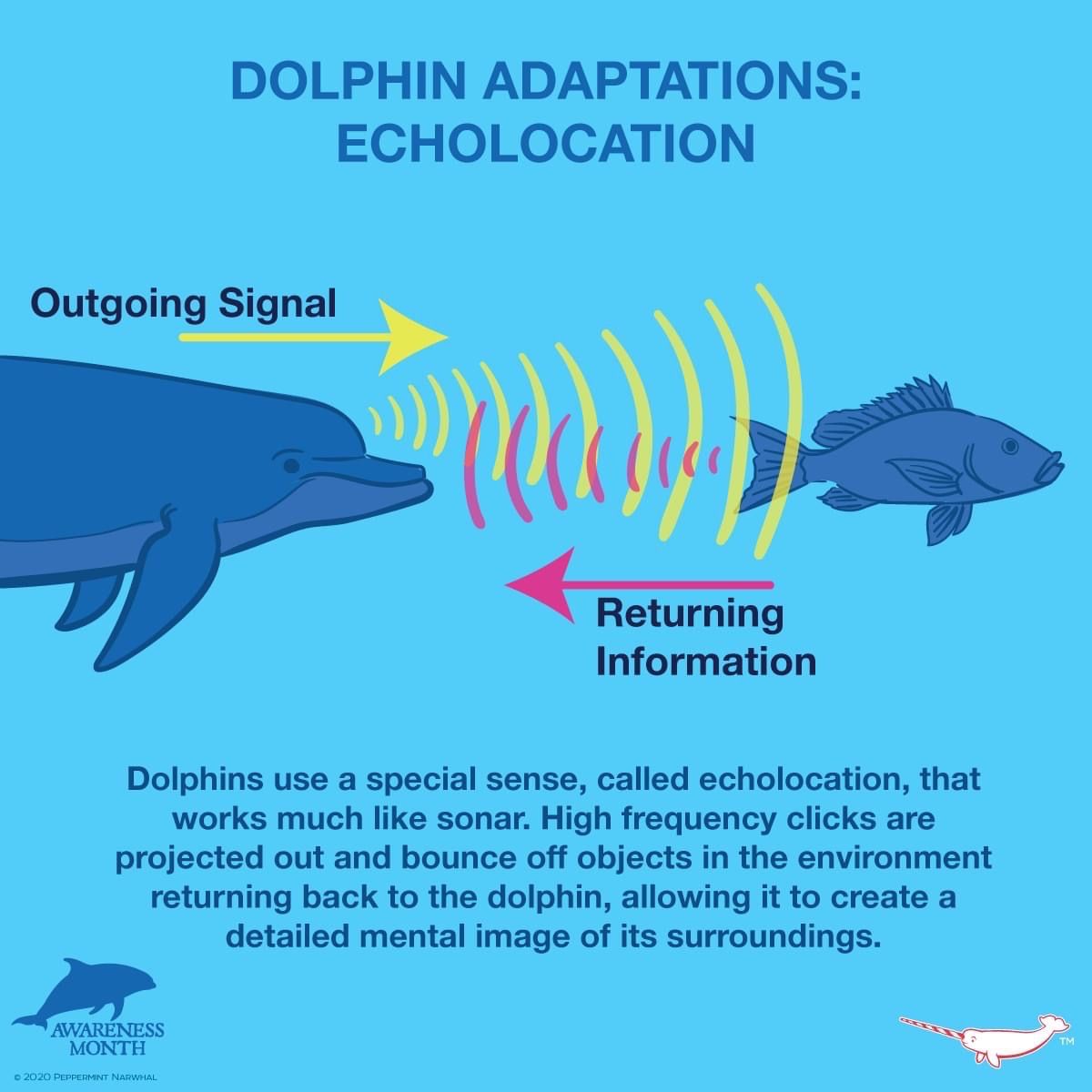
- Echolocation clicks
- Body language signals
- Tail slaps and other sound production
Imitation:
- Copy specific behaviors
- Learn from conspecifics
- Imitate humans
- Experimental imitation tasks
Theory of mind:
- Understand others have different knowledge
- React to what others know vs don't know
- Strategic information sharing
- Predictive modeling of others
Creativity:
- Invent new behaviors
- Modify existing actions
- Problem-solve creatively
- Innovative hunting techniques
Hunting and Feeding
Bottlenose dolphins are versatile hunters.
Diet:
- Fish: primary food (mullet, mackerel, herring, sardines)
- Squid: secondary prey
- Crustaceans: shrimp, crabs occasionally
- Other: opportunistic feeders
Hunting techniques:
Strand feeding:
- Drive fish onto shallow beaches
- Partial stranding to catch prey
- Requires precise coordination
- Regional cultural variation
Fish whacking:
- Strike fish with tail
- Stun or kill prey
- Catch stunned fish
- Skilled individual technique
Sponge foraging:
- Carry sponges on snout
- Protection during bottom foraging
- Shields face from rocks
- Cultural transmission in specific populations
Cooperative hunting:
- Multiple dolphins coordinate
- Surround fish schools
- Herd prey into circles
- Take turns attacking
Bubble nets:
- Blow bubble curtains
- Trap fish within
- Systematic feeding
- Similar to humpback whales
Sharing:
- Multiple dolphins hunt together
- Share captured prey
- Coordinate for benefit
- Demonstrates complex social cooperation
Social Structure
Bottlenose dolphin society is complex.
Group types:
Male alliances:
- 2-3 males form long-term partnerships
- Cooperate for mating access
- Defend females together
- Can last decades
Female groups:
- Less rigid structure
- Some long-term friendships
- Calf-rearing cooperation
- Fluid membership
Mother-calf pairs:
- Strong bonds during calf years
- Social learning emphasis
- Protection and teaching
- Gradual independence
Mixed groups:
- Variable membership
- Temporary aggregations
- Social and hunting purposes
- Various configurations
Friendships:
- Dolphins form close relationships
- Preferred companionship
- Can last for years or decades
- Differential grief at losses
Rank and status:
- Hierarchical elements
- Dominance relationships
- Not strict linear dominance
- Multiple dimensions of social status
Where They Live
Bottlenose dolphins inhabit warm coastal waters worldwide.
Distribution:
- North America: East Coast, Gulf of Mexico, California
- Europe: Mediterranean, Black Sea, Atlantic coasts
- Africa: East and West coasts
- Asia: Southeast Asian waters, Arabian Sea
- Oceania: Australia, Pacific islands
- Americas: Caribbean, Brazilian coasts
Temperature preference:
- 10-32°C
- Temperate and tropical
- Adaptable to seasonal variation
- Some cold-water populations
Habitats:
Coastal:
- Bays and harbors
- Shallow coastal waters
- Estuaries
- Inshore zones
Offshore:
- Open ocean populations
- Deeper waters
- Different behaviors
- Separate subpopulations
Resident vs migratory:
- Some populations stay year-round
- Others migrate seasonally
- Mix of both patterns
- Site fidelity strong
Reproduction
Bottlenose breeding involves complex behaviors.
Sexual maturity:
- Females: 5-12 years
- Males: 10-15 years
- Late compared to small mammals
Breeding:
- Gestation: 12 months
- Calf size at birth: 1 meter
- Birth weight: 20-30 kg
- Nursing period: 3-6 years
Calves:
- Born in shallow protected areas
- Stay with mother for years
- Gradually learn complex behaviors
- Develop signature whistles
- Culturally educated
Mother-calf bond:
- Strong continuous bond
- Extensive maternal care
- Teaching of hunting and social skills
- Gradual independence
Male roles:
- Don't provide direct care
- May form alliances for mating access
- Compete through displays
- Minimal involvement with offspring
Lifespan
Bottlenose dolphins live remarkably long lives.
Typical lifespan:
- Wild: 40-50 years
- Captive: 20-25 years (shorter)
- Oldest verified: 67 years
Individual tracking:
Through photo-identification:
- Decades of observation
- Multiple generations documented
- Lifetime patterns revealed
- Social networks mapped
Why shorter in captivity:
- Reduced space
- Social isolation
- Stress of performances
- Chlorinated water
- Limited diving depth
- Altered social structures
Threats
Bottlenose dolphins face multiple pressures.
Conservation status:
- Common bottlenose: Least Concern globally
- Specific populations: some threatened
- Overall trend: generally stable
- Regional declines: significant in some areas
Major threats:
Bycatch:
- Fishing net entanglement
- Gillnet drownings
- Commercial fishing impact
- Can devastate local populations
Marine pollution:
- PCBs (persistent organic pollutants)
- Heavy metals accumulation
- Plastic pollution
- Chemical contamination
Habitat degradation:
- Coastal development
- Port construction
- Tourism pressure
- Water quality decline
Ship strikes:
- Particularly for coastal populations
- Propeller injuries
- Collision mortality
- Increasing with traffic
Climate change:
- Ocean warming
- Prey distribution changes
- Habitat shifts
- Disease patterns
Direct fisheries:
- Hunting in some regions
- Japan drive fisheries (reduced but continues)
- Peru tradition hunting
- Limited but impactful
Conservation
Various protection strategies exist.
Legal status:
- Marine Mammal Protection Act (US): protected
- Endangered Species Act: specific populations listed
- Bern Convention: European protection
- IUCN Red List: various subpopulation listings
Protected areas:
- Marine protected areas
- Specific dolphin reserves
- No-fishing zones
- Coastal protection
Research programs:
- Global photo-identification networks
- Population monitoring
- Behavioral studies
- Conservation genetics
Community engagement:
- Responsible whale watching
- Local conservation education
- Fishing gear modifications
- Protected habitat areas
Tourism and Captivity
Dolphin tourism is complex.
Wild dolphin watching:
Generally considered beneficial:
- Raises awareness
- Generates conservation funds
- Educates public
- Respects animals
Captivity issues:
Captive dolphins face:
- Shorter lifespans
- Smaller spaces than ocean
- Separation from natural family groups
- Chlorinated water
- Forced performance behaviors
- Cognitive/social stress
Growing opposition:
- Major captivity facilities closing
- Legal changes in some jurisdictions
- Public awareness shifting
- Ethical concerns widespread
Alternatives:
- Observation-only programs
- Wild dolphin research partnerships
- Virtual reality experiences
- Education without captivity
Cultural Significance
Dolphins hold special cultural positions.
Historical cultures:
- Ancient Greek: Apollo associated with dolphins
- Roman: dolphin coins and iconography
- Indigenous cultures: various spiritual connections
- Polynesian: cultural importance
Modern culture:
- Symbol of intelligence
- Environmental ambassadors
- Tourism icons
- Children's education subjects
Popular perception:
- Generally positive view
- Associated with friendliness
- Subject of fictional heroism
- Conservation cause mobilization
Why Bottlenose Dolphins Matter
Bottlenose dolphins represent multiple important aspects.
Biological:
- Extreme intelligence in non-primate
- Complex communication systems
- Mirror self-recognition
- Long-term social relationships
Scientific:
- Model species for cetacean intelligence
- Comparative cognition studies
- Communication research
- Social behavior investigations
Ecological:
- Top predators in coastal ecosystems
- Food web regulation
- Ocean health indicators
- Seasonal migration patterns
Cultural:
- Universal symbols of ocean life
- Inspirational species
- Tourism economic value
- Scientific ambassadorship
The Named Individuals
Every bottlenose dolphin swimming in the ocean today has a name, a signature whistle unique to that individual, maintained throughout its life, recognized by all dolphins who know it.
Each dolphin is identifiable. Each has specific preferences, friendships, skills, and memories. Each participates in complex social networks that may extend across decades and multiple generations.
They are not abstract representatives of their species. They are individuals. They have personalities. They maintain relationships with specific others.
This reality changes how we think about cetacean intelligence and consciousness. A dolphin is not just an intelligent animal; it is a specific individual with a personal identity, social life, and cognitive continuity across years.
When bottlenose dolphins communicate, they address specific others by name. When they hunt, they coordinate with specific partners they know. When they socialize, they choose preferred companions. When they teach their young, they transmit both general techniques and specific cultural traditions.
Every encounter with a bottlenose dolphin in the wild is an encounter with a specific individual, one whose name could be learned, whose relationships could be mapped, whose history could be documented. They are not just animals behaving instinctively; they are individuals living socially-rich lives in ocean environments we're only beginning to understand.
Dolphin Intelligence Compared to Other Mammals
Bottlenose dolphins (Tursiops truncatus) display cognitive abilities that place them among the most intelligent non-human animals. Their brain-to-body ratio, measured as the encephalization quotient (EQ), approaches that of humans and exceeds that of most other mammals. Our research team compiled a comparison of EQ values across species.
| Species | Brain Mass (g) | Body Mass (kg) | EQ | Notable Cognitive Feature |
|---|---|---|---|---|
| Human | 1,350 | 70 | 7.4 | Language, abstract reasoning |
| Bottlenose dolphin | 1,500-1,700 | 200 | 4.1-4.5 | Self-recognition, signature names |
| Orca | 5,620 | 4,500 | 2.5 | Culture, cooperative hunting |
| Chimpanzee | 405 | 50 | 2.2-2.5 | Tool manufacture, politics |
| African elephant | 4,780 | 5,000 | 1.9 | Self-recognition, grief |
| Gorilla | 500 | 160 | 1.5 | Language comprehension |
| Domestic dog | 72 | 20 | 1.2 | Social learning, commands |
| Cat | 30 | 4 | 1.0 | Spatial memory |
| Rabbit | 10 | 2 | 0.4 | Instinctive behavior |
The bottlenose dolphin brain is anatomically unique, with extensively folded cerebral cortex producing a total cortical surface area greater than that of the human brain. Dolphin cortex, however, lacks the pronounced layering seen in primate cortex and instead shows a distinctive five-layer organization with extensive limbic connections.
Signature Whistles and Dolphin Names
A landmark 2013 study by Stephanie King and Vincent Janik at the University of St Andrews, published in Proceedings of the National Academy of Sciences, documented that bottlenose dolphins can address each other by name. The researchers played back recorded copies of a dolphin's signature whistle - its unique vocal identifier - and found that dolphins responded specifically to their own name but not to the names of strangers [1].
"The signature whistle functions exactly as a proper name functions in human language. Each dolphin invents its own whistle in early life, uses it consistently throughout its lifespan, and responds selectively when other dolphins broadcast the same signature. This is the clearest example of vocal name use in a non-human animal to date." - Dr. Vincent Janik, Scottish Oceans Institute, University of St Andrews [1]
Males within male alliances learn and use each other's signature whistles, potentially as a means of reinforcing social bonds across long-term cooperative relationships. Mothers, calves, and long-separated dolphins have been documented reuniting by broadcasting signature whistles across distances of up to 20 kilometers through coastal waters.
Tool Use and Cultural Transmission
The Shark Bay, Western Australia, population of bottlenose dolphins has been documented using marine sponges as tools to protect their rostrums while foraging on the sea floor. This behavior, called "sponging," is transmitted culturally from mother to calf and has been followed in the same matrilineal lineages for over 40 years. Recent genetic work has shown that sponging is a matrilineally inherited cultural trait, not a genetic adaptation.
"Sponging in Shark Bay dolphins is one of the clearest examples of non-human culture we have. The behavior is specific to a single population, passed from mother to daughter across generations, and confers a measurable foraging advantage. It is cultural evolution in a marine mammal, operating in parallel to the genetic evolution of the species." - Dr. Janet Mann, Georgetown University [2]
Mann's laboratory has maintained continuous longitudinal observations of the Shark Bay dolphin population since 1984, producing some of the most detailed behavioral records for any wild cetacean. Her work has demonstrated matrilineal cultural inheritance for sponging, specific shelling techniques, and differentiated foraging tactics across the same coastal habitat.
References
- King, S. L., & Janik, V. M. (2013). Bottlenose dolphins can use learned vocal labels to address each other. Proceedings of the National Academy of Sciences, 110(32), 13216-13221. DOI: 10.1073/pnas.1304459110
- Mann, J., Stanton, M. A., Patterson, E. M., et al. (2012). Social networks reveal cultural behaviour in tool-using dolphins. Nature Communications, 3, 980. DOI: 10.1038/ncomms1983
- Reiss, D., & Marino, L. (2001). Mirror self-recognition in the bottlenose dolphin: a case of cognitive convergence. Proceedings of the National Academy of Sciences, 98(10), 5937-5942. DOI: 10.1073/pnas.101086398
- Connor, R. C., Wells, R. S., Mann, J., & Read, A. J. (2000). The bottlenose dolphin: social relationships in a fission-fusion society. In Cetacean Societies: Field Studies of Dolphins and Whales, 91-126. University of Chicago Press. ISBN: 978-0226503400
Related Articles
- Orcas: Why Killer Whales Are the Ocean's Deadliest Predators
- Are Dolphins Smarter Than Humans?
- Dolphins Self-Awareness: Consciousness in the Sea
Frequently Asked Questions
How intelligent are bottlenose dolphins?
Bottlenose dolphins (Tursiops truncatus) are among the most intelligent animals on Earth, with cognitive abilities rivaling great apes in many respects. They pass mirror self-recognition tests, demonstrating self-awareness (a trait only shared with humans, great apes, elephants, magpies, and a few other species). They use signature whistles to identify specific individuals - essentially ‘names’ that dolphins call each other.
They solve novel problems, use tools, remember specific individuals for decades, and coordinate complex group behaviors. Their brain structure includes large and complex regions for social processing, communication, and emotional intelligence. Research has shown they understand numerical concepts, follow human pointing gestures, imitate specific behaviors, and demonstrate theory of mind (understanding others have different knowledge).
They have individual personalities, lasting friendships, and cultural traditions passed through generations. Their intelligence likely exceeds what traditional tests can measure, and researchers continue discovering new cognitive capabilities. Many scientists consider dolphins the second-most intelligent species on Earth after humans, though comparison methodologies vary.
Do dolphins really have names?
Yes, bottlenose dolphins use signature whistles that function essentially as names. Each dolphin develops a unique whistle pattern during its first few years of life, and this whistle identifies that specific dolphin throughout its life. Research has documented dolphins using another dolphin’s signature whistle to ‘call’ that specific individual - similar to calling someone by name.
This allows complex social interactions: dolphins can address specific individuals, not just make general calls. Signature whistles are learned (not genetically determined), developed through listening to adults and practicing. Young dolphins may spend years refining their signature before it becomes stable. Adults maintain their signature whistles throughout life, though specific contexts may produce variations.
When dolphins meet other dolphins they don’t know, they often exchange signature whistles - essentially introducing themselves. This naming system is unique among non-human animals. Research in Scotland has shown dolphins respond differently to their own signature whistle versus other whistles, similar to humans hearing their own name. This represents one of the most sophisticated communication systems in any non-human species.
Where do bottlenose dolphins live?
Bottlenose dolphins inhabit nearly all temperate and tropical oceans worldwide, making them one of the most widely distributed cetaceans. They live in coastal waters along coasts of North and South America, Europe, Africa, Asia, and Oceania. They can be found in both nearshore coastal environments and deeper ocean waters, with some populations showing preferences for specific habitat types.
Two species actually exist: common bottlenose dolphins (Tursiops truncatus) and Indo-Pacific bottlenose dolphins (Tursiops aduncus), though they are sometimes treated as subspecies. Their adaptability to various conditions has supported their wide distribution. They thrive in harbors, bays, open ocean, and can tolerate a wide range of temperatures (10-32°C). Some populations are resident (staying in specific areas), while others are migratory.
Well-known populations exist around Hawaii, Florida, the Mediterranean, Australia, New Zealand, and many other coastal regions. Their ability to live near humans has made them particularly familiar - many cities have resident dolphin populations visible to residents. Their broad distribution and adaptability have generally supported stable populations.
What do bottlenose dolphins eat?
Bottlenose dolphins eat primarily fish, squid, and crustaceans, with diet varying significantly between populations and regions. They are versatile hunters using multiple techniques: strand feeding (chasing fish onto shallow beaches), fish whacking (striking fish with tails), sponge hunting (using sponges as snout protection while foraging rocky bottoms), and cooperative hunting (multiple dolphins working together).
Different populations have developed specific techniques passed through generations - one of the clearest examples of animal culture. Favorite prey species include mullet, mackerel, herring, sardines, and various bottom fish. They consume 4-6% of their body weight daily - about 6-10 kg for adults. They hunt both individually and in groups, with larger groups sometimes coordinating to trap fish schools.
Research has documented specific dolphin groups using entirely different hunting methods than neighboring groups - demonstrating cultural variation. Their intelligence allows them to learn and invent new hunting techniques based on local conditions. Some populations have adapted to human activities, learning to follow fishing boats for bycatch.
How long do bottlenose dolphins live?
Bottlenose dolphins can live 40-50 years in the wild, with some individuals reaching 60+ years. Captive dolphins typically live shorter lives (20-25 years) due to the stresses of captivity. The oldest verified wild dolphin was 67 years old when identified through photo-identification records. Their lifespan is relatively long compared to other dolphins and reflects their social, intelligent lifestyles. Sexual maturity occurs at 5-13 years.
Females breed every 3-6 years, producing one calf at a time with 12-month gestation. Calves stay with mothers for 3-6 years - a longer dependency period than most mammals of similar size. This extended maternal care allows complex learning and cultural transmission. Individual dolphins recognized through photo-ID have been tracked for decades, providing valuable data on their lives.
Some documented individuals have been observed with multiple generations of offspring. Their long lives support the development of complex social relationships and knowledge accumulation that shorter-lived species cannot achieve. Conservation and research benefit from their long lives because individual whales can be studied across decades.