
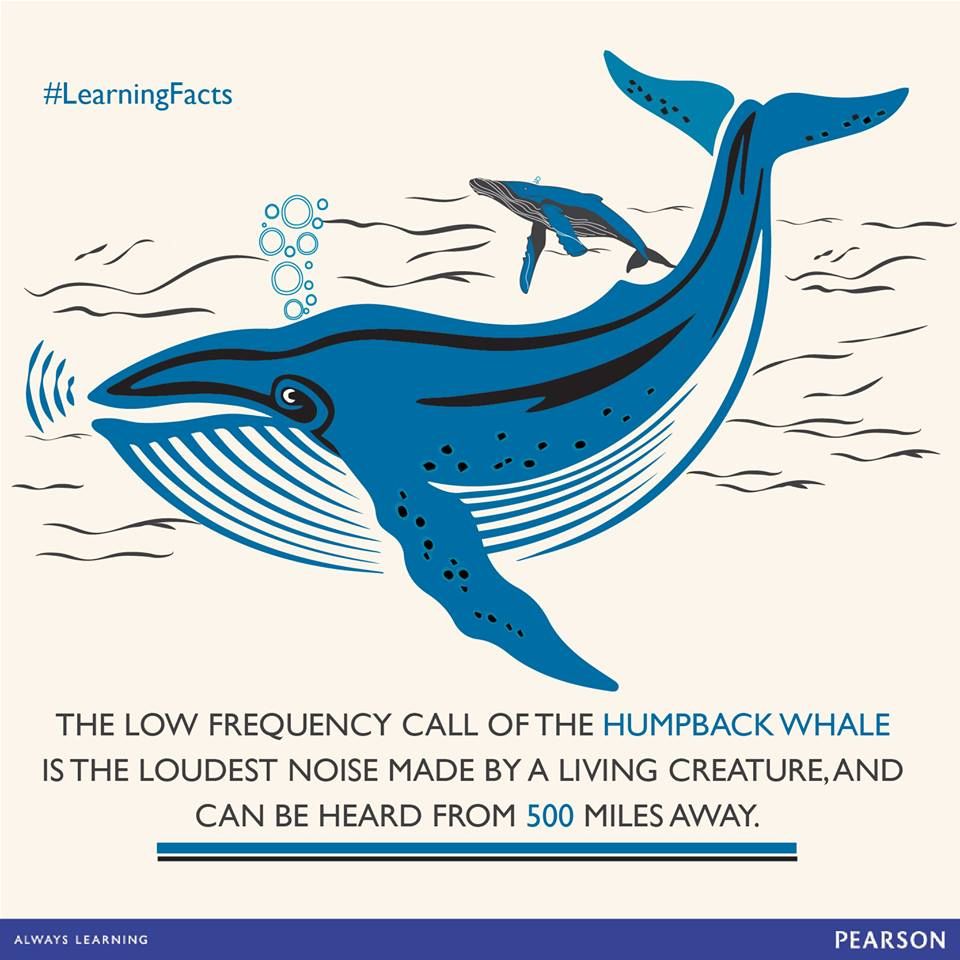
Why do humpback whales sing?
Male humpback whales (Megaptera novaeangliae) sing complex songs primarily as mating displays to attract females and establish breeding territories. Songs are species-specific and vary by population - whales in the same ocean share similar songs while different ocean populations have distinct repertoires. Songs can last 10-20 minutes and repeat for hours, sometimes days.
The Whales That Change Their Songs Every Year
Every winter in Hawaiian waters, male humpback whales sing. They sing long, complex songs, sequences of moans, cries, and tones that last 10-20 minutes before repeating. Hours of singing. Days of singing. The sound carries for hundreds of kilometers through the ocean.
What's remarkable is that the songs change. Within each breeding season, all male humpbacks in the region gradually modify their songs, incorporating new elements and abandoning old ones. By next year, the song is different. The year after, different again.
This is cultural evolution happening in real time, one of the fastest-evolving communication systems in any non-human species.
The Animal
Humpback whales are distinctive baleen whales.
Physical features:
- Length: 12-16 meters typical; 18.2m record
- Weight: 25-40 tons
- Pectoral fins: 4-5 meters long (1/3 body length)
- Head bumps: distinctive tubercles covering head
- Color: dark on top, white underneath
- Tail markings: unique to each individual (used for ID)
The name:
"Humpback" refers to:
- The hump in front of the dorsal fin
- Humped appearance when arching to dive
- Distinctive diving silhouette
Their scientific name (Megaptera novaeangliae) means "big wing of New England" referring to their large pectoral fins and the area where they were first documented by Western scientists.
The Songs
Humpback whale songs are complex vocalizations.
Structure:
Songs have hierarchical organization:
- Notes: individual sounds (lowest level)
- Sub-phrases: combinations of notes
- Phrases: groups of sub-phrases
- Themes: groups of phrases
- Songs: sequences of themes
- Song sessions: continuous singing
Duration:
- Individual songs: 10-20 minutes typically
- Song sessions: hours to days
- Total singing: up to 22 hours continuous
Who sings:
- Primarily males: during breeding season
- Females: rarely sing
- Young whales: may practice simpler versions
Range:
Songs travel enormous distances:
- Audible range: up to 30 km (clear water)
- Detection range: much greater (whales can detect at kilometers)
- Long-distance: possibly 160+ km in ideal conditions
Cultural Evolution
Humpback songs change in remarkable ways.
Within-season change:
During each breeding season:
- All males slowly modify their songs
- New elements incorporated gradually
- Old elements abandoned
- Changes are directional and coordinated
- By season's end, songs noticeably different
Between-season changes:
Year-to-year:
- Song evolves significantly
- Population-wide shifts occur
- New themes emerge
- Old themes fade
- Sometimes complete song revolutions
Song revolutions:
Occasionally, new song types spread:
- Starting from "innovator" whales
- Spreading through populations
- Eventually dominating region
- Sometimes crossing ocean basins
Geographic variations:
Different populations have distinct songs:
- Atlantic populations: unique regional songs
- Pacific populations: different variants
- Indian Ocean: another regional style
- Mediterranean: historical songs
Cross-population transmission:
Sometimes songs spread between populations:
- Pacific song originated in Australia, spread to New Caledonia, Tonga, French Polynesia, Cook Islands over years
- Represents cultural transmission between populations
- Likely through young whales meeting
- Demonstrates rapid cultural spread
Why They Sing
Multiple theories explain humpback singing.
Mating display:
- Most supported theory
- Males sing during breeding season
- Females may choose mates based on song
- Song quality indicates male fitness
Territorial signaling:
- Males announce presence to rivals
- Avoid physical confrontations
- Establish pecking order
- Claim breeding areas
Male-male communication:
- Coordinate with nearby males
- Share information
- Possibly negotiate breeding opportunities
- Establish relationships
Cultural identity:
- Song defines population
- Signals group membership
- May be similar to human accent
- Cultural signal beyond reproduction
Combined purposes:
Likely multiple functions simultaneously:
- Display, territory, communication, identity
- Different elements serve different purposes
- Complex communication system
Breaching and Acrobatics
Humpbacks are famously acrobatic.
The breach:
- Entire body launched above water
- Can reach 9+ meters above surface
- Full 180-degree turns possible
- Massive splash on re-entry
- Happens in series of 20-30
Why breach:
Communication:
- Sound carries far underwater
- Visible from distance
- Coordinates with other whales
- Signals emotion or intent
Feeding:
- Stun fish schools
- Confuse prey
- Corral fish with bubble nets
Parasite removal:
- Dislodge barnacles
- Remove lice
- Skin maintenance
Social:
- Mating displays
- Mother-calf interaction
- Play behavior (especially young)
- Group coordination
Play:
Some breaching appears purely recreational:
- Young whales practice skills
- Social interaction
- Energy dispersal
- Possible enjoyment
Other acrobatics:
- Pec slaps: hitting water with pectoral fins
- Tail slaps: hitting water with tail flukes
- Spyhopping: vertical rise to observe surface
- Lobtailing: tail hitting water repeatedly
- Fluke displays: showing tail during dive
Feeding
Humpbacks are specialized filter feeders.
Diet:
- Krill: primary food source
- Small fish: herring, mackerel, sand lance, capelin
- Some squid: secondary
Feeding techniques:
Bubble net feeding:
The most famous technique:
- Whales swim in circles around fish school
- Release bubbles continuously
- Bubbles form rising net
- Fish trapped in bubble ring
- Whales surge through net with mouths open
- Swallow massive amounts of fish
Lunge feeding:
- Simple version of bubble net
- Direct attack on prey
- Mouth opens wide
- Surge through prey concentration
Group coordination:
Multiple whales may cooperate:
- Synchronized bubble nets
- Coordinated lunges
- Prey herding
- Team hunting
Daily consumption:
During feeding season:
- 1.5 tons of food per day
- Maximum summer feeding
- Essentially no feeding during migration
- Rely on stored fat during breeding
Fasting:
Humpbacks essentially don't eat:
- During long migrations
- In tropical breeding grounds
- During mating and calving
- Live on summer fat reserves
Migration
Humpbacks make among the longest mammal migrations.
Distance:
- Annual round trip: up to 16,000 km
- One way: up to 8,000 km
- Individual variations: significant
Timing:
- Winter: tropical breeding grounds
- Spring: migration begins
- Summer: polar feeding grounds
- Fall: return migration
Atlantic migration:
- Feeding: Gulf of Maine, Iceland, Norway, Scotland
- Breeding: Dominican Republic, Puerto Rico, Cape Verde
- Distance: up to 7,000 km each way
Pacific migration:
- Feeding: Alaska, Siberia, British Columbia
- Breeding: Hawaii, Mexico, Central America, Australia
- Distance: up to 8,000 km each way
Southern Hemisphere:
- Feeding: Antarctic waters
- Breeding: Colombia, Ecuador, Australia, Madagascar, Mozambique
- Distance: comparable to Northern populations
Fidelity:
Individual whales return to:
- Same feeding areas year after year
- Same breeding grounds
- Same migration routes
- Family-based migration patterns
Individual Identification
Each humpback has unique markings.
Tail flukes:
- Black and white pattern
- Unique to each individual
- Researchers photo-identify thousands of individuals
- Used to track populations globally
Pectoral fins:
- White underside patterns
- Individual variation
- Secondary identification feature
Dorsal fins:
- Shape and scars
- Tertiary identification
Global catalog:
International photo-identification catalogs include:
- Thousands of individual whales documented
- Allows long-term tracking
- Reveals migration patterns
- Provides conservation data
Conservation
Humpback populations have recovered dramatically.
Pre-whaling:
- Estimated 125,000+ individuals globally
- Well-established populations in all oceans
- Regular distributions and migrations
Whaling era impact:
- Intensive hunting 1800s-1960s
- Populations reduced 90-95%
- Some populations nearly extinct
- Below 10,000 individuals globally at peak hunting
Protection:
- 1966: International Whaling Commission banned commercial whaling of humpbacks
- Recovery began gradually
- Some populations recovered quickly, others slowly
Current status:
- IUCN: Least Concern (most populations)
- Global population: approximately 80,000
- Some populations: significantly recovered
- Others: still well below historical levels
Ongoing threats:
- Ship strikes
- Fishing net entanglement
- Noise pollution
- Pollution (PCBs, oil spills)
- Climate change
- Coastal development
Conservation efforts:
- Protected areas
- Shipping lane adjustments
- Fishing gear modifications
- Research monitoring
- Sustainable whale watching tourism
Whale Watching
Humpbacks support major tourism industries.
Popular destinations:
- Hawaii: winter (breeding)
- Alaska: summer (feeding)
- Iceland: summer migrations
- New England: summer feeding
- Dominican Republic: winter breeding
- Australia: east coast migration
- South Africa: seasonal populations
Tourism value:
- Billions USD globally
- Supports coastal economies
- Provides conservation funding
- Educates public
Responsible tourism:
- Approach distance regulations
- Engine speed limits
- Maximum boat numbers
- No swimming in most areas
- Sustainable practices
Scientific Research
Humpbacks are among the most-studied whales.
Research topics:
Acoustic communication:
- Song analysis
- Cultural transmission
- Long-distance communication
- Individual signatures
Migration ecology:
- Satellite tracking
- Route analysis
- Timing and triggers
- Climate change impacts
Population dynamics:
- Size estimates
- Reproductive rates
- Survival analysis
- Recovery tracking
Cognition and behavior:
- Intelligence measures
- Social learning
- Problem solving
- Mother-calf behavior
Evolutionary biology:
- Genetic studies
- Population structure
- Ancestral lineages
- Speciation research
Reproduction
Humpback breeding involves complex behaviors.
Sexual maturity:
- Females: 8-10 years
- Males: 7-15 years
Breeding grounds:
- Specific tropical locations
- Warm waters (22-25°C)
- Calm shallow bays
- Away from feeding areas
Courtship:
- Males compete physically
- "Heat runs" where multiple males pursue females
- Contests of strength and speed
- Song displays
Gestation:
- 11-12 months
- Single calf born
- Timing ensures calves born in warm waters
Calves:
- Born 4-5 meters long
- 1-1.5 tons
- Nursed for 10-12 months
- Stay close to mother
- Migrate with mother
Lifetime reproduction:
- Females breed every 2-3 years
- Produce 6-10 calves lifetime
- Males mate with multiple females
- Competitive breeding behavior
Lifespan
Humpbacks live long lives.
Typical lifespan:
- Wild: 80-90 years
- Some individuals: 100+ years documented
- Longest verified: 114 years (through ear bone analysis)
Aging methods:
- Ear bone wax plug analysis
- Hormone cycles show age
- Photo-identification records
- Size and behavior patterns
Why Humpbacks Matter
Humpback whales represent multiple significant roles.
Ecological:
- Important ocean ecosystem players
- Nutrient cycling (whale pump)
- Prey species population control
- Climate regulation contributors
Scientific:
- Studies of cetacean biology
- Evolution of communication
- Migration ecology research
- Cultural transmission studies
Cultural:
- Indigenous cultures featuring whales
- Modern conservation symbols
- Tourism icon
- Research flagship species
Conservation:
- Recovery success story
- Proof that protection works
- Continuing challenges
- International cooperation model
The Ocean's Musicians
Every humpback singing in tropical waters is participating in one of nature's most remarkable communication systems.
Their songs aren't random. They follow complex hierarchical structures. They evolve culturally within and between seasons. They spread across entire ocean basins. They represent communication sophistication that continues to surprise researchers.
This cultural evolution happens without writing, without fixed memory, without cultural institutions. It persists through social learning and oral transmission. It demonstrates that culture, in a broad sense, exists in animals beyond humans.
Humpback songs have been recorded and studied for decades. The patterns continue evolving. New research methods reveal previously unknown complexity. What we know about their communication keeps expanding.
For now, every winter in warm tropical waters, male humpbacks continue singing. They sing the songs of their ancestors, modified through their own contributions and those of rival males. They sing to attract mates, establish presence, and participate in whatever other purposes their songs serve. The songs echo across kilometers of ocean.
Their songs will continue evolving. Populations will continue recovering. Whales will continue migrating across vast ocean distances. And the ocean will continue being a place where millions of tons of cetacean biology does things we're still trying to understand.
Population Structure and Global Recovery
The humpback whale (Megaptera novaeangliae) exists in 14 distinct genetic populations worldwide, each with independent migration routes between polar feeding grounds and tropical breeding areas. Our research team compiled the regional population estimates based on the most recent comprehensive assessments.
| Population | Feeding Ground | Breeding Ground | Current Estimate | Pre-Whaling Estimate |
|---|---|---|---|---|
| North Atlantic | Gulf of Maine, Norway | West Indies, Cape Verde | 12,000 | 150,000 |
| North Pacific | Alaska, Russia | Hawaii, Mexico, Japan | 21,000 | 22,000 |
| Southern Hemisphere (A) | Antarctic Peninsula | Brazil | 7,500 | 25,000 |
| Southern Hemisphere (B) | South Shetland | Gabon, Congo | 6,800 | 55,000 |
| Southern Hemisphere (C) | Crozet Islands | Madagascar | 7,000 | 40,000 |
| Southern Hemisphere (D) | Kerguelen Plateau | Western Australia | 35,000 | 30,000 |
| Southern Hemisphere (E) | Ross Sea | Eastern Australia | 28,000 | 27,000 |
| Southern Hemisphere (F) | New Zealand sector | Oceania | 7,000 | 18,000 |
| Arabian Sea | Nonmigratory, resident | Gulf of Oman | 82 | Unknown |
The Arabian Sea population is the only known non-migratory humpback population and is listed as Endangered by the IUCN. The population is genetically isolated and has been separated from other humpback populations for approximately 70,000 years based on mitochondrial DNA analyses.
The Cultural Transmission of Song
A 2011 landmark study by Ellen Garland and colleagues at the University of Queensland, published in Current Biology, tracked humpback whale song changes across the South Pacific from 1998 to 2008. The researchers documented that songs originating in eastern Australia propagated eastward across the South Pacific at a rate of approximately 6,000 kilometers per breeding season [1].
"Humpback whale song represents one of the clearest examples of rapid cultural transmission in the animal kingdom. A new song pattern arising in Australian waters will replace the traditional song across the entire eastern Pacific within a few years, as males encounter each other during migration and adopt the new version wholesale. The process is directly analogous to human cultural innovation spreading through social contact networks." - Dr. Ellen Garland, School of Biology, University of St Andrews [1]
The 2011 study established humpback song as one of the few documented cases of cross-cultural horizontal transmission in non-human animals, with new songs spreading across geographically separated populations through individual contact at migration boundary zones.
Bubble-Net Feeding as Cooperative Culture
Humpback whales in the North Pacific have developed bubble-net feeding, a cooperative foraging technique in which groups of 4 to 20 whales coordinate to concentrate fish schools. One whale releases a spiral of bubbles from beneath the school while others vocalize to herd fish upward, after which the whales all lunge through the concentrated fish ball from below simultaneously.
"Bubble-net feeding is cultural behavior. Individual whales learn specific roles within their group - one whale produces the bubble net, another acts as the vocal herder, others form the lunge-feeding line. These roles are passed through the population by social learning, and specific feeding groups in Southeast Alaska have maintained stable coordinated routines for over 30 years." - Dr. Fred Sharpe, Alaska Whale Foundation [2]
Not all humpback populations practice bubble-net feeding. The behavior is concentrated in specific North Pacific groups, with some Southern Hemisphere populations showing related but distinct techniques such as trap-feeding documented off Canada's British Columbia coast starting in 2011.
References
- Garland, E. C., Goldizen, A. W., Rekdahl, M. L., et al. (2011). Dynamic horizontal cultural transmission of humpback whale song at the ocean basin scale. Current Biology, 21(8), 687-691. DOI: 10.1016/j.cub.2011.03.019
- Sharpe, F. A., Dill, L. M., Rueggeberg, H., & Perrine, D. (1995). Bubble-net feeding by humpback whales in Southeast Alaska. Canadian Journal of Zoology, 73(1), 1-9. DOI: 10.1139/z95-001
- Payne, R., & McVay, S. (1971). Songs of humpback whales. Science, 173(3997), 585-597. DOI: 10.1126/science.173.3997.585
- Stevick, P. T., Neves, M. C., Johansen, F., et al. (2011). A quarter of a world away: female humpback whale moves 10,000 km between breeding areas. Biology Letters, 7(2), 299-302. DOI: 10.1098/rsbl.2010.0717
Related Articles
- Blue Whale: The Largest Animal That Ever Lived
- Sperm Whale: The Deepest Diving Mammal
- Orcas: Why Killer Whales Are the Ocean's Deadliest Predators
Frequently Asked Questions
Why do humpback whales sing?
Male humpback whales (Megaptera novaeangliae) sing complex songs primarily as mating displays to attract females and establish breeding territories. Songs are species-specific and vary by population - whales in the same ocean share similar songs while different ocean populations have distinct repertoires. Songs can last 10-20 minutes and repeat for hours, sometimes days. Each song consists of themes, phrases, and notes arranged in specific patterns.
Remarkably, humpback songs evolve gradually during breeding seasons - all males in a region slowly incorporate new elements while abandoning old ones. By next breeding season, the song has changed significantly. This cultural evolution occurs relatively rapidly compared to other animal communication. Females don’t typically sing but may produce other vocalizations.
Outside breeding grounds, whales produce different sounds including social calls and feeding-related noises. Their songs can travel thousands of kilometers through ocean water, reaching distant whales. The evolutionary advantage of singing likely combines: advertising male fitness, coordinating with other males, and attracting females across vast distances where visual signals fail.
How do humpback whale songs change over time?
Humpback songs change continuously and uniformly across populations in a remarkable pattern of cultural evolution. Within a breeding season, all males in a region slowly incorporate new themes and abandon old elements. By the following breeding season, songs have evolved significantly - essentially the population has ‘agreed’ on a new version.
The changes aren’t random but show directional patterns, with new elements typically spreading from specific ‘innovator’ whales. Most remarkable: song variations sometimes spread across entire oceans over years. A song originating in one region gradually replaces songs in adjacent populations, creating song ‘revolutions.’ These changes occur faster than most animal cultural transmission.
Different populations (Atlantic, Pacific, Indian Ocean) have distinct songs but can influence each other. Research has tracked specific song variations spreading between breeding areas across multiple migration cycles. Songs aren’t just inherited - they’re culturally transmitted through social learning. This represents one of the fastest-evolving non-human communication systems ever documented.
How big are humpback whales?
Adult humpback whales reach 12-16 meters (40-53 feet) in length and weigh 25-40 tons. The largest verified humpback was 18.2 meters long. Females are typically larger than males, a common pattern in baleen whales. They have distinctive long pectoral fins (about 1⁄3 body length - hence the name ‘long-armed whale’ in some languages), knobby heads with bumps (tubercles), and tall dorsal fins. Their bodies are dark on top with white undersides.
Tail flukes have distinctive black and white markings used to identify individual whales. They have barrel-shaped bodies and throat pleats that expand during feeding. Despite their massive size, they’re remarkably acrobatic - capable of full body breaches, complex turns, and spectacular aerial displays. They can live 80-90 years. Their size is impressive but not record-breaking - blue whales are substantially larger.
However, their spectacular behaviors make humpbacks perhaps the most famous and studied whale species. Their global population was devastated by whaling but has recovered significantly since protection began in the 1960s.
Why do humpback whales breach?
Humpback whales breach (leap completely out of the water) for multiple reasons. They may breach to communicate with other whales - the impact can be heard underwater across kilometers. They may breach during feeding to stun prey or corral schooling fish. They may breach for parasite removal, dislodging barnacles and other organisms from their skin. They may breach during social interactions between whales.
Some breaching appears to serve as play behavior, particularly in young whales. Their breaches are spectacular - they can launch their entire 40-ton body 9+ meters above water, perform complete 180-degree turns, and land with thunderous impact. They can breach continuously for hours, performing 20-30 consecutive breaches.
A single breach uses massive energy, so continuous breaching demonstrates good physical condition and potentially serves as fitness displays. Young whales may practice breaching as they learn to be adult humpbacks. Pregnant females often breach extensively. The behavior is particularly common during mating displays in breeding grounds. Researchers continue studying the specific triggers for different breach types.
Where do humpback whales migrate?
Humpback whales undertake the longest migrations of any mammal, traveling up to 8,000 km each way between feeding and breeding grounds. They feed in cold polar and temperate waters (summer), then migrate to warm tropical waters for breeding (winter). Atlantic populations move between high-latitude feeding areas (Gulf of Maine, Iceland, Norway) and tropical breeding grounds (Dominican Republic, Puerto Rico, Cape Verde).
Pacific populations migrate from Alaska and Siberia to Hawaii, Mexico, and Central American waters. Antarctic populations move to South American and African tropical waters. Each individual shows strong fidelity to specific feeding and breeding areas - returning year after year to the same locations. The round-trip migration can exceed 16,000 km annually.
They rarely feed during migration or in breeding grounds, instead relying on fat reserves from intense summer feeding. Climate change is altering migration timing - many populations now arrive earlier at feeding grounds and stay longer. Some populations are beginning to skip migrations entirely, remaining in feeding areas year-round when food is abundant.