
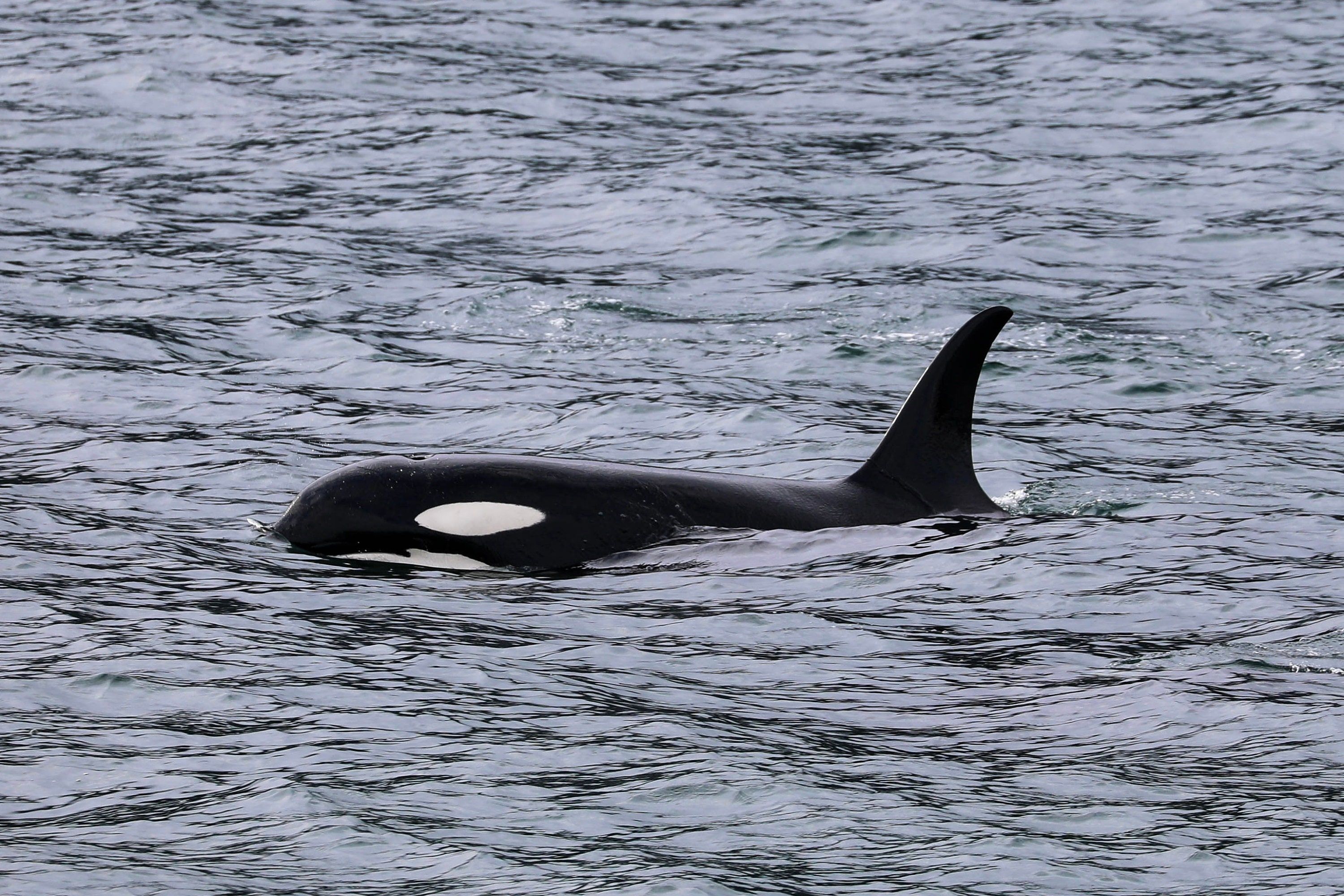
Are orcas the ocean's top predator?
Yes, orcas (Orcinus orca) are the ocean's apex predators. They sit at the top of every marine food chain they encounter and have no natural predators themselves. Adult orcas eat almost anything including great white sharks, other whales, dolphins, seals, sea lions, penguins, fish, octopuses, and squid.
The Predator That Hunts Everything
A pod of orcas encounters a great white shark off the coast of South Africa. Within minutes, the shark is dead, flipped upside down, paralyzed by tonic immobility, drowned in the water column. The orcas extract the shark's liver with surgical precision, eat only that organ, and leave the rest of the body to sink.
Minutes or hours later, the same pod might kill a seal by coordinated wave-wash from a glacier, or hunt herring by synchronizing bubble curtains. The diversity of orca hunting techniques, and the cultural specialization between different pods, makes them the ocean's most sophisticated predator.
They are not the largest animals in the ocean. But they are at the top of every food chain. Nothing hunts them. They hunt everything else.
The Animal
Orcas (Orcinus orca) are the largest members of the dolphin family, not true whales.
Statistics:
- Length: males up to 9.8 m, females up to 8.5 m
- Weight: males up to 11,000 kg, females up to 7,500 kg
- Lifespan: females 50-90+ years, males 29-60 years
- Diet: varies dramatically by population (fish, mammals, or mixed)
- Speed: up to 56 km/h in bursts
Distribution:
Orcas live in every ocean on Earth, from tropical waters to Arctic and Antarctic ice. They are among the most widely distributed mammals of any kind.
Cultural Speciation
Different orca populations have dramatically different cultures, diets, and behaviors.
Main ecotypes:
Resident (fish-eating) orcas. Feed primarily on salmon. Found in Pacific Northwest, Iceland, Norway. Large pods (20-40 individuals). Complex vocal dialects.
Transient (mammal-eating) orcas. Hunt seals, sea lions, whales. Smaller pods (2-10). Quieter acoustic behavior to avoid alerting prey.
Offshore orcas. Less well-studied. Feed primarily on sharks and other fish. Different physical appearance.
Antarctic Type A. Hunt minke whales specifically. Antarctic Type B. Hunt seals, often using coordinated wave-washing. Antarctic Type C. Feed almost exclusively on Antarctic toothfish. Antarctic Type D. Recently described deep-water ecotype.
The remarkable implication:
Different ecotypes overlap geographically but never interbreed. Fish-eating and mammal-eating orcas in the same waters treat each other as different species. Despite being genetically capable of interbreeding, cultural differences prevent it.
This is cultural speciation, behavioral differences driving reproductive isolation, a phenomenon rare outside humans.
Hunting Intelligence
Orcas demonstrate coordinated hunting strategies that rival any predator on Earth.
Wave washing:
Antarctic Type B orcas hunt seals resting on ice floes. Multiple orcas swim in coordinated formation toward the floe, generating a wave that washes the seal off. Once in the water, the seal is easy prey.
This requires planning, coordination, and practice. Young orcas learn the technique over years of watching and participating.
Shark hunting:
Research in South Africa has documented orcas killing great white sharks:
- Approach the shark (often at speed)
- Flip the shark upside down
- Shark enters "tonic immobility" a trance-like paralysis
- Shark cannot swim, so water stops flowing over gills
- Shark drowns
- Orcas extract the liver with precision
The liver contains squalene, an energy-rich oil. Orcas take only the liver, leaving the rest.
Since 2015, great white shark populations have relocated from some South African coastal areas due to orca predation. This is the first documented case of orcas displacing great whites from established territories.
Beach stranding:
Some orca populations in Patagonia and the Crozet Islands hunt seals by deliberately beaching themselves. They slide up the beach, grab a seal, then push back into the water with their tails.
This is extraordinarily risky, a mistake could leave the orca stranded and dead. Young orcas practice in shallow water, often with adult supervision, before attempting real hunts.
Carousel feeding:
Resident orcas hunt schooling fish by working together to corral them into tight balls. Then orcas take turns stunning fish with tail slaps, eating the stunned ones.
Cooperative whale hunting:
Transient orcas can kill gray whales, humpback whales, and even blue whales through group attacks lasting hours or days. They drown the whale by preventing surfacing, eventually killing animals many times their own size.
Language and Dialect
Orca vocalizations form complex communication systems.
Call types:
- Echolocation clicks (for hunting and navigation)
- Whistles (general social communication)
- Pulsed calls (mostly close-range)
- Discrete calls (pod-specific signatures)
Dialects:
Different pods have different repertoires of "discrete calls." A pod might have 7-17 specific calls used only by its members. These dialects remain stable across decades.
Two neighboring pods in the Pacific Northwest might share 0% of their discrete calls despite encountering each other regularly. Cultural isolation at the vocal level.
Learning:
Calves learn their pod's dialect from mothers. Research has documented calves practicing calls for months before producing adult versions.
Individual signatures:
Beyond dialect, orcas have individual voice signatures. Researchers can identify specific orcas by voice alone, similar to recognizing human voices.
Mirror Self-Recognition
Orcas pass the mirror self-recognition test, a rare cognitive achievement.
The test:
A mark is placed on an animal's body where it can only be seen via mirror. If the animal uses the mirror to investigate the mark, it demonstrates understanding of self.
Species that pass:
- Humans (around 18 months)
- Great apes
- Asian elephants
- Bottlenose dolphins
- Orcas
- Eurasian magpies
- Cleaner wrasses (fish)
- Manta rays (tentatively)
- Mimic octopus (recently)
This is an exclusive cognitive club. Passing indicates self-awareness, understanding that the reflection is you, not another animal.
Pod Structure
Orca social organization is matriarchal and multigenerational.
The pod:
A pod consists of a grandmother/matriarch, her offspring, and her grandchildren. Males stay with their mothers their entire lives. Females may split off when they have their own offspring but often remain associated.
Menopause:
Orcas are one of only three known animals (along with humans and certain pilot whales) where females experience menopause, ending reproduction while continuing to live decades more. Post-reproductive females serve critical roles in pod leadership, knowledge transmission, and childcare.
Grandmother effect:
Orca pods with living grandmothers have higher calf survival. Grandmothers contribute knowledge about food locations, hunting techniques, and predator avoidance.
Male longevity:
Male orcas typically don't live as long as females. Many males die shortly after their mothers die, suggesting they depend heavily on maternal relationships for health and survival.
Grief and Emotion
Orcas display behaviors strongly consistent with grief.
Documented cases:
Tahlequah (2018): A female resident orca (J35) carried her dead newborn calf for 17 days over 1,600 kilometers. She surfaced repeatedly with the calf on her head, refusing to let it sink. Pod members often helped support the calf or watch over Tahlequah. Researchers called this "grief behavior."
Similar cases: Dozens of documented instances of orcas carrying dead calves, refusing to leave sick pod members, or showing distress at the death of pod members.
Collective mourning:
Pod members often gather around dying orcas. They remain still, sometimes supporting the dying individual at the surface. The behavior resembles vigil rituals in humans.
Salmon Hats
Orcas sometimes develop cultural trends.
The 1987 salmon hat trend:
A juvenile female orca in Puget Sound (named K13) started wearing a dead salmon on her head. Within weeks, her entire pod was wearing dead salmon "hats." The trend spread to neighboring pods.
It lasted about 6 weeks, then mysteriously stopped. Nobody knows why it started or stopped.
The 2024 revival:
In late 2024, researchers reported the salmon hat trend reappearing in Puget Sound orcas. Whether this is a cultural revival (orcas remembering their grandmothers' fashion) or independent re-invention is unclear.
Cultural transmission:
The salmon hat trend demonstrates cultural transmission of behaviors that serve no obvious survival purpose. It's fashion, or something analogous to fashion, in a non-human species.
Wild vs Captive Attacks
Wild orcas have never killed a human in recorded history. Captive orcas have killed several.
Wild encounters:
Thousands of documented close encounters between wild orcas and humans (swimmers, divers, sailors, indigenous hunters). Zero human fatalities.
Wild orcas apparently don't consider humans prey. We are not in their cultural food repertoire.
Captive attacks:
SeaWorld's Tilikum killed three people including trainer Dawn Brancheau in 2010. At least four total human deaths have been caused by captive orcas.
Why the difference:
Researchers attribute captive orca aggression to:
- Extreme spatial confinement (they swim less than 1% of normal daily range)
- Isolation from pod members
- Boredom and chronic stress
- Separation from mothers at young ages
- Psychological trauma
The documentary "Blackfish" (2013) drew public attention to these issues. SeaWorld has since ended captive orca breeding, though captive orcas remain at multiple facilities.
New Boat Attacks
Recently, orcas near Spain and Portugal have begun attacking boats.
The behavior:
Starting around 2020, a specific orca pod near the Strait of Gibraltar began targeting boat rudders. The orcas bite, push, or ram rudders, sometimes damaging boats severely.
Theories:
- Learned behavior spreading through the pod
- Revenge for a traumatized individual
- Playful behavior that got serious
- Response to environmental stressors
- Cultural innovation (as with salmon hats)
The behavior is spreading. Hundreds of boat encounters have been documented. No human has been seriously injured, but multiple boats have been damaged or sunk.
This is a live example of orca culture evolving in real time, and a reminder that these animals have minds we are still learning to understand.
Conservation Status
Orca populations vary in conservation status.
Global:
Data Deficient (IUCN), overall population unknown but estimated at 50,000 individuals globally.
Specific populations:
- Southern Resident orcas (Pacific Northwest): Endangered, fewer than 75 individuals
- Northern Resident orcas: stable at ~300
- Transient orcas (West Coast): population unknown but increasing
- Iceland orcas: declining due to herring overfishing
- Antarctic orcas: stable
Threats:
- PCBs and pollution: orcas accumulate high levels of persistent pollutants
- Prey depletion: salmon declines affect resident orcas severely
- Noise pollution: disrupts communication and echolocation
- Ship strikes: occasional fatalities
- Climate change: disrupts Arctic habitats and prey distribution
The Most Interesting Mind in the Ocean
Orcas combine features found in few other animals:
- Intelligence rivaling great apes
- Complex language with dialects
- Multigenerational social structure
- Menopause (extremely rare outside humans)
- Cultural traditions that persist and evolve
- Coordinated group hunting
- Self-awareness
- Grief behaviors
- Global distribution
- Apex predator status
They are the ocean's most sophisticated animals, and they have been here far longer than we have, millions of years of their cultural evolution happening in saltwater while primates were just starting to walk upright on land.
Whatever we think we understand about orcas is likely underselling what they actually are. Every year, researchers discover new behaviors, new cultural practices, new cognitive capabilities. The orca in a documentary or an aquarium is not an animal. It is a mind, a different kind of mind than ours, but a mind nonetheless.
Perhaps the most remarkable thing about orcas is that they choose not to hunt us despite being perfectly capable. Wild orcas have had thousands of opportunities to kill humans and have not done so. That restraint, across generations and cultures of orcas, suggests something about them that is hard to characterize but impossible to miss.
The Ecotypes of Orca
Orcas (Orcinus orca) are recognized as a single species globally, but contain at least 10 distinct ecotypes adapted to specific prey and habitats. These ecotypes show strong reproductive isolation, dietary specialization, and cultural differentiation sufficient that several researchers have proposed formally splitting them into separate species. Our research team compiled the recognized ecotypes along with their defining characteristics.
| Ecotype | Distribution | Primary Prey | Key Feature |
|---|---|---|---|
| Southern Resident (J, K, L pods) | Eastern N. Pacific | Chinook salmon | 74 individuals, critically endangered |
| Northern Resident | NE Pacific, Alaska | Salmon | ~300 individuals, stable |
| Transient (Bigg's) | NE Pacific | Marine mammals | Silent stalkers of pinnipeds |
| Offshore | NE Pacific pelagic | Sharks, fish | Tooth-wear from shark skin |
| Type A (Antarctic) | Open Southern Ocean | Minke whales | Largest Antarctic ecotype |
| Type B1 (Pack Ice) | Antarctic ice | Seals | Wave-washing hunting technique |
| Type B2 (Gerlache) | Antarctic Peninsula | Penguins, fish | Smaller than Type B1 |
| Type C (Ross Sea) | Ross Sea area | Antarctic toothfish | Smallest known ecotype |
| Type D (Subantarctic) | Sub-Antarctic | Patagonian toothfish | Distinctive rounded forehead |
| Tropical Atlantic | Equatorial Atlantic | Tunas, dolphins | Recently recognized |
The Antarctic Type B1 ecotype is famous for coordinated wave-washing attacks on seals resting on ice floes, documented in a 2011 study by Robert Pitman and colleagues at NOAA. Groups of four to seven orcas swim in synchronized formation to create waves that flush seals from the floes, producing one of the most sophisticated cooperative hunting behaviors in the animal kingdom [1].
Culture and Menopause
A 2012 study published in Current Biology by Emma Foster and colleagues at the University of Exeter documented that resident orca matriarchs provide ecological leadership to their pods across decades, with post-reproductive females leading dive patterns during low-salmon years. This is one of the few documented examples of menopause serving an evolutionary function in any species beyond humans [2].
"Menopause in orcas appears to have evolved for the same reason it evolved in humans - because older females become more valuable to their descendants as sources of ecological knowledge than as continued reproducers. An orca grandmother with 50 years of knowledge of salmon run patterns is worth more to her grandchildren's survival than another calf she might bear." - Dr. Darren Croft, University of Exeter [2]
This hypothesis, called the "grandmother effect," has been supported by longitudinal data showing that orca calves whose grandmothers died are 4.5 times more likely to die within the next two years than calves whose grandmothers remain alive. The effect is most pronounced during low-salmon years, precisely when grandmothers' foraging knowledge becomes most important.
Brain Complexity and Cognition
Orca brains are the largest dolphin brains and among the largest of any animal in absolute terms, averaging 5,620 grams - over four times the mass of a human brain. The cerebral cortex of orcas is more extensively folded than that of any primate, producing a cortical surface area approximately twice that of the human brain. Specific brain regions including the insular cortex, anterior cingulate, and paralimbic structures are disproportionately enlarged compared to other mammals.
"The orca brain is anatomically optimized for exactly the cognitive domains where orcas excel - complex social cognition, long-term memory, communication, emotional processing, and coordinated group action. These are not simple instinctive capabilities but large-scale cognitive specializations built into the structural organization of the brain itself." - Dr. Lori Marino, Kimmela Center for Animal Advocacy [3]
The extent of paralimbic elaboration in orca brains has been interpreted by some neuroanatomists as evidence for a form of emotional experience and social consciousness that may equal or exceed that of great apes, though such claims remain scientifically contested.
References
- Pitman, R. L., & Durban, J. W. (2011). Cooperative hunting behavior, prey selectivity and prey handling by pack ice killer whales (Orcinus orca), type B, in Antarctic Peninsula waters. Marine Mammal Science, 28(1), 16-36. DOI: 10.1111/j.1748-7692.2010.00453.x
- Foster, E. A., Franks, D. W., Mazzi, S., et al. (2012). Adaptive prolonged postreproductive life span in killer whales. Science, 337(6100), 1313. DOI: 10.1126/science.1224198
- Marino, L., Connor, R. C., Fordyce, R. E., et al. (2007). Cetaceans have complex brains for complex cognition. PLOS Biology, 5(5), e139. DOI: 10.1371/journal.pbio.0050139
- Riesch, R., Barrett-Lennard, L. G., Ellis, G. M., et al. (2012). Cultural traditions and the evolution of reproductive isolation: ecological speciation in killer whales? Biological Journal of the Linnean Society, 106(1), 1-17. DOI: 10.1111/j.1095-8312.2012.01872.x
Related Articles
- Sperm Whale: The Deepest Diving Mammal
- Blue Whale: The Largest Animal That Ever Lived
- Are Dolphins Smarter Than Humans?
See also: Orca vs Giant Squid
Frequently Asked Questions
Are orcas the ocean's top predator?
Yes, orcas (Orcinus orca) are the ocean’s apex predators. They sit at the top of every marine food chain they encounter and have no natural predators themselves. Adult orcas eat almost anything including great white sharks, other whales, dolphins, seals, sea lions, penguins, fish, octopuses, and squid. They successfully hunt prey many times their size including blue whales, the largest animal ever to live on Earth.
Females live 50-90 years (humans have recorded individuals at 105+ years old), giving them time to develop sophisticated hunting techniques and transmit knowledge across generations. They coordinate attacks in matrilineal pods of 5-40 individuals, using distinct strategies for different prey types.
Different orca populations have evolved specialized diets, some eat only fish, others only mammals, and these groups never interbreed despite occupying overlapping waters. This suggests cultural speciation, where behavior rather than geography drives evolutionary divergence.
How do orcas kill sharks?
Orcas kill great white sharks through coordinated hunting techniques documented in multiple locations. Research in Mossel Bay (South Africa) and False Bay has confirmed orcas targeting great whites specifically for their livers - extracting the liver with surgical precision while leaving the rest of the body.
The hunting strategy involves flipping the shark upside down, which triggers ‘tonic immobility’ - sharks go into a trance-like paralysis when inverted. The paralyzed shark then drowns because sharks need to swim to push water over their gills. Once dead, the orcas eat the liver, which contains energy-dense squalene (a major food source). The first documented orca kills of great whites occurred in the 1990s.
Since 2015, orca predation has caused great white populations to relocate entirely from some coastal areas in South Africa. This is the first time in recorded history that orcas have displaced great whites from long-held territories.
Do orcas have culture?
Yes, orcas have distinct cultural traditions that vary between populations and are transmitted through generations. Different orca pods have different dialects - specific call patterns that members of one pod use but don’t match other pods. Calves learn their pod’s dialect from their mothers. Different populations have different prey preferences (fish vs. mammals), hunting techniques, and social structures.
Some populations even have specific fashion trends - in 1987, a juvenile orca near Puget Sound started wearing a dead salmon on her head. Within weeks, her entire pod was wearing dead salmon hats. The trend lasted several weeks, then mysteriously stopped. A similar fashion trend reemerged in 2024, suggesting cultural revival.
Orca populations that look identical genetically (and could interbreed biologically) don’t interbreed in practice because their cultures are incompatible. This represents one of the strongest documented examples of cultural speciation outside of humans.
How intelligent are orcas?
Orcas rank among the most intelligent animals on Earth, with brain structures and behaviors rivaling or exceeding great apes in some areas. Orca brains weigh approximately 6 kg (compared to 1.4 kg for humans) with extensive folding that suggests sophisticated processing capability. Their limbic system (emotional processing) is larger and more developed than in humans, leading some researchers to suggest orcas may have richer emotional lives than we do.
They pass mirror self-recognition tests (showing self-awareness), solve complex problems, coordinate multi-step hunting strategies, and transmit culture across generations. Their communication includes dialects, calf-specific calls, and apparent grief rituals when pod members die. Research has documented orcas helping injured dolphins, rescuing distressed humans, and showing what appears to be altruistic behavior.
Some orca behaviors (like complex teaching of young, pod-wide mourning) suggest cognitive capacities we are only beginning to understand. They may be among the few truly self-aware species on Earth alongside humans, great apes, dolphins, and elephants.
Do orcas attack humans?
Wild orcas have never killed a human in recorded history, despite thousands of encounters with swimmers, divers, and sailors. This is remarkable given that orcas are clearly capable of killing any human they encounter. Researchers believe wild orcas simply don’t recognize humans as prey - we are not in their cultural or evolutionary prey repertoire. However, captive orcas have killed several humans.
Tilikum, a captive orca at SeaWorld, killed three people including trainer Dawn Brancheau in 2010. The documentary ‘Blackfish’ (2013) examined his case. Captive orcas suffer from severe psychological problems including abnormal aggression toward humans, believed to result from inadequate space, isolation from pod members, and chronic stress.
The distinction between wild and captive orca behavior suggests wild orcas actively choose not to attack humans - a sign of cultural intelligence since the choice requires active decision rather than default behavior. Recently, orcas off Spain and Portugal have begun attacking boats, which may represent new cultural trends emerging in response to environmental changes.