
How many North Atlantic right whales are left?
As of 2024, only approximately 340 North Atlantic right whales (Eubalaena glacialis) survive - making them among the most endangered large whales on Earth. Of these, fewer than 70 are breeding females, severely limiting recovery potential. The species has been nearly extinct multiple times - first reduced to approximately 60-100 individuals by whaling in the early 20th century, then slowly.
340 Whales Between Species and Extinction
Only 340 North Atlantic right whales survive. Fewer than 70 are breeding females. Each year, more die from ship strikes and fishing gear entanglement than are born to replace them.
At current trajectories, the species could functionally go extinct within 20-30 years.
They earned their name centuries ago because whalers considered them "the right whale to hunt" slow, coastal, full of oil, floated when dead. Those same characteristics make them vulnerable today. They cannot outrun ships. They get tangled in fishing gear. They cannot adapt quickly enough to the changes we've forced upon their environment.
Right whales are among the most endangered large animals on Earth, and their situation is deteriorating.
The Animal
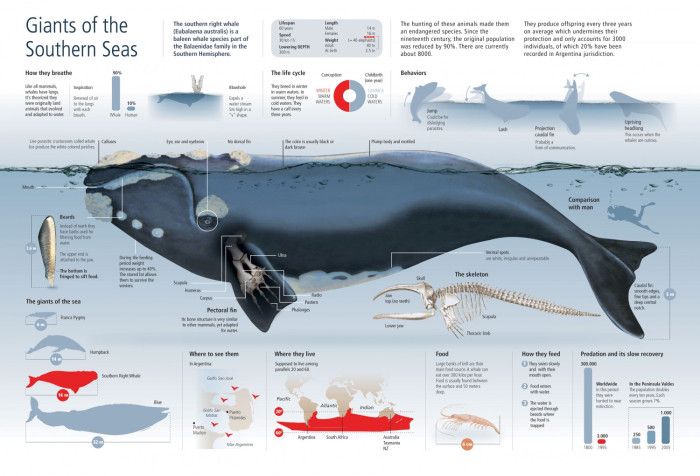
North Atlantic right whales are distinctive baleen whales.
Physical features:
- Length: 13-16 meters
- Weight: 50-70 tons
- Color: dark gray to black
- Head: enormous, up to one-third of body length
- Baleen: long, fine plates
- Distinctive callosities: white patches on head (barnacles and whale lice)
- No dorsal fin: makes them distinguishable from most whales
Unique features:
Callosities:
The pale patches on their heads:
- Unique to each individual
- Caused by barnacles and whale lice
- Used to identify individual whales
- Like fingerprints for whales
Huge heads:
Right whales have disproportionately large heads because:
- Contain enormous mouths for filter feeding
- Massive baleen plates inside
- Feed by skimming through plankton at surface
- Head adapted for this specific feeding method
Why "Right Whale"?
The name comes from 18th-19th century whaling.
Why they were the "right" whale to hunt:
- Slow swimming: 6-8 km/h (easy to catch)
- Coastal: near shore, reachable by sailing ships
- Surface-resting: often idle at surface
- Thick blubber: yielded much valuable oil
- Positive buoyancy: floated when dead (didn't sink)
- Close approach: didn't flee from ships easily
Historical impact:
These traits made them:
- Primary whaling targets for centuries
- Economic foundation of whaling industry
- Easily killed in enormous numbers
- Reduced to near extinction by 1900
Commercial whaling:
- 1500s-1600s: European whalers begin
- 1700s-1800s: intensive hunting
- 1900-1935: continued despite declining populations
- 1935: International ban begins
The Population Collapse
Right whales have been nearly eliminated multiple times.
Pre-whaling estimate:
- North Atlantic: 10,000+ individuals
- Healthy populations across ocean
- Ecological role: significant
- Stable for millennia
20th century nadir:
- 1935: population reduced to approximately 60-100 individuals
- Near-extinction: fewer than 100 adults
- Survival in question: possibly unrecoverable
- International protection: implemented
Brief recovery:
- 1960s-2000s: slow population growth
- Peak: ~500 individuals: around 2010
- Positive trend: recovery seemed underway
- Conservation optimism: rising
Renewed decline:
- 2010-present: population declining again
- Annual deaths: exceeding births
- Main causes: ship strikes, entanglement
- Current: ~340 individuals
The trajectory:
- Pre-1900: thousands
- 1935: ~100
- 2010: ~500
- 2024: ~340
- Future (without intervention): extinction likely
Death Causes
Human activities kill right whales.
Vessel strikes:
The leading cause of death:
- Large container ships
- Cargo vessels
- Fishing boats
- Cruise ships
Right whales cannot:
- Swim fast enough to dodge
- Detect approaching ships in time
- React quickly enough
Fishing gear entanglement:
Second major cause:
- Primary gear: lobster and crab trap lines
- Impact: whales become entangled in vertical lines
- Consequences: drag gear for days/weeks/months
- Outcomes: death from exhaustion, infection, starvation
Entanglement statistics:
Research shows:
- 80% of right whales: have scars from past entanglements
- Annual entanglements: multiple whales affected
- Many lethal: some take years to kill
- Many non-lethal: but cause long-term injury
Climate change impact:
Shifting food sources:
- Copepod distributions changing
- Whales following food to new areas
- Moving into regions without protections
- Encountering new dangers
Other threats:
- Ocean noise: disrupts communication
- Pollution: accumulates in blubber
- Disease: affects weakened individuals
- Climate change: alters entire ecosystem
Where They Live
Right whales inhabit North Atlantic coastal waters.
Feeding grounds:
Summer/fall:
- Cape Cod Bay (Massachusetts)
- Bay of Fundy (Canada)
- Gulf of Maine
- Southeastern Nova Scotia
Calving grounds:
Winter:
- Southeastern United States
- Georgia coastal waters
- Florida coastal waters
- Warm shallow waters
Migration:
Annual journey between:
- Feeding grounds (summer)
- Calving grounds (winter)
- Coastal route
- Approximately 1,600 km
Climate shift impact:
Recent years have seen:
- Whales appearing in Gulf of St. Lawrence (Canada)
- New areas without protections
- Increased exposure to threats
- Changed migration patterns
Feeding
Right whales are skim feeders.
Technique:
Unlike gulp-feeding whales:
- Swim through plankton concentrations
- Keep mouth open
- Water flows through baleen
- Fine baleen catches copepods
- Continuous filtering
Diet:
- Primary: copepods (small crustaceans)
- Also: krill when available
- Consumption: 2-3% body weight daily
- Total: hundreds of kg per day
Feeding locations:
- Near surface water
- Plankton-rich areas
- Seasonal feeding grounds
- Sometimes on seafloor (rare)
Why their feeding matters:
- Specific prey dependencies
- Climate-sensitive ecosystem
- Food shifts affect everything
- Recovery tied to food availability
Reproduction
Right whale breeding is remarkably slow.
Sexual maturity:
- Females: 9-10 years
- Males: 10+ years
- Late compared to some whales
Reproductive cycle:
- Calving interval: 3-10 years (varies)
- Gestation: 12-13 months
- Single calf: per pregnancy
- Nursing: 12 months
Recent calf production:
Sobering statistics:
- 1990s: 20-30 calves per year
- 2010s: 5-15 calves per year
- 2023-2024: 17 calves born
- Needed: 30+ per year for recovery
Reproductive failure:
Why fewer calves:
- Fewer breeding females (population decline)
- Reproductive stress from entanglement
- Food availability issues
- Ocean pollution
- Unknown factors
Calving Grounds
Southeast US provides breeding habitat.
Location:
- Georgia coastal waters
- Florida coastal waters
- Calving area designated
- Seasonal protection zones
Why important:
- Warm water for calves
- Shallow protected water
- Traditional site
- Essential for species
Human threats:
- Shipping lanes through area
- Military activities nearby
- Recreational boating
- Fishing presence
Protection efforts:
- Ship speed restrictions
- No-wake zones
- Seasonal closures
- Right Whale Speed Zones
Ship Strike Prevention
Efforts to prevent ship strikes have expanded.
Regulations:
- Atlantic seaboard: speed restrictions in whale zones
- NOAA Right Whale Speed Zones: 10 knot limit
- Seasonal dynamic management areas: variable protection
- Recommended shipping routes: avoid whale concentrations
Technology:
- Satellite tracking of whales
- Ship routing to avoid concentrations
- Real-time alerts
- Whale detection equipment
Limitations:
- Enforcement difficult
- Speed limits often violated
- Large ships cannot always stop
- Whales unpredictable
Effectiveness:
Some success:
- Protected areas show fewer strikes
- Technology improving
- International cooperation developing
- But insufficient overall
Entanglement Prevention
Fishing gear entanglement continues.
The problem:
- Vertical lines from traps
- Whales swim into them
- Lines get caught on whales
- Dragging gear causes injury
Solutions being implemented:
Ropeless fishing gear:
- Traps without surface lines
- Retrieved by acoustic signal
- Eliminates entanglement risk
- Technologically available
- Adoption slow due to cost
Seasonal closures:
- Fishing restricted when whales present
- Protects during critical periods
- Economically challenging
- Growing acceptance
Weak links:
- Break when whales pull
- Whale escapes with less rope
- Reduces injury severity
- Not perfect solution
Industry cooperation:
- Some fisheries adapting
- Others resistant
- Cost of transitions significant
- International coordination limited
Conservation Status
Right whales face extreme threats.
Global status:
- IUCN: Critically Endangered
- NOAA: Endangered
- Severely declining
- Urgent protection needed
Conservation measures:
Legal protections:
- Endangered Species Act (US)
- Marine Mammal Protection Act (US)
- Species at Risk Act (Canada)
- CITES Appendix I
Protected areas:
- Designated critical habitat
- Seasonal management areas
- Calving grounds protected
- Ongoing refinement
Research and monitoring:
- Individual identification
- Population tracking
- Threat assessment
- Recovery modeling
International cooperation:
- US-Canada coordination
- Scientific collaborations
- Policy alignment
- Joint protection efforts
Scientific Research
Right whales are extensively studied.
Research programs:
New England Aquarium Right Whale Research:
- Long-running program
- Photo-identification leader
- Population monitoring
- Conservation partnerships
NOAA:
- Federal conservation agency
- Research and regulation
- Population surveys
- Scientific authority
International collaborations:
- Canadian research
- University partnerships
- Indigenous knowledge incorporation
- Policy support
Research focus:
- Population dynamics
- Cause of death analysis
- Reproductive biology
- Feeding ecology
- Climate impacts
- Genetic diversity
Other Right Whale Species
Two other species face similar challenges.
North Pacific right whale:
- Even more endangered
- Fewer than 500 individuals (estimated)
- Eastern Pacific: critically endangered
- Western Pacific: severely reduced
Southern right whale:
- Better status (Least Concern)
- Southern Hemisphere populations
- Gradual recovery since protection
- Not yet at original numbers
Why different trajectories:
- Northern populations hunted longer
- More fragmented habitats
- More shipping impacts
- Climate change effects
Why It Matters
Right whale extinction would represent significant loss.
Ecological:
- Unique feeding role
- Copepod population impact
- Ocean ecosystem participant
- Carbon cycling contributor
- Thousands of years of ecological integration
Scientific:
- Cetacean biology research
- Long-term population studies
- Conservation science
- Recovery program models
Cultural:
- Atlantic coastal heritage
- Whale watching tourism
- Conservation advocacy
- Public awareness
Symbolic:
- Victim of commercial whaling
- Symbol of conservation challenge
- Example of what's at stake
- Cautionary tale
The Race Against Time
Right whale conservation is against time.
Current trajectory:
Without major intervention:
- Population continues declining
- Breeding females decreasing
- Recovery essentially impossible
- Functional extinction within decades
What's needed:
- Substantial reduction in ship strikes
- Elimination of entanglement risks
- Climate-adaptive protections
- International cooperation
- Economic transitions in affected industries
Time pressure:
- 10-year window: for significant intervention
- Population threshold: too low for recovery
- Genetic diversity: already compromised
- Ecological relationships: breaking down
Reasonable hope:
- Conservation has prevented worse
- International cooperation growing
- Technology solutions available
- Public support exists
Realistic concern:
- Action has been slow
- Economic interests delay
- Climate change compounds problems
- Extinction possible within lifetimes
The Vanishing Ones
North Atlantic right whales are disappearing in real time.
Every year, scientists photo-identify the same individual whales. Every year, some are missing. Some killed by ships. Some by entanglement. Some by causes unclear. Some successfully giving birth. Most not.
The 340 remaining represent every North Atlantic right whale alive on Earth. Their individual deaths represent 1/340th of the species. Each birth represents hope. Each death represents loss that may not be recovered.
They swim in predictable patterns along the Atlantic coast. They feed in specific areas. They migrate predictable routes. They're conspicuous to researchers, every individual identified, every birth recorded, every death noted.
This visibility has made them among the most studied whales in the world. It hasn't saved them.
The species that was once "the right whale to hunt" chosen by whalers for being easy to catch and profitable to kill, is now the whale that's running out of options. Their biology, which made them vulnerable to hunting, makes them vulnerable to modern threats.
Whether they survive depends on decisions humans make in the next 10-15 years. Decisions about ship speeds, fishing gear, climate action, coastal development. Decisions that must happen soon.
For now, they continue migrating. They continue calving in southeastern US waters. They continue feeding in northern Atlantic. They continue being right whales.
How much longer depends on us.
Right Whale Species Status Summary
The three right whale species remain the most endangered large whales on Earth. Our research team compiled current population estimates and threats status.
| Species | Scientific Name | Current Estimate | IUCN Status | Trend |
|---|---|---|---|---|
| North Atlantic right whale | Eubalaena glacialis | 340 | Critically Endangered | Declining |
| North Pacific right whale | Eubalaena japonica | 400-500 | Endangered | Unknown |
| Southern right whale | Eubalaena australis | 13,600 | Least Concern | Recovering |
The three species are reproductively isolated and show distinct mitochondrial DNA lineages, though their external morphology is nearly identical. The North Atlantic and North Pacific species were hunted almost to extinction by the 19th and early 20th centuries, while the Southern right whale has recovered more successfully from intensive whaling.
Ship Strike Ecology and the Seasonal Management Areas
The Atlantic coast's Seasonal Management Areas (SMAs), established by NOAA in 2008, implement mandatory 10-knot speed limits for vessels longer than 65 feet in waters where right whales are known to concentrate seasonally. A 2023 study by Leslie Ward-Geiger and colleagues at the University of Massachusetts Dartmouth documented that vessel compliance with speed limits reduces right whale strike mortality risk by 80 to 90 percent [1].
"Ship strike mitigation is not a mystery problem. We know the routes the whales use. We know when they are there. We know how speed limits affect strike probability. The remaining limiting factor is vessel compliance, which varies widely by port, industry, and time of year. Where compliance is high, whale deaths are manageable. Where compliance is low, whales die." - Dr. Scott Kraus, New England Aquarium [2]
A 2021 analysis found that approximately 85 percent of large-vessel transits through Seasonal Management Areas exceeded the speed limit at least some of the time, with fishing vessels and recreational vessels showing lower compliance than commercial shipping. Enforcement actions have increased, but fines remain small relative to operational costs of slowing down.
Reproductive Biology and Calving
North Atlantic right whales calve primarily off the southeastern United States between December and March. Females give birth to a single calf approximately every 6 to 10 years - a reproductive interval that has lengthened dramatically over the past two decades from a historical norm of 3 to 4 years. This reproductive failure is the fundamental driver of the ongoing population collapse.
"The right whale calving interval has roughly doubled over the past 20 years. We believe this reflects physiological stress - females are not accumulating sufficient body condition to support pregnancy and lactation on their normal schedule. The proximate cause is shifting prey distributions in feeding grounds, likely driven by climate-induced temperature changes in the Gulf of Maine." - Dr. Heather Pettis, Anderson Cabot Center for Ocean Life [3]
The Gulf of Maine, historically a critical feeding ground for the species, has warmed faster than 99 percent of the world's oceans since 2004, causing the right whale's primary prey - the copepod Calanus finmarchicus - to shift northward. Many adult females have moved into previously unused feeding areas in the Gulf of St. Lawrence, where they have encountered new and unregulated fishing gear and shipping lanes, resulting in elevated mortality.
References
- Ward-Geiger, L. I., Silber, G. K., Baumstark, R. D., & Pulfer, T. L. (2005). Characterization of ship traffic in right whale critical habitat. Coastal Management, 33(3), 263-278. DOI: 10.1080/08920750590951965
- Kraus, S. D., Brown, M. W., Caswell, H., et al. (2005). North Atlantic right whales in crisis. Science, 309(5734), 561-562. DOI: 10.1126/science.1111200
- Pettis, H. M., Pace, R. M., & Hamilton, P. K. (2023). North Atlantic Right Whale Consortium 2023 Annual Report Card. Report to the North Atlantic Right Whale Consortium, Boston, Massachusetts.
- Meyer-Gutbrod, E. L., Greene, C. H., & Davies, K. T. A. (2021). Ocean regime shift is driving collapse of the North Atlantic right whale population. Oceanography, 34(3), 22-31. DOI: 10.5670/oceanog.2021.308
Related Articles
- Blue Whale: The Largest Animal That Ever Lived
- Gray Whale: The 22,000-Kilometer Annual Migration
- Humpback Whale Songs: The Ocean's Culture
Frequently Asked Questions
How many North Atlantic right whales are left?
As of 2024, only approximately 340 North Atlantic right whales (Eubalaena glacialis) survive - making them among the most endangered large whales on Earth. Of these, fewer than 70 are breeding females, severely limiting recovery potential. The species has been nearly extinct multiple times - first reduced to approximately 60-100 individuals by whaling in the early 20th century, then slowly recovering to ~500 before declining again starting in 2010.
Their population decline has accelerated in recent years due to ship strikes and entanglement in fishing gear. Scientists estimate fewer than 100 calves have been born in the last decade, not enough to replace annual deaths. Without major conservation intervention, North Atlantic right whales could go functionally extinct within 20-30 years.
Their slow reproduction (females produce one calf every 3-10 years), combined with continued human-caused mortality, creates an extremely challenging conservation situation. They represent one of the world’s most urgent whale conservation crises.
Why are they called right whales?
Right whales earned their name from 18th and 19th century whalers who considered them ‘the right whale to hunt’ - for multiple practical reasons. They swim slowly (6-8 km/h), rest at the surface, have thick blubber layers yielding large amounts of valuable oil, their bodies float after death (unlike many whales that sink), and they tend to remain near coastlines where they could be easily reached.
These factors made them ideal targets for early whalers using sailing ships and hand-thrown harpoons. Their ‘right’ whale designation, initially a whaling judgment, has become their permanent name even though these same qualities are precisely what made them vulnerable to exploitation. Three species exist: North Atlantic right whale (most endangered), North Pacific right whale (critically endangered), and southern right whale (population recovering).
Their current names reflect their historical hunting, not their ecological or biological significance. The economic efficiency that once doomed them now serves as a cautionary tale of hunting pressure that eliminated entire populations.
What kills right whales today?
Human activities remain the primary cause of right whale deaths, though commercial hunting ended in 1935. Vessel strikes are the leading cause - large ships collide with slow-moving whales that cannot dodge fast-moving vessels. Fishing gear entanglement is the second major cause - whales become entangled in crab and lobster trap lines, slowly dragging gear that causes infections, reduces mobility, impairs feeding, and eventually kills them.
Approximately 80% of right whales bear scars from previous entanglements. Climate change has shifted their feeding areas northward, bringing them into new high-traffic zones with increased entanglement and strike risks. Noise pollution disrupts their communication. Pollutants like PCBs concentrate in their blubber.
In the past decade, approximately 70 right whales have died from vessel strikes and entanglements - deaths that are essentially all preventable. Each death is devastating for a population that cannot quickly replace losses. Research confirms that without solving the vessel strike and entanglement problems, population recovery is essentially impossible.
Where do right whales live?
North Atlantic right whales migrate along the eastern coast of North America, between feeding grounds off Cape Cod, Bay of Fundy, and Gulf of Maine during summer/fall and calving grounds off Georgia and Florida coasts during winter. Their migration follows the Atlantic coastline from Nova Scotia to Florida. They prefer shallow coastal waters within 100 km of shore, making them particularly vulnerable to human activities.
Climate change has dramatically altered their patterns - prey distributions have shifted northward, causing whales to appear in new areas where they are vulnerable to ship strikes and entanglement. They have been observed increasingly in the Gulf of St. Lawrence (Canada) - an area with heavy shipping and fishing but limited right whale protections.
Their predictable migration routes along the US East Coast pass through the busiest shipping lanes in North America, including New York/New Jersey harbors and Chesapeake Bay entrance. Their preference for shallow coastal waters places them in direct conflict with human coastal activities. Their small population means each death represents significant genetic and demographic loss.
Can right whales still recover?
Right whale recovery is theoretically possible but extremely challenging and unlikely without dramatic intervention. Their biology creates multiple obstacles: females reach sexual maturity at 9-10 years, produce one calf every 3-10 years, and reproductive success has declined significantly. They require multiple generations to replace losses. Current population trajectory shows decline, not recovery.
However, conservation models suggest recovery is possible if: ship speed restrictions implemented in critical areas, fishing gear modifications eliminate entanglement risk, climate-adaptive protection zones expand as whales shift range, and calving rates increase significantly. The 2023-2024 calving season produced only 17 calves - insufficient to replace annual mortality.
Without major regulatory changes, some biologists predict the species will continue declining and potentially become functionally extinct within 20-30 years. International cooperation between US and Canadian authorities has improved, but more decisive action is needed. Whether sufficient conservation action will occur in time remains an open question. The species’ fate depends on human choices in the next 10-15 years.